
Research & Sources · Deep dive
Viking Reenactment: Interpreting the Past Through Present-Day Practice
In Brief
Living history can make archaeological questions tangible. Its greatest value emerges when the evidence, practical choices, and invented narrative remain distinguishable.
On this page
A convincing scene is an interpretationAuthenticity is negotiated around an event’s purposeExperience can generate questions worth investigatingMaterial substitutions can change what is learnedA lived scene does not reproduce an entire societyModern combat rules shape the performanceAsk whether a practical claim can be checkedA reconstruction should leave room for alternativesSourcesA convincing scene is an interpretation
Ribe VikingeCenter describes its work as reconstruction, live interpretation, and practical engagement with Viking Age Ripa. Its interpreters give historical roles personal stories so visitors can connect with a distant society. That is a legitimate communicative purpose, but the imagined carpenter’s thoughts are not archaeological finds. The distinction helps visitors enjoy a scene without treating every detail as recovered fact. Buildings, tools, and activities can draw on evidence while dialogue and individual personalities fill gaps. A useful presentation makes that combination understandable: it shows what anchors the scene in research and where storytelling helps people explore possibilities.
Sources for this section: 1
Authenticity is negotiated around an event’s purpose
Midgard Viking Centre publishes different levels of authenticity requirements for living-history events. Its guidance distinguishes minimum standards, recommendations, and longer-term goals, and recognizes the need for exceptions in some circumstances. This is evidence about how a modern heritage event is organized, not a list of unquestionable Viking practices. The distinction is important because event rules also respond to educational access, practical constraints, and safety. A visitor should not infer that an approved item has the same evidential basis as every other approved item. The useful question is which historical source supports the interpretation and which modern requirement explains an adaptation.
Sources for this section: 2

Experience can generate questions worth investigating
An ethnographic study published in EXARC examined reenactment through observation, interviews, a survey, and participation in a group. The author’s participating group represented the fifteenth century, so its findings should not be presented as direct evidence about Viking performers or medieval Scandinavia. Its methodological relevance is broader: practitioners acquire experience that can reveal overlooked practical questions. A task may prove more awkward, slower, or more dependent on coordination than a static illustration suggests. Such experience can help formulate research, but the experience itself needs interpretation. It shows what particular modern people encountered under particular conditions, not what everyone in the past necessarily experienced.
Sources for this section: 3
Material substitutions can change what is learned
Research specifically addressing Viking Age reenactment discusses the difficulty of achieving complete authenticity, including the practical use of commercially produced yarn in costume reconstruction. The issue is not merely visual accuracy. A substitute material can affect how a garment behaves, how long production takes, or what skills are required. A useful reconstruction record therefore identifies significant substitutions rather than hiding them behind a general claim of authenticity. This allows a demonstration to remain informative even when perfect replication is impossible. It also clarifies which conclusions are supported: a garment may illustrate a proposed silhouette while providing a weaker basis for estimating historical labor.
Sources for this section: 4
A lived scene does not reproduce an entire society
Ribe’s account emphasizes sensory experience and the human stories associated with work, household life, and social inequality. These approaches can widen attention beyond spectacular weapons and elite objects. Yet the present-day setting also changes the experience. Volunteers can leave, visitors choose what to watch, and interpreters know outcomes that historical people did not. These are logical limits of the format, not criticism of the center’s practice. A scene depicting an enslaved person, for example, can encourage reflection on coercion without reproducing that person’s condition. Interpretation should keep this difference visible rather than claiming complete access to someone else’s historical experience.
Sources for this section: 1
Modern combat rules shape the performance
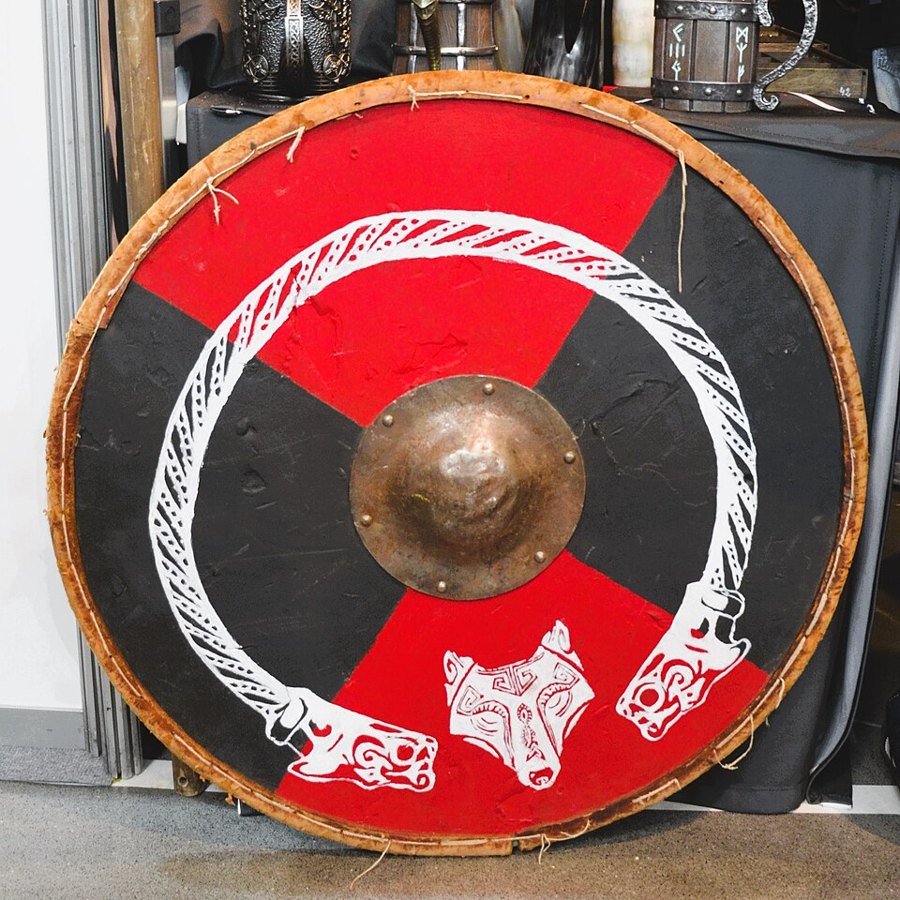
Midgard’s guidelines acknowledge protective equipment and require it to be concealed under clothing in relevant situations. This demonstrates a necessary distinction between public appearance and the conditions under which participants act. A reenacted fight takes place within modern limits intended to protect people; its visible movements should not automatically be treated as an observation of Viking warfare. The same caution applies to conclusions about equipment. A weapon or shield may be selected, modified, or used within an event’s rules. An explanation becomes stronger when it identifies those constraints and separates a public demonstration from a defined experiment designed to investigate a narrower question.
Sources for this section: 2
Ask whether a practical claim can be checked
The EXARC ethnography emphasizes variation among reenactment groups and the importance of reflexive interpretation. This supports asking about a particular practice rather than praising or dismissing reenactment as a whole. Imagine a craftsperson reporting that one sewing method is faster than another. The observation is potentially useful, but comparison requires information about materials, experience, task size, and repeated attempts. Those are proposed checks, not findings from the ethnographic study. They show how practical experience can lead toward a testable claim. A persuasive performance and a well-designed comparison can coexist, provided their different purposes remain explicit.
Sources for this section: 3
A reconstruction should leave room for alternatives
The Viking reenactment study warns that a tangible replica can appear more definitive than the fragmentary evidence behind it. Once a complete costume or object is visible, alternative reconstructions can become difficult to imagine. A useful interpretive technique is therefore to show the source alongside the finished result and identify major uncertain choices. A display might compare two plausible arrangements rather than presenting one as inevitable. The point is not to weaken the experience but to invite participation in the reasoning. Visitors can appreciate skilled work more fully when they understand both what the evidence requires and what the maker had to decide.
Sources for this section: 4
The Evidence
The sources below support this article. Interpretations and limits are explained in the text; this is not an exhaustive research review.