An annual rhythm. Many local traditions.
Seasons, Feasts & Rituals
Explore winter gatherings, offerings and remembrance without mistaking a modern festival calendar for a universal Viking one.
Customs, not one rulebook
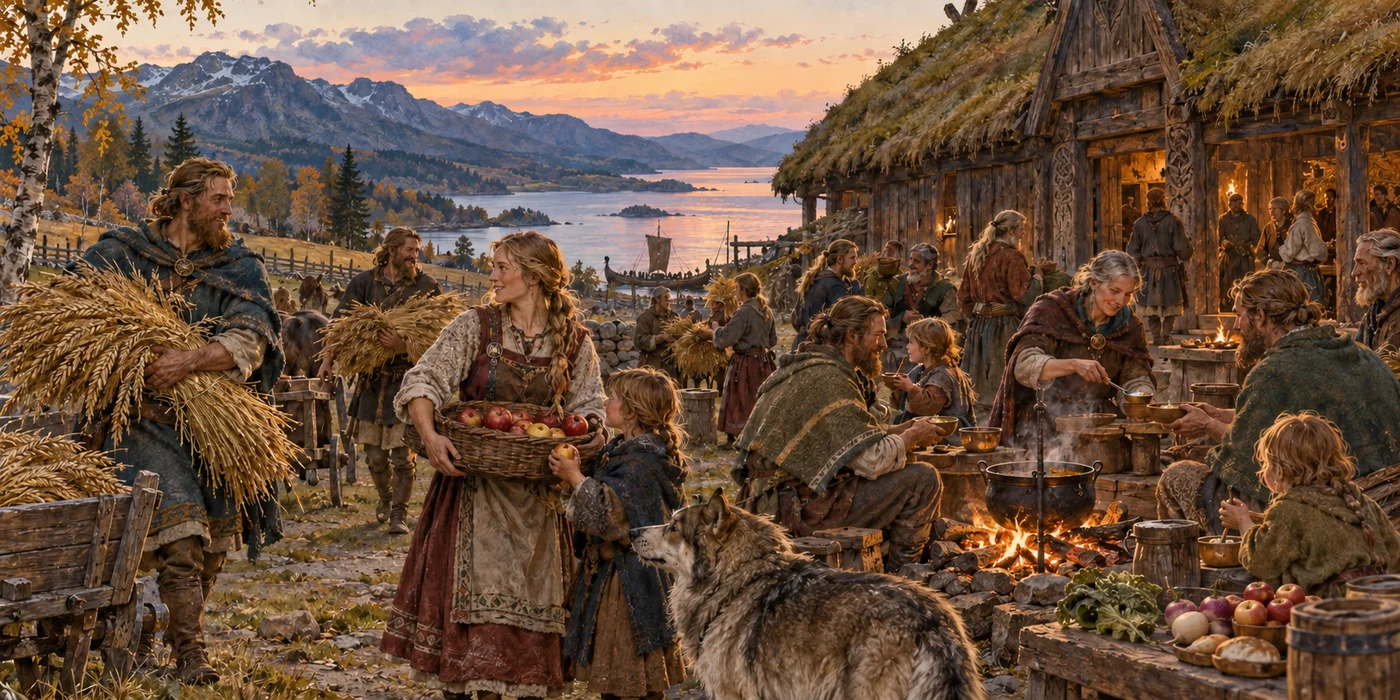
Norse religion was expressed through customary actions as well as stories about gods. Practices differed by region, community and period. The evidence does not establish one programme of festivals followed identically throughout the Viking world.
This matters when reading a neat modern calendar. A named celebration in one later text does not prove that every household held it on the same date. A useful introduction should explain what kind of evidence survives before assigning exact days or a fixed sequence of ceremonies.
Evidence: Swedish History Museum: Norse religion in the Viking Age
How can archaeologists recognise a ritual?
Deposits, structures, animal remains and unusual arrangements of objects can suggest ritual activity. Context is essential: a collection of bones or an isolated valuable object does not explain its own purpose. Comparison with the surrounding site helps researchers distinguish possible offerings from other forms of disposal.
Written accounts add actions, names and stories that objects cannot supply. Many were written by Christian authors or copied after conversion. They may preserve older traditions while reshaping them. Neither accepting every detail literally nor dismissing all later texts gives a sound account of the evidence.
Evidence: Swedish History Museum: Norse religion in the Viking Age · Swedish History Museum: Old Norse religion · National Museum of Denmark: The Viking blót sacrifices
The practical year and the religious year
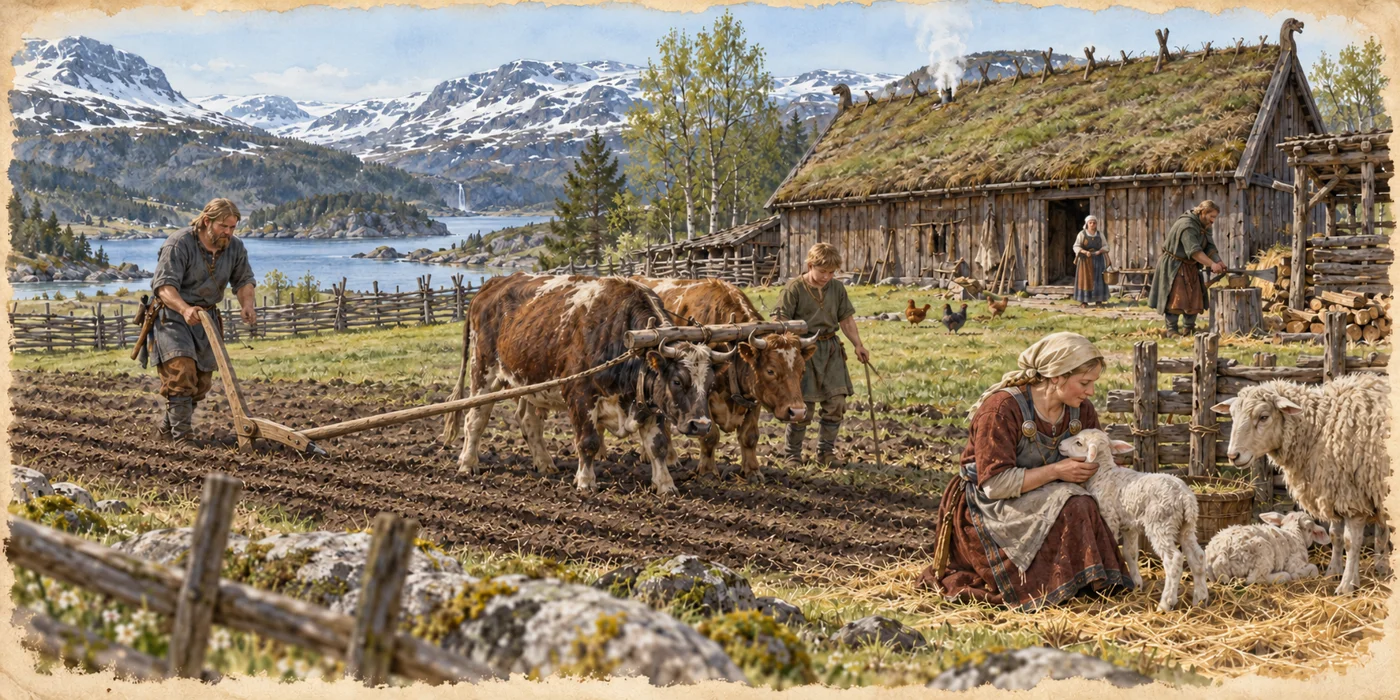
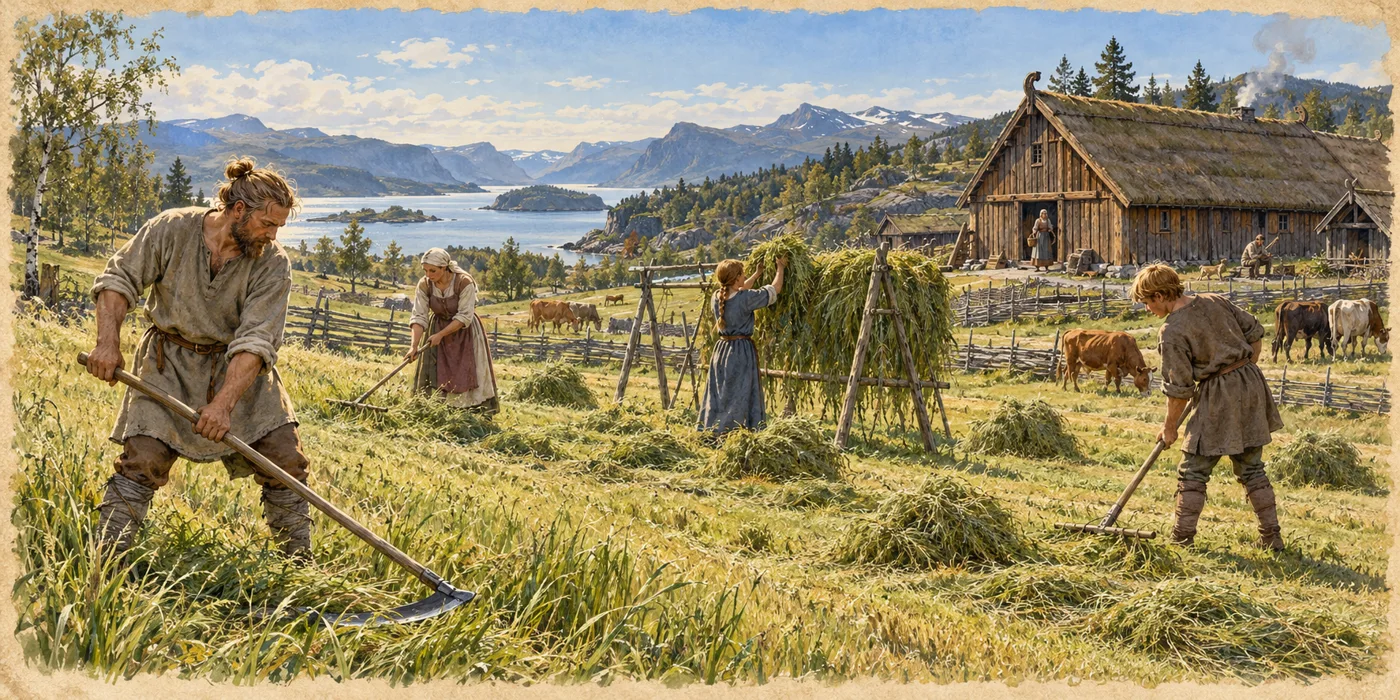
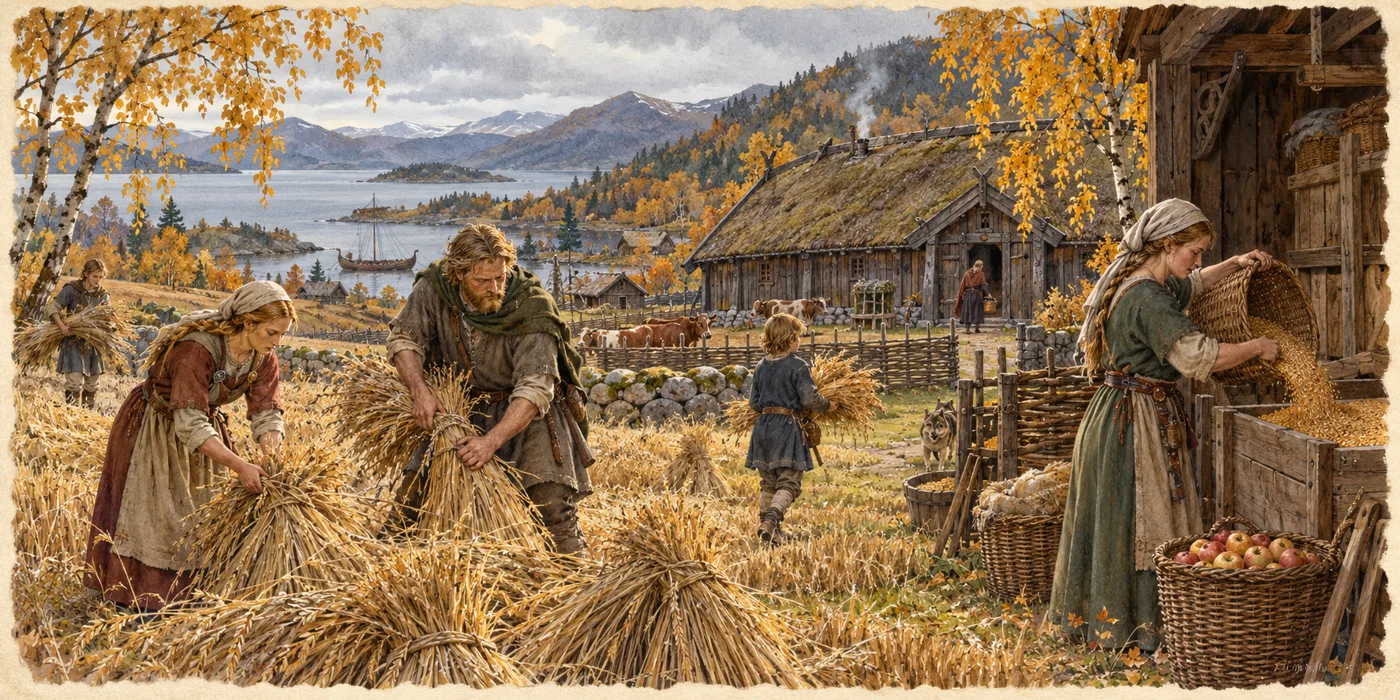
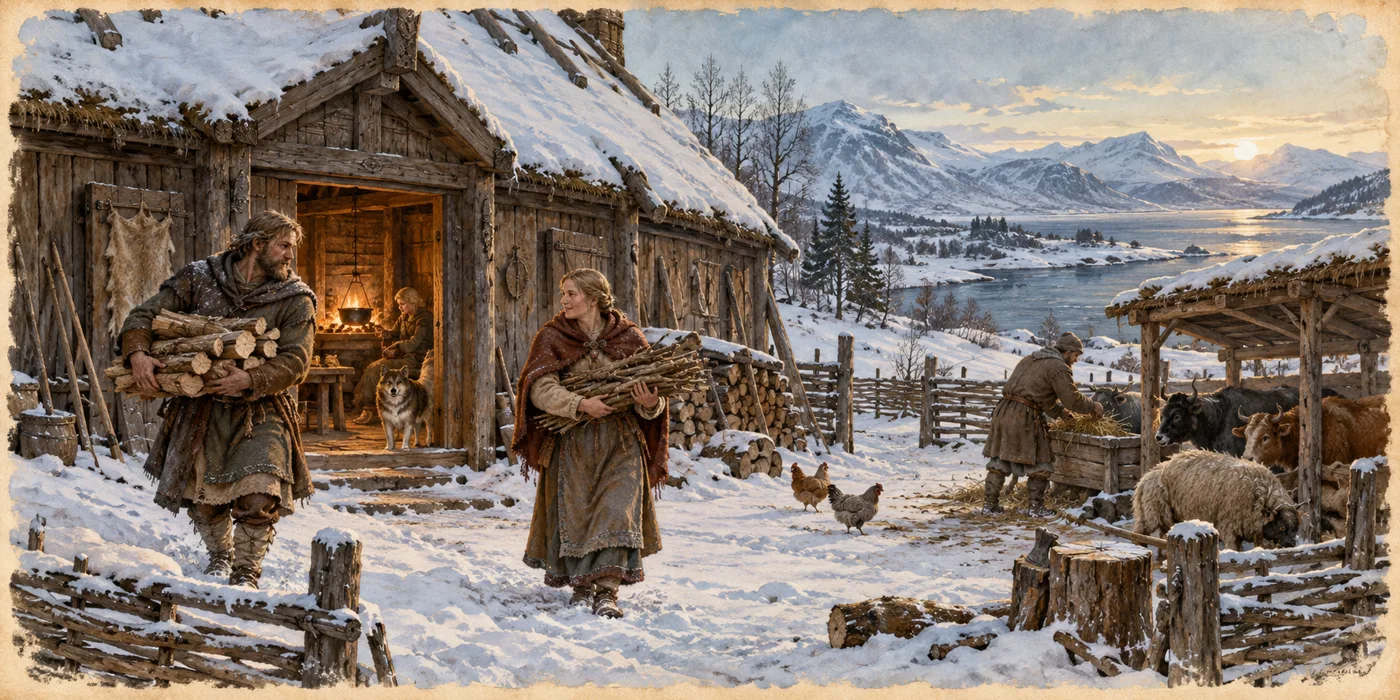
Growing food, keeping animals, storing supplies and travelling linked household life to the seasons. Local climate and resources affected that rhythm. A coastal household, an inland farming community and a northern hunting community did not experience an identical working year.
A seasonal task is not automatically a named religious festival. Harvesting could provide the resources for a gathering, but that practical connection does not establish a universal harvest ceremony. Here the seasons provide context, not a claim to reconstruct a complete ancient calendar.
Evidence: Swedish History Museum: Norse religion in the Viking Age · Viking Ship Museum: Was there Yule in the Viking Age?
Jól: winter gatherings and changing traditions
Jól is associated with pre-Christian winter celebrations and survives in Scandinavian words for Christmas. Feasting and drinking are prominent in the written tradition. The timing and meaning of celebrations changed, including through Christianisation.
It is too simple to label jól a universal festival on 21 December. It is also too simple to claim that every modern Christmas food, decoration or custom is a direct Viking survival. Similarity and a shared name can be historically interesting without proving an uninterrupted ceremony.
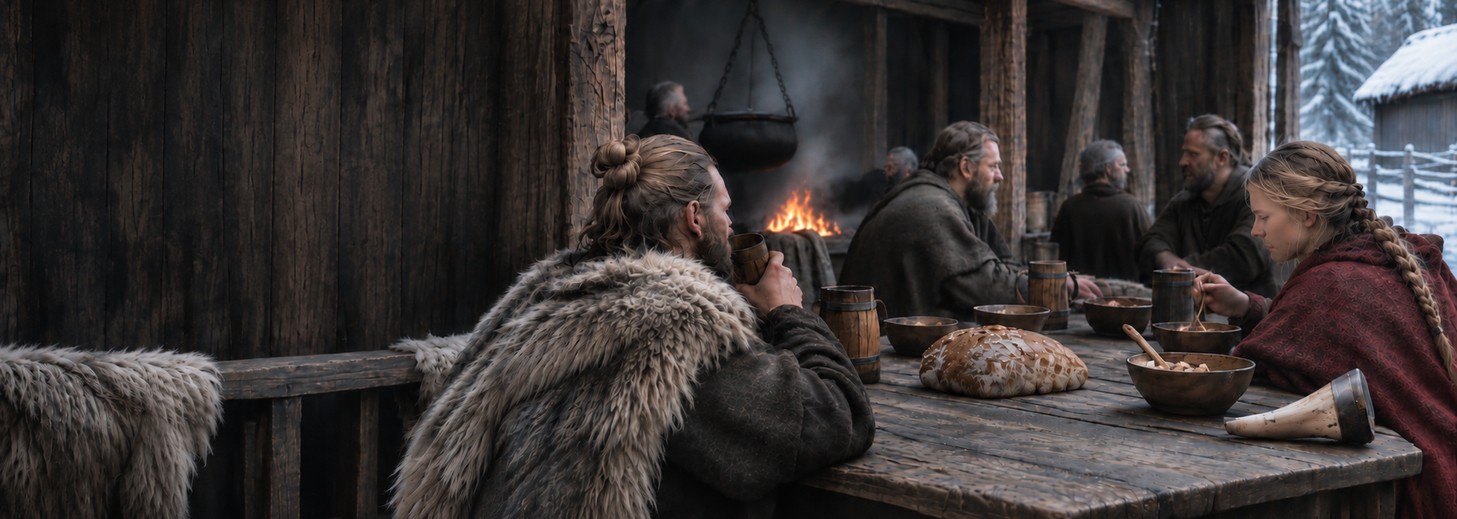 How Did the Vikings Really Celebrate Yule?Feasts, beliefs and what the sources reveal.
Evidence: Viking Ship Museum: Was there Yule in the Viking Age? · Swedish History Museum: Norse religion in the Viking Age
Blót: offerings, hospitality and authority
Blót refers to offerings or sacrifices seeking divine favour. Accounts of communal food and drink show how worship could connect with leadership, hospitality and social obligations. A feast was therefore more than a menu: who hosted it and who participated could matter.
Snorri’s detailed descriptions were written in the thirteenth century. They should be labelled later accounts, not contemporary transcripts of Viking-Age ceremonies. Archaeology can support discussion of offerings and communal activity without confirming every narrated gesture or spoken formula.
Evidence: National Museum of Denmark: The Viking blót sacrifices
Halls, special buildings and outdoor deposits
There was no requirement for every religious action to occur in a building resembling a modern church. The Swedish History Museum discusses evidence from Borg in Östergötland, including amulet rings and animal bones, as part of a late Viking-Age cult setting.
The Gudingsåkrarna weapon concentration remains debated; evidence for metalworking complicates its interpretation as offerings.
Evidence: Swedish History Museum: Old Norse religion · Carlsson (2011), Från offerplats till vapensmedja, pp. 47–64.
Death and remembrance were rituals too
Burial involved choices made by the living. Cremation and unburnt burial, different arrangements of objects and the treatment of animals reveal varied practices rather than a single Viking funeral script. A spectacular ship burial cannot represent everyone’s experience.
Objects and remains help reconstruct parts of the process, but their precise meanings are not always recoverable. The ceremony, the person remembered and the people arranging it all belong in the discussion. Reading a grave only as a list of possessions misses those relationships.
Evidence: Swedish History Museum: Old Norse religion · Swedish History Museum: Rituals affected the living and the dead
Conversion and celebrations today
Christianity and older customs overlapped during periods of change. Regional histories and household choices complicate any story in which one religion disappears everywhere on a single date.
Modern revival festivals can be meaningful contemporary traditions. Their ceremonies and dates should nevertheless be identified as modern choices unless independent evidence supports a specific historical connection. A modern eight-festival “Wheel of the Year” should not be presented as the documented calendar of all Viking-Age Scandinavians.
Evidence: Swedish History Museum: Norse religion in the Viking Age
Sources & further reading
Sources checked October 17, 2026. These are introductory guides; evidence and uncertainty are distinguished in each section.
- Swedish History Museum: Norse religion in the Viking Age ↗
- Swedish History Museum: Old Norse religion ↗
- National Museum of Denmark: The Viking blót sacrifices ↗
- Viking Ship Museum: Was there Yule in the Viking Age? ↗
- Swedish History Museum: Rituals affected the living and the dead ↗
- Carlsson (2011), Från offerplats till vapensmedja, pp. 47–64. ↗
Keep exploring