
A language behind the names.
Old Norse: Language & Pronunciation
Start with sounds, words and the evidence for Old Norse. This is an introduction to reading—not a promise to recreate every Viking-Age accent.
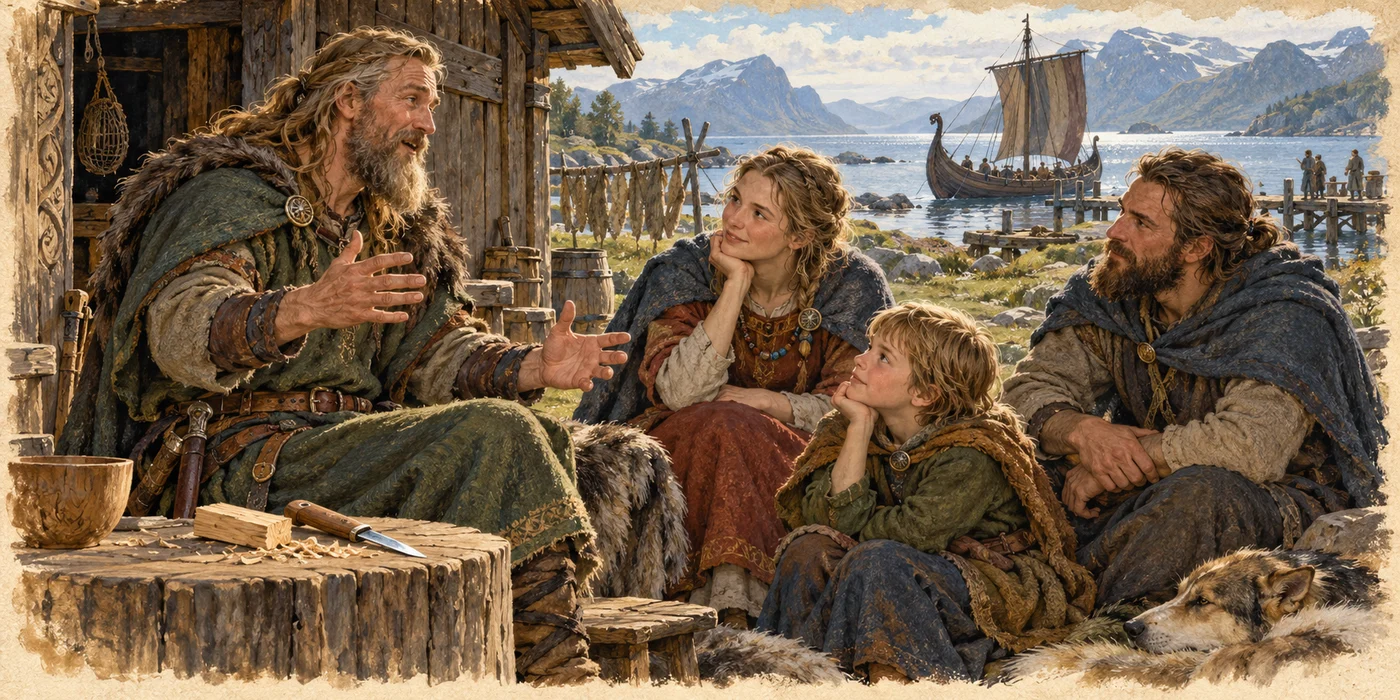
One name, many varieties
Old Norse is a name for related medieval North Germanic language varieties. It was not a single unchanging accent spoken identically from Denmark to Iceland. Where a text was produced, when it was written and how it was transmitted all affect the language we encounter.
Much surviving literature is preserved in Old Icelandic manuscripts. That makes Icelandic evidence central to many introductions, but does not mean every Viking-Age Scandinavian spoke exactly like the narrator of an Icelandic saga. A standard teaching form is useful precisely because the historical picture is more varied.
Evidence: University of Texas: Old Norse Online introduction
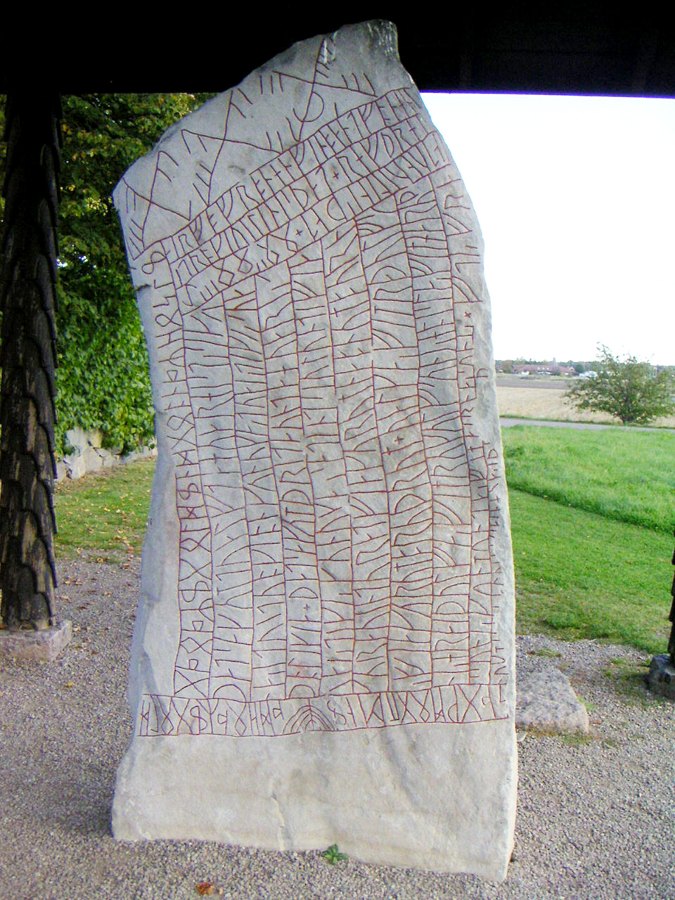

Inscriptions, poems and later manuscripts
Runic inscriptions and manuscript books preserve different kinds of language. An inscription might commemorate a person in a short formula; a saga can tell an extended story using a much larger vocabulary. Neither should be treated as a recording of ordinary conversation.
Many sagas survive in manuscripts later than the Viking Age. Poetry can preserve older features while being copied and interpreted by later people. When a popular quotation is called “Viking”, ask for its text, date and context before treating it as something a tenth-century person actually said.
Evidence: University of Texas: Old Norse Online introduction · University of Copenhagen: Dictionary of Old Norse Prose
The pronunciation convention used here
This guide uses simplified learning aids based on reconstructed medieval West Norse. They are not recordings of Viking-Age speech and cannot represent every regional or chronological difference. Modern Icelandic reading practices are another useful tradition, but should not silently be substituted for historical reconstruction.
In the normalised spelling used in introductory texts, acute accents usually mark long vowels. Hold the vowel longer instead of automatically turning it into an English diphthong. The letter þ has the sound at the start of English “thin”; ð resembles the sound in “this”. The letter j is y-like, and r is trilled. These comparisons are approximations, not a complete pronunciation system.
A small vocabulary to begin reading
The table below gives a basic meaning and a rough sound aid. Capital letters in the aids show the stressed syllable; they are not part of the Old Norse spelling. English accents differ, so follow the university sound-system lesson when you need greater precision.
A dictionary gives a starting point, not a substitution cipher. A word can have several senses, and its form can change with its role in a sentence. The examples below are deliberately modest: learning a few well-supported words is more useful than memorising an attractive phrase with no traceable source.
| Old Norse | Basic meaning | Rough sound aid |
|---|---|---|
| ek | I | ehk |
| ok | and | ohk, with a short pure o |
| nú | now | noo, with a long vowel |
| þar | there | thahr; th as in thin, short a |
| hafa | to have | HAH-vah; both a vowels short |
| at | to; at (depending on context) | aht, short a |
| aptr | back | ahptr; keep the final r |
| askr | ash tree | ahskr; keep the final r |
Evidence: University of Texas: Alphabet and sound system · University of Texas: Norse base-form dictionary · University of Copenhagen: Dictionary of Old Norse Prose
Words, objects & ideas
Old Norse & Viking glossary
280 selected terms for reading about the Viking Age. Search a word, a modern spelling or its English meaning; open an entry for context and sources.
An introductory glossary, not a complete dictionary. Old Norse headwords use normalized scholarly spellings, mainly West Norse. Spellings and meanings vary by place, period and genre; many written witnesses are medieval and later than the events they describe. Modern study terms are labelled separately. Plain-letter aliases help searching but are not alternative historical spellings. Definitions are original summaries; follow the cited texts, dictionaries and research for fuller evidence.
280 of 280 terms
No terms match. Try an English meaning, a shorter word, or reset the filters.
Language & runes · Modern study termAblautA patterned change of a word’s root vowel across grammatical forms. In Old Norse strong verbs, such vowel differences help distinguish present and past forms.
Also searched as: vowel gradation.
Check the sourcesCrafts & objects · Modern study termAdzeA woodworking tool whose cutting edge lies across the handle, useful for shaping timber surfaces. An iron example belongs to the Viking Age Mästermyr tool assemblage.
Poetry & texts · Modern study termAlliterationThe linking of stressed syllables through matching initial sounds. It helps organize Old Norse poetic lines and remains central across several different metres.
Also searched as: alliterative verse.
Check the sourcesSociety & law · Old NorseAlþingiThe general assembly established at Þingvellir in Iceland in 930. It brought together legal proceedings and lawmaking within the Icelandic Commonwealth; it should not be equated with universal political representation.
Also searched as: Althing, Althingi, Alþing.
Check the sourcesBelief & ritual · Modern study termAmuletA small object carried or worn for supernatural protection or assistance. Viking Age examples include miniature divine attributes and inscribed metal plates, connecting personal objects with ritual practice.
Also searched as: protective object, amulets.
Check the sourcesShips & trade · Modern study termAnchorA device lowered to grip the seabed and hold a vessel in place. The Ladby ship burial preserved an iron anchor with a chain.
Also searched as: ship anchor, Ladby anchor.
Check the sourcesCrafts & objects · Modern study termAnvilA solid support on which heated metal is hammered into shape. Small anvils survive among the tools recovered from the Mästermyr assemblage on Gotland.
Society & law · Modern study termArbitrationDispute settlement in which the parties entrust a decision to an agreed third party or group. In Icelandic saga accounts, arbitration could complement bargaining and formal court proceedings.
Also searched as: arbitrator, arbitral settlement.
Check the sourcesArchaeology & evidence · Modern study termArchaeobotanyThe study of plant remains from archaeological contexts, including seeds, grain, wood and pollen. It investigates past food, fuel, craft materials, vegetation and human use of plants.
Also searched as: palaeoethnobotany, paleoethnobotany.
Check the sourcesWarfare & equipment · Modern study termArrowheadThe pointed head attached to an arrow’s shaft. Archaeological examples vary in shape and attachment, and surviving iron heads provide evidence where wooden components have disappeared.
Also searched as: arrow head, arrow point.
Check the sourcesSociety & law · Modern study termAssembly boothAccommodation used by people attending the Alþing at Þingvellir. Booth remains record repeated occupation of the assembly site, although most visible ruins belong to centuries after the Commonwealth.
Also searched as: assembly booths, booth, búð, bud.
Check the sourcesLanguage & runes · Old NorseaugaA neuter noun meaning eye. Hávamál uses the dative plural augom in a description of a guest who looks around while remaining silent.
Also searched as: eye, eyes.
Check the sourcesCrafts & objects · Modern study termAwlA pointed tool used to pierce material, particularly when preparing leather for stitching. Awls are among the leatherworking equipment recovered from Viking Age York.
Also searched as: leather awl.
Check the sourcesWarfare & equipment · Modern study termAxeheadThe metal working part of an axe, combining a cutting blade with an opening for its handle. Shape and size vary among Viking Age examples.
Also searched as: axe head.
Check the sourcesShips & trade · Modern study termBalance scaleA weighing instrument that compares a load against weights. Viking Age examples allowed precious metal to be measured for exchange, although their accuracy had limits.
Also searched as: balance scales, weighing scales.
Check the sourcesShips & trade · Modern study termBallastWeight carried low in a vessel to improve stability and balance the forces from its sail. Stones serve this purpose in modern Viking ship reconstructions.
Also searched as: ballast stones.
Check the sourcesBelief & ritual · Modern study termBaptismChristian initiation performed with water. During Scandinavia’s conversion, adults as well as children were baptised; the rite brought the recipient into the community of the Christian Church.
Also searched as: baptise, baptize, christening.
Check the sourcesBelief & ritual · Modern study termBaptismal fontA basin holding water for Christian baptism. Scandinavian churches used stone and occasionally wooden fonts; their form and decoration provide evidence for the practices of the medieval Church.
Also searched as: font, baptismal basin.
Check the sourcesFood & farming · Modern study termBarleyA cereal crop important in Viking Age food production. Its grain was used for bread and porridge, and it also supplied material for brewing beer.
People & relationships · Old NorsebarnA child. The word identifies a relationship or life stage without supplying a precise modern age boundary; a text may also use family language to explain descent rather than everyday childhood.
Also searched as: child, children, born, börn.
Check the sourcesWarfare & equipment · Modern study termBearded axeAn axe whose blade extends downward beneath the socket, creating a projecting lower edge. A ninth- or tenth-century Norwegian example survives in the British Museum.
Also searched as: beard axe, bearded axehead.
Check the sourcesCrafts & objects · Modern study termBellowsEquipment that forces air into a fire to increase its heat. In ironworking, bellows supplied the air needed by smelting furnaces and smithing hearths.
Language & runes · Modern study termBind-runeTwo or more runes combined in one written form. Such combinations need to be read in their inscriptional context; the presence of joined signs does not by itself establish a magical meaning.
Also searched as: bind rune, bindrune, bindrunor.
Check the sourcesCrafts & objects · Modern study termBloomeryA furnace that extracts iron from ore without melting the iron itself. The metal collects as a solid bloom, while waste slag separates during smelting.
Belief & ritual · Old NorseblótSacrifice or sacrificial worship. Offerings and communal feasting could connect religious practice with local power, but later accounts do not supply one uniform ceremony followed everywhere in the Viking Age.
Also searched as: blot, sacrifice, offering.
Check the sourcesCrafts & objects · Modern study termBone-workingShaping bone and antler into useful objects, including pins, handles and gaming pieces. Archaeological offcuts and unfinished pieces help reveal production alongside the surviving finished artefacts.
Also searched as: bone working.
Check the sourcesPeople & relationships · Modern study termBridewealthProperty transferred from the groom’s side in a marriage arrangement. Medieval Icelandic and Norwegian laws describe such payments, while saga narratives connect marriage negotiations with wealth and family interests.
Also searched as: bride-price, bride price, mundr.
Check the sourcesWarfare & equipment · Modern study termBroad axeIn weapon studies, an axe with a wide cutting blade. Late Viking Age battleaxe examples could have thin blades and long handles used with both hands.
Also searched as: broad-bladed axe, Dane axe.
Check the sourcesShips & trade · Modern study termBullionMetal valued for its material and measured by weight. Viking Age exchange could use silver fragments, ornaments and ingots alongside, or instead of, locally accepted coins.
Also searched as: bullion economy, weighed silver.
Check the sourcesBelief & ritual · Modern study termBurial moundA constructed mound marking or covering a burial. Viking Age examples could cover cremated remains; their size and form varied, and a mound does not itself identify the deceased.
Also searched as: barrow, grave mound, tumulus.
Check the sourcesFood & farming · Modern study termByreA building or section of a farm used to house cattle. In archaeological descriptions, the term identifies livestock accommodation rather than a particular Scandinavian architectural style.
Also searched as: cowshed, cattle house.
Check the sourcesLanguage & runes · Old NorsebókThe feminine noun for a book. Its plural bœkr occurs in Ari Þorgilsson’s account of Irish books said to have been left in Iceland.
Also searched as: bok, book, bœkr, boekr.
Check the sourcesSociety & law · Old NorsebóndiA householder or farmer; in some contexts the word also means husband. Its meaning identifies a social or household relationship, not a guarantee that the person was wealthy or politically powerful.
Also searched as: bondi, boendr, bændr, farmer, householder, bœndr.
Check the sourcesSociety & law · Old NorsebótCompensation or redress for an injury or wrong. The appropriate English translation depends on the legal or narrative setting; it is not a single fixed fine applicable to every offence.
Also searched as: bot, compensation, atonement.
Check the sourcesCrafts & objects · Modern study termCasting mouldA shaped cavity that receives molten metal and determines the resulting object’s form. Birka finds include moulds associated with open, two-part and lost-wax casting.
Also searched as: casting mold.
Check the sourcesShips & trade · Modern study termCaulkingMaterial placed in seams between hull planks to restrict water entry. Skuldelev 2 preserved traces of twisted cords treated with tar between overlapping planks.
Also searched as: hull caulking, seam sealing.
Check the sourcesFood & farming · Modern study termChaffThe husks and other light material separated from cereal grain during processing. Archaeological plant remains can preserve this residue alongside the grains themselves.
Belief & ritual · Modern study termChamber graveA burial containing a built chamber for the deceased and accompanying objects. At Gokstad, the chamber lay within the ship burial and contained human remains and furniture.
Also searched as: chamber burial, burial chamber, chamber tomb.
Check the sourcesBelief & ritual · Modern study termChristianizationThe process through which Christian practices, institutions and affiliations spread. It could involve gradual change, political decisions and continued older practices; a royal announcement is not proof of instant uniform conversion.
Also searched as: Christianisation, conversion.
Check the sourcesBelief & ritual · Modern study termChurchyardA burial ground associated with a church. As Christian organisation developed in Scandinavia, churchyard burial increasingly replaced older local burial grounds and linked the dead to parish communities.
Also searched as: church cemetery, Christian cemetery.
Check the sourcesShips & trade · Modern study termClinker constructionA method of building a hull with overlapping plank edges. It predates the Viking Age and continued afterward; the technique alone therefore cannot date a boat or establish the identity of its builders.
Also searched as: clinker-built, lapstrake, clinker.
Check the sourcesShips & trade · Modern study termCoin dieAn engraved metal tool used to impress a design onto a coin. A surviving iron die from Coppergate made the obverse of Æthelstan pennies.
Also searched as: coin dies, minting die.
Check the sourcesPeople & relationships · Modern study termCommemorationPractices that preserve the memory of the dead. Viking Age memorials could express family relationships and religious identity, as the Dynna stone does for a mother and daughter.
Also searched as: remembrance, memorial practice, commemorating.
Check the sourcesCrafts & objects · Modern study termComposite combA comb assembled from separate tooth plates held between side plates with rivets. Coppergate examples demonstrate how antler pieces could be combined into a durable grooming implement.
Also searched as: composite antler comb.
Check the sourcesPeople & relationships · Modern study termConcubinageA recognised sexual relationship outside formal marriage. Viking Age research draws on later narratives and external accounts to examine concubines’ varied status, especially in households of powerful men.
Also searched as: concubine, concubines.
Check the sourcesBelief & ritual · Modern study termCremationThe burning of a dead body as part of funerary treatment. It was common in some Viking Age regions, with burned remains subsequently incorporated into graves or monuments.
Also searched as: cremated remains, burned burial.
Check the sourcesPoetry & texts · Modern study termCritical apparatusAn edition’s record of significant alternative readings and the manuscripts that contain them. It lets readers see evidence behind the text chosen for display.
Also searched as: variant apparatus, textual apparatus.
Check the sourcesBelief & ritual · Modern study termCross pendantA cross-shaped ornament worn on the body. Viking Age finds include the silver crucifix from Birka grave Bj 660, which combines a Christian image with Scandinavian craftsmanship.
Also searched as: pendant cross, crucifix pendant, cross necklace.
Check the sourcesWarfare & equipment · Modern study termCrossguardThe guard crossing a sword’s hilt where the blade meets the grip. Viking Age swords include straight guards, sometimes decorated with inlaid or applied metal.
Also searched as: lower guard, sword guard.
Check the sourcesCrafts & objects · Modern study termCrucibleA heat-resistant vessel used to melt and combine metals. Crucible fragments from early Viking Age Ribe retain residues that reveal work with copper alloys, silver and gold.
Belief & ritual · Modern study termCult imageAn image representing a divine being in religious practice. Small Viking Age figurines may have served this role, though identifying a particular deity or use often requires interpretation.
Also searched as: divine image, god figurine, religious figurine.
Check the sourcesLanguage & runes · Old NorsedagrThe noun for a day. The university dictionary records it in both Ari Þorgilsson’s historical prose and Vǫluspá, illustrating its use across different genres.
Also searched as: day, days.
Check the sourcesShips & trade · Modern study termDanegeldA historical label used for tribute paid to Scandinavian armies and for English taxation. These uses require distinction: buying peace and funding military forces were different arrangements.
Also searched as: Dane-geld, geld.
Check the sourcesArchaeology & evidence · Modern study termDendrochronologyDating wood by matching its sequence of annual growth rings to an established reference chronology. A surviving outermost ring can allow the tree’s felling year to be identified.
Also searched as: tree-ring dating.
Check the sourcesPoetry & texts · Modern study termDiplomatic transcriptionA transcription that retains a manuscript’s spelling and much of its written form. Abbreviations may be expanded, according to the edition’s stated conventions.
Also searched as: diplomatic edition.
Check the sourcesShips & trade · Modern study termDirhamA coin denomination familiar from Islamic silver found in Viking-Age contexts. A coin’s minting place and date concern its production; they do not by themselves establish who transported it or when it reached Scandinavia.
Also searched as: dirhams, Islamic silver coin.
Check the sourcesCrafts & objects · Modern study termDistaffA support that holds prepared fibres while a spinner draws them into thread. It keeps the unspun fibre supply separate from the rotating spindle.
Language & runes · Modern study termDotted runesRunes modified by adding a dot to distinguish sounds sharing one sign. This practice began during the Viking Age and developed further in medieval writing.
Also searched as: stung runes, stungna runor.
Check the sourcesShips & trade · Modern study termDraughtThe vertical depth of a vessel below the waterline. Skuldelev 5 had a shallow draught, suited to operating in coastal waters and the Danish archipelago.
Also searched as: draft, ship draught.
Check the sourcesCrafts & objects · Modern study termDrawknifeA blade held at both ends and pulled across wood to remove shavings. Drawknives are among the woodworking tools identified in the Mästermyr assemblage.
Also searched as: shaving iron.
Check the sourcesPeople & relationships · Old NorsedrengrA man described approvingly, often in a martial or honorable context. Translations such as warrior or worthy fellow depend on usage; the word is not a universal technical rank in a Viking army.
Also searched as: dreng, drengir, warrior, worthy man.
Check the sourcesCrafts & objects · Modern study termDrop spindleA suspended hand tool rotated to twist fibres into yarn. Unlike its removable whorl, the spindle is the shaft onto which the completed yarn is wound.
Also searched as: hand spindle.
Check the sourcesPoetry & texts · Old NorsedrápaA substantial poem characterized by a refrain, often associated with praise. Its organization matters when interpreting surviving fragments; a detached stanza may not reveal the design or full subject of the original poem.
Also searched as: drapa, praise poem, refrain.
Check the sourcesPoetry & texts · Old NorsedróttkvættA demanding skaldic verse form conventionally called court meter. It combines regulated rhythm, alliteration and internal rhyme; a fluent prose translation can convey meaning while leaving much of this formal construction invisible.
Also searched as: drottkvaett, dróttkvæðr, court meter, court metre.
Check the sourcesBelief & ritual · Old NorsedísA term for a lady, often a supernatural or semi-divine female figure in Old Norse usage. It also appears in divine names, such as Freyja’s name Vanadís.
Also searched as: dis, dísir, disir.
Check the sourcesPoetry & texts · Modern study termEddic poetryA modern category for Old Norse verse commonly treating gods and legendary heroes in relatively simple metres. Its boundary with skaldic poetry is not absolute.
Also searched as: Edda poetry.
Check the sourcesLanguage & runes · Modern study termElder FutharkThe earlier runic writing system of twenty-four signs. It predates the Viking Age; using its alphabet for a modern design does not make that design a typical Viking-Age Scandinavian inscription.
Also searched as: older futhark, 24 runes.
Check the sourcesCrafts & objects · Old NorseeldrFire. It can appear in accounts of heating, danger or poetic imagery; identifying the literal word is only a first step when a passage uses flames as part of figurative language.
Also searched as: eld, fire, flame.
Check the sourcesCrafts & objects · Modern study termEmbroideryDecorative stitching added to a textile after its basic structure has been made. Surviving Viking Age cloth from Mammen provides evidence of embroidered ornament.
Ships & trade · Modern study termEmporiumA term for an early medieval trading centre connected with long-distance exchange. Northern examples such as Ribe and Birka developed within networks of maritime trade.
A modern historical label derived from Latin, not an Old Norse headword.
Also searched as: emporia, trading centre.
Check the sourcesPoetry & texts · Modern study termEnd rhymeRhyme occurring at the ends of verse lines. Old Norse runhent metres use this device, whereas many other skaldic metres organize rhyme within each line.
Also searched as: end rhyme, runhent.
Check the sourcesLanguage & runes · Modern study termEth — ðThe letter ð used in normalized Old Norse spelling, commonly compared with the voiced th in English this. Manuscript spelling and pronunciation conventions vary; modern Icelandic is not an unchanged recording of medieval speech.
Also searched as: eth, edh, ð, dh.
Check the sourcesLanguage & runes · Old NorsefaraA verb meaning to go, move, or travel, also used for how something happens or turns out. Farit is one of its past-participle forms.
Also searched as: go, travel, fare.
Check the sourcesPeople & relationships · Old NorsefaðirFather. Its forms vary with grammatical case, so the spelling in a text may differ from the dictionary headword; identifying the relationship still requires following who is speaking and who is named.
Also searched as: fadir, father.
Check the sourcesSociety & law · Modern study termFeudAn extended dispute involving retaliation, supporters and attempts at settlement. Icelandic sagas present feuding as interacting with legal procedures and negotiation, rather than simply as uninterrupted violence.
Saga narratives were written after many of the events they depict.
Also searched as: feuding, blood feud.
Check the sourcesSociety & law · Modern study termFifth courtAn additional court established at the Icelandic Alþing in the early eleventh century to deal with cases that the four quarter courts had failed to resolve.
Also searched as: fifth court of Iceland, fimmtardomr, fimmtardómr.
Check the sourcesCrafts & objects · Modern study termFiligreeDecoration made from fine metal wires arranged into patterns. Silver beads from the Vårby hoard carry filigree that the Swedish History Museum attributes probably to Scandinavian craftspeople.
Language & runes · Old NorsefjallA neuter noun for a mountain or fell. Hávamál uses it in a passage about a traveller needing warmth after crossing mountainous terrain.
Also searched as: mountain, fell.
Check the sourcesCrafts & objects · Modern study termFlax rettingControlled decomposition that loosens fibres within flax stems before further processing. Moist conditions, including water or a damp meadow, allow microorganisms to help separate the usable fibres.
Also searched as: retting.
Check the sourcesPoetry & texts · Old NorseflokkrIn poetic terminology, a poem without the refrain characteristic of a drápa. The word has other senses, including a group of people, so its literary meaning must be established from context.
Also searched as: flokk, poem without refrain.
Check the sourcesShips & trade · Modern study termFloor timberThe lower transverse timber of a ship frame, extending across the keel and bottom planking. Skuldelev 2 examples were shaped from naturally curved oak.
Also searched as: floor timbers, bottom frame.
Check the sourcesArchaeology & evidence · Modern study termFlotationA recovery method that uses water to separate light material, especially charred plant remains, from soil samples. Fine screens collect the floating material and heavier residues for examination.
Also searched as: archaeological flotation.
Check the sourcesPoetry & texts · Old NorsefornyrðislagAn alliterative verse form found in much eddic poetry, including Vǫluspá. Editions may print its paired units as four long lines or eight short lines; layout should not be mistaken for a different poem.
Also searched as: fornyrdislag, eddic meter, eddic metre.
Check the sourcesPeople & relationships · Modern study termFosterageThe upbringing of another person’s child for a period. Medieval Icelandic evidence shows arrangements that created social bonds, supported dependants and sometimes combined child-rearing with education.
Also searched as: fostering, foster parent, foster child.
Check the sourcesShips & trade · Modern study termFrameA transverse structural assembly inside a hull. In ships such as Skuldelev 2, separate bottom and side timbers helped support the planking across the vessel.
Also searched as: ship frame, ribs.
Check the sourcesPeople & relationships · Modern study termFreedpersonA formerly enslaved person who had gained freedom. The Hørning runestone commemorates the man who enabled Tóki to obtain freedom, providing an individual example of this change in status.
Also searched as: freed person, freedman, freedwoman.
Check the sourcesBelief & ritual · Modern study termFunerary pyreThe fire structure on which a body was cremated. In parts of Viking Age Sweden, later stone settings or earthen mounds covered the remains of the pyre.
Also searched as: funeral pyre, cremation pyre.
Check the sourcesBelief & ritual · Old NorsefylgjaA supernatural attendant associated with a person in medieval Old Norse narrative. Animal forms can express character or foretell events; the concept is distinct from a Christian soul.
Also searched as: fylgjur, fetch, attendant spirit.
Check the sourcesShips & trade · Old NorseféA word that can refer to livestock, possessions or money. Its range connects material wealth with animals, but the correct translation depends on the sentence rather than one universal equation between cattle and coins.
Also searched as: fe, wealth, property, cattle.
Check the sourcesLanguage & runes · Old NorsegefaA verb meaning to give; some uses concern giving someone in marriage. In the Stamford Bridge narrative, it describes an offered share of a kingdom.
Also searched as: give.
Check the sourcesSociety & law · Old NorsegoðiA chieftain, especially in medieval Icelandic usage, with a title associated with religious leadership. Its political and ritual implications depend on the period; the title alone does not describe every Scandinavian leader.
Also searched as: godi, godar, goðar, chieftain.
Check the sourcesSociety & law · Old NorsegoðorðThe office or chieftaincy held by an Icelandic goði. Its influence depended on relationships with supporting farmers, whose allegiance was not simply fixed by territorial boundaries.
Also searched as: godord, chieftaincy.
Check the sourcesCrafts & objects · Modern study termGranulationSurface decoration formed by attaching tiny metal spheres. The granulated silver beads in the Vårby hoard are identified by the Swedish History Museum as western Slavic imports.
Belief & ritual · Modern study termGrave goodsObjects placed with the dead during burial. The Oseberg grave included furniture, textiles and kitchen equipment, illustrating how funerals could bring together many kinds of possessions.
Also searched as: burial goods, grave gifts, funerary objects.
Check the sourcesSociety & law · Old Norse text titleGrágásThe conventional name for collections of Icelandic Commonwealth law preserved in thirteenth-century manuscripts. They record earlier legal traditions but are not manuscripts written during the Viking Age.
Also searched as: Gragas, Grey Goose laws.
Check the sourcesShips & trade · Modern study termGunwaleThe upper edge of a boat or ship’s side. On Skuldelev 5, fittings along this area supported shields displayed outside the hull.
Also searched as: gunnel, upper hull edge.
Check the sourcesBelief & ritual · Old NorseguðA word for a god or God, depending on grammatical form and context. Christian authors also wrote in Old Norse; a divine reference in the language is therefore not automatically pre-Christian.
Also searched as: gud, god, deity.
Check the sourcesCrafts & objects · Modern study termHacklingDrawing flax fibres through a toothed comb to remove remaining woody fragments and separate coarser material. This prepares cleaner fibres for spinning into linen yarn.
Also searched as: heckling.
Check the sourcesShips & trade · Modern study termHacksilverSilver deliberately cut into pieces, including fragments of ornaments and other objects. It is studied as evidence for handling silver by weight; a fragment’s context is needed to explain how it circulated.
Also searched as: hack silver, hacksilber, cut silver.
Check the sourcesShips & trade · Modern study termHalyardA rope used to hoist or lower the yard and sail. On reconstructed Viking ships, it works with blocks or tackle to manage the load.
Also searched as: halyard rope, sail hoist.
Check the sourcesCrafts & objects · Modern study termHeddleA loop that engages selected warp threads and connects them to a movable rod. Moving the rod changes which threads are lifted during weaving.
Also searched as: heald.
Check the sourcesPoetry & texts · Old NorseheitiA poetic name or alternative term used in place of a more ordinary word. Unlike an extended kenning, it can operate as a single lexical item; context determines its particular referent.
Also searched as: poetic name, poetic synonym.
Check the sourcesWarfare & equipment · Modern study termHelmetProtective headgear represented by rare Viking Age archaeological finds. The iron helmets from Gjermundbu and Yarm are important evidence for construction and protection around the face.
Also searched as: Viking helmet, iron helmet.
Check the sourcesPoetry & texts · Old NorsehelmingrHalf of a poetic stanza, normally four lines in skaldic verse. Editors use the term when discussing the two sections of an eight-line stanza.
Also searched as: helmingar, half stanza.
Check the sourcesPoetry & texts · Old NorsehendingA rhyming syllable paired with another within a skaldic verse line. The pairing may involve full internal rhyme or partial rhyme, according to the metre.
Also searched as: hendingar, internal rhyme.
Check the sourcesLanguage & runes · Old NorseheyraA verb meaning to hear or hear of. Its forms can describe hearing directly or, with middle endings, something being heard.
Also searched as: hear, hear of.
Check the sourcesShips & trade · Modern study termHoardA group of objects deposited together, often including coins or precious metal. A hoard’s composition can help date its deposition, but burial does not automatically prove theft, warfare or a single identifiable owner.
Also searched as: hoards, treasure deposit.
Check the sourcesBelief & ritual · Old NorsehofA word that can mean a farm or a sanctuary in different contexts. Translating it as temple requires attention to the text and archaeological setting; the word alone does not identify a building’s function.
Also searched as: temple, sanctuary, farmstead.
Check the sourcesPeople & relationships · Modern study termHouseholdThe people sharing a domestic and productive unit. A Viking Age household could include relatives, servants and enslaved people, so it extended beyond the modern nuclear family.
Also searched as: households, domestic group.
Check the sourcesPoetry & texts · Old NorsehrynhentA skaldic metre that expands the line of dróttkvætt to eight metrical positions. The longer line retains the tradition’s patterned use of alliteration and internal rhyme.
Also searched as: hrynhendr, flowing metre.
Check the sourcesShips & trade · Modern study termHullThe main body of a vessel, including its outer planking and supporting structure. Archaeologists reconstruct its shape from surviving timbers and their connections.
Also searched as: ship hull.
Check the sourcesCrafts & objects · Old NorsehǫllA hall, often encountered in literary settings involving rulers, hospitality or public display. The word alone does not establish the building’s dimensions, decoration or date; those details require additional textual or material evidence.
Also searched as: holl, höll, great hall.
Check the sourcesLanguage & runes · Old NorsehǫndA feminine noun meaning hand, sometimes including the arm or indicating a side. Its grammatical forms vary; the dictionary form does not appear unchanged everywhere.
Also searched as: hond, hönd, hand.
Check the sourcesBelief & ritual · Old NorsehǫrgrA sanctuary or place associated with ritual, sometimes rendered altar. The term’s range makes an automatic identification with one particular building plan or a simple pile of stones unsafe.
Also searched as: horgr, hörgr, horg, altar.
Check the sourcesLanguage & runes · Modern study termi-umlautHistorical fronting of a stressed vowel under the influence of a following i or j. Its effects survive in Old Norse grammatical alternations.
Also searched as: i mutation, front mutation.
Check the sourcesLanguage & runes · Modern study termInflectionChanges in word forms that express grammatical relationships such as case, number or tense. An Old Norse dictionary headword may therefore look different from the form encountered in a sentence.
Also searched as: case, declension, conjugation, word endings.
Check the sourcesSociety & law · Modern study termInheritanceThe transfer of property after death. Family claims to land and other wealth influenced economic security and status, and could make succession an important source of competition.
Also searched as: heir, inheritance rights, succession.
Check the sourcesBelief & ritual · Modern study termInhumationBurial of a body without cremating it. Viking Age communities used this practice alongside cremation, with strong regional differences; an unburned burial alone does not establish Christian belief.
Also searched as: unburned burial, body burial.
Check the sourcesLanguage & runes · Modern study termInscriptionWriting placed on an object or surface, such as stone, wood or metal. Identifying the marks, dating the object and interpreting the language are related tasks, but none automatically settles the others.
Also searched as: inscriptions, carved writing.
Check the sourcesCrafts & objects · Modern study termIron bloomThe spongy mass of iron produced in a bloomery furnace. Trapped slag and voids mean that further hammering is needed before it becomes useful working stock.
Society & law · Old NorsejarlA high-ranking lord, conventionally translated as earl. The title’s powers and relationship to kings varied across places and periods; it should not be treated as a fixed modern rank throughout the Viking world.
Also searched as: earl, jarls.
Check the sourcesLanguage & runes · Old NorsejǫrðA feminine noun meaning earth, the world, ground, or soil. In Egils saga, its inflected form jǫrðu refers to the ground beneath someone.
Also searched as: jord, jörð, earth, ground.
Check the sourcesBelief & ritual · Old NorsejǫtunnA being conventionally translated as giant in Norse mythology. The English label can mislead if taken to mean only exceptional physical size; relationships and actions vary between individual stories.
Also searched as: jotunn, jötunn, jotnar, jötnar, giant.
Check the sourcesShips & trade · Modern study termKeelThe main longitudinal timber at the bottom of a vessel’s hull. In Nordic clinker building it works with the end timbers and planking; its shape and joints must be studied on the particular ship.
Also searched as: keels, ship backbone.
Check the sourcesPoetry & texts · Old NorsekenningA poetic expression that identifies something through a relationship between words, commonly a base word and a determinant. Understanding it requires the poem’s grammar and conventions, not merely replacing each word with an English equivalent.
Also searched as: kenningar, poetic circumlocution.
Check the sourcesShips & trade · Old NorseknǫrrA ship term commonly associated with ocean-going cargo vessels and usually anglicized knarr. Archaeological ships such as Skuldelev 1 help explore the category, but medieval names do not map perfectly onto every excavated hull.
Also searched as: knarr, knorr, knörr, cargo ship.
Check the sourcesLanguage & runes · Old NorsekomaA verb meaning to come, arrive, or reach. In Grettis saga, the past form kom describes someone coming into a house through its doorway.
Also searched as: come, arrive.
Check the sourcesPeople & relationships · Old NorsekonaA woman or wife, depending on context. The noun does not itself tell us whether a person was married, free, wealthy or influential; those claims require the surrounding text or other evidence.
Also searched as: woman, wife, konur.
Check the sourcesSociety & law · Old NorsekonungrA king. Viking-Age kingship could depend on military support, alliances and competing claims rather than stable control of a modern national territory; different rulers could claim power in the same region.
Also searched as: king, konung.
Check the sourcesSociety & law · Old NorselandnámThe taking or settlement of land. In Icelandic history the term commonly refers to the settlement period; it describes a historical process whose dates and participants require evidence beyond later narrative accounts.
Also searched as: landnam, settlement.
Check the sourcesBelief & ritual · Old NorselandvættirSupernatural guardians or rulers of the land in Old Norse texts. Medieval accounts associate these beings with places and territorial protection, rather than presenting a single fixed pantheon.
Also searched as: landvaettir, landvettir, land spirits, land wights.
Check the sourcesShips & trade · Old NorselangskipA longship, generally associated with long, narrow vessels suited to carrying many rowers and warriors. Dimensions and arrangements varied; the term is not a synonym for every ship used during the Viking Age.
Also searched as: longship, long ship.
Check the sourcesCrafts & objects · Modern study termLathe turningShaping a rotating wooden workpiece with a cutting tool. Cores discarded during cup and bowl production provide archaeological evidence for extensive woodturning at Coppergate in York.
Also searched as: woodturning.
Check the sourcesSociety & law · Modern study termLaw codeA written collection of legal rules. Icelandic law began to be written down in 1117–1118, so surviving law books require careful dating when used to study earlier society.
Also searched as: legal code, lawbook, law book.
Check the sourcesSociety & law · Modern study termLaw RockThe public speaking place of the Icelandic Alþing, where laws, decisions and other announcements were proclaimed. Its exact location within the historic Þingvellir assembly site remains debated.
Also searched as: Logberg, Lögberg.
Check the sourcesSociety & law · Modern study termLawspeakerThe official who recited and interpreted the law at Iceland’s Alþingi. During the Commonwealth, the office involved a three-year term and repeated public recital, rather than royal command over the country.
Also searched as: law speaker, lögsögumaður, logsogumadur.
Check the sourcesPoetry & texts · Old NorseljóðaháttrAn eddic verse form especially associated with speech and wisdom poetry such as Hávamál. Its alternating line structures differ from dróttkvætt; identifying the meter helps explain emphasis that an English translation may obscure.
Also searched as: ljodahattr, song meter, song metre.
Check the sourcesLanguage & runes · Modern study termLong-branch runesA set of Younger Futhark letter forms distinguished from short-twig forms. Long-branch runes became dominant on Swedish rune-stones during the eleventh century.
Also searched as: long branch runes, långkvistrunor, Danish runes.
Check the sourcesWarfare & equipment · Modern study termLongbowA long wooden bow drawn by hand, represented among finds from Hedeby. Archaeological examples help researchers investigate the materials and design of Viking Age archery equipment.
Also searched as: long bow, wooden bow.
Check the sourcesCrafts & objects · Modern study termLoom weightA pierced stone or clay weight attached to a bundle of warp threads to maintain tension. Its mass helps determine which threads and fabrics a loom can handle.
Crafts & objects · Modern study termLost-wax castingA casting method in which a wax model is enclosed in a mould, then removed by heating. Metal fills the resulting cavity to reproduce the model.
Also searched as: cire perdue.
Check the sourcesSociety & law · Old NorselǫgréttaThe legislative council within Iceland’s Alþingi. Chieftains participated in making and modifying law; membership and arrangements developed over time, so later descriptions should not be projected unchanged onto the tenth century.
Also searched as: Lögrétta, logretta, law council.
Check the sourcesWarfare & equipment · Modern study termMailProtective armour made from interconnected metal rings. The Gjermundbu garment shows riveted rings linked together, creating a flexible covering rather than a solid metal plate.
Also searched as: chain mail, chainmail, ring armour.
Check the sourcesFood & farming · Modern study termMaltGrain allowed to germinate as part of brewing preparation. Archaeologists can identify sprouted barley, but its presence requires context because germination can also occur accidentally.
Society & law · Modern study termManumissionThe act of releasing an enslaved person from slavery. Viking Age evidence includes freedom granted by an owner or obtained through payment, rather than one uniform procedure.
Also searched as: emancipation, release from slavery.
Check the sourcesLanguage & runes · Modern study termManuscriptA handwritten witness to a text. The date of a surviving manuscript need not equal the date of the story or poem it preserves; copying and compilation can separate those stages by centuries.
Also searched as: codex, manuscripts, handwritten text.
Check the sourcesPoetry & texts · Modern study termManuscript siglumA short identifier used by an edition for a particular manuscript. Lists of sigla connect these compact labels with the manuscripts that preserve a text.
Also searched as: sigla, manuscript abbreviation.
Check the sourcesPeople & relationships · Modern study termMarriage allianceA marriage used to create or strengthen connections between families. Icelandic sagas depict marriages securing political support or settling disputes, alongside the personal relationships of the spouses.
These narratives provide later medieval evidence for earlier social arrangements.
Also searched as: dynastic marriage, family alliance.
Check the sourcesShips & trade · Modern study termMastThe upright spar carrying a sailing vessel’s yard and sail. Its position, supporting timbers and ropes connect the forces of the rig to the hull.
Also searched as: ship mast.
Check the sourcesShips & trade · Modern study termMast fishA substantial wooden support that braces the mast above its lower seating. At Oseberg, it spans several frames and incorporates an opening closed by a removable mast lock.
Also searched as: mast partner, mastefisk.
Check the sourcesPeople & relationships · Old NorsemaðrA man or person, with more specific senses in context. Its changing forms can make dictionary lookup difficult; the familiar plural menn should be read through the grammar of the whole sentence.
Also searched as: madr, madur, menn, man, person.
Check the sourcesShips & trade · Modern study termMintA place where coins are produced under an issuing authority. Viking York’s coinage provides evidence for local manufacture and for the political identities proclaimed on money.
Also searched as: coin mint, minting.
Check the sourcesBelief & ritual · Modern study termMissionOrganised efforts to spread a religion. Christian missionaries travelled to Scandinavian communities, teaching and seeking converts; their work formed one part of the region’s gradual religious transformation.
Also searched as: missionary, missionaries, Christian mission.
Check the sourcesBelief & ritual · Old NorseMiðgarðrThe human world or enclosure in Norse mythological language, usually anglicized Midgard. It belongs to accounts of the cosmos; it is not a securely mapped historical region with recoverable geographical borders.
Also searched as: Midgard, Midgardr, Middle-enclosure.
Check the sourcesBelief & ritual · Old NorseMjǫllnirThor’s hammer in Norse mythological tradition. Hammer-shaped pendants provide material evidence for the symbol, while the object’s presence alone cannot reconstruct its wearer’s full beliefs, rituals or personal identity.
Also searched as: Mjolnir, Mjölnir, Thor hammer.
Check the sourcesCrafts & objects · Old NorsemjǫðrMead, a drink associated with honey fermentation. Literary references can also use it in stories about poetry and knowledge; a named drink in a poem is not a surviving recipe with measured ingredients.
Also searched as: mjodr, mjöðr, mead.
Check the sourcesShips & trade · Modern study termMoneyerA person responsible for producing coins under an issuing authority. Names of moneyers appear on many English coin issues found in Viking Age contexts.
Also searched as: coin moneyer, coin maker.
Check the sourcesBelief & ritual · Modern study termMortuary ritualThe actions and ceremonies surrounding treatment of the dead. Viking Age evidence reveals different regional combinations of burning, burial and monument building, rather than one shared funeral sequence.
Also searched as: funerary ritual, death ritual, burial rites.
Check the sourcesLanguage & runes · Old NorsemálA neuter noun with meanings including speech, a tale, information, and a period of time. The surrounding sentence determines which sense a passage requires.
Also searched as: mal, speech, tale.
Check the sourcesPoetry & texts · Old NorsemálaháttrAn expanded form of fornyrðislag in which each half-line normally has five metrical positions rather than four. The distinction concerns verse structure.
Also searched as: malahattr, speech metre.
Check the sourcesLanguage & runes · Old NorsemániThe word for the moon. The university dictionary links it to occurrences in Vǫluspá, where celestial bodies appear within the poem’s account of creation.
Also searched as: mani, moon.
Check the sourcesPeople & relationships · Old NorsemóðirMother. Kinship terms help readers trace relationships in narratives and inscriptions, but a reference to motherhood alone does not establish a woman’s legal powers, household position or full personal biography.
Also searched as: modir, mother.
Check the sourcesLanguage & runes · Old NorsenafnThe neuter noun for a name. In the tale of Bǫðvarr Bjarki, its dative form nafni appears when one character asks another’s name.
Also searched as: name.
Check the sourcesLanguage & runes · Modern study termNormalizationRendering a historical text in a consistent scholarly spelling system. A normalized Old Norse form helps comparison and dictionary lookup, but it is not a facsimile of the original inscription or manuscript.
Also searched as: normalisation, normalized spelling, normalised spelling.
Check the sourcesBelief & ritual · Old NorsenornA female being associated with shaping human fate in Norse myth. Snorri names Urðr, Verðandi and Skuld, while also describing other norns who attend births.
Also searched as: norns, nornir, fate.
Check the sourcesCrafts & objects · Modern study termNålbindingA needle-looping textile technique that passes working yarn through existing loops. It is distinct from knitting; the Coppergate sock provides a securely contextualized Anglo-Scandinavian example, while other famous pieces may be considerably later.
Also searched as: nalbinding, naalbinding, needlebinding, needle binding.
Check the sourcesLanguage & runes · Old NorsenóttA feminine noun meaning night. In Grettis saga, the form nóttina combines the noun with the definite article in a phrase meaning through the night.
Also searched as: nott, night.
Check the sourcesShips & trade · Modern study termOarA long shaft with a broad blade, worked against the water to propel a vessel. Viking ships used oars through ports or against oarlocks.
Also searched as: rowing oar.
Check the sourcesShips & trade · Modern study termOarportAn opening in a ship’s side through which an oar passes. The reused upper planking of Skuldelev 5 preserves evidence of altered oarport positions.
Also searched as: oar port, oarhole, oar hole.
Check the sourcesFood & farming · Modern study termOatsA cereal cultivated alongside barley, rye and other grains during the Viking Age. Oats belong among the crops considered when reconstructing the period’s grain-based foods.
Language & runes · Modern study termOld NorseA modern umbrella label for closely related medieval North Germanic varieties. Many introductory editions emphasize Old Icelandic, but that convention should not erase differences of region, date, writing system or genre.
Also searched as: Norse, norrœnt, Old Icelandic.
Check the sourcesLanguage & runes · Old NorseorðA neuter noun meaning a word, speech, or conversation. In Hávamál, a form of orð describes conversation in a passage about a guest’s conduct.
Also searched as: ord, word, speech.
Check the sourcesSociety & law · Modern study termOutlawryA legal exclusion that withdrew a person’s protection under the law. Medieval Scandinavian sources describe consequences including exile and, in severe forms, exposure to killing without the usual legal penalties.
Also searched as: outlaw, outlaws, legal exclusion.
Check the sourcesPoetry & texts · Modern study termPaleographyThe study of historical handwriting and the development of scripts. In manuscript work, attention to letter shapes helps readers interpret how a text was written.
Also searched as: palaeography, history of writing.
Check the sourcesCrafts & objects · Modern study termPattern weldingForging together prepared pieces of iron or steel, often with twisting, to create a composite blade structure. The process can produce visible patterns; it should not be treated as automatic proof of superior performance.
Also searched as: pattern welded, pattern-welded, forge welding.
Check the sourcesShips & trade · Modern study termPennyA coin denomination used in Viking Age England. Silver pennies minted at York carried designs and legends that help identify rulers and changing political authority.
Also searched as: silver penny, pennies.
Check the sourcesArchaeology & evidence · Modern study termPollen analysisIdentifying pollen grains and spores preserved in sediments to investigate earlier vegetation. These microscopic remains help researchers reconstruct environmental change and the landscapes surrounding archaeological sites.
Also searched as: palynology.
Check the sourcesPeople & relationships · Modern study termPolygynyA form of marriage in which one man has several wives concurrently. Scholars discuss it alongside concubinage in Viking Age elite society, drawing especially on later texts.
Also searched as: plural wives, multiple wives.
Check the sourcesShips & trade · Modern study termPortageMoving a boat over land between waterways or around an obstruction. The practice appears in medieval accounts and has been investigated through reconstructed Viking ships.
Also searched as: ships over land, boat hauling.
Check the sourcesBelief & ritual · Modern study termProcessional wagonA wagon used in ceremonial movement. The richly carved Oseberg wagon is sometimes interpreted in this way, although its precise use and practicality as a vehicle remain debated.
Also searched as: ceremonial wagon, ritual wagon.
Check the sourcesPoetry & texts · Modern study termProse word orderAn editorial rearrangement of a poem’s words into a sequence that clarifies its syntax. Skaldic editions may display it beside the original verse order.
Also searched as: prose order.
Check the sourcesCrafts & objects · Modern study termPunch decorationRepeated marks impressed into metal with a shaped punch or stamp. Such tools could create small decorative patterns; a stamp punch survives in the Mästermyr tool assemblage.
Also searched as: stamped decoration.
Check the sourcesSociety & law · Modern study termQuarter courtOne of four courts established at Iceland’s Alþing around 960, corresponding to the country’s quarters. Cases left unresolved at district assemblies could be brought before them.
Also searched as: quarter courts, fjordungsdomr, fjórðungsdómr.
Check the sourcesArchaeology & evidence · Modern study termRadiocarbon datingEstimating age by measuring the carbon-14 remaining in a sample. Archaeological results require calibration and interpretation, and normally produce a probability range rather than one certain calendar year.
Also searched as: carbon-14 dating, C14 dating.
Check the sourcesBelief & ritual · Old NorseRagnarǫkThe catastrophic fate of the gods in Norse myth, involving a final conflict and destruction followed by renewal. Medieval poetic and prose accounts preserve differing versions of the sequence.
Also searched as: Ragnarok, Ragnarök, Ragnarøkkr, doom of the gods.
Check the sourcesPeople & relationships · Modern study termReciprocityThe expectation that a gift or service creates an obligation to respond. Viking Age leaders could receive contributions while owing protection and consideration to their supporters.
Also searched as: reciprocal obligation, gift obligation.
Check the sourcesPoetry & texts · Modern study termRefrainA recurring passage, called stef in Old Norse. Such refrains characterize the drápa, a long poem within the skaldic praise tradition.
Also searched as: stef.
Check the sourcesBelief & ritual · Modern study termReliquaryA container made to preserve a sacred relic, such as a saint’s remains. Examples reaching Viking Age Scandinavia include capsules and hollow pendant crosses, sometimes made from precious metals.
Also searched as: relic container, relic shrine.
Check the sourcesCrafts & objects · Modern study termRepousséA technique that creates raised decoration by working a sheet of metal from its reverse. It changes the shape of the sheet rather than adding separate decorative pieces.
Also searched as: repousse.
Check the sourcesShips & trade · Modern study termRiggingThe ropes and associated fittings used to support a mast and operate a sail. Reconstructions combine archaeological traces with comparative evidence from later sailing traditions.
Also searched as: ship rig, sailing rig.
Check the sourcesBelief & ritual · Modern study termRitual depositionThe deliberate placement of objects interpreted as part of ritual activity. Deposits at thresholds, wetlands or older monuments are studied through their setting and arrangement, not simply their value.
Also searched as: ritual deposit, ritual deposits, structured deposition.
Check the sourcesCrafts & objects · Modern study termRivetA metal fastening whose projecting end is deformed to hold components together. In shipbuilding, such fastenings secure particular joints; identifying a rivet does not by itself establish the size or type of vessel.
Also searched as: rivets, iron fastening.
Check the sourcesFood & farming · Modern study termRotary quernA hand mill that grinds grain between two stones. Grain enters through the upper stone, which is turned with a handle above the stationary lower stone.
Also searched as: quern, hand quern.
Check the sourcesShips & trade · Modern study termRowing benchA transverse seat for an oarsman, also called a thwart. Its position must correspond to the oar opening, as repairs to Skuldelev 5 demonstrate.
Also searched as: thwart, rowing seat.
Check the sourcesLanguage & runes · Modern study termRune-nameA spoken name associated with a rune. Usually the name begins with the sound represented by the sign, although the naming system includes exceptions.
Also searched as: rune name, runnamn.
Check the sourcesLanguage & runes · Modern study termRune-rowThe conventional ordered sequence of runic signs. Different historical systems contain different numbers of signs, including twenty-four in the older row and sixteen in the younger.
Also searched as: rune row, runic alphabet order.
Check the sourcesFood & farming · Modern study termRyeA cereal cultivated for its grain, which could be ground into flour. It was one of the important crops in Viking Age Denmark, alongside barley.
Language & runes · Old NorserúnA rune or, in other contexts, a secret or secret knowledge. The range of meanings helps explain literary wordplay; it does not establish that every message written in runes was magical.
Also searched as: run, rune, runes.
Check the sourcesPoetry & texts · Old NorsesagaA story or narrative; modern scholarship also uses saga for several kinds of medieval Norse prose literature. A saga’s historical setting does not mean that every episode is a contemporary eyewitness report.
Also searched as: sagas, story.
Check the sourcesWarfare & equipment · Modern study termScabbardA sheath covering a sword blade when it is carried or stored. Wood preserved in corrosion on the Langeid sword provides evidence of its former scabbard.
Also searched as: sword sheath, sword scabbard.
Check the sourcesShips & trade · Modern study termScarf jointA joint connecting timbers through shaped, overlapping ends. The Skuldelev 2 keelson included hooked scarfs that joined separate pieces into one longitudinal structural member.
Also searched as: scarph joint, timber scarf.
Check the sourcesCrafts & objects · Modern study termScutchingRemoving broken woody material from prepared flax by sweeping along the fibres with a blade-like tool. It follows breaking and precedes the final combing of fibres.
Language & runes · Old NorsesegjaA verb meaning to say, speak, tell, or relate. The university dictionary connects it with accounts of events in prose as well as speech in poetry.
Also searched as: say, tell, speak.
Check the sourcesBelief & ritual · Old NorseseiðrA category of magical practice described in medieval Norse texts, including activities connected with foreknowledge and influence. Archaeological objects may inform interpretation, but they do not reveal a complete surviving ritual script.
Also searched as: seidr, seid, sejd, magic.
Check the sourcesShips & trade · Modern study termSheetA rope used to control a sail’s lower corner and its setting. Adjusting a sheet helps the crew change the sail’s angle to the wind.
Also searched as: sail sheet.
Check the sourcesWarfare & equipment · Modern study termShield bossA raised metal fitting covering the hand opening at the centre of a shield. The iron boss from Repton illustrates this protection on a wooden shield.
Also searched as: umbo, shield-boss.
Check the sourcesBelief & ritual · Modern study termShip burialA burial incorporating a real vessel. At Oseberg, a seagoing ship was brought ashore and used for the burial of two women in 834, accompanied by abundant objects.
Also searched as: boat burial, burial ship.
Check the sourcesLanguage & runes · Modern study termShort-twig runesA set of Younger Futhark letter forms using shorter branches for several signs. They are prominent in Swedish inscriptions of the ninth and tenth centuries.
Also searched as: short twig runes, kortkvistrunor, Swedish-Norwegian runes.
Check the sourcesShips & trade · Modern study termShroudA supporting rope running from the upper mast towards a vessel’s side. Shrouds help brace the mast against sideways loads generated by the sail.
The museum diagram documents the modern Sea Stallion reconstruction.
Also searched as: mast shroud, shrouds.
Check the sourcesFood & farming · Modern study termSickleA hand-held harvesting tool with a curved cutting blade, used for crops or grass. A sickle was included among the objects in the Viking Age Scar burial.
Also searched as: reaping hook.
Check the sourcesLanguage & runes · Old NorsesjáThe verb meaning to see or perceive, also used for understanding. In Njáls saga, the present form sér introduces what Gunnarr observes.
Also searched as: sja, see, perceive.
Check the sourcesSociety & law · Old NorsesjálfdœmiSelf-judgment: an arrangement in Icelandic dispute settlement that allowed one party to determine the terms. Saga accounts show it operating within negotiated relationships of honour, responsibility and restraint.
Also searched as: sjalfdoemi, sjalfdaemi, self judgment, self-judgment.
Check the sourcesShips & trade · Old NorseskipA ship or boat. The ordinary word does not specify a warship, cargo capacity or hull design; a more precise identification requires descriptive context or archaeological evidence for the particular vessel.
Also searched as: ship, boat.
Check the sourcesCrafts & objects · Old NorseskjǫldrA shield. The lexical meaning identifies the object, while details such as board thickness, grip, covering and decoration depend on a particular find, image or text rather than on the noun alone.
Also searched as: skjoldr, skjöldr, shield.
Check the sourcesPoetry & texts · Old NorseskáldA poet, often discussed in connection with attributed Norse verse and its patrons. Skaldic poetry can preserve historical material, but praise, convention and manuscript transmission must be considered when using it as evidence.
Also searched as: skald, poet, skaldic.
Check the sourcesCrafts & objects · Old NorseskáliA hall or dwelling space in relevant contexts, with other building senses also possible. Translating the word does not recover the exact floor plan; literary descriptions and excavated buildings provide different kinds of evidence.
Also searched as: skali, hall, dwelling.
Check the sourcesLanguage & runes · Old NorseskógrA masculine noun meaning a wood or forest. Its genitive form skógar occurs in the poem about Hervǫr’s encounter with her dead father.
Also searched as: skogr, wood, forest.
Check the sourcesCrafts & objects · Modern study termSlagWaste material produced during smelting or smithing. Its composition, shape and archaeological setting can help identify metalworking activities, although different processes produce different kinds of slag.
Crafts & objects · Modern study termSoapstone vesselA container carved from soapstone, also called steatite. Its softness and resistance to heat made this stone useful for cooking vessels in Norse Shetland.
Also searched as: steatite vessel, soapstone pot.
Check the sourcesWarfare & equipment · Modern study termSpear socketThe hollow base of a spearhead into which its wooden shaft fits. A nail or pin can secure the connection between metal head and wood.
Also searched as: socketed spearhead, spearhead socket.
Check the sourcesWarfare & equipment · Modern study termSpearheadThe pointed metal head fitted to a spear’s wooden shaft. Viking Age finds include different blade shapes and sockets, which archaeologists compare when classifying weapons.
Also searched as: spear head, spear point.
Check the sourcesCrafts & objects · Modern study termSpindle whorlA weight fitted to a spindle used for spinning fibers into yarn. Its mass and shape affect handling, but an isolated whorl does not identify the exact thread or garment once produced.
Also searched as: spindle weight, drop spindle, spinning.
Check the sourcesCrafts & objects · Modern study termSpinningDrawing out fibres and twisting them into a continuous yarn. Hand spindles supplied the rotation; finished yarn could then be wound onto the spindle.
Also searched as: yarn spinning.
Check the sourcesCrafts & objects · Modern study termSpoon augerA boring tool with a spoon-shaped cutting end, turned to make holes in wood. Iron spoon augers survive among the Viking Age tools from Mästermyr.
Also searched as: spoon bit, auger.
Check the sourcesShips & trade · Modern study termSquare sailA sail carried from a yard across the mast. Viking ship reconstructions use this arrangement, although surviving rigging evidence rarely establishes every original dimension.
Also searched as: square rig, square-rigged sail.
Check the sourcesCrafts & objects · Modern study termStave constructionMaking a container from fitted upright wooden strips held together by bands. The elaborate bucket from Oseberg uses yew staves secured with bronze bands.
Also searched as: stave-built vessel.
Check the sourcesLanguage & runes · Modern study termStaveless runesRunic forms generally made by removing the main stave from corresponding ordinary runes. Many examples come from Hälsingland, though the system was used elsewhere too.
Also searched as: stavlösa runor, Hälsinge runes.
Check the sourcesShips & trade · Modern study termStayA rope supporting the mast towards the bow or stern. The Sea Stallion reconstruction carries stays as part of its system for stabilising the mast.
Also searched as: forestay, backstay.
Check the sourcesShips & trade · Modern study termSteering oarThe side-mounted steering device commonly shown on Viking-Age ships, positioned on the starboard side. Its mounting and shape belong to a different arrangement from the central sternpost rudder familiar on many later vessels.
Also searched as: side rudder, quarter rudder, rudder.
Check the sourcesShips & trade · Modern study termStemAn end timber into which hull planking runs. Viking-Age examples include carefully shaped stepped forms; the familiar sweeping silhouette is a construction feature, while the exact form varies between boats.
Also searched as: stem timber, stern timber, stems.
Check the sourcesBelief & ritual · Modern study termStone shipA setting of standing stones arranged in the outline of a vessel. The five examples at Anundshög belong to a monumental landscape associated with burial and commemoration.
Also searched as: ship setting, stone ship setting, skeppssättning, skeppssattning.
Check the sourcesShips & trade · Modern study termStrakeA continuous run of hull planking, which may comprise several joined boards. Reading a ship’s strakes helps explain construction and repair; it is different from counting every surviving fragment as a separate plank.
Also searched as: strakes, planking, hull plank.
Check the sourcesShips & trade · Modern study termStringerA longitudinal strengthening timber attached inside a hull. Skuldelev 2 had stringers running along its sides, connected with the planking and transverse structural members.
Also searched as: hull stringer.
Check the sourcesLanguage & runes · Modern study termStrong verbA verb belonging to a class that uses root-vowel alternations to distinguish grammatical forms. Old Norse strong verbs are grouped by their characteristic vowel patterns.
Also searched as: strong conjugation.
Check the sourcesCrafts & objects · Old NorsesverðA sword. The ordinary noun does not specify a blade-making technique or an archaeological type; a literary sword’s name or extraordinary qualities should not be confused with a metallurgical description.
Also searched as: sverd, sword.
Check the sourcesWarfare & equipment · Modern study termSword fullerA longitudinal groove in a sword blade. Fullers appear on surviving Viking Age swords, including the British Museum’s double-edged example numbered 1887,0209.1.
Also searched as: blade fuller, fuller.
Check the sourcesWarfare & equipment · Modern study termSword gripThe part of a sword’s hilt held in the hand, between guard and pommel. Some surviving Viking Age examples preserve decorative wire around this section.
Also searched as: hilt grip, sword handle.
Check the sourcesWarfare & equipment · Modern study termSword pommelThe fitting at the end of a sword’s hilt beyond the grip. Viking Age examples vary in shape and may carry elaborate metal decoration.
Also searched as: pommel, lobed pommel.
Check the sourcesBelief & ritual · Modern study termSyncretismThe combination of elements from different religious traditions. Viking Age objects can blend Christian and Norse motifs, although a mixed design does not reveal every aspect of its owner’s beliefs.
Also searched as: religious syncretism, religious blending.
Check the sourcesLanguage & runes · Old NorsesólThe word for the sun. It appears repeatedly in Vǫluspá; the lexical meaning is useful when reading the poem’s account of the world’s beginnings.
Also searched as: sol, sun.
Check the sourcesCrafts & objects · Modern study termTabby weaveThe simplest woven structure: each weft thread alternates over and under successive warp threads, with the next row reversing that sequence to interlock the fabric.
Also searched as: plain weave.
Check the sourcesCrafts & objects · Modern study termTablet weavingWeaving with perforated tablets that organize and turn warp threads to form a band. Oseberg preserves important examples; a surviving decorative band should not automatically be assigned to clothing without evidence for its original attachment.
Also searched as: card weaving, tablet-woven, woven band.
Check the sourcesShips & trade · Modern study termTackingChanging sailing direction by turning the bow through the wind, bringing the sail onto the opposite side. Longship reconstructions demonstrate the manoeuvre’s practical demands.
Also searched as: tack, going about.
Check the sourcesShips & trade · Modern study termTest cutA small cut made in a metal object to examine its material. Such marks on Viking Age silver help researchers investigate how bullion was assessed.
Also searched as: test nick, silver testing, knife nick.
Check the sourcesPoetry & texts · Modern study termTextual variantA different reading preserved by another manuscript of the same text. Comparing such readings reveals variation that a single printed version may conceal.
Also searched as: variant reading.
Check the sourcesLanguage & runes · Modern study termThorn — þThe letter þ used in normalized Old Norse spelling, commonly explained with the initial sound of English thing. It is a letter, not an instruction to pronounce the two letters t and h separately.
Also searched as: thorn, þ, th.
Check the sourcesLanguage & runes · Modern study termTransliterationRepresenting signs from one writing system with characters from another, according to stated conventions. A scholarly runic transliteration records a reading of signs; translating their language is a separate interpretive step.
Also searched as: transliterate, runic transcription.
Check the sourcesShips & trade · Modern study termTrimThe balance of a vessel in the water, affected by where crew, cargo and ballast are placed. Changing this distribution can alter steering behaviour.
The cited sailing observations come from the modern Sea Stallion reconstruction.
Also searched as: ship trim, sailing trim.
Check the sourcesCrafts & objects · Modern study termTuyèreA tube or nozzle that directs an air blast into a furnace or hearth. Ceramic examples could connect the bellows airflow with the high-temperature working zone.
Also searched as: tuyere, blowing nozzle.
Check the sourcesCrafts & objects · Modern study termTwillA weave in which threads pass over multiple opposing threads before interlacing, with successive rows offset. This repeated shift produces characteristic diagonal lines in the cloth.
Also searched as: twill weave.
Check the sourcesLanguage & runes · Modern study termu-umlautHistorical rounding of a vowel influenced by a following u or v. A familiar Old Norse result is the alternation between a and ǫ.
Also searched as: u mutation, back mutation.
Check the sourcesBelief & ritual · Old NorseValhǫllOdin’s hall for selected battle-dead warriors in Norse literary tradition, commonly called Valhalla. It is one particular destination in the sources, not a name for every form of pre-Christian afterlife belief.
Also searched as: Valhalla, Valholl, Valhöll.
Check the sourcesBelief & ritual · Old NorsevalkyrjaA female figure associated with choosing warriors who die in battle and with Odin in literary tradition. Interpreting a small archaeological figure as a valkyrie requires evidence beyond its being female or armed.
Also searched as: valkyrie, valkyrjur.
Check the sourcesBelief & ritual · Old NorseVanirA divine group distinguished from the Æsir in medieval Norse sources. Njǫrðr belongs to the Vanir but joins the other gods through an exchange of hostages.
Also searched as: Vana, Vanir gods.
Check the sourcesLanguage & runes · Old NorsevatnA neuter noun meaning water and, in suitable contexts, a lake or waterway. Readers should identify whether a passage describes the substance or a landscape feature.
Also searched as: water, lake.
Check the sourcesLanguage & runes · Old NorsevegrA masculine noun for a way or road. Hávamál uses an inflected plural when a speaker describes travelling alone along unfamiliar paths.
Also searched as: way, road, path.
Check the sourcesLanguage & runes · Old NorseveraThe verb meaning to be, also used for staying or happening. Its past form var occurs frequently in narratives describing people and situations.
Also searched as: be, stay.
Check the sourcesLanguage & runes · Old NorsevinrA masculine noun meaning friend, with patron or leader also possible in context. Its sense can therefore include relationships shaped by status and support.
Also searched as: friend, patron.
Check the sourcesLanguage & runes · Old NorsevitaA verb meaning to know, understand, or be aware of something. In Njáls saga, the past plural vissu occurs when characters discuss what they knew.
Also searched as: know, understand.
Check the sourcesBelief & ritual · Modern study termVotive offeringA gift dedicated through religious practice, often seeking protection or prosperity. Viking Age objects placed at significant boundaries or natural features are sometimes interpreted as offerings of this kind.
Also searched as: offering, dedicated gift.
Check the sourcesPoetry & texts · Old NorsevísaA verse or stanza in relevant literary contexts. The term describes a unit of poetry rather than one exclusive metrical form; an editor’s stanza numbering also belongs to the presentation of the text.
Also searched as: visa, stanza, verse.
Check the sourcesBelief & ritual · Old NorsevǫlvaA female seer or ritual specialist in Old Norse literature. Some furnished graves and iron staffs are interpreted in this light, but identifying an individual burial as a seer’s remains an interpretation.
Also searched as: volva, völva, seeress, prophetess.
Check the sourcesCrafts & objects · Modern study termWarpThe set of lengthwise threads held under tension during weaving. Their arrangement helps determine the cloth’s structure; they should be distinguished from the weft that passes across them.
Also searched as: warp threads, warping.
Check the sourcesCrafts & objects · Modern study termWarp-weighted loomA loom on which hanging weights maintain tension on groups of warp threads. Surviving weights can indicate textile production, although interpreting the original cloth requires more than simply finding the weights.
Also searched as: upright loom, loom weights.
Check the sourcesLanguage & runes · Modern study termWeak verbA verb whose past forms are built with a dental suffix, represented by sounds such as d, t, or ð, together with grammatical endings.
Also searched as: weak conjugation.
Check the sourcesCrafts & objects · Modern study termWeaving shedThe temporary opening between groups of warp threads through which the weft passes. A weaver changes the shed to establish the interlacing pattern.
Also searched as: shed.
Check the sourcesCrafts & objects · Modern study termWeaving swordA blade-shaped textile tool used to pack weft threads together. The name describes its form and weaving function; a weaving sword accompanied the woman buried at Scar.
Also searched as: sword beater.
Check the sourcesCrafts & objects · Modern study termWeftThe thread passed across the warp during weaving. Its relationship with the warp determines the weave; changing the yarn, spacing or interlacement can change the properties of the finished cloth.
Also searched as: weft threads, woof.
Check the sourcesShips & trade · Modern study termWeightA calibrated object used with scales to measure another object’s mass. Viking Age trading weights supported transactions in silver and came in several forms.
Also searched as: scale weight, trading weight.
Check the sourcesCrafts & objects · Modern study termWhetstoneAn abrasive stone used to sharpen an edged tool by rubbing its cutting edge against the surface. Whetstones survive alongside other craft equipment from Mästermyr.
Ships & trade · Modern study termYardThe spar from which a square sail hangs, set across the mast. Raising, lowering and turning the yard changes how the sail is carried.
Also searched as: sail yard.
Check the sourcesBelief & ritual · Old NorseYggdrasillThe named tree central to several Norse accounts of the cosmos. Its portrayal must be read across particular poems and prose passages; a modern diagram cannot settle every inconsistency in those sources.
Also searched as: Yggdrasil, world tree.
Check the sourcesLanguage & runes · Modern study termYounger FutharkThe sixteen-sign rune row widely used in Viking-Age Scandinavia. Individual signs could represent more than one sound, so it cannot be treated as a simple replacement alphabet for modern English spelling.
Also searched as: 16 runes, Viking runes.
Check the sourcesArchaeology & evidence · Modern study termZooarchaeologyThe study of animal remains from archaeological sites, especially bones and teeth. It can reveal food choices, animal husbandry, trade and other relationships between people and animals.
Also searched as: archaeozoology.
Check the sourcesLanguage & runes · Old NorseárA neuter noun meaning year or a good season. This entry concerns the noun, which should be distinguished from the similarly written adverb meaning early.
Also searched as: ar, year, season.
Check the sourcesBelief & ritual · Modern religious termÁsatrúA modern name for religious traditions centered on Norse gods. Contemporary practice involves revival and reinterpretation; its existence does not demonstrate that one unchanged religion survived continuously from the Viking Age.
Also searched as: Asatru, Asatro, modern Heathenry.
Check the sourcesBelief & ritual · Old NorseÆsirA group of gods associated with Odin in Old Norse mythology. Medieval texts also use the name more broadly for the gods, without always maintaining a strict distinction from the Vanir.
Also searched as: Aesir, Asir, Áss, ass.
Check the sourcesSociety & law · Old NorseættA family, lineage or ancestry in relevant contexts; the word also has other senses, including direction or region. Read the surrounding sentence before turning a reference into a claim about a clan.
Also searched as: aett, kin, lineage, family.
Check the sourcesSociety & law · Old NorseþingAn assembly where people met to conduct legal and public business. The word names an institution rather than a modern democratic parliament; participation and authority depended on the particular society.
Also searched as: thing, ting, assembly.
Check the sourcesSociety & law · Old NorseþrællAn enslaved person, conventionally rendered thrall. Enslavement involved coercion and restricted legal status; describing a person as a household worker must not conceal the unfreedom that the term expresses.
Also searched as: thrall, thraell, slave, enslaved.
Check the sourcesSelection and sources reviewed October 25, 2026. This is a reading aid, not a complete historical dictionary.
Why names and word endings change
Old Norse is an inflected language. Endings help express relationships between words, alongside word order and other grammatical information. A name may therefore appear in different forms without referring to a different person. Looking up only the exact written form can be frustrating until you learn to recognise its dictionary headword.
Translation requires the whole phrase. Combining separate dictionary entries for “strength”, “family” and “forever”, for example, does not automatically produce a grammatical inscription. For a permanent inscription or tattoo, a qualified reader should check grammar, meaning, period and writing system together.
Evidence: University of Texas: Alphabet and sound system · University of Copenhagen: Dictionary of Old Norse Prose
Runes are writing, not a different language
Younger Futhark, widely used in the Viking Age, has sixteen signs. It does not map neatly onto the letters and sound distinctions of modern English. Rune forms and spelling practices also changed over time and place.
Transliteration changes the writing system; translation changes the language. Writing an English name with runes does not turn it into an Old Norse name. Our rune activity is a way into that distinction. For historical interpretation, compare an actual inscription, a scholarly reading and a translation rather than relying on a decorative alphabet chart.
Take the next step with real texts
The University of Texas lessons connect introductory grammar with selected passages and a vocabulary. The University of Copenhagen’s Dictionary of Old Norse Prose provides a different resource: words linked to their use in the medieval prose tradition. Its scope is not every runic dialect or every meaning in poetry.
Begin with a short passage, identify the headwords and notice what the endings do. Then compare a translation. This takes longer than an automatic word swap, but it helps you recognise when a confident-looking internet translation has left the grammar behind.
Evidence: University of Texas: Old Norse Online introduction · University of Texas: Norse base-form dictionary · University of Copenhagen: Dictionary of Old Norse Prose
Sources & further reading
Sources checked October 17, 2026. These are introductory guides; evidence and uncertainty are distinguished in each section.
Explore further · Updated October 17, 2026
How Skaldic Poetry Works
A poem can compress a story, praise a patron or preserve a name. Its difficulty is often part of its craft, not evidence that it has no structure.
A kenning creates a relationship
A kenning uses a descriptive relationship to refer to something indirectly. In the Skaldic Project’s analysis of Egill’s Skjaldardrápa, imagery associated with a fence and ships can refer to a shield. The interpretation depends on the surrounding language and poetic convention, not on translating each word in isolation.
The project links such analyses to edited stanzas, prose word order and translations. Those separate views are helpful: the order that makes sense in an English explanation need not reproduce the arrangement of the verse. Follow the editorial explanation before inventing a hidden meaning.
Sources: 1
Form asks the listener to do work
Skaldic discussion distinguishes technical terms for verse forms, sounds and poetic language. Dróttkvætt is a particularly demanding courtly form; its constraints mean that a smooth modern translation cannot preserve every feature at once.
Compare the original, an editor’s reordered prose and the translation. Ask which decisions belong to the poet and which to the translator. A phrase that looks obscure in one English rendering may become more intelligible once its grammar and referent have been explained.
Sources: 2
A stone and a manuscript preserve different histories
The Karlevi stone offers a route from this introduction to a poem carved on a physical monument. Manuscript poetry raises a different set of questions about copying, attribution and variant readings. Both require interpretation, but they should not be treated as identical forms of survival.
Try a modest exercise: choose one short passage, identify the speaker and recipient, then explain one poetic expression in ordinary language. Check that explanation against the edition. Learning how one stanza works is more useful than collecting impressive quotations without knowing their source or date.
Sources: 3
Sources for this section
Explore further · Updated October 17, 2026
Norse Traces in English and Place-Names
Language contact left durable traces, but a familiar-sounding word is not enough to establish an origin. Use dated forms and specialist explanations.
Ordinary words can carry a long history
The University of York identifies everyday English words including they and sky among the outcomes of contact with Old Norse speakers. Such examples show influence beyond specialized words for ships or weapons. Language contact occurred through communities living and working alongside one another.
A loanword does not date a particular family’s arrival or identify its descendants. Its history has to be reconstructed from written forms, sound changes and usage. Avoid assuming that every resemblance between English and a Scandinavian language is a borrowing: related languages also inherit vocabulary from shared ancestors.
Read a place-name as a layered record
York’s explanation discusses -by in names such as Whitby and the Norse word gata in street names such as Micklegate. It also traces Jórvík as a Scandinavian reshaping of the earlier name Eoforwīc. Names could be adapted rather than created on blank ground.
This makes place-names valuable evidence of contact, but not a straightforward population count. The name that survives may record a particular stage of a settlement’s history while concealing earlier and later inhabitants. Compare names with excavation rather than making one replace the other.
Sources: 1
Borrowing could run in more than one direction
Nikolas Gunn’s research reexamines proposed English loans in Old Norse, especially words associated with Christianity and literacy. Reassessment matters because older lists can repeat uncertain identifications until they appear settled.
For a name, tattoo or quotation, begin with a dictionary and a source passage instead of a list of supposedly Viking words. A modern English word with a Norse ancestry is still modern English. Writing it in runes changes the writing system; it does not restore its medieval grammar, pronunciation or meaning.
Sources: 3
Sources for this section
Take a closer look at the evidence
- The First Grammarian: How a Medieval Icelander Tested the Sounds of Words
A twelfth-century writer examined how Icelandic sounds could be represented with Latin letters. His method helps explain reconstructed pronunciation, while its date sets clear limits on Viking-Age comparisons.