
Other powers
The Norns
Lives allotted beneath the world-tree
The three most familiar Norns are Urd, Verdandi and Skuld. They are connected with fate and Yggdrasil, but the sources also speak of many other norns.
Explore the stories ↓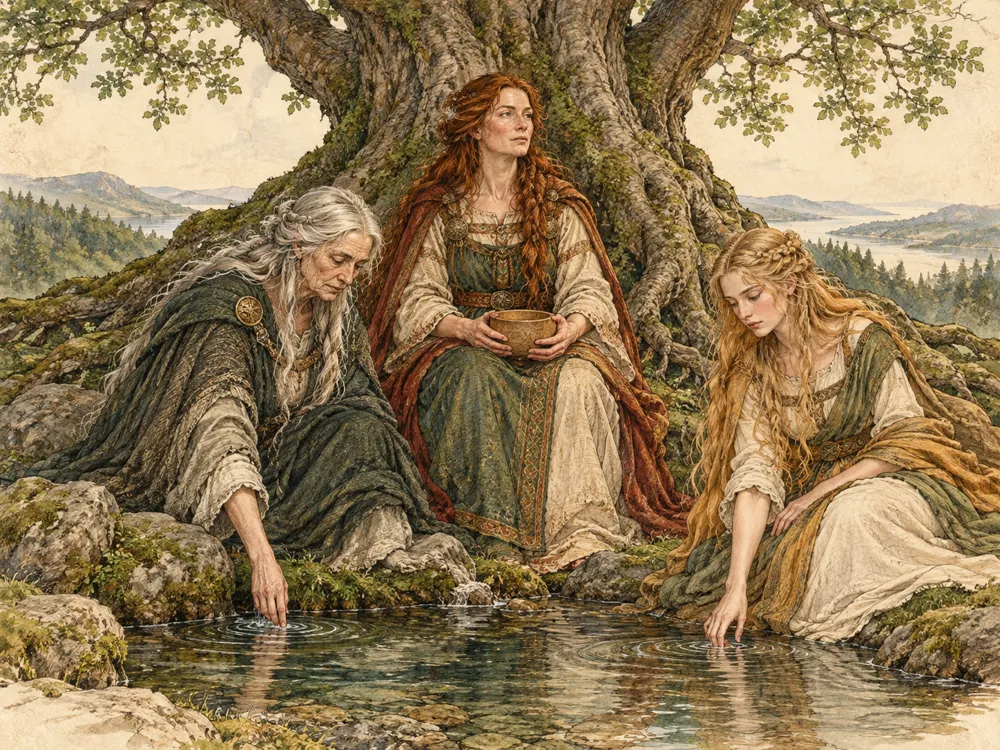
Three named figures, a wider category
Völuspá places three knowledgeable women by the tree and associates them with laying down laws and choosing lives. Snorri names Urd, Verdandi and Skuld beside the well under Yggdrasil. He then explicitly says that there are additional norns who attend births, with different kinds of ancestry. A mythology guide should not reduce that broader category to exactly three beings in every context.
Care for the tree and unequal lives
Gylfaginning describes the Norns tending Yggdrasil with water and material from the well. It also asks why lives are unequal if norns allot them, and answers through distinctions between benevolent and harmful norns. This is one surviving explanation, not a complete philosophical system. The familiar translation of the three names as Past, Present and Future is a helpful shorthand, but can suggest a tidier division of duties than the narratives actually provide.
They arrive at Helgi’s birth
Helgakviða Hundingsbana I gives the Norns a vivid action outside the familiar scene beneath Yggdrasil. At night, when Helgi is born, they enter the dwelling and shape his future. They decree exceptional fame and princely greatness, stretching golden threads across a vast space. The ends reach east and west, while another strand is cast northward. Fate becomes something laid out physically, with the newborn’s future territory and renown imagined through extended cords. The poem’s imagery is particular to this heroic birth; it should not be turned into a universal rule that every Norn always works at a loom.
A harmful fate speaks through Andvari
Reginsmál offers a sharply different reference. When Loki catches Andvari in fish form and demands to know who he is, the dwarf says that an evil Norn condemned him to live in water. Here the Norn is not shown arriving at a birth or tending the world-tree. She explains an unwanted condition that shapes another character’s life. Set beside Helgi’s glorious beginning, the brief statement shows why the category cannot be reduced to three kindly guardians. The poems use Norns to make both advantage and constraint intelligible, while leaving the identity and full story of many individual fate-givers unstated.
Read behind the retelling
Sources & limits
There are more norns than the famous three. A strict past/present/future division is not an explicit job description in the narrative.
- Völuspá, stanzas 19–20
- Gylfaginning, chapters 15–16
- Helgakviða Hundingsbana I, stanzas 1–4
- Reginsmál, stanza 2
Retold in contemporary English. Dialogue is summarized, not presented as a translation. How to read our sources and versions.
Follow the thread
Stories & related reading: The Norns
2 min read
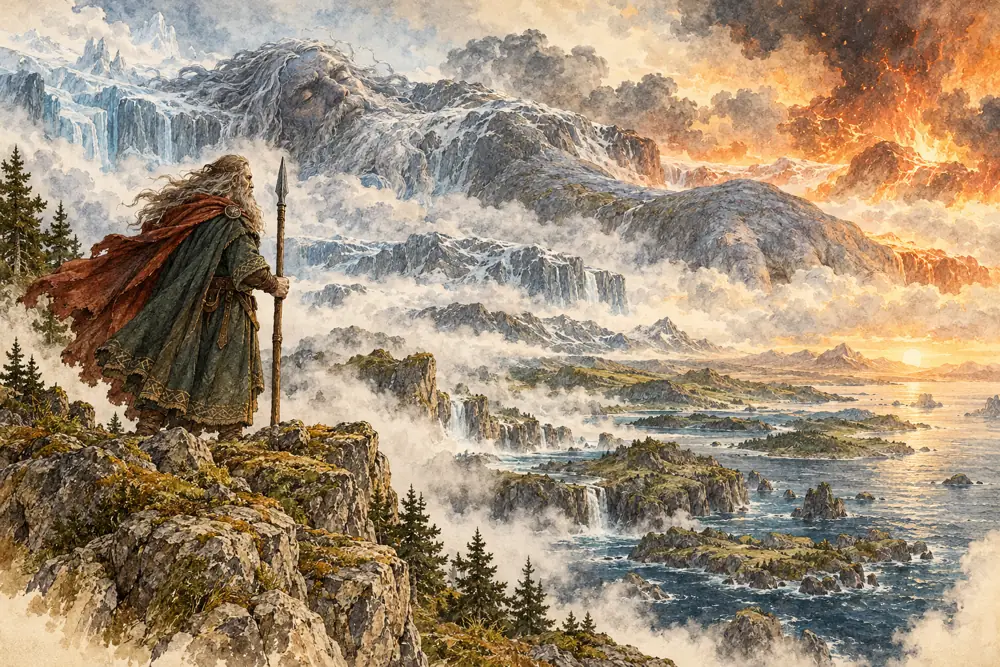
How the world was made
Several Eddic passages explain beginnings. Snorri combines them into an account in which the world is fashioned from Ymir’s body.
Read the story ↗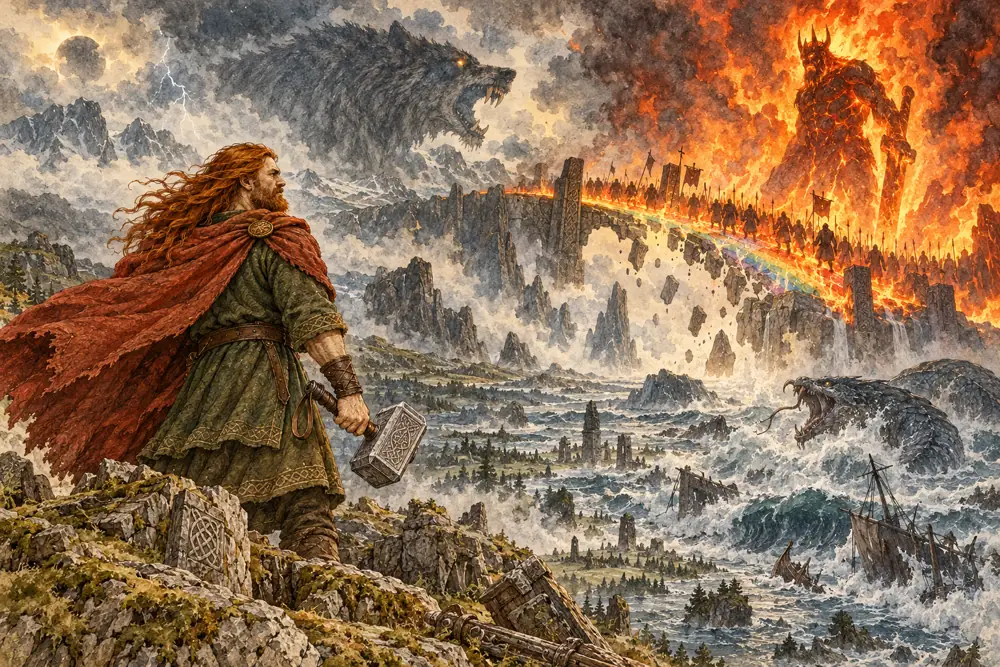
3 min read
Ragnarok: the breaking of the world
The end approaches through broken human bonds and broken cosmic restraints. The surviving texts also imagine a world that rises after the disaster.
Read the story ↗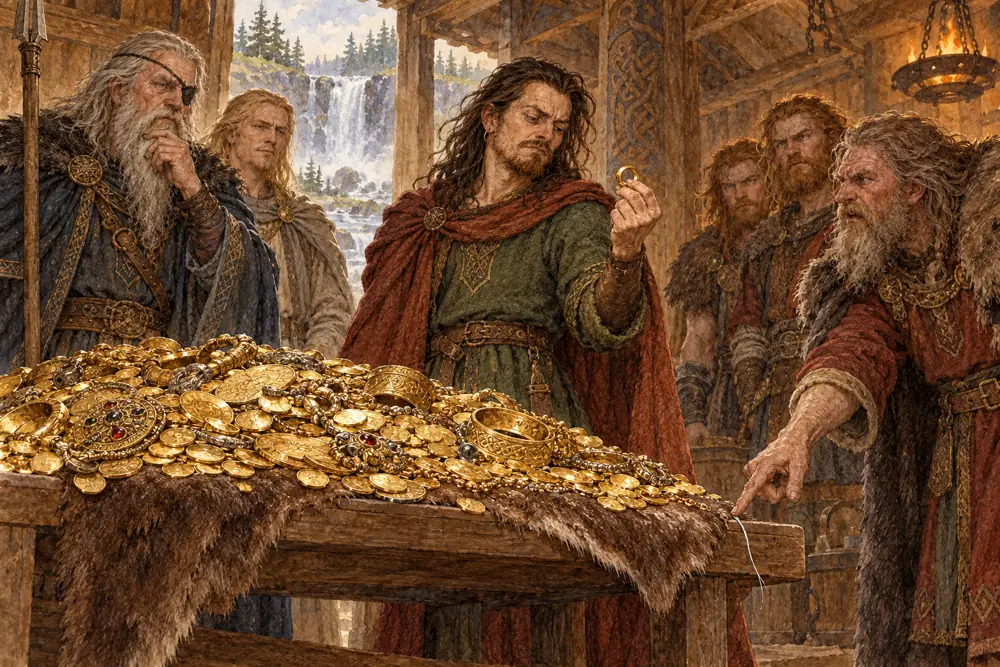
2 min read
Loki and the otter’s ransom
An apparently easy catch traps three gods in a deadly compensation claim and sets a heroic legend in motion.
Read the story ↗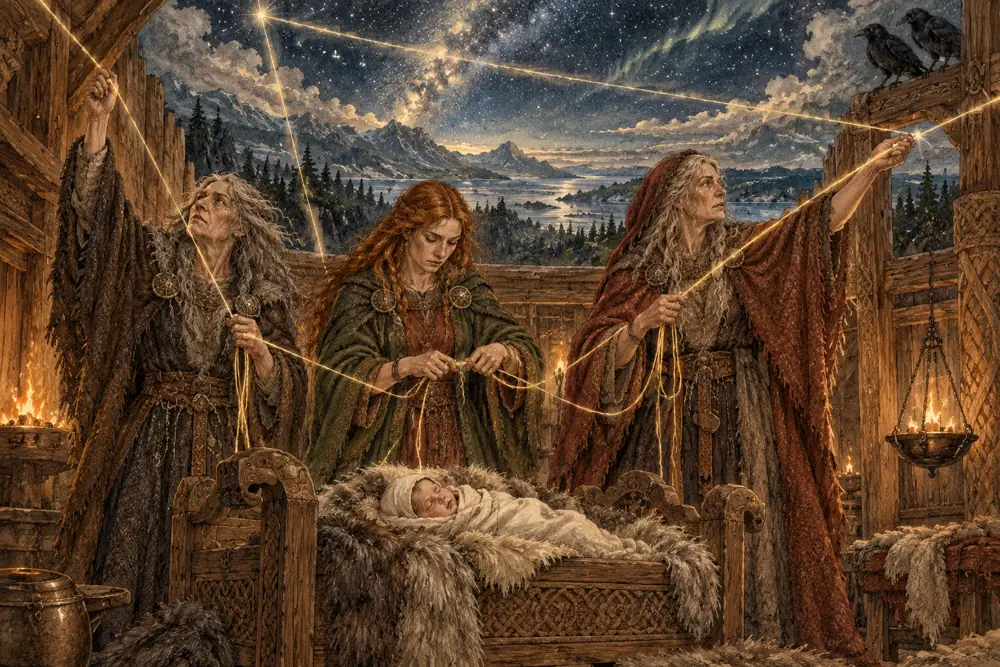
2 min read
The Norns at Helgi’s birth
The First Lay of Helgi Hundingsbane opens with the Norns shaping a child’s future. Its brilliant promises of greatness are accompanied by ravens already anticipating the violence of his career.
Read the story ↗