Horned helmets, permanently furious warriors and a fleet of flaming funerals: the familiar Viking picture has collected some spectacular extras. These ten questions separate evidence from assumptions, with room for a smile. They are selected misconceptions, not a measured ranking of what people believe. The answers concern different places and centuries; a find from one burial cannot describe everyone. Follow the sources to explore further.
Ten familiar misconceptions, not a statistical ranking. Here, “myth” means a popular misconception; for stories about the gods, visit Gods & Mythology.
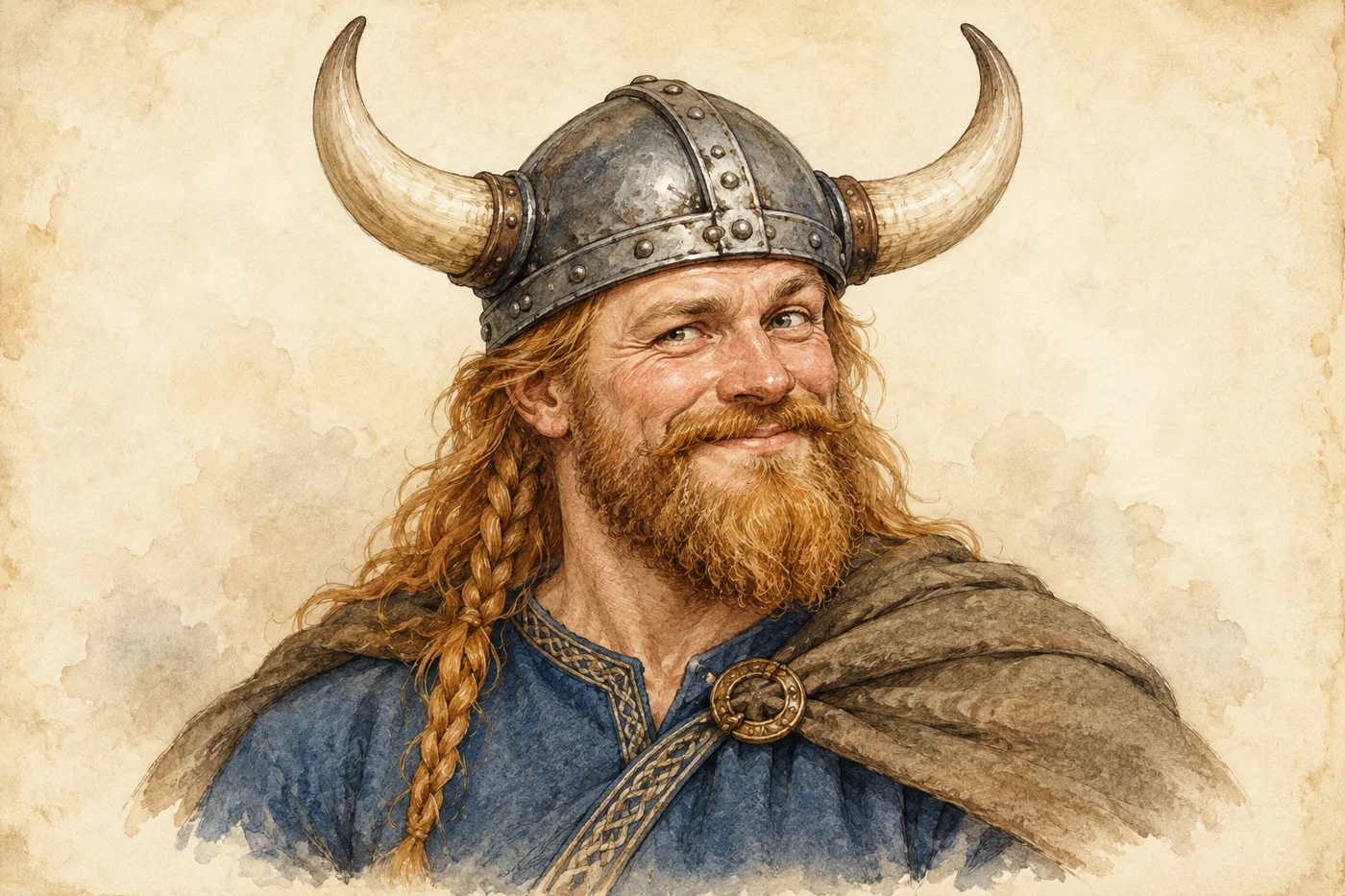
A playful modern illustration of the horned-helmet stereotype, not a reconstruction of Viking battle equipment.
Watch a short introduction
Horns? Think again.
Meet a familiar screen Viking, then question the image. The horned helmet is a playful reference to a misconception, not historical battle equipment.
Modern illustrations with quiet flute music. The film starts only when you press play.
Myth 1 of 10
Where did Vikings put their helmet horns when they went indoors?
The doorway was probably safe. The costume department is another matter.
The short answer: Ordinary Viking battle helmets were not horned.
The Gjermundbu helmet has no horns, and excavated fighting equipment does not establish horned helmets as normal Viking battle dress. Horned figures do appear in some imagery, but an image can depict ceremony, myth or a special role rather than everyday equipment.
The sensible correction is specific: the familiar horned warrior uniform is misleading. It does not require pretending that horned headgear never existed anywhere in northern Europe, or that every image has an agreed interpretation. Context matters more than a memorable silhouette.
A comb is an awkward object to explain if nobody cared about their hair.
The short answer: Grooming equipment says otherwise.
Combs, tweezers and ear scoops show that personal grooming belonged in Viking-Age life. These objects are stronger evidence than a blanket claim that everyone was filthy—or that everyone smelled delightful. Habits differed, and archaeology does not preserve a complete washing timetable.
Written observers also judged people through their own expectations. Ibn Fadlan disliked the shared washing water he described among the Rus. His account is valuable, but one encounter cannot stand for every household across Scandinavia and several centuries.
Was everyone a full-time raider with excellent holiday benefits?
Someone still had to feed the people who kept sailing away.
The short answer: Raiding was part of a much larger society.
Farming, fishing, craft production and trade supported Viking-Age communities. At Hedeby and Ribe, streets, workshops and exchange networks reveal activities that cannot be reduced to attacking monasteries. The same society could contain merchants, enslaved workers, powerful landholders and people who joined expeditions.
This wider picture does not excuse the violence. Raiding and enslavement caused real suffering. The correction is to include that violence within a broader economy, rather than replacing every northern person with either a villain carrying an axe or an entirely peaceful shopkeeper.
Did the longship have a blond-hair entry requirement?
There was no evidence-based hair inspection at the gangplank.
The short answer: No single hair colour defined the Viking world.
A large ancient-DNA study published in 2020 found considerable variation among people from Viking-Age contexts, including evidence for brown hair. Movement and ancestry were more complicated than the image of identical blond crews suggests. Scandinavian populations also differed from one another.
DNA still needs careful handling. Genetic ancestry is not the same as cultural identity, occupation or a person’s own sense of belonging. A burial style cannot provide a modern nationality certificate, and a present-day ancestry result cannot tell you that a particular ancestor went raiding.
The sheep had a substantial part in the wardrobe budget.
The short answer: Woven clothing deserves the leading role.
Wool and linen were important clothing materials. Surviving fragments, fasteners and images help reconstruct tunics, dresses, trousers and cloaks, although many details remain uncertain. Wealth could appear through fine fabrics, jewellery, imported silk and decorative work rather than one universal rugged outfit.
Leather shoes and fur certainly belonged in the material world. The mistake is turning them into the standard head-to-toe costume for everyone. Region, work, status and date affected dress, and modern reconstructions fill gaps that should remain visible in their captions.
Did every woman keep a shield beside the breakfast bowl?
One remarkable grave is not an army attendance sheet.
The short answer: Women’s lives cannot be reduced to one warrior stereotype.
Birka grave Bj.581 contained an elaborate martial assemblage, and genetic analysis identified the buried individual as biologically female. The researchers’ reassessment argues for interpreting this person as a warrior. That matters: assumptions about gender should not decide the answer before the evidence is examined.
It does not establish how frequently women fought, nor give us a complete biography. Women’s work, authority and experiences varied with freedom, wealth and family circumstances. Legendary shieldmaidens, archaeological burials and ordinary households are related subjects, but they are not interchangeable evidence.
Was an enemy’s skull the standard Viking coffee mug?
The cup-maker’s street was not a dental department.
The short answer: Skull drinking is a famous misunderstanding, not an ordinary table setting.
The skull-cup story is associated with a mistaken reading of a poetic expression in Krákumál. The image refers to drinking horns; an early modern Latin translation instead helped circulate the idea of drinking from slain enemies’ skulls. Poetry can travel badly when its imagery is misunderstood.
Archaeological drinking vessels offer a less sensational picture. Finds include wooden cups, glass and metal vessels, alongside fittings associated with horns. Coppergate in York preserves evidence of wooden vessel manufacture. The exciting translation is not a substitute for examining what people actually made and used.
Did every funeral require a ship and a flaming arrow?
The cinema version has a suspiciously generous boat budget.
The short answer: Burial customs were much more varied.
Viking-Age communities used different forms of burial and cremation. Some impressive graves incorporated boats or ships, while others used chambers or much simpler arrangements. The Danish chamber-graves alone show that a spectacular floating fire was not the universal route out of life.
A ship burial, a cremation involving a vessel and a burning boat drifting offshore are different claims. Do not merge them because they make an effective scene. Funeral choices reflected local traditions and circumstances, and surviving remains cannot recover every action or belief of the mourners.
If I write my shopping list in runes, does it become a spell?
The alphabet does not automatically enchant the groceries.
The short answer: Runes were writing, although some inscriptions had magical purposes.
The sixteen-character Younger Futhark was the principal Viking-Age rune-row in Scandinavia. Runes represented language; an individual sign could serve more than one sound. They travelled with people beyond the region and were not a separate mysterious language understood only by ritual specialists.
An inscription’s purpose has to be read from its wording and setting. Memorial texts can name relatives, praise someone or record an act of remembrance. Some runic texts involve protection or other ritual concerns, but magical use does not make every inscription a spell.
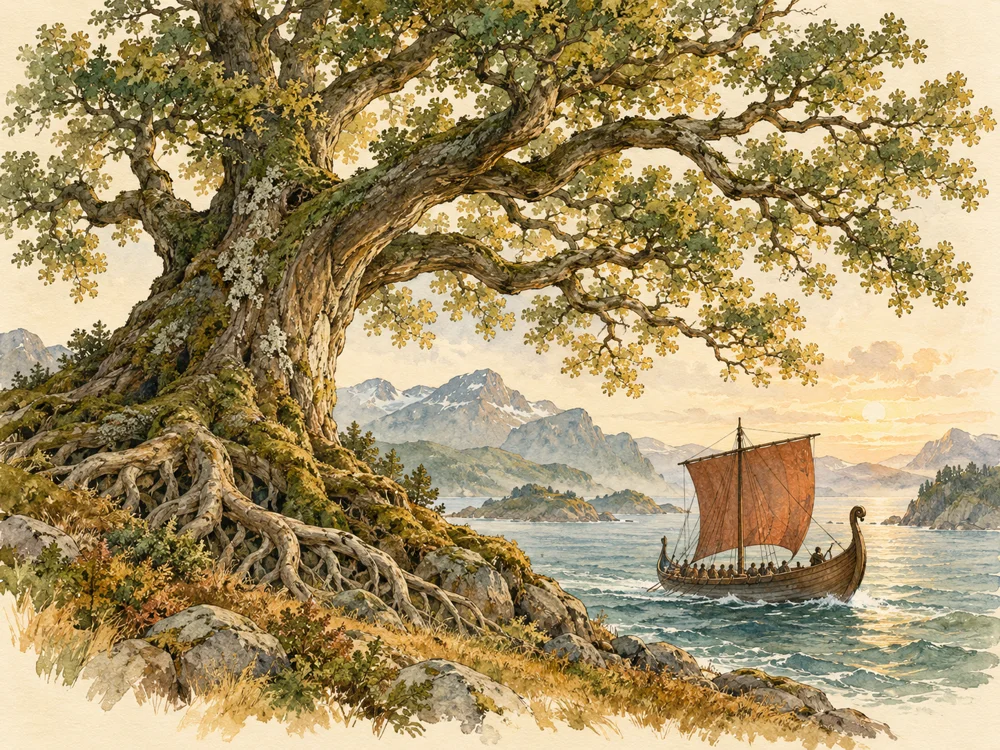
An unfamiliar coastline is not an unoccupied coastline.
The short answer: They reached a continent with a long Indigenous history.
L’Anse aux Meadows provides archaeological evidence for a Norse presence in Newfoundland around the year 1000. That is a remarkable Atlantic journey. It is not evidence that North America had been waiting without inhabitants for Europeans to arrive and give it a history.
Parks Canada documents Indigenous use of the site thousands of years before the Norse, as well as encounters elsewhere in the wider region. Recognising the Norse achievement and recognising Indigenous presence are entirely compatible. The useful questions concern contact, movement and evidence—not ownership of a continent through a discovery slogan.
Ask where the claim comes from: a dated object, a contemporary account, a medieval saga or a modern screenwriter? Each can tell us something, but they cannot all answer the same questions. “We do not know” is often a better answer than a very confident costume.
Sources reviewed October 17, 2026. The jokes are modern; the distinctions between evidence and speculation matter.