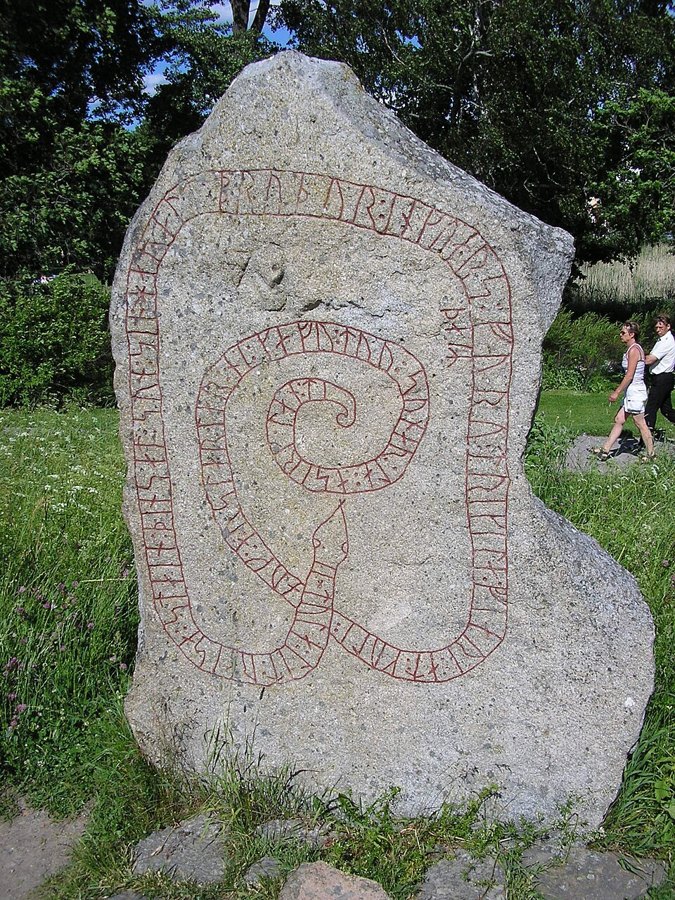
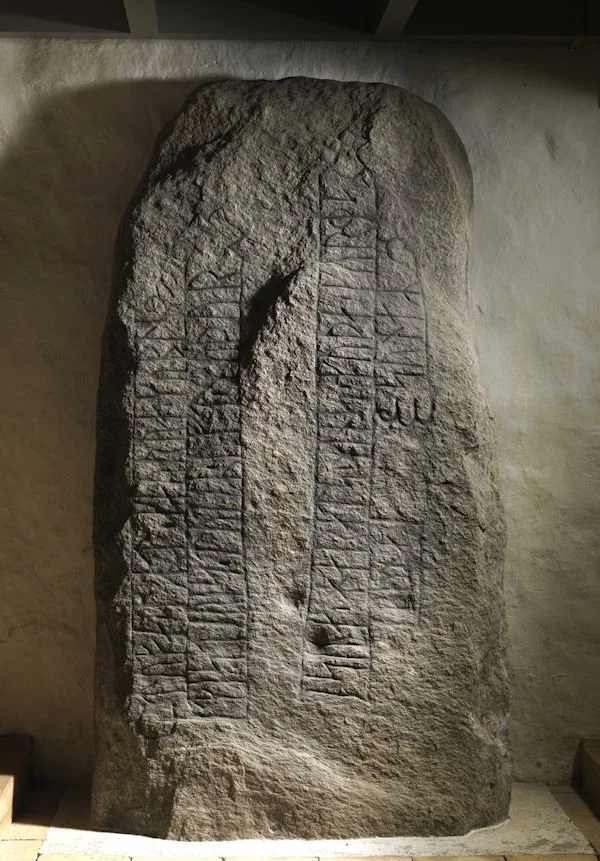
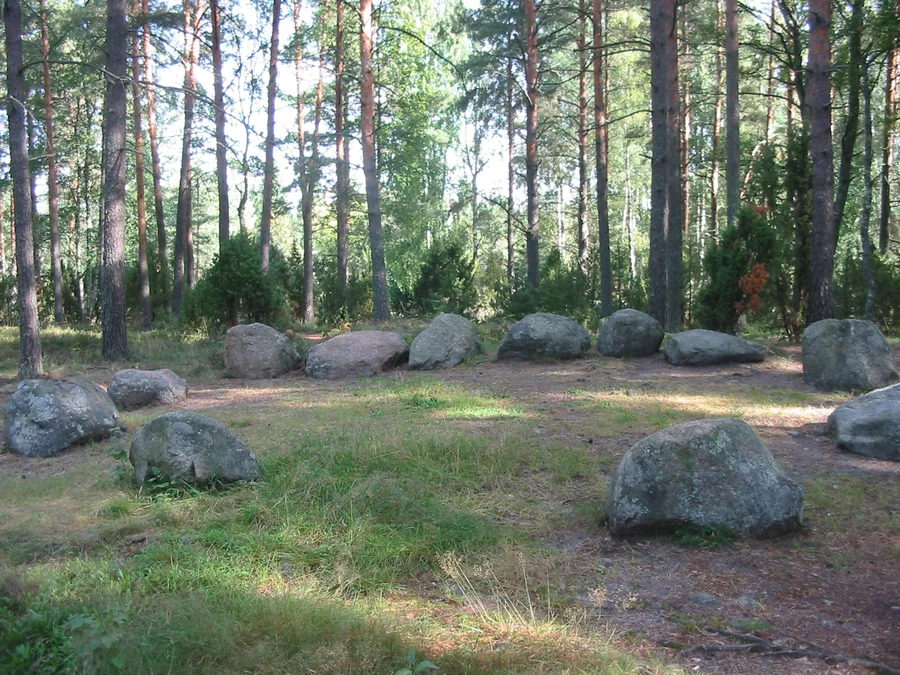
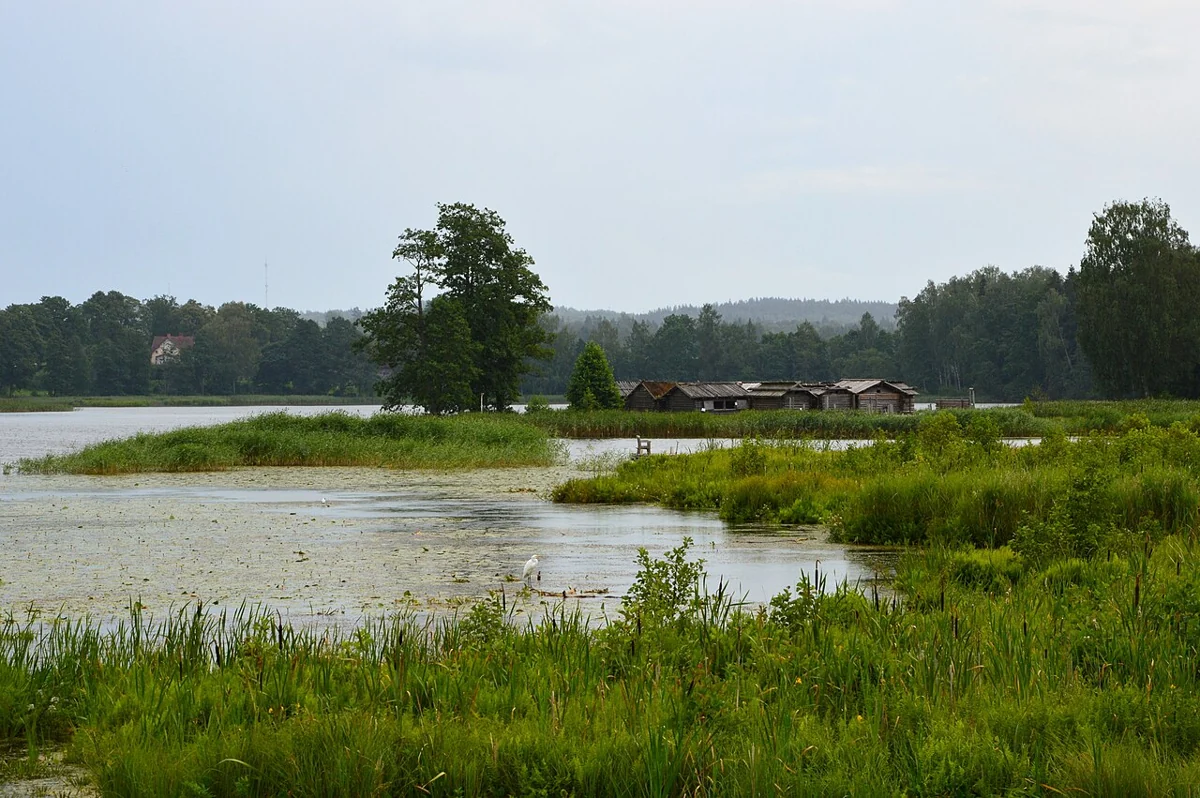
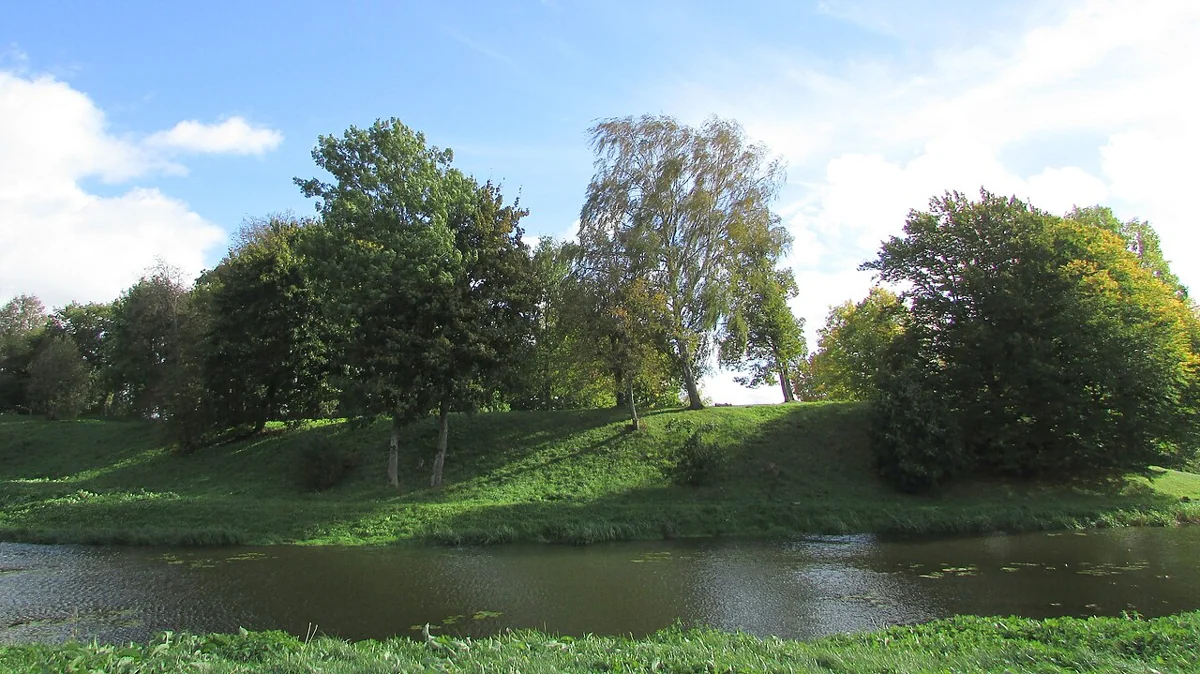
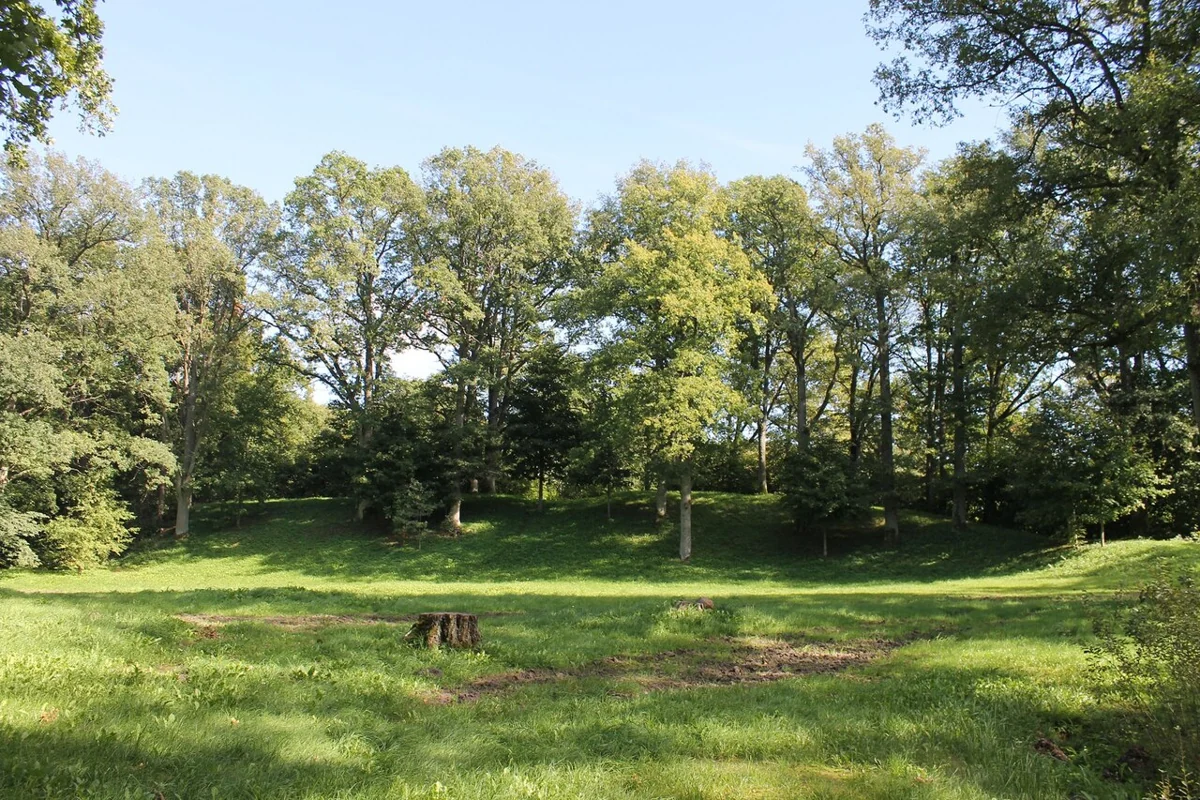
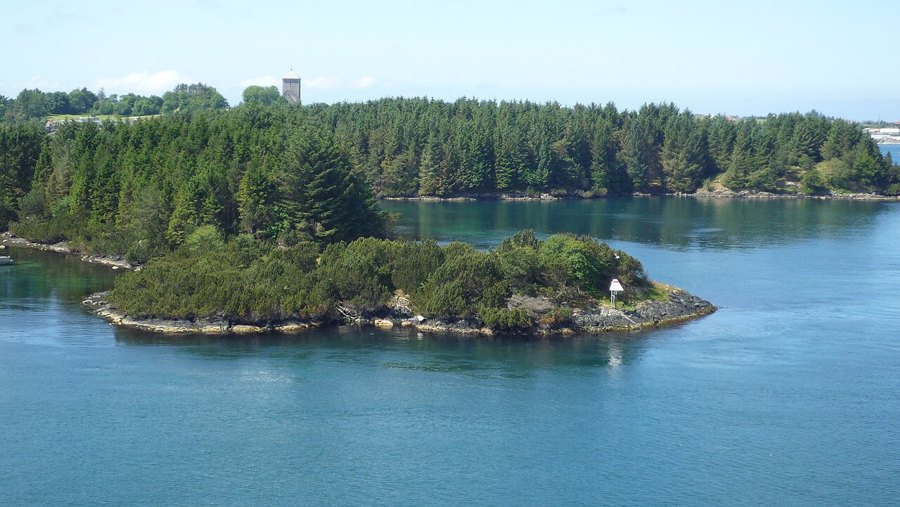
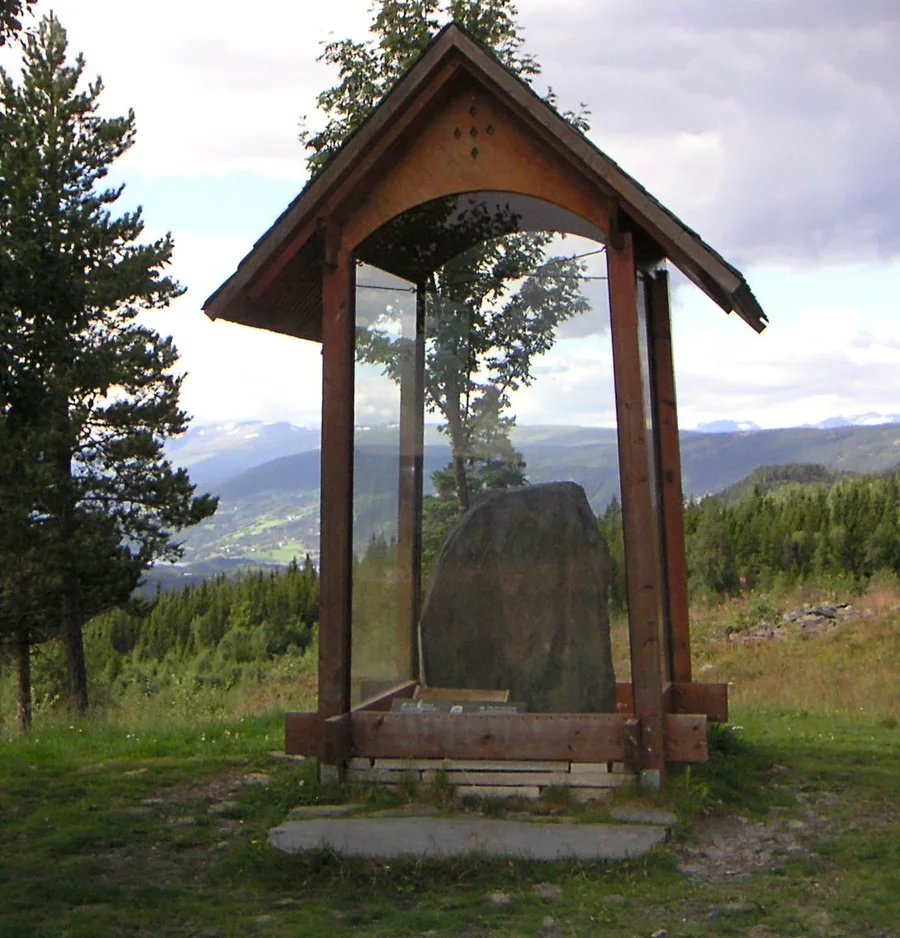
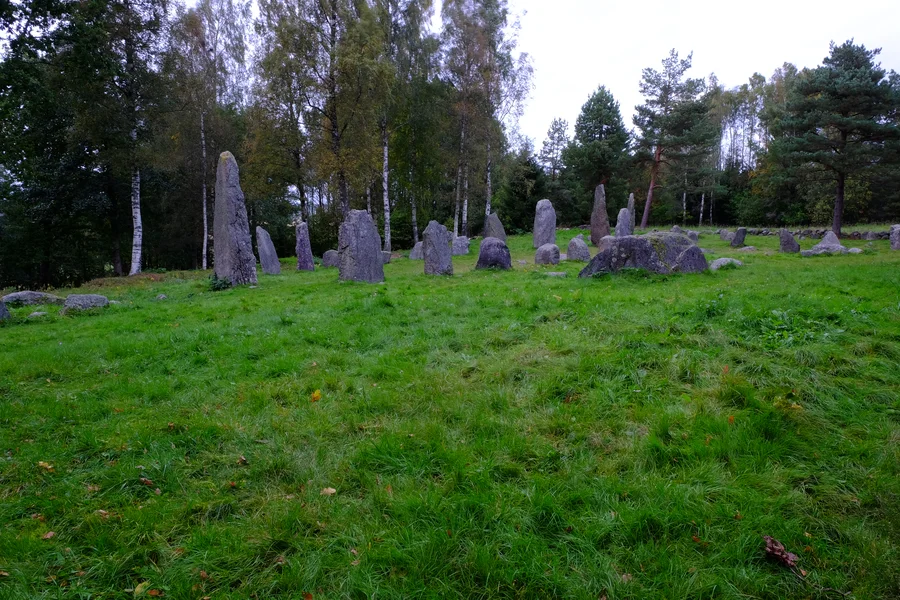
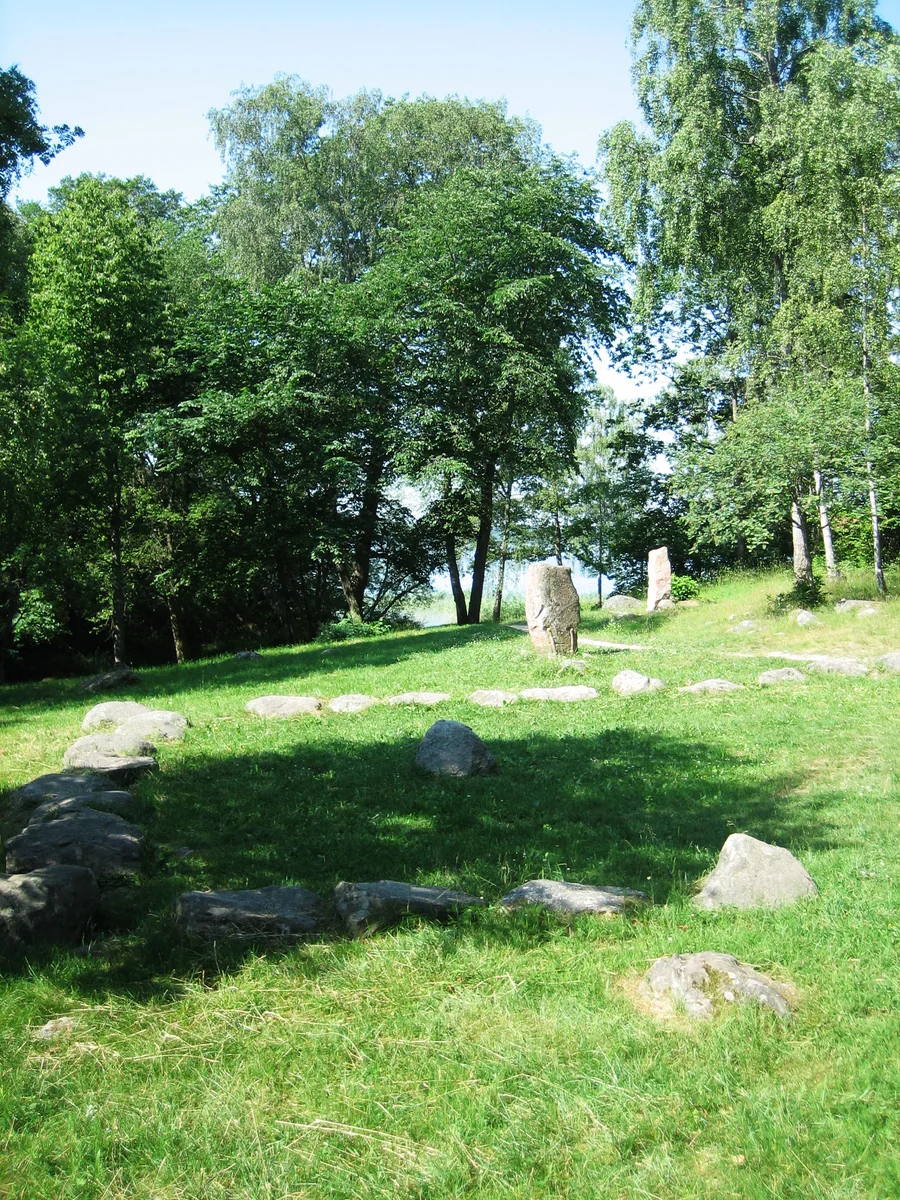
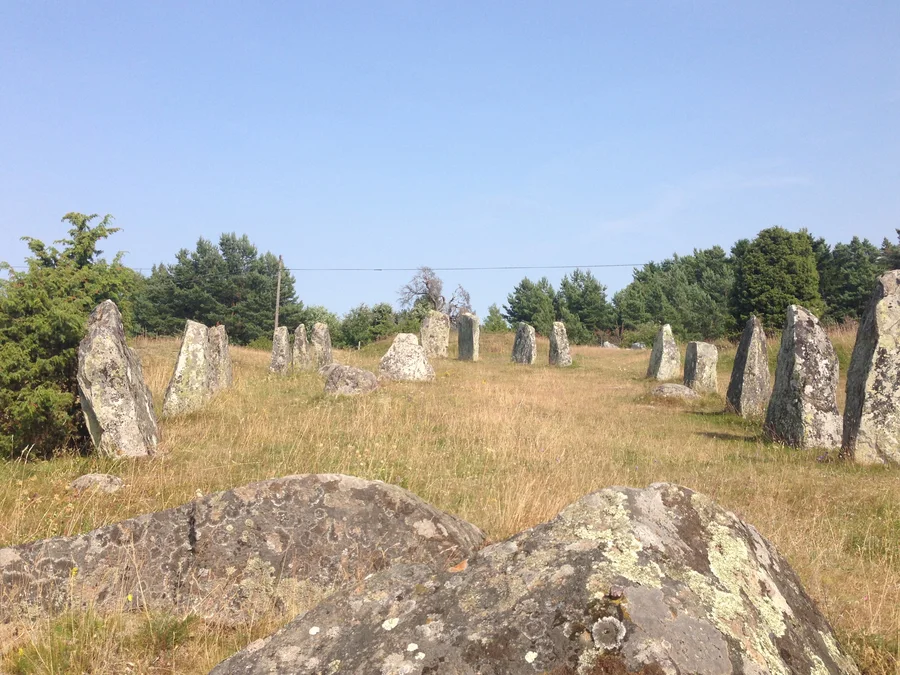
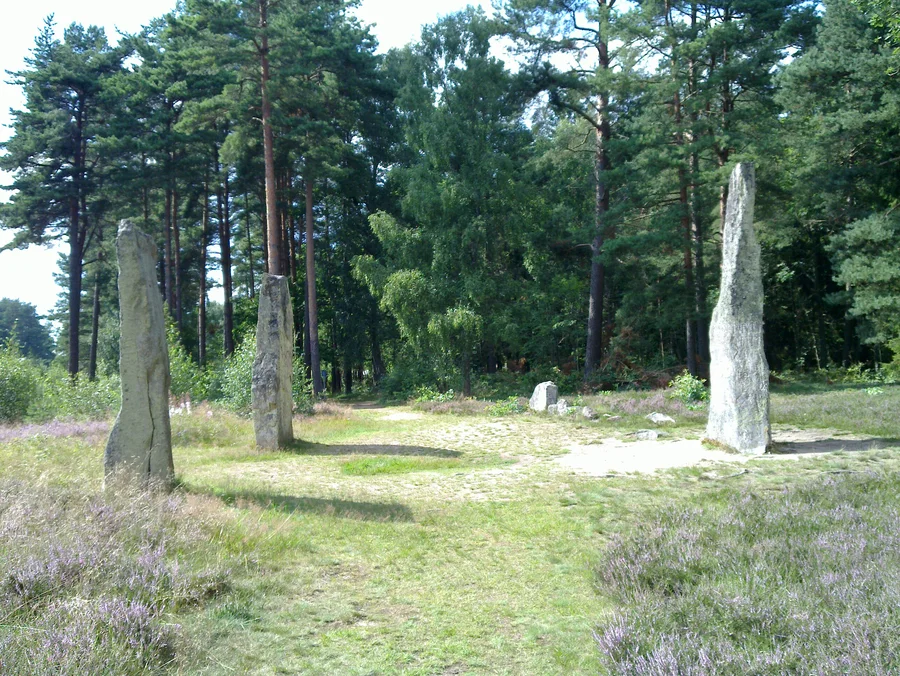
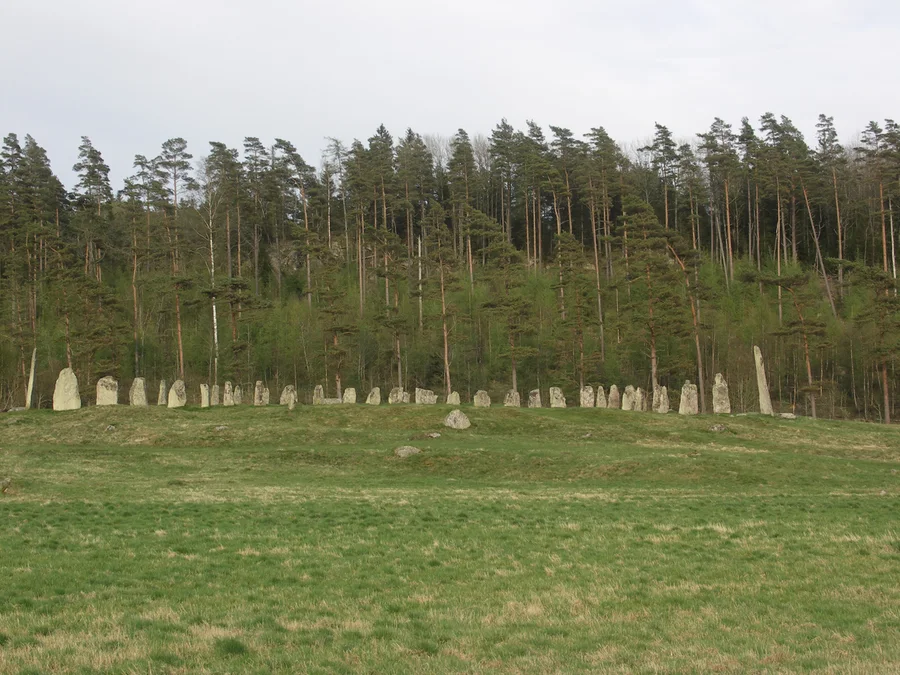
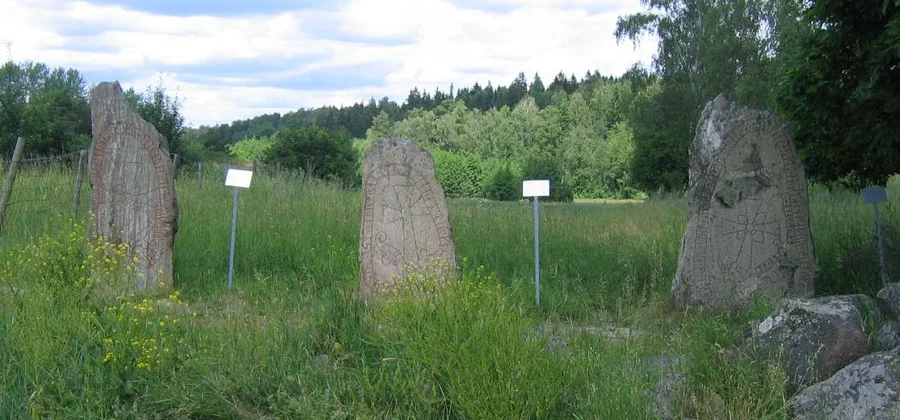
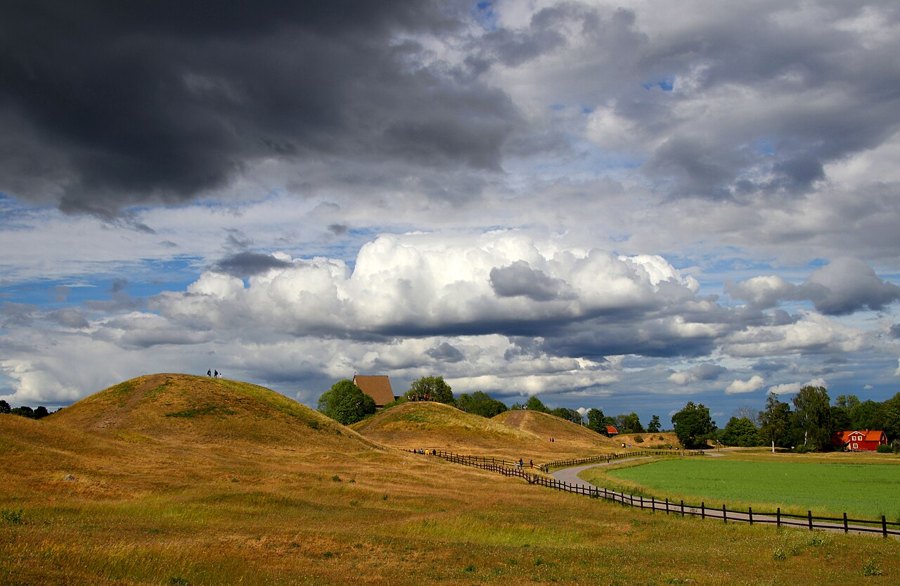
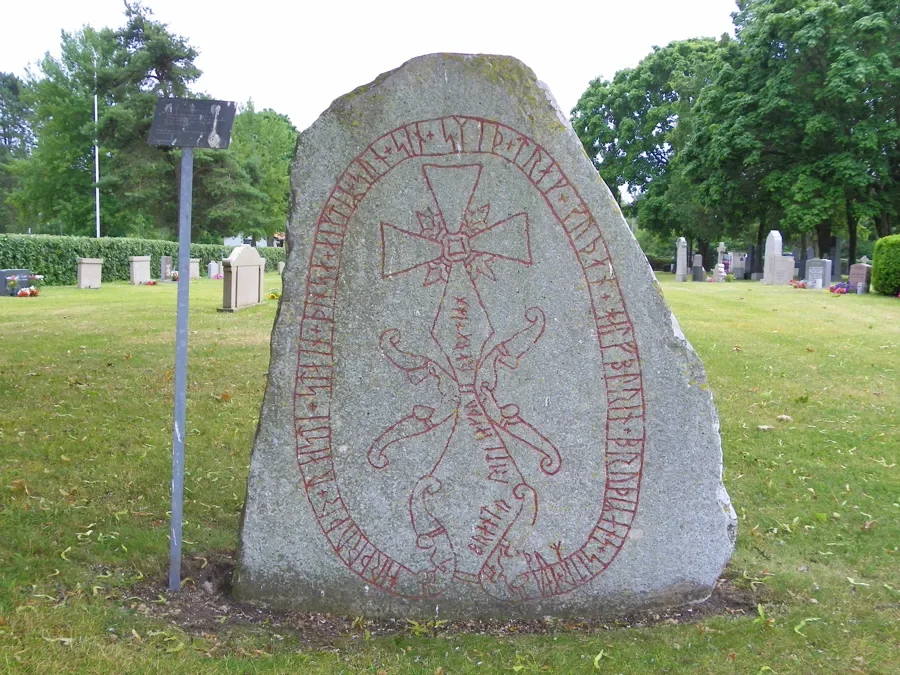
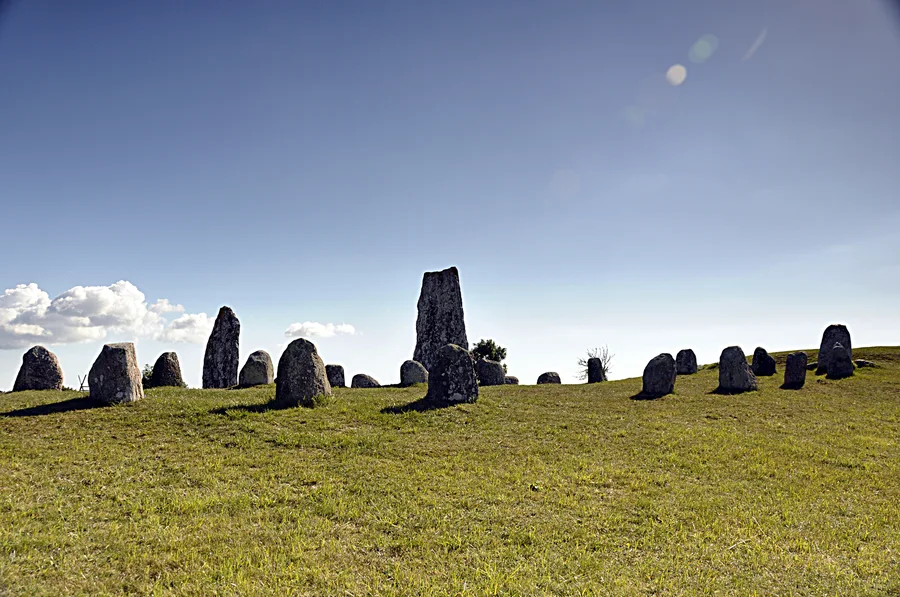
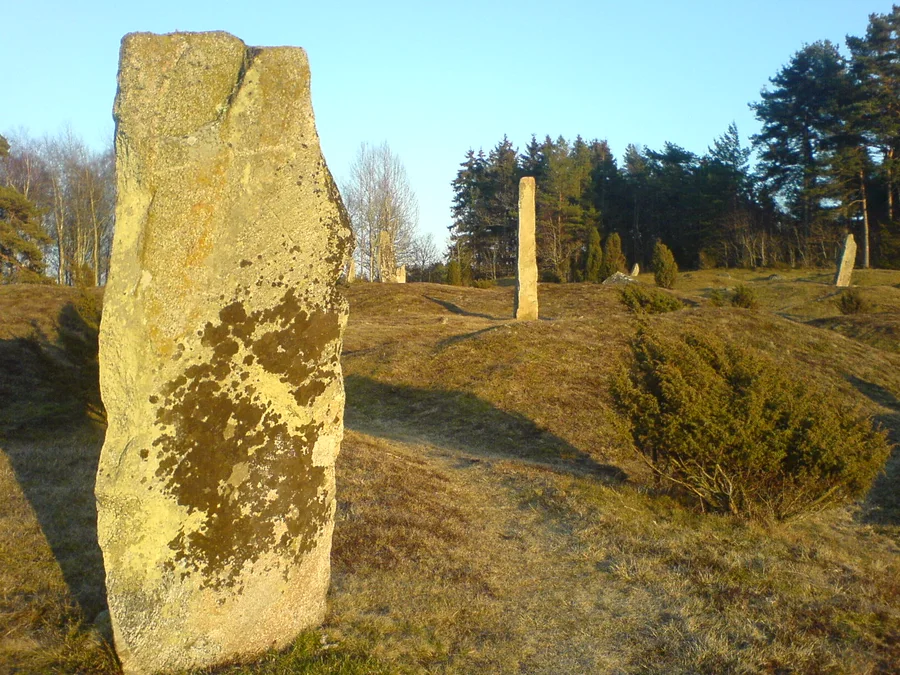
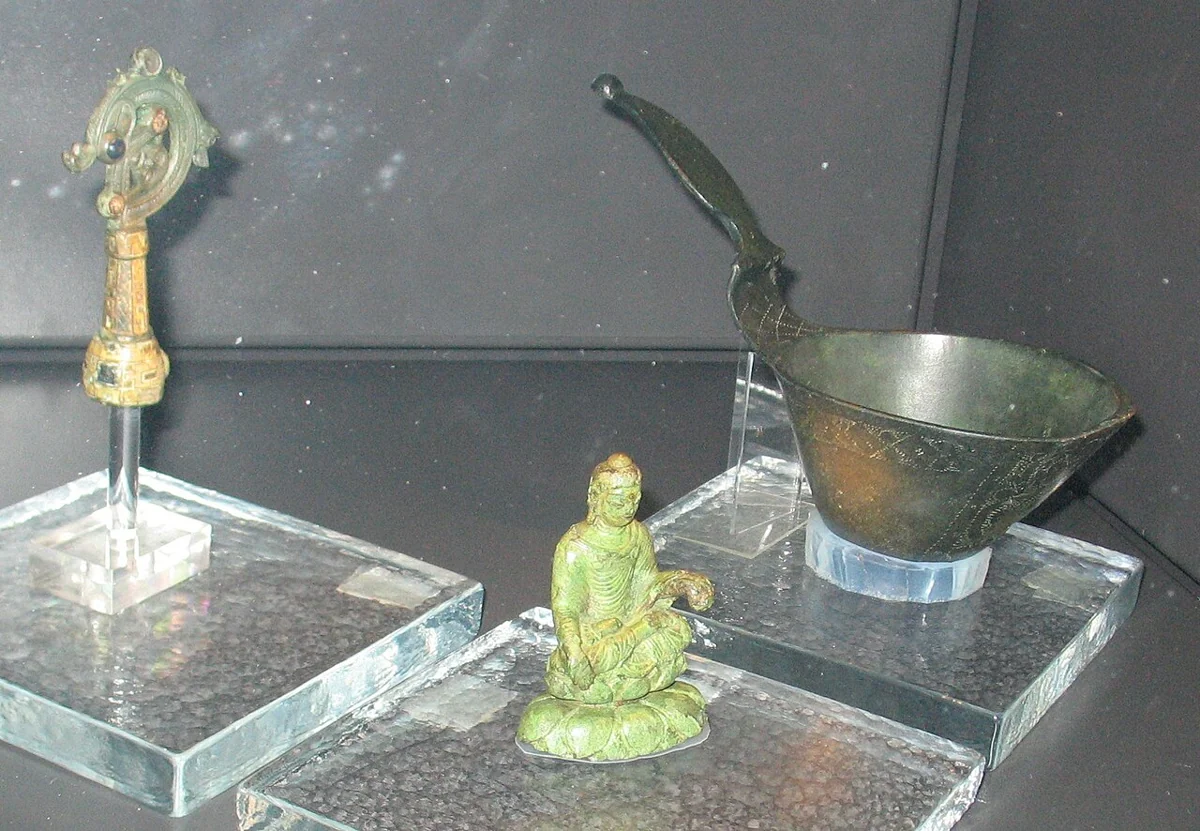
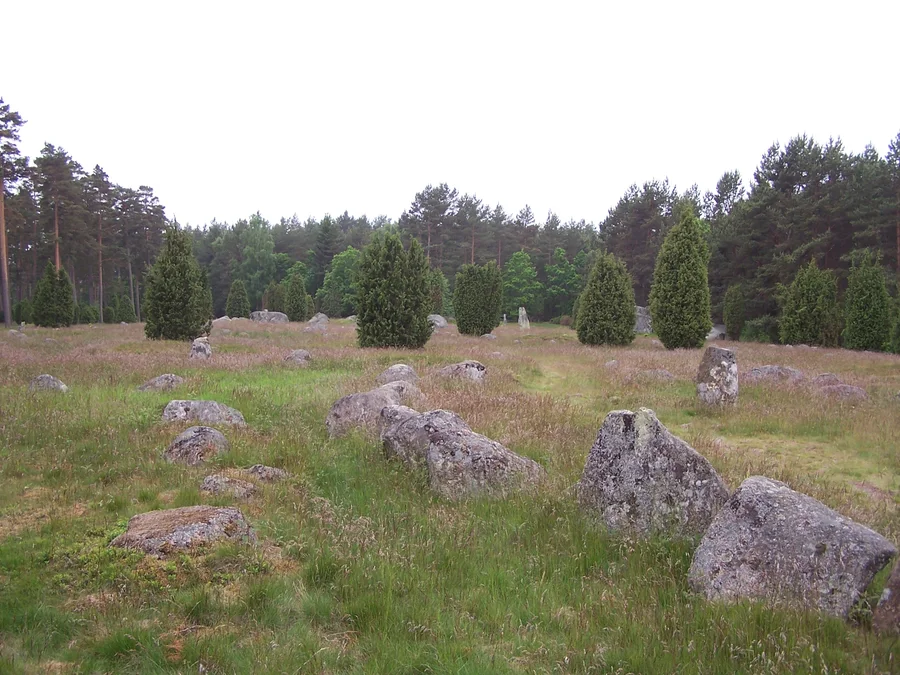
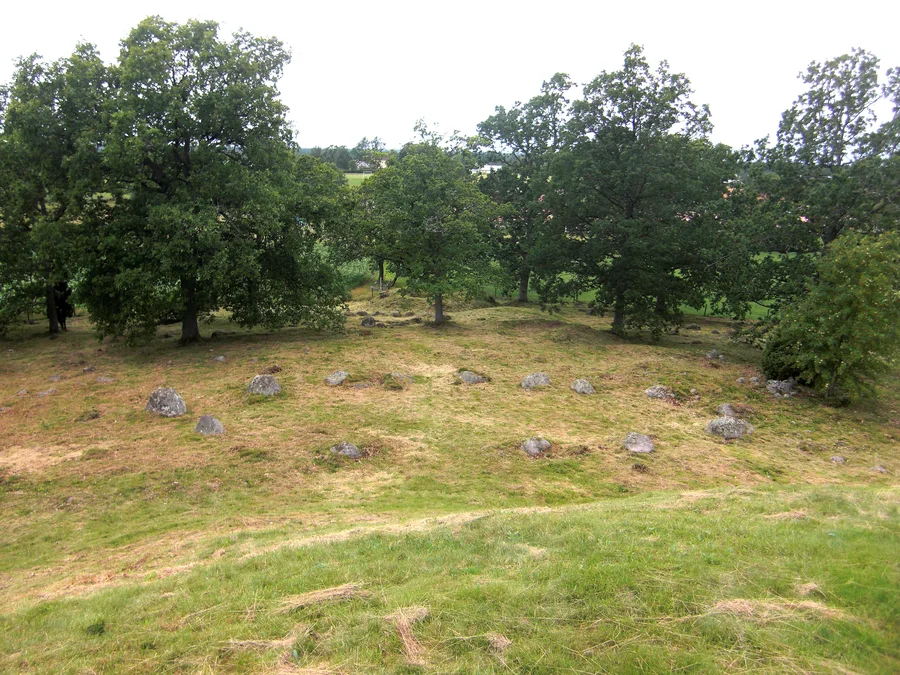
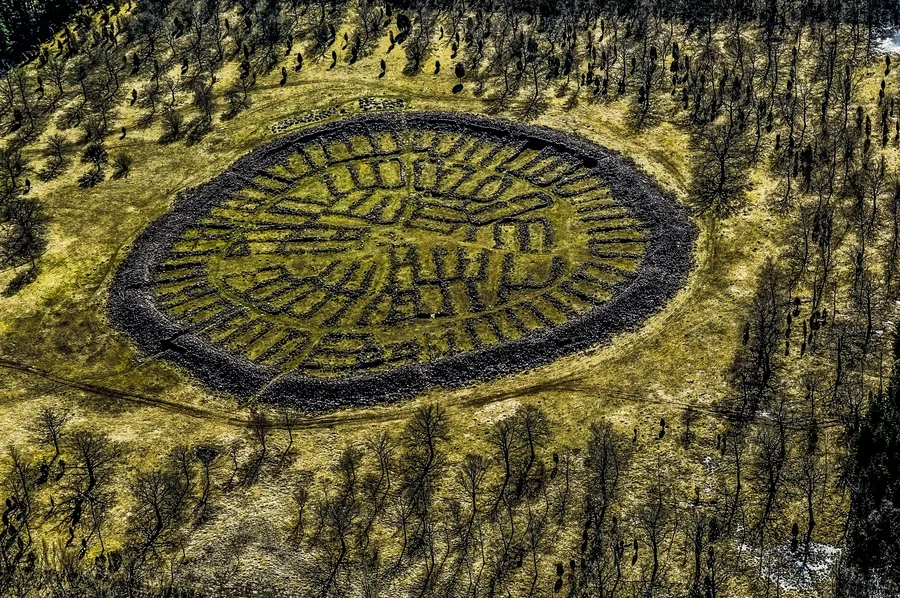
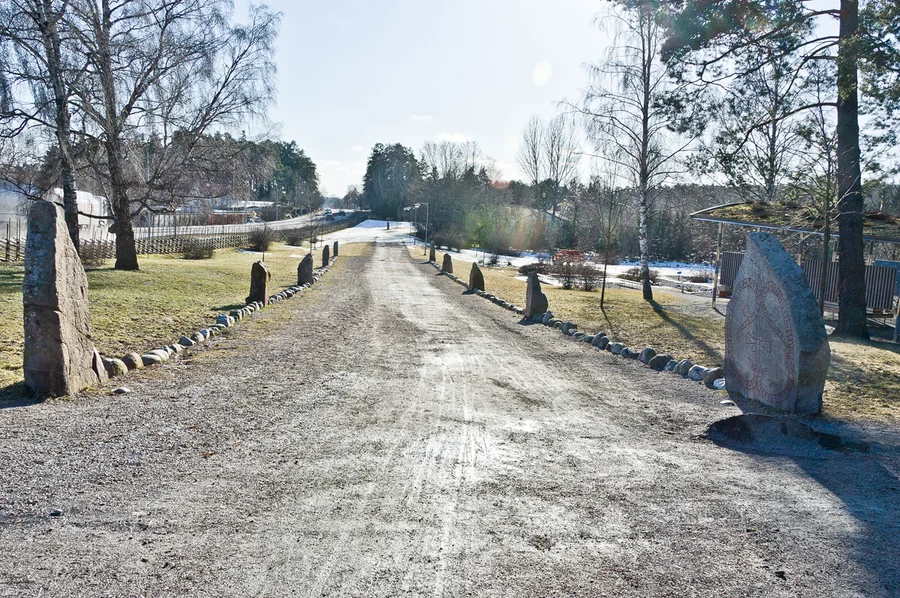
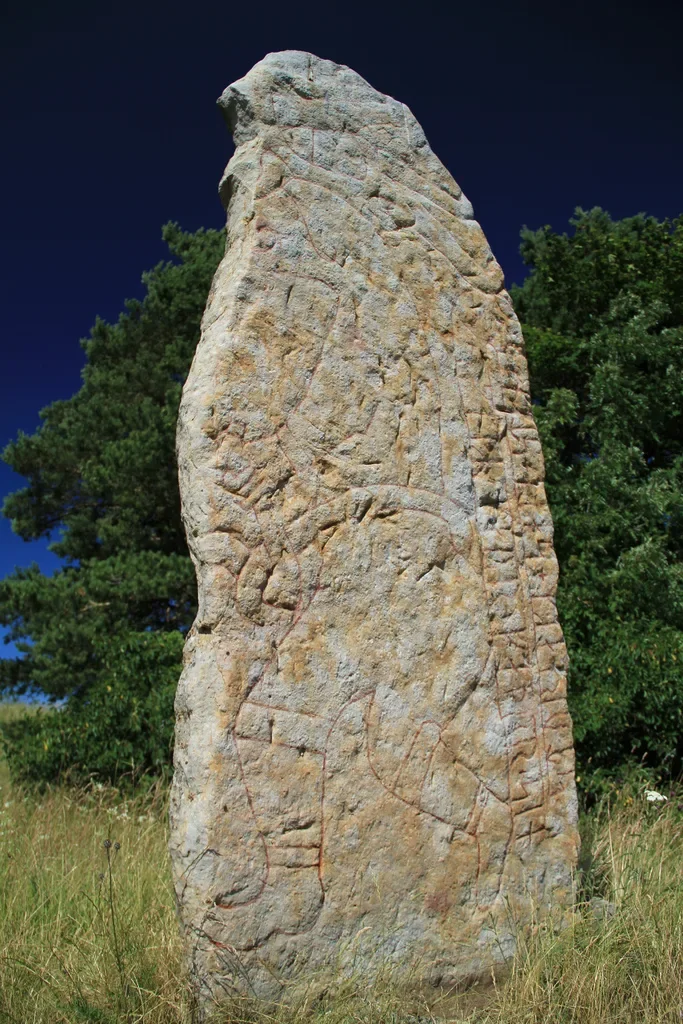
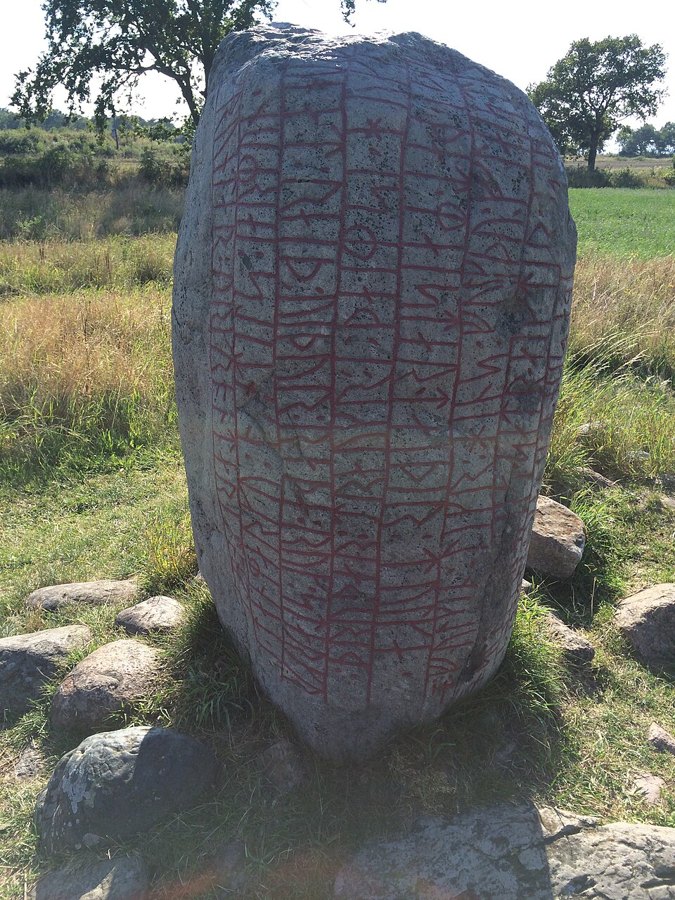
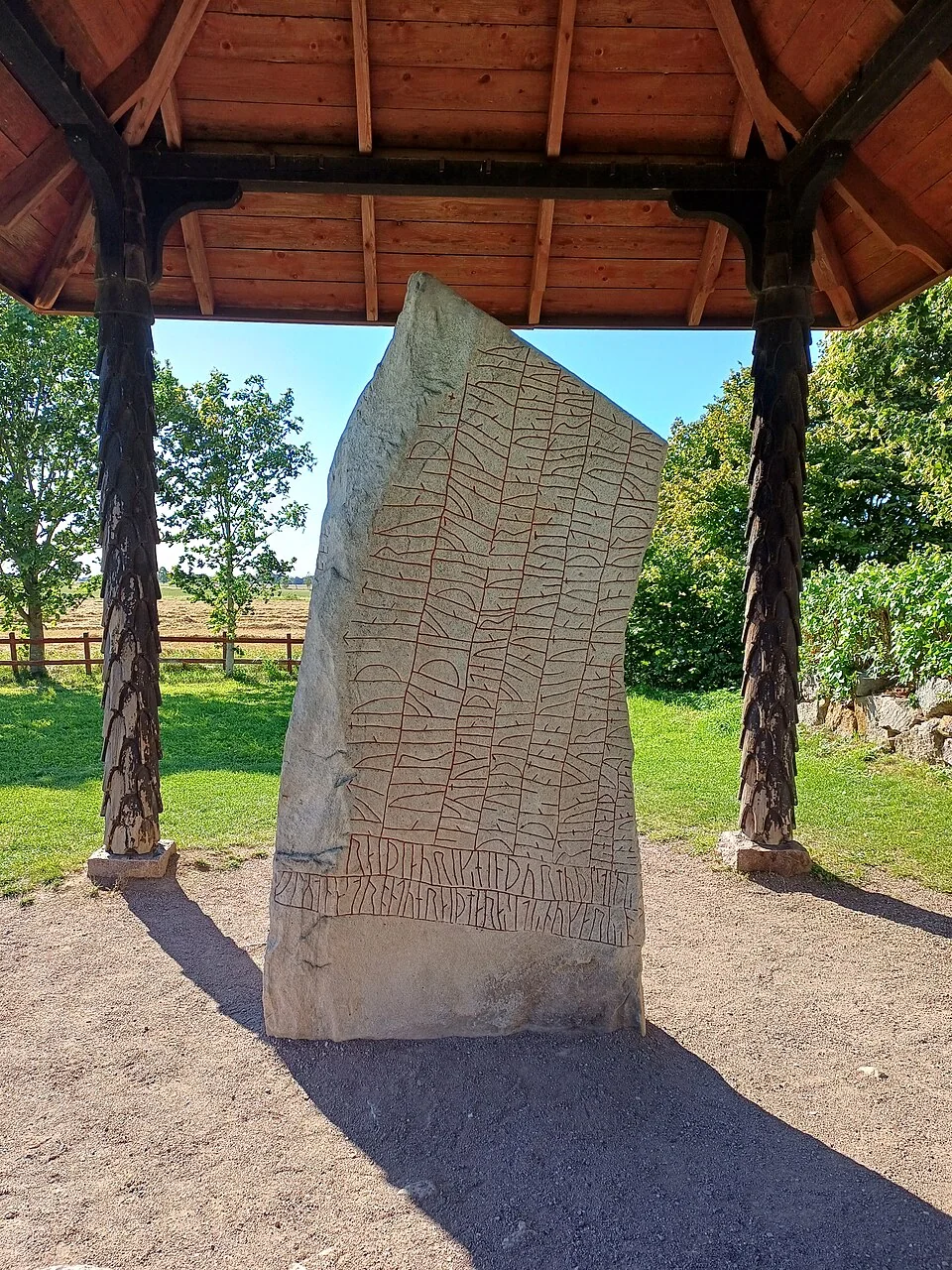
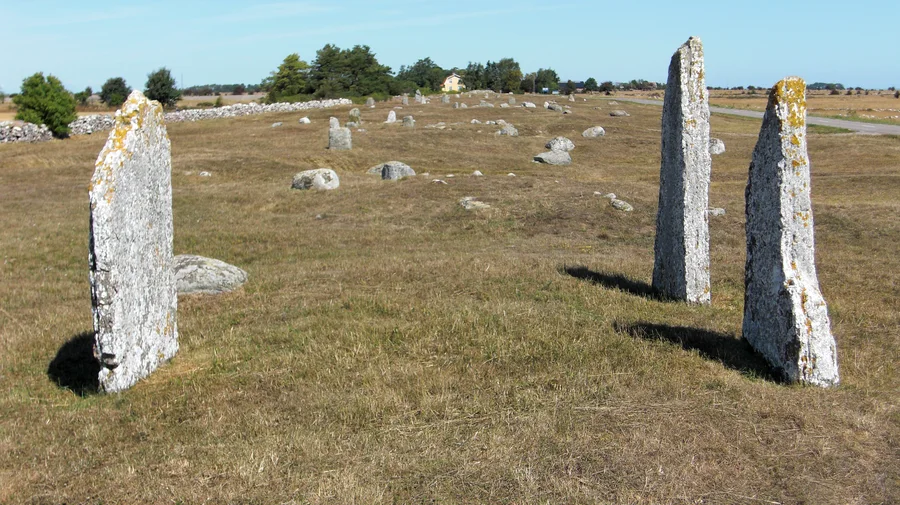
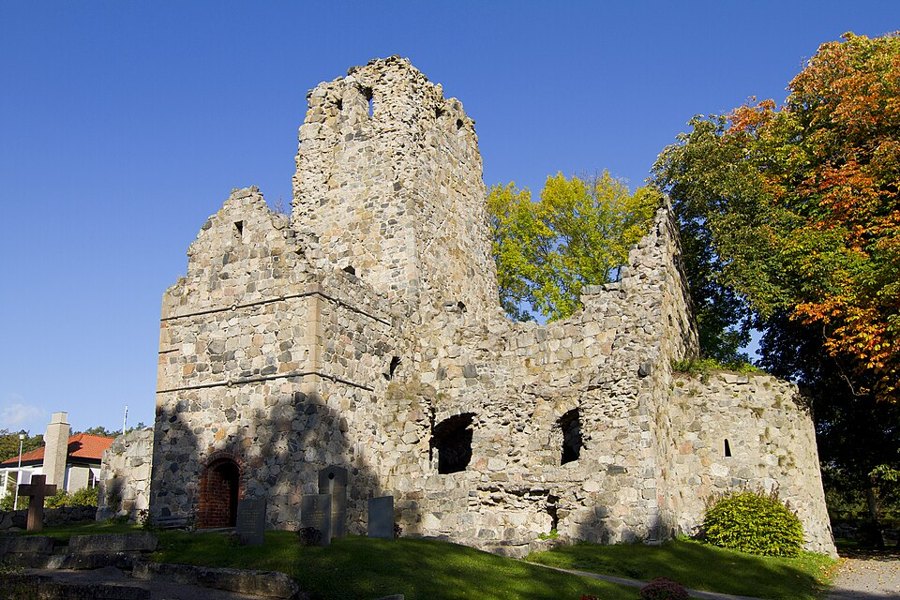
The Gripsholm runestone, associated with the commemoration of distant journeys. Its inscription preserves an act of remembrance rather than a complete travel log.Image: Liftarn · CC BY-SA 3.0
Choose your country
All the places. Country by country.
Find each country’s museums, archaeological sites and reconstructed settings together. Open a country or region below; places within each group are listed alphabetically. Present-day borders help you plan a journey, but do not describe Viking-Age societies.
300 places and museum listings, organized by country.
Canada
2 listings
L’Anse aux Meadows National Historic Site
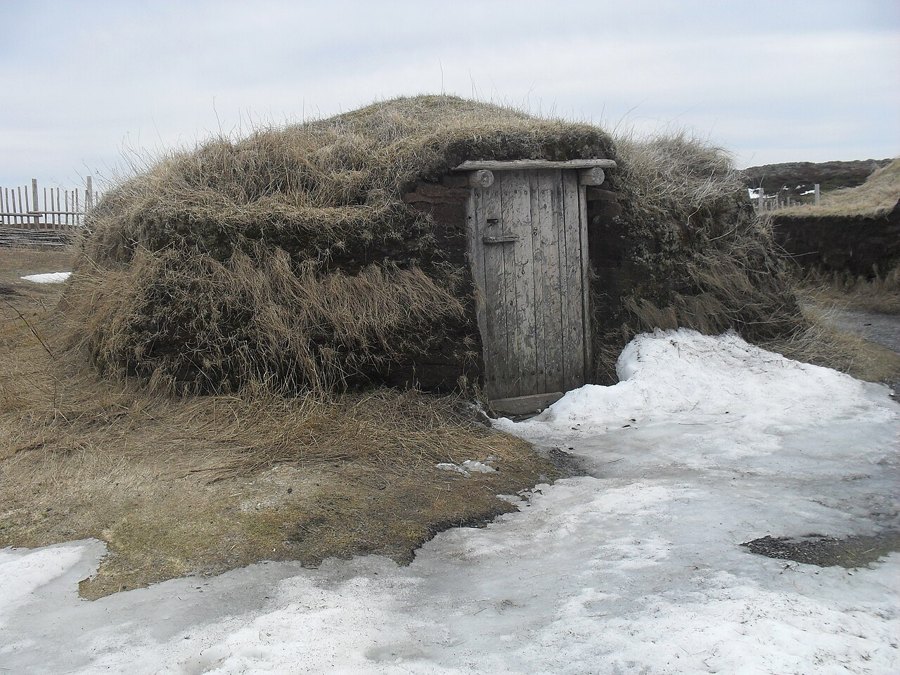
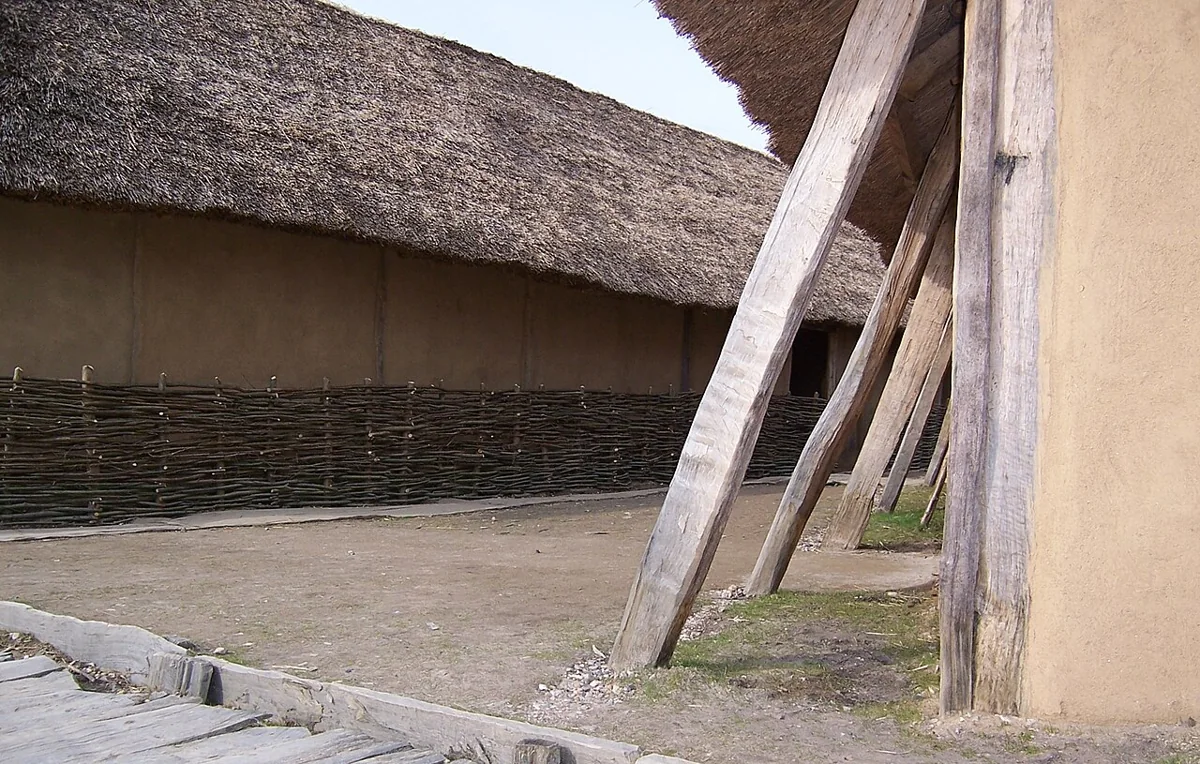
A modern reconstruction at L’Anse aux Meadows in Newfoundland, photographed in 2011. Recreated buildings help visitors imagine Norse settlement; they are not surviving medieval houses.Image: SemanticsDavid · CC BY-SA 3.0
The archaeological remains of a Norse base in Newfoundland sit beside modern reconstructed turf buildings. This is evidence of Norse presence in North America, not of a permanent colony lasting centuries.
Before you go: Plan the substantial journey to Newfoundland’s Northern Peninsula and check the seasonal visitor program; do not assume indoor access year-round.
Start with Copenhagen and Roskilde. The Viking Ship Museum in Roskilde connects surviving ships with the work of understanding and building boats. Its museum is open year-round, but sailing and some outdoor activities are seasonal.
For another chapter, travel to Jelling in Jutland: runestones, monuments, and an experience center introduce royal power and religious change. Treat this as a separate stop with travel time, rather than squeezing it into your Roskilde day.
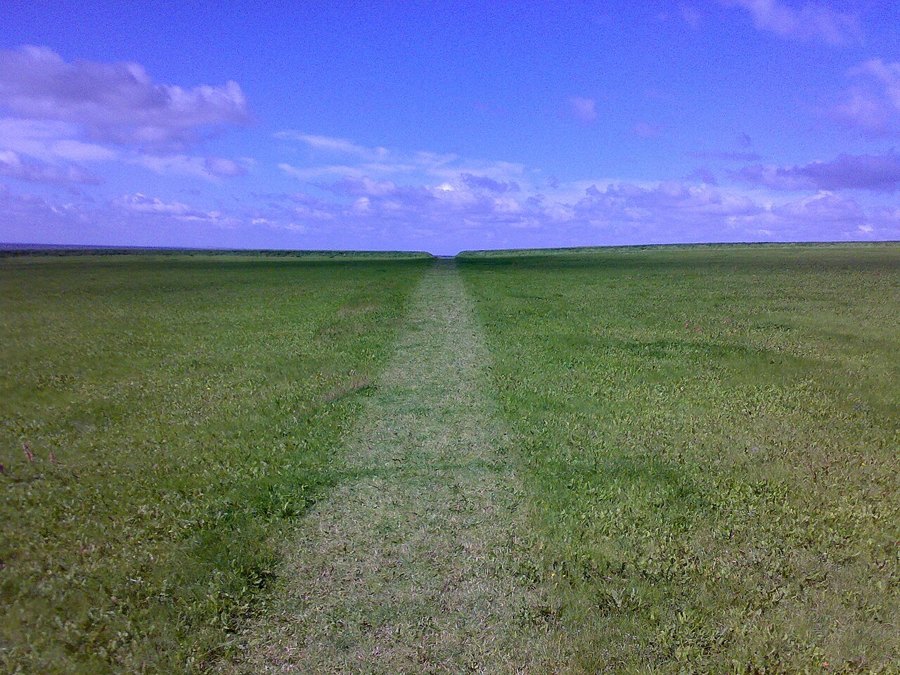
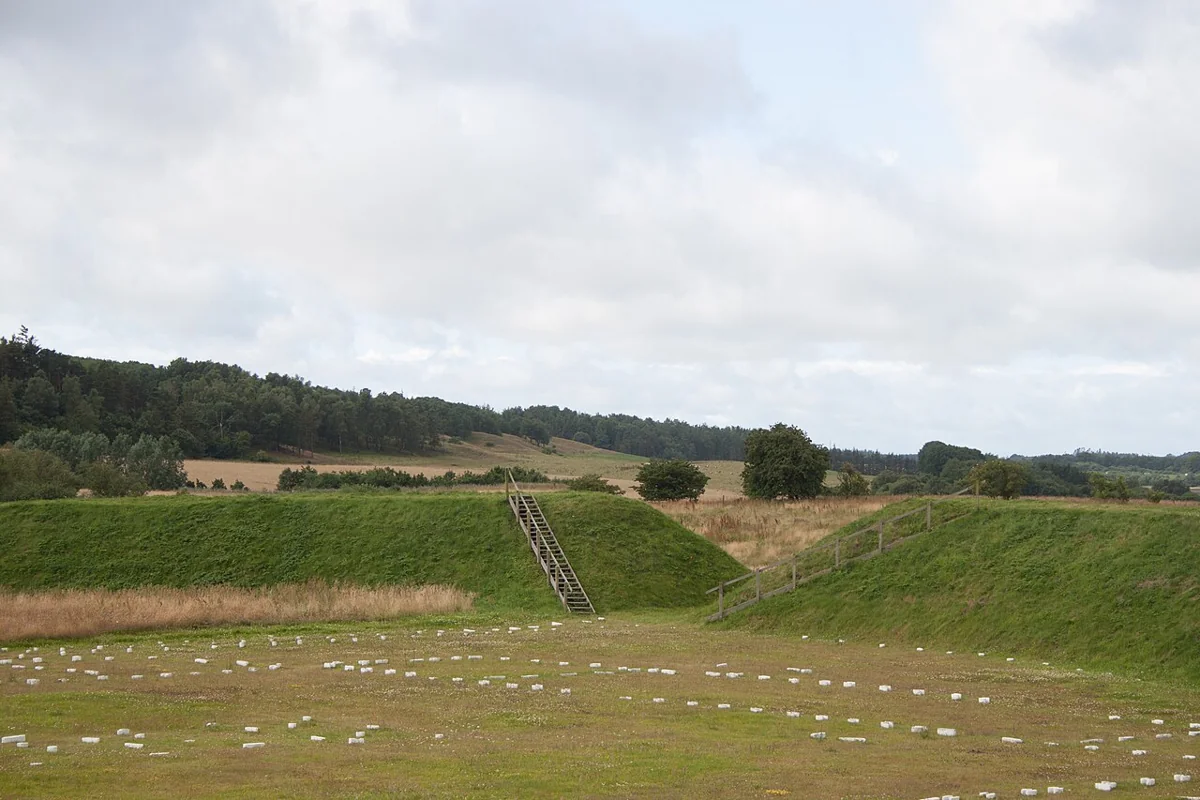
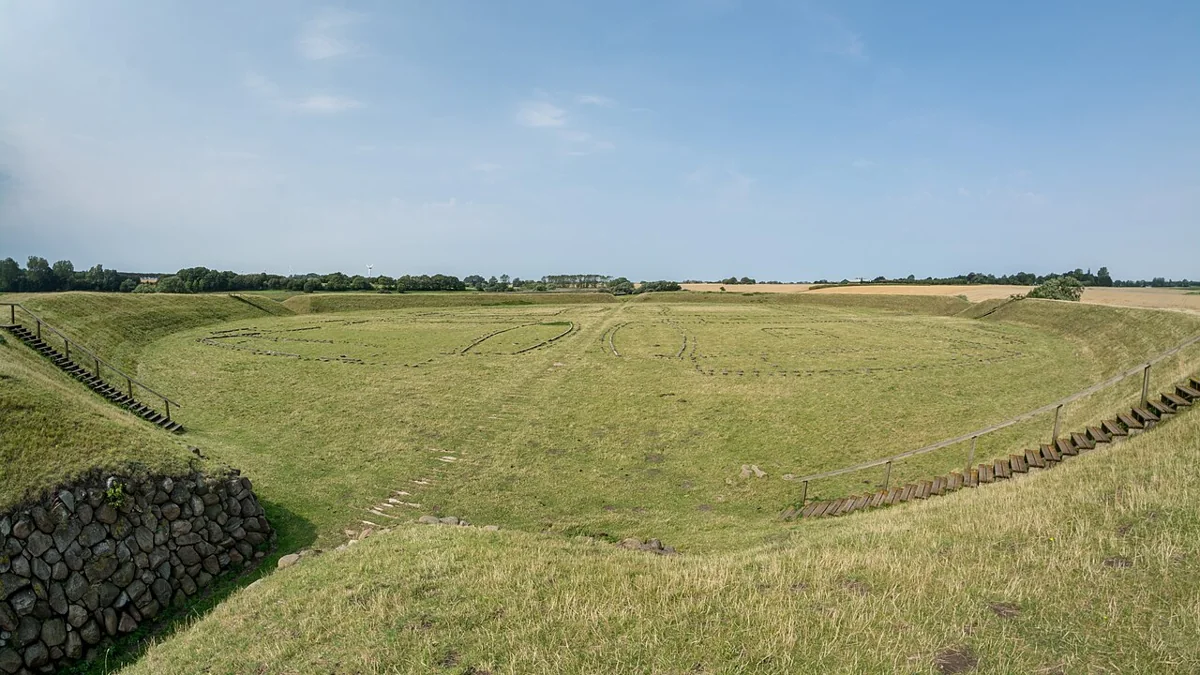
A view from inside Aggersborg’s ramparts in 2007. The grassy landscape marks a fortress whose original timber houses and defenses no longer stand.Image: Bjoertvedt · CC BY 3.0
Period: Late 970s CE
The largest of Harald Bluetooth’s Danish ring fortresses occupied a strategic position beside the Limfjord. Its circular plan enclosed space for 48 longhouses. Today the earthwork landscape lets visitors consider the resources and coordination behind royal building projects, while interpretation helps recover the vanished timber architecture.
Visiting: The museum lists free access to the fortress area throughout the year. The small exhibition house and scheduled activities have their own arrangements; consult the operator before traveling.
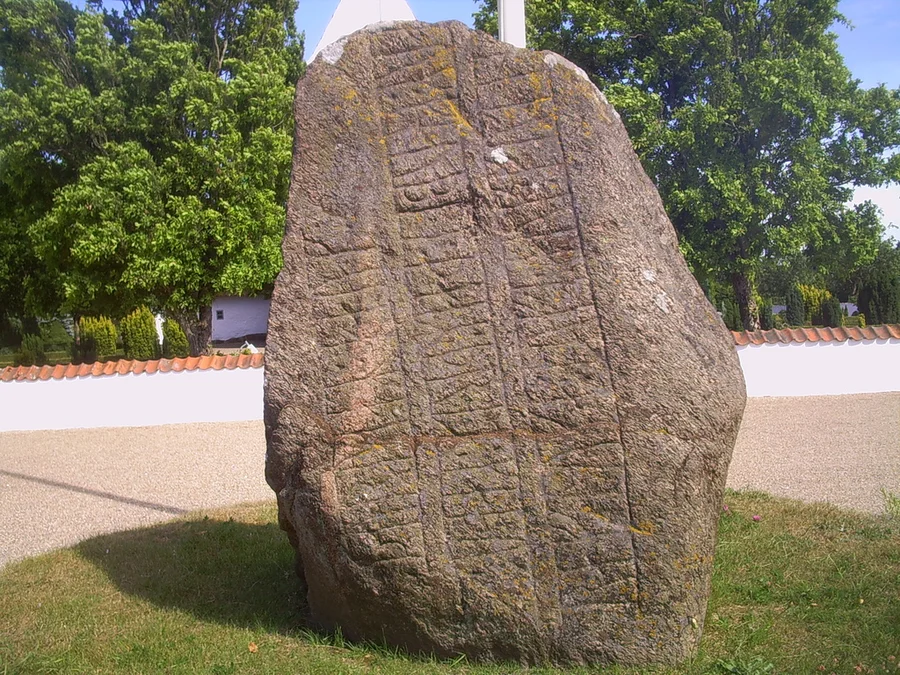
The runestone beside Bække Church records three men making Thyra’s mound. Its original location is unknown, and it has been moved more than once since rediscovery. The inscription opens questions about memory and royal connections, but identifying its Thyra with the queen at Jelling should not be treated as certain.
Visiting: Find the stone beside Bække Church on Søndergade. This outdoor memorial is distinct from the nearby Klebæk Høje complex; check the official listing when planning a combined visit.
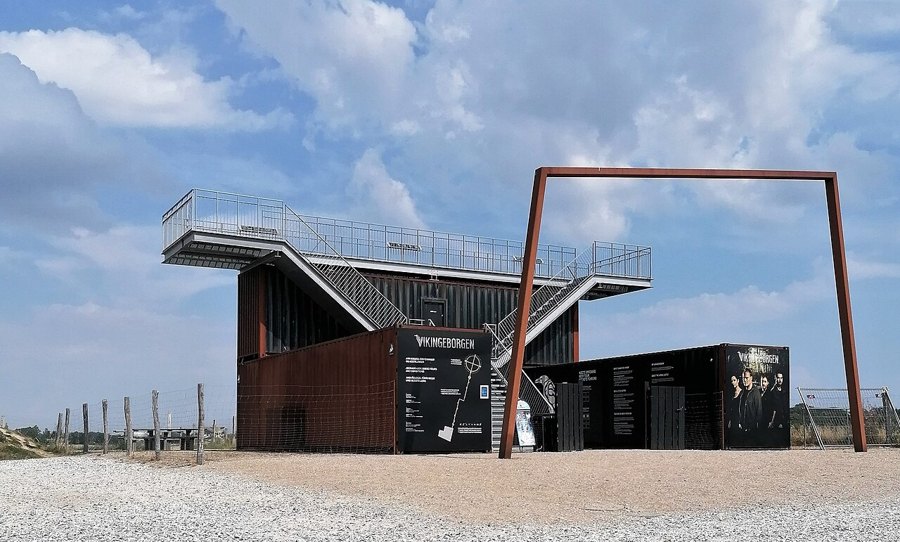
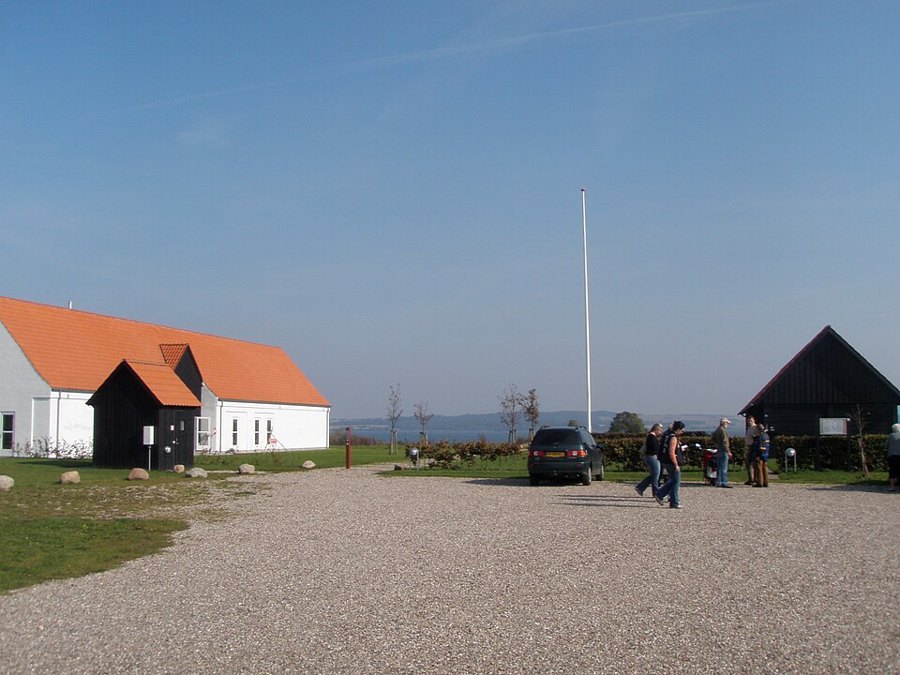
The entrance at Borgring photographed in 2020, before later visitor-center development. Modern structures interpret the fortress rather than preserving its original wooden defenses.Image: Nils Jepsen / Nico · CC BY-SA 4.0
Period: About 980 CE
Discovered by archaeologists in 2014, Borgring adds another precisely planned fortress to Harald Bluetooth’s network. Modern steel markers interpret its circular rampart, while the museum explores royal power and religious change. The important distinction is between the archaeological traces below ground and the contemporary structures that help visitors understand them.
Visiting: The museum is at Lellinge outside Køge. Check its current opening calendar and tickets; the museum’s trail and viewpoint are designed to explain the fortress in its wider landscape.
The island's cultural-history museum offers archaeological context for exploring Bornholm's monuments and Baltic connections. Its wider collections also help place the Viking period within a much longer island history, rather than presenting it in isolation.
Historical context: This is a multi-period museum; confirm which archaeological displays are currently accessible.
Before you go: Consult the museum's current seasonal opening schedule before traveling to Rønne.
Source reviewed 2026-10-18. Confirm current access with the operator.
Ring fortress
Fyrkat
Hobro, North Jutland
Fyrkat photographed in 2015. The site combines the archaeological fortress landscape with modern interpretation; reconstructed buildings should not be mistaken for surviving Viking timber.Image: Szilas · CC0 1.0
Period: About 980 CE
At Fyrkat, an earthen rampart marks the ring fortress associated with Harald Bluetooth. Sixteen longhouses once stood inside its planned enclosure. A reconstructed longhouse and a separate reconstructed estate help explain the timber buildings, while museum displays introduce excavated objects and the fortress’s place in a changing kingdom.
Visiting: The museum operates seasonally and lists different hours through the year. Check the current calendar before visiting the fortress, reconstructed longhouse, exhibition, and Chieftain’s Farm as one outing.
Surviving stones at Gammel Lejre photographed in 2010. Recent museum interpretation places the ship monument before the Viking Age, with later graves in its surroundings.Image: Västgöten · CC BY-SA 3.0
Period: Later Iron Age and Viking Age
The surviving stone ship stands within a landscape of halls, mounds, and burials associated with an important center of power. Recent museum interpretation places the ship monument in the 600s, before the conventional Viking Age. Later Viking-Age graves nearby show how people continued to use this remarkable place.
Visiting: Follow the national park’s marked routes around Gammel Lejre and consult its access guidance. Much surrounding land is privately owned; Lejre Museum provides context for the outdoor monuments.
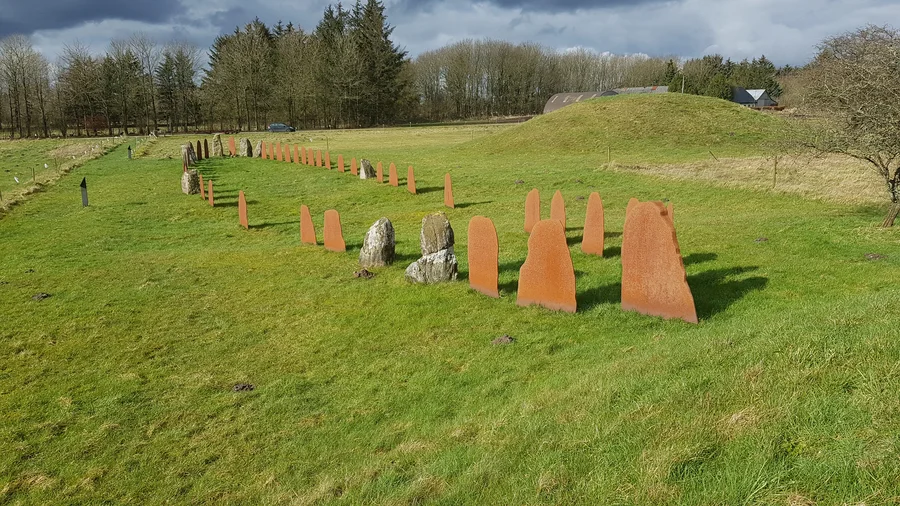
The stone-ship setting at Glavendrup seen from the east in March 2026. Its memorial landscape includes the famous runestone with an invocation of Thor.Image: Hjart · CC BY-SA 4.0
Period: About 900 CE
A long runic memorial and a ship-shaped stone setting meet in Glavendrup’s grove. The inscription remembers a man named Alle and invokes Thor, making the site especially useful for exploring commemoration and belief. Read the monument as a family memorial with religious language, rather than as a generic Viking symbol.
Visiting: The official tourism listing says the stone can be visited throughout the year. Look for Glavendruplunden near Skamby, and use the linked visitor information for access details.
Near Hobro Library, a memorial for Karl provides a smaller urban stop alongside the region's better-known fortress sites. Its runic features have prompted comparisons with inscriptions in western Sweden.
Historical context: A proposed connection to Swedish travelers is an interpretation, not a securely reconstructed biography.
Before you go: Use the official listing's Adelgade location and check any local works before visiting.
Klebæk Høje photographed in 2020. The site brings together older burial mounds and a Viking-Age stone ship rather than belonging entirely to one period.Image: Hjart · CC BY-SA 4.0
Period: Bronze Age and Viking Age
Klebæk Høje brings several periods together: Bronze Age burial mounds, a Viking-Age stone ship and runestone, and traces of a later route. The layered landscape is a reminder that Viking communities encountered older monuments too. The stone ship’s inscription connects the memorial with Ravnunge-Tue and his mother.
Visiting: Look for the Bække Monument on the northern edge of Bække. It is a separate stop from the runestone by Bække Church; the official listing explains both the location and historical layers.
The stone at Læborg Church pairs its runic memorial with two Thor's hammers. It belongs in a journey tracing inscriptions along the old north–south routes through Jutland and the prominent people named on them.
Historical context: Connections between named individuals and the Jelling dynasty require interpretation; avoid treating every proposed identification as certain.
Before you go: Visit respectfully in the cemetery beside the church.
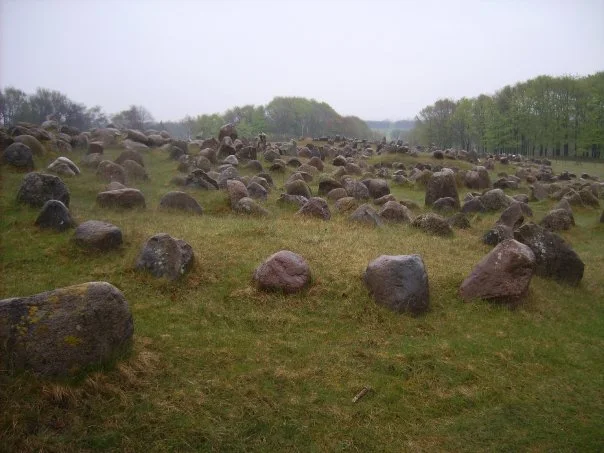
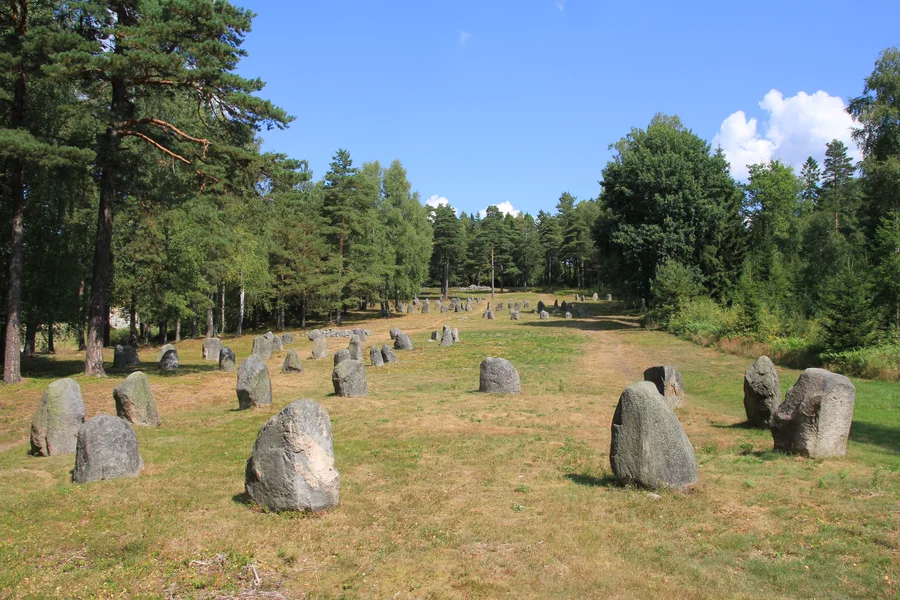
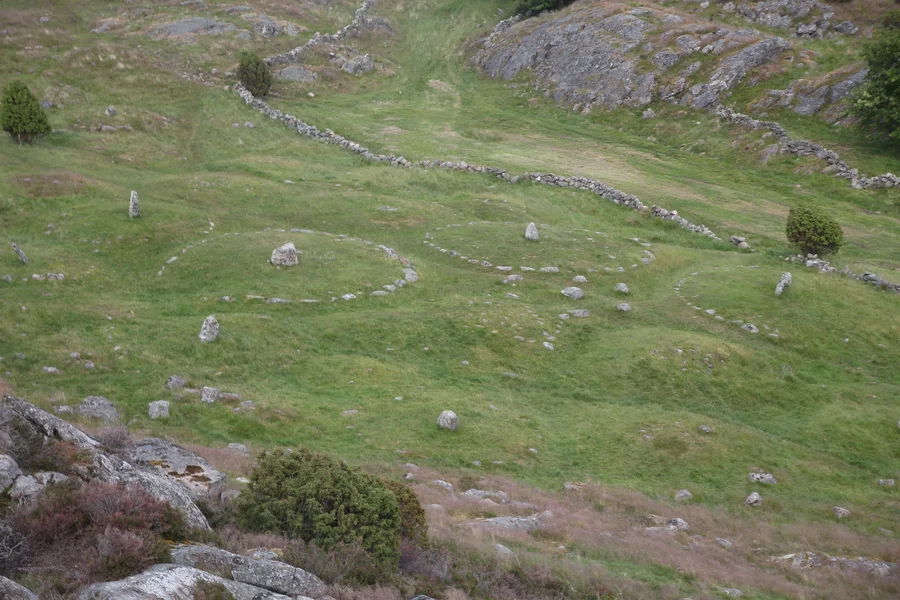
Stone settings at Lindholm Høje, photographed in 2008. This cemetery spans the later Iron Age and Viking Age rather than one single moment.Image: Västgöten · CC BY-SA 3.0
Period: About 400–1000 CE
Hundreds of stone settings mark a burial landscape used across the later Iron Age and Viking Age. The different outlines include oval, triangular, and ship-shaped arrangements. The adjoining museum connects the cemetery with the people who lived around the Limfjord, helping visitors read a landscape shaped by many generations.
Visiting: Start at Vendilavej 11 in Nørresundby. Check the museum’s seasonal calendar before combining the outdoor cemetery with the indoor exhibitions; museum opening days change during the year.
Sønderskov Museum shelters the large Malt stone, discovered near an old river crossing. Its mixture of runic forms and differently directed lines rewards slow looking and introduces visitors to the challenges of interpreting early inscriptions.
Historical context: The text has competing interpretations; the indoor setting protects the damaged original.
Before you go: The stone is accessible during museum opening hours; check the current schedule.
Source reviewed 2026-10-18. Confirm current access with the operator.
Moesgaard Museum
The Viking-Age exhibition follows imagined individual journeys grounded in archaeology, from Aros to distant trading worlds. Objects and immersive interpretation work together.
Before you go: Choose the Viking-Age galleries within this much larger museum; check the current exhibition plan before traveling.
Nylars Church contains two runestones within a distinctive round church. The combination offers a useful way to consider how older memorials survived in Christian buildings while exploring a different regional architectural tradition.
Historical context: The round church dates to the twelfth century, after the conventional Viking Age.
Before you go: Check visiting arrangements; the church closes to visitors during services.
Source reviewed 2026-10-18. Confirm current access with the operator.
Bridge remains and reconstructed bridgeheads
Ravning Bridge
Bredsten, Vejle valley
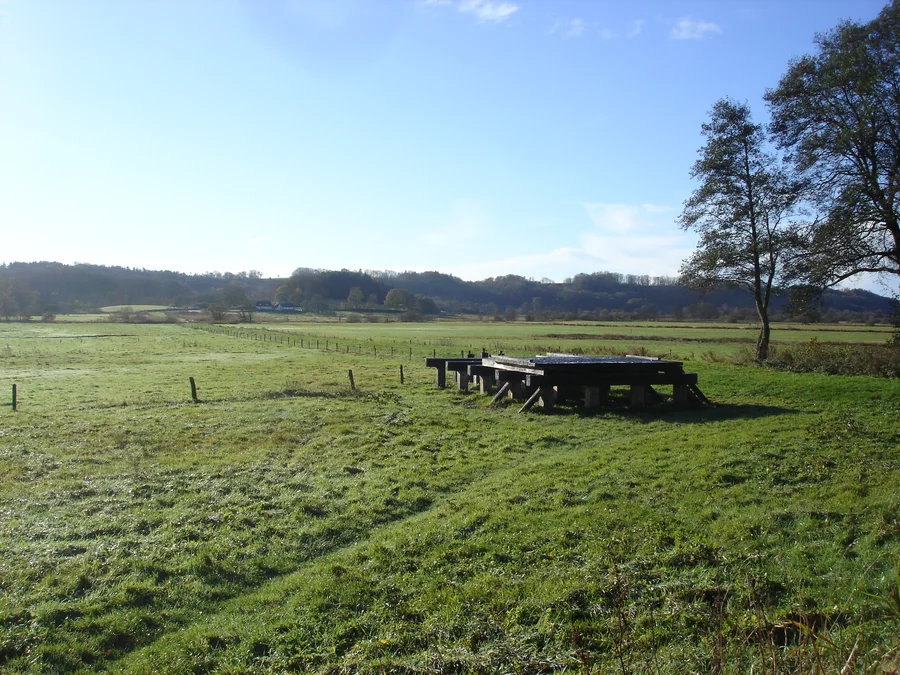
The reconstructed northern bridgehead at Ravning, photographed in 2013. These exposed timbers are modern interpretation; most original Viking-Age posts remain protected underground.Image: Beethoven9 · CC BY-SA 3.0
Period: About 980 CE
This enormous timber bridge crossed the Vejle valley in Harald Bluetooth’s time. Most surviving original posts remain protected below ground, while reconstructed bridgeheads reveal its scale. A path follows the old crossing, and the former station houses interpretation. Whether its principal purpose was military or commercial remains uncertain.
Visiting: Vejle Museums lists free access to the outdoor site throughout the day and separate hours for the exhibition. Start at Ravningvej 25 and follow the path along the former bridge alignment.
Ribe's cathedral provides a later architectural perspective on a town with Viking Age Christian roots. The history of Ansgar's church and the early bishopric makes this a worthwhile companion to the archaeological museum.
Historical context: The cathedral visitors see today is predominantly medieval, not Ansgar's ninth-century church.
Before you go: Check cathedral, museum and tower arrangements separately, and respect services.
Source reviewed 2026-10-18. Confirm current access with the operator.
Ribe Viking Museum
Discover archaeology from early Ribe and its later medieval development. This indoor town museum is separate from the reconstructed Ribe VikingeCenter.
Before you go: Use the Odins Plads address in central Ribe; check the program for family activities and demonstrations.
Explore a modern reconstruction of early Ribe, with houses, workshops, a harbor setting, and a farmstead. The visitor program includes demonstrations and hands-on activities. This is a place to investigate how daily work might have looked, rather than a surviving Viking town.
Plan your visit: Check the daily program as well as the seasonal calendar. The published 2026 season ends October 16; confirm future opening dates before arranging a visit. Some activities have separate charges.
Ribe VikingeCenter in Denmark, photographed in 2024. This open-air museum uses modern reconstructions to explore Viking-Age life; these are not surviving Viking buildings.Image: JakobHosp · CC0 1.0
Rimsø Church runestone
A tall runestone stands on a mound beside a medieval village church in Djursland.
Historical context: Its original position and relationship to the mound are uncertain.
Before you go: Check the official visitor information for current opening, access and any temporary restrictions before traveling.
The Sønder Vissing runestone commemorating Tove’s mother, photographed for the National Museum of Denmark. The inscription connects this memorial with Harald Bluetooth’s royal family.Image: Roberto Fortuna / National Museum of Denmark · CC BY-SA 3.0
Period: About 950–1000 CE
Queen Tove’s memorial for her mother survives inside Sønder Vissing Church. Its inscription identifies Tove as the daughter of Mistivir and wife of Harald Bluetooth, linking a family commemoration to the Jelling dynasty and its southern neighbors. The runestone is Viking-Age; the church that now shelters it is later.
Visiting: The official visitor listing describes daytime access to the church. Confirm access locally before making a special journey, and respect services; the stone is indoors rather than in an open field.
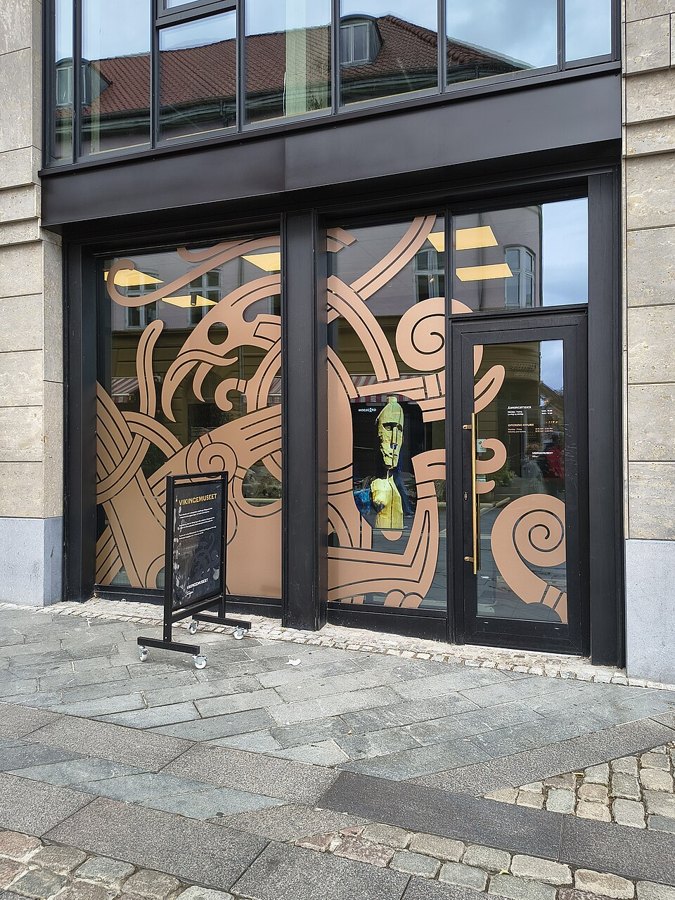
The modern entrance to Vikingemuseet in Aarhus. The museum provides access to the town's early archaeological story; the entrance itself is modern.Image: RhinoMind · CC BY-SA 4.0
A small archaeological museum below modern street level presents the Viking town of Aros at an excavated site. It offers a compact contrast to a large open-air museum.
Before you go: The entrance is beneath the bank at Skt. Clemens Torv; ask about access requirements before visiting the basement galleries.
The modern visitor setting at Fugledegård by Tissø. The archaeological evidence for elite activity and ritual comes from excavated contexts, not from the present-day buildings pictured here.Image: Västgöten · CC BY-SA 3.0
The lake landscape is associated with an elite settlement, craft activity and ritual evidence across the later Iron Age.
Historical context: The archaeological site is not a surviving village; ritual interpretations need to be distinguished from physical remains.
Before you go: Use marked walking routes and respect bird-protection areas and agricultural land.
Explore the ring-fortress landscape and interpretation of life under Harald Bluetooth. Original earthworks and modern reconstructions tell different parts of the story.
Before you go: Check the activity calendar as well as admission; leave time for the outdoor fortress.
A small Viking Age runestone in Vang Church's porch preserves a wife's memorial to her husband. Its compact size and winding inscription make a useful contrast with Denmark's monumental royal stones.
Historical context: The stone was brought here in the nineteenth century after earlier reuse elsewhere.
Before you go: Confirm access to the church porch before making a special trip.
Source reviewed 2026-10-18. Confirm current access with the operator.
Original ship burial · Museum
Viking Museum Ladby
Near Kerteminde, Funen
Visit the burial mound containing the remains of a Viking-Age ship burial, then explore finds in the exhibition building. The relationship between the grave and the surrounding inlet makes this a different experience from viewing a ship in a city museum.
Plan your visit: Combine the exhibition with time around the mound, and check accessibility for each part of the visit. Opening days vary by season, with holiday exceptions. Funen makes a separate stop between other Danish bases.
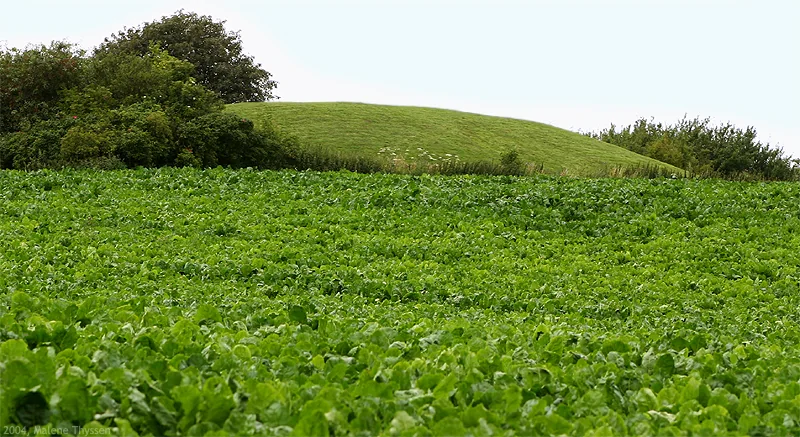
The burial mound at Ladby on Funen, Denmark, photographed in 2004. The ship burial beneath it links a visible landscape feature to the study of funerals and status.Image: Malene Thyssen, User:Malene · CC BY-SA 3.0
The European galleries allow comparisons between Scandinavian objects and neighbouring Anglo-Saxon and continental societies. Sutton Hoo is earlier Anglo-Saxon material, not a Viking burial.
Before you go: Checked October 17, 2026: Room 41 is listed as partially closed October 12–23. Recheck gallery notices before planning around a particular object.
A hands-on introduction to discovering York’s layered past, designed especially for children. Simulated excavation encourages visitors to think about objects and archaeological evidence.
Historical context: The digging areas are educational reconstructions, not active Viking excavations.
Before you go: Prebook and check the recommended ages and current activities.
St Cuthbert’s treasures illuminate the Christian community whose story continued through the Viking Age. The collection includes exceptionally important early medieval craftsmanship.
Historical context: The cathedral is later than many displayed objects; early English runes are not automatically Norse.
Before you go: Check museum tickets and accessibility separately from cathedral visiting.
The Coppergate excavations underpin this immersive reconstruction of Viking York, complemented by original finds. The reconstructed streets are modern interpretations of archaeological evidence.
Before you go: Pre-book an entry slot and review the ride’s accessibility and bag restrictions before arriving.
Source reviewed 2026-10-18. Confirm current access with the operator.
Lindisfarne Priory
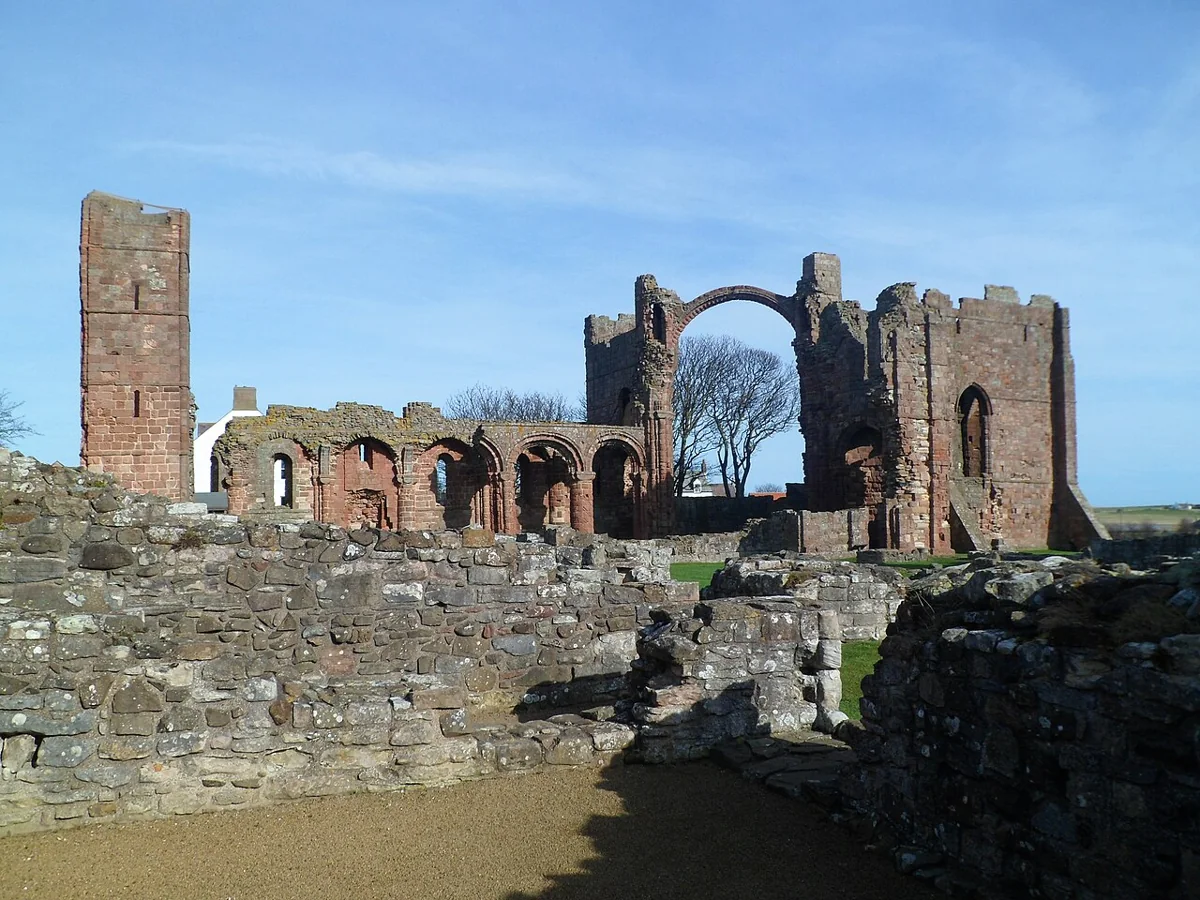
Lindisfarne’s later medieval priory ruins, photographed in 2011. The visible church dates mainly to the 12th century, centuries after the famous Viking raid of 793.Image: Hadrianus1959 · CC BY-SA 4.0
Explore the island associated with the raid of 793 and the museum’s early Christian material. The standing priory ruins are later medieval, not the monastery attacked in that raid.
Before you go: Check official safe causeway crossing times for both arrival and departure; tides determine access to Holy Island.
The museum offers ways to investigate Anglo-Saxon and Viking lives through objects and educational interpretation, including the region’s Irish Sea connections.
Historical context: Organized handling activities use replicas and may require a group booking.
Before you go: Check current galleries and book specialist workshops separately.
Source reviewed 2026-10-18. Confirm current access with the operator.
Stamford Bridge battlefield landscape
East Yorkshire
Explore the landscape associated with Harold Godwinson’s defeat of Harald Hardrada in September 1066, a pivotal event in the political history of England and Norway.
Historical context: Modern roads and settlement have changed the setting; the present bridge is not the battle’s bridge.
Before you go: Stay on public rights of way; access across the battlefield’s agricultural land is limited.
Source reviewed 2026-10-18. Confirm current access with the operator.
York Minster Undercroft Museum
York
Explore the cathedral’s archaeological layers and its connections with Viking York. Highlights include the Horn of Ulf and evidence of successive urban communities.
Historical context: The present cathedral largely postdates Viking York; the museum explains earlier evidence beneath it.
Before you go: Check sightseeing tickets and museum access before arrival.
Source reviewed 2026-10-18. Confirm current access with the operator.
Yorkshire Museum
Viking North brings together objects exploring northern England between 866 and 1066, including material from hoards and army camps. It complements JORVIK’s reconstructed streets.
Before you go: The exhibition is advertised from July 2025 to July 2027; check the museum calendar and access information for your date.
A themed village near the ancient Asva settlement offers craft demonstrations and activities that introduce Baltic island life through hands-on interpretation.
Historical context: This is a modern attraction beside a site with a much longer history; its reconstructed fortress is not an intact Viking-age building.
Before you go: Check seasonal opening and book organized activities with the operator.
Source reviewed 2026-10-18. Confirm current access with the operator.
Otepää hillfort
Valga County
Climb the hill associated with an important eleventh-century center in Ugandi. Its position helps explain why inland strongholds mattered alongside coastal trading routes.
Historical context: The visible stone-castle ruins belong to the thirteenth century, after the earlier stronghold.
Before you go: Use marked paths; the climb and uneven ruins require suitable footwear.
Source reviewed 2026-10-18. Confirm current access with the operator.
Rõuge ancient farmstead and hillfort
Võru County
A reconstructed farmstead beside the excavated settlement introduces everyday life in a local community of the Viking-age Baltic world. The adjacent earthworks preserve the defensive landscape.
Historical context: The buildings are modern interpretations; the original settlement and fortress had earlier origins and lasted into the eleventh century.
Before you go: Check the farmstead’s visitor arrangements and keep to designated paths.
Source reviewed 2026-10-18. Confirm current access with the operator.
Salme Viking Ship Site
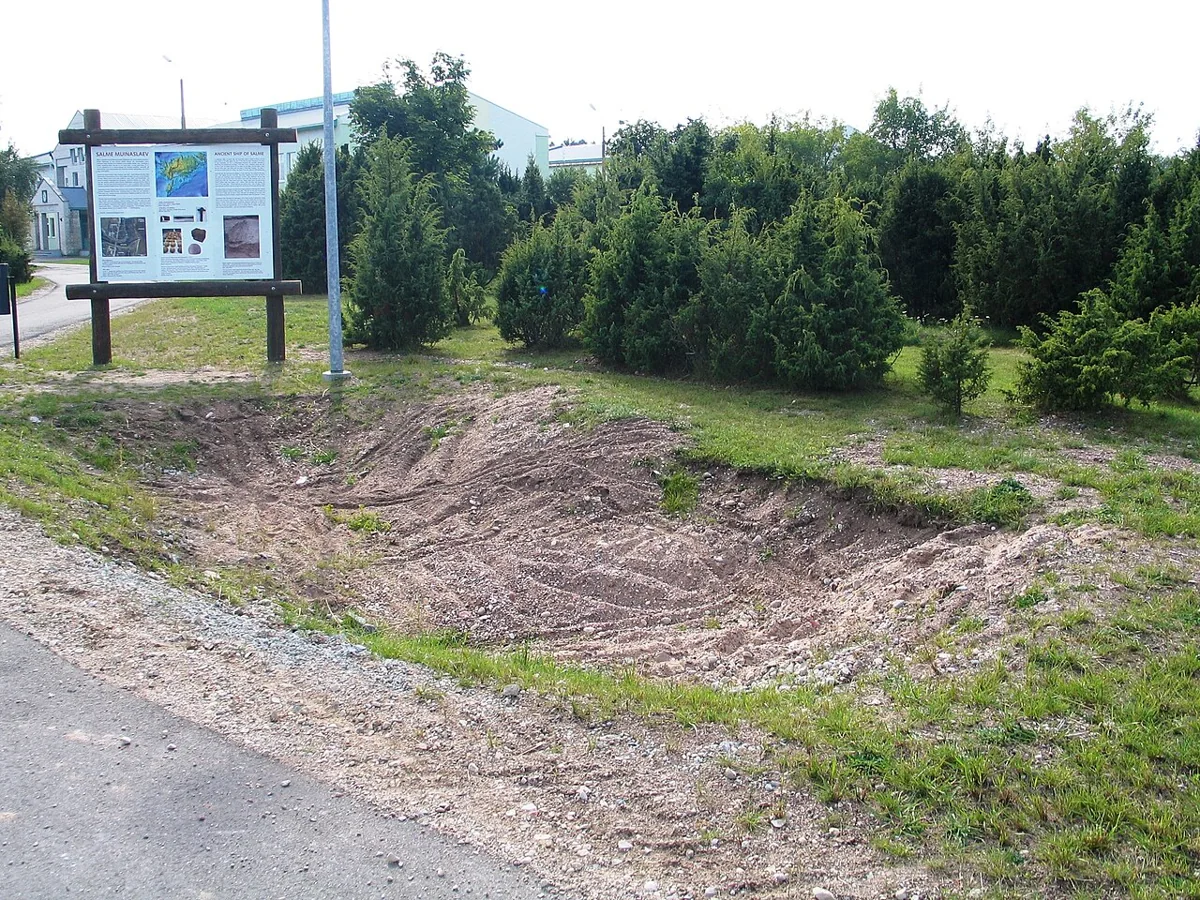
The Salme ship-find location on Saaremaa, Estonia, photographed in 2009. This modern view records the archaeological findspot; it does not show an intact ancient ship.Image: Ave Maria Mõistlik · CC BY-SA 4.0
Two eighth-century ship burials reveal armed Scandinavian travel in the eastern Baltic before the conventional 793 starting date. Markers show their scale at the findspot.
Before you go: The ships have been covered after excavation; expect an outdoor interpretation site rather than exposed hulls.
The permanent exhibition includes Viking-era finds alongside the islands’ natural and cultural history. Later medieval and modern objects show how settlement developed over time.
Before you go: The permanent exhibition, open-air museum and whaling station have different seasonal schedules; choose the relevant venue.
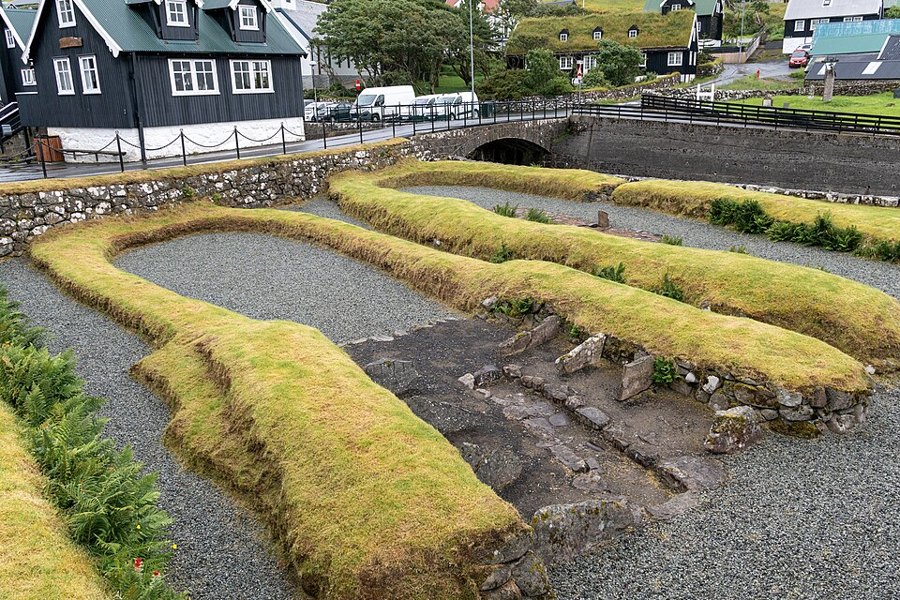
Excavated building remains at Kvívík in the Faroe Islands. Such remains are evidence for settlement, while the reconstructed appearance of the buildings requires interpretation.Image: Ekrem Canli · CC BY-SA 4.0
Excavated settlement remains in Kvívík offer an outdoor view of early Faroese life. Combine the visible foundations with museum interpretation rather than expecting complete standing houses.
Before you go: Plan a village stop on Streymoy and use the official listing for the location; prepare for wet and windy conditions.
Excavated house remains reveal an early Norse household in the Faroese island environment. The site offers a grounded counterpart to the Atlantic voyage stories.
Historical context: The remains are archaeological foundations rather than complete standing Viking houses.
Before you go: Follow the maintained visitor route; contact local visitor information for guided interpretation.
Consider Helsinki and Turku. Finland belongs in a Nordic journey in its own right. Avoid treating every Nordic destination as a Viking settlement.
Turku offers archaeological and art exhibitions at Aboa Vetus Ars Nova, a historic riverfront, and maritime collections at Forum Marinum. These are opportunities to explore a wider history; Turku’s medieval town story is later than the Viking Age.
The main regional museum in Mariehamn places Åland’s Viking-Age objects within a long island history. It offers a useful Baltic perspective beyond mainland Scandinavia.
Before you go: Use the official destination listing to reach current museum information; the cultural-history and art museums share a central location.
Start with the Naurava Lohikäärme prehistory center for Viking-Age finds and interpretations, then consider the Luistari archaeological park. The cemetery spans several centuries and helps place the Viking Age within Finland’s broader Iron Age history.
Plan your visit: The center has limited opening days outside summer. Luistari’s small exhibition building has its own summer season, so an outdoor visit does not guarantee indoor access. Ask the municipality about current guided visits and language availability.
Käräjämäki in Eura, photographed in 2013. The site belongs to a burial landscape; the later name and court traditions should not replace its archaeological interpretation.Image: Urjanhai · CC BY-SA 3.0
Period: Iron Age, especially c. 600–1200
Käräjämäki brings visitors into Eura’s Iron Age burial landscape. Its stone circle acquired a later association with courts, but the municipality identifies it originally as a prehistoric grave. Nearby burials illustrate changing funerary practices; a reconstructed warrior’s grave helps explain evidence that is otherwise difficult to recognize above ground.
Visiting: Look for the reconstructed grave on the small hill north of the road. Use Eura’s official site information to distinguish this burial ground from the separately located Luistari cemetery.
Kastelli’s stone enclosure, photographed in 2009. The traditional name “Giant’s Church” refers to a Stone Age structure, not a church building or a Viking burial monument.Image: Estormiz · Public domain
Period: Stone Age; before the Viking Age
Despite its name, Kastelli is neither a medieval church nor a Viking monument. This large Stone Age enclosure was formed by communities reshaping stone embankments along an ancient shore. Postglacial land uplift has left the site inland. The broad enclosure invites questions about collective labor and prehistoric landscapes without pretending its precise purpose is settled.
Visiting: Use Linnalantie 74 and the official Linnanraunio signs for the approach. A marked forest route leads from parking to the remains. Leave all stones in place and follow the existing route.
Source reviewed 2026-10-18. Confirm current access with the operator.
Lieto Vanhalinna
Southwest Finland
A hillfort beside the Aura River and an old overland route introduces inland defenses and long-distance connections. The museum adds archaeological context to the landscape.
Historical context: Use spans the Iron Age and medieval period; this is Finnish regional history, not proof of a Scandinavian Viking settlement.
Before you go: Check museum hours and use the official approach along Vanha Härkätie.
Source reviewed 2026-10-18. Confirm current access with the operator.
Hillfort and burial landscape
Rapola hillfort
Sääksmäki, Valkeakoski
The Rapola hillfort area, photographed in 2015. Its wooded setting contains surviving traces of a fortified landscape, rather than the standing walls of a medieval stone castle.Image: Ohikulkija · CC BY-SA 4.0
Period: Iron Age and early medieval
Rapola combines a fortified ridge with evidence of settlement, burial and cultivation around Lake Vanajavesi. Stone ramparts mark a refuge that belonged to a wider inhabited landscape rather than an isolated castle. Walking the area helps connect defensive positions with the fields, waterways and burial places that sustained nearby communities.
Visiting: The approach to the ridge starts beside the stable at Voipaala. Follow the marked heritage paths and allow for elevation changes; the landscape walk involves more climbing than a level museum visit.
Rikala’s neighboring hillfort at Linnamäki, photographed in 2008. It forms the more demanding extension of the heritage walk through the wider Rikala archaeological landscape.Image: Vnnen · CC BY-SA 3.0
Period: Iron Age, with later remains
Rikala’s heritage trail links the burial and settlement landscape at Rikalanmäki with nearby Linnamäki hillfort. Interpretation focuses on Iron Age life, burial customs and trade, while later building foundations show continued use of the area. It is a layered historical landscape where remains from different centuries need to be read separately.
Visiting: The Rikalanmäki section is about 400 meters; including Linnamäki makes the route approximately 2.5 kilometers. The hillfort section is demanding. The official parking address is Rikalantie 77, Salo.
Explore the Viking-Age history of the Finnish archipelago through exhibitions and modern reconstructed buildings, including a chieftain’s hall. The village developed from an interpretation inspired by local archaeological research; its standing buildings are not surviving Viking houses.
Plan your visit: Check the dated opening calendar before choosing a ferry. The operator describes a ferry from Kasnäs and a further five kilometers from the arrival point to the center, so plan the last part of the journey too. Outside advertised dates, group visits require advance arrangements.
Viking-age settlement evidence beneath and around Saltvik’s church connects the parish landscape with earlier occupation. The visit can complement Åland’s museum collections.
Historical context: The standing stone church and its surviving furnishings are medieval or later, rather than Viking-age architecture.
Before you go: Check church access and respect services and the cemetery.
Source reviewed 2026-10-18. Confirm current access with the operator.
Burial cairns
Sammallahdenmäki
Rauma, Satakunta
Stone burial monuments at Sammallahdenmäki, photographed in 2009. The cairns are Bronze Age remains, substantially older than the Viking Age explored elsewhere on this website.Image: Roquai · Public domain
Period: Bronze Age; before the Viking Age
Low stone cairns spread across a rocky forest landscape at this UNESCO World Heritage site near Rauma. These Bronze Age monuments belong to a much earlier world than the Vikings. They make a useful comparison with later burial grounds, showing how burial customs and the relationship between settlements and landscapes changed.
Visiting: The marked trail crosses rocky, root-covered ground and is not wheelchair accessible. There is no winter maintenance. Use the official visitor directions, remain on marked routes, and never move cairn stones.
Source reviewed 2026-10-18. Confirm current access with the operator.
Ornavik Historical Park
Modern reconstructed Carolingian, Viking and early Norman settings explore the emergence of Normandy. Craft demonstrations help distinguish experimental interpretation from surviving ancient buildings.
Before you go: Check the dated French visitor calendar and language availability; the English news section contains older event announcements.
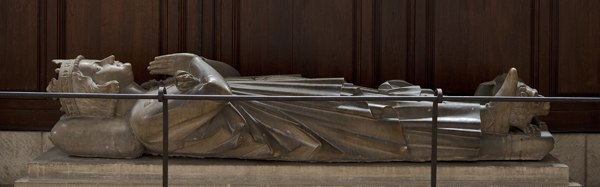
The later tomb effigy associated with Rollo in Rouen Cathedral. The photographed sculpture is a nineteenth-century copy, not a contemporary portrait of the Viking leader.Image: PMRMaeyaert · CC BY-SA 4.0
The cathedral commemorates Normandy’s rulers, including Rollo, and offers a starting point for exploring how Scandinavian settlement became Norman political identity.
Historical context: The Gothic building and monuments are later than Rollo; memorials are not contemporary portraits.
Before you go: Check visiting hours and service restrictions before entering.
The border earthworks illuminate the frontier south of Viking-Age Denmark and its long history. The landscape is valuable even when indoor facilities are unavailable.
Before you go: Checked October 17, 2026: the visitor centre is closed and the new museum is planned for spring 2027. The archaeological park is reopening gradually; confirm available routes and booked tours.
Source reviewed 2026-10-18. Confirm current access with the operator.
Viking Museum Haithabu
Modern reconstructions of Viking Age houses at Hedeby (Haithabu), Germany, photographed in 2006. These buildings are reconstructions, not surviving Viking Age structures.Image: Caravaca · Public domain
Original finds from Hedeby’s trading settlement are displayed near its archaeological landscape and reconstructed houses. The museum and open-air area offer complementary views.
Before you go: The reconstructed houses have a separate seasonal opening pattern; allow for the walk between the exhibition and open-air site.
The Nuuk museum places Norse settlement within Greenland’s much longer, diverse cultural history. It provides essential context alongside the history of Arctic Indigenous communities.
Before you go: The museum is in Nuuk’s old harbour; check seasonal access and do not confuse it with the Norse ruin sites in South Greenland.
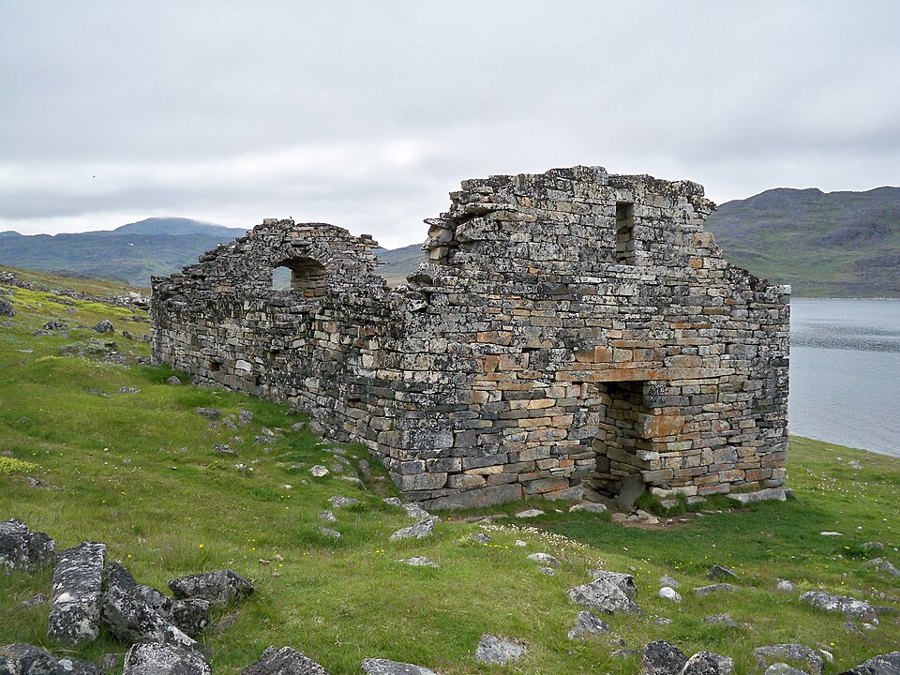
The medieval church ruins at Hvalsey in Greenland. This later Norse building belongs to the settlement's longer history and should not be treated as a structure from its earliest Viking-Age phase.Image: Number 57 at English Wikipedia · CC0
The stone church ruins near Qaqortoq offer a striking view of Greenland’s Norse Christian past.
Historical context: The standing church is fourteenth-century, not an early Viking-Age building.
Before you go: Arrange a suitable local excursion and confirm landing conditions; do not assume independent road access.
A visible Norse homestead footprint near town and the local museum introduce settlement in South Greenland. They offer a less monumental perspective than the better-known church sites.
Historical context: The suggestion that Erik the Red first settled here is uncertain; the ruins do not establish an individual occupant.
Before you go: Ask locally for directions and current museum access; avoid walking on fragile walls.
Start with Reykjavík and Þingvellir. At Þingvellir, the Alþing assembly was established around 930. Its outdoor setting adds a different perspective to a museum visit.
Keep an outdoor day flexible. Check weather, road conditions, and local notices before setting out; a route that looks simple on a map can become unsuitable in bad weather. Book a suitable guided excursion if you prefer not to drive.
A monument to Ásdís places Grettir’s saga within the valley landscape associated with his family. It is a literary-history stop rather than a reconstructed settlement.
Historical context: The account of Ásdís receiving her son’s head belongs to the saga tradition, not a verified burial identification.
Before you go: View the monument respectfully and do not enter farm fields without permission.
Source reviewed 2026-10-18. Confirm current access with the operator.
Borg á Mýrum
Borgarfjörður
The farm landscape associated with Egill and his family includes a church, the rock behind the place-name and a modern monument inspired by his poetry.
Historical context: Family histories are known through Egils saga; the visible church and sculpture are much later.
Before you go: Respect the working farm and church surroundings, and use the designated visitor approach.
Source reviewed 2026-10-18. Confirm current access with the operator.
Borgarvirki
Húnaþing
A dramatic volcanic formation modified by people offers wide views and an encounter with Iceland’s debated fortified landscapes.
Historical context: Its interpretation as an ancient fortress or battlefield remains uncertain; do not treat a specific saga battle as archaeologically proven.
Before you go: Check road and weather conditions before approaching the exposed hilltop.
Source reviewed 2026-10-18. Confirm current access with the operator.
Drangey
Skagafjörður
This steep-sided island combines seabird habitat with the landscape of Grettir’s outlaw story. Guided trips explain both the literary association and later use of the island’s resources.
Historical context: Grettir’s residence is a saga account; it should not be presented as a fully excavated biography.
Before you go: Use a guided seasonal boat trip and assess the exposed climb with the operator.
Source reviewed 2026-10-18. Confirm current access with the operator.
Reconstructed turf longhouse · Storytelling
Eiríksstaðir Living History Museum
Haukadalur, near Búðardalur in west Iceland
Enter a reconstructed longhouse for stories and explanations of building techniques and household life. The site also includes excavated remains. Keep the reconstructed experience, the physical archaeology, and the saga associations distinct when interpreting what you see.
Plan your visit: Plan a separate west-Iceland journey and check roads and weather. The operator’s homepage and visitor page currently give different spring opening dates; confirm directly if traveling near the start of the season. Groups should check booking requirements.
Fish-drying display photographed during Medieval Days at Gásir in 2009. This shows a modern heritage event at the trading site, not an excavated medieval structure.Image: Gunnar Hafdal · CC BY 2.0
Period: Medieval; documented from 1162
Gásir preserves the remains of an important medieval trading place on Eyjafjörður. Archaeology and written sources connect the site with exchange, craft production and maritime contact after the Viking Age. Its low remains reward careful reading of the landscape; modern medieval-market events are interpretations of this history, not surviving market buildings.
Visiting: The site lies about 11 kilometers north of Akureyri, approached via Road 816. Consult official visitor information and event announcements separately: a historical photograph of reenactment does not mean activities run daily.
The Commonwealth Farm reconstruction, photographed in 2007. Its turf-covered buildings interpret the excavated farm at Stöng; they are modern reconstructions at a separate visitor site.Image: Thomas Ormston · CC BY-SA 3.0
Period: Modern reconstruction of a farm around 1100
The Commonwealth Farm turns the excavated plan of Stöng into a full-scale building visitors can enter. Constructed in the 1970s, it explores how a substantial Icelandic farm around 1100 might have worked. Archaeological evidence guided the reconstruction, while uncertain details required interpretation. The building is a modern educational reconstruction, not surviving Viking architecture.
Visiting: Check the operator’s current season and admission before setting out. Its published pages give differing end-of-season dates. The reconstruction and original Stöng ruins are separate destinations with different approaches.
Turf-covered storage buildings at Keldur, photographed in 2007. The surviving complex reflects a long building tradition and later renewal, not wholly preserved Viking Age fabric.Image: Christian Bickel · CC BY-SA 2.0 Germany
Keldur preserves a turf-farm complex rooted in Iceland’s long tradition of earth-and-timber building. A passage beneath the hall is thought to date from the twelfth or thirteenth century. The standing buildings have a nineteenth-century core, including reused older timber: the place illustrates continuity and repair, not an untouched Viking farm.
Visiting: The National Museum operates seasonal visits to the historic farm. Check its current Keldur listing for opening dates and admission, and use the museum’s visitor arrangements rather than assuming unrestricted interior access.
Settlement-era objects sit within the longer story of Iceland’s society and religious change. The collections provide useful context before visiting saga landscapes.
Before you go: The principal museum is at Suðurgata in Reykjavík; check current galleries and audio-guide arrangements.
Reconstructed scenes and an audio guide introduce settlement-era and later Icelandic stories. This is a visual introduction to the people and narratives that shape popular understanding of Iceland’s past.
Historical context: The figures and scenes are modern interpretation, not surviving Viking artifacts; the narrative also covers later centuries.
Before you go: Check current admission and special opening hours on the museum’s website.
Snorralaug at Reykholt, photographed in 2007. The pool is associated with Snorri Sturluson and has undergone repairs; it is a historic monument rather than a visitor bathing facility.Image: TommyBee · Public domain
Period: Medieval, with earlier bathing traditions
Reykholt connects archaeology with the medieval writers who shaped later knowledge of the Norse past. The stone-lined pool called Snorralaug is associated with Snorri Sturluson, while nearby tunnel remains point toward the historic farm. Repairs over time are part of its history; this is a medieval monument, not an unchanged Viking Age spa.
Visiting: Include the pool in a heritage walk around Reykholt using Snorrastofa’s route information. Treat it as a protected monument to view, and follow local signs rather than entering the water or tunnel.
Stöng photographed in 2006, showing the earlier protective building over the ruins. A renewed shelter opened in 2024, so this is an archival view of the site.Image: Sigurdur Jonsson · CC BY-SA 2.0
Period: Late Viking Age and early medieval
At Stöng, the surviving farmhouse remains offer an archaeological counterpart to Iceland’s reconstructed turf buildings. Recent investigation supports occupation from around the later tenth century until Hekla’s 1104 eruption. A protective building shelters the longhouse. This is the original archaeological site, distinct from the Commonwealth Farm reconstruction elsewhere in the valley.
Visiting: Plan this as a separate stop from the Commonwealth Farm. Consult the heritage authority’s site information and current local road conditions before traveling; the protective building was extensively renewed in 2024.
An art-based exhibition presents the North Atlantic voyages associated with Erik the Red and Leif Eiriksson. Audio interpretation connects Greenland and North America with Icelandic storytelling.
Historical context: The artworks are modern. Saga narratives should be distinguished from archaeological evidence for particular landfalls.
Before you go: Confirm opening dates directly; seasonal details on tourism listings may differ.
Source reviewed 2026-10-18. Confirm current access with the operator.
The Museum of Prophecies
Skagaströnd
A tapestry and guided storytelling introduce Þórdís, the fortune-teller associated with the area’s tenth-century past. The exhibition explores how prophecy and memory are retold.
Historical context: This is interpretation of tradition; modern fortune-telling activities do not verify historical supernatural claims.
Before you go: Outside the summer season, contact the museum to arrange a visit.
Source reviewed 2026-10-18. Confirm current access with the operator.
The Settlement Center, Borgarnes
Two interpretive exhibitions introduce Iceland’s settlement and Egil’s saga. The saga presentation is a way into medieval storytelling, not proof that every narrated event happened.
Before you go: Check exhibition tickets and language options; restaurant arrangements are separate from the museum experience.
Explore early Reykjavík through an excavation preserved beneath the modern city. The exhibition centers on Viking-Age building remains and continues into a broader account of the city’s development. This offers a useful indoor counterpart to an outdoor visit to Þingvellir.
Plan your visit: Use Reykjavík City Museum’s current opening-hours and access information when planning. Check the precise entrance and ticket arrangements for the Aðalstræti exhibitions rather than assuming all of the city museum’s locations share one schedule.
A major Irish monastery on the Shannon helps explain the religious and trading world encountered by Viking raiders.
Historical context: The surviving monuments span centuries; this is an Irish monastic site, not a Viking settlement.
Before you go: Checked October 17, 2026: the visitor centre is closed and the operator announces full site closure from October 19 until January 1, 2027. Confirm reopening before travel.
Reconstructed settings introduce the people and streets of Viking and medieval Dublin. This is an interpretive visitor attraction in the city’s historic core.
Before you go: Check exhibition and walking-tour availability separately; the tower has different access limitations from the main exhibitions.
Kells connects the story of Irish monasticism with Iona: Columba’s relics were transferred here in the ninth century. The tower anchors a walk through this historic religious landscape.
Historical context: The monuments reflect several phases rather than one Viking raid or rebuilding event.
Before you go: Consult local access information; religious buildings and burial grounds remain sensitive places.
Source reviewed 2026-10-18. Confirm current access with the operator.
National Museum of Ireland: Archaeology
The Kildare Street collections include Viking Ireland, with evidence of settlement, craft, exchange and burial. Original objects complement a walk through reconstructed Dublinia.
Before you go: Use the Kildare Street branch, not another national-museum location; check gallery notices and luggage restrictions.
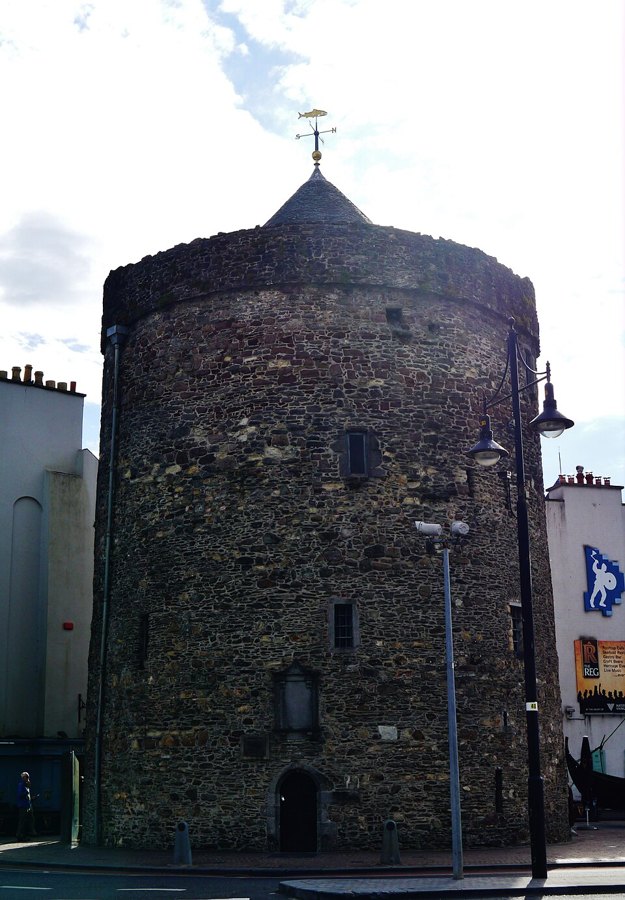
Reginald's Tower in modern Waterford. The surviving stone tower belongs to later medieval development and should not be mistaken for an intact Viking-Age building.Image: Zairon · CC BY 4.0
Viking Waterford is interpreted inside a later medieval tower. Its exhibits connect the settlement’s maritime origins with the city’s subsequent development.
Before you go: Expect stairs in the historic building; check access arrangements directly with the operator.
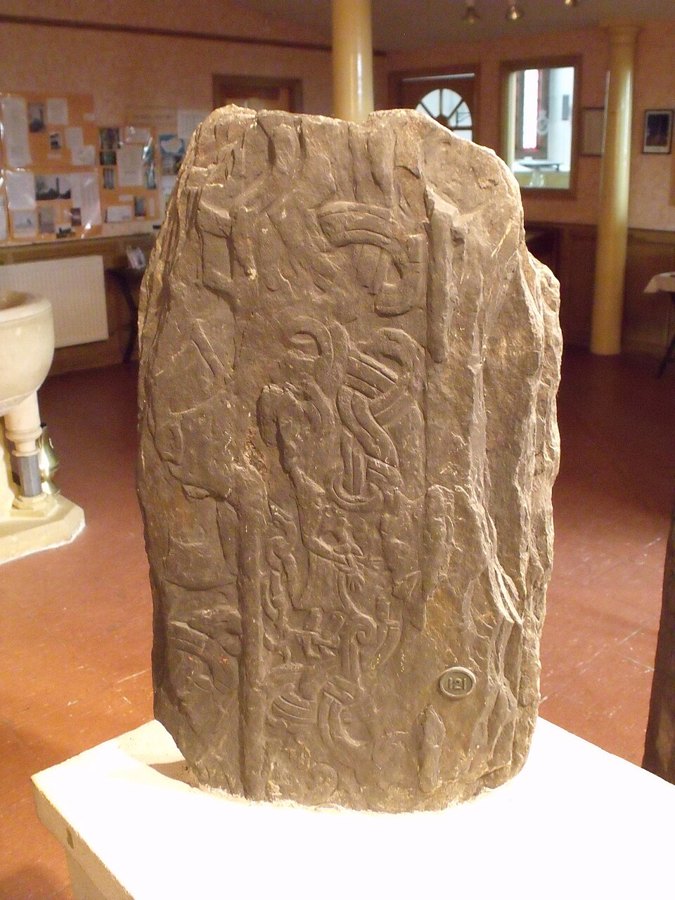
Cross 121 at Andreas, Isle of Man: side B shows narrative carving traditionally associated with Gunnar and the serpents. This view does not show a readable runic inscription.Image: Malost · CC BY-SA 3.0
This parish is another stop on the island’s carved-stone trail, showing how memorial sculpture connects local communities across the Irish Sea.
Historical context: Treat individual dates and proposed mythological identifications separately.
Before you go: Check access with the parish; services take priority over sightseeing.
Source reviewed 2026-10-18. Confirm current access with the operator.
Manx Museum
The Viking Gallery in Douglas displays treasures and interprets the island’s Norse and Celtic connections. It complements the reconstructed settings at the House of Manannan in Peel.
Before you go: Check the access guide for the easiest approach; library and archive hours differ from the museum galleries.
Source reviewed 2026-10-18. Confirm current access with the operator.
Peel Castle and St Patrick’s Isle
Peel
Explore the coastal religious and fortified landscape associated with the Norse kings of Mann. Its churches, cemeteries and defenses developed over many centuries.
Historical context: Much of the standing castle postdates the Viking Age.
Before you go: Check seasonal admission and the access guide: steps and uneven surfaces are significant.
The reconstructed timber lake settlement at Āraiši, Latvia. These modern buildings interpret archaeological evidence rather than surviving intact from the early Middle Ages.Image: Ivo Kruusamägi · CC BY-SA 4.0
Reconstructed timber buildings bring an early medieval fortified lake settlement into view, while the visitor center explains excavations and original finds.
Historical context: This represents a local Baltic community, not a Scandinavian colony. Nearby stone-castle ruins are later medieval.
Before you go: Check seasonal admission and boardwalk conditions before visiting.
Source reviewed 2026-10-18. Confirm current access with the operator.
Grobiņa archaeological landscape
South Kurzeme
Skabārža hillfort at Grobiņa, Latvia, in its present-day landscape. The associated Scandinavian and Curonian archaeology covers several centuries.Image: Evita wiki · CC BY-SA 4.0
Explore the river setting of a settlement with Scandinavian connections and a wider archaeological landscape. Grobiņa broadens the story beyond familiar Scandinavian trading towns.
Historical context: The surviving masonry castle is fourteenth-century and must not be mistaken for a Viking fortress.
Before you go: Seek local visitor guidance for archaeological stops; follow paths through the town and river landscape.
Source reviewed 2026-10-18. Confirm current access with the operator.
Liepāja Museum: Ancient History
Regional archaeology includes the centuries of Baltic and Scandinavian interaction around Grobiņa. The museum’s ancient-history collection offers context for the coastal archaeological landscape.
Before you go: Check the ancient-history gallery’s current availability and ask about relevant objects before making a specialist visit.
Apuolė hillfort in Lithuania, photographed in 2016. The surviving mound is a landscape trace, not an intact ninth-century fortress.Image: Julius Kanarskas · CC BY-SA 4.0
The Curonian stronghold is connected with ninth-century Scandinavian attacks described by Rimbert. The surviving earthwork makes a useful setting for discussing both conflict and historical sources.
Historical context: Chronicle troop totals and dramatic details should not be treated as precise archaeological measurements.
Before you go: Check the trail and weather; festival programming is seasonal.
The museum in Wijk bij Duurstede explores the early medieval trading centre on the Rhine. Finds, models and interpretation illuminate the world encountered by Scandinavian merchants and raiders.
Before you go: The current address is Markt 24; arrange guided tours with the operator and confirm language availability.
The Leiden museum’s Dorestad brooch illustrates elite craftsmanship and Christian imagery in the trading world that Scandinavian travellers encountered. It is Carolingian work, not automatically a Viking-made object.
Before you go: Use the museum’s visit information for current galleries and ask whether a specific object is on display before making a specialist trip.
Start with Oslo. The Historical Museum offers a way into Viking-Age objects and society. Check its current exhibitions when choosing your visit.
Check before you book
The former Viking Ship Museum at Bygdøy is closed while the new Museum of the Viking Age is developed. Do not plan on seeing the Oseberg ship there during this closure. Confirm opening announcements directly with the museum.
Avaldsnes seen from Karmsund in 2008. The prominent church dates to the thirteenth century and stands within a landscape with much earlier royal history.Image: Michael Spiller · CC BY-SA 2.0
Period: Iron Age and medieval royal center
Avaldsnes looks across Karmsund, a strategically important coastal passage. Archaeology and written traditions illuminate its long history as a place of rulers and maritime control. The prominent St. Olav’s Church dates to around 1250, so the visible church belongs to the medieval royal complex rather than the Viking Age itself.
Visiting: Use Nordvegen History Centre to interpret the wider landscape. Check the operator’s current opening hours and tours before visiting; the medieval church and reconstructed Viking farm are distinct parts of the area.
Explore the island landscape associated with the northern chieftain Tore Hund. At Øvergård, a later cottage stands above a much older accumulated farm site.
Historical context: The cottage is nineteenth-century; Tore Hund’s exact residence is a possibility rather than a securely identified house.
Before you go: Ask the museum about access and guiding, and check island transport before traveling.
Source reviewed 2026-10-18. Confirm current access with the operator.
Borgund Stave Church visitor center
Lærdal, Vestland
Pair the medieval wooden church with the visitor center’s interpretation of the nearby Bjørkum archaeological finds. The combination connects craft traditions with settlement evidence.
Historical context: The standing church is medieval, after the conventional Viking Age; the Bjørkum material includes earlier settlement evidence.
Before you go: Check seasonal opening and exhibition availability; admission covers the church and center.
Source reviewed 2026-10-18. Confirm current access with the operator.
Egge Museum and Eggevammen
Steinkjer, Trøndelag
Walk through a chieftain’s landscape with burial mounds and the site of Egge farm. The museum connects this older landscape with much later rural life.
Historical context: The surviving museum buildings are not Viking houses; named chieftains are also known through saga accounts.
Before you go: Check the museum’s seasonal program before planning an indoor visit.
Source reviewed 2026-10-18. Confirm current access with the operator.
Runestone and cairn field
Einang runestone and Gardberg
Vestre Slidre, Valdres
The Einang runestone, photographed in 2005. Its inscription belongs to an earlier runic tradition, several centuries before the conventional beginning of the Viking Age.Image: John Erling Blad · CC BY-SA 3.0
Period: Runestone: about 300–400s; cemetery spans the Iron Age
The Einang stone stands on a low cairn within the Gardberg burial landscape. Its early runic inscription predates the Viking Age by centuries and records a rune carver’s act of writing. Nearby cairns make this a place to explore both early literacy and the long history of burial in Valdres.
Visiting: Follow signs from Slidre toward Gardbergfeltet; the museum identifies a parking area and signed cultural trail. Contact Valdresmusea for guided visits, and leave the inscription untouched during your visit.
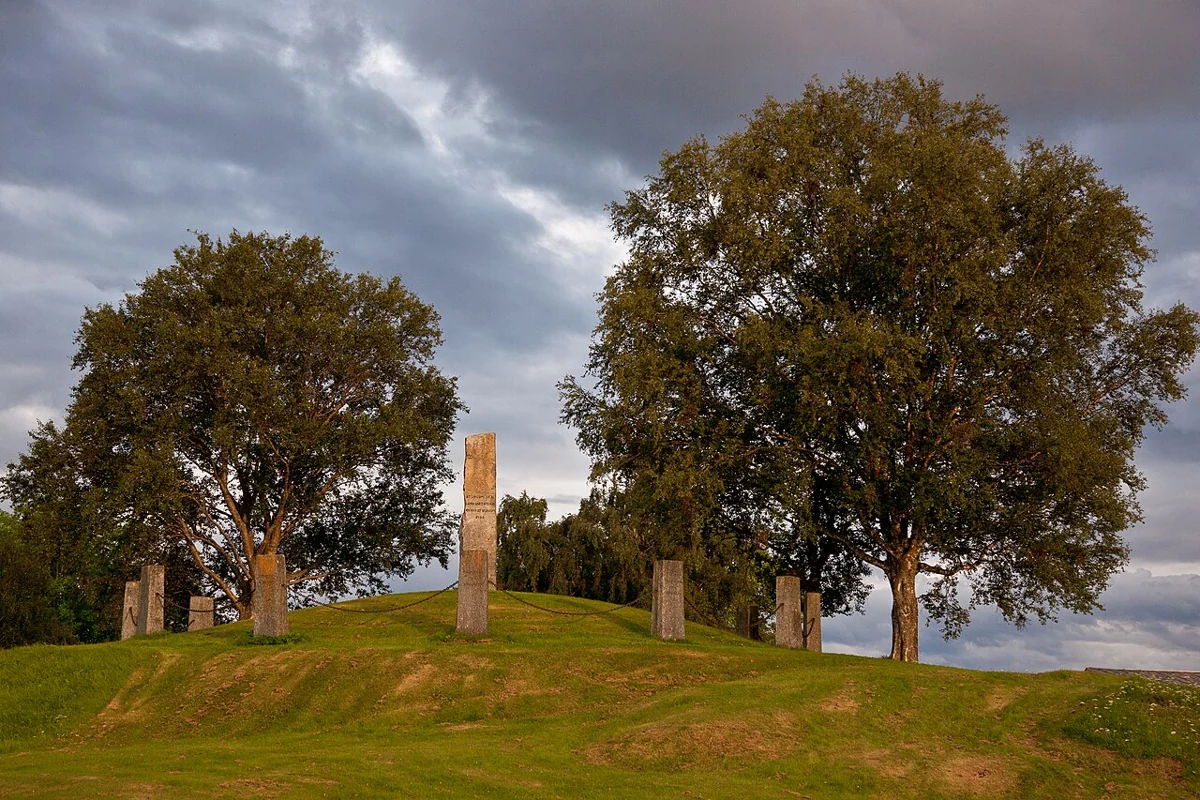
Tinghaugen at Frostating, with modern memorial stones marking the historic assembly tradition. The stones shown are commemorative, not an intact Viking-Age assembly installation.Image: Stig Morten Skjæran · CC BY-SA 3.0
A memorial on Tinghaugen introduces the assembly that served Trøndelag and neighboring districts. It is a stop for thinking about representation, law and negotiated power.
Historical context: The stones were erected in 1914. The precise original meeting location is uncertain, although it lay nearby.
Before you go: Combine the outdoor memorial with seasonal local visitor information at Frosta.
Source reviewed 2026-10-18. Confirm current access with the operator.
Ship-burial mound
Gokstad burial mound
Sandefjord, Vestfold
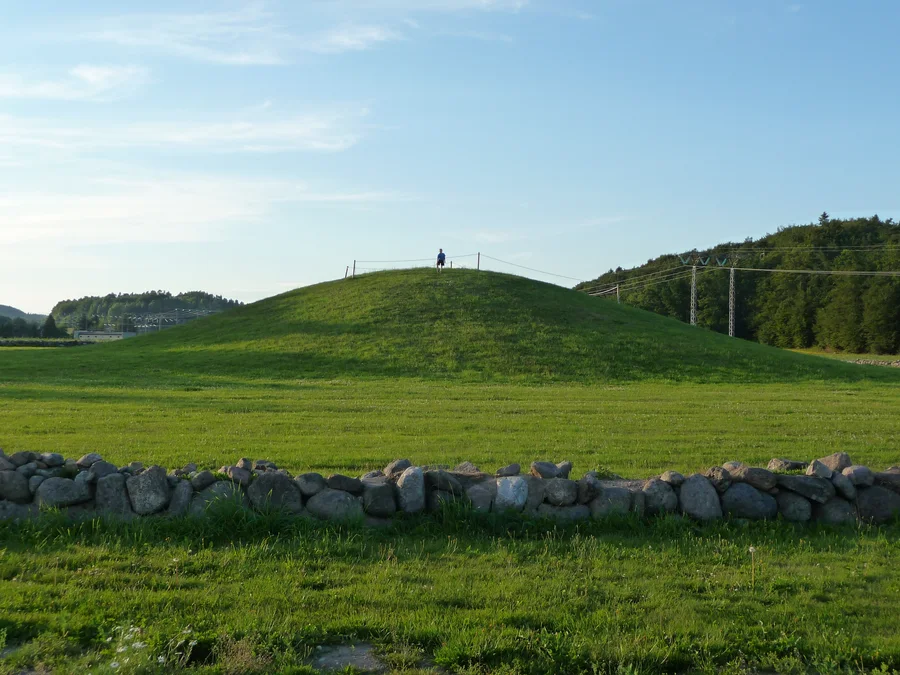
Gokstadhaugen in Sandefjord, photographed in 2008. This is the burial mound from which the Gokstad ship was excavated, not a surviving ship display.Image: EsP72 · CC BY-SA 3.0
Period: Viking Age: around 900
Gokstadhaugen is the landscape counterpart to the famous Gokstad ship. Excavation in 1880 uncovered the vessel beneath this mound near Sandefjord. The outdoor monument helps put the burial back into its local setting, while the surrounding park provides interpretation of the discovery and the ship that was removed.
Visiting: The municipality lists parking by the entrance, benches, information boards, and a walking and cycling approach along Helgerødveien. The original ship is not displayed at this outdoor site.
At Flolid, sculpture and interpretation introduce the regional assembly, lawmaking and disputes that connected communities in western Norway. Nearby Eivindvik adds another part of the assembly’s landscape.
Historical context: The park is a modern memorial; saga accounts and historical interpretation inform the identification of assembly locations.
Before you go: Use the official route information and arrange guided group visits ahead.
Source reviewed 2026-10-18. Confirm current access with the operator.
Hæreid Iron Age Burial Site
Eidfjord, Vestland
A terrace above Eidfjord preserves a substantial cemetery in a fjord farming landscape. A walk here puts maritime routes beside the communities that lived along them.
Historical context: Research has identified graves from several Iron Age periods, including a cairn interpreted as pre-Roman and a Viking-Age burial.
Before you go: Collect a cultural-history walking map from the local tourist office and follow established paths.
Source reviewed 2026-10-18. Confirm current access with the operator.
Stone rings and burial mounds
Hunn burial ground
Fredrikstad, Østfold
Stone rings at Hunn, photographed in 2014. These visible monuments form part of a larger burial landscape with remains from different Iron Age periods.Image: Vidariv · CC BY-SA 4.0
Period: Iron Age, including Roman-period and Viking-age graves
Hunn brings together stone rings, mounds, and other burial remains across a broad archaeological landscape. The cemetery contains graves from different parts of the Iron Age, including Roman-period and Viking-age burials. Its varied monuments are a reminder that this landscape accumulated over centuries rather than representing a single moment.
Visiting: Use the local Ancient Trail guide to locate the stone-ring field and surrounding monuments. Follow established paths and any excavation barriers; different parts of the archaeological landscape may have different access conditions.
The restored Iron Age stone settings at Istrehågan, photographed in 2016. These monuments predate the Viking Age by several centuries.Image: John Borg · CC BY-SA 4.0
Period: Migration Period: about 400–600
At Istrehågan, upright stones create dramatic ship shapes within a burial ground older than the Viking Age. The restored stone settings belong to the Migration Period. They offer a useful comparison with later Viking ship imagery, without assuming that similar shapes always carried exactly the same meaning.
Visiting: Check the county directions because signs can be limited. Visitors able to walk are encouraged to use Furustadlia 45 parking. Camping and fires are prohibited within the burial area.
Jellhaugen photographed in 2013, before the nearby ship grave was discovered. The mound’s modern reconstructed outline does not securely establish its original appearance.Image: Bjoertvedt · CC BY-SA 3.0 NO
Jellhaugen rises over the Gjellestad landscape, close to the separate Viking ship grave discovered in 2018. Research places the mound’s construction before or around the centuries leading into the Viking Age. Its present shape is reconstructed, and archaeologists still question its original form and whether it contained a burial.
Visiting: Treat this as a landscape stop, not a display of an exposed ship. Check local access arrangements and signs before entering farmland; archaeological work may affect routes around Gjellestad.
The site of a hall building in the Kaupang landscape, photographed in 2008. This archaeological setting should not be mistaken for a surviving Viking hall.Image: Colliekar · CC BY-SA 4.0
Period: Viking Age: about 800–900s
Kaupang developed around 800 into a settlement connected with production, exchange, and overseas trade. Excavated objects link this coast with the North Sea, Baltic, and more distant networks. Nearby Huseby had an important hall, so the surrounding landscape reveals connections between trade, local farms, and elite power.
Visiting: Plan a landscape visit and check the seasonal museum program before traveling. Archaeological remains are not a complete standing Viking town; guided interpretation can help explain what excavations revealed.
A large reconstructed chieftain’s longhouse is the focus of a visit to Borg. The museum brings together the archaeological story of the site, architecture, and craft. The building visitors enter is a modern reconstruction, distinct from the original remains.
Plan your visit: Plan this as part of a Lofoten stay, not an Oslo day trip. Check the schedule for your month: winter opening is more limited. Confirm any feast, outdoor activity, or special program separately from ordinary museum admission.
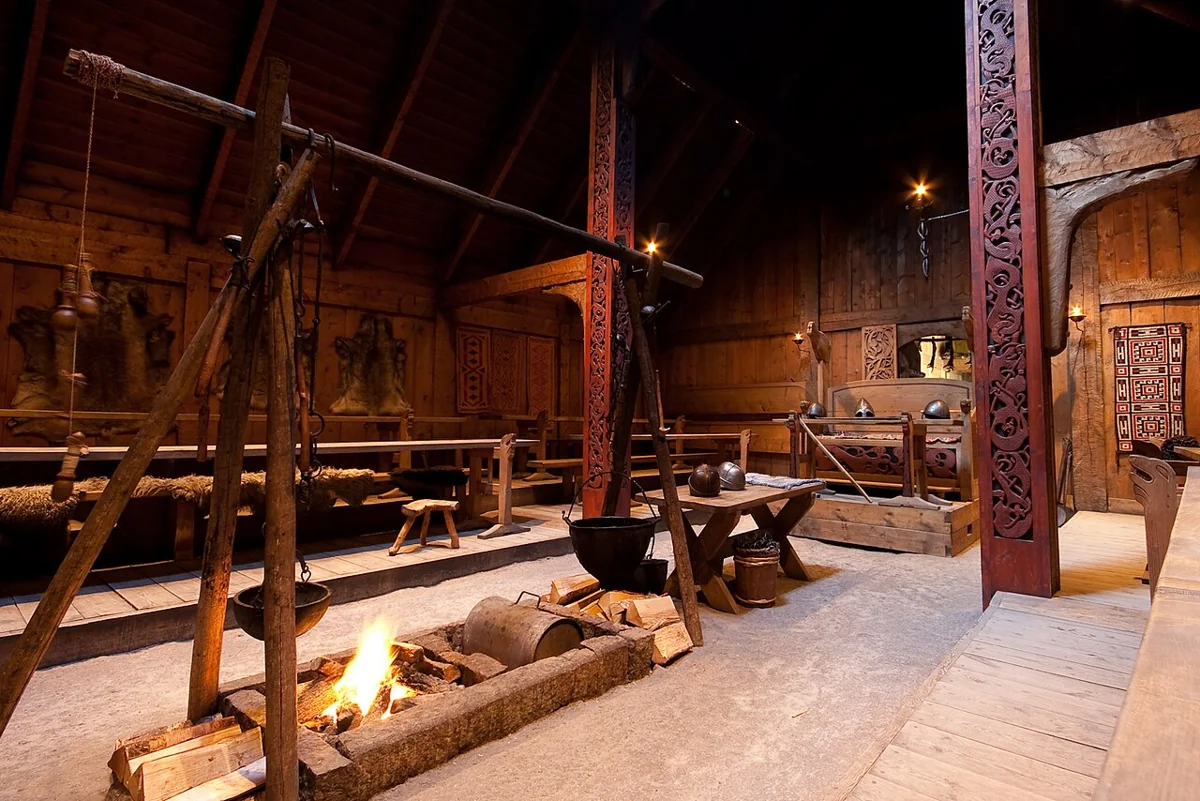
Interior of the reconstructed Viking hall at Lofotr, Norway. The modern reconstruction helps visitors consider lighting, heat and shared indoor space; it is not an intact ancient interior or a measurement of Viking-Age air quality.Image: Jon Olav Eikenes · CC BY 2.0
Burial landscape · Reconstructed hall
Midgard Viking Centre & Borre
Borre, near Horten in Vestfold
Combine the Borre mound landscape with exhibitions and a modern reconstructed Viking hall. It is a useful stop for exploring power, gatherings, and commemoration in the Oslofjord region.
Plan your visit: Check both the center and hall before visiting; individual areas can close for events. On the October 16, 2026 source check, the Norwegian visitor page announced a hall closure through that date. The outdoor park and indoor attractions have different access arrangements.
The entrance to Borre's burial-mound park near Horten, Norway, photographed in 2021. The protected landscape preserves mounds from before and during the Viking Age.Image: Wolfmann · CC BY-SA 4.0
Coastal cairn cemetery
Mølen burial cairns
Larvik, Vestfold
A row of burial cairns at Mølen, photographed in 2008. The stone-covered coast is both a geological landscape and a place of ancient remembrance.Image: Colliekar · CC BY-SA 4.0
Period: Iron Age; individual monuments vary
Mølen combines a pebble-covered coastal landscape with a large concentration of ancient burial cairns. The monuments belong to the wider Iron Age landscape explored on Vestfold’s Viking Trail. Their setting beside the sea invites visitors to consider how graves, movement, and coastal visibility could connect.
Visiting: The coastal path approaches Mølen from Helgeroa or Nevlunghavn. This is an outdoor, uneven stone landscape: choose suitable footwear, follow marked routes, and leave stones and cairns undisturbed.
Rogaland’s archaeological collections provide evidence of regional prehistory and objects connected with Viking journeys. This is a broader museum, not exclusively a Viking attraction.
Before you go: The official tourism listing links to the museum operator; confirm current exhibitions and opening dates there before visiting.
The restored Oseberg mound, photographed in 2015, marks the burial landscape. The excavated ship and grave goods are not inside the mound.Image: Karl Ragnar Gjertsen · CC BY-SA 4.0
Period: Viking Age: burial in 834
The grassy mound in Slagendalen marks the original setting of the Oseberg ship burial. Two women were buried here in 834 with textiles, carved wood, animals, and other grave goods. Excavation in 1904 transformed knowledge of Viking craftsmanship; the mound visitors see today was restored after excavation.
Visiting: Visit the outdoor burial site rather than expecting the original ship here. A cultural trail follows Vellebekken to the mound; consult local information before planning your route.
This enormous timber-built mound offers a comparison with the monumental landscapes inherited by Viking-age communities. Its construction shows the ability of earlier elites to mobilize labor.
Historical context: Built in the sixth century, it predates the Viking Age. Stories about King Rakne are legends, not an excavated royal identification.
Before you go: Follow the signed walking access and check seasonal guided visits.
The modern Myklebust ship reconstruction at Sagastad. Its complete appearance extends beyond the surviving burial evidence and depends on interpretive choices.Image: Islandmen · CC BY-SA 4.0
A full-size modern reconstruction of the Myklebust ship anchors an interpretation of Nordfjordeid’s Viking-Age power and burial traditions. It is a reconstruction, not the excavated original vessel.
Before you go: Check the dated opening calendar and book a private guided visit in advance if needed; cruise-call days may affect schedules.
Different mound shapes make this cemetery a useful place to compare burial practices. Excavation of an unassuming mound revealed a richly furnished woman’s burial from around 800.
Historical context: The cemetery spans periods; its striking star-shaped mounds are considered earlier than the Viking Age.
Before you go: Follow the signed approach near Hovden and keep off the monuments.
Sola Ruin Church, photographed in 2009. The present building incorporates modern restoration of a medieval church; it is not an intact Viking-age structure.Image: HaraldHognerud · CC BY-SA 3.0 NO
Period: Medieval: twelfth century; modern restoration
Sola’s hilltop church began in the twelfth century, after the Viking Age. Later abandonment, conversion into an artist’s home, wartime demolition, and restoration all shaped what stands today. It is a useful stop for understanding how medieval remains can survive through rebuilding rather than remaining untouched ruins.
Visiting: The local visitor page identifies parking nearby and offers contacts for tours. Check access before expecting to enter: the restored church also hosts weddings, concerts, and other events.
The place associated with Olaf Haraldsson’s death in 1030 explores warfare, kingship and conversion through a wider historic landscape and reconstructed buildings.
Before you go: Consult the current program for access to the longhouse and demonstrations; the summer experience is seasonal.
NTNU’s small archaeological display in Krambugata reveals successive timber churches and evidence of homes from the end of the Viking Age beneath them.
Historical context: The remains span several building phases; the church’s history includes unanswered questions rather than a single settled identification.
Before you go: Check the university museum’s current access hours for this separate exhibition location.
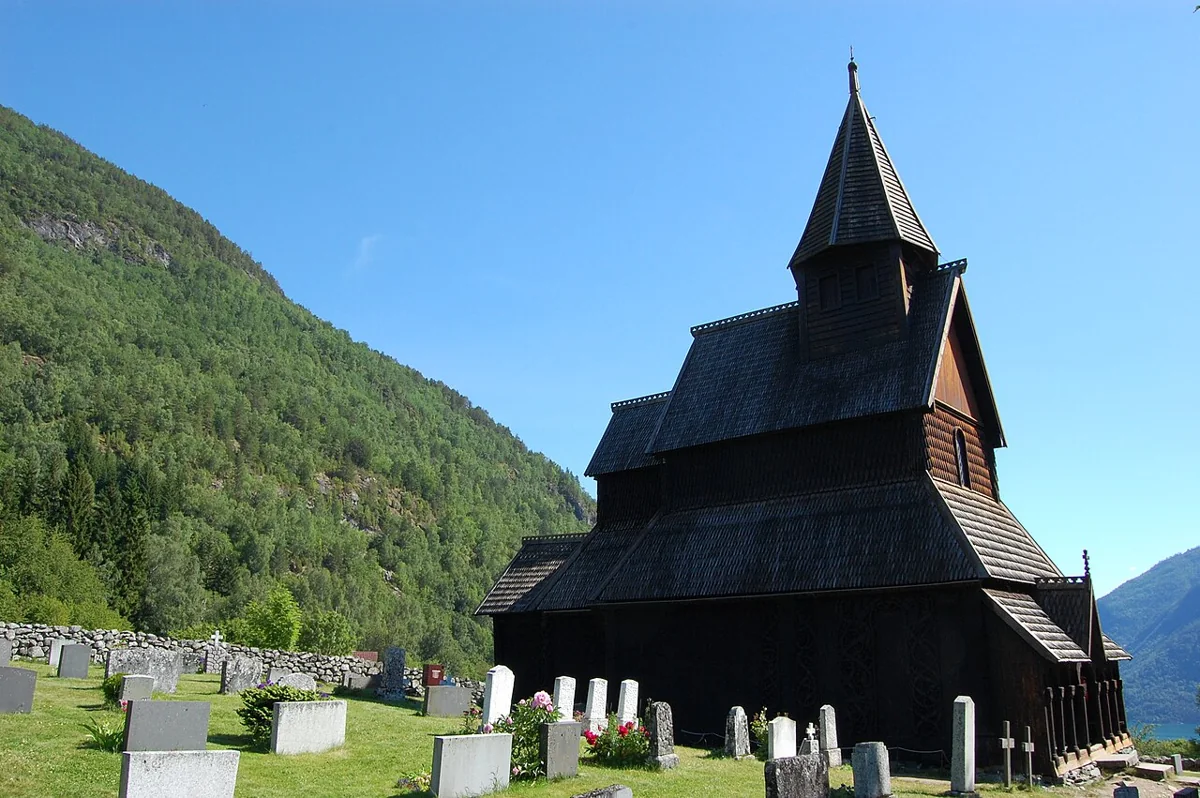
Urnes stave church in Norway. The medieval church preserves woodcarving traditions discussed in our article on art across religious change.Image: karaian · CC BY 2.0
The famous carved portal makes this a rewarding stop for the transition from late Viking animal ornament to medieval church art. Earlier carved timbers were reused in the present church.
Historical context: The standing building dates to the twelfth century; the reused carvings belong to an earlier church.
Before you go: Check seasonal guided access and transport connections to Ornes.
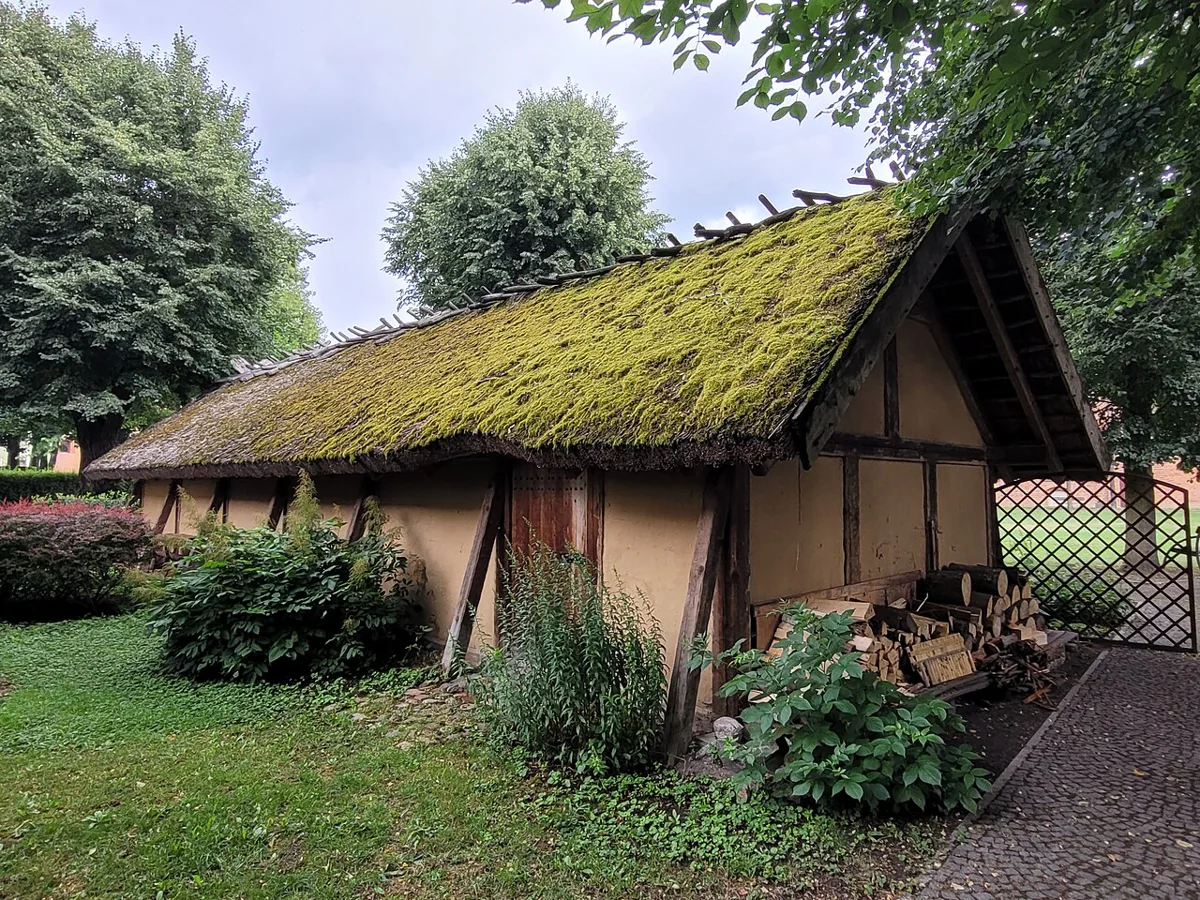
A modern reconstruction of a Truso house in the courtyard of Elbląg Museum, Poland, photographed in 2024. This museum interpretation is separate from the original settlement site at Janów Pomorski.Image: Bornholm · CC BY-SA 4.0
The museum provides a visitor-friendly route into Truso research and the trading world of the southeastern Baltic, including interpreted settlement features.
Historical context: Truso’s archaeological site and the museum’s reconstructed hut are different places and kinds of evidence.
Before you go: Check current Truso displays and seasonal museum hours.
Source reviewed 2026-10-18. Confirm current access with the operator.
Slavs and Vikings’ Center, Wolin
Modern reconstructed buildings in the Wolin Viking setting. They visualize interpretations of the past rather than preserving an unchanged Viking-Age settlement.Image: Radosław Drożdżewski (Zwiadowca21) · CC BY-SA 3.0
Reconstructed buildings and demonstrations explore the early medieval Baltic world of Slavic and Scandinavian contacts. The name Jomsborg should not be read as proof that the legendary stronghold has been identified.
Before you go: Check the seasonal calendar and festival arrangements; large events use different tickets and parking rules.
Visible remains on the Brough of Birsay, Orkney. The site developed through successive periods; its surviving buildings do not all belong to one moment.Image: Ekrem Canli · CC BY-SA 4.0
On this tidal Orkney island, Norse settlement remains overlie earlier Pictish traces, with later medieval church remains nearby. The different periods should be read separately.
Before you go: Only cross at suitable low tide after checking current advice. The causeway can be rocky and slippery; leave time to return safely.
Source reviewed 2026-10-18. Confirm current access with the operator.
Iona Abbey and Nunnery
Inner Hebrides
The monastic community endured repeated Viking attacks. Early carved crosses and the museum help explain the Christian networks affected by raiding and migration.
Historical context: The main abbey buildings belong to later medieval rebuilding.
Before you go: Plan island ferries and admission together; allow for weather disruption.
Source reviewed 2026-10-18. Confirm current access with the operator.
Jarlshof Prehistoric and Norse Settlement
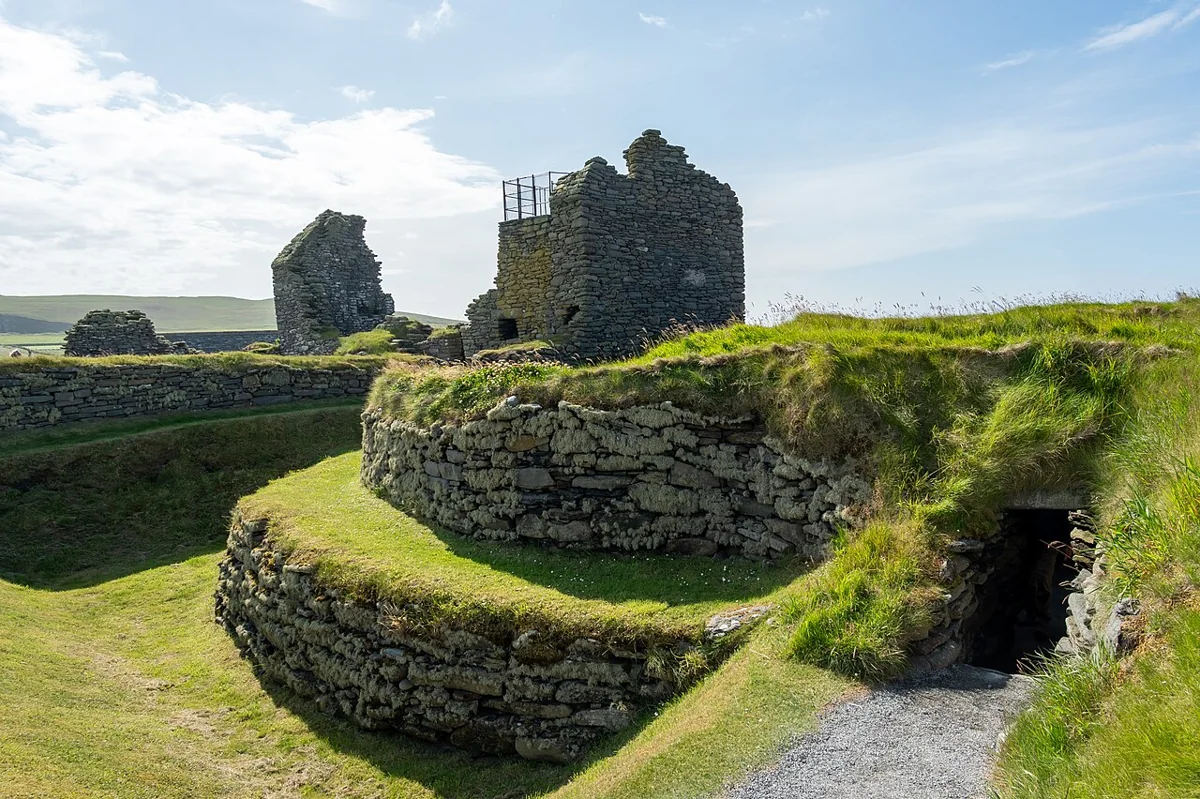
Jarlshof in Shetland, photographed in 2026. This layered settlement includes Norse longhouses as well as much earlier and later remains; not every visible wall belongs to the Viking Age.Image: Ekrem Canli · CC BY-SA 4.0
Successive settlement remains at Sumburgh include Norse buildings within a much longer archaeological sequence. The site helps place Shetland’s Norse history in its local landscape.
Before you go: Prepare for exposed weather and uneven paths; use the operator’s access guidance and seasonal schedule.
A prehistoric tomb later entered by Norse visitors preserves their runic graffiti. The cairn itself predates the Viking Age by millennia, and the inscriptions are medieval.
Before you go: Access is by guided tour from the Stenness visitor centre; reserve ahead and check the low entrance passage requirements.
Pictish sculpture from the late eighth to late tenth centuries reveals the neighboring societies encountered by Norse travelers. Look closely at animals, riders and Christian imagery.
Historical context: These are Pictish monuments, not Viking runestones.
Before you go: Check seasonal opening and reserve admission where required.
The Early People gallery includes Viking objects within Scotland’s long archaeological history. It places Scandinavian contacts alongside the communities already living in the region.
Before you go: Use the Chambers Street museum in Edinburgh; check the gallery map and any current display changes.
Archaeological collections place Norse settlement among Shetland’s earlier and later communities. Everyday objects offer a counterpart to the building remains at Jarlshof.
Before you go: Start with the lower galleries for early history; archive research and specialist enquiries need separate planning.
These riverside defenses evoke the danger of seaborne attacks along the route toward Santiago. The landscape also hosts modern celebrations of Galicia’s Viking connections.
Historical context: Visible structures include later rebuilding; modern festivals are theatrical remembrance rather than exact reenactments.
Before you go: Check local access and event dates; riverside paths can be slippery.
Start with Stockholm. Explore The Viking World at the Swedish History Museum, then consider a separate day for Birka on Björkö in Lake Mälaren.
Birka’s museum, tours, and visitor boats follow seasonal schedules. Check the sailing date, departure point, return trip, and what the ticket includes before booking. The open landscape and archaeological traces reward a guided visit; expect more than a street of standing ancient houses.
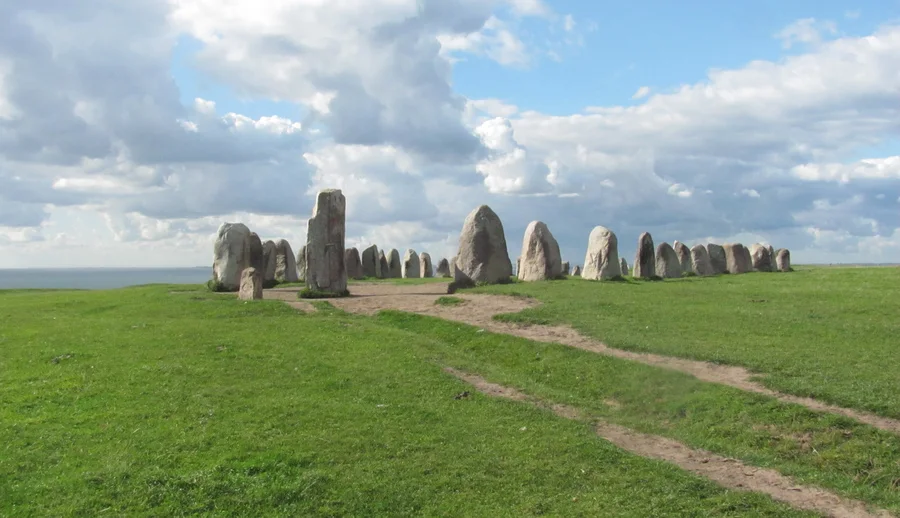
The stone ship at Ales stenar in Kåseberga, photographed in 2011. The surviving arrangement is impressive, but its original meaning remains open to interpretation.Image: Mivashanti · CC BY-SA 3.0
Period: Late Iron Age, approximately AD 600–1000; purpose uncertain
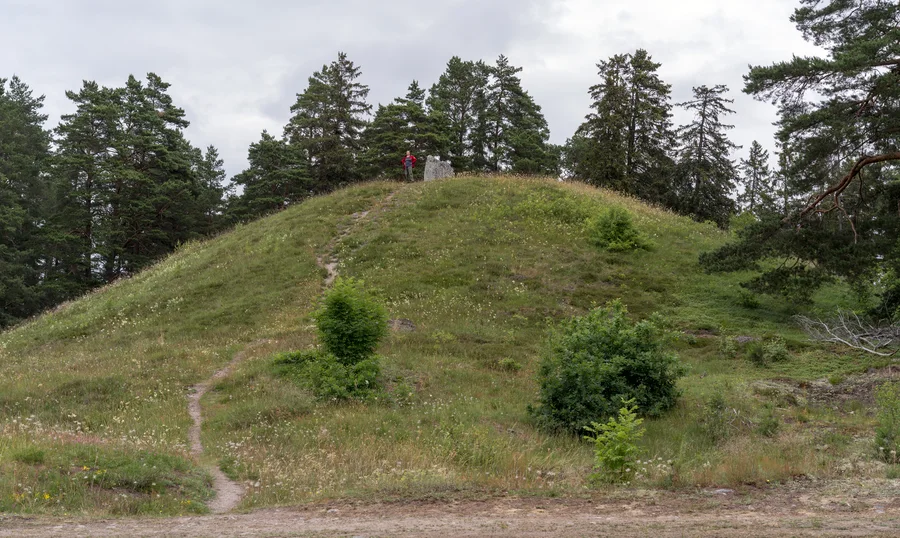
Above the fishing village of Kåseberga, standing stones outline a ship against the Baltic horizon. This is Sweden’s largest stone ship, dated broadly to AD 600–1000. Its original meaning remains debated, so it should not be presented as a securely identified Viking grave or an established astronomical observatory.
Visiting: Ystad’s visitor information lists parking, bus access and toilets in the Kåseberga area. Use the official area map to plan the approach; allow time for the walk up to the monument.
Anundshög outside Västerås, photographed in 2004. The great mound belongs to a wider archaeological landscape containing smaller burial monuments, stone ships and a runestone.Image: Ben DeRoy · Public domain
Period: Iron Age; great mound dated broadly to AD 500–1050
Near Västerås, a monumental mound, smaller graves, stone ships and a runestone form one of Sweden’s most striking archaeological landscapes. The great mound’s occupant is unknown. Its broad dating spans centuries before and during the Viking Age, making the site useful for exploring how elite commemoration changed over time.
Visiting: The official site describes year-round independent visits, parking and toilets at the visitor center. Guided activities and the café are seasonal; check their current opening information before planning refreshments or a tour.
Two eleventh-century runestones stand beside the ruined medieval church at Ärja. Both were recovered from reuse in the building, and one records a death in the Kalmar Strait, placing local memory within coastal travel networks.
Historical context: The surviving church ruins are medieval, later than the inscriptions.
Before you go: Walk carefully around uneven ruins and avoid climbing the masonry.
Source reviewed 2026-10-18. Confirm current access with the operator.
Assembly site and runestones
Arkils tingstad
Uppland
Arkils tingstad photographed in 2009. The runestones identify a family’s memorial and assembly place; the precise workings of the gathering remain a subject of interpretation.Image: Hedning · CC BY-SA 3.0
Period: Early eleventh century
Beside Lake Vallentuna, two runestones and a square arrangement of stones mark a place associated with an assembly. The inscriptions commemorate a family and describe creating the meeting place. What happened at such gatherings remains debated: the stones do not by themselves demonstrate a modern democratic institution.
Visiting: This is one of the signposted Runriket stops. Consult the municipal route map before traveling, and use the English audio guide linked from the site’s official page to interpret the inscriptions.
The stone ship at Åsa burial ground on Selaön, photographed in 2013. It is one of the visible monuments in a wider Late Iron Age cemetery.Image: Makkek · CC BY-SA 3.0
Period: Late Iron Age
On Selaön in Lake Mälaren, Åsa preserves a cemetery on a ridge rich in prehistoric monuments. Its stone ship gives visitors a clear outline to study among the many graves. The site also belongs to a protected grazing landscape, where archaeological heritage and the survival of meadow plants are closely connected.
Visiting: The county authority describes active pasture with cattle, horses and sheep. Keep a respectful distance from grazing animals and use the official map when planning a walk along the ridge and neighboring burial areas.
The Björketorp monument in 2011. Its runic text dates to the seventh century CE, before the conventional beginning of the Viking Age.Image: Harriks · CC BY-SA 3.0
Period: Seventh century CE, before the Viking Age
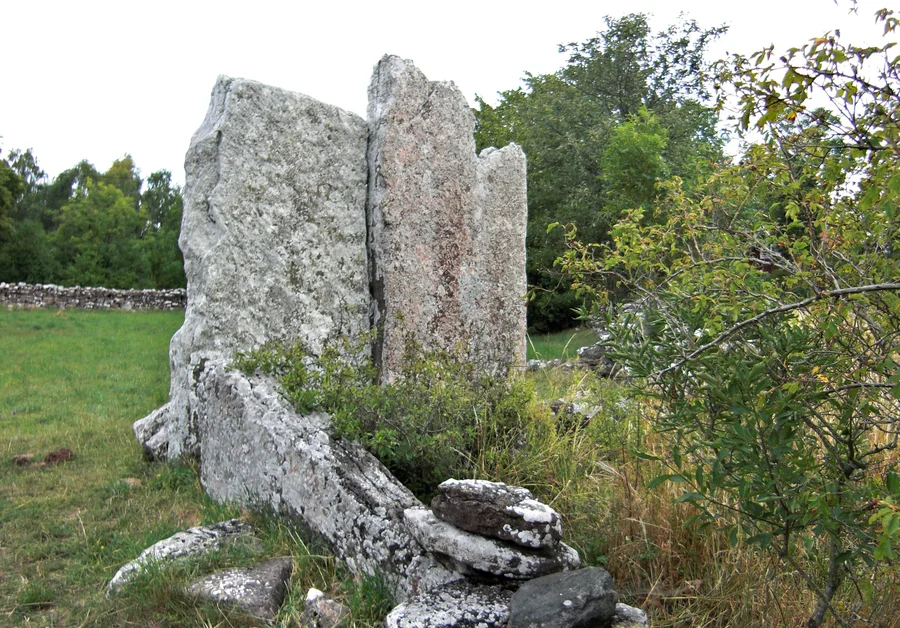
Björketorp’s towering runestone stands with two companion stones and carries an intimidating inscription threatening whoever damages the monument. The county board dates its text to the seventh century CE. It offers a striking contrast with the later Viking Age memorial stones familiar from Uppland, in both language and purpose.
Visiting: Follow signs from the E22 near Leråkra to the visitor parking area. The county board describes a roughly 150-meter walk to the stones, with a stone circle a little farther along.
The stone ship at Blomsholm, photographed in 2008. Its rising end stones mark a burial monument rather than the remains of a wooden vessel.Image: Magnús Þór Magnússon (JJ.sandal) · Public domain
Period: Iron Age; ship setting probably c. 400–600 CE
Blomsholm’s stone ship stands within a much larger funerary landscape near Strömstad. The tall end stones and lower sides create a recognizable vessel shape. Nearby excavated graves date to approximately 400–600 CE, and the ship setting is probably contemporary: an impressive reminder that stone ships predate the Viking Age.
Visiting: Use the county board’s visitor information to locate the ship setting and surrounding monuments. Plan an outdoor walk and take time to distinguish the different burial grounds around the estate.
North of Bro Church stands a memorial raised by Ginnlög for Assur. Dated around the turn of the eleventh century, it offers a glimpse of a prominent Mälaren family and the public language of remembrance.
Historical context: The stone was formerly reused in the church wall; its current position is not its original setting.
Before you go: Approach through permitted church-area routes and respect local signs.
Source reviewed 2026-10-18. Confirm current access with the operator.
Runestones and early Christian cemetery
Broby bro
Uppland
Runestones U 136, U 137 and U 135 at Broby bro, photographed in 2007. These stones were moved from their earlier positions beside the bridge.Image: Berig · CC BY-SA 3.0
Period: Eleventh century
Runestones near Broby bro connect local families with travel far beyond Scandinavia. Archaeologists also uncovered an early Christian cemetery here. One burial has been linked, probably rather than certainly, to Estrid, a woman named in the inscriptions. The site brings personal remembrance and changing burial practices into the same landscape.
Visiting: The municipal guide distinguishes stones beside the parking area from three others moved roughly 150 meters away. Follow the official site description so you do not miss either group during your visit.
A cross-bearing runestone stands near old paths and a crossing of the Lagan.
Historical context: The inscription has no secure full interpretation; proposed readings should not be presented as certain.
Before you go: Follow the museum’s Vaggeryd directions despite the misleading /vetlanda/ segment in its URL; the approach includes a short gravel path.
Panoramic view of Eketorp on Öland. The visible rebuilt fort helps interpret an excavated site with both Iron Age and medieval occupation.Image: Sven Rosborn · CC0 1.0
Period: Iron Age and medieval phases; modern reconstruction
Eketorp turns the ground plan of an excavated ringfort into a place you can walk through. Its rebuilt houses represent Iron Age and medieval phases, so the setting should be read as an archaeological reconstruction. It is particularly useful for comparing the bare foundations at other Öland forts with interpreted buildings.
Visiting: Check the official calendar before traveling for staffed activities and indoor access. The operator distinguishes year-round visits to the fort from access inside buildings, which is restricted outside the staffed season.
This eleventh-century memorial was raised by five sons for their father Gunnlev, who died in the east with Ingvar. Pair it with nearby Varpsund to see how one family commemorated the same loss at more than one location.
Historical context: The stone was recovered from beneath a later bridge and re-erected in the nineteenth century.
Before you go: Check the heritage guide before approaching the bridge area.
Source reviewed 2026-10-18. Confirm current access with the operator.
Fällbro runic monuments
Täby, Uppland
At the southern end of Lake Vallentuna, Fällbro combines inscriptions on bedrock with a memorial raised by Kättilö for Jarlabanke. The site adds a more personal final chapter to the powerful man's monuments around the lake.
Historical context: Rock inscriptions are fragile archaeological surfaces, not paths or climbing features.
Before you go: Follow the Runriket route and view the carvings without stepping on them.
A reconstructed settlement explores the transition from the late Viking Age into the early Middle Ages. Craft settings, characters, storytelling, and activities make this an option for visitors who enjoy history presented through participation.
Plan your visit: Treat it as a seasonal attraction. The opening page currently lists September 2026 dates; that does not confirm later or next-season availability. Check with the operator before traveling, especially outside the advertised season or for English-language activities.
On Frösön, an eleventh-century inscription links bridge building with the Christianization of Jämtland. Unlike most memorial stones, it commemorates an event and a public undertaking rather than simply naming a dead relative.
Historical context: The identity and authority of its sponsor Östman remain uncertain; the stone has been relocated.
Before you go: Use the heritage guide's current location information on Frösön.
Source reviewed 2026-10-18. Confirm current access with the operator.
Archaeological landscape · Museum
Gamla Uppsala Museum & royal mounds
Gamla Uppsala, north of central Uppsala
Pair the museum’s objects and interpretations with the monumental burial landscape outside. The political and religious importance of this place reaches back before the Viking Age: it is an opportunity to explore the longer Iron Age context, not just one period.
Plan your visit: Check the museum’s own calendar for current opening hours and English tours. Leave time for the outdoor landscape as well as the displays, and ask about the walking route if uneven surfaces are a concern.
The landscape at Gamla Uppsala, photographed in 2018. The site connects early royal power, burial traditions, and later stories about the past.Image: Guillaume Baviere · CC BY-SA 2.0
Gårdby runestone
Öland
Gårdby runestone; photograph of the surviving stone.Image: Berig · CC BY-SA 3.0
At Gårdby Church, an ornamented runestone incorporates its carver's message into the cross. It is a useful small stop for visitors interested in the people who made memorials, as well as those commemorated by them.
Historical context: The Christian cross belongs to the inscription's historical setting; Viking Age monuments were not uniformly pagan.
Before you go: Visit respectfully within the church environment.
Source reviewed 2026-10-18. Confirm current access with the operator.
Burial ground
Gettlinge burial ground
Öland
Gettlinge burial ground on Öland, photographed in 2013. Its surviving stones belong to a larger archaeological landscape with several different forms of graves.Image: Hstad · CC BY-SA 3.0
Period: Iron Age; some earlier burial traditions
Stone ships, upright slabs, and low stone settings mark a burial landscape beside Öland’s western ridge. The variety matters more than a single date: this is a cemetery shaped across generations, not one Viking monument. Its northern part offers particularly varied grave forms and views toward the Kalmar Strait.
Visiting: Explore on foot using the official site information. The property manager warns that many southern Öland cemeteries lack parking: choose a safe designated stopping place rather than stopping along the road.
Surviving sections of an earthwork reveal a major effort to control movement in Viking-Age Östergötland.
Historical context: Its builders and precise political purpose are unknown; later activity has removed parts of the line.
Before you go: The authority reports no visitor parking or information board at the Hageby approach. Do not park on private plots; plan lawful access carefully.
Gotland’s museum provides context for the island’s picture stones and rich archaeological record. Its carved monuments help connect commemoration, belief and seaborne contacts.
Before you go: The official website explains its translation options; confirm current galleries and visitor information before a Visby visit.
Standing stones at Greby burial ground in 2007. Excavated graves place the cemetery in the earlier Iron Age, centuries before the conventional Viking Age.Image: Morgan Antonsson · CC BY-SA 3.0
Period: Iron Age, c. 200–600 CE
Tall upright slabs punctuate the closely packed graves at Greby near Grebbestad. Excavations recovered cremated remains, spindle whorls, glass beads, and bone combs, placing use of the cemetery around 200–600 CE. The dramatic stones therefore belong chiefly to the centuries before the conventional beginning of the Viking Age.
Visiting: Find the site just north of Grebbestad using the county board’s map. This is an outdoor archaeological landscape; compare the standing stones and low grave forms while keeping to existing routes.
The Gripsholm runestone, associated with the commemoration of distant journeys. Its inscription preserves an act of remembrance rather than a complete travel log.Image: Liftarn · CC BY-SA 3.0
Two eleventh-century stones beside the approach to Gripsholm Castle recall family memorials and distant journeys. One is associated with the expedition of Ingvar, linking a quiet lakeside visit to the wider eastern Viking world.
Historical context: Their original locations are unknown; the castle is much later than the inscriptions.
Before you go: Find the stones along Rännarbanan, the castle approach, and follow local access signs.
The large runestone at Hälsingtuna Church remains in its original setting. Combine it with Hög to compare the scale and presentation of northern memorials rather than treating the runestone tradition as exclusively southern Swedish.
Historical context: The present church environment has changed since the stone was erected.
Before you go: Use the heritage guide's location link and follow local churchyard signs.
Source reviewed 2026-10-18. Confirm current access with the operator.
Helgö archaeological site
Imported religious objects found on Helgö, displayed together in a museum. Their varied origins illuminate the site's long-distance connections; their manufacture predates their final deposition.Image: Berig · CC BY-SA 4.0
House terraces and archaeological interpretation recall an important centre of craft and long-distance contacts in Lake Mälaren.
Historical context: Much of the site’s activity predates the Viking Age; famous portable finds are not left at the settlement.
Before you go: Follow local signs and the designated approach from the Fornbyvägen area; respect surrounding homes.
Hjortsberga burial ground in Blekinge, photographed in 2005. Its varied grave forms belong to the later Iron Age landscape beside the medieval church.Image: Henrik Sendelbach · CC BY-SA 3.0
Period: Later Iron Age and Viking Age, c. 700–1050 CE
Beside Hjortsberga’s medieval church lies a cemetery with stone ships, mounds, upright stones, and triangular settings. The burial ground is generally assigned to approximately 700–1050 CE. Visiting both places makes the change from an older burial landscape to a Christian church setting tangible without assuming the transition happened overnight.
Visiting: Locate the burial ground beside Hjortsberga church on Johannishusåsen in Blekinge, not the similarly named site in Närke. Consult the regional visitor page before combining the cemetery with a church visit.
Two stones outside Hög Church let visitors compare conventional Viking Age runes with the unusually compact staveless form. Their family memorials connect regional writing styles with bridge building, remembrance and Christian prayer.
Historical context: Staveless runes are a regional writing variation, not a separate secret language.
Before you go: Look closely without touching or tracing the carvings; respect the churchyard.
Source reviewed 2026-10-18. Confirm current access with the operator.
Hovgården on Adelsö
Lake Mälaren
Across the water from Birka, Hovgården preserves a royal landscape of burial mounds, settlement terraces and a runestone near the former harbor. It complements the trading town by focusing on authority and control of movement across the lake.
Historical context: The visible Alsnöhus palace ruins are medieval, not the Viking Age royal residence.
Before you go: Plan transport to Adelsö separately from a Birka excursion.
A stone ship in the cemetery surrounding Inglinge hög, seen from the great mound in 2009. The wider site contains several different forms of burial monument.Image: Achird · CC BY-SA 3.0
Period: Iron Age; great mound probably sixth–seventh century
Inglinge hög combines a large mound with a standing stone and an ornamented stone globe. Smaller burial monuments spread across the surrounding ground. The mound probably predates the Viking Age, offering a useful comparison with later elite graves and reminding visitors that Scandinavian monumental landscapes developed over many centuries.
Visiting: The county authority lists parking and an information board at this site in Ingelstad. Use its directions for the approach and remember that the mound and surrounding stones are protected archaeological remains.
Aerial photograph of Ismantorp in April 2007. The circular enclosure and interior foundations show the fort’s plan without turning uncertain interpretations into reconstructed buildings.Image: L.G.foto · CC BY-SA 4.0
Period: Earlier Iron Age
A circular stone wall encloses a dense plan of house foundations, lanes, and entrances at Ismantorp. Unlike reconstructed Eketorp, the ruins leave much to your imagination. The fort’s purpose remains debated: its imposing defenses and numerous gates do not fit a simple explanation as an emergency refuge.
Visiting: Follow signed roads toward the parking area, then walk the remaining few hundred meters to the fort. Use the official directions and allow time to examine the foundations without moving stones.
Jarlabankes bro photographed in 2012. The modern presentation highlights an eleventh-century causeway, whose standing runestones commemorate Jarlabanke and his claims to local power.Image: S. Brunbäck (Svanevit) · CC BY-SA 3.0
Jarlabanke marked a causeway across wet ground with runestones celebrating his own position while he was still alive. Two stones remain at its northern end. The site connects travel infrastructure with Christian commemoration and claims to land, although today’s presentation includes work to reveal and restore the monument.
Visiting: Begin at this gateway to the Runriket heritage route, where there is an outdoor exhibition. The municipal page provides an English audio guide; use the route map to connect nearby stops.
Järvsö preserves one of the few Hälsingland runestones still standing at its original location. It offers a northern counterpoint to the much denser concentrations of memorials around Lake Mälaren.
Historical context: A surviving runestone marks a particular commemorative practice; its absence elsewhere does not mean an absence of settlement.
Before you go: Consult the heritage map linked from the regional guide before setting out.
Two tall runestones flank an old road at Källby. Their contrasting carvings include a cross and a striking humanlike figure, making the site especially useful for comparing imagery and commemorative language.
Historical context: The stones were not necessarily an original pair: one was moved here from Skälvum in the seventeenth century.
Before you go: Take care around the road and view from safe standing areas.
Source reviewed 2026-10-18. Confirm current access with the operator.
Karlevi runestone
Öland
The Karlevi runestone on Öland. Its inscription joins commemoration with the demanding conventions of skaldic verse.Image: Alers · CC BY-SA 3.0
The Karlevi memorial offers a compact encounter with late tenth-century runic culture on Öland. Unlike many island inscriptions cut into local limestone, this monument uses porphyry, making its material another part of the story.
Historical context: The heritage register dates it to the late 900s.
Before you go: Use the heritage listing to locate the stone and respect surrounding agricultural land.
At Kungshållet, an imposing eleventh-century runestone stands among burial monuments beside an old route. Its memorial to Spjut includes verse about journeys west, connecting landscape, family status and remembered achievement.
Historical context: Parts of the verse are difficult to interpret; the nearby mound's association with Spjut is tradition.
Before you go: Consult the heritage guide and take care beside the road.
Source reviewed 2026-10-18. Confirm current access with the operator.
Köpings Church runestone display
Öland
Runestone fragments displayed inside Köpings Church preserve evidence of colored surfaces. They help overturn the familiar image of Viking memorials as unpainted gray stone and show how fragments can retain information lost from more complete monuments.
Historical context: The church display contains archaeological finds, not an intact Viking Age building.
Before you go: Confirm church access before traveling and avoid services.
Carved directly into bedrock, Norahällen records family ownership and inheritance. Its present inland position also invites visitors to imagine a different shoreline: boats could once approach much closer to the inscription.
Historical context: Land uplift has substantially changed this landscape since the eleventh century.
Before you go: Locate the rock through the heritage guide and do not walk over the carved surface.
Source reviewed 2026-10-18. Confirm current access with the operator.
Burial mound and cemetery
Nordians hög
Uppland
Nordians hög photographed in 2021. The mound probably dates to the sixth or seventh century, placing it before the conventional beginning of the Viking Age.Image: SiberianJay · CC BY-SA 4.0
Period: Iron Age; mound probably sixth or seventh century
At Åshusby, Nordians hög rises above a cemetery containing many smaller monuments. The great mound probably predates the Viking Age, while the surrounding burial landscape has a longer history. Its scale invites questions about labor, status and memory; the traditional royal name does not identify a historically verified occupant.
Visiting: The Fysingen reserve page gives Åshusby gård as the bus stop for Nordians hög. Check current services and the reserve map, and follow posted restrictions if extending your walk toward the lakeside.
Odens flisor in 2008. These upright limestone slabs belong to an archaeological cemetery; the tale of Odin splitting a stone is a later legendary explanation.Image: Gunnar Creutz · CC BY-SA 3.0
Period: Iron Age burial landscape
Two tall limestone slabs rise from a cemetery containing around forty graves. Their name connects them with a story about Odin and his horse Sleipnir, but that legend is not an archaeological explanation. The stones also make a starting point for exploring the wider Iron Age landscape around Ismantorp.
Visiting: A parking area adjoins the site, and the Mittlandsleden walking route passes it. Climbing the stones is prohibited. The county board describes a longer circuit linking Ismantorp and Rönnerum.
Near Norra Åsarp, the Olsbro stone remembers a son killed in Estonia. It brings Baltic journeys into a rural inland setting, showing how overseas events affected families far from the major trading ports.
Historical context: The inscription records the death but does not provide a full account of the journey.
Before you go: Use the heritage location information and respect the working countryside around Frugården.
Source reviewed 2026-10-18. Confirm current access with the operator.
Burial ground
Pilane burial ground
Bohuslän, Tjörn
Pilane burial ground on Tjörn, photographed in 2013. The ancient cemetery dates to the Iron Age, while modern sculpture adds another layer to the landscape.Image: Carl-Magnus Helgegren · CC BY-SA 3.0
Period: Iron Age, c. 0–600 CE
Pilane combines an Iron Age cemetery with a landscape now also used for contemporary sculpture. Around ninety ancient remains include stone settings and standing stones. Keep the two layers separate: modern artworks are additions to the setting, while the cemetery is dated to approximately the first six centuries CE.
Visiting: Consult Pilane’s current visitor information for sculpture-season arrangements and parking charges. The National Property Board confirms visits to the burial ground; grazing sheep help maintain the surrounding open landscape.
A runestone at the edge of Råby's burial ground commemorates Anund, who died with Ingvar in the east. Raised by two daughters, it is a valuable reminder that women commissioned public memorials to overseas losses.
Historical context: The inscription is stronger evidence than the much later saga's detailed adventure narrative.
Before you go: Use the heritage guide to locate the monument southwest of Håtuna Church.
Source reviewed 2026-10-18. Confirm current access with the operator.
Ramsund Sigurd carving
Södermanland
An eleventh-century rock carving near Ramsund combines a bridge memorial with scenes from the story of Sigurd. The setting beside a former water passage helps explain why this elaborate public image was placed here.
Historical context: The legendary scenes are storytelling, not an illustration of a documented local battle.
Before you go: Use the county's excursion guide for the approach and stay off the rock carving.
Two runestones at Risbyle recall the influential Skålhamra family around Lake Vallentuna. Their ornament gives visitors a close view of the imagery used by local elites; a cross on one stone later inspired Täby's municipal emblem.
Historical context: The modern coat of arms is a later reuse of Viking Age imagery.
Before you go: Use the Runriket guide to plan the lakeside circuit.
Source reviewed 2026-10-18. Confirm current access with the operator.
Rök runestone
Östergötland
The Rök runestone beside the church in Östergötland, Sweden, photographed in 2024. The carved surface invites close attention to how runic writing survives in stone.Image: L’imaginaire · CC0 1.0
Outside Rök Church, a ninth-century memorial carries an exceptionally long inscription. Its densely carved surfaces make this a rewarding stop for understanding how much more runestones could contain than a name and a short memorial.
Historical context: Several passages remain disputed; no single interpretation explains every detail with certainty.
Before you go: Read the outdoor interpretation and keep off the stone.
Source reviewed 2026-10-18. Confirm current access with the operator.
Burial ground
Seby burial ground
Öland
Seby burial ground on Öland, photographed in 2008. The visible stone monuments form part of a long cemetery on the island’s eastern ridge.Image: Achird · CC BY-SA 3.0
Period: Prehistoric, principally Iron Age landscape
Seby stretches along Öland’s eastern ridge, where hundreds of recorded remains include stone settings, mounds, upright slabs, and a stone ship. Some stones carry cup marks. This is a good place to compare the many ways communities marked graves, rather than expecting rows of identical memorials.
Visiting: The property manager lists the cemetery for independent visits. Use its map and park safely; it warns that several southern Öland burial grounds have limited signage and no dedicated parking.
Sigtuna’s museum places the early medieval town within a longer local history. Combine its objects and interpretation with an outdoor walk among the town’s historical traces.
Before you go: Check which museum buildings and exhibitions are open; their locations and schedules differ.
A protective exhibition building beside Sparlösa Church houses an early Viking Age stone with a ship, rider, animals and runes. Walk around it to compare the carved faces rather than viewing only the best-known photograph.
Historical context: Damage and unusual wording prevent a complete, secure interpretation.
Before you go: Check the visitor listing for access to the shelter; a ramp is provided.
Source reviewed 2026-10-18. Confirm current access with the operator.
Church ruins
St. Olof’s church ruins, Sigtuna
Uppland
The medieval ruins of St. Olof’s church in Sigtuna, photographed in 2011. These surviving stone walls represent Christian town life after the Viking Age.Image: Brorsson (Stefan Sjogren) · CC BY-SA 3.0
Period: Medieval; after the Viking Age
The roofless stone walls of St. Olof’s belong to medieval Sigtuna and should not be mistaken for a Viking temple. They offer a follow-on visit to the town’s earlier history, showing how monumental Christian buildings changed the urban landscape. The church’s dedication also connects Sigtuna with the cult of Norway’s Saint Olaf.
Visiting: Use Sigtuna municipality’s visitor page to locate the ruin and combine it with the town museum. Check local notices for access around the masonry; museum opening arrangements are separate from the outdoor ruin.
Two fragments incorporated into Täby Church provide an accessible example of runestones reused as building material. They also connect the surrounding runestone landscape with the later parish church and its famous painted interior.
Historical context: The surviving church and its murals are medieval; they should not be presented as Viking Age art.
Before you go: Check church visiting arrangements and avoid disrupting worship.
Two inscribed stones and an uncarved standing stone form a roadside stop near Tystberga village. The eleventh-century inscriptions relate to the same family and probably refer to travel in both eastern and western directions.
Historical context: The monuments were moved a short distance in the twentieth century; some wording remains uncertain.
Before you go: Plan a safe stopping place rather than parking on the road verge.
Source reviewed 2026-10-18. Confirm current access with the operator.
Uppåkra Archaeological Centre
The modern protective building over the Great Hall excavation at Uppåkra, photographed in 2023; it is not a reconstruction of the hall.Image: Sinikka Halme · CC BY-SA 4.0
Explore the archaeological landscape of a long-lived centre of power south of Lund.
Historical context: Most of the settlement survives as buried evidence rather than standing buildings.
Before you go: The operator notes irregular autumn visitor-centre opening; book a public event or private guided visit in advance.
The mounds of Vada sjökullar viewed from Vada Church in 2018. Their prominent position beside an old waterway is clearer than their still uncertain dating.Image: Jacob Truedson Demitz · Public domain
Period: Iron Age; great mounds undated by excavation
Three large mounds stand beside the former water route through the Vada valley, within a cemetery containing more than a hundred graves. Their exact date is unresolved because they have not been excavated. The setting makes the connection between waterways, settlement and monumental burial particularly easy to explore.
Visiting: The county museum lists Vada kyrka as the nearest bus stop. Start with its visitor map and view the mounds north of the church; do not assume the grassy cemetery has surfaced paths.
Jarlabanke's unusually two-sided memorial at Vallentuna Church extends the story told by his bridge monuments. The wider church setting also contains later runic traces, making it a useful place to follow writing traditions beyond the Viking Age.
Historical context: The standing church and its building inscriptions belong to the medieval period.
Before you go: Use the museum guide and check church access before visiting indoors.
Beside the water north of Bålsta, a tall memorial remembers Gunnlev, who died during Ingvar's eastern expedition. Its reference to his skill steering a knarr makes this a particularly evocative stop for visitors interested in ships and navigation.
Historical context: The inscription offers a personal memorial rather than a complete expedition narrative.
Before you go: Use the heritage directions and take care along the waterside approach.
Source reviewed 2026-10-18. Confirm current access with the operator.
Västerby runestone and causeway
Läby, Uppland
West of Uppsala, an eleventh-century runestone records a bridge commissioned by three sons. Remains of the stone causeway survive, allowing visitors to connect an inscription with the practical improvement to travel that it commemorates.
Historical context: The word translated as bridge can describe a raised roadway rather than a span over open water.
Before you go: Respect cultivated fields and use established approaches.
The Velanda memorial commemorates a husband and ends with an invocation to Thor. It provides an unusually direct comparison with the Christian prayers found on many other surviving late Viking Age runestones.
Historical context: One inscription documents a particular dedication, not the beliefs of every person in the district.
Before you go: Follow the heritage guide's directions to the stone near Väne-Åsaka.
Source reviewed 2026-10-18. Confirm current access with the operator.
Vendel Church and boat-grave landscape
Vendel's medieval church provides a present-day landmark near the famous burial ground; this building is later than the boat graves.Image: Einarspetz · CC BY-SA 3.0
The churchyard landscape is associated with the boat-grave discoveries that named the Vendel Period.
Historical context: The Vendel Period precedes the Viking Age, and the standing church is medieval.
Before you go: Respect the working church and check interior opening times separately from the surrounding landscape.
This archaeological open-air museum at Löddeköpinge uses reconstructed landscapes and activities to explore early medieval daily life. It is an interpretive setting rather than an intact Viking village.
Before you go: Check the dated Swedish program and arrange visits outside advertised openings; the English page contains older scheduling information.
Earlier source notes were checked October 16–17, 2026. Additional listings have individual source-review dates. These reviews establish historical relevance, not guaranteed opening hours or access on your travel date.
Plan around daylight and opening dates
When should you go?
Our starting suggestion for an outdoor history trip is summer, after checking each site’s calendar. Weather varies enormously by latitude, altitude, and coast. A Stockholm forecast says little about northern mountains or Iceland.
Summer
Longer daylight makes it easier to combine a museum with time outdoors. Book the transport and activities that matter most first, especially island visits. Bring a warm layer and rain protection even when your trip is in summer.
Spring & fall
Build the trip around confirmed openings. Seasonal boats, outdoor demonstrations, and smaller sites may have limited dates. Keep a museum or indoor alternative ready for an exposed day.
Winter
Favor a city base and a relaxed museum schedule. Short daylight, cold, and possible travel disruption call for extra time. Do not assume that summer boat routes or remote outdoor sites offer the same winter experience.
Check the requirements for your nationality, passport, residence status, and complete route before paying for travel. Carry the travel document your journey requires, including between countries. Do not assume that visiting one Nordic destination establishes permission for every other territory.
Use government guidance for visa requirements and current border procedures, including whether EES or ETIAS affects your journey. Avoid relying on an old travel article for a launch date or an application link.
Denmark uses DKK, Sweden SEK, Norway NOK, Iceland ISK, and Finland EUR. Similar currency names do not make them interchangeable. Bring a working payment card and know its PIN; check foreign-payment fees with your provider.
Sweden has many cashless businesses, and visitors generally cannot rely on the local Swish app. Finland also widely accepts cards. Keep a backup payment method rather than depending entirely on one phone.
Price accommodation, transport, meals, entry tickets, and a contingency separately. Check whether breakfast, baggage, transfers, and guided activities are included. A cheaper room far from your planned stops may add travel costs and time.
Compare museum passes against the places you will actually visit. Look up age bands and family tickets individually; children’s admission rules are not the same everywhere. We link to live prices instead of promising a fixed daily budget.
Getting around
Choose your bases before choosing a rental car. For city stays, compare public transport with parking and rental costs. For rural sites, check the final connection from the station or bus stop, not just the journey between cities.
Leave room for ferry check-in, transfers, and delays. Confirm the last return service before heading to an island. In Iceland, consult the linked road and weather information each travel day; summer routes are not automatically winter routes.
Bring comfortable walking shoes, layers, a waterproof outer layer, and a small day bag. For winter visits, plan warmer footwear and clothing. Check the forecast again just before departure.
Check plug compatibility and your devices’ voltage ratings. Arrange mobile data for every country on your route, download essential tickets and directions, and carry a charger. Do not count on continuous phone reception away from towns.
Families and accessibility
Plan one main attraction per day with time for food, rest, and changing weather. Ask venues about step-free entrances, walking surfaces, accessible toilets, seating, and the specific boat or tour you intend to use.
Historic sites may have uneven ground. Roskilde’s museum currently notes stairs and limited access in parts of the site, so contact it about your needs before visiting. “Accessible destination” does not describe every building or activity.
Check restaurant and grocery opening hours near your accommodation, particularly on holidays and in smaller places. Tell restaurants about dietary requirements in advance and ask about ingredients when needed.
Carry a refillable bottle and ask locally where to refill it. Build in an unhurried meal or café stop: a trip does not need a new attraction every hour.
Respect the places you visit
Follow marked paths, barriers, and local signs. Leave stones and objects in place, and photograph inscriptions without touching or marking them. Ask before photographing people or using a drone.
Do not assume that camping or access rules are identical across the region. Check local permissions and fire restrictions. Keep plans flexible when weather or site staff advise a change.
Our suggested starting plans
Less rushing. More discovering.
These are editorial trip ideas, not bookable packages or verified transport schedules. Adjust them to your arrival times, mobility, season, and interests.
3–4 days / One base
Stockholm & Birka
Settle into Stockholm, give the Swedish History Museum a proper visit, then reserve a separate day for Birka if boats and the visitor program operate on your dates. Keep a flexible city day for weather or a slower pace.
7–10 days / Two bases
Copenhagen & Stockholm
Use Copenhagen as a base for a Roskilde visit, then move to Stockholm for the museum and a possible Birka excursion. Allow a substantial transfer day and check actual rail or flight options before fixing the sequence.
4–5 days / Flexible outings
Reykjavík & Þingvellir
Choose a Reykjavík base, give Þingvellir a suitable weather day, and leave time for the city and another outing that suits the conditions. This is a focused introduction, not a plan to drive all the way around Iceland.
Your final planning pass
Before you leave.
Check passport, entry requirements, and travel insurance for your route and activities.
Confirm accommodation, museum openings, reservations, and seasonal boat departures.
Check the whole journey, including airport transfers and the final return connection.
Arrange payment backups, phone data, offline tickets, and suitable clothing.
Confirm accessibility, dietary, and family needs directly with providers.
Save current local emergency information and your accommodation’s contact details.
Recheck weather, roads, and official notices close to departure.
Opening hours, fares, exhibits, and entry procedures can change. The official links throughout this page are the starting points for your final checks.
Go further · Expanded October 16, 2026
How to turn a Viking-history stop into a richer visit
A rewarding visit does not require fitting every famous site into one trip. Combine a landscape, an original object and a good question. The examples here suggest ways to look closely; opening times, transport and access should still be checked with each site before you travel.
Birka and Hovgården: look across the water
Birka on Björkö and Hovgården on nearby Adelsö form one World Heritage property. UNESCO describes the relationship between the trading settlement and the royal domain across the water. That pairing helps a visitor see more than an isolated collection of burial mounds: movement, exchange and authority belonged to a connected landscape.
At Birka, distinguish the archaeological site from modern visitor facilities and reconstructed houses. A reconstruction can help you imagine a building’s scale, while a mound or shoreline invites different questions about the surviving landscape. Before arrival, choose one theme—trade, power or daily work—and look for how each part of the visit contributes to it. Check the available boat connections and site arrangements directly before committing to a day’s plan.
Jelling’s mounds, stones and church make sense as an ensemble. UNESCO emphasizes the relationship between earlier religious traditions, royal monuments and Christianization. Treat the site as a conversation between several kinds of evidence, rather than a quick photograph of the best-known stone.
Read the inscription, look at the imagery and then step back to consider placement and scale. What does a ruler choose to say publicly? What does a large monument make visible that a small portable object cannot? These are questions you can keep using at other sites. An interpretation center can provide background, but leave time to revisit the outdoor setting afterward: familiar words often mean more once you can relate them to the landscape.
Runestones: photograph the setting as well as the letters
A useful visit record includes the stone’s identification, its present location and the information board, where photography is permitted. Take a wider photograph before concentrating on the carved surface. The setting can reveal whether you are looking at a monument in a landscape, a moved object or a museum display.
Do not add chalk, paint, water or cleaning products to make an inscription easier to see. The Swedish National Heritage Board explains that surfaces may preserve tool marks, pigment or other traces that need specialist assessment. Modern painted lettering also does not establish the exact original color scheme. Read the official interpretation and use light and camera position without altering the stone; report concerns to the responsible heritage authority rather than attempting a repair.
Before a museum or site visit, choose three things to notice: something made of wood, something repaired and something whose purpose is uncertain. Ask everyone to pick one object they would like to understand better. This is a suggested family activity, not a reconstruction of a Viking lesson.
At a reconstruction, ask which parts follow excavated evidence and which fill gaps. At an original monument, ask what survives and what you are being invited to imagine. Let “we do not know yet” count as an interesting answer. Afterward, connect the chosen object with one short article on this site. A single remembered question often gives a family more to discuss than a long list of stops visited too quickly.