Food & recipes
Viking food.
Your kitchen.
Build your own Viking-inspired dinner. Open the pantry, choose your ingredients and explore 82 modern recipes with a historical starting point.
THE TIME CAPSULE · YOUR VIKING PANTRY
What’s in your pantry?
Choose what you have. Find a meal. Follow the evidence.
One curious cook.
Start with an idea:
Your recipe matches
FOUR PLACES TO START
A small feast to make at home
Modern recipes inspired by historical ingredients. The quantities and combinations are our adaptations, not recovered or kitchen-tested Viking recipes.
How do we know? Yes, even ancient poo.
At Viking-Age York, preserved human poo revealed cereal remains and parasitic worms. Other deposits contained fruit remains and fish bones. Archaeologists combine this evidence with charred grains, animal bones and cooking vessels. Preservation is uneven: these discoveries reveal ingredients and practices, not an exact recipe or everybody’s daily menu.
JORVIK Viking Centre: How did they live? Food and waste ↗ · Andrew K. G. Jones, University of York: Fish remains from 6–8 Pavement, York (1984) ↗ · National Museum of Denmark: Food in the Viking Age ↗
Ingredients survive. Complete menus rarely do.
Plant remains, animal bones, utensils and residues help researchers reconstruct food supplies. Later texts add another viewpoint. Neither gives us a single menu shared by everyone across the Viking world: season, location and resources mattered.
Every recipe below is a modern interpretation. Ingredient choices draw on the linked museum resources; quantities, combinations and cooking instructions were developed for this guide. They are not recovered medieval recipes and have not yet been kitchen-tested. Cooking times are estimates: use texture, package instructions and safe temperatures as well.
The Viking Ship Museum also distinguishes historically informed ingredients from contemporary dishes. We follow that useful distinction instead of describing a plausible meal as an authenticated one.
Read the food-history introduction →Grains & daily work
Barley, rye and other cereals connect meals with growing, grinding and cooking. Modern flour and rolled oats make recipes practical, but do not reproduce every ancient processing method.
Bread and the work before baking →Animals, fish & milk
Food from livestock, fishing and dairying depended on access and season. Fresh ingredients from a modern shop should not be confused with the preservation challenges of a historical household.
Explore the dairy economy →Fruit, nuts & season
Apples, berries and hazelnuts offer approachable ingredients. Their presence in historical evidence does not prove any particular dessert below existed.
Food storage and household planning →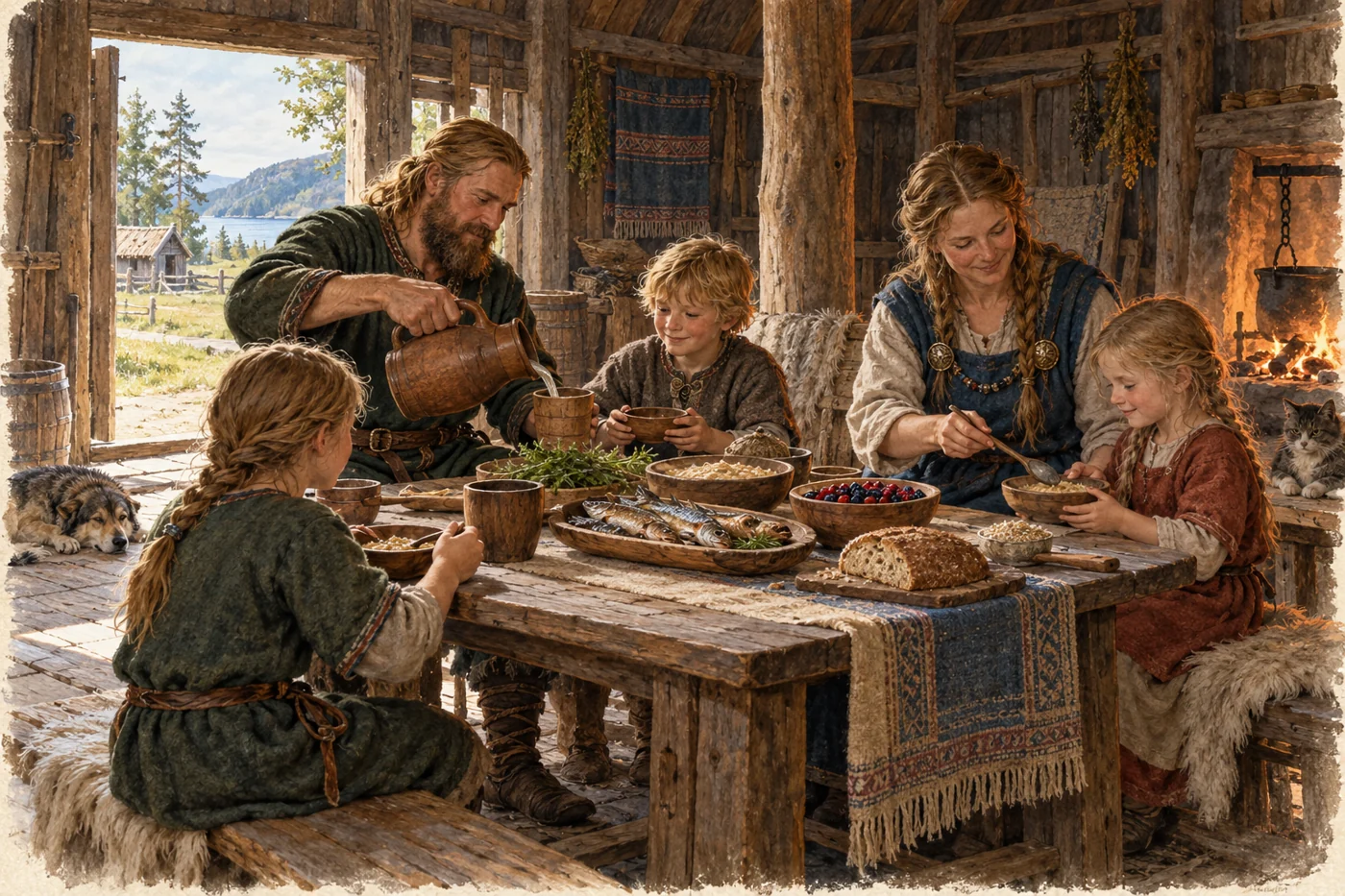
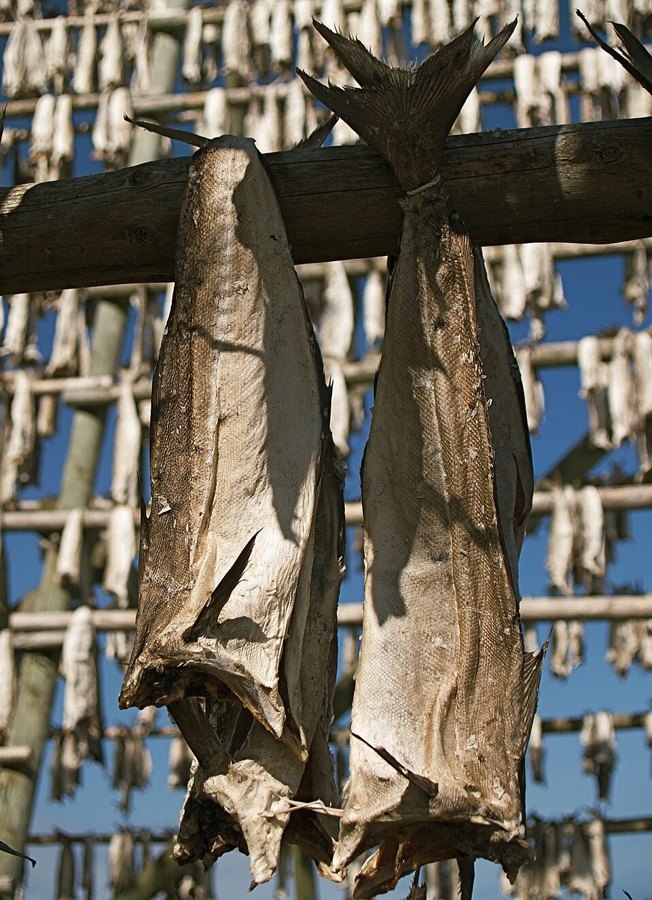
Choose something to cook
recipes for today’s kitchen
Bread & grains
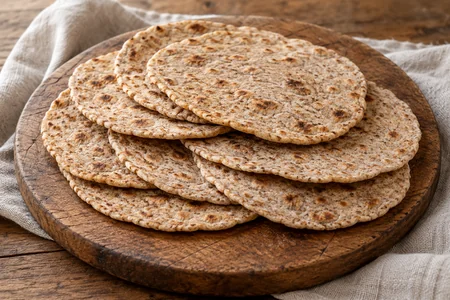
Barley & wheat skillet bread
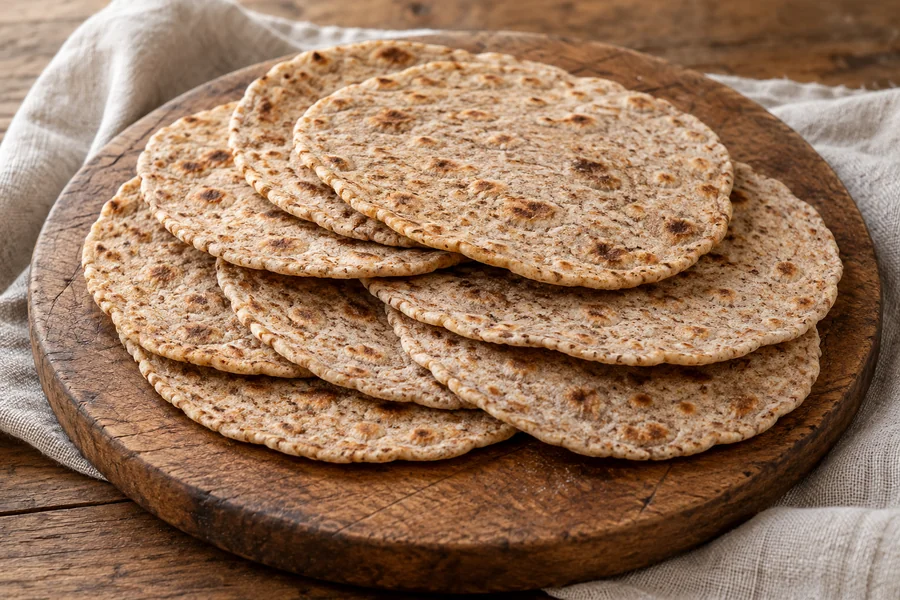
Barley and wheat belong to the period’s cereal evidence. This mixed-flour dough and its proportions are our modern cooking interpretation; wheat was not equally accessible to everyone.
Ingredients & cooking steps
Ingredients
- 200 g barley flour
- 100 g wholemeal wheat flour, plus a little for rolling
- 200 ml water, plus extra if needed
- ½ tsp salt
Method
- Mix both flours and salt. Add the water gradually to make a soft dough; different flours absorb different amounts.
- Cover and rest for 20 minutes. Divide into eight pieces and roll on a floured surface to about 3 mm thick.
- Heat a heavy, dry skillet over medium heat. Cook each bread for about 2–3 minutes per side, until browned in places and cooked through. Reduce the heat if it scorches before the middle cooks.
- Keep the breads under a clean cloth and eat warm with soup.
Contains: Gluten (barley, wheat). Check ingredient labels for additional allergens.
Ingredient background and guidance: National Museum of Denmark — Bread and porridge
Bread & grains
Rye & oat oven cakes
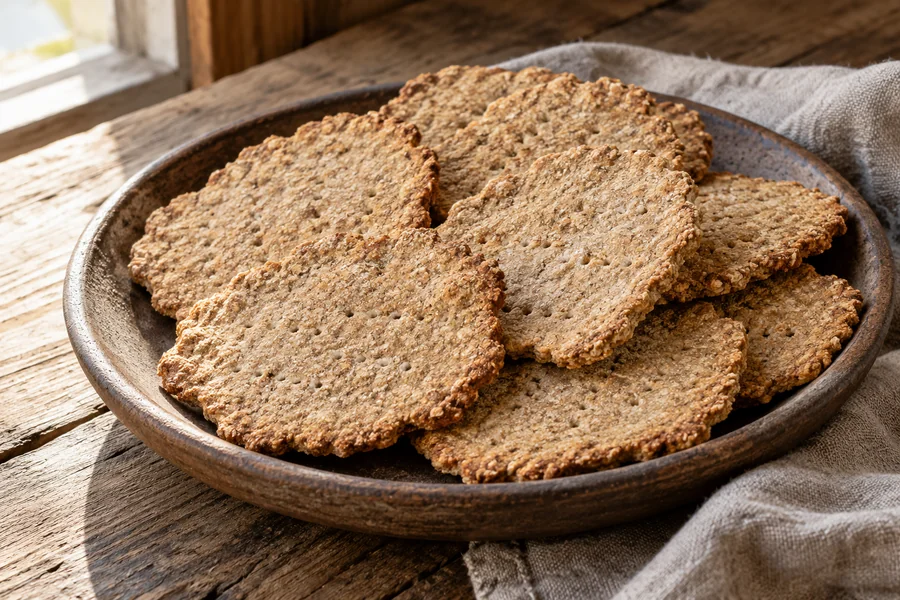
The grains provide the historical connection. Baking paper, a thermostatic oven and this particular crisp cake are modern conveniences and choices.
Ingredients & cooking steps
Ingredients
- 150 g rye flour
- 100 g finely ground oats
- 40 g butter
- 150 ml hot water
- ¼ tsp salt
Method
- Heat a modern oven to 180°C / 355°F. Mix rye flour, oats and salt.
- Melt the butter into the hot water, then stir into the flour mixture. Let the dough stand for 10 minutes.
- Roll between two sheets of baking paper to 4–5 mm thick. Cut into ten pieces and prick with a fork.
- Bake on a lined tray for 20–25 minutes until firm with lightly browned edges. Cool on a rack.
Contains: Gluten (rye, oats); milk. Check ingredient labels for additional allergens.
Ingredient background and guidance: National Museum of Denmark — Bread and porridge · National Museum of Denmark — Meat, fish and dairy
Bread & grains
Apple oat porridge
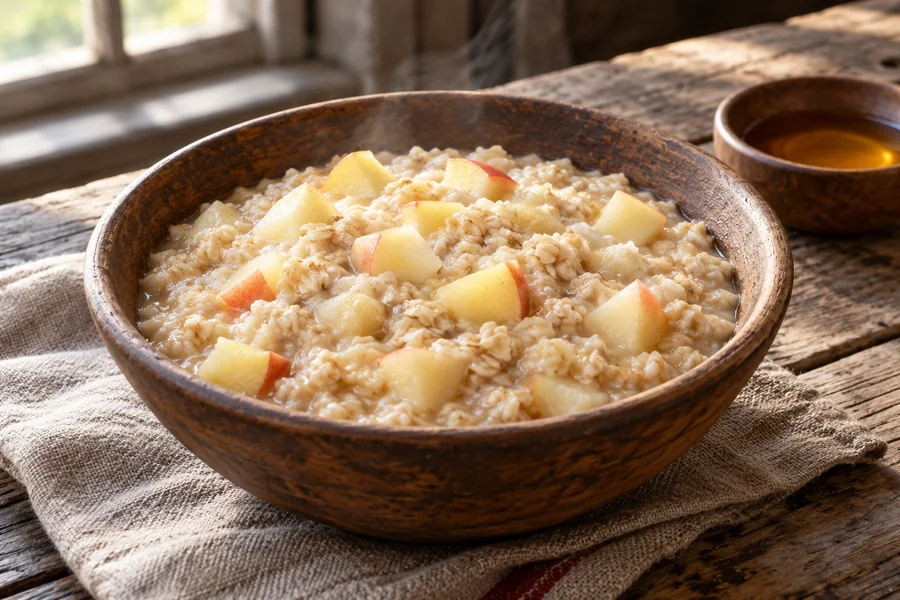
Grain porridges and fruit are a useful starting point for exploring food evidence. Rolled supermarket oats are a modern processed ingredient, not a reproduction of ancient milling.
Ingredients & cooking steps
Ingredients
- 160 g rolled oats
- 800 ml water
- 2 apples, cored and diced
- A small pinch of salt
- Honey, optional, to serve
Method
- Put oats, water, apples and salt in a saucepan. Bring to a gentle simmer, stirring.
- Cook for 10–15 minutes until the oats soften and the apple is tender. Add a little water if it becomes too thick.
- Divide into bowls. Taste before adding a small amount of honey.
Contains: Oats (check gluten labelling). Check ingredient labels for additional allergens.
Ingredient background and guidance: National Museum of Denmark — Bread and porridge · National Museum of Denmark — Fruit and berries
Bread & grains
Soft barley with apples
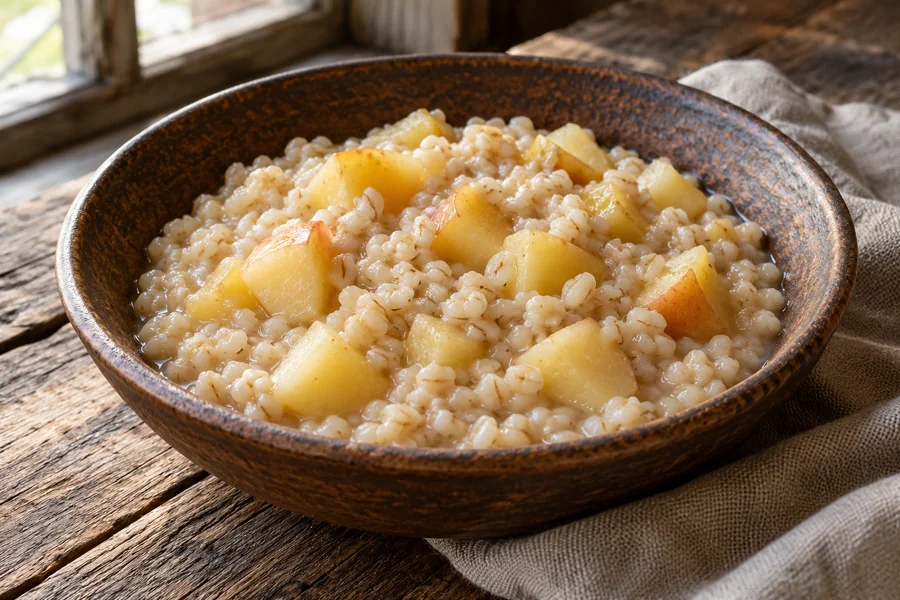
This pairs grain and fruit without claiming an excavated dish. Pearl barley is used for convenience; processing affects cooking time and differs from many archaeological grain remains.
Ingredients & cooking steps
Ingredients
- 250 g pearl barley, rinsed
- 1 litre water, plus extra as needed
- 2 apples, cored and diced
- 20 g butter
- A pinch of salt
Method
- Bring barley, water and salt to a boil. Lower the heat and simmer partly covered for about 35–45 minutes, stirring occasionally.
- Add the apples and simmer for another 10–15 minutes, until both grain and fruit are tender. Add water if the pan begins to dry.
- Stir in the butter. Serve as a soft grain bowl rather than a dry side dish.
Contains: Gluten (barley); milk. Check ingredient labels for additional allergens.
Ingredient background and guidance: National Museum of Denmark — Bread and porridge · National Museum of Denmark — Fruit and berries
Soups & stews
Split-pea & onion soup
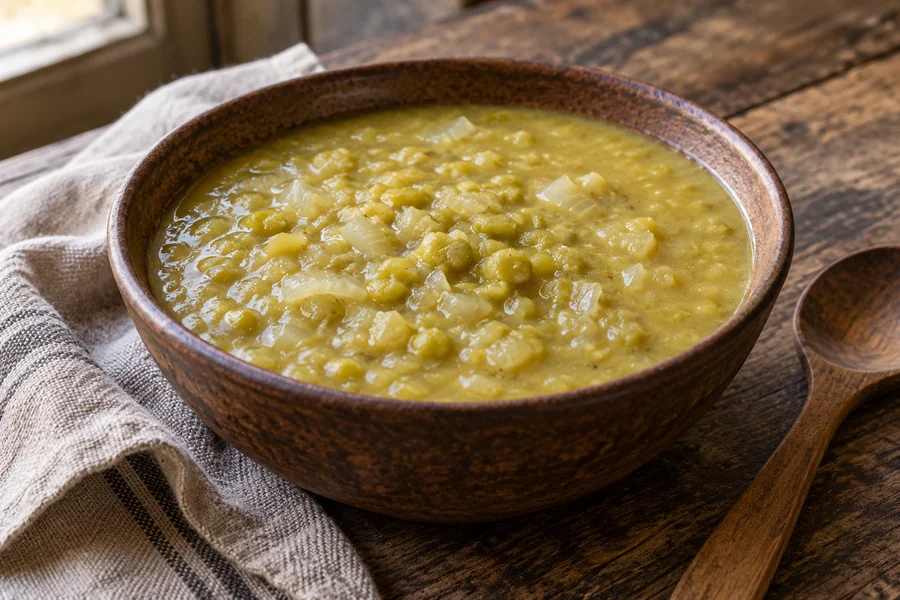
Peas and onions are discussed in museum accounts of Viking food. Split peas and the precise balance here are modern kitchen choices, not a preserved recipe.
Ingredients & cooking steps
Ingredients
- 300 g dried split peas, rinsed
- 2 onions, chopped
- 1.3 litres water, plus extra as needed
- 20 g butter
- Salt to taste
Method
- Soften onions in butter in a large saucepan over medium-low heat for 8 minutes without browning.
- Add peas and water. Bring to a boil, then simmer partly covered for 60–90 minutes or according to the pea packet, until completely tender. Stir regularly near the end.
- Add more water for a thinner soup. Mash some peas with the spoon and season with salt before serving.
Contains: Milk. Check ingredient labels for additional allergens.
Ingredient background and guidance: Australian National Maritime Museum — What the Vikings really ate
Soups & stews
Barley, leek & turnip pot
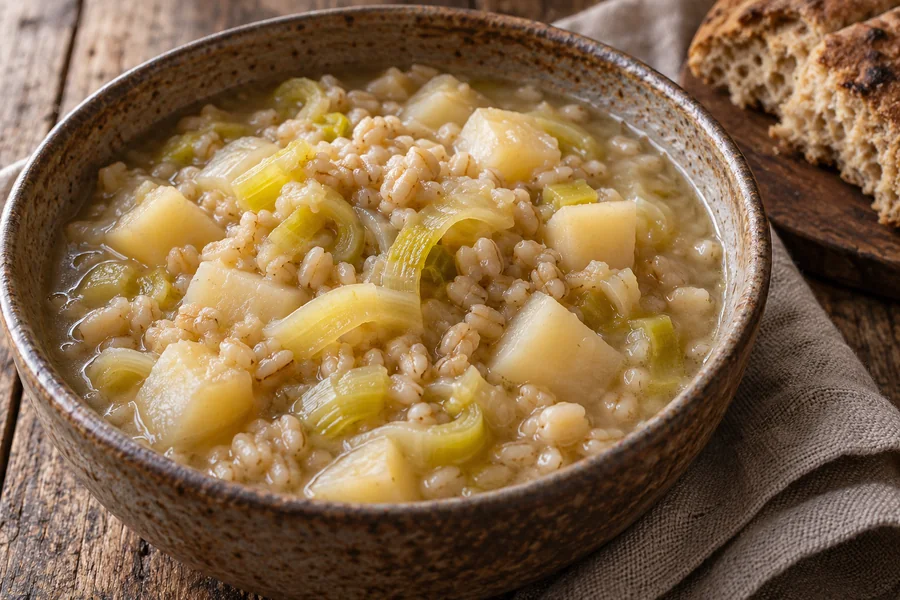
A modern vegetable pot inspired by the kinds of grains and vegetables discussed in historical food interpretation. Today’s cultivated vegetables should not be assumed identical to ancient varieties.
Ingredients & cooking steps
Ingredients
- 200 g pearl barley, rinsed
- 2 leeks, thoroughly washed and sliced
- 400 g turnips, peeled and diced
- 1.2 litres water
- 25 g butter
- Salt to taste
Method
- Melt the butter in a large pot and soften the leeks for 5–8 minutes.
- Add barley, turnips and water. Bring to a boil, then simmer partly covered for 40–50 minutes until tender. Stir occasionally and add water if needed.
- Season and serve with skillet bread. The result should be spoonable, with some broth remaining.
Contains: Gluten (barley); milk. Check ingredient labels for additional allergens.
Ingredient background and guidance: Australian National Maritime Museum — What the Vikings really ate · National Museum of Denmark — Bread and porridge
Soups & stews
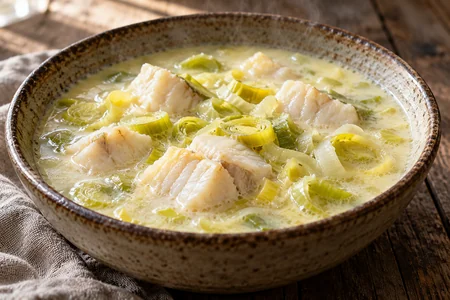
Fish & leek soup
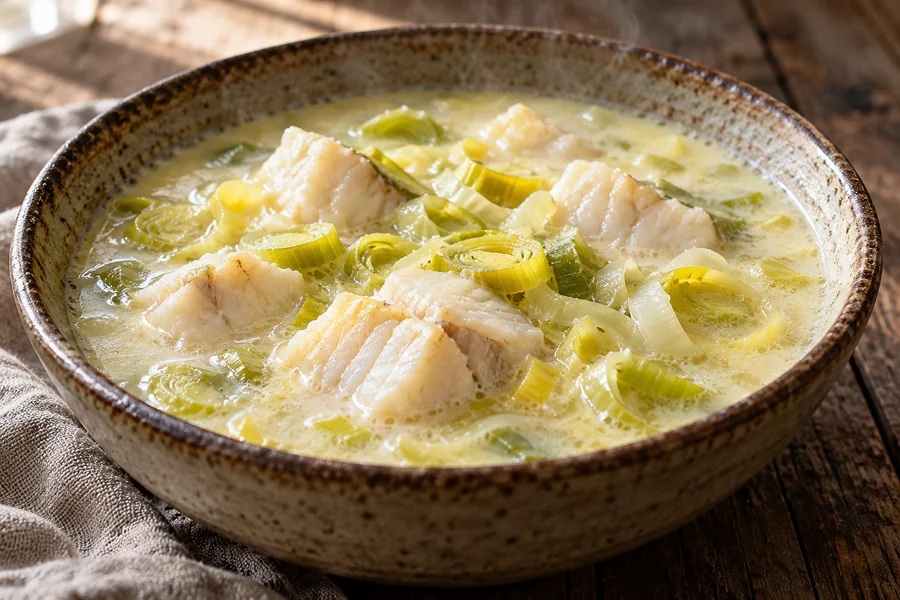
Fish and dairy both appear in food histories, but their combination in this soup is an editorial choice. It is not presented as a known Viking dish.
Ingredients & cooking steps
Ingredients
- 600 g boneless cod or haddock, cut into large pieces
- 2 leeks, washed and thinly sliced
- 800 ml water
- 150 ml pasteurized whole milk
- 20 g butter
- Salt to taste
Method
- Check the fish carefully for bones. Keep it refrigerated while preparing the vegetables.
- Soften leeks in butter for 8 minutes. Add water and simmer for 10 minutes.
- Add milk and fish. Keep at a gentle simmer for about 5–8 minutes, depending on the pieces. Check the thickest fish piece reaches 63°C / 145°F; time alone is not the safety test.
- Season and serve immediately. Avoid vigorous stirring, which breaks up the fish.
Contains: Fish; milk. Check ingredient labels for additional allergens.
Ingredient background and guidance: National Museum of Denmark — Meat, fish and dairy · USDA — Safe minimum internal temperatures
Soups & stews
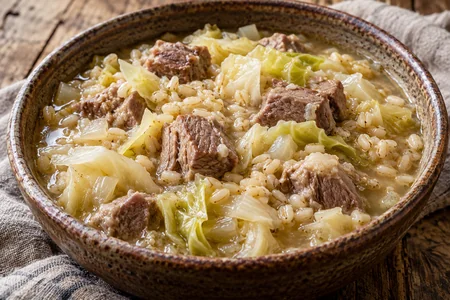
Lamb, cabbage & barley stew
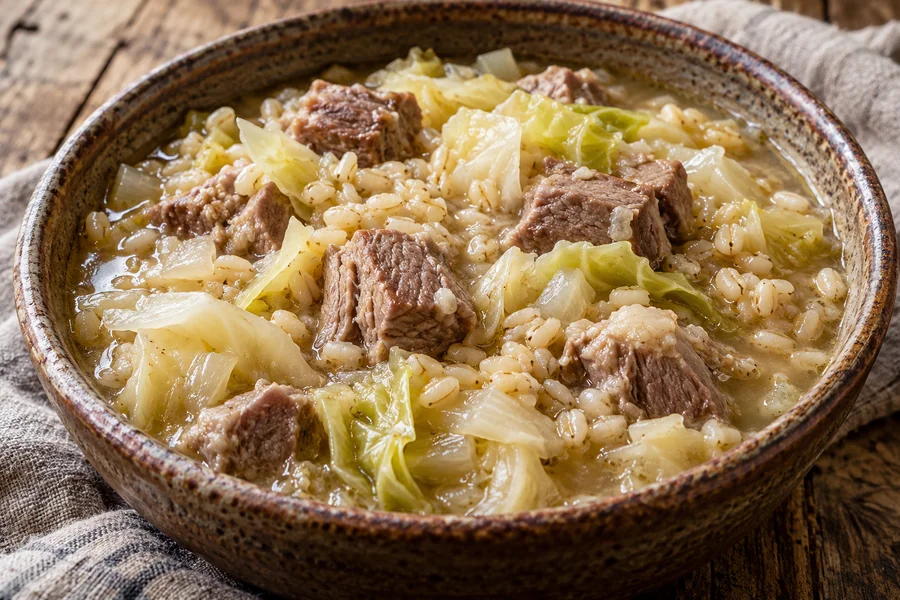
Sheep, grain and vegetables offer a historical starting point. The cut, quantities, timing and combination are a present-day recipe, not evidence for one standard meal across Scandinavia.
Ingredients & cooking steps
Ingredients
- 700 g boneless lamb shoulder, cut into 3 cm pieces
- 2 onions, chopped
- 100 g pearl barley, rinsed
- 400 g cabbage, sliced
- 1.5 litres water, plus extra if needed
- Salt to taste
Method
- Place the lamb, onions and water in a large pot. Bring to a boil, then reduce to a gentle simmer. Skim foam if desired.
- Cover loosely and simmer for 75 minutes. Add barley and continue for 35 minutes, stirring occasionally.
- Add cabbage and cook for another 20–30 minutes, until the lamb is thoroughly cooked and fork-tender and the barley is soft. Add water to maintain a stew consistency.
- Season near the end. Ladle into bowls, making sure meat and grain are distributed evenly.
Contains: Gluten (barley). Check ingredient labels for additional allergens.
Ingredient background and guidance: National Museum of Denmark — Meat, fish and dairy · Australian National Maritime Museum — What the Vikings really ate
Vegetables & sides
Gently cooked buttered cabbage
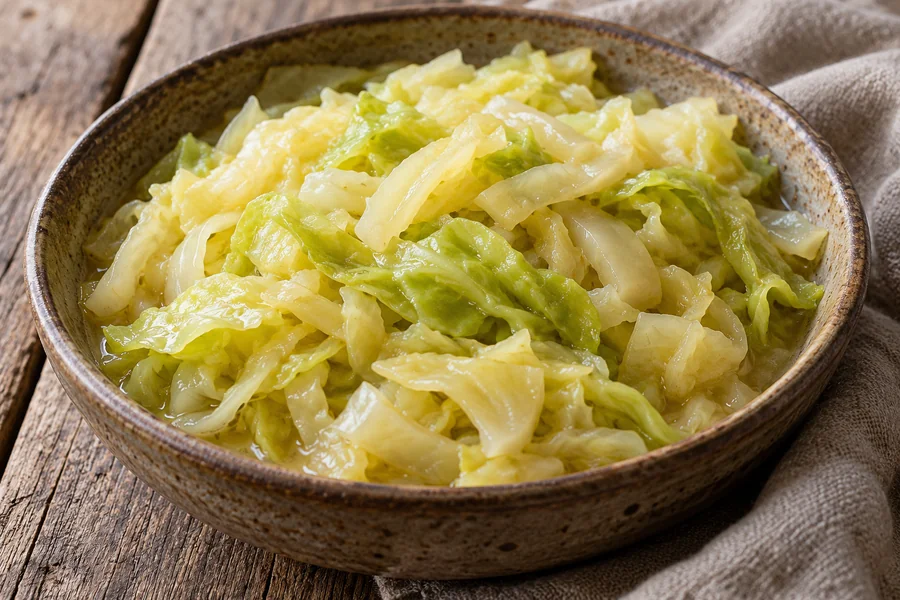
A simple modern side dish linking a vegetable food group with dairy. It does not reconstruct a specific archaeological meal or establish which cabbage variety a household grew.
Ingredients & cooking steps
Ingredients
- 600 g cabbage, shredded
- 30 g butter
- 100 ml water
- Salt to taste
Method
- Remove the tough cabbage core and slice the leaves evenly.
- Melt butter in a wide saucepan. Add cabbage and water, cover and cook on medium-low heat for 12–18 minutes, stirring occasionally.
- When tender, uncover briefly to evaporate excess liquid. Season and serve alongside bread or stew.
Contains: Milk. Check ingredient labels for additional allergens.
Ingredient background and guidance: Australian National Maritime Museum — What the Vikings really ate · National Museum of Denmark — Meat, fish and dairy
Vegetables & sides
Turnip & apple mash
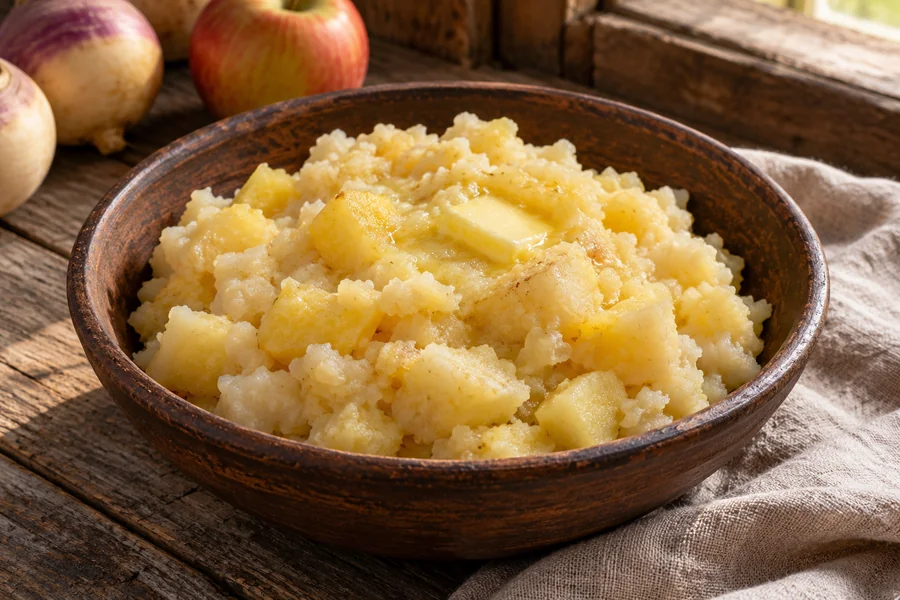
The combination is modern and chosen for its contrasting sweet and earthy flavours. Ingredient plausibility does not establish that people prepared this particular mash.
Ingredients & cooking steps
Ingredients
- 600 g turnips, peeled and cut into 2 cm cubes
- 2 apples, peeled, cored and diced
- 30 g butter
- Salt to taste
Method
- Cover turnips with water in a saucepan. Bring to a boil and simmer for 12–15 minutes.
- Add apples and cook for another 8–10 minutes until both are soft. Drain well.
- Mash roughly with butter and a little salt. Leave some texture and serve hot.
Contains: Milk. Check ingredient labels for additional allergens.
Ingredient background and guidance: Australian National Maritime Museum — What the Vikings really ate · National Museum of Denmark — Fruit and berries
Fruit & dairy
Baked apples with hazelnuts
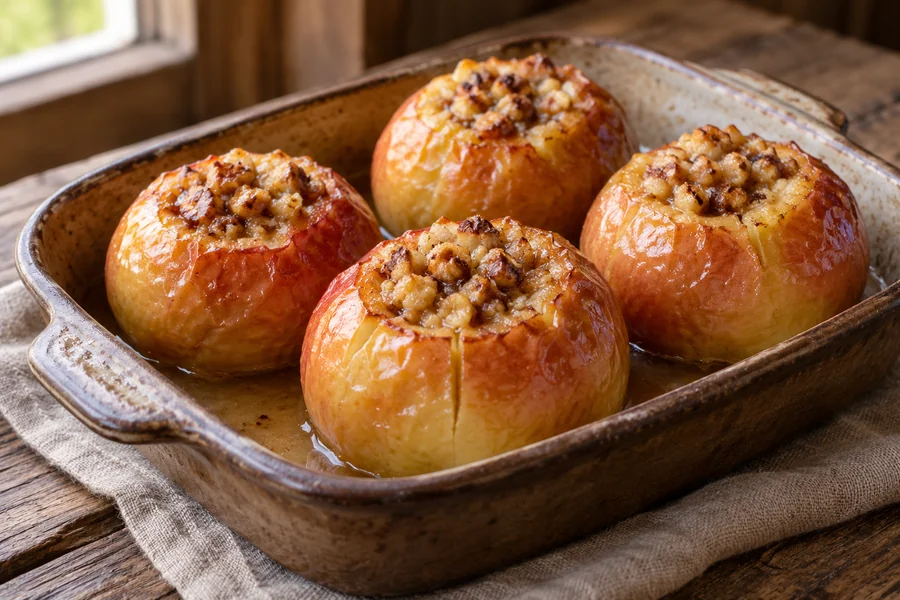
Apples, hazelnuts and honey connect this dish to ingredients of interest. Stuffing whole apples and baking them at a fixed oven temperature is our modern interpretation.
Ingredients & cooking steps
Ingredients
- 4 eating apples
- 40 g finely chopped hazelnuts
- 20 g butter, softened
- 20 g honey
- 4 tbsp water
Method
- Heat a modern oven to 180°C / 355°F. Core the apples without cutting right through the bottom.
- Mix nuts, butter and honey and spoon into the cavities. Stand apples in a small baking dish with the water.
- Bake for 25–35 minutes until tender; the time depends on apple variety and size. Cool slightly before serving.
Contains: Hazelnuts; milk. Check ingredient labels for additional allergens.
Ingredient background and guidance: National Museum of Denmark — Fruit and berries · National Museum of Denmark — Food
Fruit & dairy
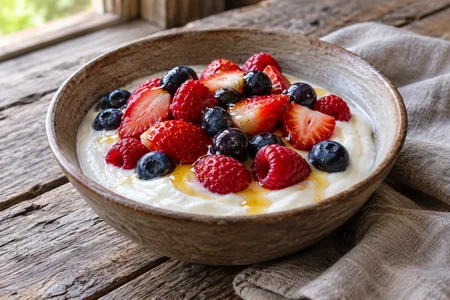
Berries with a modern cultured-dairy bowl
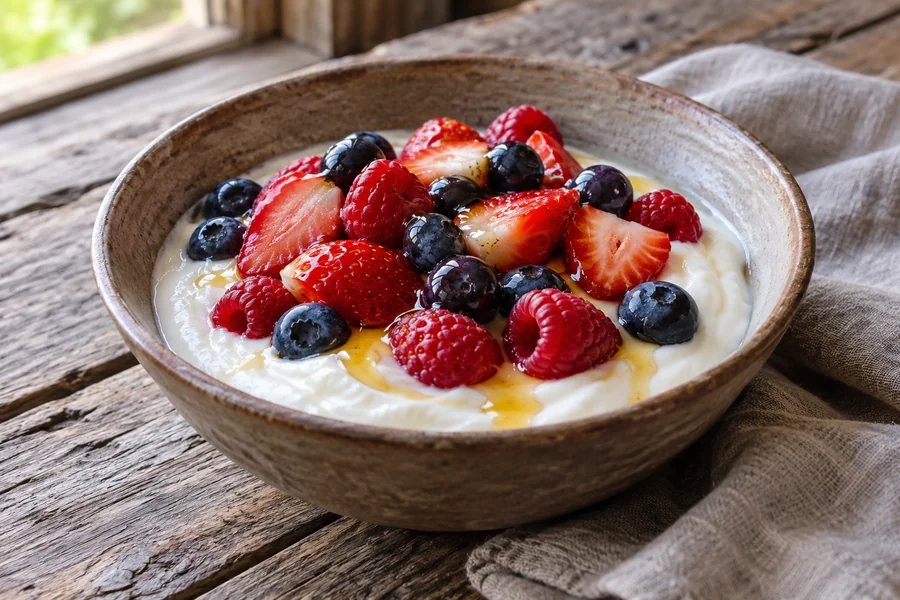
This is explicitly a modern serving suggestion, not a reconstruction of Viking skyr. Dairy and berries have a historical connection, but that does not prove continuity of a specific product or recipe.
Ingredients & cooking steps
Ingredients
- 400 g plain pasteurized yogurt or commercially made skyr
- 200 g fresh berries, washed and checked
- Up to 20 g honey, optional
Method
- Divide the yogurt or skyr between four bowls.
- Add the prepared berries. If using frozen berries instead, follow the packet’s cooking instructions and cool them before serving.
- Add a little honey if wanted and eat promptly. Keep dairy chilled until serving.
Contains: Milk. Check ingredient labels for additional allergens.
Ingredient background and guidance: National Museum of Denmark — Meat, fish and dairy · National Museum of Denmark — Fruit and berries
Bread & grains
Millet breakfast with warm plums
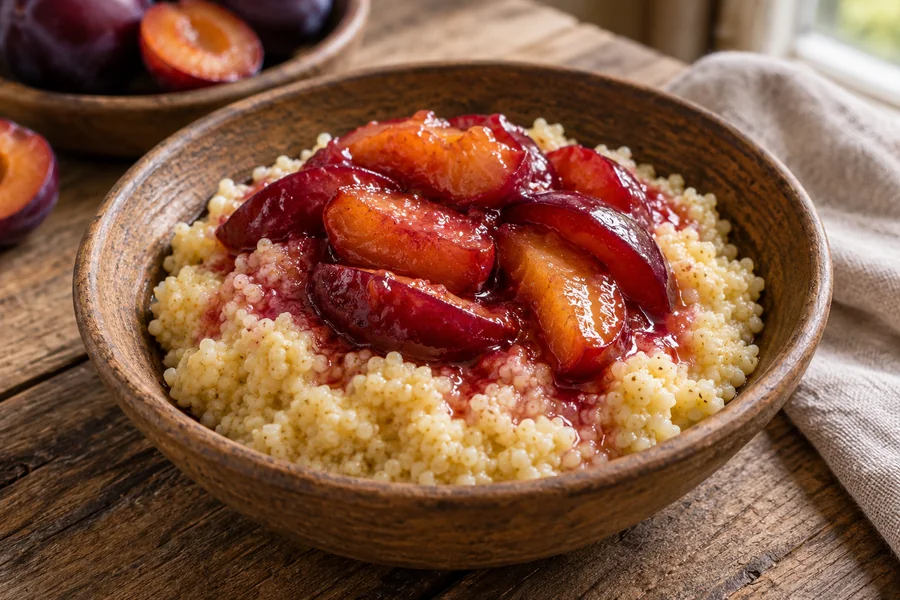
Millet and plums supply the ingredient connection; this two-pan breakfast and its proportions are a modern interpretation.
Ingredients & cooking steps
Ingredients
- 200 g hulled millet, rinsed
- 750 ml water
- 400 g plums, washed, stoned and quartered
- 20 g honey
- 100 ml water for the fruit
- A pinch of salt
Method
- Bring the millet, 750 ml water and salt to a boil. Cover and simmer gently for 20–25 minutes, stirring occasionally; add water if needed.
- Meanwhile simmer the plums with 100 ml water in a second pan for 8–12 minutes until soft. Stir in the honey.
- Let the cooked millet rest, covered, for 5 minutes. Spoon into bowls and top with the warm fruit.
Contains: None of the 14 major UK allergens in the listed ingredients. Check ingredient labels for additional allergens.
Ingredient background and guidance: National Museum of Denmark — Bread and porridge · National Museum of Denmark — Fruit and berries
Bread & grains
Savoury leek & oat pancakes
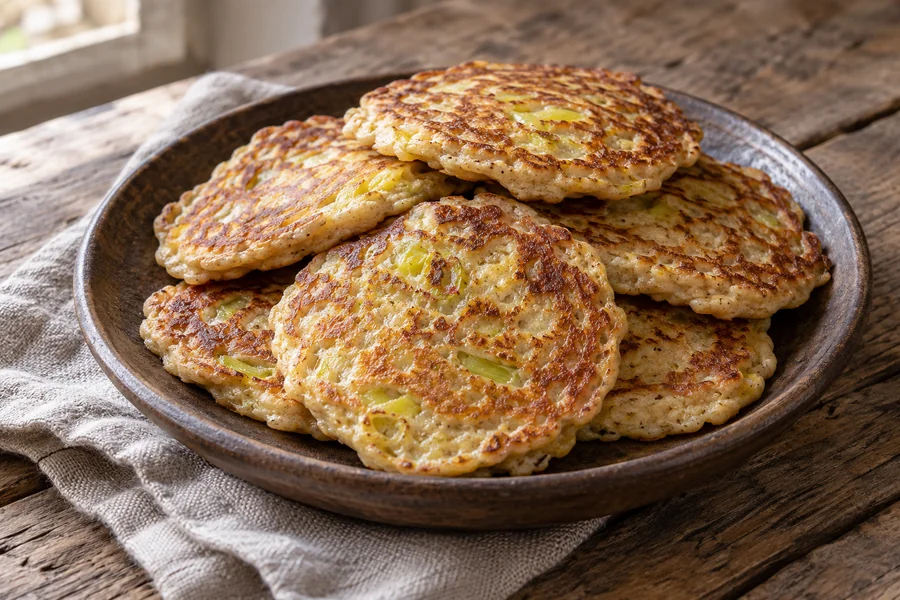
This is a modern savoury pancake, using familiar food groups rather than claiming a surviving Viking batter recipe.
Ingredients & cooking steps
Ingredients
- 150 g finely ground oats
- 50 g wholemeal wheat flour
- 2 medium eggs
- 250 ml pasteurized milk
- 150 g leek, washed and finely sliced
- 25 g butter
- ¼ tsp salt
Method
- Soften the leek in 10 g butter over medium-low heat for 8 minutes. Let cool slightly.
- Whisk flour, oats, eggs, milk and salt into a thick batter. Fold in the leek and leave for 10 minutes.
- Heat the remaining butter in a large non-stick skillet over medium heat. Cook eight small pancakes in batches for about 3 minutes per side. The centres must be fully set and reach 71°C / 160°F.
Contains: Gluten (wheat, oats); eggs; milk. Check ingredient labels for additional allergens.
Ingredient background and guidance: National Museum of Denmark — Bread and porridge · Australian National Maritime Museum — What the Vikings really ate · USDA — Safe minimum internal temperatures
Bread & grains
Everyday rye & wheat tin loaf
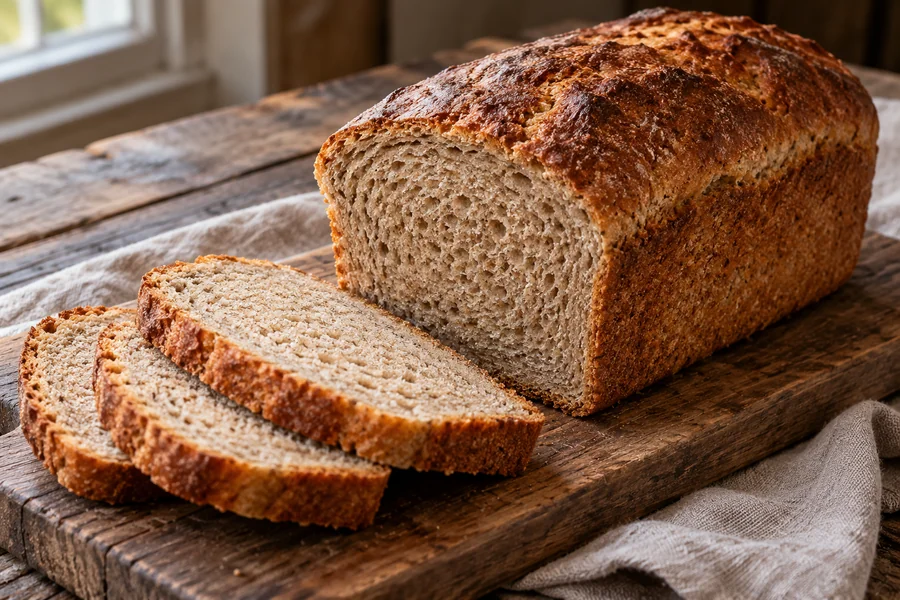
Commercial yeast, a loaf tin and this wheat-rich formula are modern choices. This is not a reconstruction of Viking sourdough.
Ingredients & cooking steps
Ingredients
- 350 g strong wheat bread flour
- 150 g rye flour
- 7 g instant dried baker’s yeast
- 350 ml lukewarm water
- 8 g salt
- 10 g butter for the tin
Method
- Mix the flours, yeast and salt. Add the water and knead for 8–10 minutes to make a slightly sticky dough. Cover and let rise for 60–90 minutes, until roughly doubled.
- Grease a 900 g loaf tin with butter. Shape the dough into a log, place in the tin, cover and rise for 40–60 minutes until puffy.
- Heat the oven to 220°C / 425°F. Bake for 15 minutes, reduce to 200°C / 390°F and bake for 25–30 minutes more, until well browned and baked through.
- Remove from the tin and cool fully on a rack before slicing.
Contains: Gluten (wheat, rye); milk. Check ingredient labels for additional allergens.
Ingredient background and guidance: National Museum of Denmark — Bread and porridge
Bread & grains
Barley with peas & soft onions
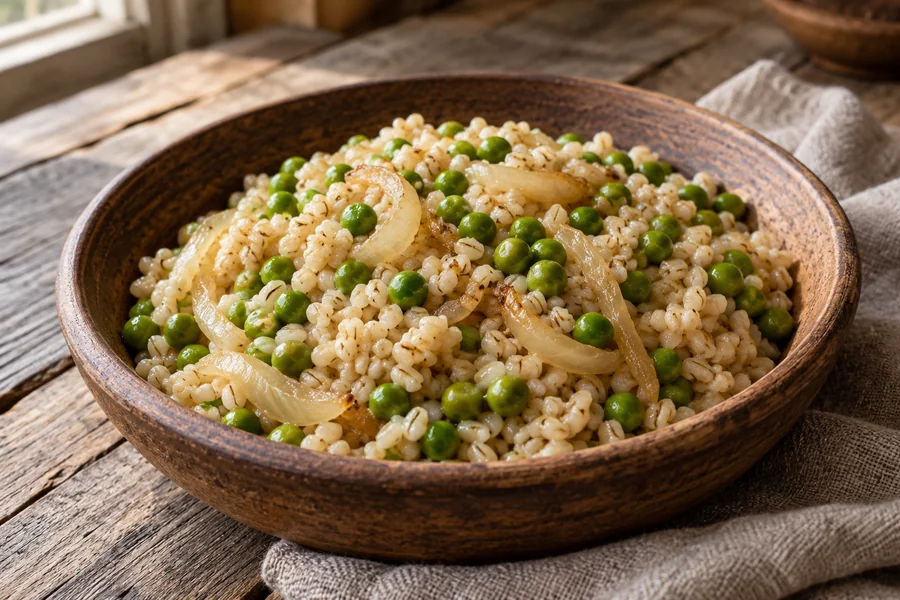
Pearling, frozen peas and this side-dish format make this explicitly a modern interpretation of grain and vegetable ingredients.
Ingredients & cooking steps
Ingredients
- 220 g pearl barley, rinsed
- 1 litre water, plus extra if needed
- 200 g frozen green peas
- 200 g onions, thinly sliced
- 25 g butter
- Salt to taste
Method
- Simmer the barley in the water for 35–50 minutes, following the packet, until tender. Drain any excess water.
- Meanwhile cook the onions in butter over medium-low heat for 15–20 minutes, stirring, until soft and golden.
- Add peas and 50 ml water to the onions. Simmer for 5–7 minutes or as directed on the pea packet. Stir in the hot barley, season and serve.
Contains: Gluten (barley); milk. Check ingredient labels for additional allergens.
Ingredient background and guidance: National Museum of Denmark — Bread and porridge · Australian National Maritime Museum — What the Vikings really ate
Bread & grains
Oat, onion & cheese bake
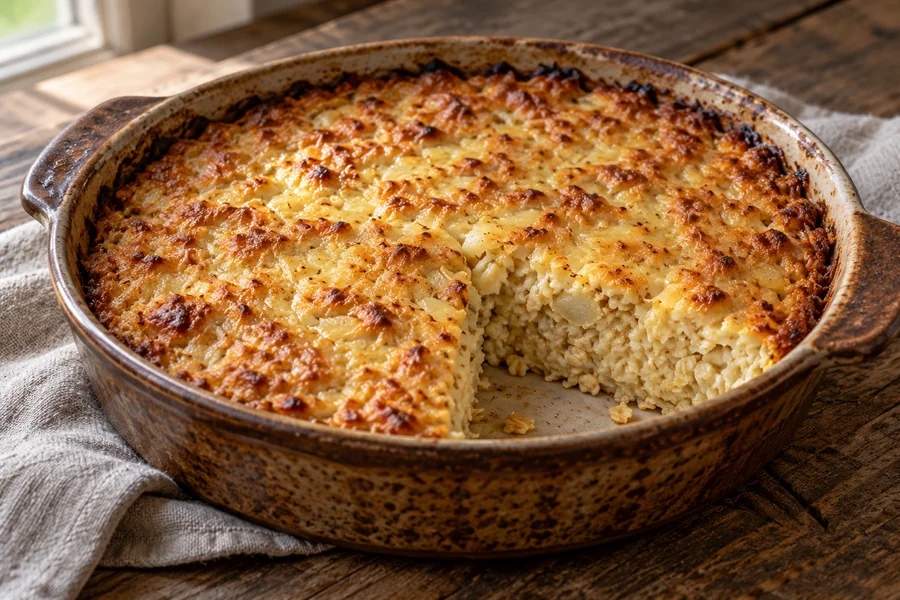
An original modern baked dish. Its set, sliceable texture should not be mistaken for evidence of a historical Viking casserole.
Ingredients & cooking steps
Ingredients
- 160 g rolled oats
- 400 ml pasteurized milk
- 2 medium eggs
- 100 g grated pasteurized hard cheese
- 150 g onion, finely chopped
- 15 g butter
- A pinch of salt
Method
- Heat the oven to 180°C / 355°F. Soften the onion in 10 g butter for 8 minutes. Grease a shallow 20 cm baking dish with the remaining butter.
- Mix oats and milk and let soak for 10 minutes. Stir in the onion, beaten eggs, cheese and salt.
- Pour into the dish and bake for 30–35 minutes until set and golden. Check the centre reaches 74°C / 165°F, then rest for 5 minutes.
Contains: Oats (check gluten labelling); eggs; milk. Check ingredient labels for additional allergens.
Ingredient background and guidance: National Museum of Denmark — Bread and porridge · National Museum of Denmark — Meat, fish and dairy · USDA — Safe minimum internal temperatures
Soups & stews
Slow beef & onion broth
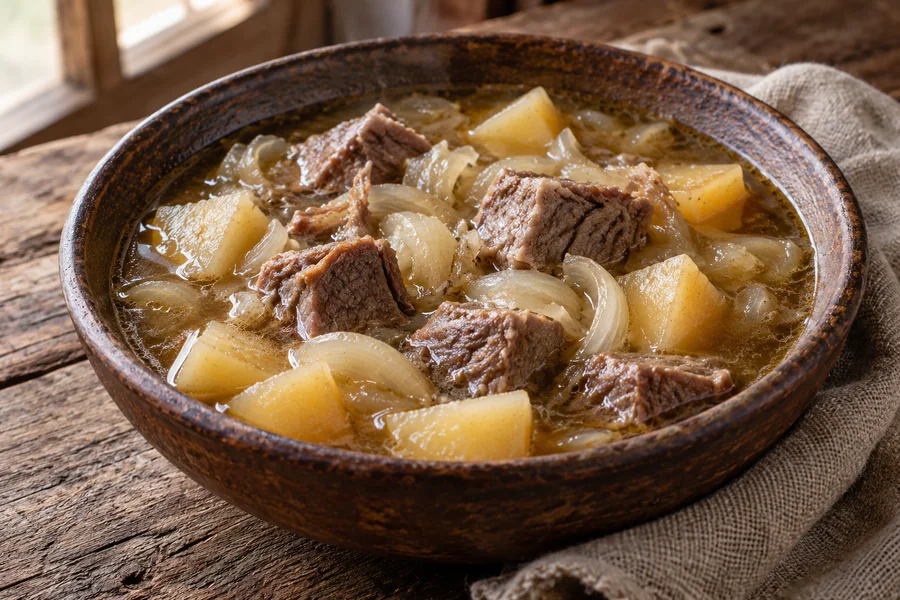
This modern slow-cooked broth explores economical cuts. The particular vegetables, quantities and cooking schedule are editorial choices.
Ingredients & cooking steps
Ingredients
- 600 g beef chuck, cut into 3 cm cubes
- 300 g onions, sliced
- 300 g turnips, peeled and diced
- 1.5 litres water, plus extra if needed
- Salt to taste
Method
- Place beef, onions and water in a large pot. Bring to a boil, then lower to a gentle simmer.
- Cover loosely and cook for 2 hours, checking the liquid level occasionally. Add water if needed to keep the meat covered.
- Add turnips and simmer for another 30–45 minutes, until the meat is fully cooked and fork-tender and the turnips are soft. Season and serve.
Contains: None of the 14 major UK allergens in the listed ingredients. Check ingredient labels for additional allergens.
Ingredient background and guidance: National Museum of Denmark — Meat, fish and dairy · Australian National Maritime Museum — What the Vikings really ate
Soups & stews
Chicken & barley soup
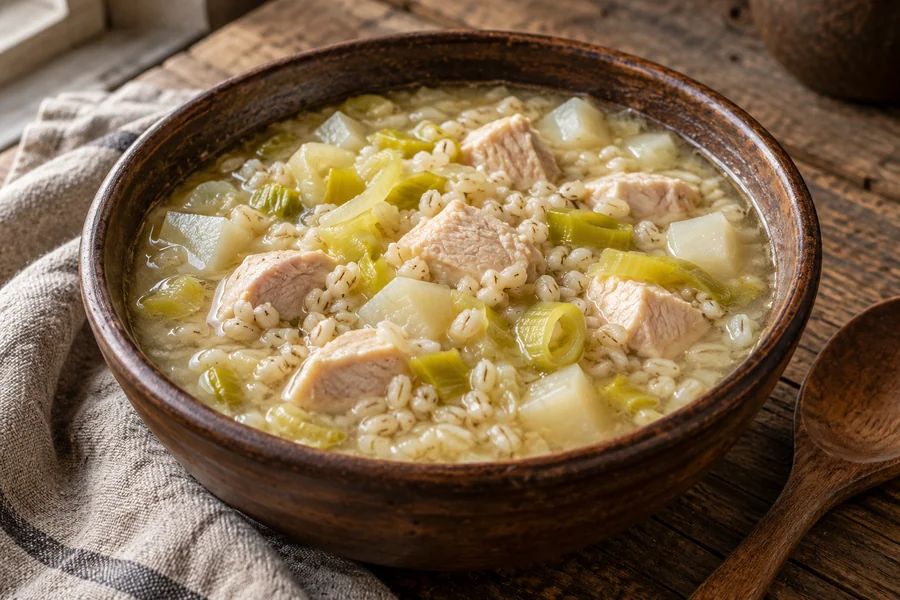
Hens were among the domestic birds kept in the period. This boneless supermarket-chicken soup is a modern interpretation, not a recovered recipe.
Ingredients & cooking steps
Ingredients
- 500 g boneless skinless chicken thighs, cut into 3 cm pieces
- 150 g pearl barley, rinsed
- 200 g leek, washed and sliced
- 200 g turnips, peeled and diced
- 1.4 litres water
- Salt to taste
Method
- Bring the barley, leeks, turnips and water to a boil. Simmer gently for 20 minutes.
- Add the chicken and return to a simmer. Cook for another 25–35 minutes until the barley is tender and every chicken piece is cooked; check the thickest reaches 74°C / 165°F.
- Add a little water if the soup has thickened too much, season and serve hot.
Contains: Gluten (barley). Check ingredient labels for additional allergens.
Ingredient background and guidance: National Museum of Denmark — Meat, fish and dairy · National Museum of Denmark — Bread and porridge · USDA — Safe minimum internal temperatures
Soups & stews
Cabbage & split-pea pot
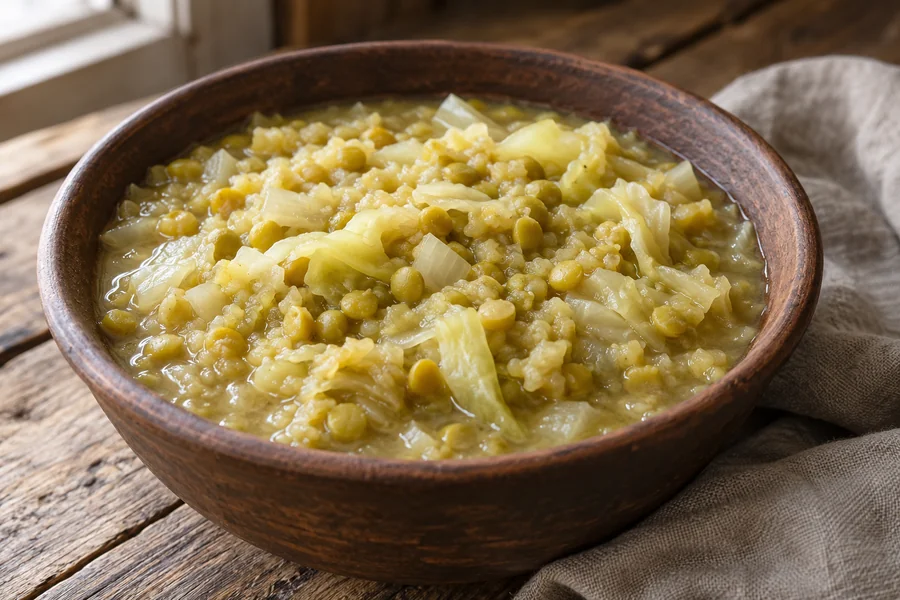
A modern one-pot combination. Neither this consistency nor the ratio of cabbage to peas is claimed as historically documented.
Ingredients & cooking steps
Ingredients
- 250 g dried split peas, rinsed
- 400 g cabbage, shredded
- 200 g onion, chopped
- 1.4 litres water, plus extra if needed
- 25 g butter
- Salt to taste
Method
- Soften onion in butter for 8 minutes. Add peas and water, bring to a boil and simmer partly covered for 50–70 minutes.
- Add cabbage and simmer for 20–30 minutes more, until the peas are completely tender; older peas may take longer. Stir to prevent sticking and add water as needed.
- Mash some peas against the side of the pan for a thicker texture. Season and serve as a substantial vegetable pot.
Contains: Milk. Check ingredient labels for additional allergens.
Ingredient background and guidance: Australian National Maritime Museum — What the Vikings really ate
Soups & stews
Soft onion soup with rye croutons
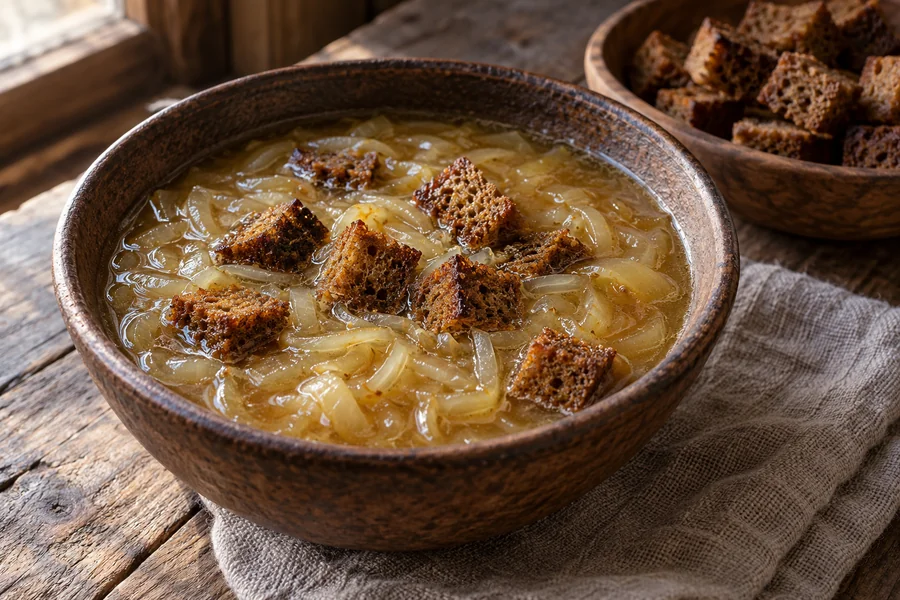
The bread topping and gentle onion caramelisation are modern recipe choices. This is not a claim that Viking households served French onion soup.
Ingredients & cooking steps
Ingredients
- 600 g onions, thinly sliced
- 35 g butter
- 1 litre water
- 150 g ready-baked rye bread, cut into cubes
- Salt to taste
Method
- Cook the onions in 25 g butter over medium-low heat for 25–30 minutes, stirring often, until soft and golden but not burnt.
- Add the water, bring to a simmer and cook for 15 minutes. Season to taste.
- Meanwhile heat the oven to 190°C / 375°F. Toss bread cubes with the remaining 10 g melted butter and bake for 10–15 minutes, turning once, until crisp.
- Ladle soup into bowls and add the croutons immediately before eating.
Contains: Gluten (rye and any other bread grains); milk; check bread label for additional allergens. Check ingredient labels for additional allergens.
Ingredient background and guidance: Australian National Maritime Museum — What the Vikings really ate · National Museum of Denmark — Bread and porridge · National Museum of Denmark — Meat, fish and dairy
Soups & stews
Pork shoulder & apple pot
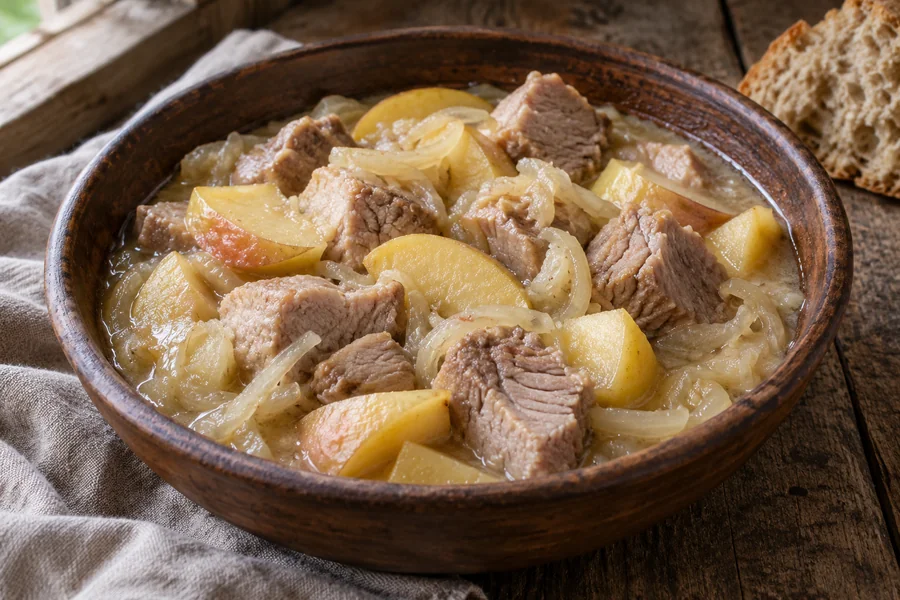
Pork and apples are combined here for a modern sweet-savoury stew. Their individual historical relevance does not document this combination.
Ingredients & cooking steps
Ingredients
- 700 g boneless pork shoulder, cut into 3 cm cubes
- 250 g onions, sliced
- 300 g apples, cored and cut into wedges
- 800 ml water, plus extra if needed
- Salt to taste
Method
- Put pork, onions and water in a heavy pot. Bring to a boil, then cover loosely and simmer gently for 90 minutes.
- Add the apple wedges and cook for another 30–45 minutes, until the pork is fully cooked and fork-tender. Add water if the pan becomes dry.
- Season the sauce and serve with bread or cooked grain. The apple may break down into the broth.
Contains: None of the 14 major UK allergens in the listed ingredients. Check ingredient labels for additional allergens.
Ingredient background and guidance: National Museum of Denmark — Meat, fish and dairy · National Museum of Denmark — Fruit and berries
Vegetables & sides
Roasted turnip wedges
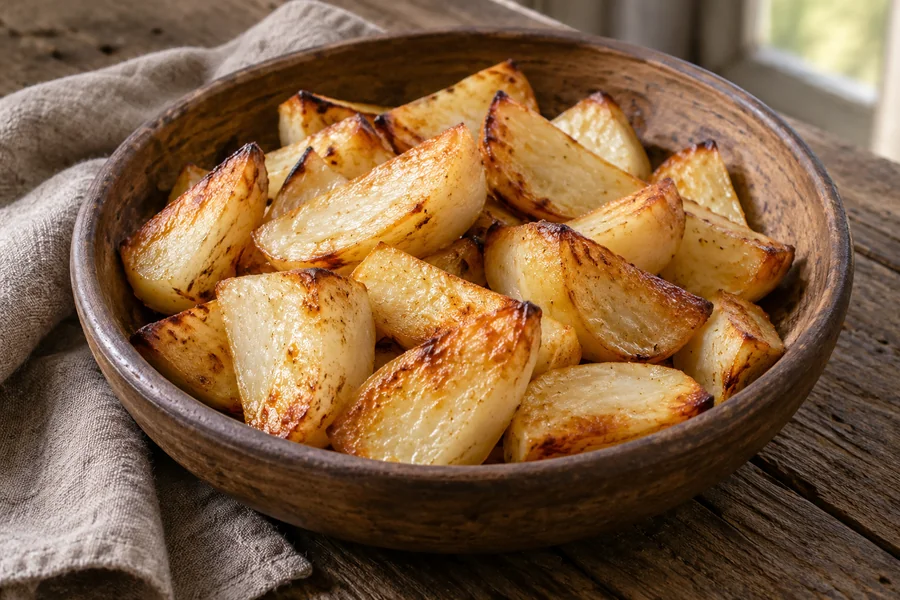
A modern oven side dish; the controlled high heat and browned wedges are practical serving choices, not a recreated hearth technique.
Ingredients & cooking steps
Ingredients
- 800 g turnips, peeled and cut into 2 cm wedges
- 30 g butter, melted
- ¼ tsp salt
Method
- Heat the oven to 200°C / 390°F. Dry the turnip wedges with a clean towel.
- Toss with butter and salt and spread in one layer in a roasting tin.
- Roast for 30–40 minutes, turning halfway, until browned at the edges and tender when pierced.
Contains: Milk. Check ingredient labels for additional allergens.
Ingredient background and guidance: Australian National Maritime Museum — What the Vikings really ate · National Museum of Denmark — Meat, fish and dairy
Vegetables & sides
Leeks gently braised in milk
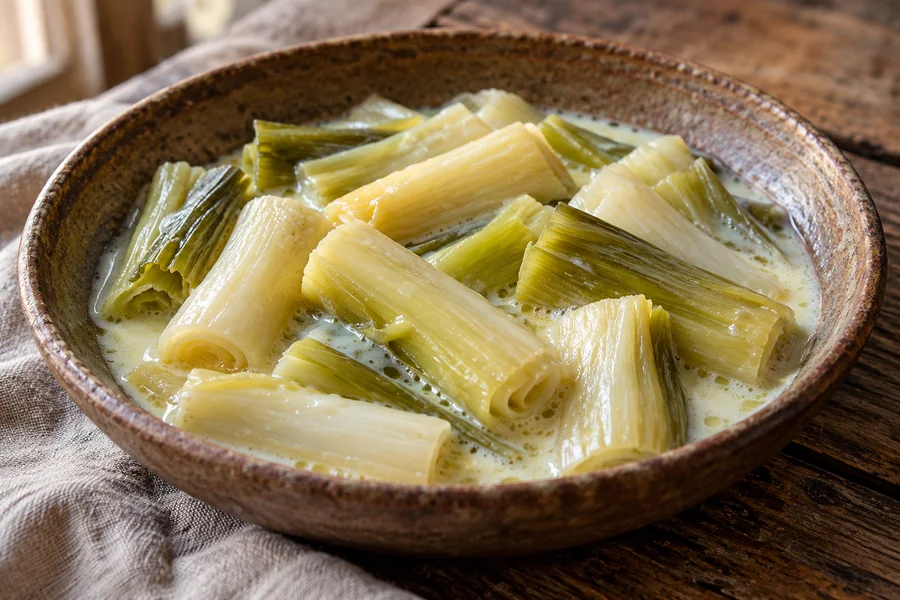
This gentle milk braise is an original modern preparation; the historical link is to vegetable and dairy food groups.
Ingredients & cooking steps
Ingredients
- 600 g trimmed leeks
- 250 ml pasteurized milk
- 20 g butter
- A pinch of salt
Method
- Split the leeks lengthways and wash between the layers. Cut into 5 cm lengths.
- Place in a wide saucepan with milk, butter and salt. Bring just to a simmer, cover and cook gently for 15–20 minutes, turning carefully.
- Uncover and cook for another 3–5 minutes if the liquid needs reducing. Serve the tender leeks with a little of the sauce.
Contains: Milk. Check ingredient labels for additional allergens.
Ingredient background and guidance: Australian National Maritime Museum — What the Vikings really ate · National Museum of Denmark — Meat, fish and dairy
Vegetables & sides
Warm split-pea spread
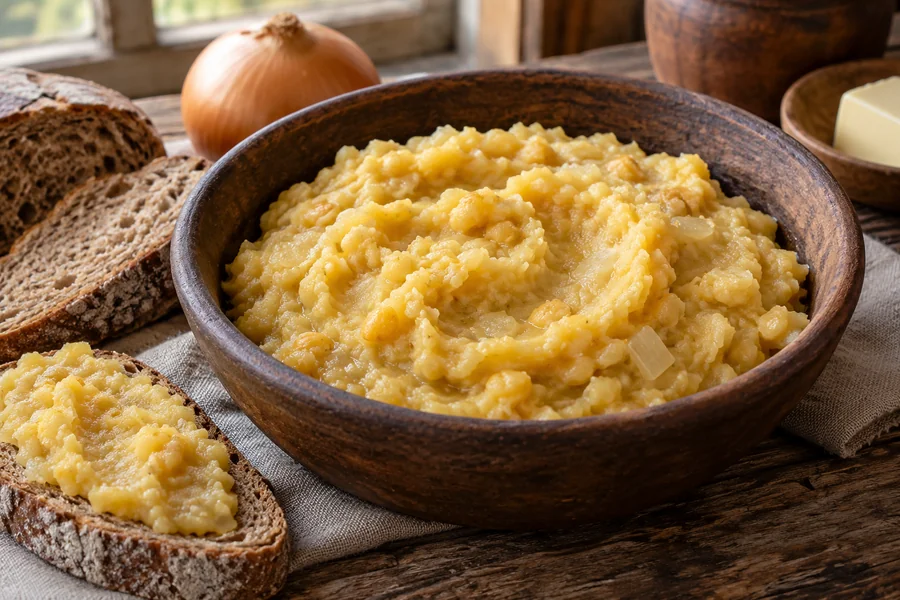
Turning cooked peas into a spread is a modern presentation choice. It is not evidence for a specific Viking dip.
Ingredients & cooking steps
Ingredients
- 250 g dried yellow split peas, rinsed
- 900 ml water, plus extra if needed
- 100 g onion, finely chopped
- 25 g butter
- Salt to taste
Method
- Simmer peas in the water for 60–90 minutes or according to the packet, until completely soft. Stir frequently near the end and add water if needed.
- Meanwhile soften the onion in butter for 10 minutes over medium-low heat.
- Drain excess liquid from the peas, reserving a little. Mash peas with the buttery onions, adding reserved liquid until spreadable. Season and serve warm with bread.
Contains: Milk; bread served alongside may contain gluten. Check ingredient labels for additional allergens.
Ingredient background and guidance: Australian National Maritime Museum — What the Vikings really ate
Vegetables & sides
Warm cabbage with toasted hazelnuts
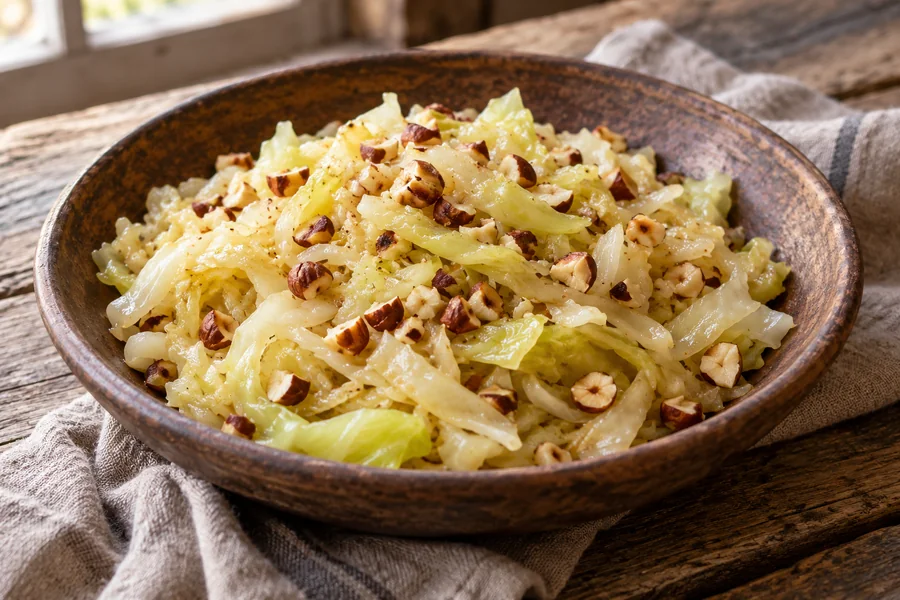
The nut topping is a modern textural contrast. Hazelnuts provide an ingredient connection, not proof of this particular cabbage dish.
Ingredients & cooking steps
Ingredients
- 500 g cabbage, finely shredded
- 50 g hazelnuts, finely chopped
- 25 g butter
- 60 ml water
- A pinch of salt
Method
- Toast the chopped nuts in a dry wide pan over medium-low heat for 3–4 minutes, stirring constantly. Tip into a bowl.
- Add butter, cabbage and water to the pan. Cover and cook for 10–15 minutes until the cabbage is tender, stirring occasionally.
- Uncover to evaporate excess water, season, and scatter the nuts over just before serving.
Contains: Hazelnuts; milk. Check ingredient labels for additional allergens.
Ingredient background and guidance: National Museum of Denmark — Fruit and berries · Australian National Maritime Museum — What the Vikings really ate
Vegetables & sides
Baked onions filled with barley
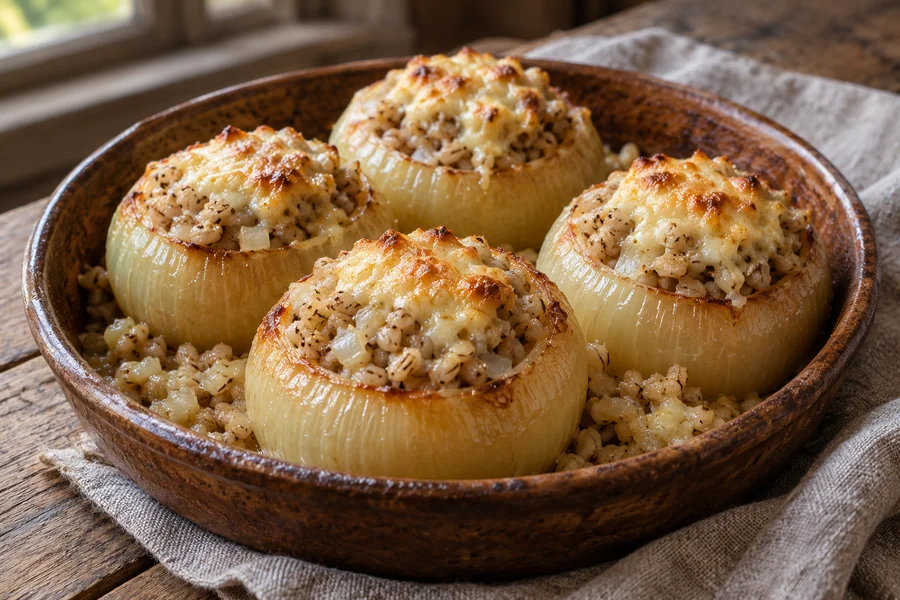
Stuffed onions are our modern construction, not a dish identified in Viking evidence. The filling uses broadly relevant grain and dairy ingredients.
Ingredients & cooking steps
Ingredients
- 4 large onions, about 800 g total
- 80 g pearl barley, rinsed
- 600 ml water for the barley
- 40 g grated pasteurized hard cheese
- 20 g butter
- 100 ml water for the baking dish
- Salt to taste
Method
- Simmer barley in 600 ml water for 35–50 minutes until tender; drain. Meanwhile peel onions, trim the bases just enough to stand and simmer whole in a separate pan of water for 15 minutes.
- Heat the oven to 190°C / 375°F. Cool the onions enough to handle. Slice off their tops and scoop out the centres, leaving two outer layers and the bases intact. Chop the scooped onion.
- Mix barley, chopped onion, cheese, butter and salt. Fill the onion shells and place any extra filling around them in a small baking dish. Add 100 ml water.
- Cover and bake for 20 minutes, then uncover for 10–15 minutes, until the onions are tender and filling is piping hot.
Contains: Gluten (barley); milk. Check ingredient labels for additional allergens.
Ingredient background and guidance: National Museum of Denmark — Bread and porridge · Australian National Maritime Museum — What the Vikings really ate · National Museum of Denmark — Meat, fish and dairy
Vegetables & sides
Green-pea & cheese mash
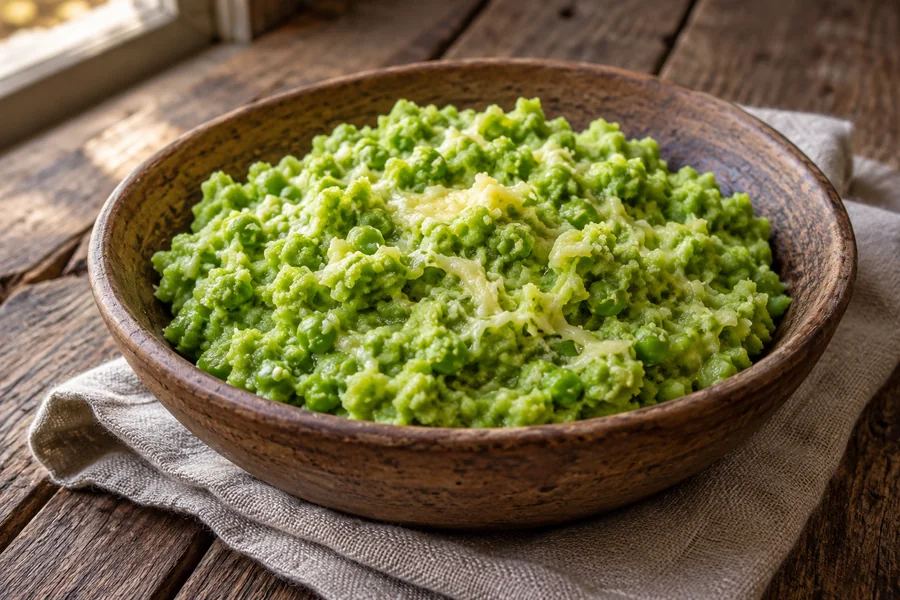
This uses modern frozen sweet peas and commercial cheese. Their convenience and sweetness should not be projected onto ancient pea crops.
Ingredients & cooking steps
Ingredients
- 500 g frozen green peas
- 40 g grated pasteurized hard cheese
- 20 g butter
- 2–4 tbsp cooking water
- Salt to taste
Method
- Cook peas in boiling water according to their packet, usually 4–6 minutes. Reserve a little cooking water and drain.
- Mash the hot peas with butter and cheese, adding 2–4 tbsp water for a rough, spoonable mash.
- Taste before adding salt, because the cheese may already provide enough. Serve hot.
Contains: Milk. Check ingredient labels for additional allergens.
Ingredient background and guidance: Australian National Maritime Museum — What the Vikings really ate · National Museum of Denmark — Meat, fish and dairy
Fish & meat
Oven cod over soft onions
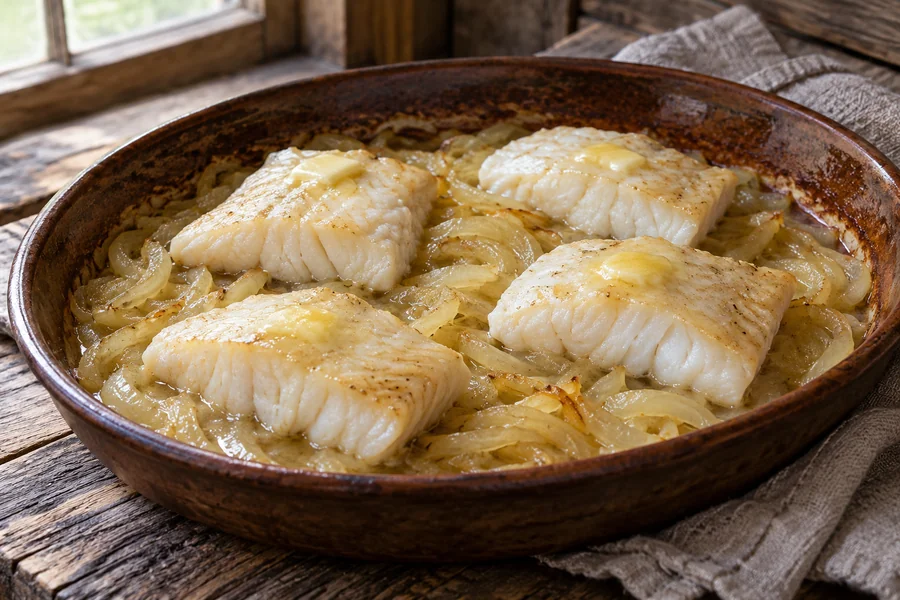
A modern oven preparation using boneless portions. It illustrates fish cookery without claiming that this recipe was used at a specific Viking site.
Ingredients & cooking steps
Ingredients
- 600 g boneless cod fillet, divided into 4 portions
- 400 g onions, thinly sliced
- 30 g butter
- 100 ml water
- Salt to taste
Method
- Heat the oven to 190°C / 375°F. Soften onions in 20 g butter in an ovenproof pan for 15 minutes over medium-low heat.
- Check the fish for bones. Put it on the onions, add water and dot with the remaining butter. Season lightly.
- Bake for about 12–20 minutes, depending on thickness, until the thickest part of each portion reaches 63°C / 145°F. Serve with the onions and pan juices.
Contains: Fish; milk. Check ingredient labels for additional allergens.
Ingredient background and guidance: National Museum of Denmark — Meat, fish and dairy · USDA — Safe minimum internal temperatures
Fish & meat
Oat-coated fresh herring
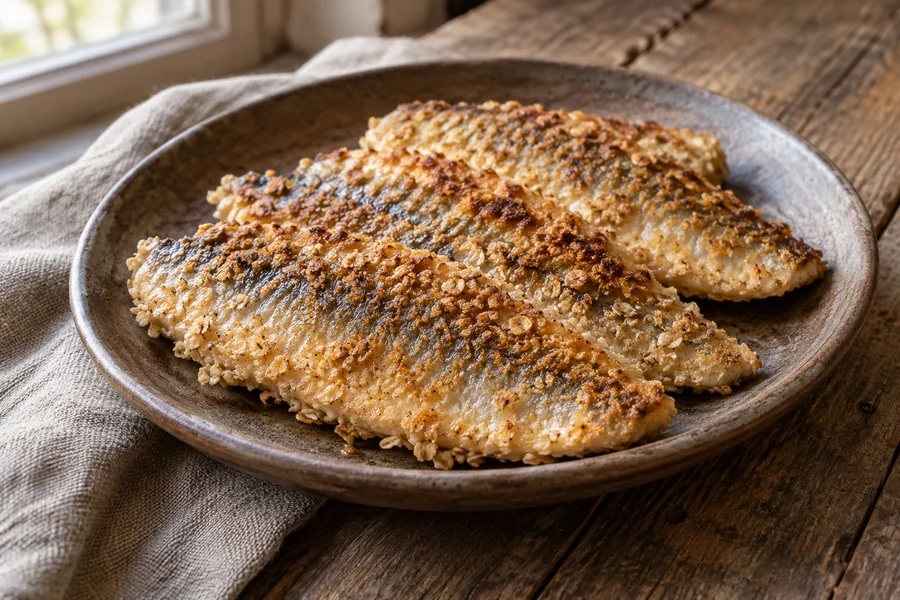
Herring offers a strong ingredient connection. The ground-oat coating and pan-frying instructions are our modern recipe, not an excavated preparation.
Ingredients & cooking steps
Ingredients
- 600 g fresh herring fillets, pin-boned by a fishmonger
- 80 g finely ground oats
- 30 g butter
- ¼ tsp salt
Method
- Check the fillets carefully for remaining bones and pat dry. Mix oats and salt on a plate.
- Press both sides of the fish into the oats, shaking off excess. Heat half the butter in a large skillet over medium heat.
- Fry in two batches for about 3–4 minutes per side, adding the remaining butter for the second batch. Check the thickest part reaches 63°C / 145°F; lower the heat if the coating browns too fast.
Contains: Fish; oats (check gluten labelling); milk. Check ingredient labels for additional allergens.
Ingredient background and guidance: National Museum of Denmark — Meat, fish and dairy · National Museum of Denmark — Bread and porridge · USDA — Safe minimum internal temperatures
Fish & meat
Trout & leek oven parcels
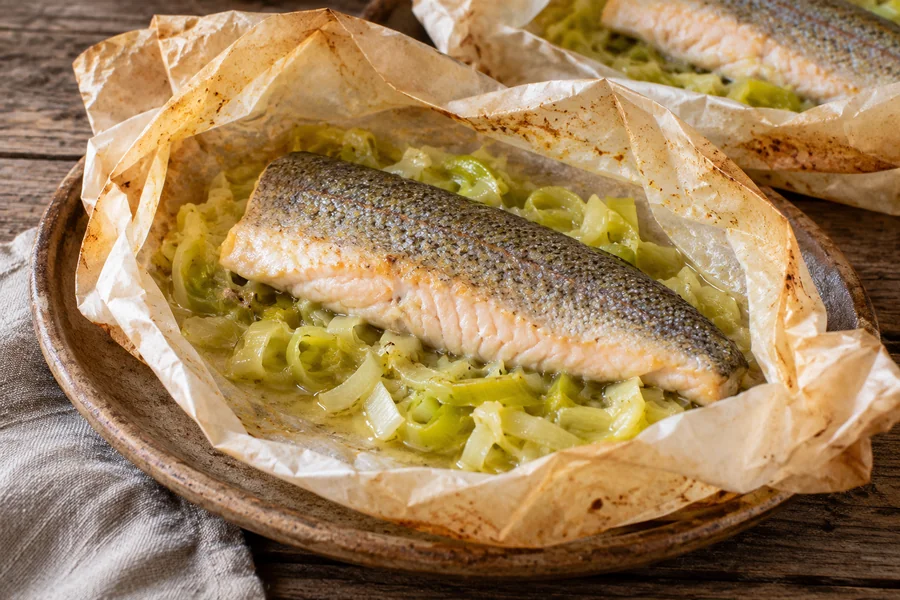
The sealed paper parcel is explicitly modern. Fish provides the broad historical connection; no period parcel recipe is implied.
Ingredients & cooking steps
Ingredients
- 4 boneless trout fillets, about 150 g each
- 300 g leeks, washed and finely sliced
- 25 g butter
- 80 ml water
- Salt to taste
Method
- Heat the oven to 190°C / 375°F. Soften leeks in 15 g butter for 8–10 minutes. Check trout carefully for bones.
- Divide leeks between four large sheets of baking paper. Add fish, remaining butter, a little salt and 20 ml water per parcel. Fold the paper into well-sealed packets on a tray.
- Bake for about 15–20 minutes. Open carefully to avoid steam; check each thickest fish portion reaches 63°C / 145°F, returning it to the oven if necessary.
Contains: Fish; milk. Check ingredient labels for additional allergens.
Ingredient background and guidance: National Museum of Denmark — Meat, fish and dairy · USDA — Safe minimum internal temperatures
Fish & meat
Beef & oat patties
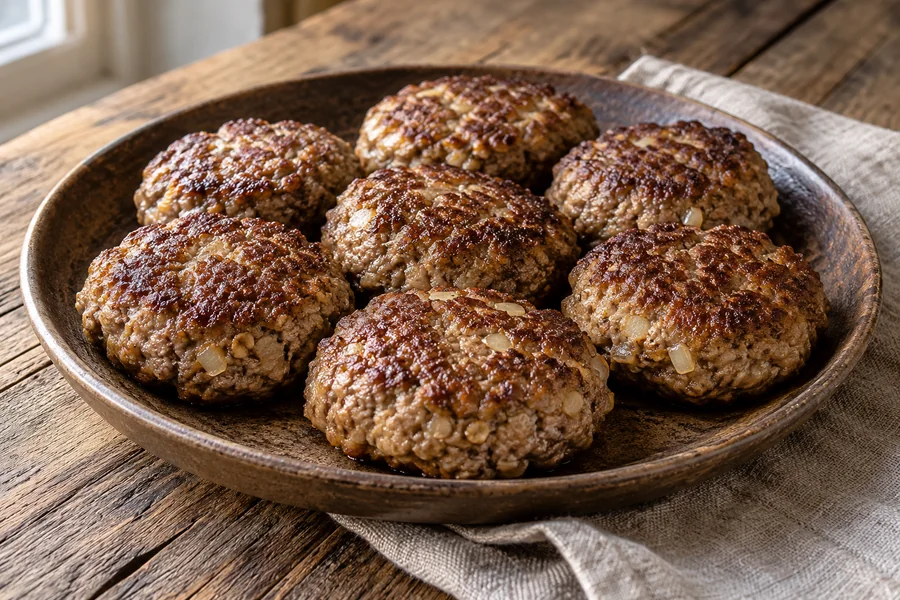
These are modern minced-meat patties, not an assertion that today’s hamburgers or meatballs originated with Vikings.
Ingredients & cooking steps
Ingredients
- 500 g minced beef
- 50 g rolled oats
- 80 ml water
- 80 g onion, very finely chopped
- 20 g butter
- ½ tsp salt
Method
- Soak the oats in water for 5 minutes. Mix with beef, onion and salt until evenly combined, then form eight patties about 1.5 cm thick.
- Heat butter in a large skillet over medium heat. Cook patties in batches for approximately 5–6 minutes per side, adjusting heat to avoid burning.
- Use a thermometer inserted through the side to check the centre of each patty reaches 71°C / 160°F. Serve immediately.
Contains: Oats (check gluten labelling); milk. Check ingredient labels for additional allergens.
Ingredient background and guidance: National Museum of Denmark — Meat, fish and dairy · National Museum of Denmark — Bread and porridge · USDA — Safe minimum internal temperatures
Fish & meat
Roast chicken thighs with turnips
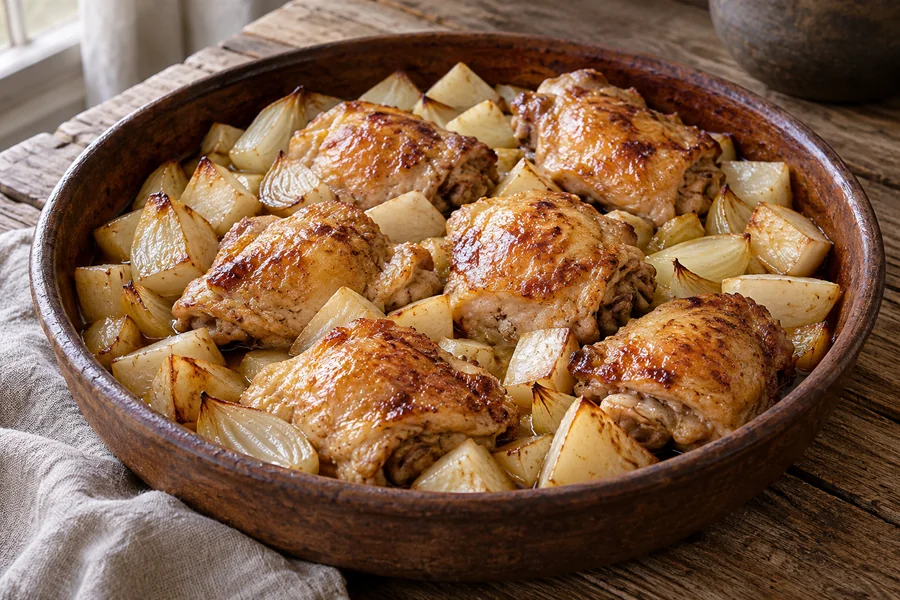
A modern family traybake using a domestic bird known in the period. Oven timing and this vegetable pairing are not historical claims.
Ingredients & cooking steps
Ingredients
- 700 g boneless chicken thighs
- 600 g turnips, peeled and cut into 2 cm cubes
- 200 g onions, cut into wedges
- 30 g butter, melted
- ½ tsp salt
Method
- Heat the oven to 200°C / 390°F. Toss turnips and onions with half the butter and spread in a large roasting tin. Roast for 15 minutes.
- Keep raw chicken separate from other foods while preparing it. Add thighs to the tin, brush with remaining butter and season.
- Roast for another 25–35 minutes, turning the vegetables once, until tender and the thickest part of every thigh reaches 74°C / 165°F. Continue cooking if needed.
Contains: Milk. Check ingredient labels for additional allergens.
Ingredient background and guidance: National Museum of Denmark — Meat, fish and dairy · Australian National Maritime Museum — What the Vikings really ate · USDA — Safe minimum internal temperatures
Fish & meat
Pork chops with warm plum sauce
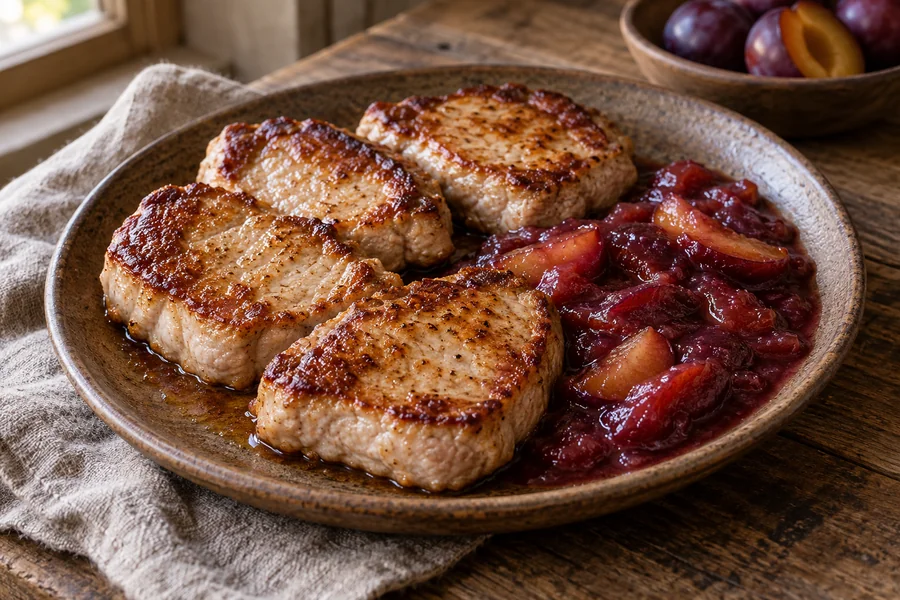
The fruit sauce is a modern accompaniment. This recipe does not establish that pork and plums were cooked together in the Viking Age.
Ingredients & cooking steps
Ingredients
- 4 boneless pork chops, about 150 g each and 2 cm thick
- 350 g plums, washed, stoned and quartered
- 80 ml water
- 15 g honey, optional
- 25 g butter
- Salt to taste
Method
- Simmer the plums with water in a small pan for 10–15 minutes until softened. Mash lightly and add honey if wanted. Keep warm.
- Season pork lightly. Heat butter in a wide skillet over medium heat and cook the chops for about 4–6 minutes per side, depending on thickness.
- Check each chop reaches at least 63°C / 145°F in the centre, then rest for at least 3 minutes. Serve with the warm plum sauce.
Contains: Milk. Check ingredient labels for additional allergens.
Ingredient background and guidance: National Museum of Denmark — Meat, fish and dairy · National Museum of Denmark — Fruit and berries · USDA — Safe minimum internal temperatures
Fish & meat
Lamb & onion patties with dairy sauce
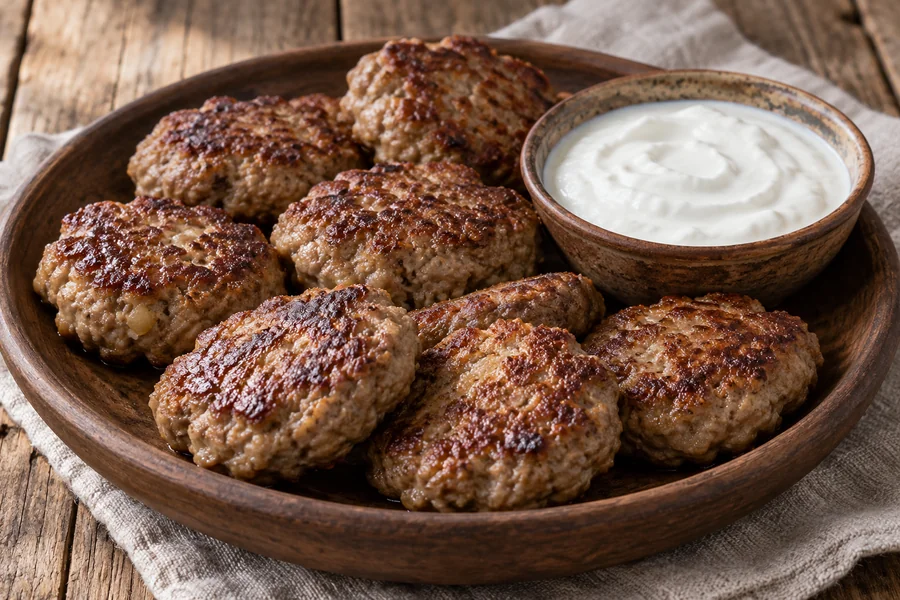
The minced patties and yogurt sauce are modern choices. Present-day yogurt is not being identified as a particular Viking dairy product.
Ingredients & cooking steps
Ingredients
- 500 g minced lamb
- 100 g onion, finely grated
- ½ tsp salt
- 15 g butter
- 200 g plain pasteurized yogurt
- A small pinch of salt for the sauce
Method
- Mix lamb, grated onion and ½ tsp salt. Form eight patties about 1.5 cm thick. Keep the yogurt chilled while preparing the meat.
- Fry patties in butter over medium heat in two batches for about 5–6 minutes per side. Check every centre reaches 71°C / 160°F using a thermometer inserted through the side.
- Stir a small pinch of salt into the yogurt and serve alongside the hot patties. Use clean utensils for the sauce.
Contains: Milk. Check ingredient labels for additional allergens.
Ingredient background and guidance: National Museum of Denmark — Meat, fish and dairy · USDA — Safe minimum internal temperatures
Fish & meat
Poached white fish on savoury barley
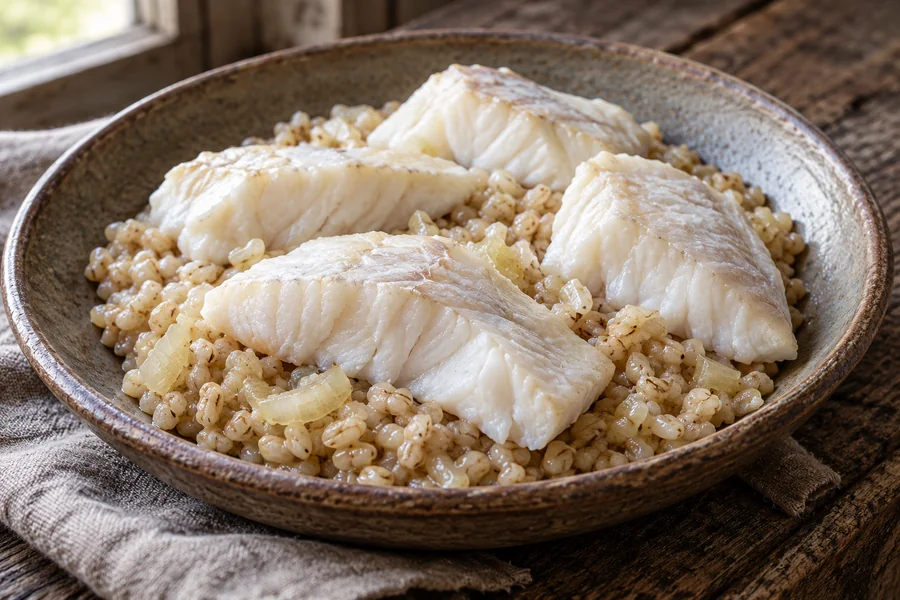
A modern plated meal combining grain and fish. The separate poaching stage and final arrangement are practical contemporary choices.
Ingredients & cooking steps
Ingredients
- 600 g boneless haddock, in 4 portions
- 220 g pearl barley, rinsed
- 1 litre water for barley
- 200 g onion, chopped
- 25 g butter
- 700 ml water for poaching, or enough to cover fish
- Salt to taste
Method
- Simmer barley in 1 litre water for 35–50 minutes until tender and drain. Meanwhile soften onion in butter over medium-low heat for 10 minutes; mix with the cooked barley and season.
- Check fish for bones. Bring the poaching water to a gentle simmer in a wide pan, add fish and keep just below a vigorous boil.
- Cook for approximately 8–12 minutes, checking that the thickest part of each portion reaches 63°C / 145°F. Lift out carefully and serve over the hot barley.
Contains: Fish; gluten (barley); milk. Check ingredient labels for additional allergens.
Ingredient background and guidance: National Museum of Denmark — Meat, fish and dairy · National Museum of Denmark — Bread and porridge · USDA — Safe minimum internal temperatures
Fruit & dairy
Plum & oat crumble
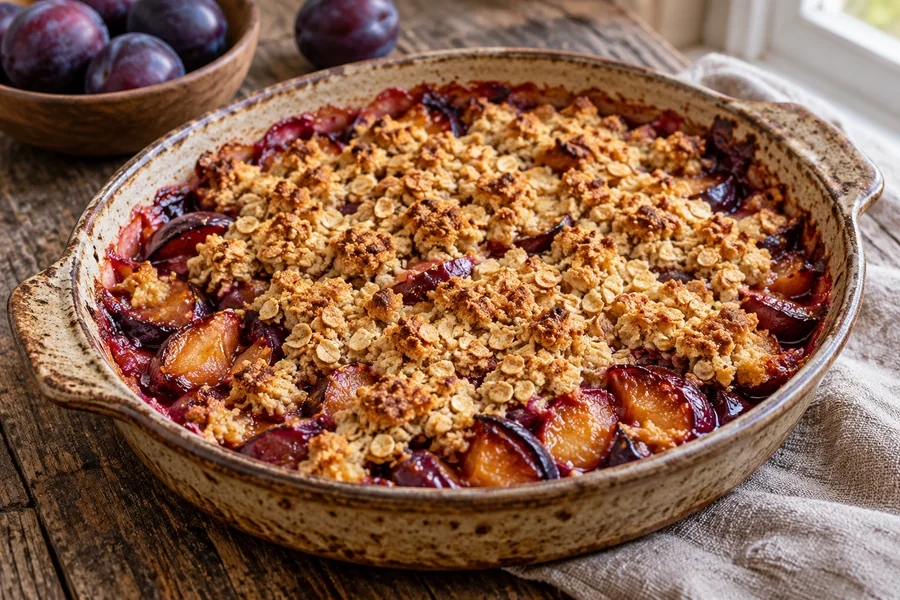
Crumble is a modern dessert format, not a Viking recipe. The ingredient selection is an invitation to discuss fruit and grains.
Ingredients & cooking steps
Ingredients
- 700 g plums, washed, stoned and quartered
- 100 g rolled oats
- 60 g wholemeal wheat flour
- 65 g butter, chilled and cubed
- 40 g honey
- 2 tbsp water
Method
- Heat the oven to 180°C / 355°F. Put plums in a shallow baking dish with water and half the honey.
- Rub the butter into the flour, then stir in the oats and remaining honey to form rough clumps. Scatter over the fruit.
- Bake for 30–35 minutes until the topping is golden and the fruit bubbles around the edges. Cool for 10 minutes before serving.
Contains: Gluten (wheat, oats); milk. Check ingredient labels for additional allergens.
Ingredient background and guidance: National Museum of Denmark — Fruit and berries · National Museum of Denmark — Bread and porridge
Fruit & dairy
Apple & rye bread pudding
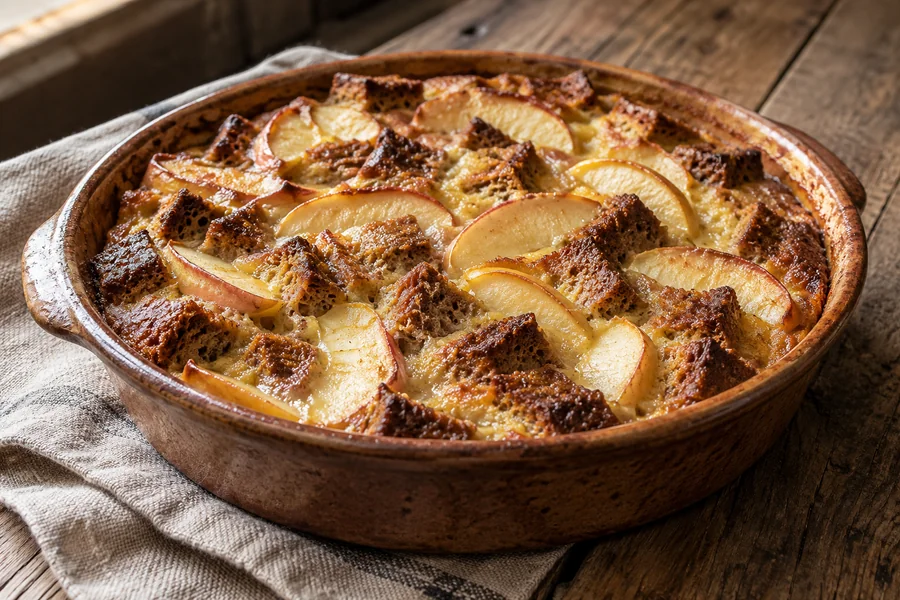
This modern bread pudding offers a way to use bread. It should not be described as a surviving Viking dessert.
Ingredients & cooking steps
Ingredients
- 200 g ready-baked rye bread, cubed
- 300 g apples, cored and thinly sliced
- 400 ml pasteurized milk
- 3 medium eggs
- 35 g honey
- 15 g butter for the dish
Method
- Heat the oven to 180°C / 355°F. Grease a shallow 20 cm baking dish and distribute bread and apple pieces in it.
- Whisk milk, eggs and honey. Pour over the bread, press down gently and let soak for 15 minutes.
- Bake for 30–40 minutes until the middle is fully set and reaches 74°C / 165°F. Rest for 5 minutes before serving.
Contains: Gluten (rye and any other bread grains); eggs; milk; check bread label. Check ingredient labels for additional allergens.
Ingredient background and guidance: National Museum of Denmark — Bread and porridge · National Museum of Denmark — Fruit and berries · USDA — Safe minimum internal temperatures
Fruit & dairy
Warm berry sauce for porridge
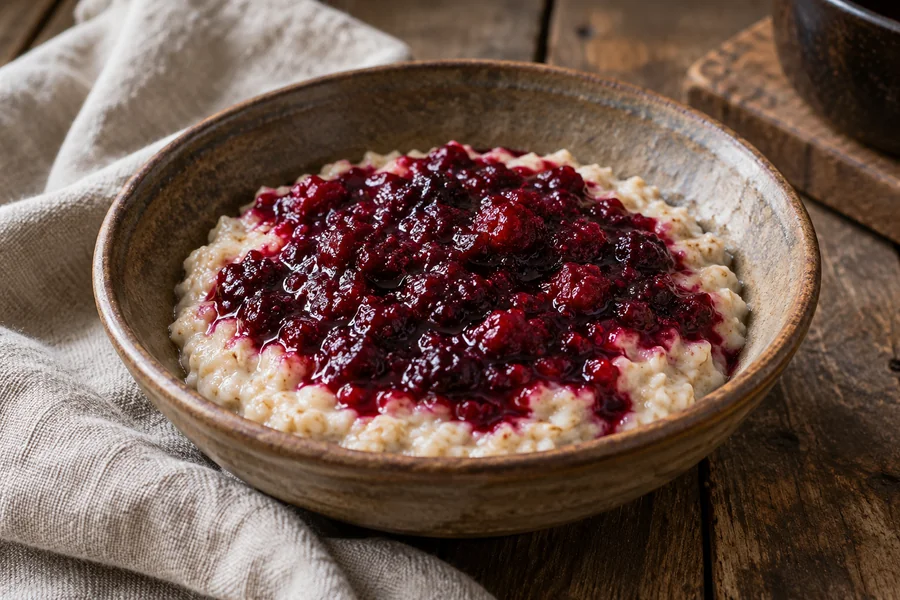
This is a modern quick sauce, not a historical jam or preservation method. Fresh fruit is used for immediate serving.
Ingredients & cooking steps
Ingredients
- 400 g fresh raspberries or bilberries, washed and checked
- 50 ml water
- 20 g honey, optional
Method
- Put the berries and water in a small saucepan. Bring to a simmer and cook for 5–8 minutes, stirring gently, until the fruit breaks down.
- Mash a little with a spoon for a thicker texture. Stir in honey if wanted.
- Serve warm over porridge. If substituting frozen berries, follow their packet’s cooking instructions; do not use this as a shelf-stable preserve.
Contains: None of the 14 major UK allergens in the listed ingredients. Check ingredient labels for additional allergens.
Ingredient background and guidance: National Museum of Denmark — Fruit and berries · National Museum of Denmark — Food
Fruit & dairy
Pan-softened apples with cultured cream
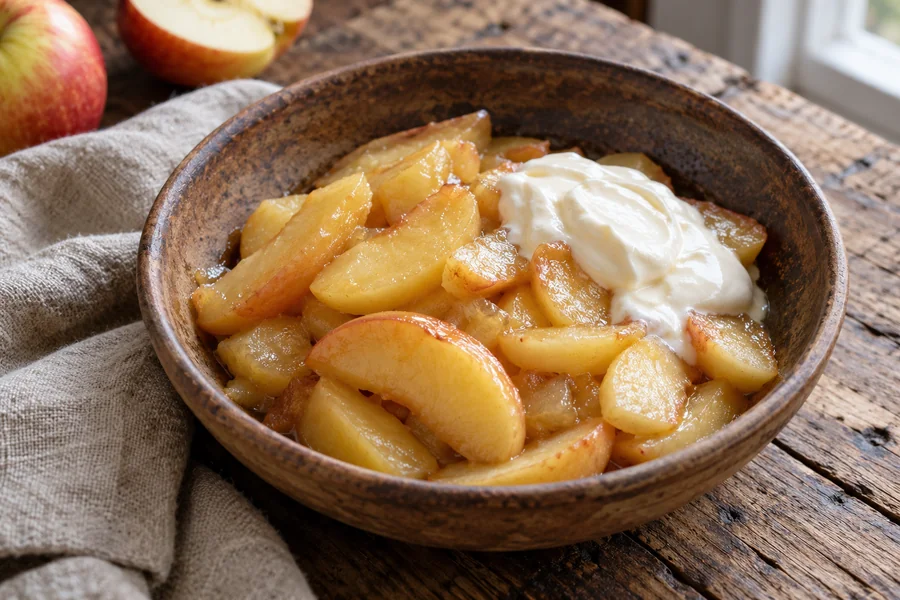
Commercial crème fraîche is an explicitly modern serving choice. Dairy evidence does not identify this exact cultured product or apple dish.
Ingredients & cooking steps
Ingredients
- 500 g apples, cored and cut into 1 cm slices
- 20 g butter
- 50 ml water
- 150 g pasteurized crème fraîche
- 15 g honey, optional
Method
- Melt butter in a wide pan over medium-low heat. Add apples and water, cover and cook for 8–10 minutes until beginning to soften.
- Uncover and cook for another 3–5 minutes until excess water evaporates. Stir in honey if wanted.
- Divide warm apples into bowls and add a spoonful of chilled crème fraîche just before serving.
Contains: Milk. Check ingredient labels for additional allergens.
Ingredient background and guidance: National Museum of Denmark — Fruit and berries · National Museum of Denmark — Meat, fish and dairy
Fruit & dairy
Soft hazelnut & oat honey bites
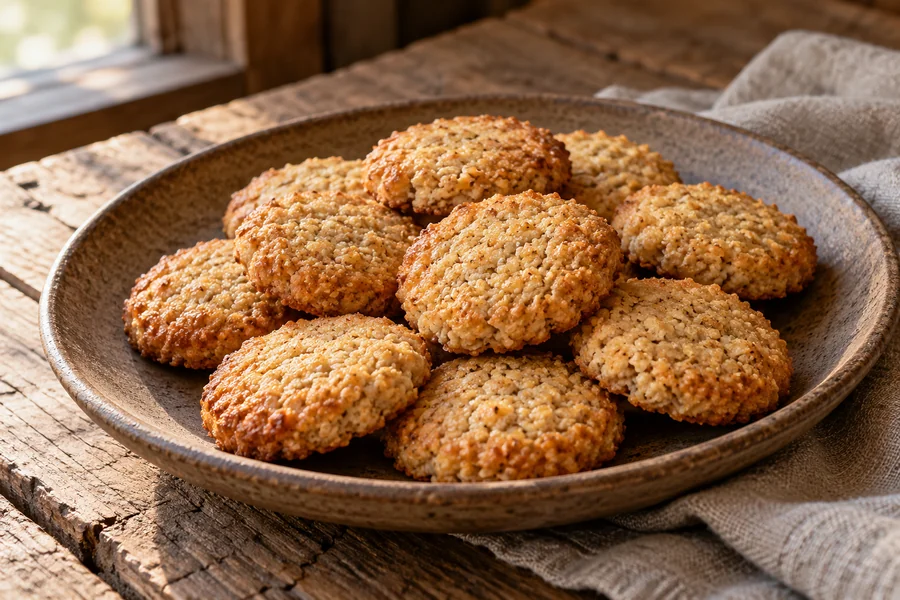
These soft baked bites are a new modern confection. Their shape, sweetness and egg-bound dough are not attributed to Viking cooks.
Ingredients & cooking steps
Ingredients
- 100 g finely ground hazelnuts
- 100 g finely ground oats
- 50 g butter, softened
- 45 g honey
- 1 medium egg
Method
- Heat the oven to 170°C / 340°F. Mix butter and honey, beat in the egg, then stir in ground nuts and oats. Leave for 5 minutes.
- Shape into 12 small flattened discs about 1 cm thick on a lined tray, leaving space between them.
- Bake for 15–20 minutes until firm and lightly golden; check the centre reaches 71°C / 160°F. Let cool on the tray for 10 minutes before moving.
Contains: Hazelnuts; oats (check gluten labelling); milk; eggs. Check ingredient labels for additional allergens.
Ingredient background and guidance: National Museum of Denmark — Fruit and berries · National Museum of Denmark — Bread and porridge · USDA — Safe minimum internal temperatures
Fruit & dairy
Millet milk pudding with berry topping
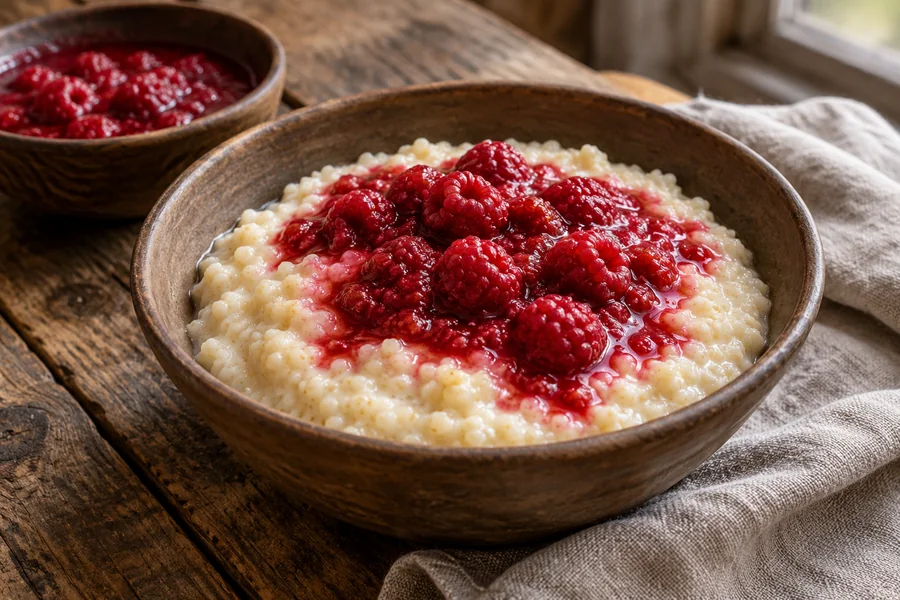
This creamy pudding is a modern development of grain cookery; its milk ratio and topping are not a documented historical preparation.
Ingredients & cooking steps
Ingredients
- 140 g hulled millet, rinsed
- 400 ml pasteurized milk
- 400 ml water
- 200 g fresh raspberries, washed and checked
- 40 ml water for berries
- 20 g honey, optional
Method
- Bring millet, milk and 400 ml water gently to a simmer in a heavy pan. Cook partly covered for 25–35 minutes, stirring often to prevent sticking, until creamy and soft. Add water if necessary.
- Meanwhile simmer berries with 40 ml water for 5–8 minutes, until broken down into a sauce.
- Sweeten the pudding with honey if wanted, spoon into bowls and add the berry sauce. Serve warm.
Contains: Milk. Check ingredient labels for additional allergens.
Ingredient background and guidance: National Museum of Denmark — Bread and porridge · National Museum of Denmark — Fruit and berries · National Museum of Denmark — Meat, fish and dairy
Bread & grains
Soft rye dumplings in onion broth
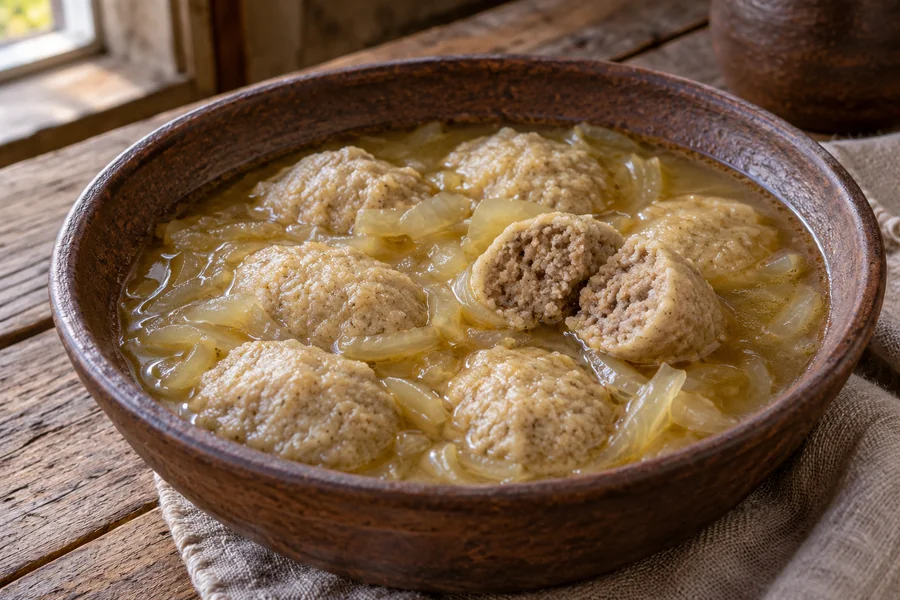
A modern, untested recipe using ingredients discussed in the museum sources below. The combination, proportions and kitchen method are not an authenticated Viking-Age recipe.
Ingredients & cooking steps
Ingredients
- 100 g rye flour
- 100 g wheat flour
- 1 egg
- 100 ml milk
- 2 sliced onions
- 20 g butter
- 1.2 litres unsalted vegetable stock
- ¼ tsp salt
Method
- Soften onions in butter for 10 minutes; add stock and bring to a gentle simmer.
- Mix flours and salt with egg and milk into a sticky dough. Rest 10 minutes, then shape 16 small dumplings with wet spoons.
- Simmer dumplings gently in the broth for 12–15 minutes, turning once. Cut one open to check that its center is firm and no raw dough remains.
Contains: Gluten, egg, milk. Check ingredient labels for additional allergens.
Ingredient background and guidance: National Museum of Denmark — Bread and porridge · National Museum of Denmark — Meat, fish and dairy
Bread & grains
Barley breakfast bake with pears
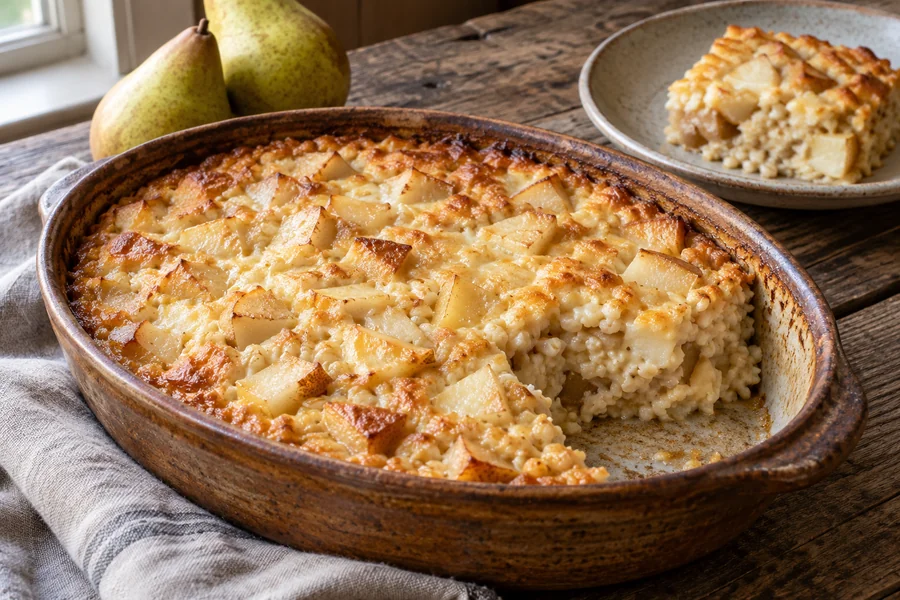
A modern, untested recipe using ingredients discussed in the museum sources below. The combination, proportions and kitchen method are not an authenticated Viking-Age recipe.
Ingredients & cooking steps
Ingredients
- 160 g pearl barley
- 600 ml water
- 2 ripe pears, diced
- 250 ml milk
- 1 egg
- 15 g butter
Method
- Simmer barley in water for 30–40 minutes or according to the packet; drain excess water.
- Heat oven to 180°C. Butter a shallow dish. Combine barley and pears; whisk milk with egg and pour over.
- Bake 25–30 minutes until the center reaches 71°C and the egg mixture is set.
Contains: Gluten, milk, egg. Check ingredient labels for additional allergens.
Ingredient background and guidance: National Museum of Denmark — Bread and porridge · National Museum of Denmark — Fruit and berries · USDA — Safe minimum internal temperatures
Bread & grains
Rye and hazelnut crisp sheets
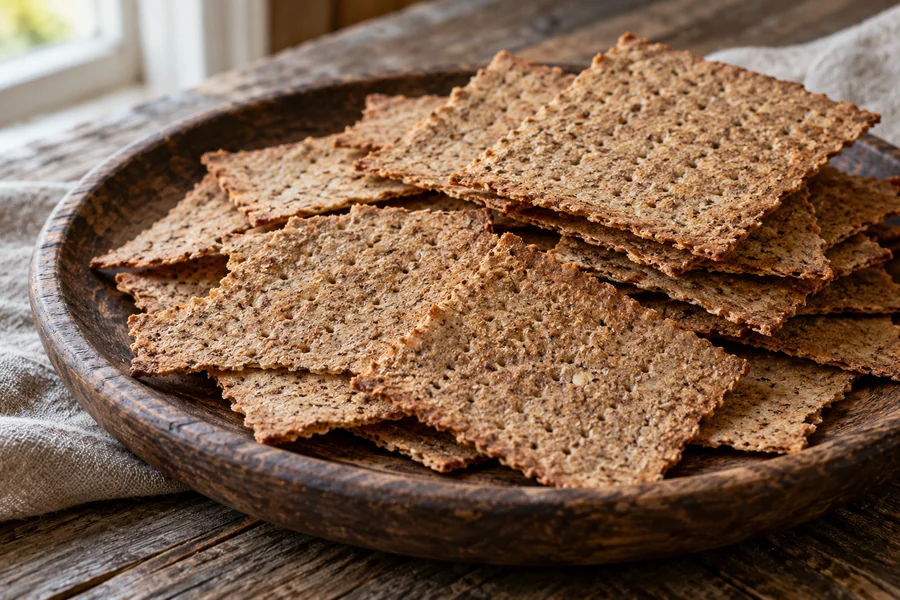
A modern, untested recipe using ingredients discussed in the museum sources below. The combination, proportions and kitchen method are not an authenticated Viking-Age recipe.
Ingredients & cooking steps
Ingredients
- 150 g rye flour
- 50 g wheat flour
- 40 g finely ground hazelnuts
- 130 ml water
- 15 g melted butter
- ¼ tsp salt
Method
- Heat oven to 180°C. Mix all ingredients into a pliable dough, adding water a teaspoon at a time if dry; rest 10 minutes.
- Roll between baking paper sheets to 2 mm. Remove top paper, score 16 pieces and prick with a fork.
- Bake 18–25 minutes until dry and crisp, moving browned edge pieces to a rack first. Cool completely.
Contains: Gluten, hazelnuts, milk. Check ingredient labels for additional allergens.
Ingredient background and guidance: National Museum of Denmark — Bread and porridge · National Museum of Denmark — Fruit and berries
Bread & grains
Oat and fresh-cheese skillet rounds
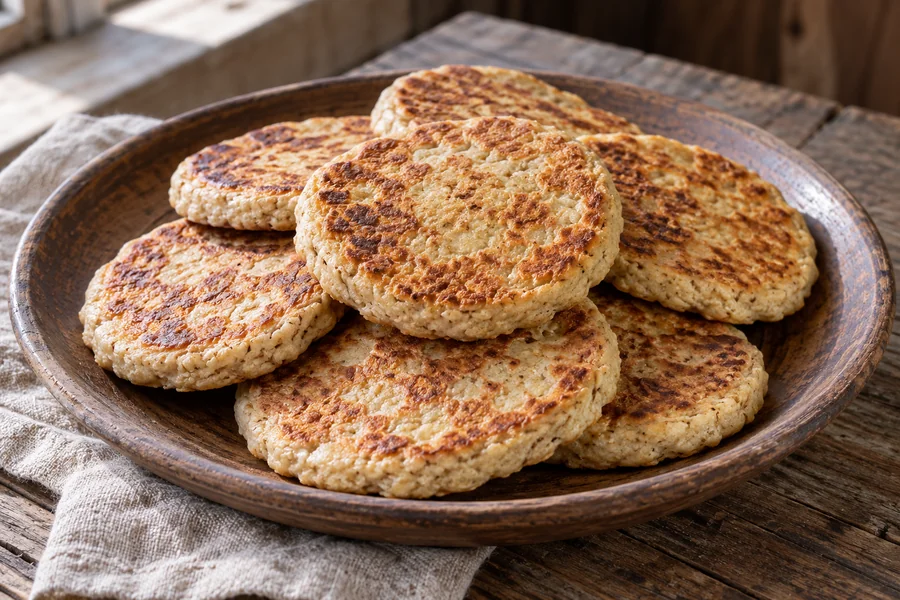
A modern, untested recipe using ingredients discussed in the museum sources below. The combination, proportions and kitchen method are not an authenticated Viking-Age recipe.
Ingredients & cooking steps
Ingredients
- 150 g oat flour
- 100 g wheat flour
- 150 g pasteurized fresh cheese
- 100 ml water
- 1 egg
- 15 g butter
Method
- Mix flour, cheese, egg and water into a soft dough; rest 10 minutes.
- Divide into eight and flatten to 8 mm thick with damp hands.
- Cook in butter over medium-low heat for 5–6 minutes each side, until cooked through and the center reaches 71°C.
Contains: Gluten, milk, egg. Check ingredient labels for additional allergens.
Ingredient background and guidance: National Museum of Denmark — Bread and porridge · National Museum of Denmark — Meat, fish and dairy · USDA — Safe minimum internal temperatures
Bread & grains
Barley with roasted cabbage and apples
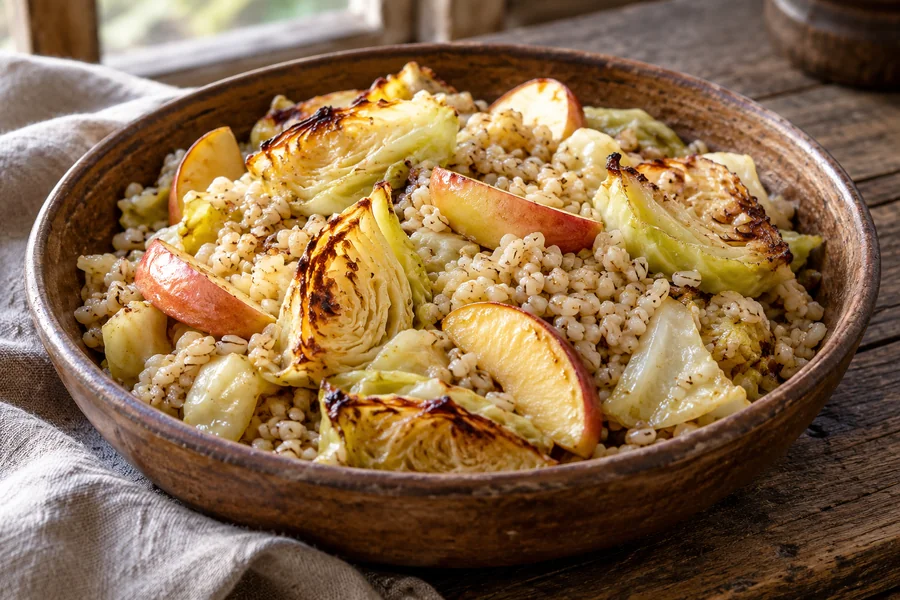
A modern, untested recipe using ingredients discussed in the museum sources below. The combination, proportions and kitchen method are not an authenticated Viking-Age recipe.
Ingredients & cooking steps
Ingredients
- 200 g pearl barley
- 800 ml water
- 500 g cabbage in wedges
- 2 apples in wedges
- 30 g butter
- ¼ tsp salt
Method
- Cook barley in water according to the packet and drain.
- Heat oven to 200°C. Put cabbage and apples in a shallow dish with butter and salt; cover and bake 20 minutes.
- Uncover and bake 15 minutes more, until cabbage is tender. Chop roughly and fold into the barley with the pan juices.
Contains: Gluten, milk. Check ingredient labels for additional allergens.
Ingredient background and guidance: National Museum of Denmark — Bread and porridge · National Museum of Denmark — Fruit and berries · Australian National Maritime Museum — What the Vikings really ate
Bread & grains
Wheat and rye griddle strips
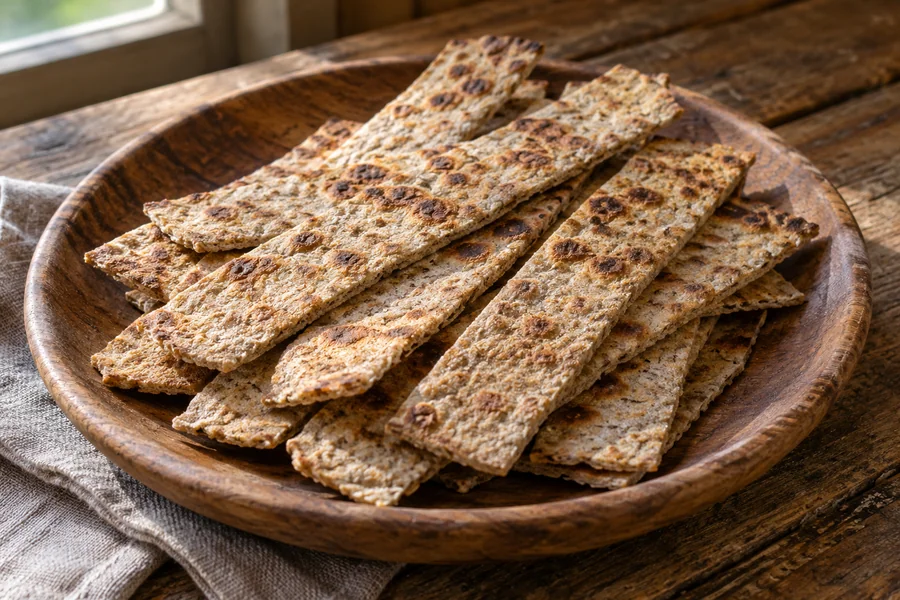
A modern, untested recipe using ingredients discussed in the museum sources below. The combination, proportions and kitchen method are not an authenticated Viking-Age recipe.
Ingredients & cooking steps
Ingredients
- 150 g wheat flour
- 100 g rye flour
- 150 ml water
- 20 g softened butter
- ¼ tsp salt
Method
- Mix ingredients and knead briefly; rest covered for 15 minutes.
- Roll into a rectangle 3 mm thick and cut into 12 strips.
- Cook on a medium-hot dry skillet for 2–3 minutes on each side, until browned and cooked through. Serve with soup.
Contains: Gluten, milk. Check ingredient labels for additional allergens.
Ingredient background and guidance: National Museum of Denmark — Bread and porridge
Bread & grains
Milk oats with toasted barley crumbs
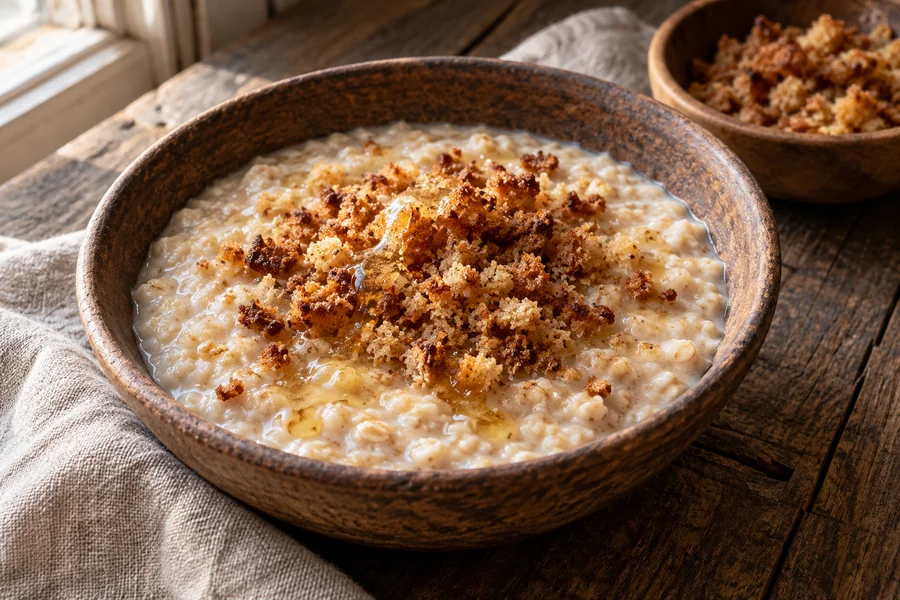
A modern, untested recipe using ingredients discussed in the museum sources below. The combination, proportions and kitchen method are not an authenticated Viking-Age recipe.
Ingredients & cooking steps
Ingredients
- 160 g rolled oats
- 600 ml milk
- 250 ml water
- 60 g barley bread crumbs
- 20 g butter
- 1 tbsp honey
Method
- Cook oats with milk and water at a gentle simmer for 8–10 minutes, stirring frequently.
- Toast bread crumbs in butter over medium-low heat for 4–5 minutes until crisp.
- Spoon porridge into bowls and add crumbs and a little honey just before serving.
Contains: Gluten, milk; honey unsuitable under age one. Check ingredient labels for additional allergens.
Ingredient background and guidance: National Museum of Denmark — Bread and porridge · NHS — Foods to avoid giving babies and young children
Bread & grains
Leek and barley baked parcels
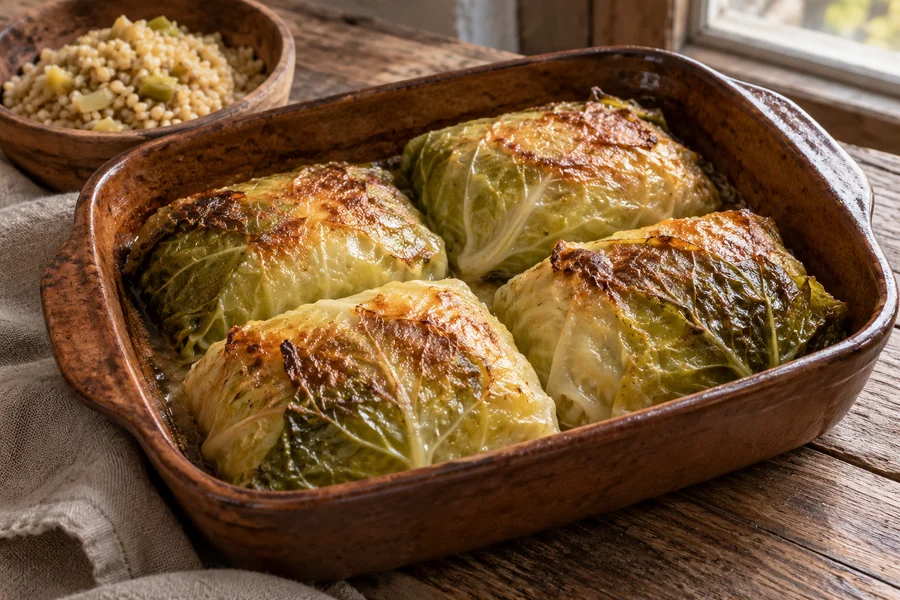
A modern, untested recipe using ingredients discussed in the museum sources below. The combination, proportions and kitchen method are not an authenticated Viking-Age recipe.
Ingredients & cooking steps
Ingredients
- 180 g pearl barley
- 750 ml water
- 2 leeks, washed and sliced
- 30 g butter
- 80 g grated hard cheese
- 4 large cabbage leaves
Method
- Cook barley until tender according to packet; drain. Soften leeks in half the butter for 10 minutes and combine with barley and cheese.
- Blanch cabbage leaves in boiling water for 3 minutes; drain and trim thick stalks. Fill with barley mixture and fold into parcels.
- Place seam-down in a buttered dish with 100 ml water. Cover and bake at 180°C for 25 minutes, until piping hot.
Contains: Gluten, milk. Check ingredient labels for additional allergens.
Ingredient background and guidance: National Museum of Denmark — Bread and porridge · National Museum of Denmark — Meat, fish and dairy · Australian National Maritime Museum — What the Vikings really ate
Vegetables & pulses
Turnip and leek creamy soup
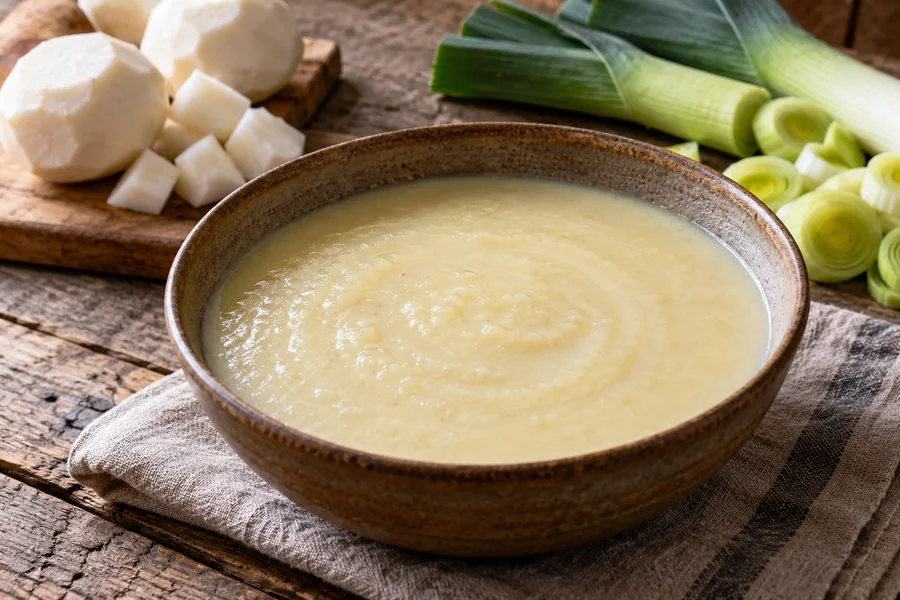
A modern, untested recipe using ingredients discussed in the museum sources below. The combination, proportions and kitchen method are not an authenticated Viking-Age recipe.
Ingredients & cooking steps
Ingredients
- 600 g peeled turnips, diced
- 2 washed leeks, sliced
- 25 g butter
- 800 ml vegetable stock
- 150 ml milk
Method
- Soften leeks in butter for 8 minutes.
- Add turnips and stock; simmer for 20 minutes until tender.
- Blend carefully off the heat, add milk and heat gently for 3–4 minutes. Add water if too thick.
Contains: Milk; check stock for celery. Check ingredient labels for additional allergens.
Ingredient background and guidance: Australian National Maritime Museum — What the Vikings really ate · National Museum of Denmark — Meat, fish and dairy
Vegetables & pulses
Roasted cabbage with pea puree
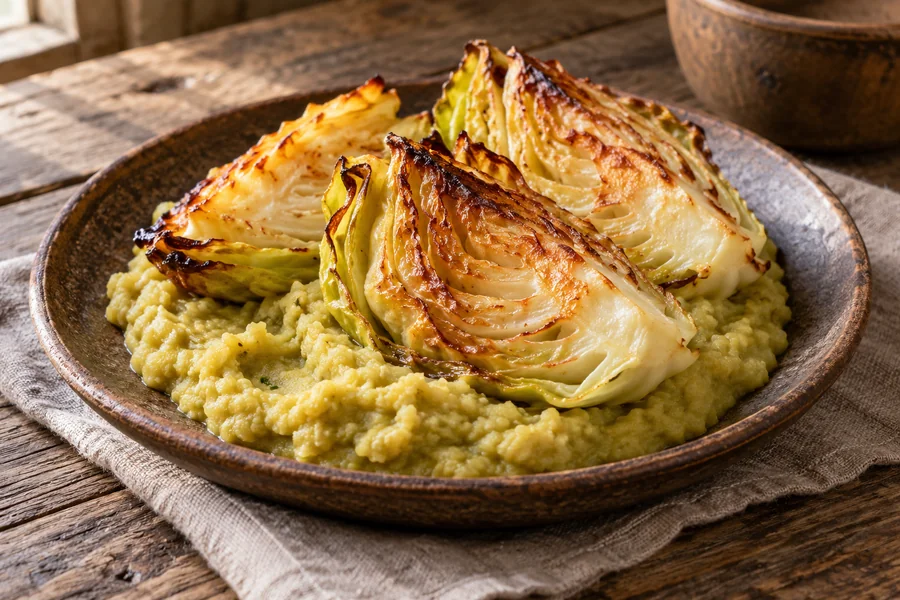
A modern, untested recipe using ingredients discussed in the museum sources below. The combination, proportions and kitchen method are not an authenticated Viking-Age recipe.
Ingredients & cooking steps
Ingredients
- 200 g dried split peas, rinsed
- 900 ml water
- 600 g cabbage wedges
- 30 g butter
- 1 onion, diced
Method
- Simmer peas and onion in water for 45–60 minutes or until soft, adding water as needed.
- Brush cabbage with half the butter and roast at 200°C for 30–35 minutes, turning once.
- Mash peas with remaining butter and enough cooking liquid for a soft puree. Serve cabbage over the puree.
Contains: Milk. Check ingredient labels for additional allergens.
Ingredient background and guidance: Australian National Maritime Museum — What the Vikings really ate
Vegetables & pulses
Braised turnips with hazelnut crumble
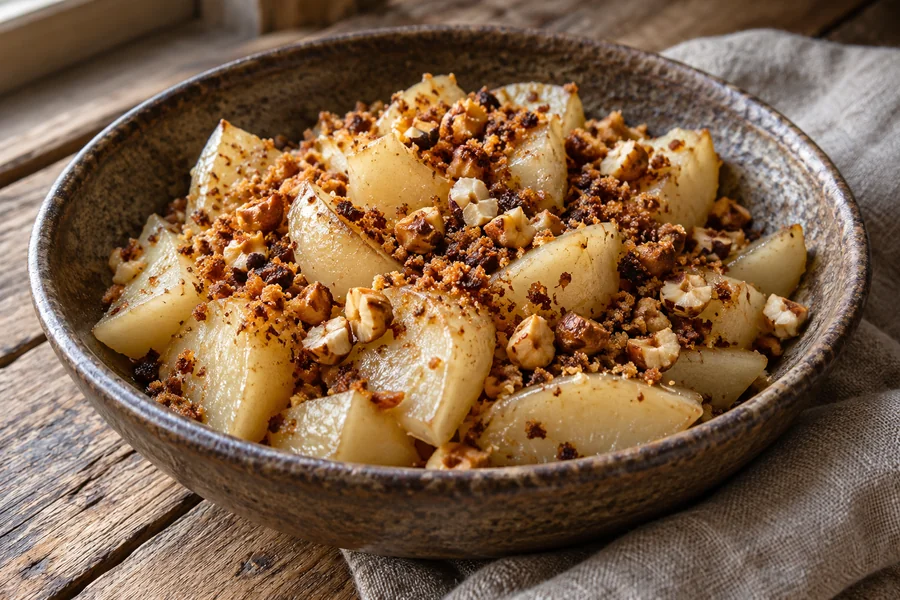
A modern, untested recipe using ingredients discussed in the museum sources below. The combination, proportions and kitchen method are not an authenticated Viking-Age recipe.
Ingredients & cooking steps
Ingredients
- 600 g turnips in small wedges
- 250 ml vegetable stock
- 25 g butter
- 40 g chopped hazelnuts
- 30 g rye bread crumbs
Method
- Simmer turnips with stock and half the butter, covered, for 15–20 minutes.
- Uncover and simmer until most liquid has evaporated.
- Toast hazelnuts and crumbs in remaining butter for 3–4 minutes. Scatter over tender turnips.
Contains: Hazelnuts, gluten, milk; check stock. Check ingredient labels for additional allergens.
Ingredient background and guidance: Australian National Maritime Museum — What the Vikings really ate · National Museum of Denmark — Fruit and berries · National Museum of Denmark — Bread and porridge
Vegetables & pulses
Onion and apple baked mash
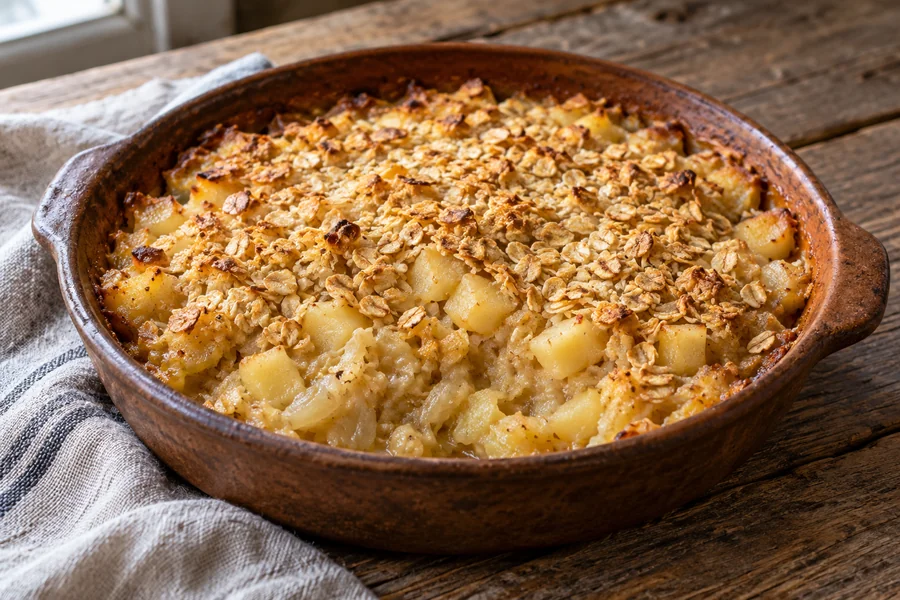
A modern, untested recipe using ingredients discussed in the museum sources below. The combination, proportions and kitchen method are not an authenticated Viking-Age recipe.
Ingredients & cooking steps
Ingredients
- 3 onions, sliced
- 3 apples, peeled and diced
- 25 g butter
- 100 ml water
- 60 g rolled oats
Method
- Cook onions in butter over low heat for 15 minutes.
- Add apples and water; cover and cook 10 minutes until soft, then mash roughly.
- Transfer to a small oven dish, scatter oats on top and bake at 190°C for 15 minutes.
Contains: Gluten, milk. Check ingredient labels for additional allergens.
Ingredient background and guidance: Australian National Maritime Museum — What the Vikings really ate · National Museum of Denmark — Fruit and berries · National Museum of Denmark — Bread and porridge
Vegetables & pulses
Pea and barley stuffed cabbage
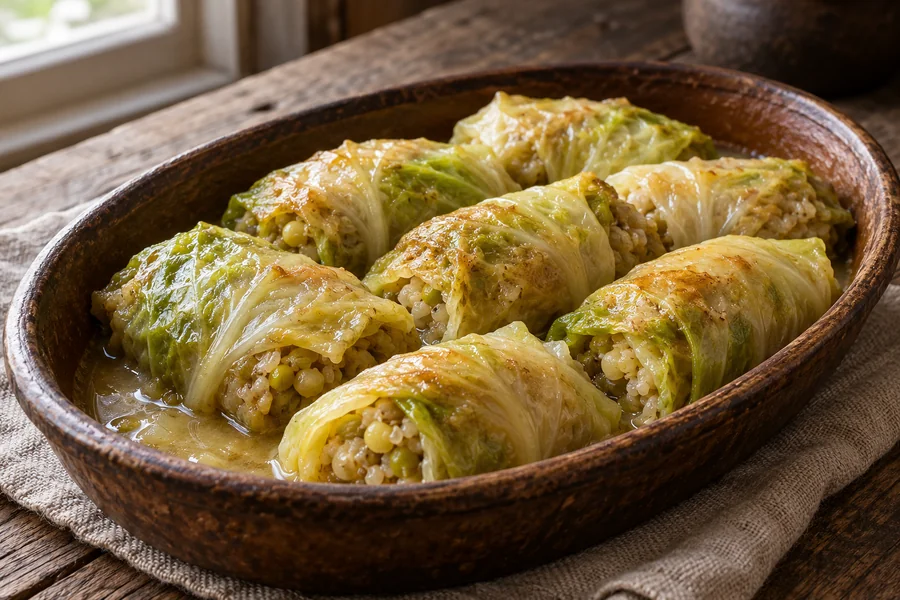
A modern, untested recipe using ingredients discussed in the museum sources below. The combination, proportions and kitchen method are not an authenticated Viking-Age recipe.
Ingredients & cooking steps
Ingredients
- 120 g split peas
- 100 g pearl barley
- 1.2 litres water
- 1 onion, diced
- 8 cabbage leaves
- 25 g butter
- 250 ml vegetable stock
Method
- Cook peas and barley in separate pans until tender according to packets, using the water as needed; drain. Soften onion in butter and combine.
- Blanch cabbage leaves for 3 minutes; trim stalks. Divide filling among leaves and fold into rolls.
- Place seam-down in a dish with stock. Cover and bake at 180°C for 30 minutes until tender and hot throughout.
Contains: Gluten, milk; check stock. Check ingredient labels for additional allergens.
Ingredient background and guidance: Australian National Maritime Museum — What the Vikings really ate · National Museum of Denmark — Bread and porridge
Vegetables & pulses
Warm beetroot with apple and dairy
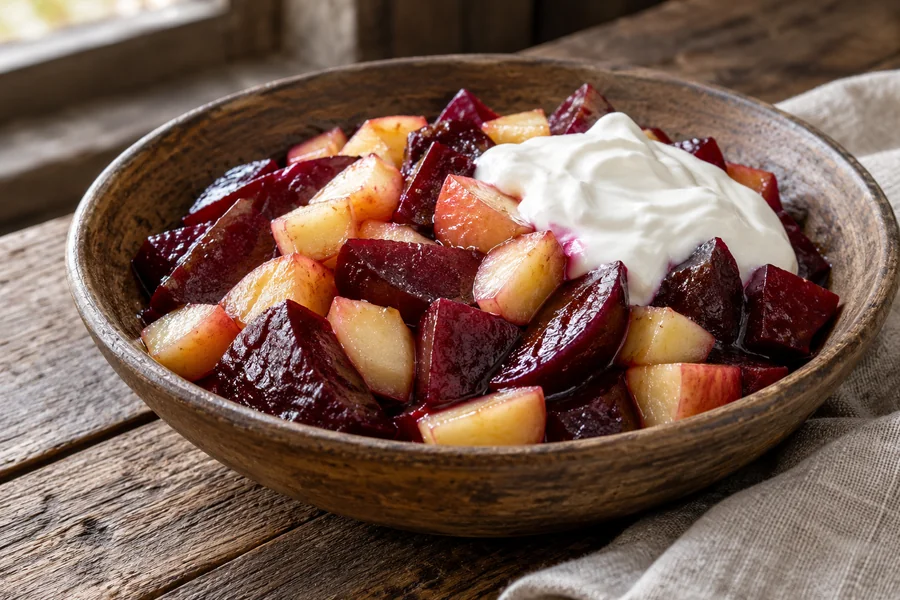
A modern, untested recipe using ingredients discussed in the museum sources below. The combination, proportions and kitchen method are not an authenticated Viking-Age recipe.
Ingredients & cooking steps
Ingredients
- 600 g beetroot
- 2 apples, diced
- 150 g plain pasteurized yogurt
- 20 g butter
Method
- Wrap washed beetroot in foil and bake at 200°C for 45–60 minutes until easily pierced; larger roots may need longer.
- Cool enough to handle, peel and cut into wedges. Soften apples in butter in a skillet for 5–7 minutes.
- Combine warm beetroot and apples, then spoon yogurt on top. Beetroot is a modern ingredient choice here; this dish is not evidence of a specific Viking crop variety.
Contains: Milk. Check ingredient labels for additional allergens.
Ingredient background and guidance: Australian National Maritime Museum — What the Vikings really ate · National Museum of Denmark — Fruit and berries
Vegetables & pulses
Leek and egg pan supper
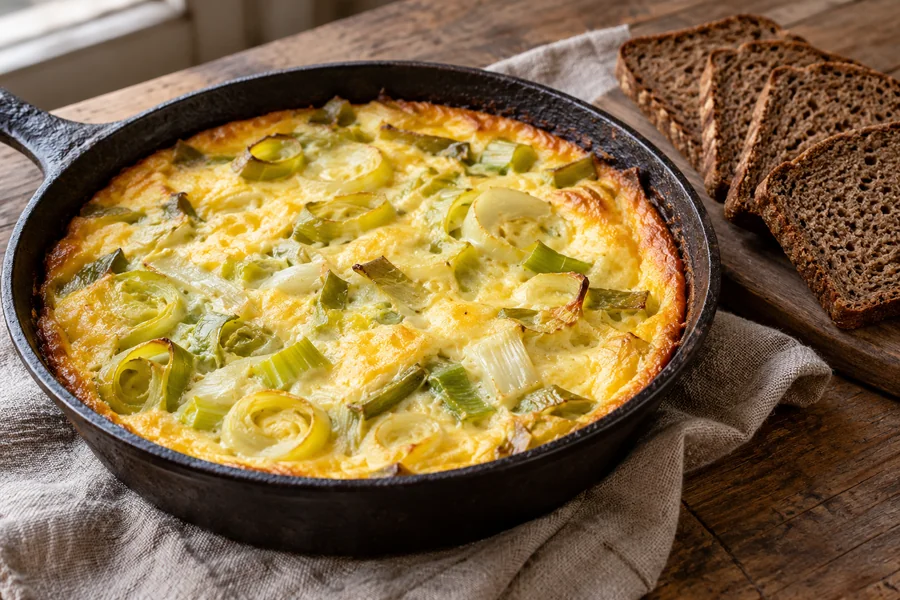
A modern, untested recipe using ingredients discussed in the museum sources below. The combination, proportions and kitchen method are not an authenticated Viking-Age recipe.
Ingredients & cooking steps
Ingredients
- 3 leeks, washed and sliced
- 6 eggs
- 100 ml milk
- 25 g butter
- 4 slices rye bread
Method
- Soften leeks in butter in an oven-safe skillet for 12–15 minutes.
- Whisk eggs and milk, pour over leeks and cook gently for 5 minutes.
- Move to an oven at 180°C for 8–12 minutes, until the center reaches 71°C. Serve with rye bread.
Contains: Egg, milk, gluten. Check ingredient labels for additional allergens.
Ingredient background and guidance: National Museum of Denmark — Meat, fish and dairy · National Museum of Denmark — Bread and porridge · USDA — Safe minimum internal temperatures
Vegetables & pulses
Slow onion and green-pea pot
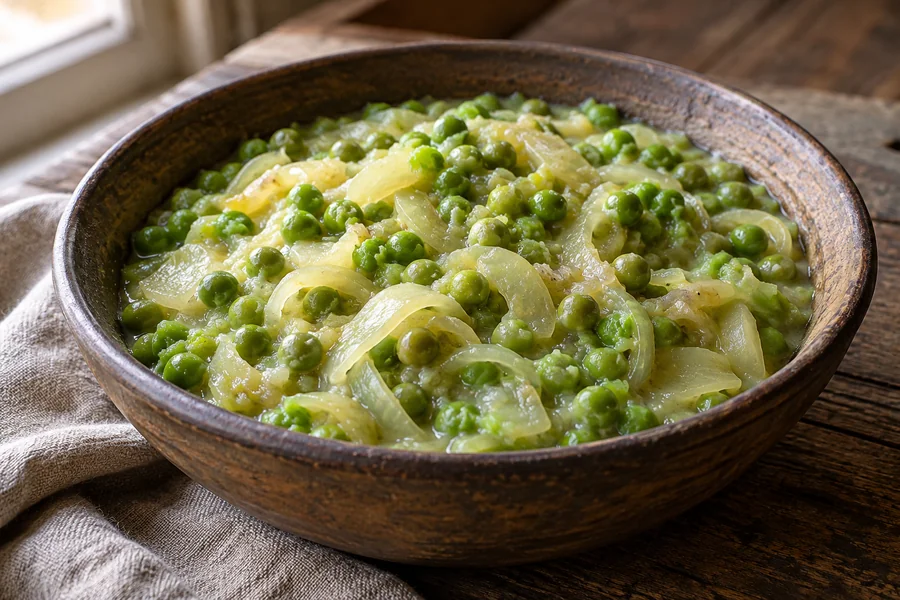
A modern, untested recipe using ingredients discussed in the museum sources below. The combination, proportions and kitchen method are not an authenticated Viking-Age recipe.
Ingredients & cooking steps
Ingredients
- 4 onions, sliced
- 400 g frozen peas
- 30 g butter
- 150 ml water
- 2 tbsp plain yogurt
Method
- Cook onions in butter over low heat for 20 minutes, stirring often.
- Add peas and water; simmer for 5–8 minutes until peas are hot and tender.
- Remove from heat, mash a third of the peas to thicken and stir in yogurt. Frozen garden peas are a modern convenience, not an exact historical variety.
Contains: Milk. Check ingredient labels for additional allergens.
Ingredient background and guidance: Australian National Maritime Museum — What the Vikings really ate · National Museum of Denmark — Meat, fish and dairy
Fish & meat
Salmon with warm apple and barley
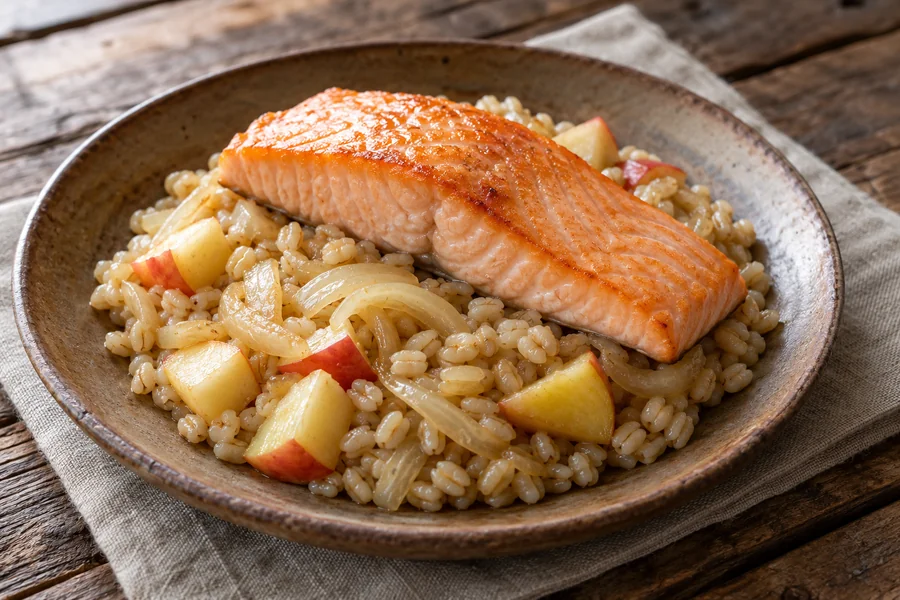
A modern, untested recipe using ingredients discussed in the museum sources below. The combination, proportions and kitchen method are not an authenticated Viking-Age recipe.
Ingredients & cooking steps
Ingredients
- 4 boneless salmon portions, 140 g each
- 180 g pearl barley
- 800 ml water
- 2 apples, diced
- 1 onion, sliced
- 25 g butter
Method
- Cook barley in water according to packet; drain.
- Soften onion in half the butter for 10 minutes; add apple and cook 5 minutes. Fold into barley.
- Bake salmon brushed with remaining butter at 190°C for approximately 12–18 minutes, until its thickest part reaches 63°C. Serve over barley.
Contains: Fish, gluten, milk. Check ingredient labels for additional allergens.
Ingredient background and guidance: National Museum of Denmark — Meat, fish and dairy · National Museum of Denmark — Bread and porridge · USDA — Safe minimum internal temperatures
Fish & meat
Herring and cabbage tray supper
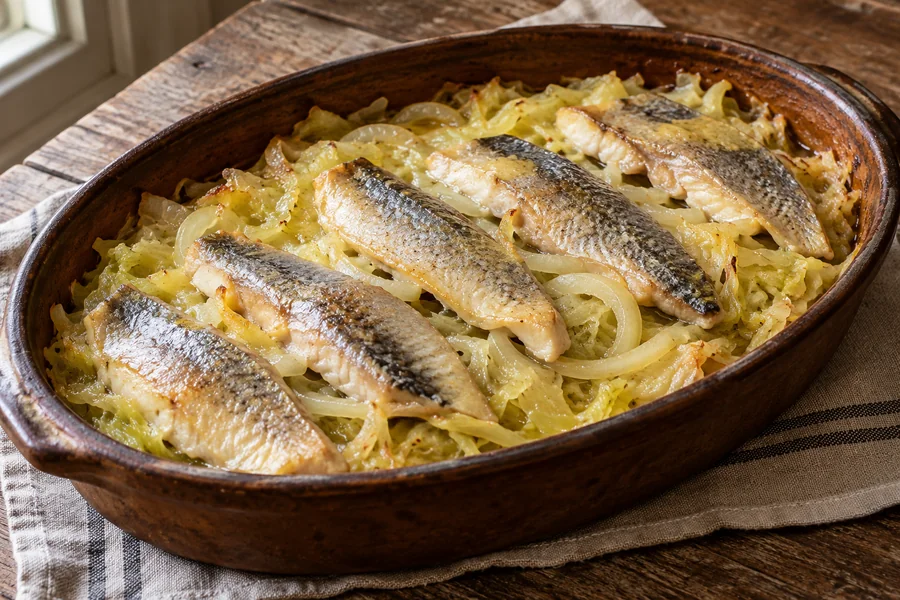
A modern, untested recipe using ingredients discussed in the museum sources below. The combination, proportions and kitchen method are not an authenticated Viking-Age recipe.
Ingredients & cooking steps
Ingredients
- 600 g boneless fresh herring fillets
- 500 g cabbage, shredded
- 1 onion, sliced
- 30 g butter
- 100 ml water
Method
- Heat oven to 190°C. Put cabbage, onion, water and half the butter in a covered dish; bake 20 minutes.
- Place herring over the softened cabbage and dot with remaining butter.
- Bake uncovered for 12–18 minutes until the fish reaches 63°C; check for small bones before serving.
Contains: Fish, milk. Check ingredient labels for additional allergens.
Ingredient background and guidance: National Museum of Denmark — Meat, fish and dairy · Australian National Maritime Museum — What the Vikings really ate · USDA — Safe minimum internal temperatures
Fish & meat
White fish and oat cakes
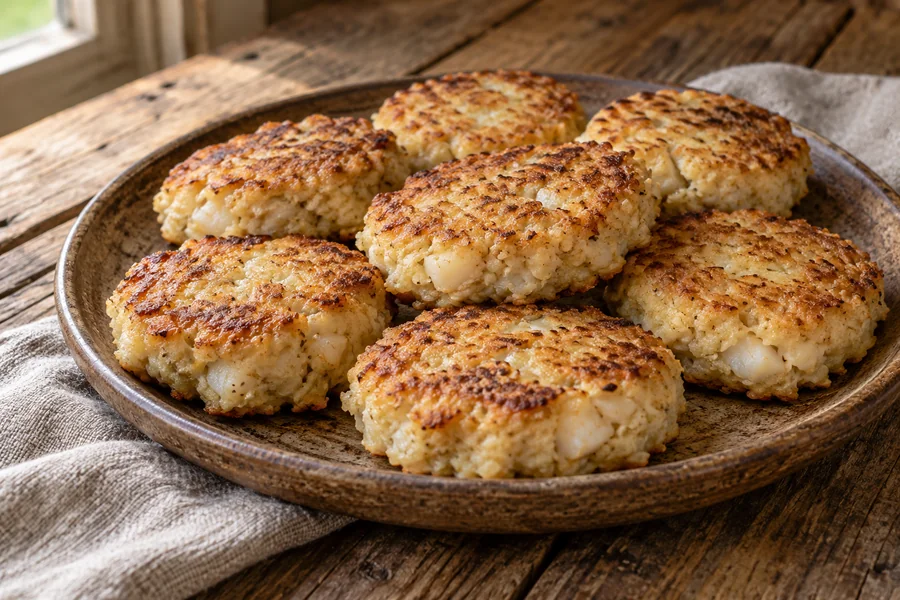
A modern, untested recipe using ingredients discussed in the museum sources below. The combination, proportions and kitchen method are not an authenticated Viking-Age recipe.
Ingredients & cooking steps
Ingredients
- 500 g boneless white fish, finely chopped
- 60 g rolled oats
- 1 egg
- 1 small onion, finely grated
- 20 g butter
- 2 tbsp milk
Method
- Mix fish, oats, egg, onion and milk. Rest in the refrigerator for 10 minutes.
- Shape eight patties with damp hands.
- Fry in butter over medium-low heat for 5–6 minutes on each side. Check the center reaches 74°C because the mixture includes egg and fish.
Contains: Fish, egg, gluten, milk. Check ingredient labels for additional allergens.
Ingredient background and guidance: National Museum of Denmark — Meat, fish and dairy · National Museum of Denmark — Bread and porridge · USDA — Safe minimum internal temperatures
Fish & meat
Chicken and apple barley bake
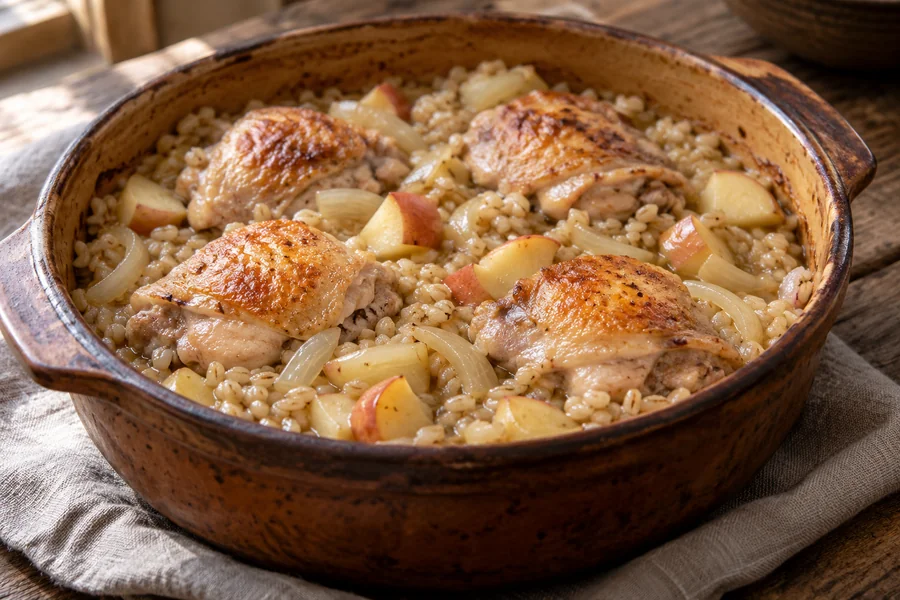
A modern, untested recipe using ingredients discussed in the museum sources below. The combination, proportions and kitchen method are not an authenticated Viking-Age recipe.
Ingredients & cooking steps
Ingredients
- 600 g boneless chicken thighs
- 160 g pearl barley
- 2 apples, diced
- 2 onions, sliced
- 700 ml chicken stock
- 20 g butter
Method
- Heat oven to 190°C. Put barley, onions, apples and stock into a deep covered casserole.
- Lay chicken on top and dot with butter. Cover and bake 50 minutes.
- Check barley is tender and chicken reaches 74°C. If needed add a little boiling water and cook 10–15 minutes more; uncover at the end for color.
Contains: Gluten, milk; check stock. Check ingredient labels for additional allergens.
Ingredient background and guidance: National Museum of Denmark — Meat, fish and dairy · National Museum of Denmark — Bread and porridge · USDA — Safe minimum internal temperatures
Fish & meat
Beef with turnip and rye spoon-dumplings
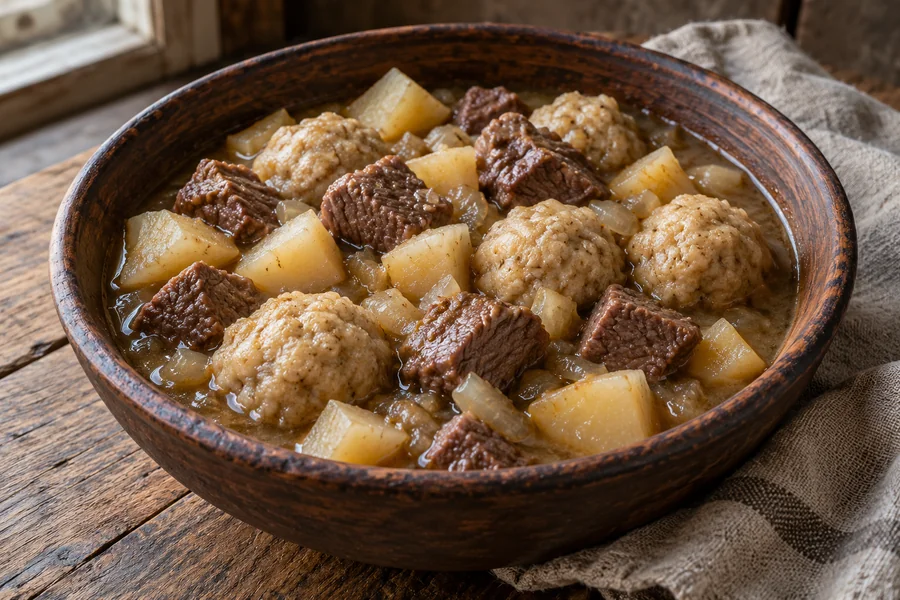
A modern, untested recipe using ingredients discussed in the museum sources below. The combination, proportions and kitchen method are not an authenticated Viking-Age recipe.
Ingredients & cooking steps
Ingredients
- 600 g stewing beef in cubes
- 400 g turnips in cubes
- 2 onions, chopped
- 1 litre beef stock
- 80 g rye flour
- 80 g wheat flour
- 100 ml water
- 20 g butter
Method
- Brown beef in butter in batches. Add onion and stock; cover and simmer gently for 90 minutes.
- Add turnips and simmer 25 minutes. Mix flours and water into soft dough and shape 12 small dumplings.
- Add dumplings to bubbling stew, cover and simmer 15–20 minutes until cooked through and beef is tender. Add hot water if needed.
Contains: Gluten, milk; check stock. Check ingredient labels for additional allergens.
Ingredient background and guidance: National Museum of Denmark — Meat, fish and dairy · National Museum of Denmark — Bread and porridge · Australian National Maritime Museum — What the Vikings really ate
Fish & meat
Pork and cabbage barley soup
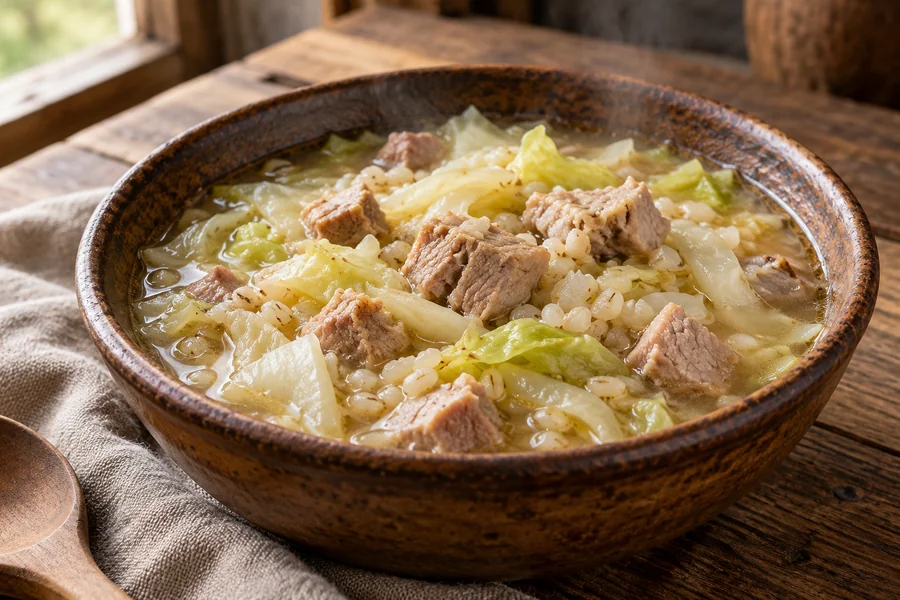
A modern, untested recipe using ingredients discussed in the museum sources below. The combination, proportions and kitchen method are not an authenticated Viking-Age recipe.
Ingredients & cooking steps
Ingredients
- 500 g diced pork shoulder
- 120 g pearl barley
- 400 g cabbage, sliced
- 1 onion, diced
- 1.4 litres water
- 20 g butter
Method
- Brown pork in butter; add onion and cook 5 minutes.
- Add water, cover and simmer 40 minutes. Add barley and simmer for its packet cooking time, usually 30–40 minutes.
- Add cabbage for the last 15 minutes. Pork should be tender and thoroughly cooked; add water to keep a soup consistency.
Contains: Gluten, milk. Check ingredient labels for additional allergens.
Ingredient background and guidance: National Museum of Denmark — Meat, fish and dairy · National Museum of Denmark — Bread and porridge
Fish & meat
Lamb and pea broth
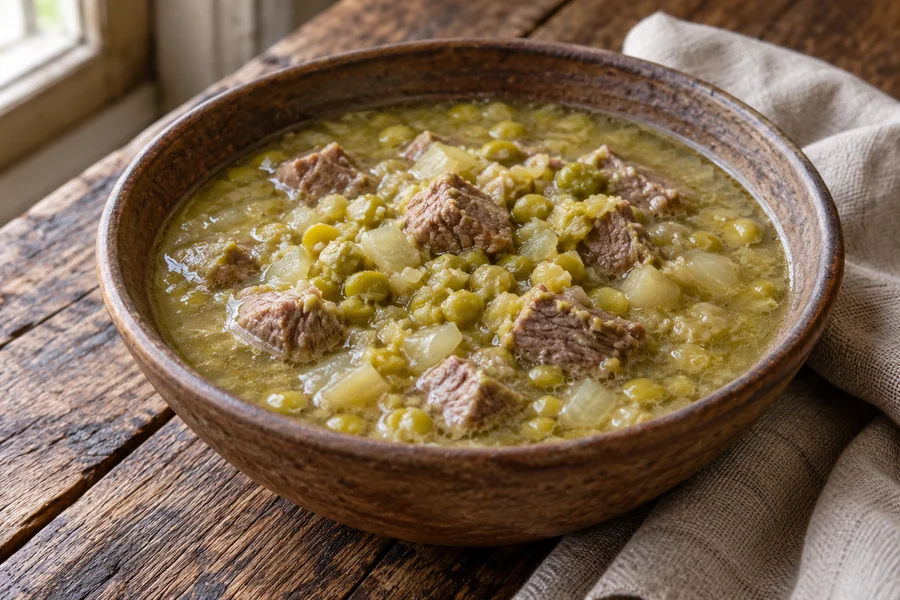
A modern, untested recipe using ingredients discussed in the museum sources below. The combination, proportions and kitchen method are not an authenticated Viking-Age recipe.
Ingredients & cooking steps
Ingredients
- 600 g diced lamb shoulder
- 180 g split peas
- 2 onions, diced
- 1.5 litres water
- 20 g butter
Method
- Brown lamb in butter, then soften onions in the same pan.
- Add rinsed peas and water. Bring to a boil, then reduce to a gentle simmer.
- Cook covered for 90–110 minutes until lamb and peas are tender, stirring and adding water as needed.
Contains: Milk. Check ingredient labels for additional allergens.
Ingredient background and guidance: National Museum of Denmark — Meat, fish and dairy · Australian National Maritime Museum — What the Vikings really ate
Fish & meat
Roast duck legs with barley and plums
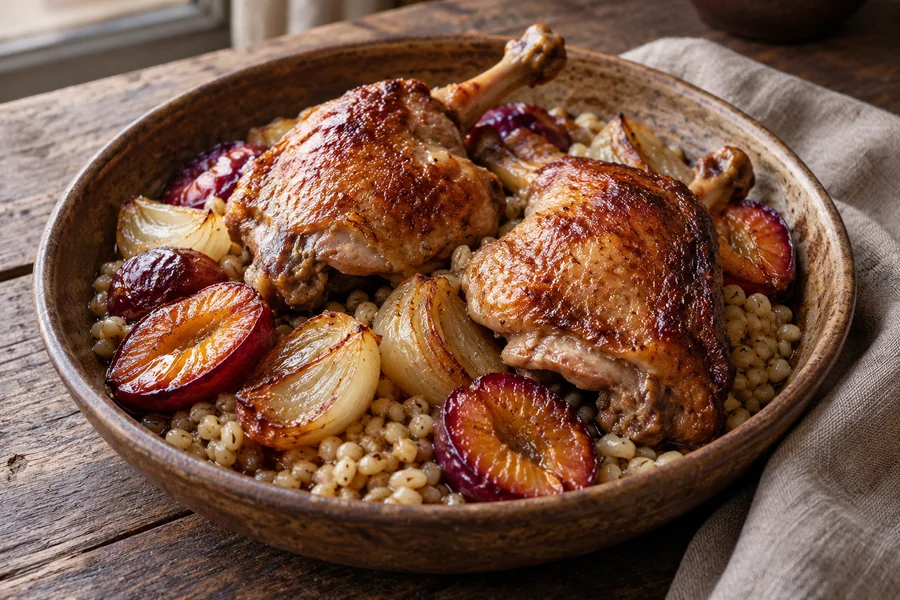
A modern, untested recipe using ingredients discussed in the museum sources below. The combination, proportions and kitchen method are not an authenticated Viking-Age recipe.
Ingredients & cooking steps
Ingredients
- 4 duck legs
- 200 g pearl barley
- 800 ml water
- 6 plums, halved and stoned
- 2 onions, quartered
Method
- Heat oven to 180°C. Put duck skin-up over onions in a roasting dish; roast for 70 minutes.
- Add plums and roast 20–30 minutes more, until duck reaches at least 74°C and is tender.
- Meanwhile cook barley according to packet and drain. Serve with plums and onions, skimming excess fat from pan juices.
Contains: Gluten. Check ingredient labels for additional allergens.
Ingredient background and guidance: National Museum of Denmark — Meat, fish and dairy · National Museum of Denmark — Bread and porridge · National Museum of Denmark — Fruit and berries · USDA — Safe minimum internal temperatures
Dairy & eggs
Fresh cheese with warm leek topping
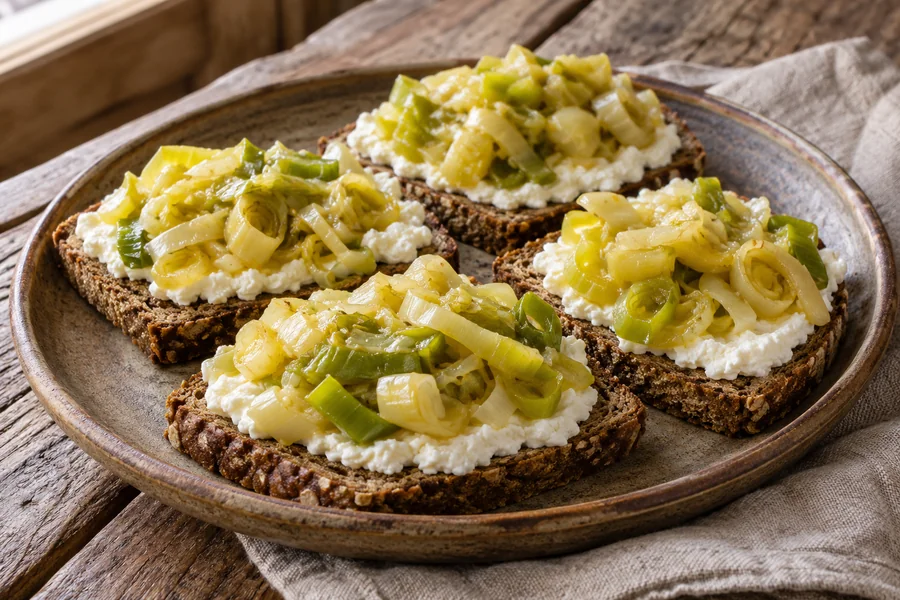
A modern, untested recipe using ingredients discussed in the museum sources below. The combination, proportions and kitchen method are not an authenticated Viking-Age recipe.
Ingredients & cooking steps
Ingredients
- 300 g pasteurized fresh cheese
- 2 washed leeks, sliced
- 25 g butter
- 4 slices rye bread
Method
- Soften leeks slowly in butter for 12–15 minutes; add a splash of water if needed.
- Toast rye bread lightly and divide cheese between slices.
- Top with hot leeks and serve immediately. This is a modern open sandwich.
Contains: Milk, gluten. Check ingredient labels for additional allergens.
Ingredient background and guidance: National Museum of Denmark — Meat, fish and dairy · National Museum of Denmark — Bread and porridge
Dairy & eggs
Baked egg and barley cups
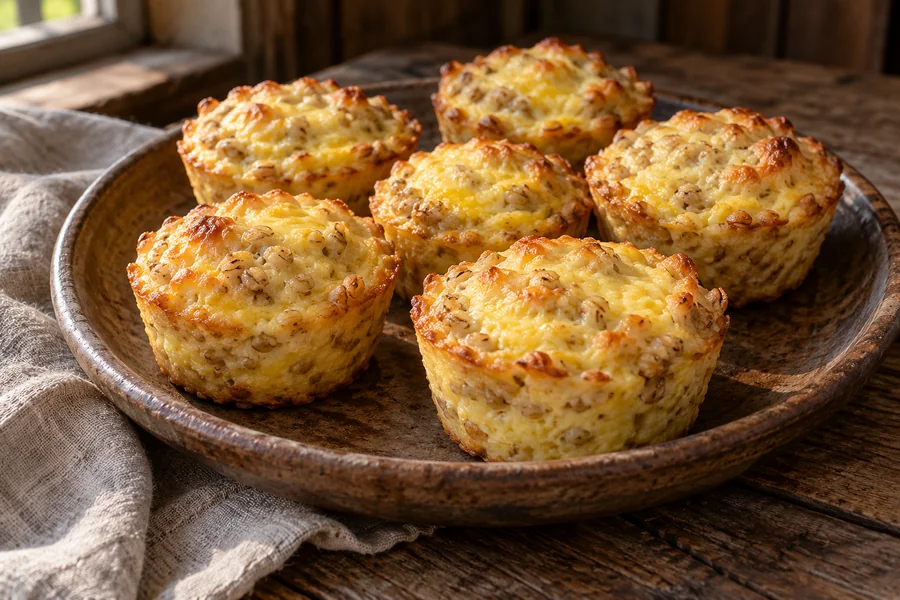
A modern, untested recipe using ingredients discussed in the museum sources below. The combination, proportions and kitchen method are not an authenticated Viking-Age recipe.
Ingredients & cooking steps
Ingredients
- 100 g pearl barley
- 450 ml water
- 4 eggs
- 150 ml milk
- 60 g grated cheese
- 10 g butter
Method
- Cook barley until tender and drain. Heat oven to 180°C; grease six muffin cups well.
- Whisk eggs and milk, fold in barley and cheese, and divide among cups.
- Bake 20–25 minutes until centers reach 71°C. Rest 5 minutes before loosening edges and removing.
Contains: Egg, milk, gluten. Check ingredient labels for additional allergens.
Ingredient background and guidance: National Museum of Denmark — Meat, fish and dairy · National Museum of Denmark — Bread and porridge · USDA — Safe minimum internal temperatures
Dairy & eggs
Warm milk and rye crumb bowl
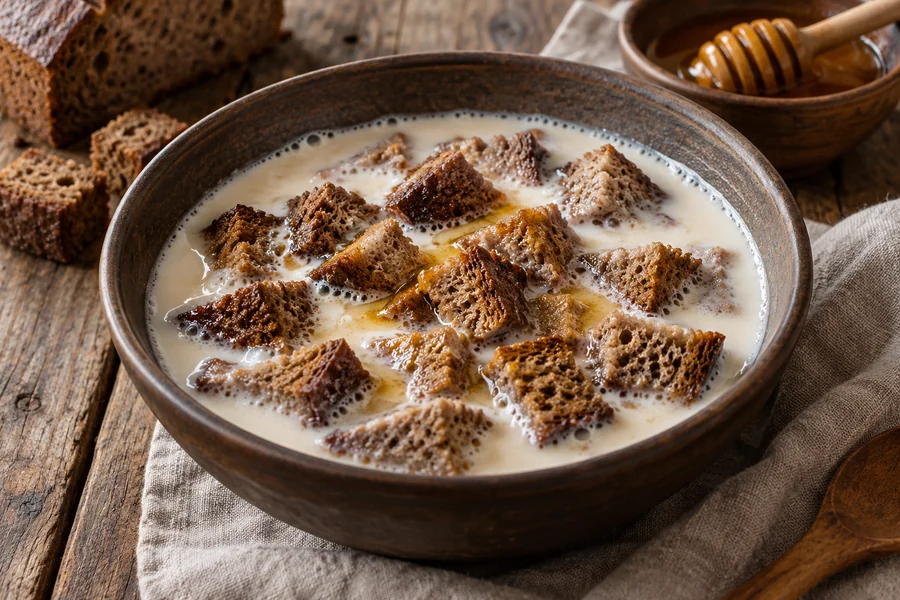
A modern, untested recipe using ingredients discussed in the museum sources below. The combination, proportions and kitchen method are not an authenticated Viking-Age recipe.
Ingredients & cooking steps
Ingredients
- 200 g rye bread, cubed
- 800 ml milk
- 20 g butter
- 2 tbsp honey
Method
- Toast bread cubes in butter over medium-low heat for 5–7 minutes.
- Warm milk in a saucepan until steaming, stirring frequently.
- Divide bread between bowls and pour over milk. Add honey to taste and eat immediately.
Contains: Milk, gluten; honey unsuitable under age one. Check ingredient labels for additional allergens.
Ingredient background and guidance: National Museum of Denmark — Meat, fish and dairy · National Museum of Denmark — Bread and porridge · NHS — Foods to avoid giving babies and young children
Dairy & eggs
Cultured dairy with stewed pears and oats
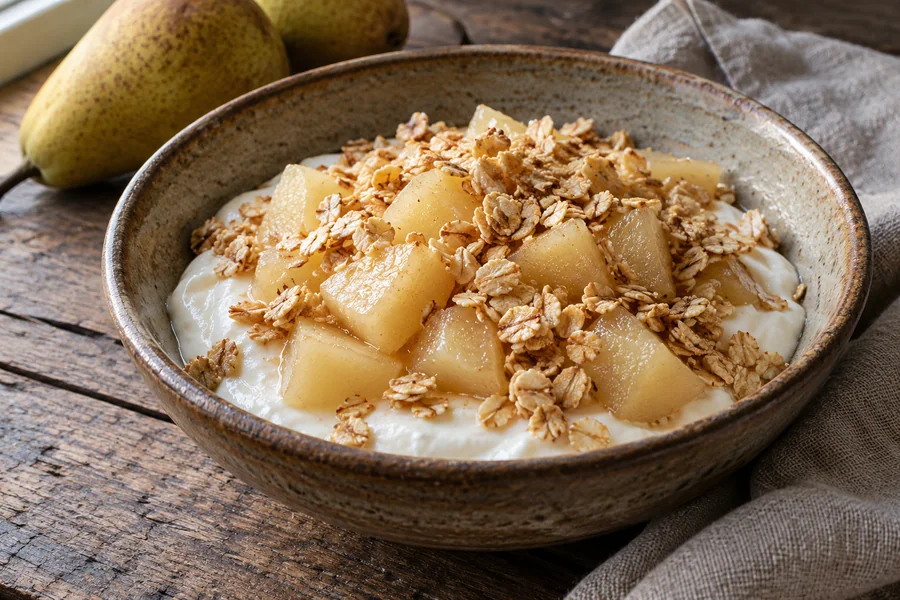
A modern, untested recipe using ingredients discussed in the museum sources below. The combination, proportions and kitchen method are not an authenticated Viking-Age recipe.
Ingredients & cooking steps
Ingredients
- 500 g plain pasteurized yogurt
- 3 pears, peeled and diced
- 100 ml water
- 60 g rolled oats
- 15 g butter
Method
- Simmer pears in water for 10–15 minutes until soft.
- Toast oats in butter for 5 minutes over low heat, stirring.
- Cool pears until lukewarm and layer with yogurt and oats. Cultured dairy from a shop is a modern ingredient, not a recreated historical culture.
Contains: Milk, gluten. Check ingredient labels for additional allergens.
Ingredient background and guidance: National Museum of Denmark — Meat, fish and dairy · National Museum of Denmark — Fruit and berries · National Museum of Denmark — Bread and porridge
Dairy & eggs
Onion and cheese rye pudding
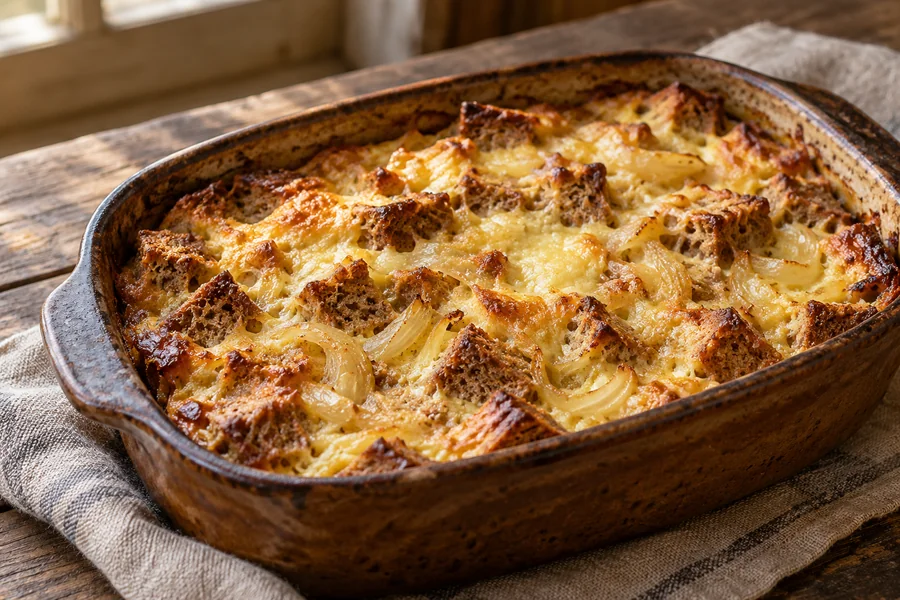
A modern, untested recipe using ingredients discussed in the museum sources below. The combination, proportions and kitchen method are not an authenticated Viking-Age recipe.
Ingredients & cooking steps
Ingredients
- 200 g rye bread, cubed
- 2 onions, sliced
- 4 eggs
- 350 ml milk
- 80 g grated hard cheese
- 25 g butter
Method
- Soften onions in butter for 12 minutes. Heat oven to 180°C.
- Put bread and onions in a buttered dish. Whisk eggs with milk, add cheese, pour over and rest 10 minutes.
- Bake 25–30 minutes until set and the center reaches 71°C.
Contains: Gluten, milk, egg. Check ingredient labels for additional allergens.
Ingredient background and guidance: National Museum of Denmark — Meat, fish and dairy · National Museum of Denmark — Bread and porridge · USDA — Safe minimum internal temperatures
Dairy & eggs
Soft eggs over buttered peas
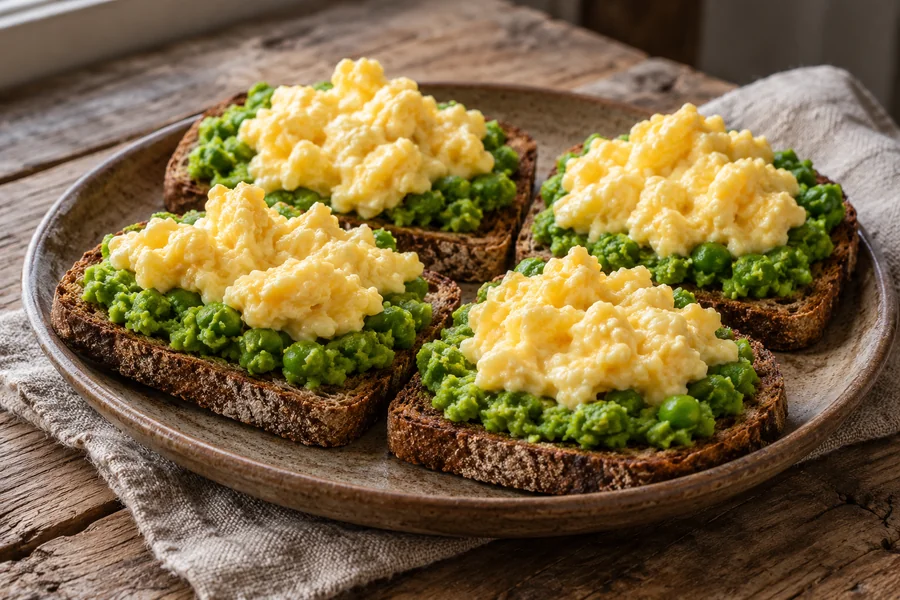
A modern, untested recipe using ingredients discussed in the museum sources below. The combination, proportions and kitchen method are not an authenticated Viking-Age recipe.
Ingredients & cooking steps
Ingredients
- 6 eggs
- 300 g frozen peas
- 30 g butter
- 60 ml milk
- 4 slices barley or rye bread
Method
- Cook peas in boiling water for 4–5 minutes and drain; mash roughly with half the butter.
- Whisk eggs and milk. Cook in remaining butter over medium-low heat, stirring, until fully set and reaching 71°C.
- Toast bread and serve topped with peas and eggs.
Contains: Egg, milk, gluten. Check ingredient labels for additional allergens.
Ingredient background and guidance: National Museum of Denmark — Meat, fish and dairy · Australian National Maritime Museum — What the Vikings really ate · USDA — Safe minimum internal temperatures
Dairy & eggs
Oven-set milk custards with apples
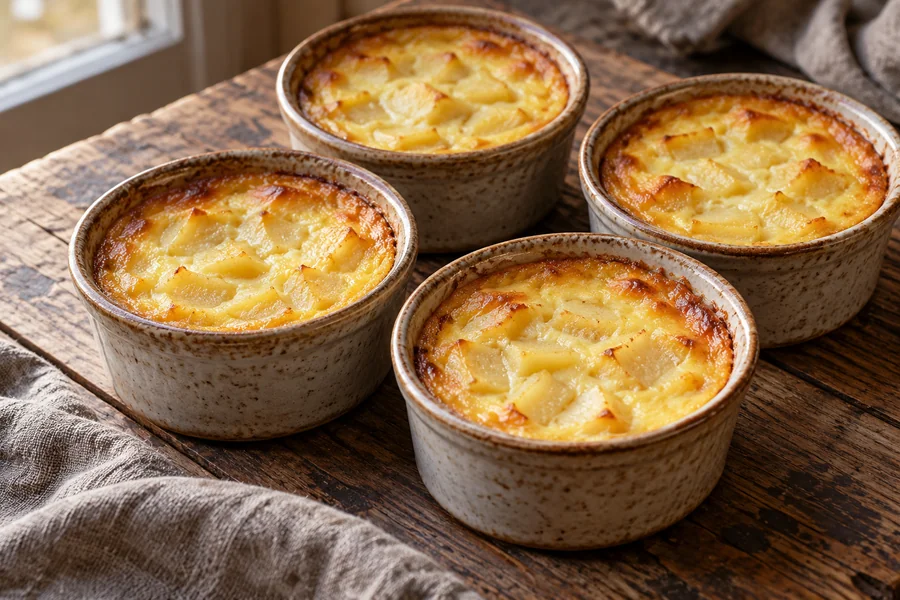
A modern, untested recipe using ingredients discussed in the museum sources below. The combination, proportions and kitchen method are not an authenticated Viking-Age recipe.
Ingredients & cooking steps
Ingredients
- 3 eggs
- 450 ml milk
- 2 tbsp honey
- 2 apples, peeled and diced
- 10 g butter
Method
- Soften apples in butter for 5–8 minutes. Divide among four ovenproof ramekins.
- Whisk eggs, milk and honey; pour over apples. Stand ramekins in a roasting dish and add hot water halfway up their sides.
- Bake at 160°C for 30–40 minutes until centers reach 71°C and are set with a slight wobble. Cool before serving.
Contains: Egg, milk; honey unsuitable under age one. Check ingredient labels for additional allergens.
Ingredient background and guidance: National Museum of Denmark — Meat, fish and dairy · National Museum of Denmark — Fruit and berries · USDA — Safe minimum internal temperatures · NHS — Foods to avoid giving babies and young children
Dairy & eggs
Fresh cheese and hazelnut spread
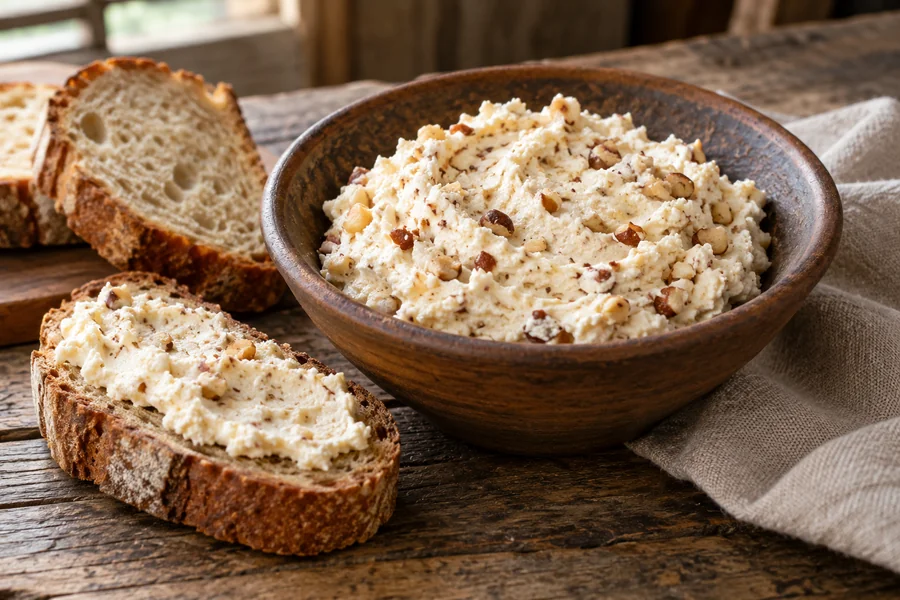
A modern, untested recipe using ingredients discussed in the museum sources below. The combination, proportions and kitchen method are not an authenticated Viking-Age recipe.
Ingredients & cooking steps
Ingredients
- 250 g pasteurized fresh cheese
- 50 g hazelnuts
- 1 tbsp honey
- 2 tbsp milk
Method
- Toast hazelnuts in a dry skillet over medium-low heat for 4–5 minutes; cool and chop finely.
- Mash cheese with milk and honey until spreadable.
- Fold in nuts and serve with bread. Refrigerate promptly; this is a fresh spread, not a preservation method.
Contains: Milk, hazelnuts; honey unsuitable under age one. Check ingredient labels for additional allergens.
Ingredient background and guidance: National Museum of Denmark — Meat, fish and dairy · National Museum of Denmark — Fruit and berries · NHS — Foods to avoid giving babies and young children
Fruit & sweet dishes
Pear and hazelnut oat crumble
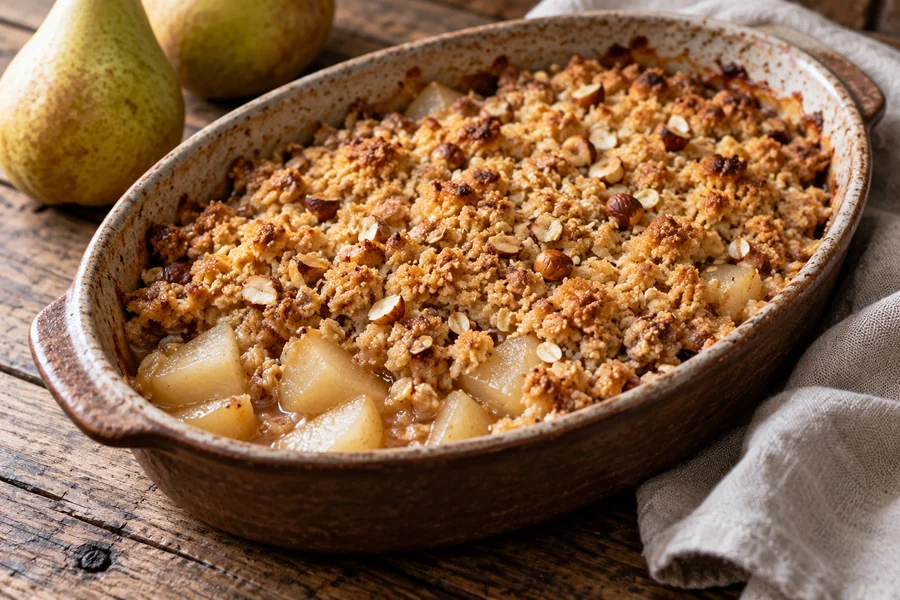
A modern, untested recipe using ingredients discussed in the museum sources below. The combination, proportions and kitchen method are not an authenticated Viking-Age recipe.
Ingredients & cooking steps
Ingredients
- 4 pears, diced
- 80 g rolled oats
- 40 g wheat flour
- 50 g chopped hazelnuts
- 50 g butter
- 2 tbsp honey
Method
- Heat oven to 180°C. Put pears in a small baking dish with 3 tbsp water.
- Rub butter into flour and oats, then stir in nuts and honey.
- Scatter over pears and bake 25–30 minutes until fruit is tender and topping is golden.
Contains: Gluten, hazelnuts, milk; honey unsuitable under age one. Check ingredient labels for additional allergens.
Ingredient background and guidance: National Museum of Denmark — Fruit and berries · National Museum of Denmark — Bread and porridge · NHS — Foods to avoid giving babies and young children
Fruit & sweet dishes
Blackberry and barley breakfast cups
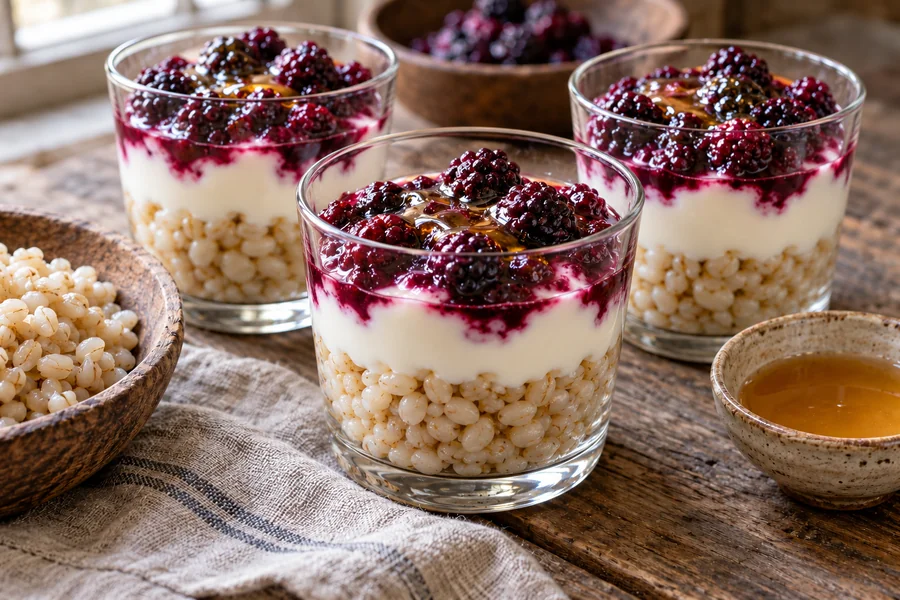
A modern, untested recipe using ingredients discussed in the museum sources below. The combination, proportions and kitchen method are not an authenticated Viking-Age recipe.
Ingredients & cooking steps
Ingredients
- 120 g pearl barley
- 550 ml water
- 250 g blackberries
- 200 g plain pasteurized yogurt
- 1 tbsp honey
Method
- Cook barley according to packet and drain; spread on a plate to cool promptly.
- Simmer berries with 2 tbsp water for 5 minutes; cool until lukewarm.
- Layer barley, yogurt and berries in cups and drizzle with honey. Serve immediately or refrigerate.
Contains: Gluten, milk; honey unsuitable under age one. Check ingredient labels for additional allergens.
Ingredient background and guidance: National Museum of Denmark — Fruit and berries · National Museum of Denmark — Bread and porridge · National Museum of Denmark — Meat, fish and dairy · NHS — Foods to avoid giving babies and young children
Fruit & sweet dishes
Baked plums with rye crumbs
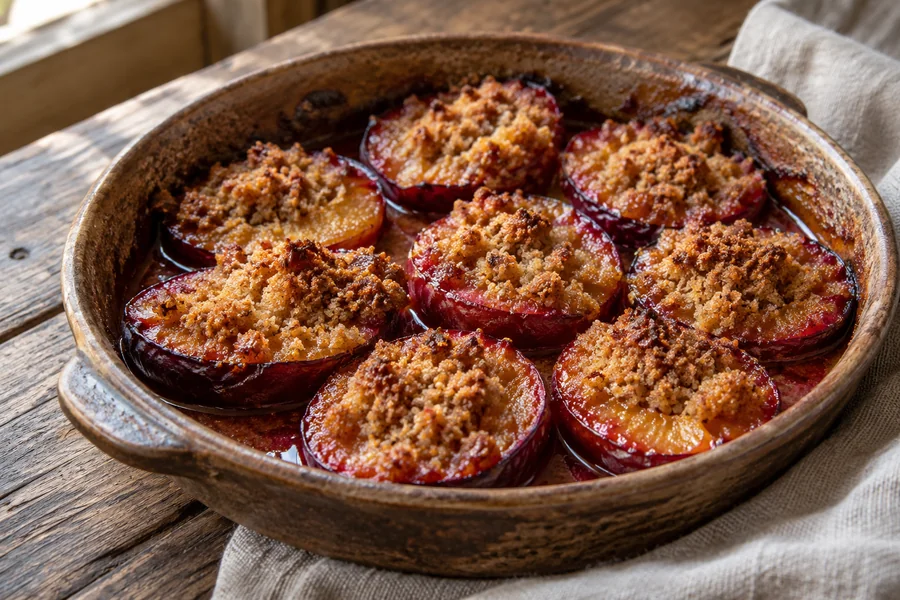
A modern, untested recipe using ingredients discussed in the museum sources below. The combination, proportions and kitchen method are not an authenticated Viking-Age recipe.
Ingredients & cooking steps
Ingredients
- 8 plums, halved and stoned
- 80 g rye bread crumbs
- 30 g butter
- 2 tbsp honey
Method
- Heat oven to 190°C and arrange plums cut-side up in a shallow dish.
- Mix crumbs with melted butter and honey; spoon onto plums.
- Add 3 tbsp water to dish and bake 20–25 minutes until fruit is soft.
Contains: Gluten, milk; honey unsuitable under age one. Check ingredient labels for additional allergens.
Ingredient background and guidance: National Museum of Denmark — Fruit and berries · National Museum of Denmark — Bread and porridge · NHS — Foods to avoid giving babies and young children
Fruit & sweet dishes
Apple and oat skillet pudding
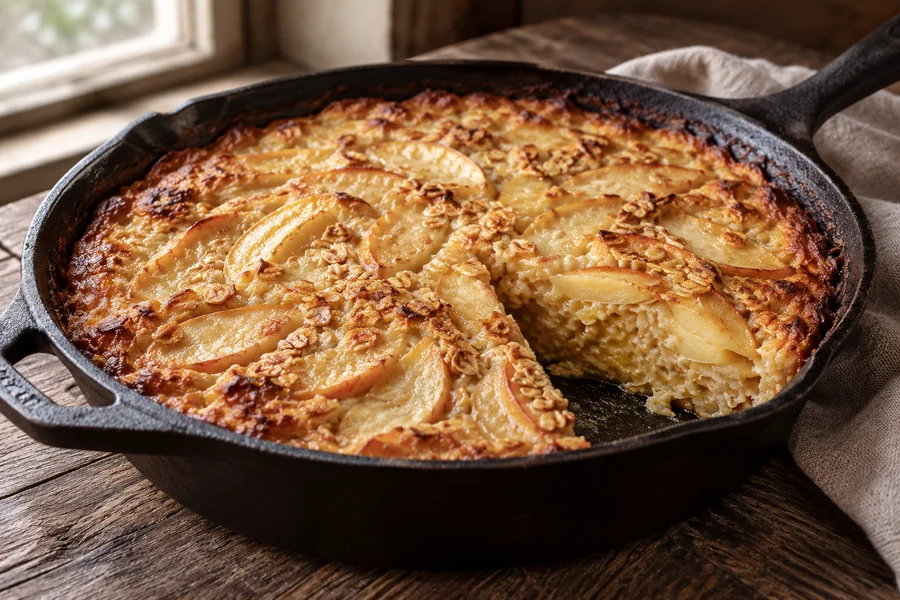
A modern, untested recipe using ingredients discussed in the museum sources below. The combination, proportions and kitchen method are not an authenticated Viking-Age recipe.
Ingredients & cooking steps
Ingredients
- 3 apples, thinly sliced
- 100 g rolled oats
- 2 eggs
- 250 ml milk
- 25 g butter
- 1 tbsp honey
Method
- Soften apples in butter in an ovenproof skillet for 8–10 minutes.
- Whisk eggs, milk and honey; fold in oats and pour over apples.
- Bake at 180°C for 20–25 minutes until set and the center reaches 71°C.
Contains: Gluten, egg, milk; honey unsuitable under age one. Check ingredient labels for additional allergens.
Ingredient background and guidance: National Museum of Denmark — Fruit and berries · National Museum of Denmark — Bread and porridge · USDA — Safe minimum internal temperatures · NHS — Foods to avoid giving babies and young children
Fruit & sweet dishes
Warm pear and plum compote
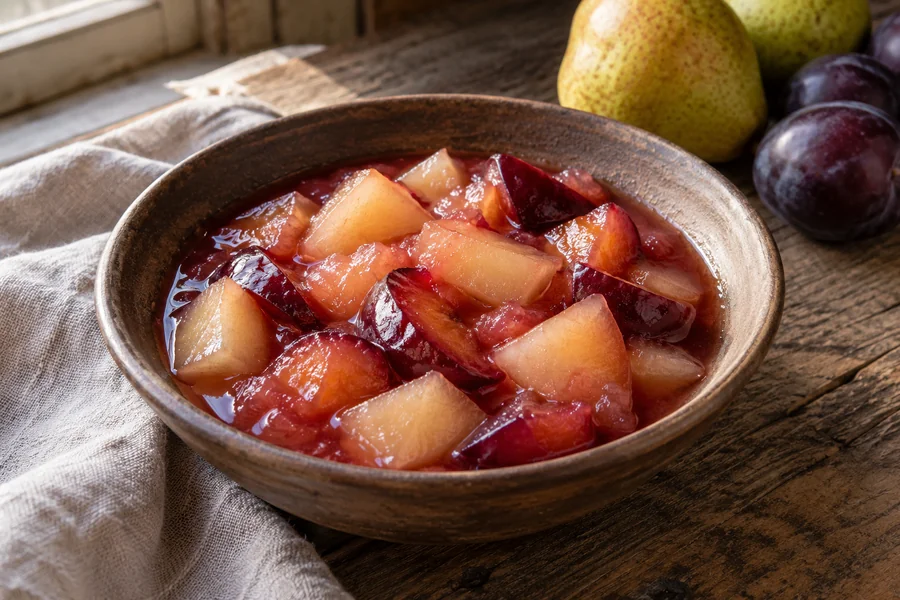
A modern, untested recipe using ingredients discussed in the museum sources below. The combination, proportions and kitchen method are not an authenticated Viking-Age recipe.
Ingredients & cooking steps
Ingredients
- 3 pears, peeled and diced
- 6 plums, stoned and chopped
- 150 ml water
- 1 tbsp honey
Method
- Put pears and water in a saucepan and simmer for 8 minutes.
- Add plums and cook 8–12 minutes until fruit is soft but still recognizable.
- Stir in honey off the heat. Serve warm with porridge or chill promptly for later.
Contains: Honey unsuitable under age one. Check ingredient labels for additional allergens.
Ingredient background and guidance: National Museum of Denmark — Fruit and berries · NHS — Foods to avoid giving babies and young children
Fruit & sweet dishes
Honeyed hazelnut barley clusters
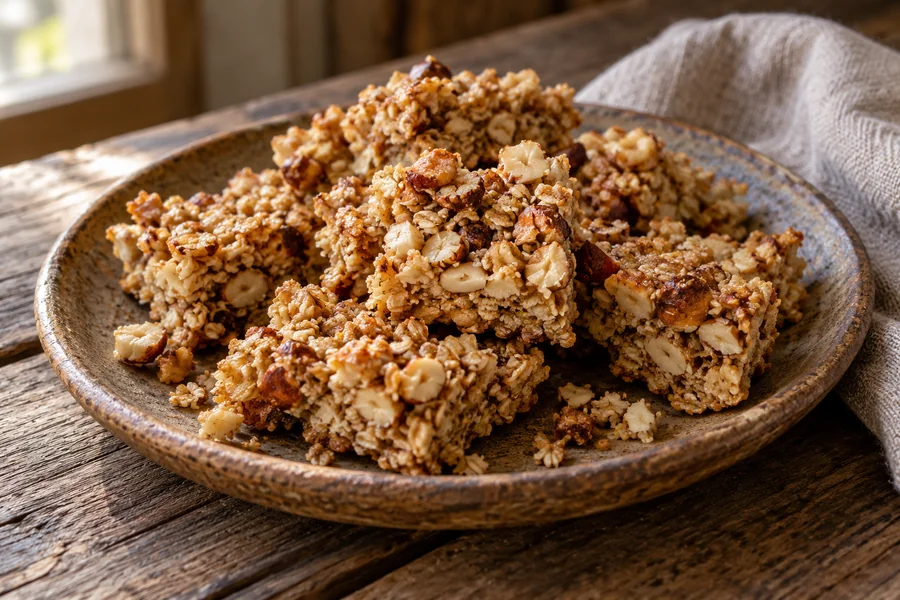
A modern, untested recipe using ingredients discussed in the museum sources below. The combination, proportions and kitchen method are not an authenticated Viking-Age recipe.
Ingredients & cooking steps
Ingredients
- 100 g barley flakes
- 80 g chopped hazelnuts
- 50 g butter
- 60 g honey
Method
- Heat oven to 170°C. Melt butter with honey over low heat.
- Stir in flakes and nuts; press into a lined 15 cm square tin.
- Bake 15–20 minutes until lightly golden. Cool completely before breaking into clusters; these may be crumbly.
Contains: Gluten, hazelnuts, milk; honey unsuitable under age one. Check ingredient labels for additional allergens.
Ingredient background and guidance: National Museum of Denmark — Bread and porridge · National Museum of Denmark — Fruit and berries · NHS — Foods to avoid giving babies and young children
Fruit & sweet dishes
Berry and rye skillet cakes
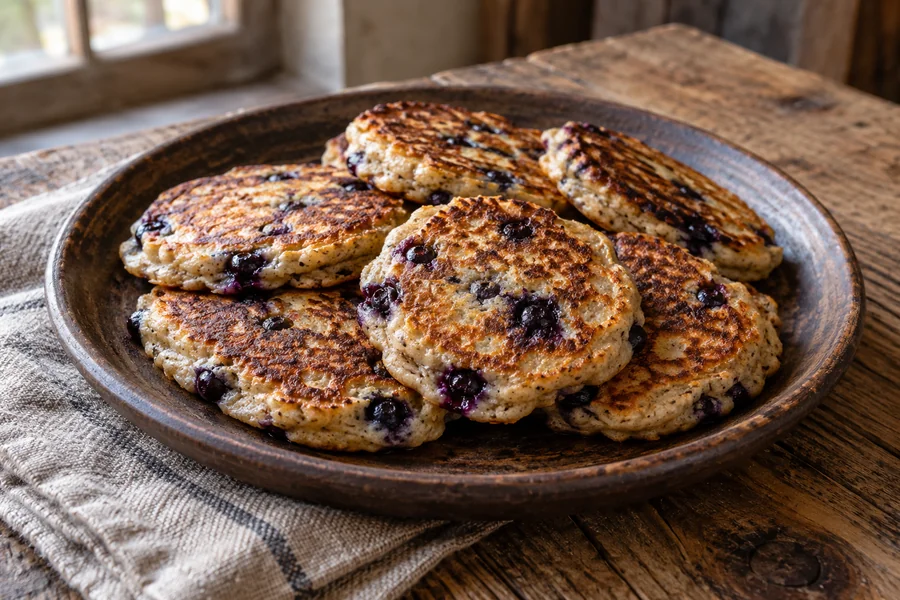
A modern, untested recipe using ingredients discussed in the museum sources below. The combination, proportions and kitchen method are not an authenticated Viking-Age recipe.
Ingredients & cooking steps
Ingredients
- 100 g rye flour
- 100 g wheat flour
- 2 eggs
- 250 ml milk
- 150 g fresh blueberries
- 20 g butter
Method
- Whisk flours, eggs and milk into a thick batter. Rest 5 minutes and gently fold in berries.
- Melt a little butter in a skillet over medium-low heat. Spoon in eight small cakes in batches.
- Cook 3–4 minutes on each side until browned and centers are set, reaching 71°C. Add remaining butter between batches.
Contains: Gluten, egg, milk. Check ingredient labels for additional allergens.
Ingredient background and guidance: National Museum of Denmark — Fruit and berries · National Museum of Denmark — Bread and porridge · USDA — Safe minimum internal temperatures
Fruit & sweet dishes
Roasted apples with barley and fresh cheese
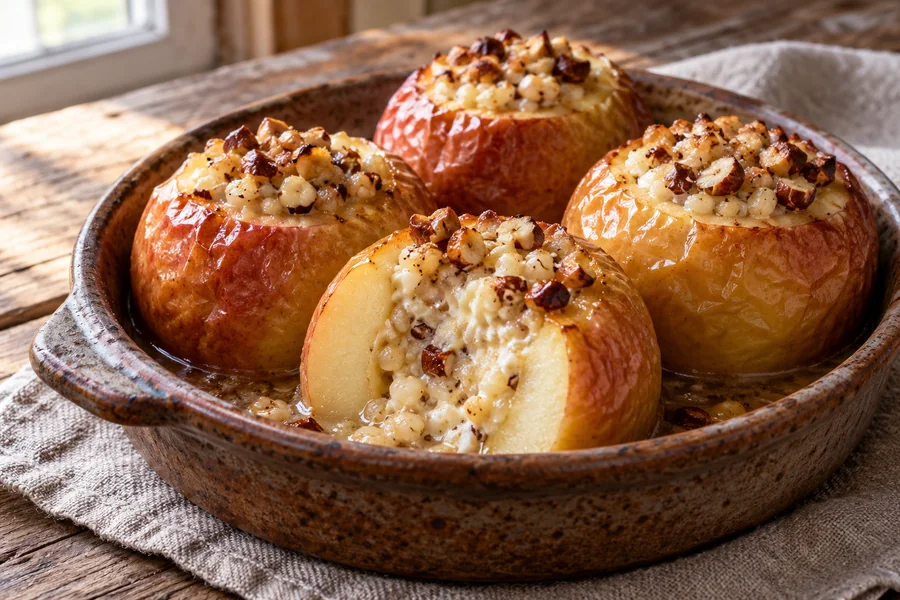
A modern, untested recipe using ingredients discussed in the museum sources below. The combination, proportions and kitchen method are not an authenticated Viking-Age recipe.
Ingredients & cooking steps
Ingredients
- 4 large apples
- 60 g pearl barley
- 300 ml water
- 100 g pasteurized fresh cheese
- 30 g chopped hazelnuts
- 1 tbsp honey
- 10 g butter
Method
- Cook barley according to packet and drain. Core apples leaving their bases intact; widen cavities slightly.
- Mix barley with cheese, nuts and honey; fill apples. Place in a buttered dish with 100 ml water.
- Bake at 180°C for 30–40 minutes until apples are tender. Cut one to check the filling is steaming hot.
Contains: Gluten, milk, hazelnuts; honey unsuitable under age one. Check ingredient labels for additional allergens.
Ingredient background and guidance: National Museum of Denmark — Fruit and berries · National Museum of Denmark — Bread and porridge · National Museum of Denmark — Meat, fish and dairy · NHS — Foods to avoid giving babies and young children
No recipes match this filter.
Sources behind the guide
These sources support ingredient history, interpretation and kitchen safety. They do not authenticate our individual recipes. Source check: October 17, 2026.
National Museum of Denmark — Food ↗
National Museum of Denmark — Bread and porridge ↗
National Museum of Denmark — Meat, fish and dairy ↗
National Museum of Denmark — Fruit and berries ↗
Viking Ship Museum — New Nordic Viking Food ↗
Australian National Maritime Museum — What the Vikings really ate ↗
USDA — Safe minimum internal temperatures ↗
Keep exploring