The Swedish History Museum contrasts several burial traditions within what is now Sweden. Cremation was common in the Mälaren Valley, where stone settings could cover the remains. In Finnveden in inland Småland, cremation deposits were often covered by substantial earthen mounds. In much of Skåne, burial without cremation was common. These differences matter before any interpretation of belief begins. A practice documented in one region should not automatically become the standard for the whole Viking world.
A pyre was only one stage
Cremation did not end when the fire went out. Burned human remains, animal bones, and damaged objects could be collected and arranged. Ceramic containers might hold selected remains, while other material lay outside them. The museum’s Iron Age burial overview describes personal belongings and, in some cases, food or weapons accompanying the dead on the pyre. Archaeologists therefore study both the burned material and its final placement. What survives in the grave can be the result of several deliberate acts.
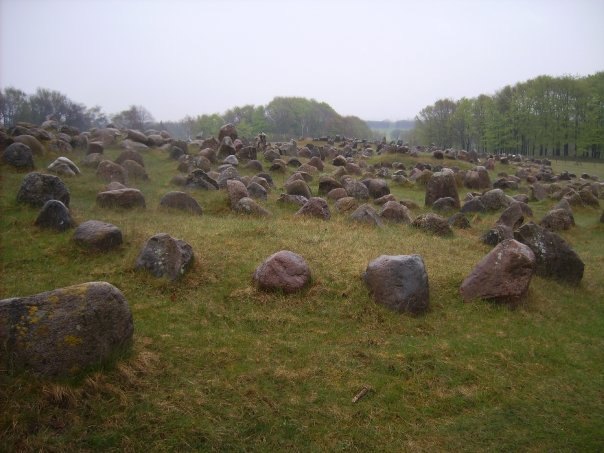
The burial landscape at Lindholm Høje in Denmark. Its stone settings and burial evidence belong to a landscape with a history extending across more than one period.Image: Västgöten · CC BY-SA 3.0
Monuments could accumulate histories
A mound or stone setting need not represent a single funeral. Additional burials could be placed in an existing monument, either at the same time or later. Reuse turns a grave into evidence for continuing relationships between people and places. It also creates a practical archaeological challenge: objects found within one structure may not all belong to one person or one event. Careful excavation records are necessary to distinguish these episodes rather than compressing them into a single scene.
Belief is not the only explanation
Burial treatment can illuminate religious ideas, but it also involves resources, local habits, family decisions, and the condition of the evidence. Burial without burning does not by itself prove Christianity, just as a cremation does not disclose the name of a particular god. Nor should an unusually rich grave stand for everybody’s experience. Comparing nearby cemeteries, dating the deposits, and examining human and animal remains produces a more reliable account than starting with a dramatic modern image of a Viking funeral.
The Evidence
The sources below support this article. Interpretations and limits are explained in the text; this is not an exhaustive research review.
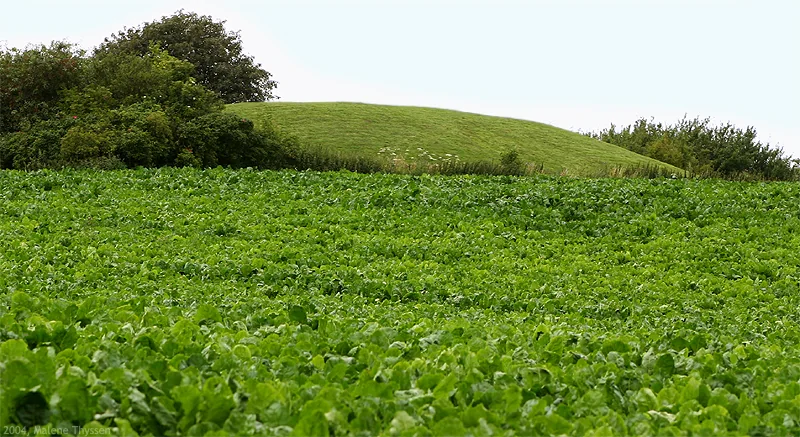
The burial mound at Ladby on Funen, Denmark, photographed in 2004. The ship burial beneath it links a visible landscape feature to the study of funerals and status.Image: Malene Thyssen, User:Malene · CC BY-SA 3.0
Viking funerals: graves, fire, ships and remembrance
Was there a standard Viking funeral?
No single ceremony describes the Viking Age. Cremation and burial of the unburned body coexisted, with differences between regions and communities. Wealth and social relationships mattered alongside religious traditions.
This is why a ship burial is an important case study but a poor default image for everyone’s death. Begin with the cemetery or locality, its dates and the actual remains. Only then compare it with other places or with written accounts. The question is how people here treated their dead, not how all Vikings must have behaved.
A funeral pyre was one stage in a longer sequence. In cremation graves discussed by the Swedish History Museum, remains could be gathered, selected and rearranged before a monument was completed. Bone, charcoal and burned objects might be distributed between an urn and the surrounding layer.
That sequence matters when interpreting what survives. A small amount of bone does not necessarily mean that only a small part of a person was placed on the pyre. Recovery, selection and later disturbance all shape the archaeological deposit.
Objects placed with a body can illuminate dress, equipment and funeral decisions. They are not a complete inventory of a person’s possessions or an automatic description of their occupation. A weapon, tool or spindle-whorl needs to be interpreted with the rest of the context.
The living selected and arranged these things. Asking who made those choices helps keep the deceased’s biography separate from the social message of the funeral. Richness can be visible without telling us everything about identity, personal belief or power during life.
The Oseberg ship was used for the burial of two women in 834. It was placed on land and covered by a mound. The surviving ship and objects make it one of the most informative graves of the period; they do not demonstrate the familiar cinematic scene of a flaming vessel drifting away.
Keep ship burial, cremation involving a vessel and a floating funeral separate. They are different claims requiring different evidence. The presence of a boat-shaped monument is also not the same thing as the burial of a wooden boat.
A mound or stone setting could contain more than one burial. Additional remains might be placed within an existing structure, so a monument could accumulate associations over time. Its final visible shape need not describe a single event.
This makes the order of deposits important. Archaeologists study how layers and features relate to one another before building a sequence. A monument that looks simple above ground may preserve a complicated history below it. The date of one object cannot automatically date every use of the entire structure.
Christian burial increasingly favored the unburned body and eventually organized burial around churches. Grave goods often became less prominent, but change was uneven and exceptions matter. A grave without objects is not, on that fact alone, a secure religious identification.
The location of a cemetery, its chronology, the arrangement of bodies and other evidence need to be considered together. Conversion did not happen on one date throughout Scandinavia, and the appearance of a new custom does not reveal every thought of the family involved.
Spectacular preservation draws attention. At Oseberg, wooden objects and other materials survived in unusual abundance, offering a detailed picture unavailable in many ordinary graves. The grave was also entered long after the original funeral, adding another episode to its history.
We should not confuse the best-preserved burial with the most typical one. Compare exceptional discoveries with smaller cemeteries and less elaborate graves. Absence, disturbance and preservation all affect what enters a museum display and what becomes familiar to modern visitors.
Where and when was it made? Was the body burned or unburned? What was deliberately deposited, and what may have arrived later? How well did different materials survive? Which interpretations remain open?
These questions let a striking object become the start of an investigation. They also help distinguish a modern illustration from an excavated record. Our links lead to specific graves and archaeological methods so that readers can move from a broad overview to the evidence behind individual claims.