
Research & Sources · Deep dive
Cremated Bone and Mobility: What Survives the Pyre
In Brief
Heath Wood demonstrates how burned remains can answer questions about movement. Experimental work explains both the opportunity and the limits.
On this page
Burning destroys some evidence and changes other evidenceThe resistance to contamination was testedHeath Wood’s sample was small and specificChemical differences can reveal mixed remainsDifferent bones can represent different life historiesFood can blur the mapCombine experimental and archaeological evidence carefullyThe historical result remains boundedSourcesBurning destroys some evidence and changes other evidence
Cremation transforms bone rather than merely making an unburned skeleton smaller. Organic components can be lost, and the mineral structure changes with heating. Techniques that rely on surviving organic material may therefore become unavailable, while other analyses remain possible. The distinction between partially burned and fully calcined material matters. Research demonstrating strontium retention in calcined bone concerns a particular material condition, not a claim that every blackened fragment preserves the same information. Before asking where a person traveled, researchers must establish what kind of burned tissue survives and whether it is appropriate for the chosen analysis.
Sources for this section: 2
The resistance to contamination was tested
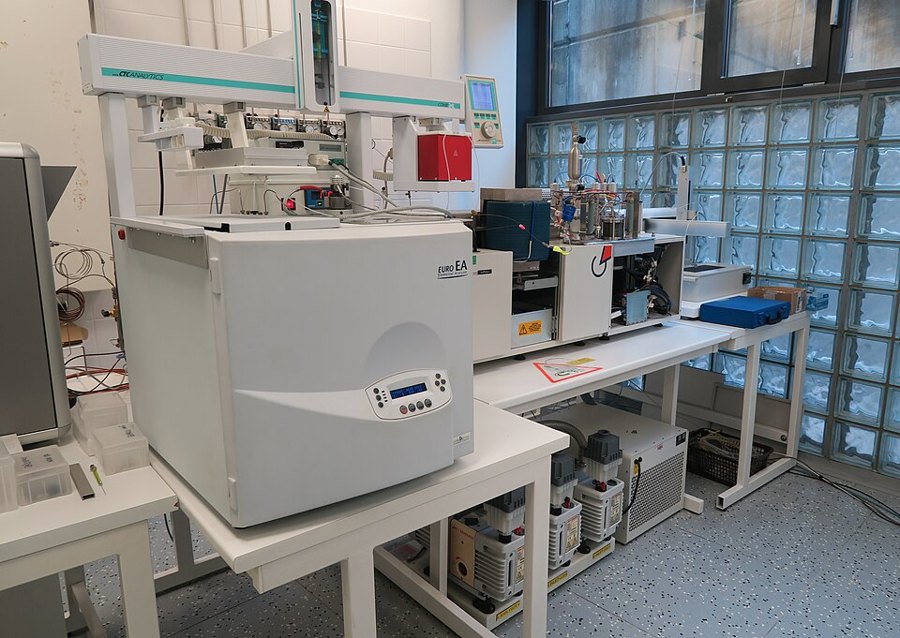
Snoeck and colleagues exposed enamel and calcined bone to a solution enriched in a strontium isotope, then examined whether laboratory pretreatment could remove the introduced signal. Both materials were affected during exposure, but after treatment the calcined bone did not retain the enriched contamination in the same way as the enamel samples. This experiment supported the use of calcined bone for recovering lifetime strontium ratios. Its strength lies in testing a proposed mechanism under controlled conditions, rather than assuming that archaeological bone is resistant simply because it looks mineralized.
Sources for this section: 2


Heath Wood’s sample was small and specific
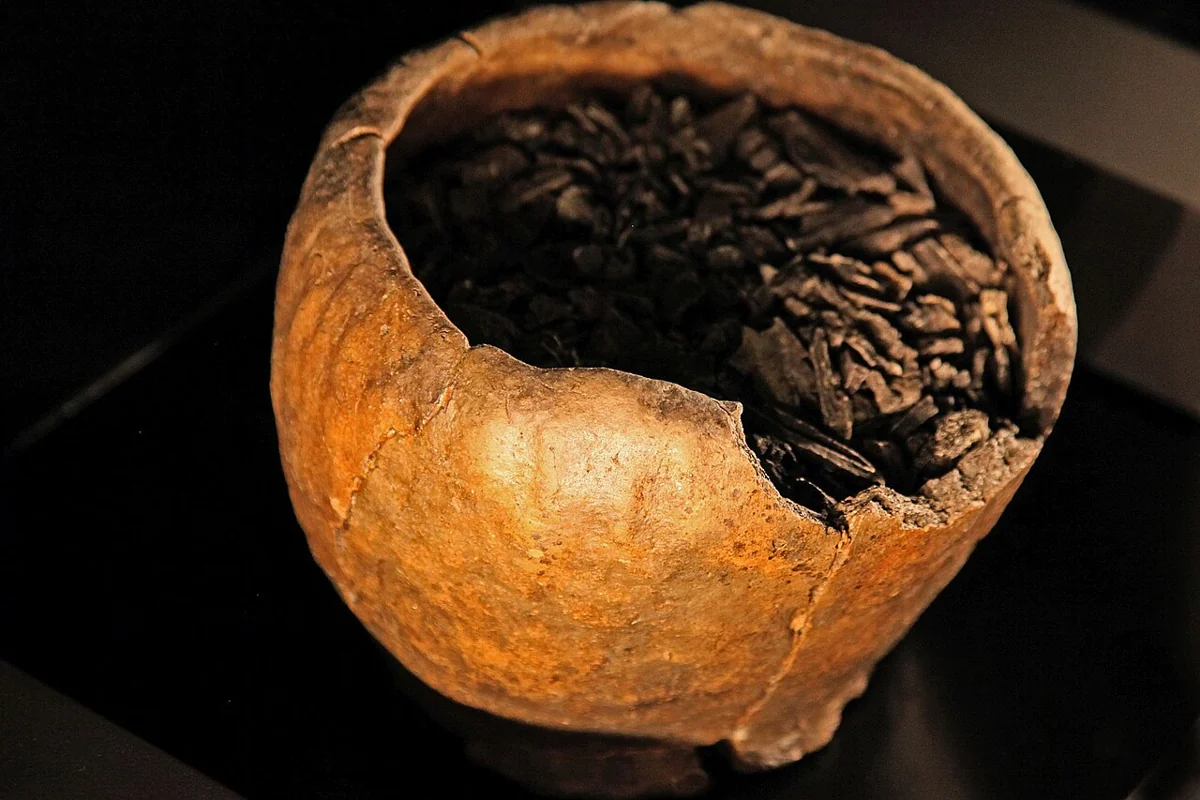
The 2023 Heath Wood study examined two adults, a child, and three animals from a cremation cemetery associated with the Scandinavian presence in late ninth-century Derbyshire. One adult and the animals were interpreted as nonlocal, with Scandinavian origins favored through combined chemical and archaeological evidence. This supports animal transport across the North Sea in this particular case. The other adult and child had locally compatible values, which could also occur elsewhere. The study therefore does not establish a birthplace for every individual or measure the frequency of animal transport across Viking expeditions.
Sources for this section: 1
Chemical differences can reveal mixed remains
A comparison from Roman Mutina illustrates another question isotope analysis can address. Researchers studied fourteen cremation burials and combined skeletal examination, strontium measurements, and funerary objects. In at least one grave, the chemical evidence helped increase the minimum number of individuals recognized. This is not a Viking case, and it should not be used to supply missing people at Heath Wood. Its methodological relevance is the need to establish who is being compared before reconstructing a journey. If fragments from different individuals are mistaken for one skeleton, their contrasting measurements could be misread as changes during a single person’s life.
Sources for this section: 5
Different bones can represent different life histories
A study of recently deceased cremated individuals with known residential histories compared skeletal elements with different turnover characteristics, including petrous bone, femur, and rib. The researchers explored how these differences affect the information retained after cremation. They also found limitations arising from modern global food supplies. This is a modern methodological comparison, not a direct account of Viking diet. Its value is to show why a report must identify the element sampled: treating every bone fragment as a record of the same period of life can obscure the question the measurement actually addresses.
Sources for this section: 4
Food can blur the map
A study of Metal Age and Gallo-Roman cremations in Belgium examined strontium concentrations alongside isotope ratios and proposed that marine-derived salt affected some results. The authors warned that substantial salt consumption could complicate mobility interpretations. The context is earlier than the Viking Age, so it cannot establish the salt intake of Heath Wood’s dead. It does demonstrate a relevant mechanism: a person’s chemical signature can incorporate food products transported from elsewhere. Archaeological isotope maps work through consumption, and consumption does not always track residence in a simple one-to-one fashion.
Sources for this section: 3
Combine experimental and archaeological evidence carefully
The enrichment experiment tests resistance to postmortem contamination, while the dietary study addresses the mixture acquired during life. These are separate sources of uncertainty. Successfully removing a burial-related contaminant does not establish that the original dietary signature identifies one location. Likewise, a plausible geographical interpretation does not remove the need to validate the material’s preservation. A strong study connects the two stages: appropriate tissue and pretreatment first, then comparison with environmental and dietary possibilities. The logic matters more than a dramatic statement that fire has either destroyed all evidence or preserved a perfect travel record.
Sources for this section: 2, 3
The historical result remains bounded
Consider a hypothetical cemetery with twenty excavated graves but suitable calcined samples from only three. Even flawless measurements from those three would leave seventeen unmeasured graves. This is a sampling problem, separate from chemical preservation or geographic interpretation. The report would need to explain whether the analyzed group differs in date, treatment, or location within the cemetery. These questions are especially useful when reading a headline about Viking migration: the relevant denominator is the population actually investigated, not every person associated with a cultural label. A discovery becomes more useful when its scope is stated precisely enough for another study to test it.
Sources for this section: 5
For the introductory context, read Many Ways to Bury the Dead.
For the introductory context, read Isotopes and Mobility: Evidence Without a Passport.
The Evidence
The sources below support this article. Interpretations and limits are explained in the text; this is not an exhaustive research review.