How did Vikings weave cloth, sew clothes, cast metal, build ships and make fishing nets? Follow the materials, tools and stages of 19 crafts—and the evidence behind our reconstructions.
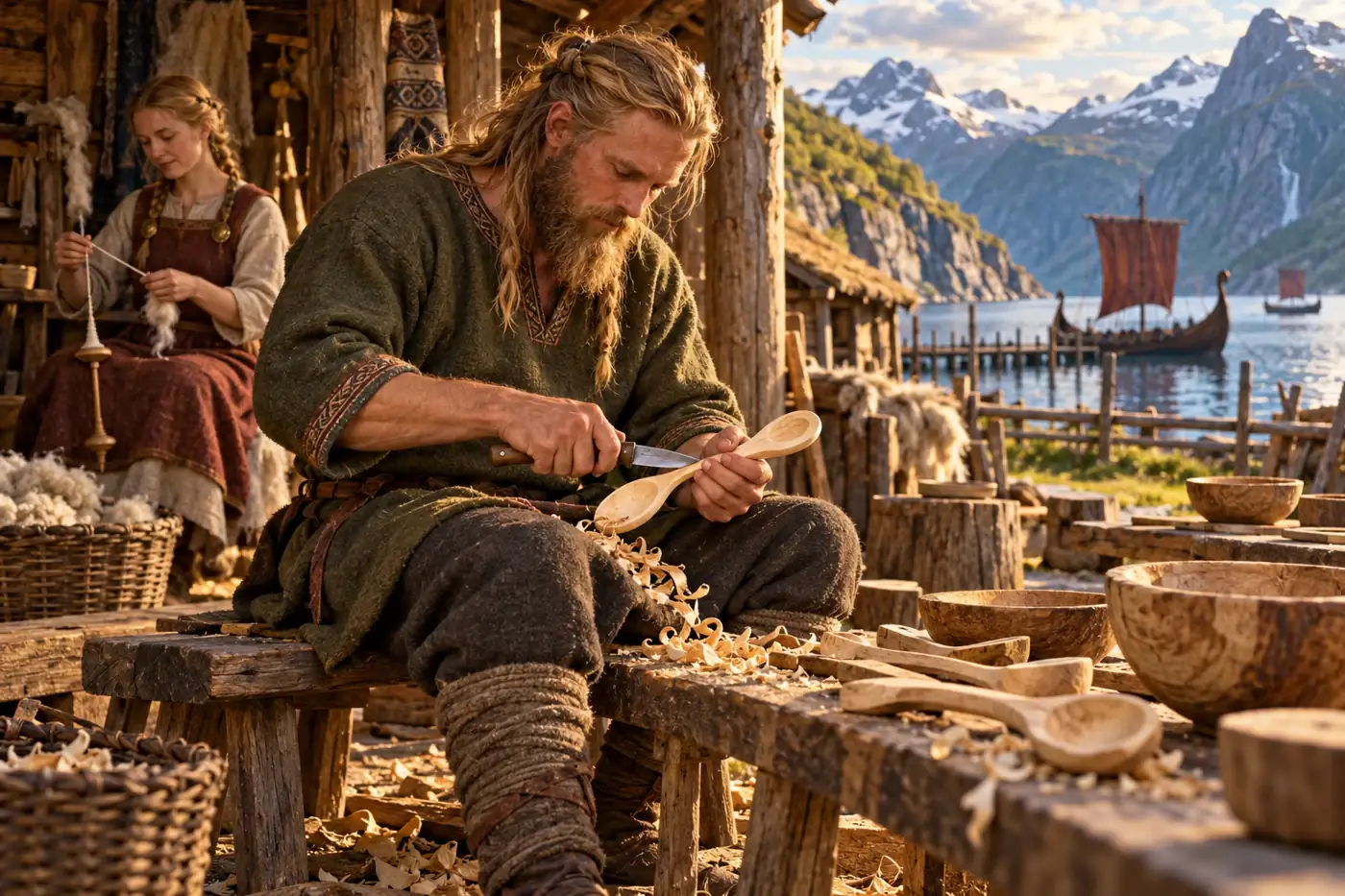
Woodcarving and spinning in an imagined Viking-Age workshop. Modern interpretive illustration for Nordic Viking History; not a technical diagram or an exact reconstruction of a particular find.
Watch a short introduction
Hands at work. A world taking shape.
A short illustrated journey through Viking-Age crafts. Explore the evidence and working methods below; these scenes are interpretations, not filmed historical demonstrations.
Modern illustrations with quiet flute music. The film starts only when you press play.
Craft linked farms, towns and voyages. A ship needed woodworkers, smiths, textile workers and rope makers. Small tasks such as mending a seam or replacing a handle kept expensive belongings in use. The surviving evidence is uneven: metal tools and workshop waste may remain after wood, cloth and leather have disappeared.
The sequences below explain historical processes. Museum experiments help fill gaps, but a method that works today is not automatically the only method used in the past. Hot-metal, glass and firing work calls for trained instruction and suitable facilities.
Metal & smithing
Blacksmithing: turning iron into useful tools
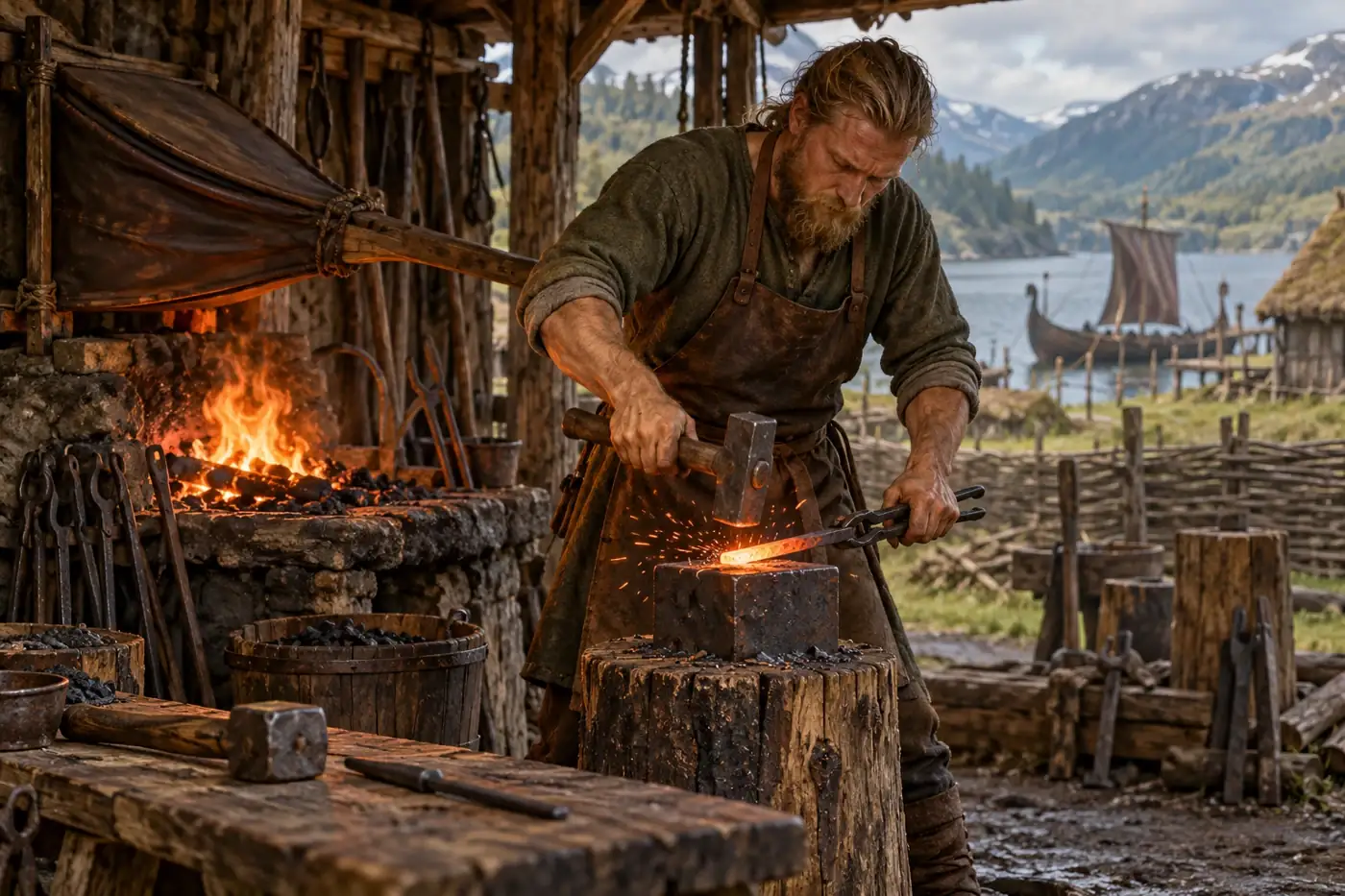
A blacksmith shaping heated iron with hammer and tongs. Modern interpretive illustration for Nordic Viking History; not a technical diagram or an exact reconstruction of a particular find.
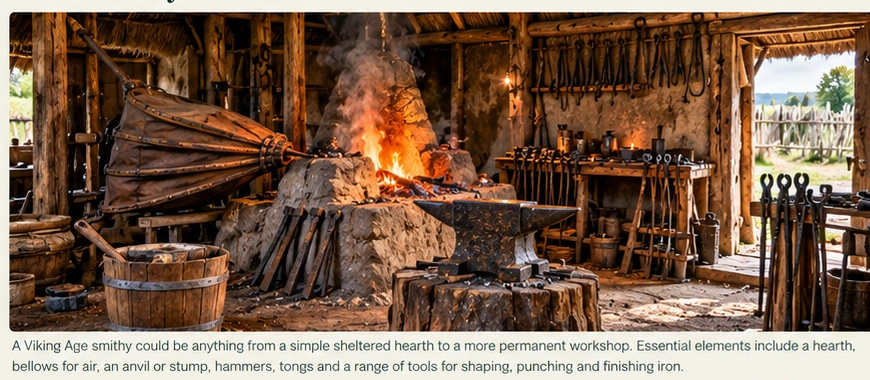
Materials and tools: Iron stock, charcoal, forge, bellows, tongs, hammer and anvil.
How the work proceeded
The smith heated a piece of iron until it could be shaped by hammering. Repeated heating and working changed its thickness, length and form; the same stock could become a nail, knife blank or fitting.
Holes, cutting edges and joints required different tools and skills. Finishing and sharpening followed shaping. Repairing an existing object was as important as making a new one.
What the evidence tells us: Smelting extracts iron from ore; smithing shapes the resulting metal. These are related operations, not two names for casting molten iron. Ribe documents both imported iron bars and local bog-ore production. A modern demonstration helps explain the work but is not a record of one particular ancient workshop.
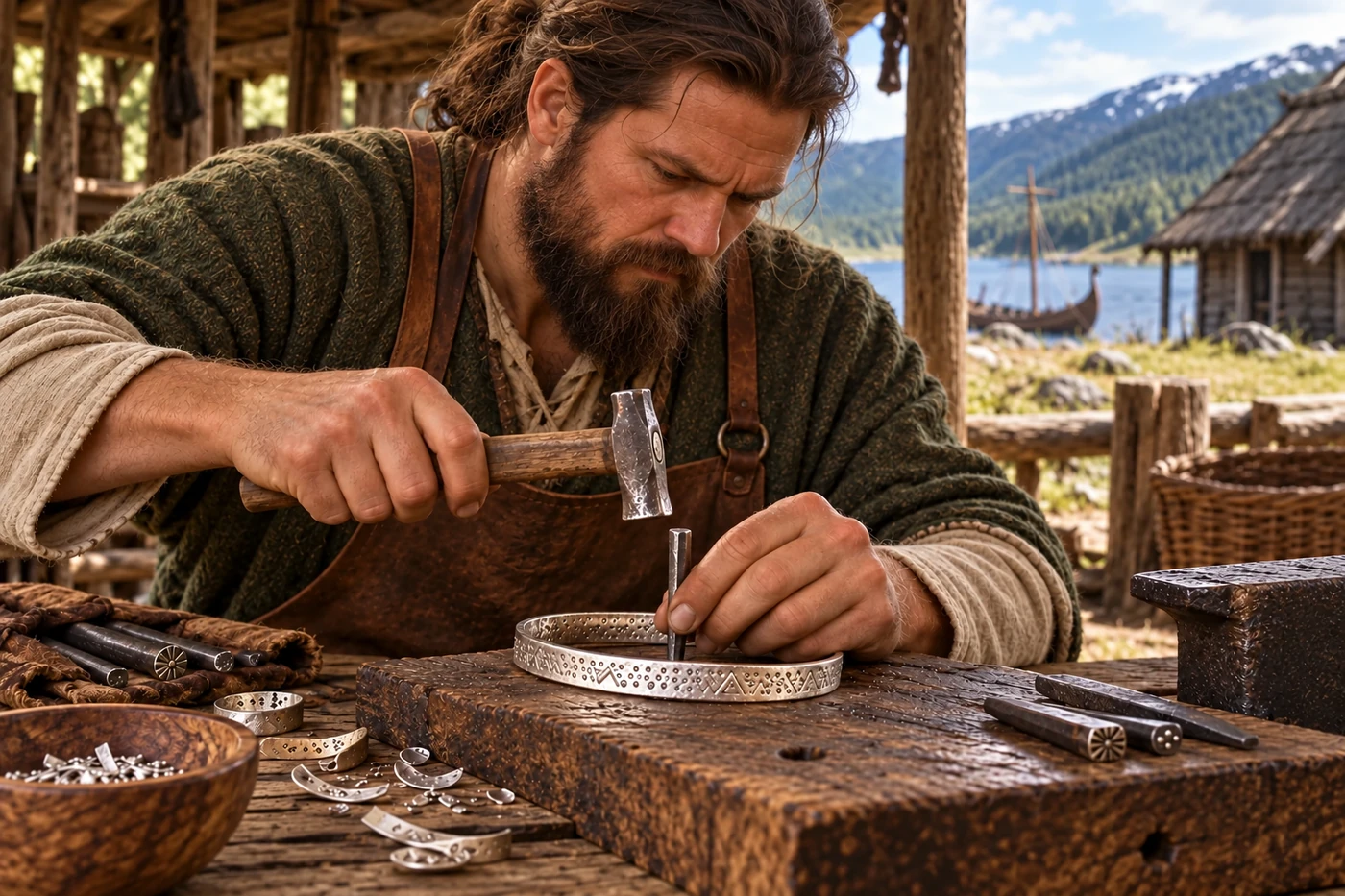
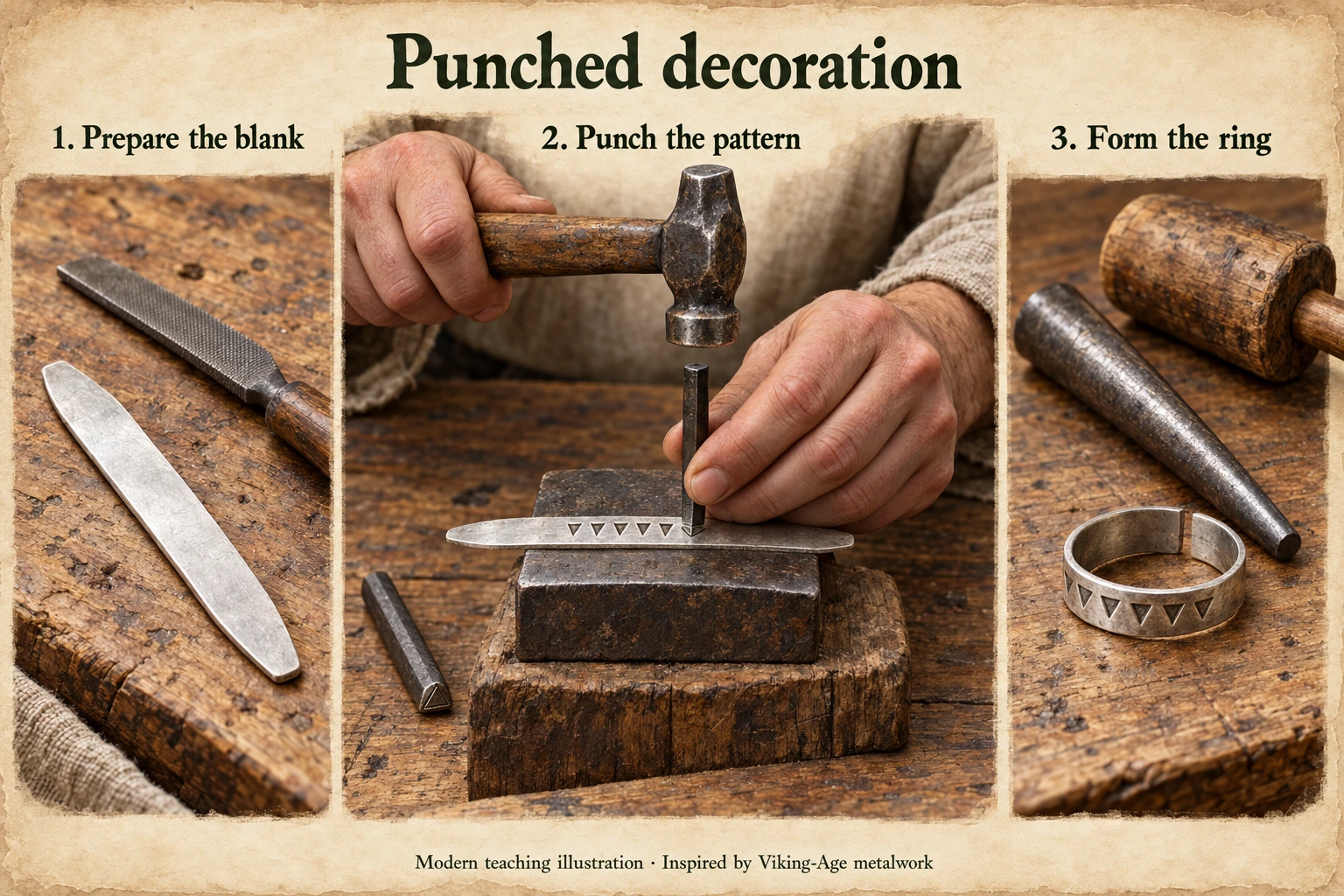
A metalworker decorating a silver arm ring with a punch and hammer. Modern interpretive illustration for Nordic Viking History; not a technical diagram or an exact reconstruction of a particular find.
Materials and tools: Gold or silver, small hammers, punches, abrasives and, where appropriate, casting equipment.
How the work proceeded
A maker first chose a method suited to the object: working solid metal, shaping sheet or wire, or casting a blank. Decoration and joining were separate stages, rather than a single universal recipe.
A finished ornament might be polished, fitted with a fastening, repaired or later cut up as metal. Follow an individual find before deciding which sequence its maker used.
What the evidence tells us: Workshop debris at Tissø includes models, unfinished products, failed castings, tools and scrap. These traces establish production more firmly than simply finding an expensive ornament. Not every gold or silver object found in Scandinavia was made locally.
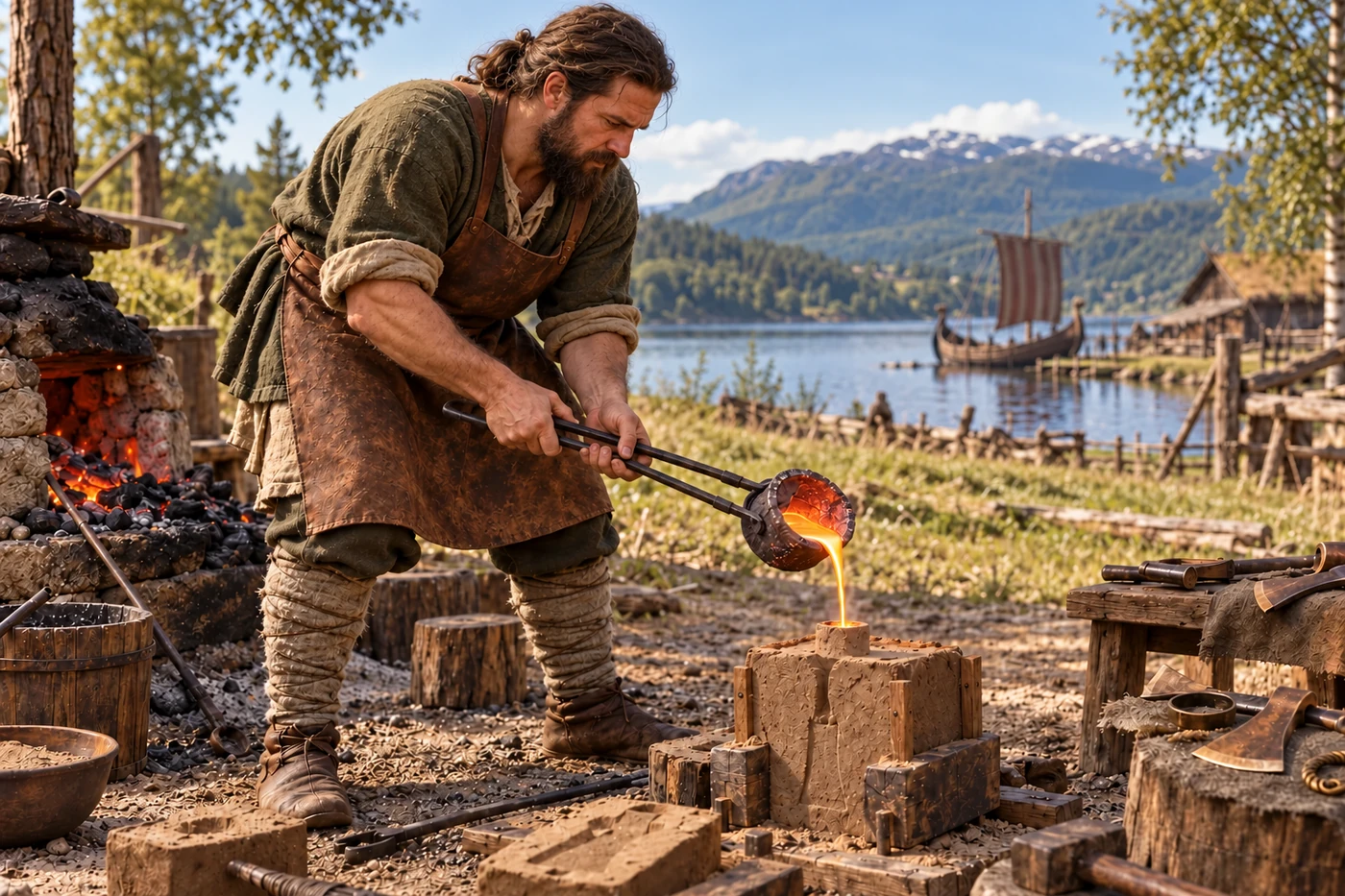
Pouring molten bronze from a crucible into a mold. Modern interpretive illustration for Nordic Viking History; not a technical diagram or an exact reconstruction of a particular find.
Materials and tools: Metal, crucible, heat source and a prepared stone or clay mold.
How the work proceeded
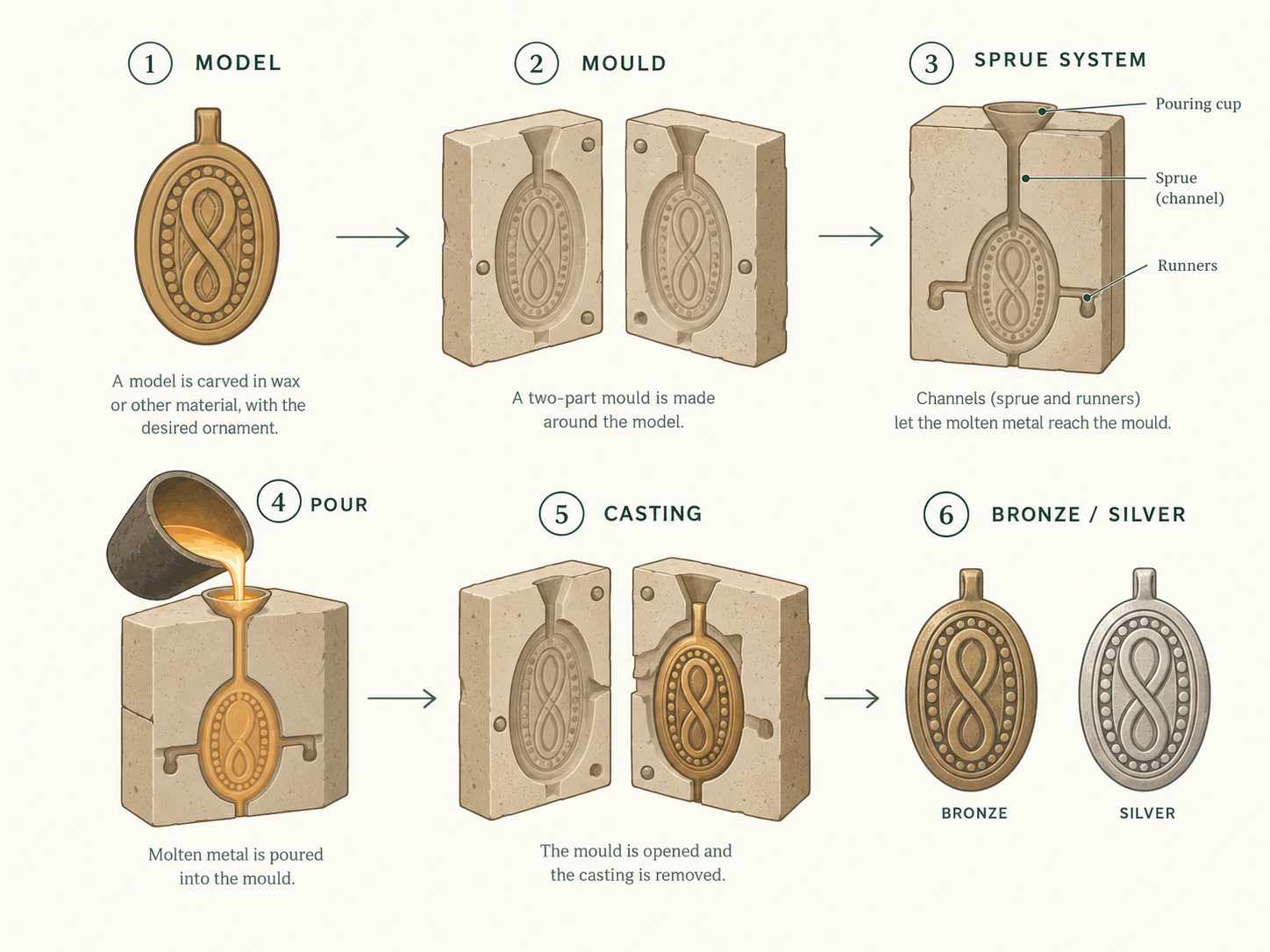
The mold supplied the object's shape. Simple open molds could produce bars; two-part molds and lost-wax methods allowed more complicated forms.
In lost-wax casting, clay enclosed a wax model. Heating removed the wax, leaving a cavity for metal. After cooling, a disposable mold was broken to recover the object; casting projections and surfaces still needed finishing.
What the evidence tells us: Birka preserves open, two-part and lost-wax molds. Some oval-brooch molds combined techniques in a more complex sequence. Bronze is a copper alloy, not another word for iron, and silver casting should not be described as iron forging. These are historical process summaries, not furnace operating instructions.
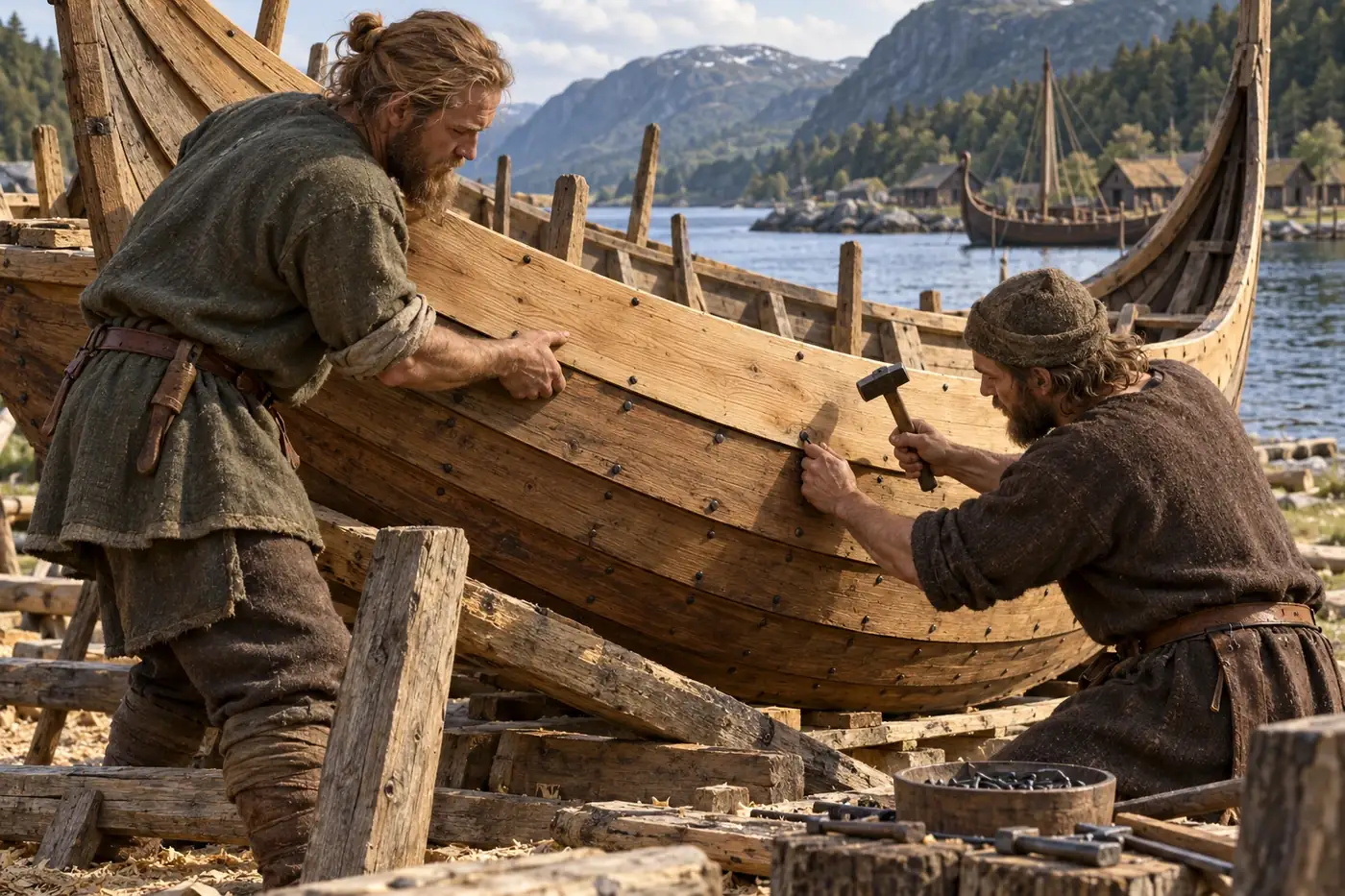
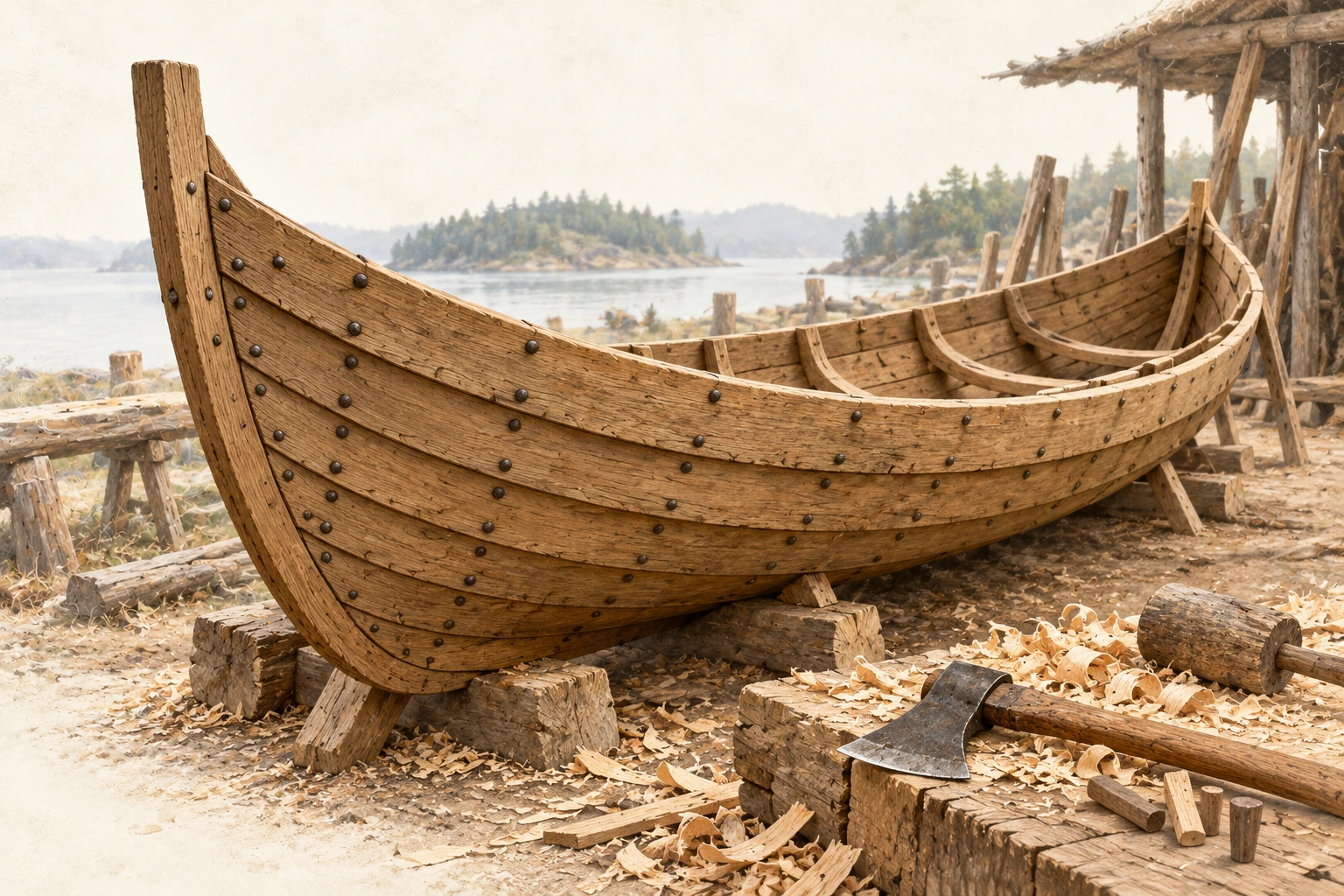
Boatbuilders fastening overlapping planks in a clinker-built hull. Modern interpretive illustration for Nordic Viking History; not a technical diagram or an exact reconstruction of a particular find.
Materials and tools: Selected timber, axes, boring tools, fastenings, seam material and a team of craftspeople.
How the work proceeded
The work began with choosing timber whose grain and shape suited the intended part. Logs were converted into structural pieces and planks, with the surviving tool marks guiding modern reconstruction.
Overlapping planks formed the distinctive clinker hull. Fastenings, internal supports and sealed seams made a working structure; the rig and sail were additional craft projects.
What the evidence tells us: The Viking Ship Museum combines archaeological recording with full-scale construction and sailing trials. A successful reconstruction demonstrates a workable solution, not that every original builder followed exactly the same sequence. Woodworkers depended on smiths, rope makers and textile workers.
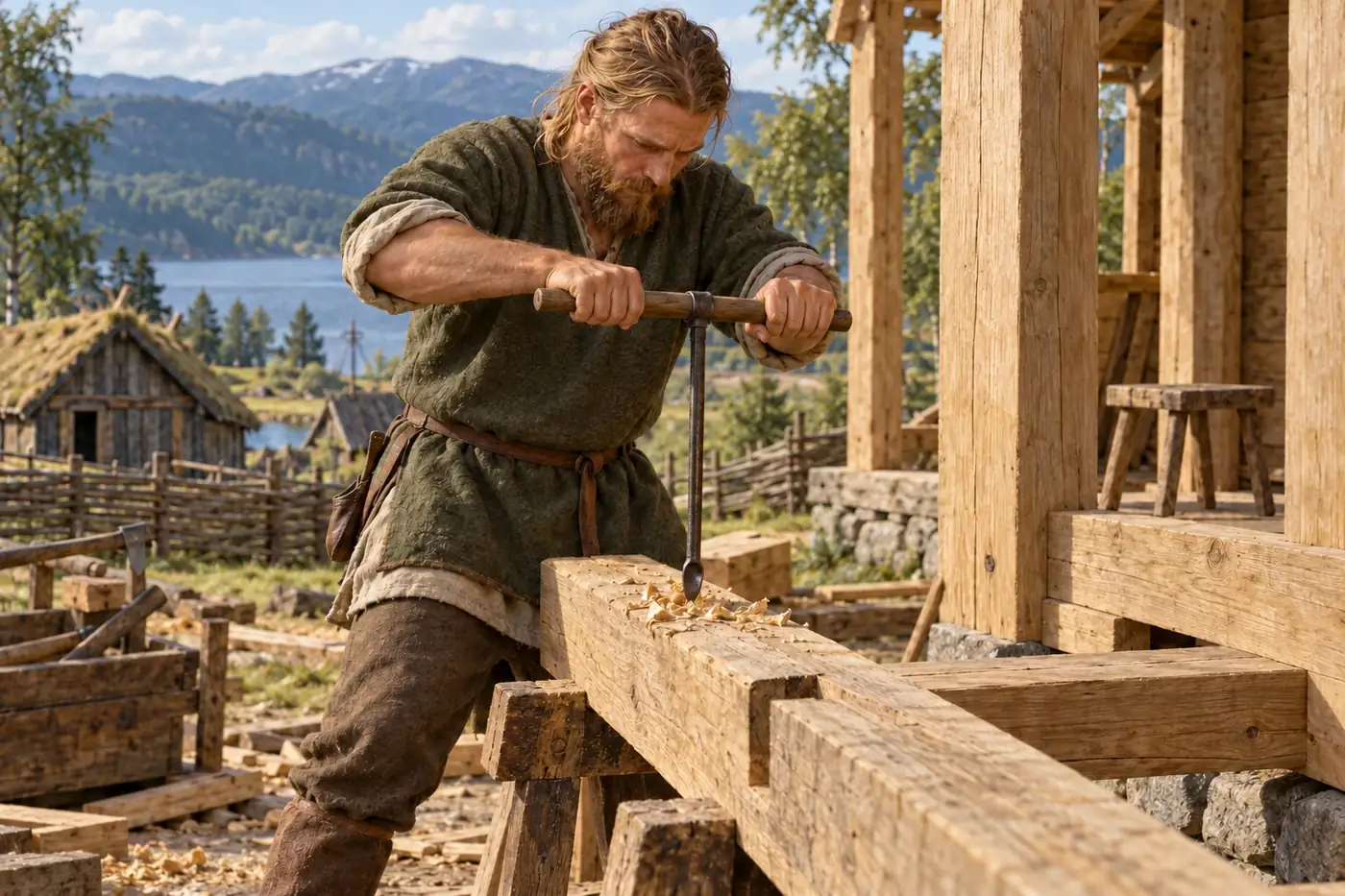
A carpenter using a hand-powered spoon bit to bore timber. Modern interpretive illustration for Nordic Viking History; not a technical diagram or an exact reconstruction of a particular find.
Materials and tools: Timber, axes, knives, boring and cutting tools, and suitable joints or fastenings.
How the work proceeded
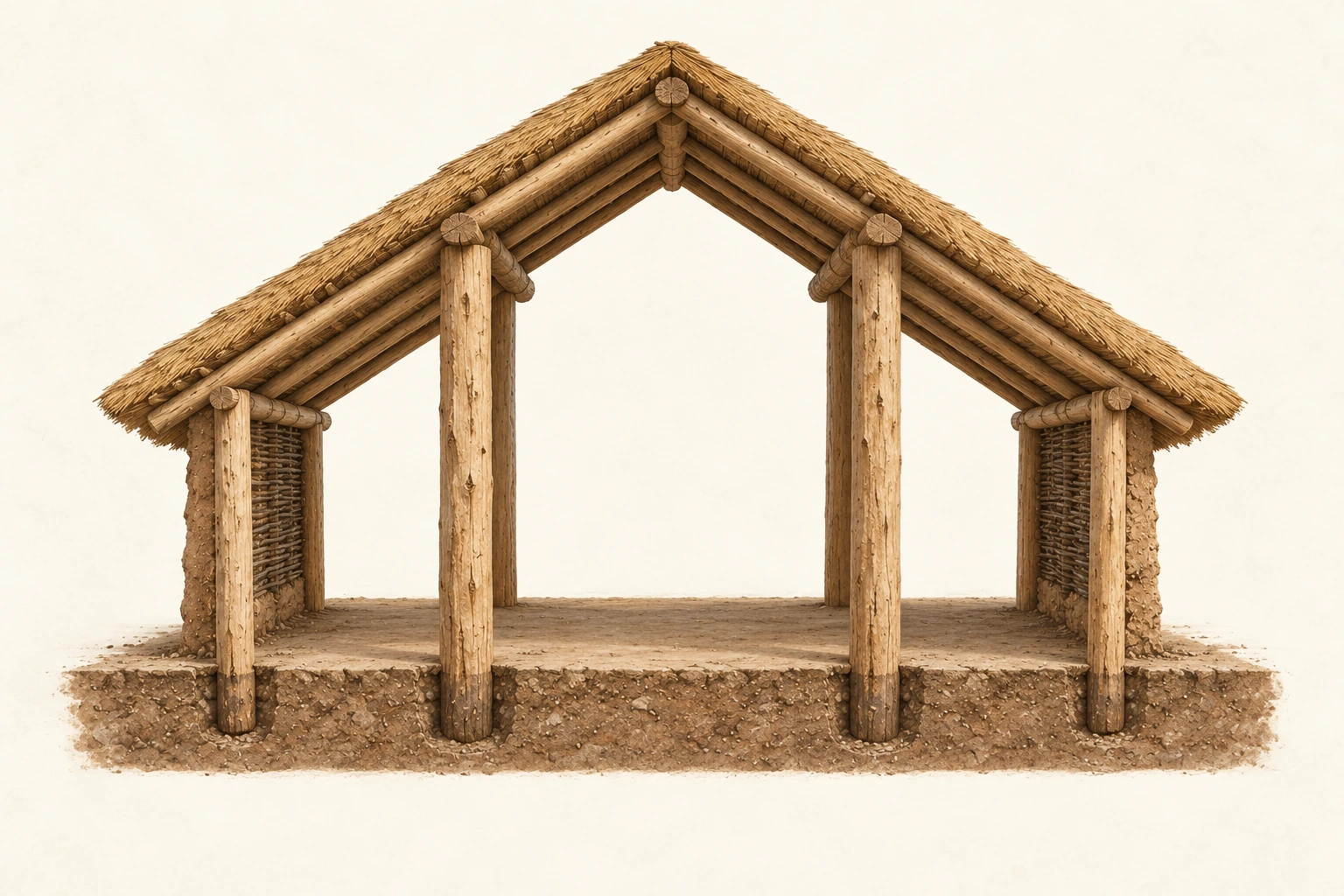
Builders reduced timber to the shapes needed for posts, beams, boards and smaller fittings. Assembly depended on the building or object: a stool, a chest and a roof frame posed different problems.
Once in use, woodwork needed maintenance. Damaged handles, doors and furniture could be repaired rather than discarded; workshop offcuts can preserve evidence of this everyday labor.
What the evidence tells us: Ribe's working woodshop illustrates the range from buildings to furniture. Its modern workholding equipment should not automatically be assigned to every Viking-Age workshop. The archaeological context and a tool's working marks matter more than a convincing-looking demonstration.
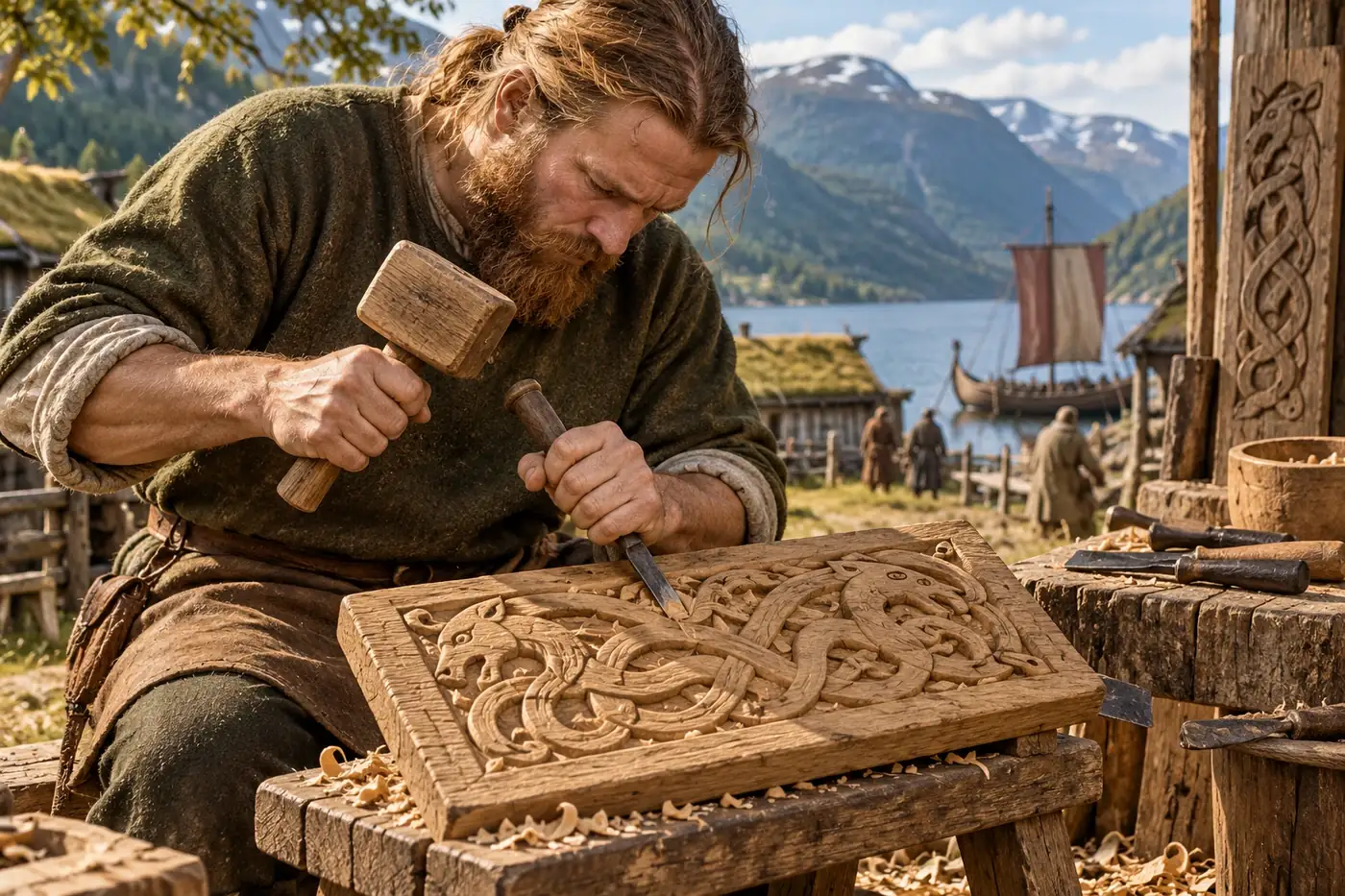
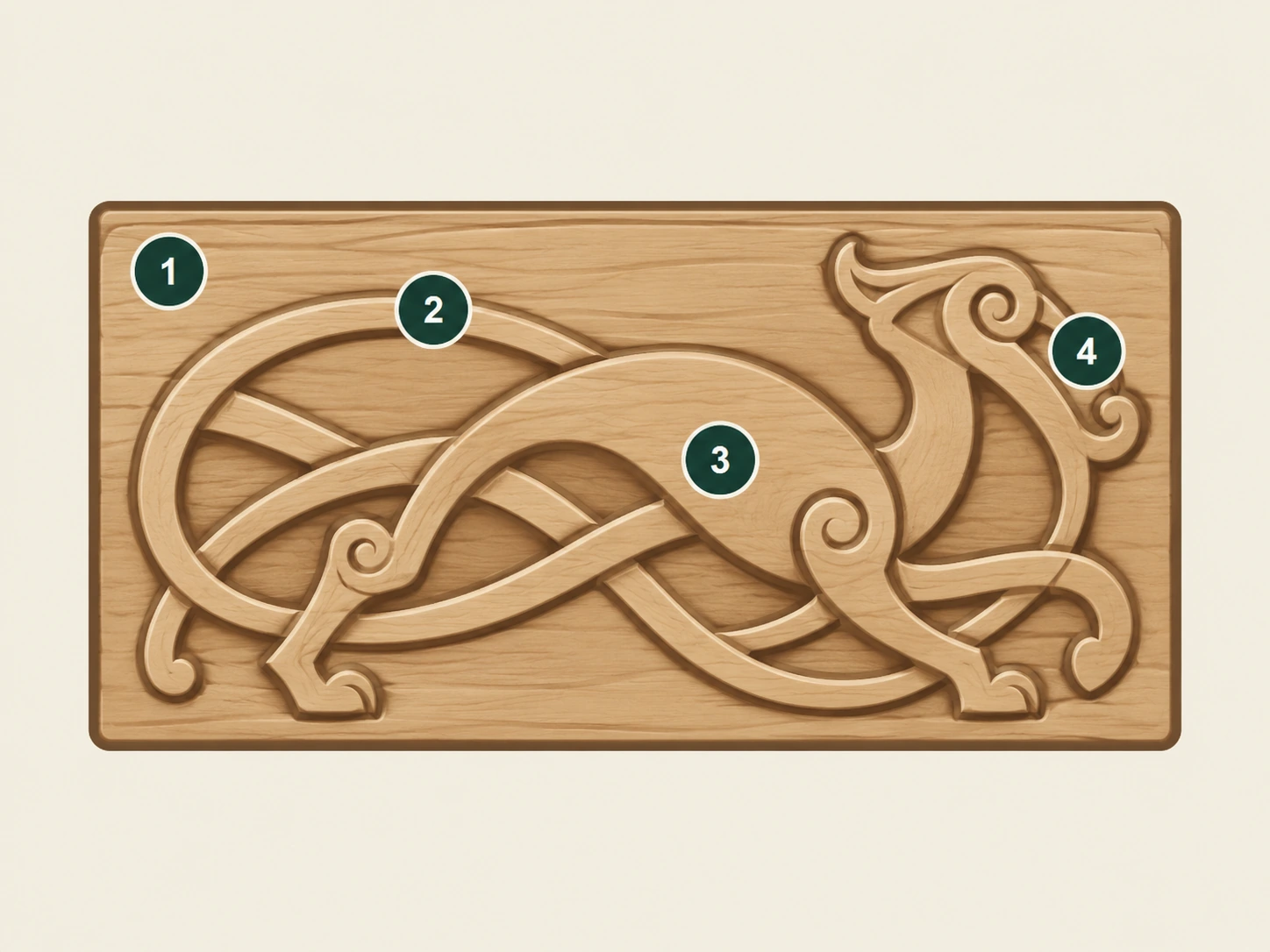
A woodcarver cutting animal ornament into a wooden panel. Modern interpretive illustration for Nordic Viking History; not a technical diagram or an exact reconstruction of a particular find.
Materials and tools: Wood, cutting tools, a planned design and a surface suitable for carving.
How the work proceeded
The maker established the larger form before cutting the detailed ornament. Removing background material could leave animal bodies and interlace standing above the surrounding surface.
Small cuts refined edges and details. Design choices had to respect the grain: an elegant projecting limb was of little use if it snapped during manufacture.
What the evidence tells us: Animal ornament appeared on objects made in several materials. Carving is a technique; Oseberg, Borre, Jelling, Mammen, Ringerike and Urnes are modern style categories. A decorative reconstruction should identify the object or style that inspired it rather than invent an ancient symbolic meaning.
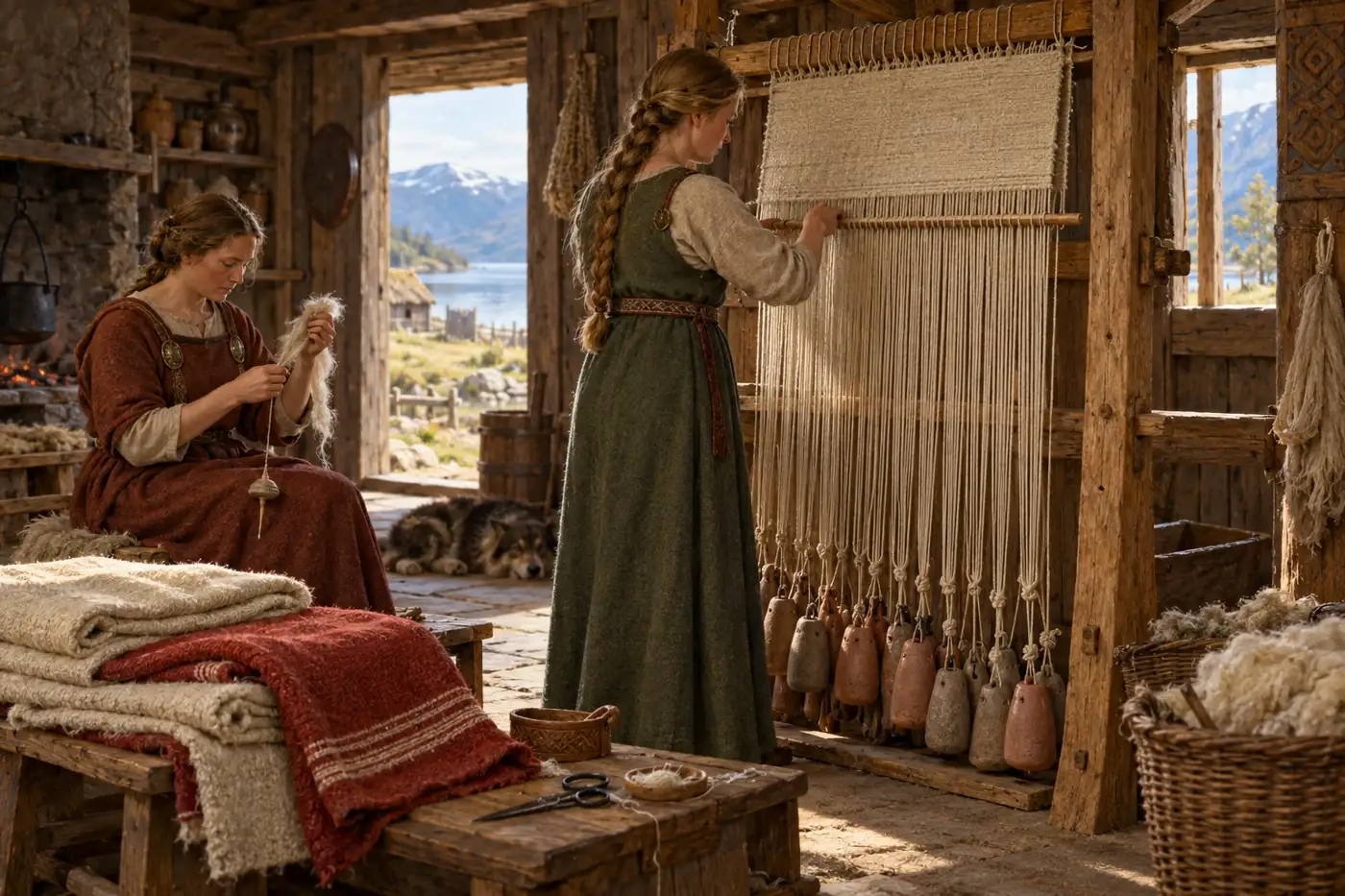
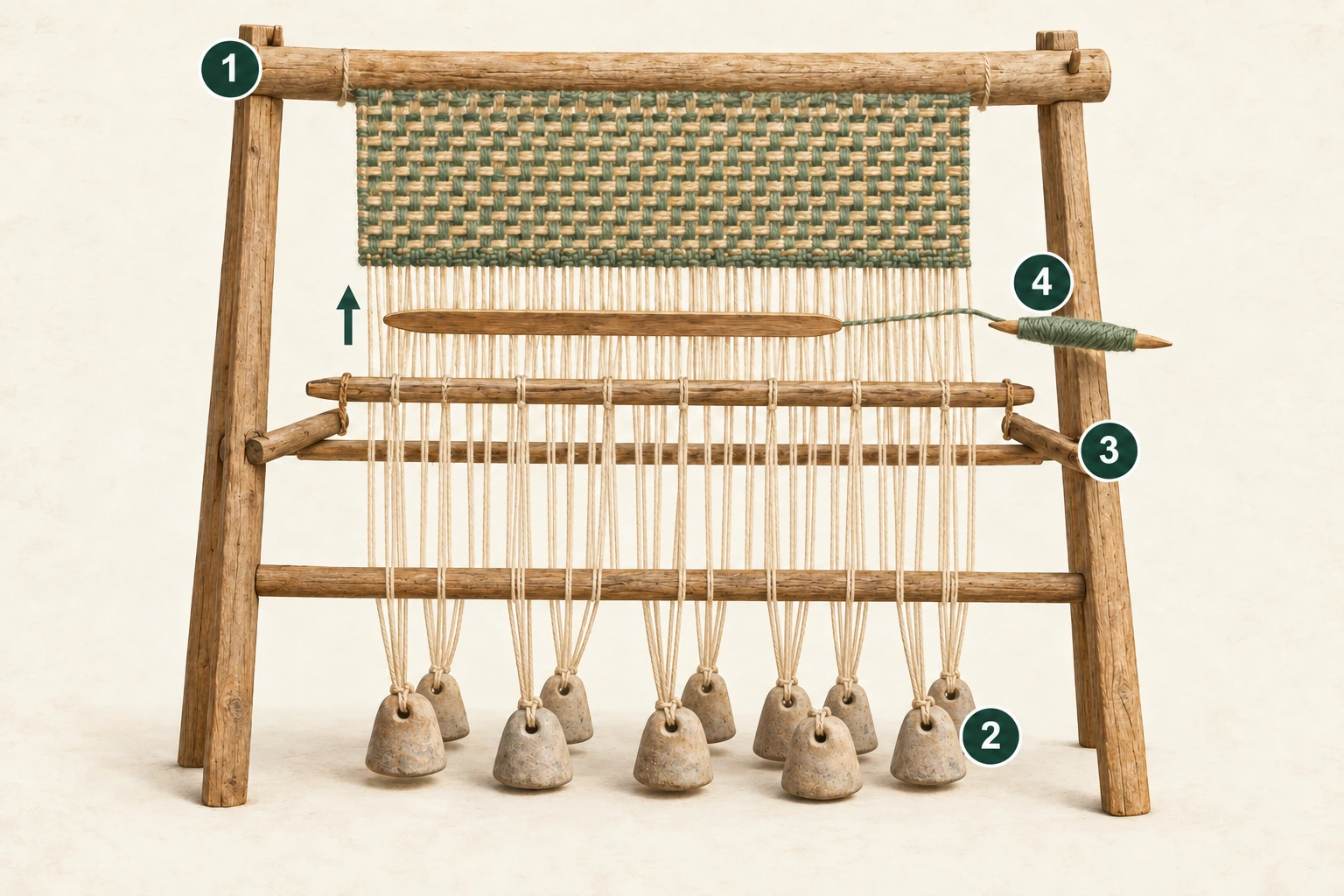
Spinning with a drop spindle and weaving on a warp-weighted loom. Modern interpretive illustration for Nordic Viking History; not a technical diagram or an exact reconstruction of a particular find.
Materials and tools: Prepared wool or flax, spindle and whorl, loom, loom weights and yarn.
How the work proceeded
Spinning drew fibers into a continuous strand while twist held them together. Yarn quality mattered before any weaving could begin.
On a warp-weighted loom, weights kept groups of vertical threads under tension. Passing the weft through alternating openings built the cloth; different thread arrangements produced different structures.
What the evidence tells us: Spindle whorls and loom weights often survive where the textiles do not. Ribe demonstrates warp-weighted weaving as well as tablet-woven bands. This was skilled production, not simply a quick household chore. A spindle should not be replaced by a later spinning wheel in an illustration of Viking-Age work.
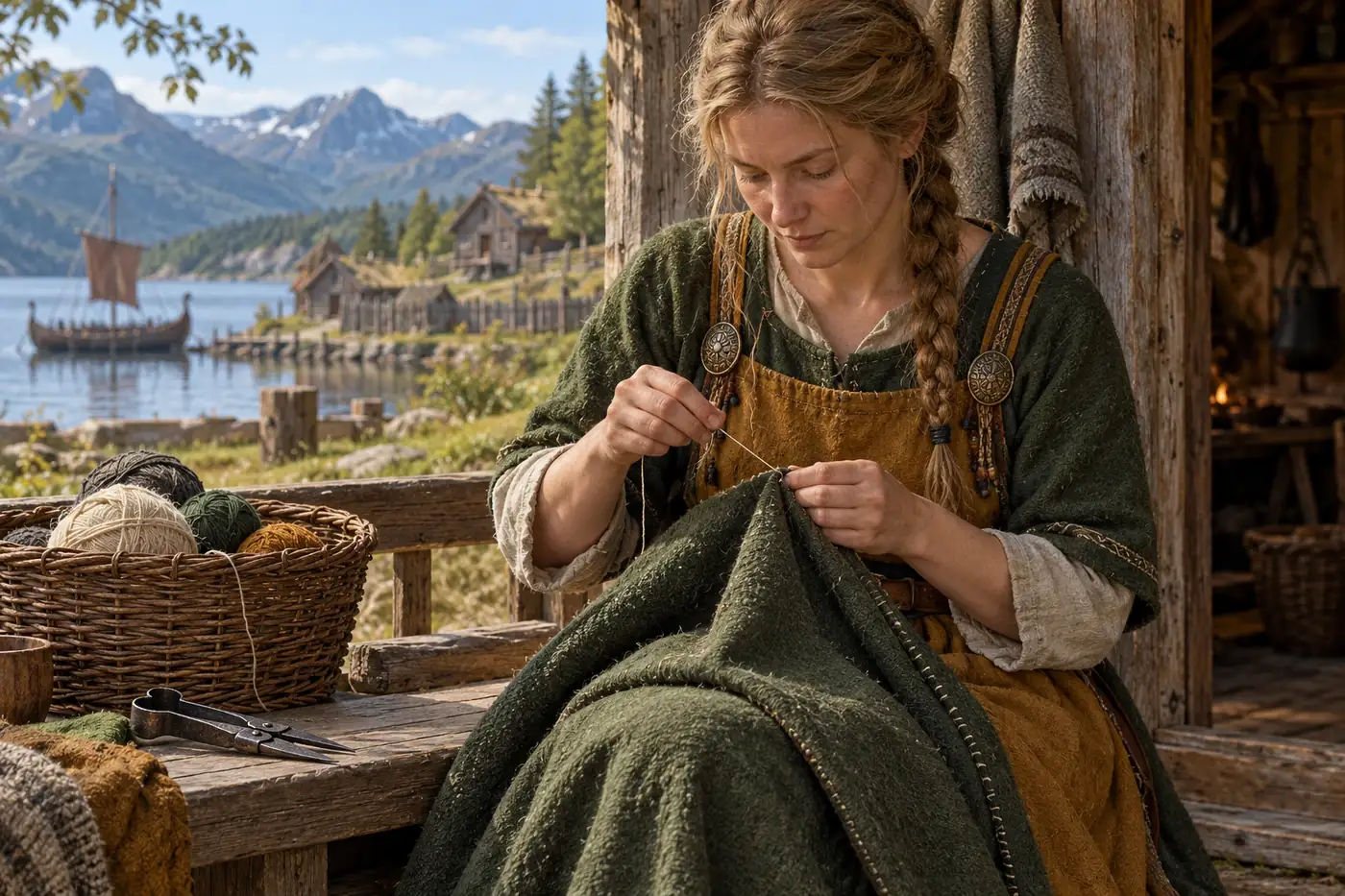
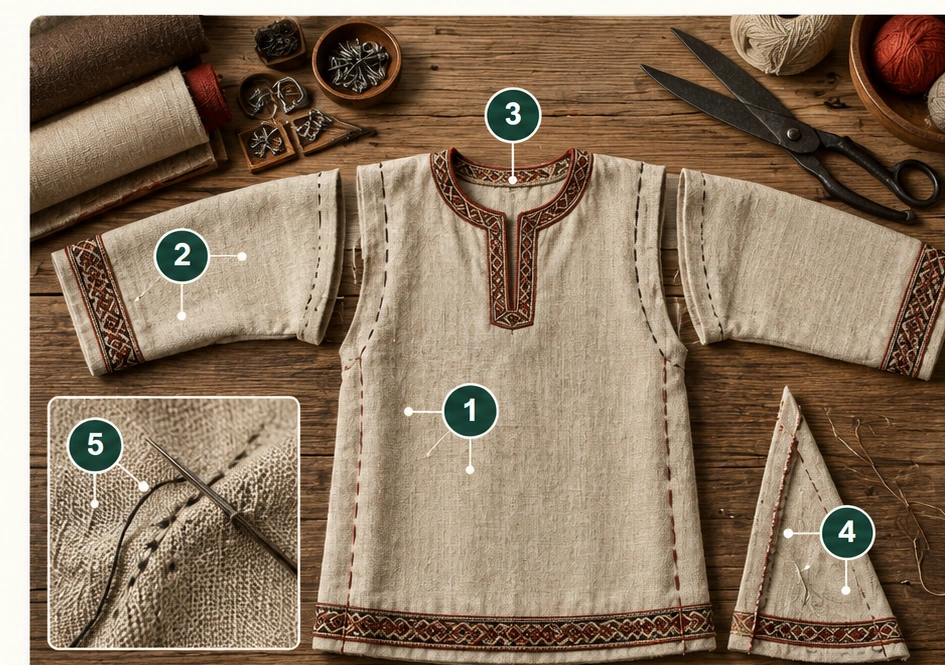
Hand sewing a wool garment with needle and thread. Modern interpretive illustration for Nordic Viking History; not a technical diagram or an exact reconstruction of a particular find.
Materials and tools: Woven cloth, thread, needles and cutting tools.
How the work proceeded
After weaving, cloth could be finished, cut and assembled into clothing. Seams joined the pieces, while edge finishing helped control wear and fraying.
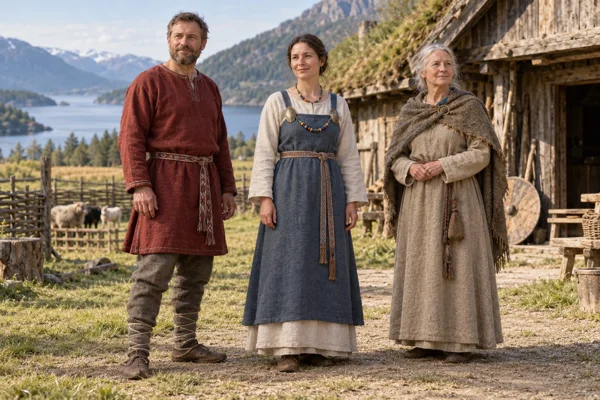
Repairs extended the life of expensive fabric. Decorative stitching, woven bands or applied details could be added separately; surviving elite garments do not represent everyone's clothing.
What the evidence tells us: The National Museum describes running, overcast and other stitches in late Iron Age textile work. Mammen provides exceptional evidence for decoration. Complete clothing patterns are often reconstructions because many finds consist of fragments rather than intact outfits.
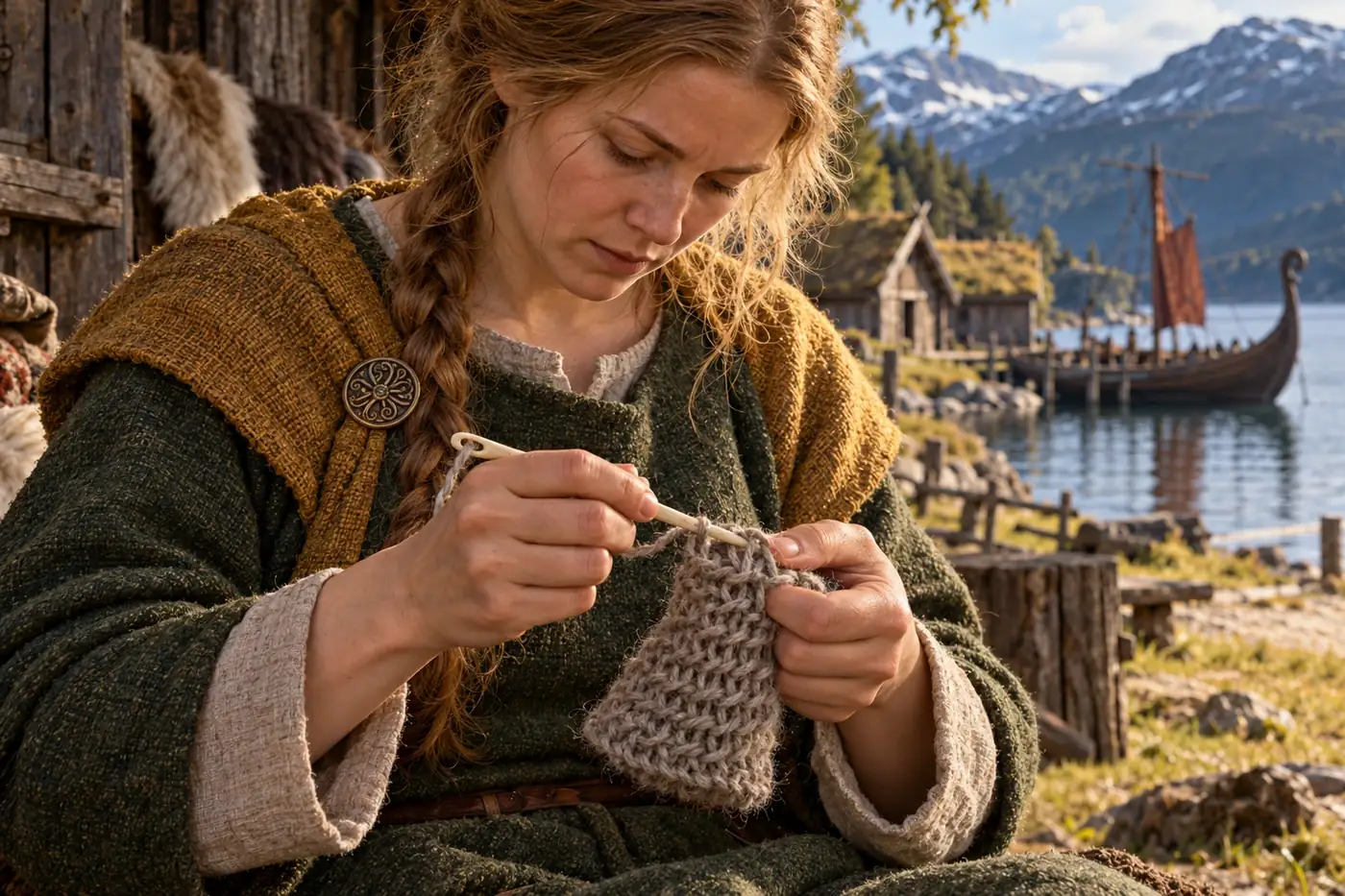
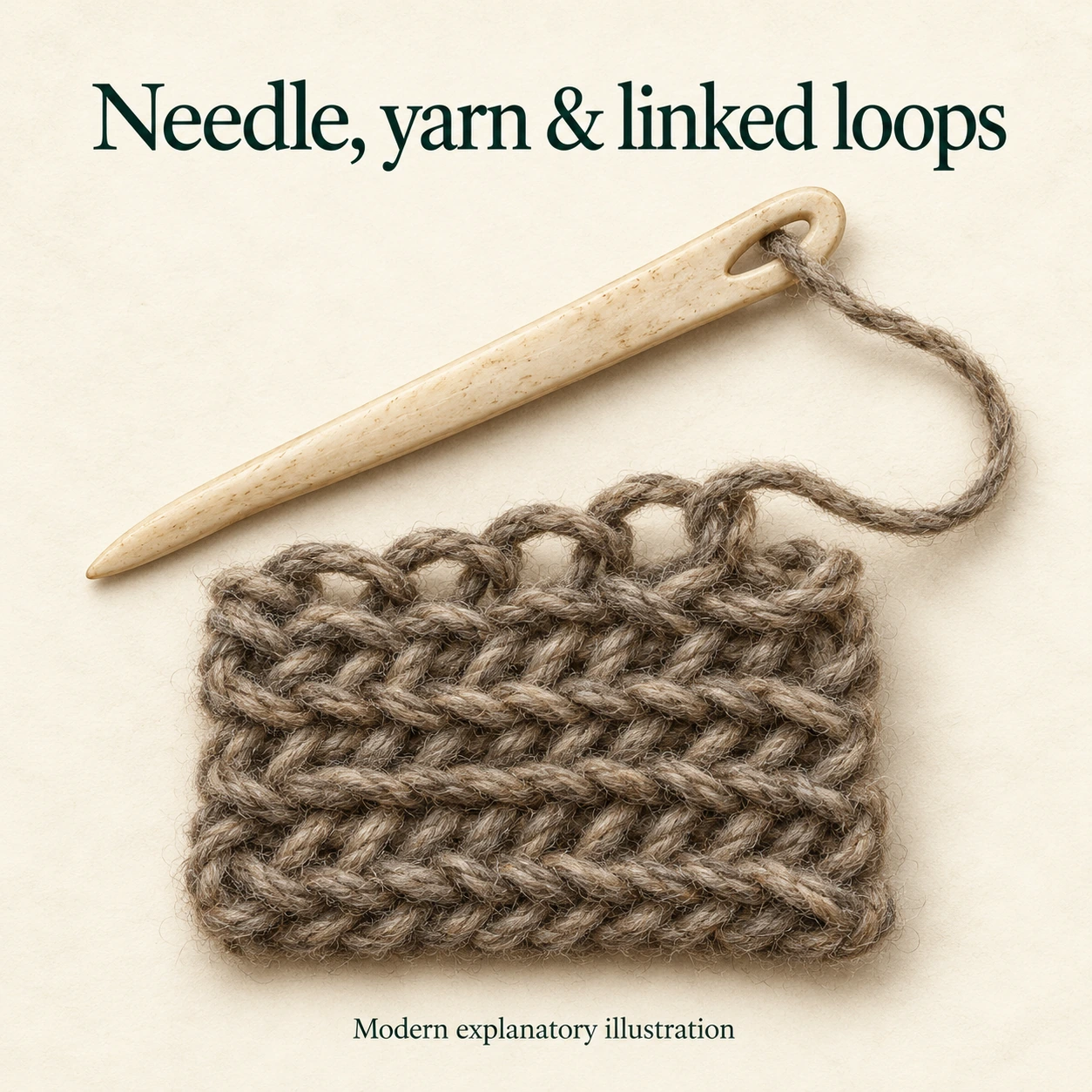
Interlinking wool loops with an eyed bone needle in an interpretation of nalbinding. Modern interpretive illustration for Nordic Viking History; not a technical diagram or an exact reconstruction of a particular find.
Materials and tools: A needle and manageable lengths of yarn.
How the work proceeded
Unlike weaving, nålbinding builds fabric by passing a needle and the working thread through loops. Successive stitches join into a shaped textile.
The entire working length passes through the stitch structure. This makes its construction different from knitting, even where the finished surfaces look similar.
What the evidence tells us: Ribe includes nålbinding in its textile demonstrations; the Mammen material also includes elaborate looped work in precious-metal-wrapped thread. Do not assume that every modern nålbinding stitch, mitten or hat pattern is documented in the Viking Age.
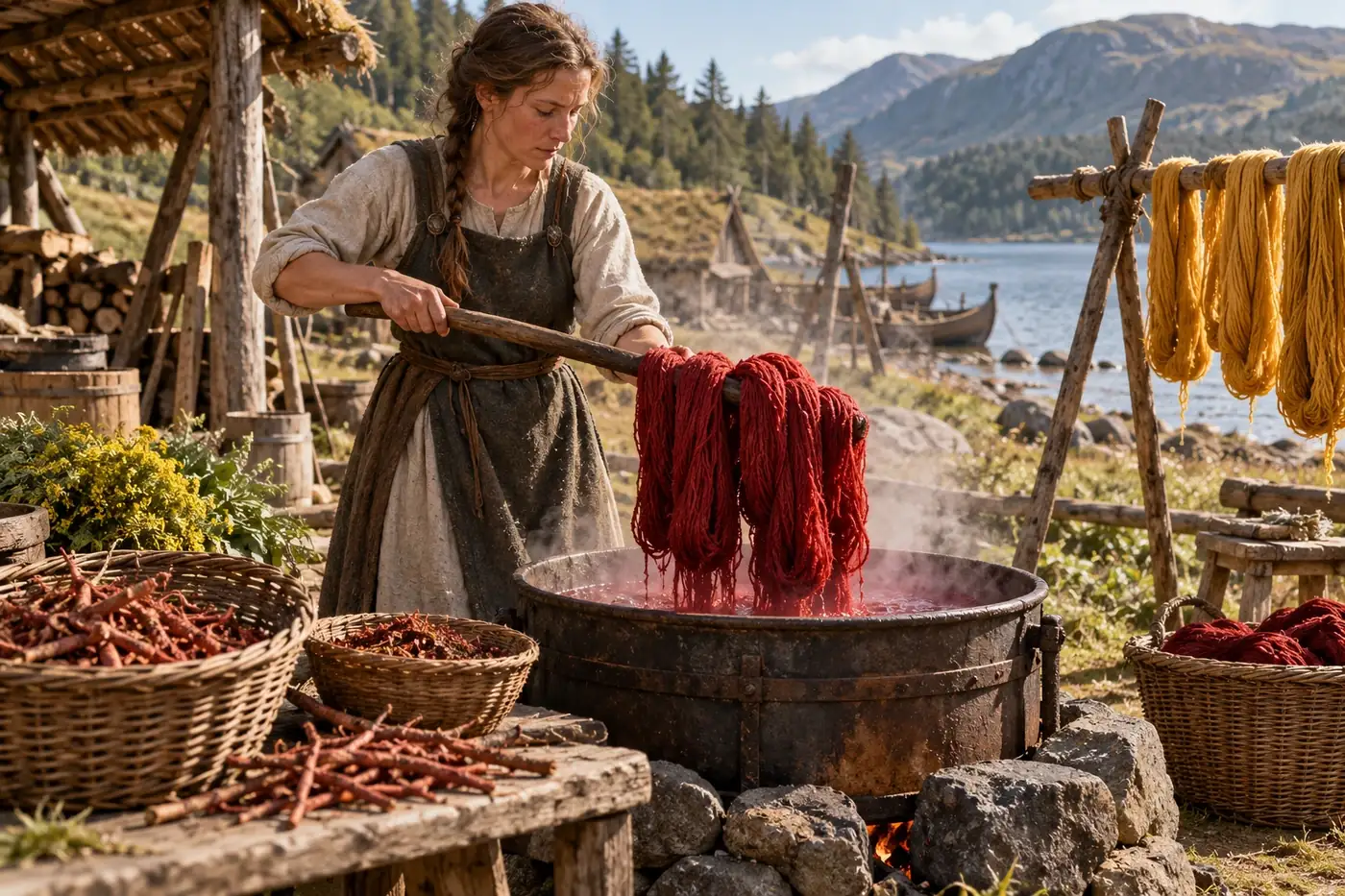
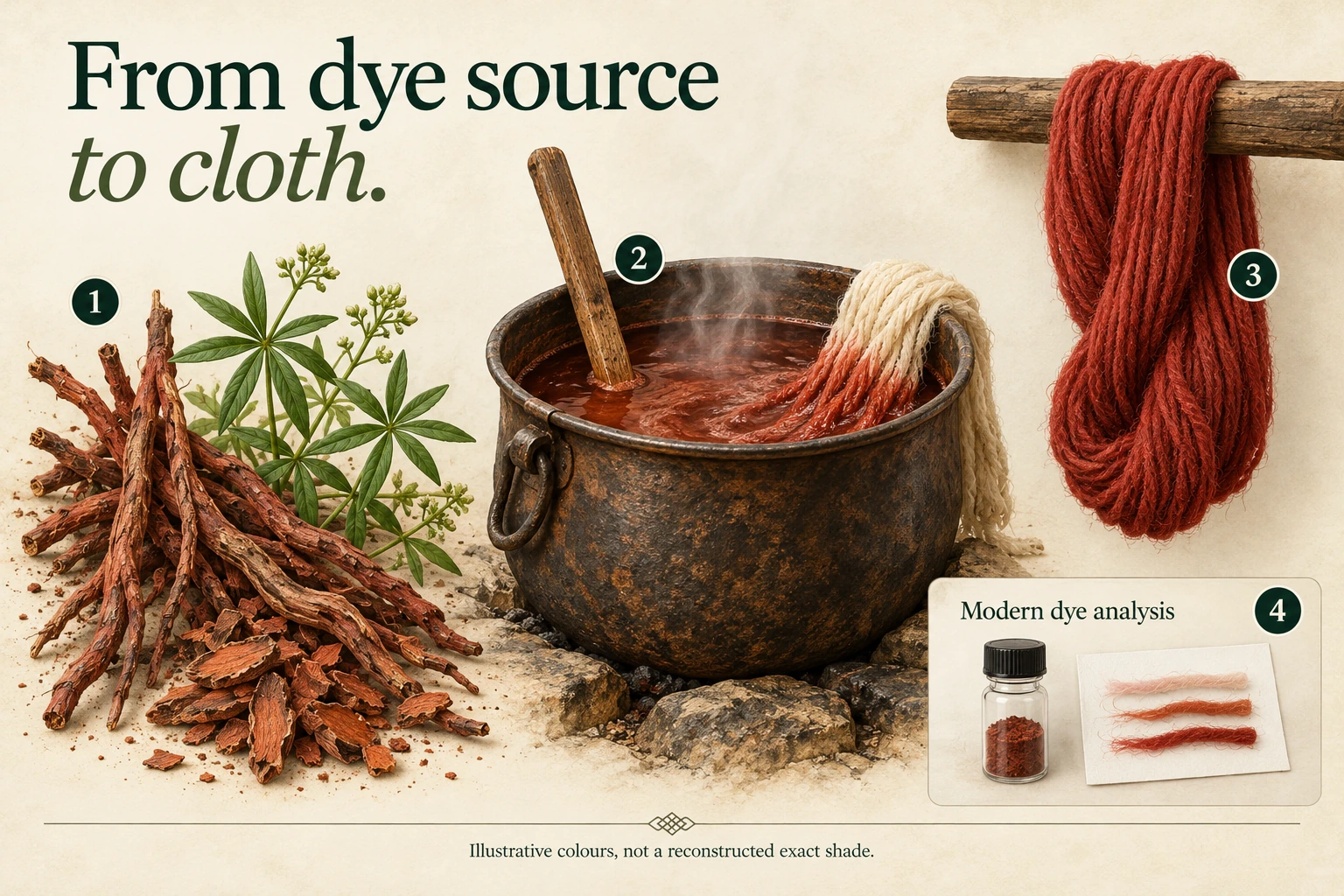
Lifting red wool skeins from a dye bath beside yellow skeins drying. Modern interpretive illustration for Nordic Viking History; not a technical diagram or an exact reconstruction of a particular find.
Materials and tools: Prepared fiber or textile, dye materials, water and a suitable vessel.
How the work proceeded
Dyers extracted color from plant material and brought it into contact with yarn or cloth. Preparing and finishing the fiber affected the result.
Different dyes required different processes. Blue-producing vats cannot be explained simply as boiling a blue flower; mixtures, fiber choice and repeated treatments could change the shade.
What the evidence tells us: Archaeological textiles preserve evidence for several colors, including red, yellow, blue and purple. The museum identifies woad and imported indigo as blue sources. Color on a present-day reconstruction is an interpretation unless it follows analysis of the specific find.
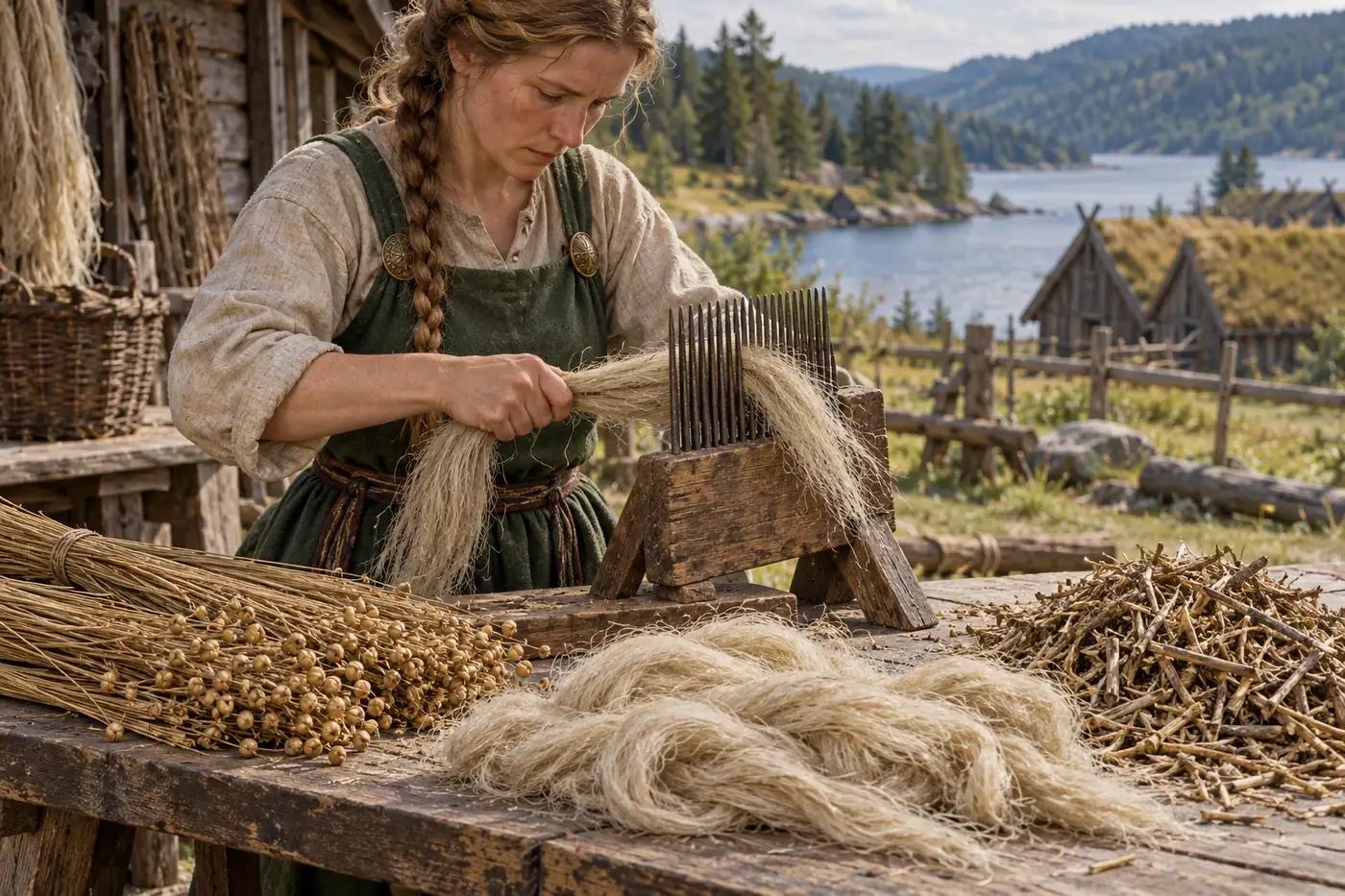
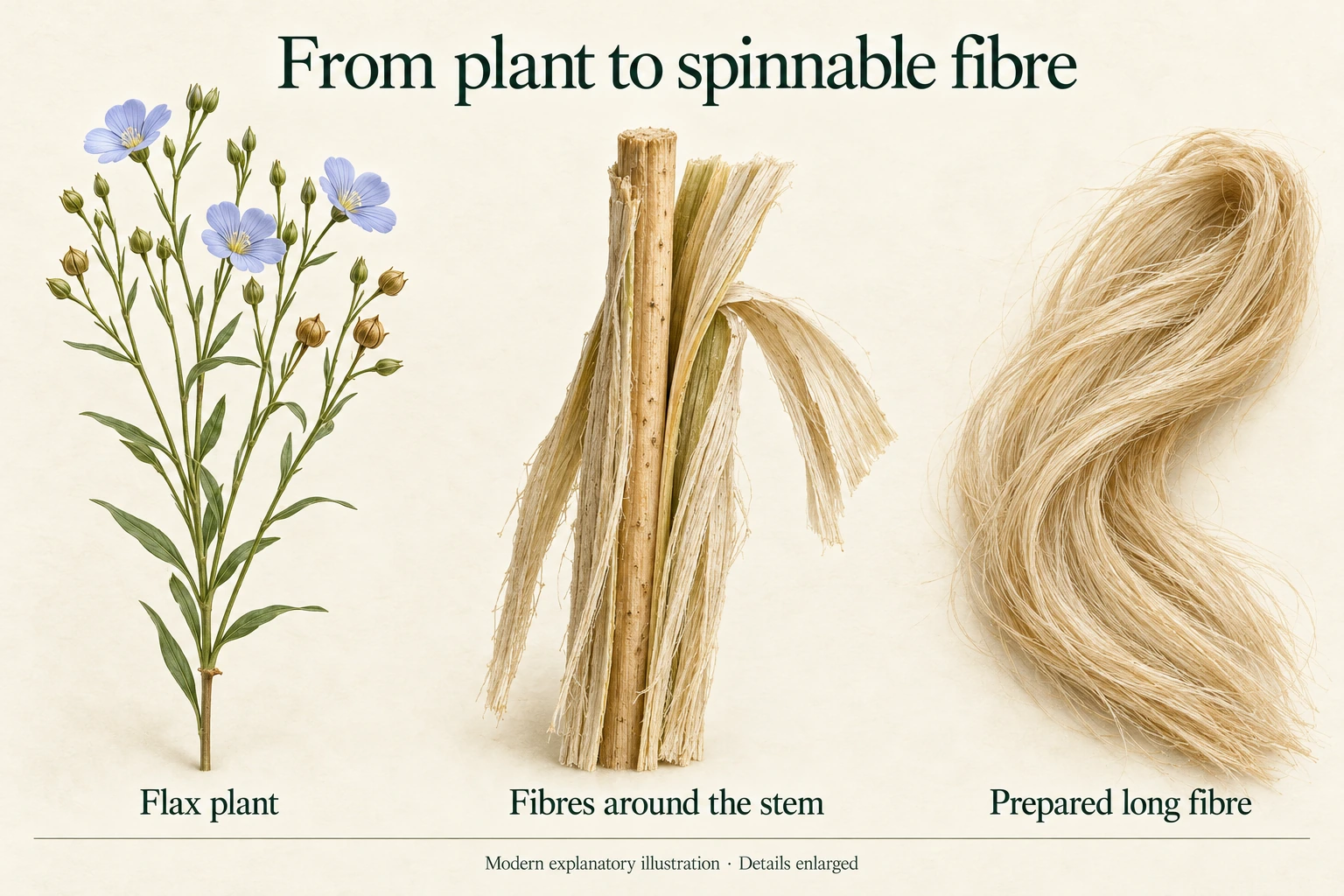
Combing prepared flax fibers through iron teeth. Modern interpretive illustration for Nordic Viking History; not a technical diagram or an exact reconstruction of a particular find.
Materials and tools: Flax stems and equipment for separating and arranging the fibers.
How the work proceeded
After harvesting and removing seed heads, retting helped loosen the fibers from other stem material. Drying and breaking were followed by cleaning away woody fragments.
Combing sorted and aligned the usable fibers before spinning. Only then could the maker begin producing the yarn needed for cloth.
What the evidence tells us: The Viking Ship Museum documents this sequence in a modern flax-sail project. Its traditional tools and experimental choices must not all be treated as directly excavated Viking equipment. Flax production is archaeologically attested; the project's flax sail tests a reconstruction, not a surviving original sail.
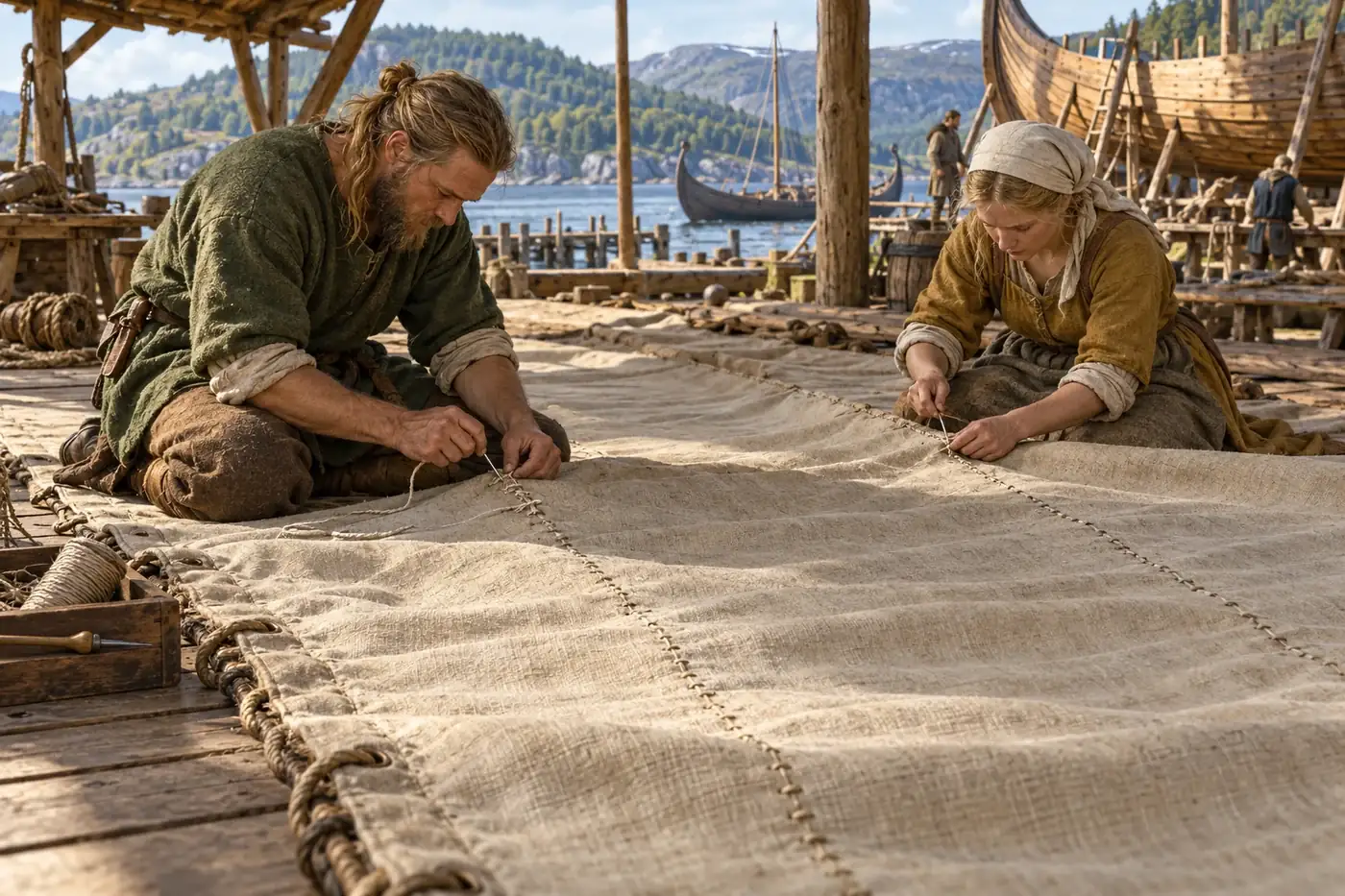
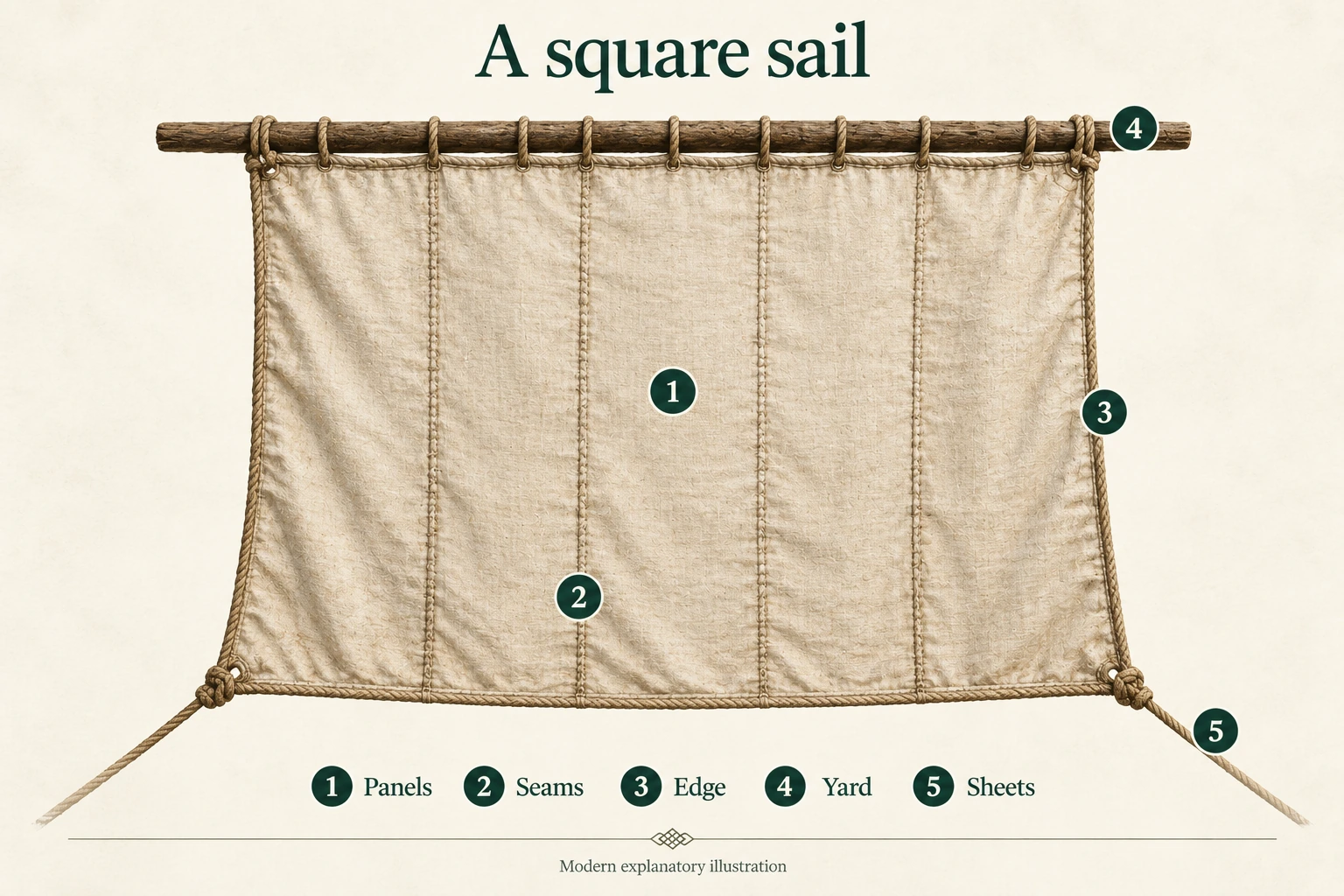
Two workers hand sewing cloth panels for a sail beside a boatyard. Modern interpretive illustration for Nordic Viking History; not a technical diagram or an exact reconstruction of a particular find.
Materials and tools: Large quantities of prepared fiber, spun yarn, woven panels, sewing thread and reinforcing rope.
How the work proceeded
The first task was making enough consistent cloth. Panels were then joined into the required sail shape, with seams and edge reinforcement contributing to its strength.
Finishing the cloth and testing the rig were further stages. A sail had to function with the hull and rudder, not merely look like a square of fabric.
What the evidence tells us: The Viking Ship Museum has experimented with wool sails using archaeological, historical and later comparative evidence. Different weaves and panel arrangements remain subjects of study. Labor estimates from modern experiments vary with the tools and assumptions used; there is no single secure time requirement for every Viking sail.
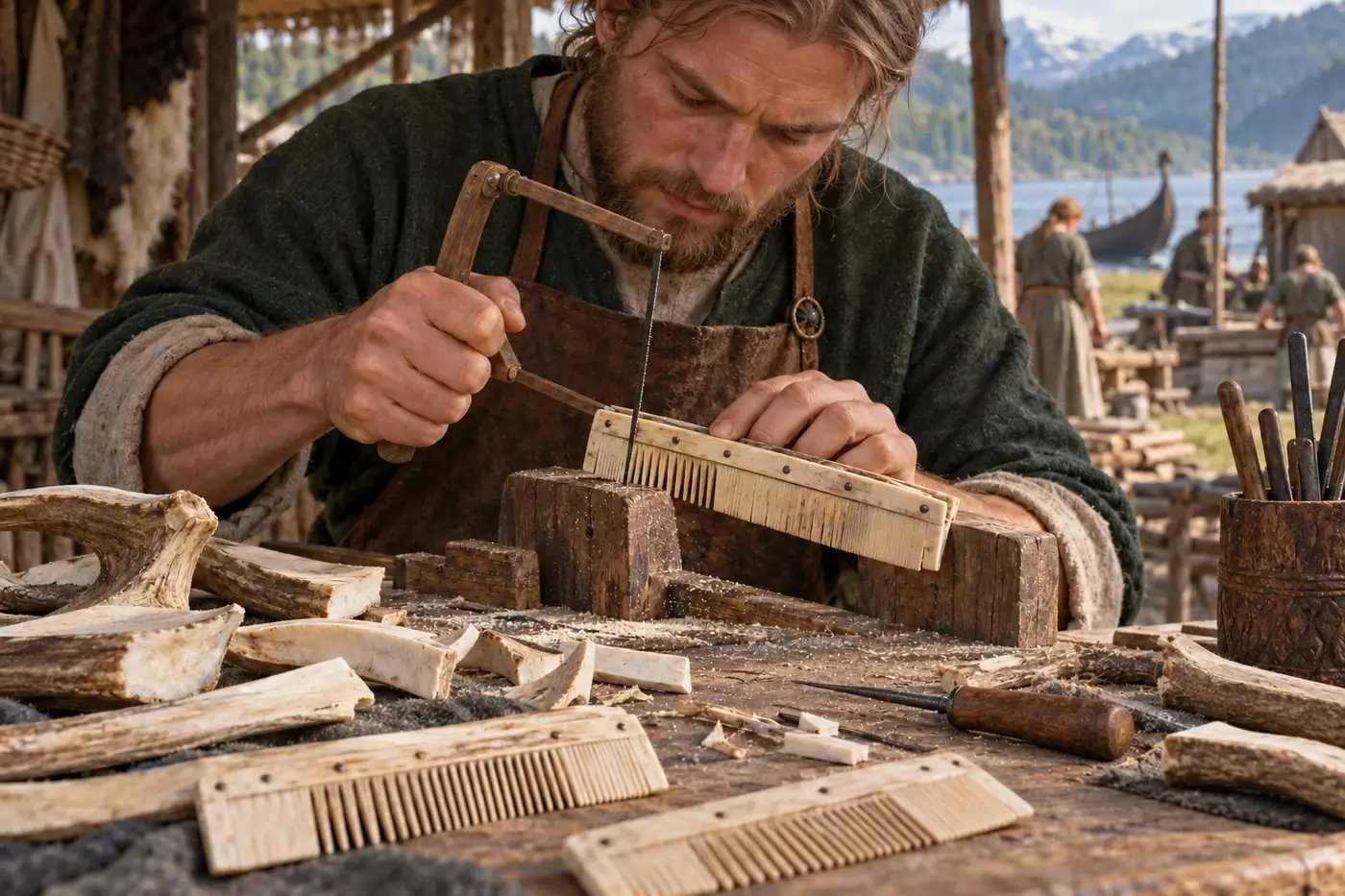
A comb maker sawing teeth into a composite antler comb. Modern interpretive illustration for Nordic Viking History; not a technical diagram or an exact reconstruction of a particular find.
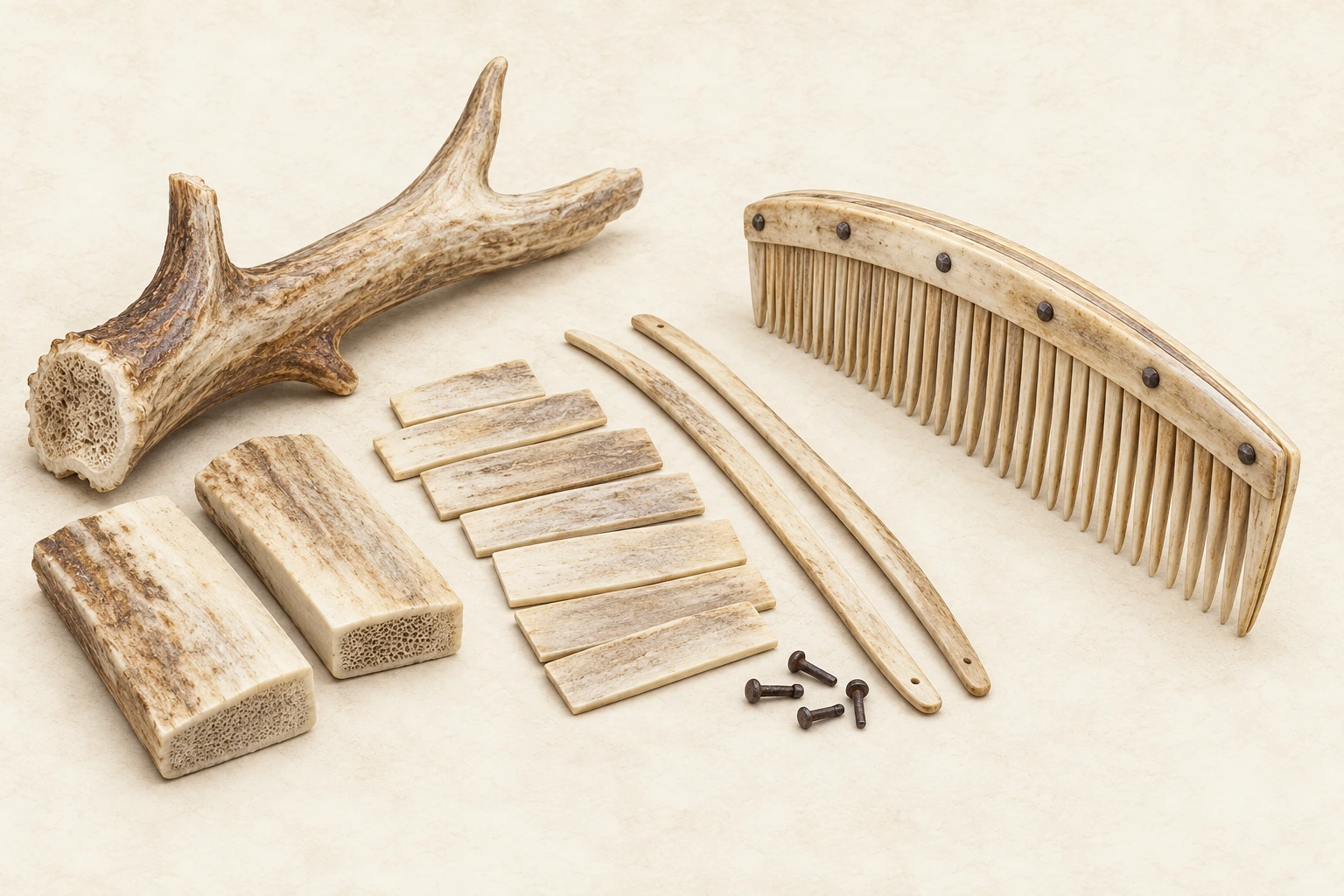
Materials and tools: Antler or bone, cutting and drilling tools, a fine saw and small rivets.
How the work proceeded
In a composite comb, small plates formed the tooth-bearing section. Side plates held them together with rivets.
The maker cut the teeth carefully and could add surface decoration. Offcuts and unfinished pieces reveal stages that a polished finished comb conceals.
What the evidence tells us: Coppergate preserves evidence through the production sequence. Bone, antler and horn are different materials; they should not be treated as interchangeable labels. Ribe also records finely made gaming pieces, needles and handles. A comb could be an everyday necessity and a skilled specialist product at the same time.
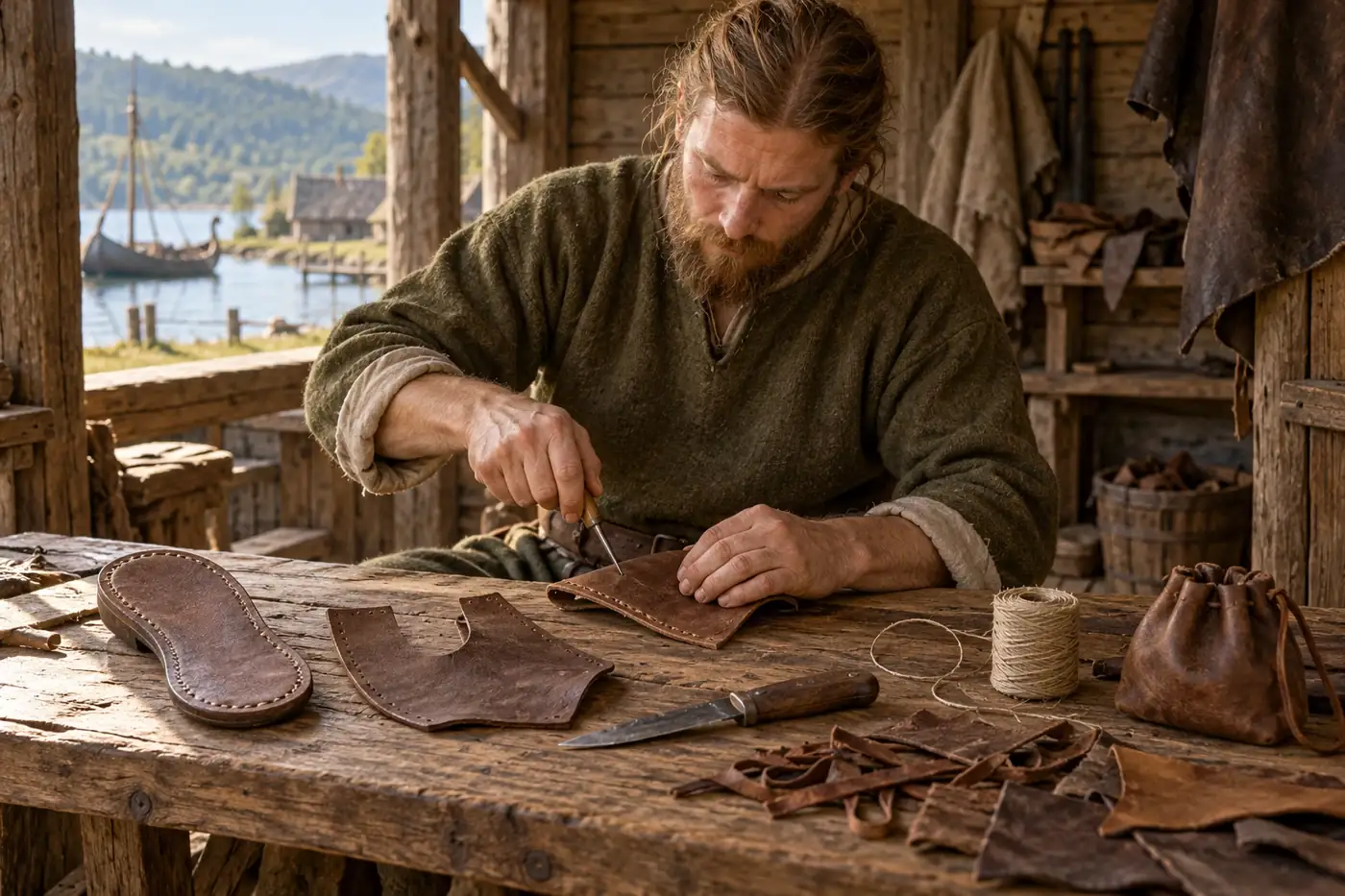
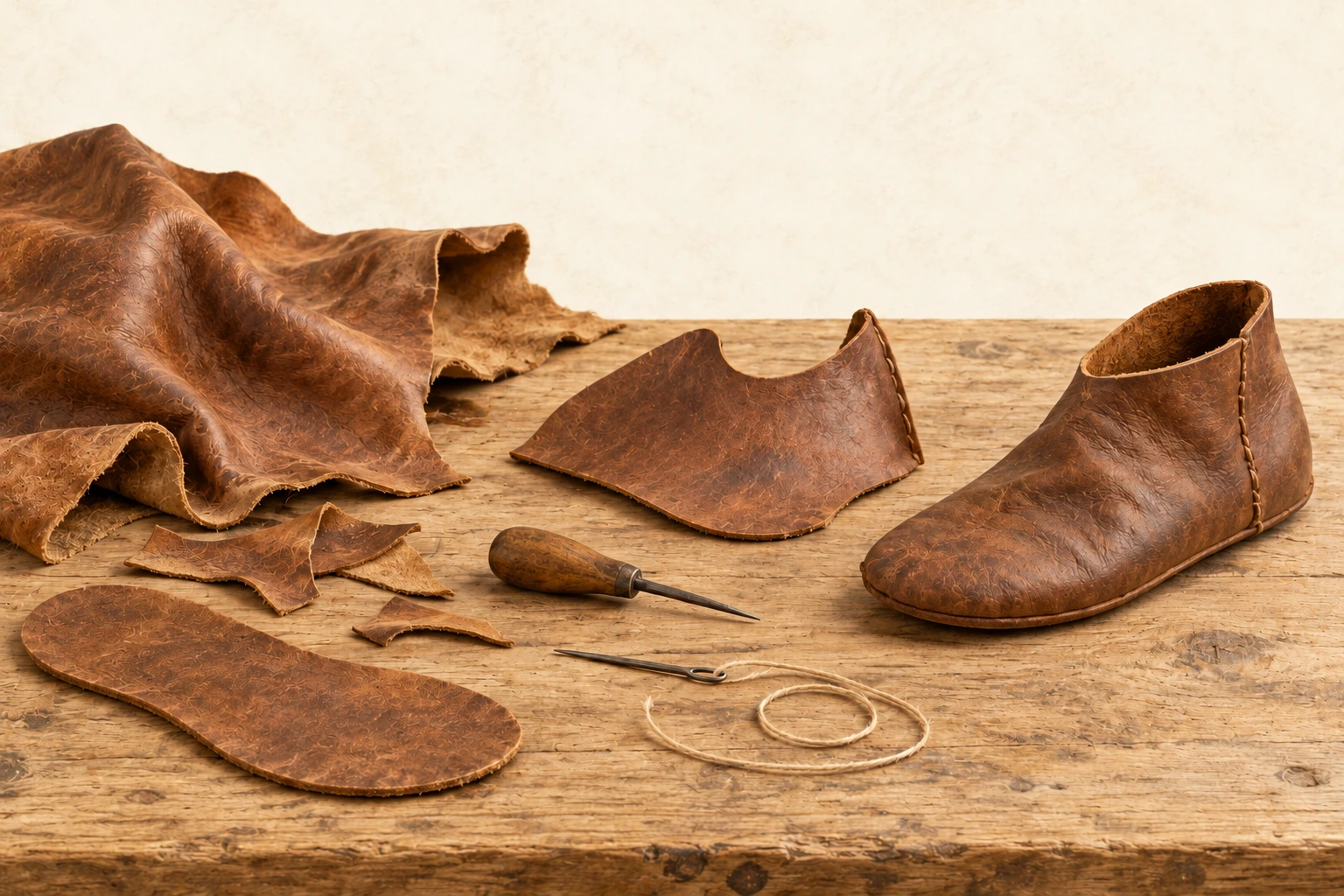
Preparing stitch holes in leather with an awl. Modern interpretive illustration for Nordic Viking History; not a technical diagram or an exact reconstruction of a particular find.
Materials and tools: Prepared leather, cutting tools, awls, punches and thread.
How the work proceeded
A leatherworker selected and cut pieces for the intended object. Holes and seams joined them; different thicknesses served different purposes.
Finishing, decoration and repair followed. Shoes, straps and knife sheaths placed different demands on the material, so a single pattern cannot stand for all leatherwork.
What the evidence tells us: At Coppergate, leather offcuts and tools identify production and repair. These are stronger evidence for a workshop than an isolated finished shoe. Cutting and sewing a hide is not the same operation as preparing it from a fresh skin.
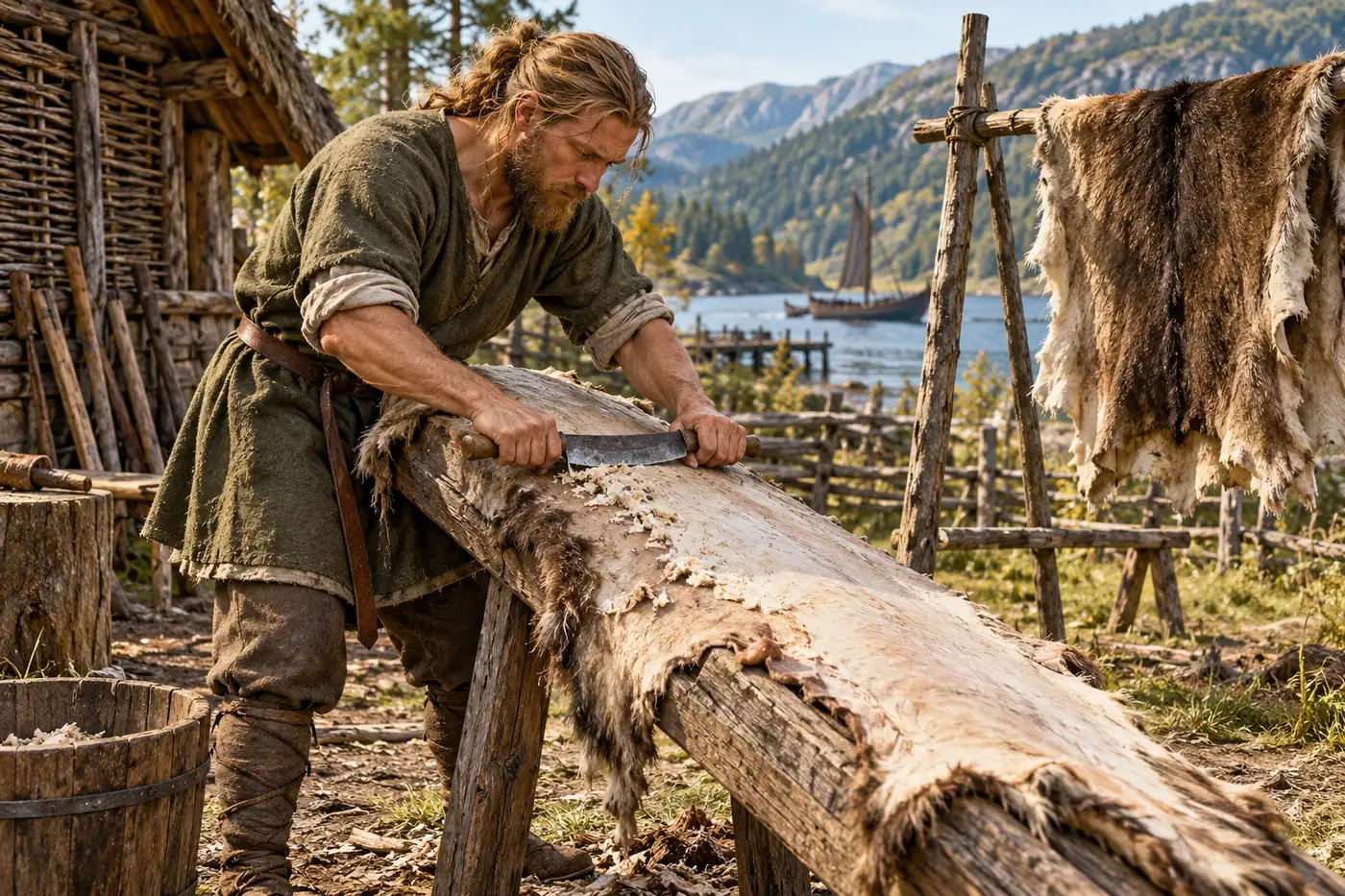
Scraping the flesh side of a hide over a sloping wooden beam. Modern interpretive illustration for Nordic Viking History; not a technical diagram or an exact reconstruction of a particular find.
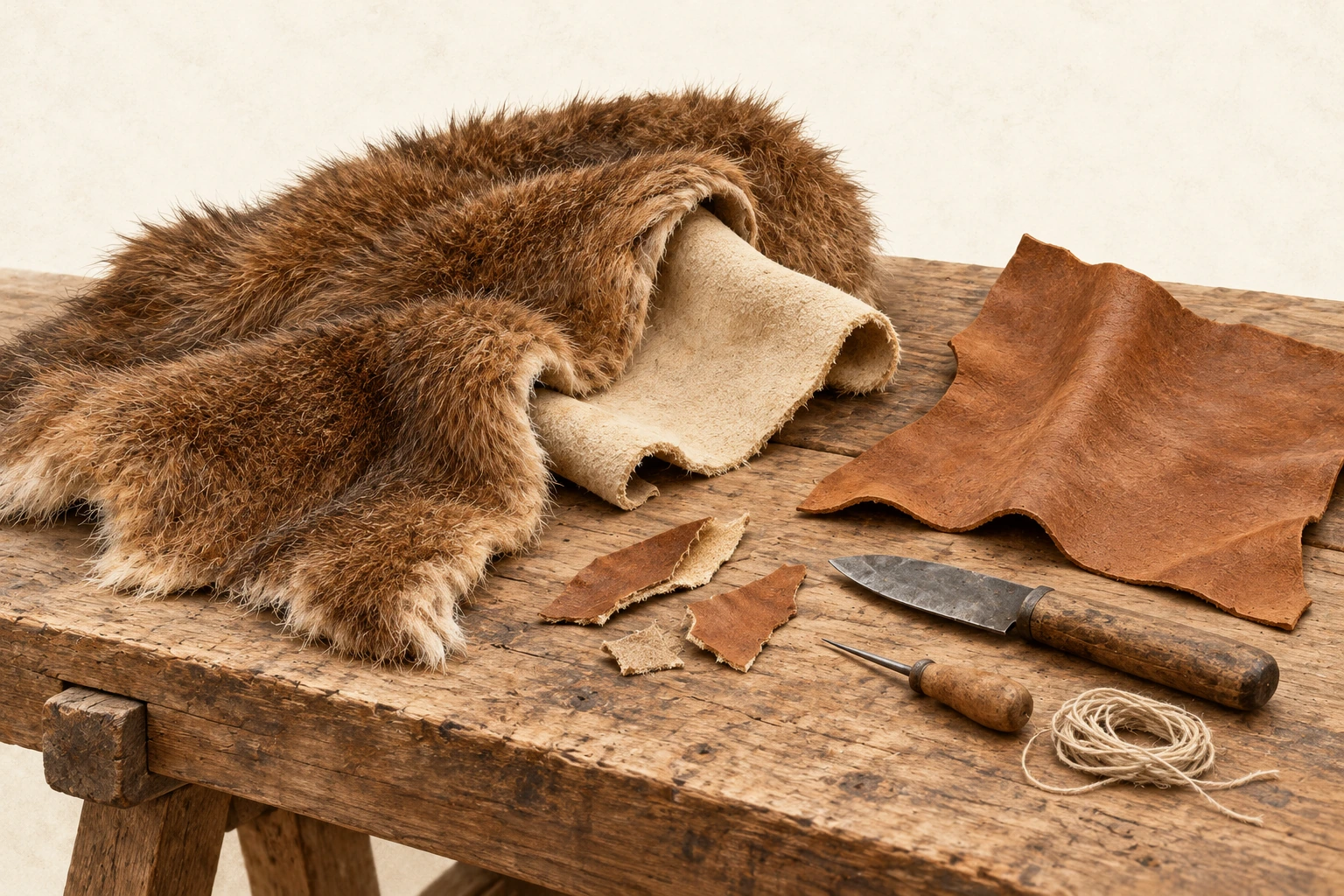
Materials and tools: An animal skin, scraping equipment and a treatment appropriate to the intended product.
How the work proceeded
Before a skin could become a useful material, unwanted tissue had to be removed. Subsequent treatment aimed to make it durable and workable.
Fur preparation retained the hair, whereas many leather products required a different surface. Softening, drying and later maintenance affected the finished material.
What the evidence tells us: The Swedish History Museum identifies tanning, fur processing and leatherworking among Viking-Age activities. The exact recipe is often less securely known than the existence of the craft. We therefore do not present one bark, fat or other treatment as the universal Viking method.
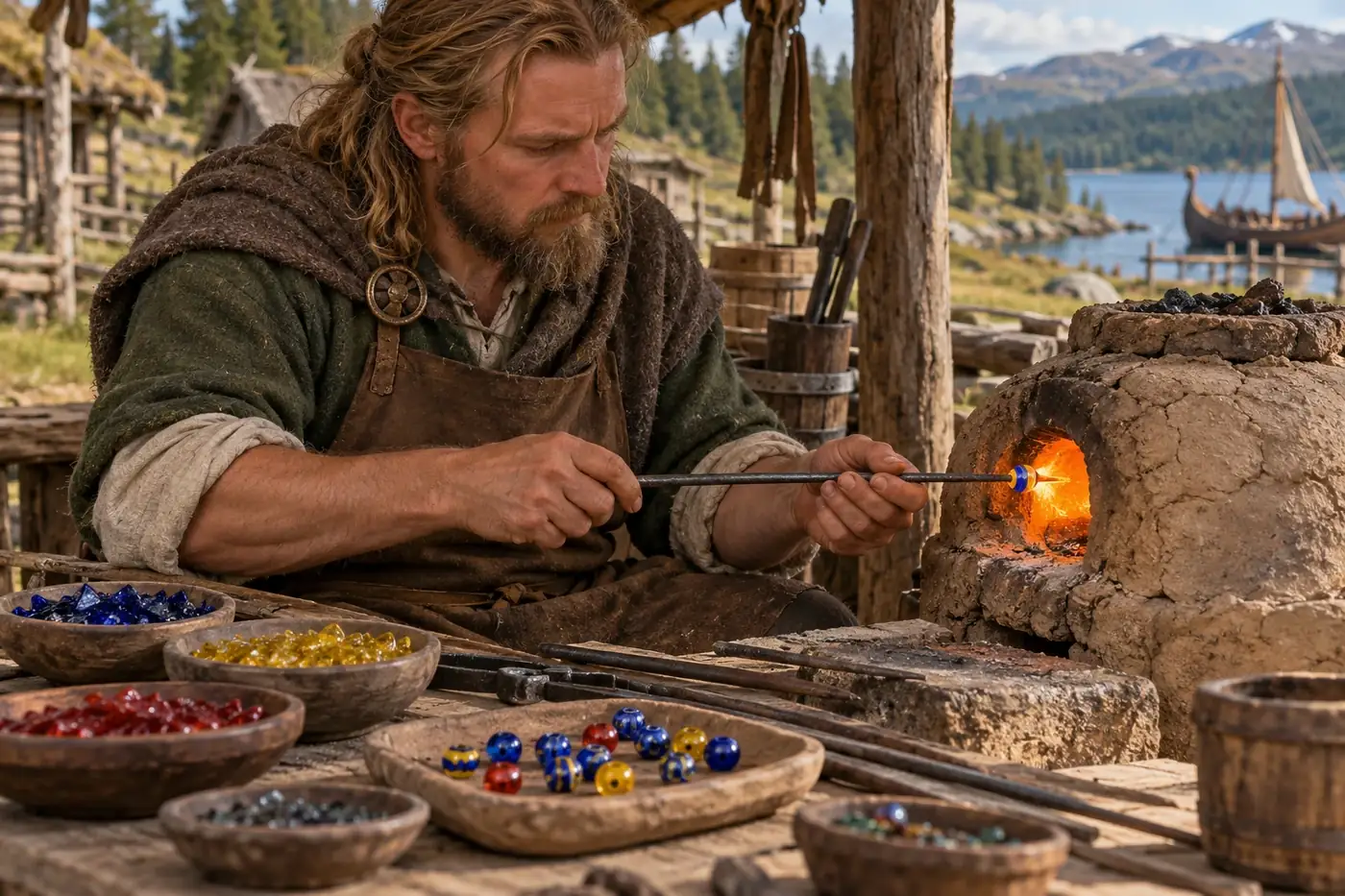
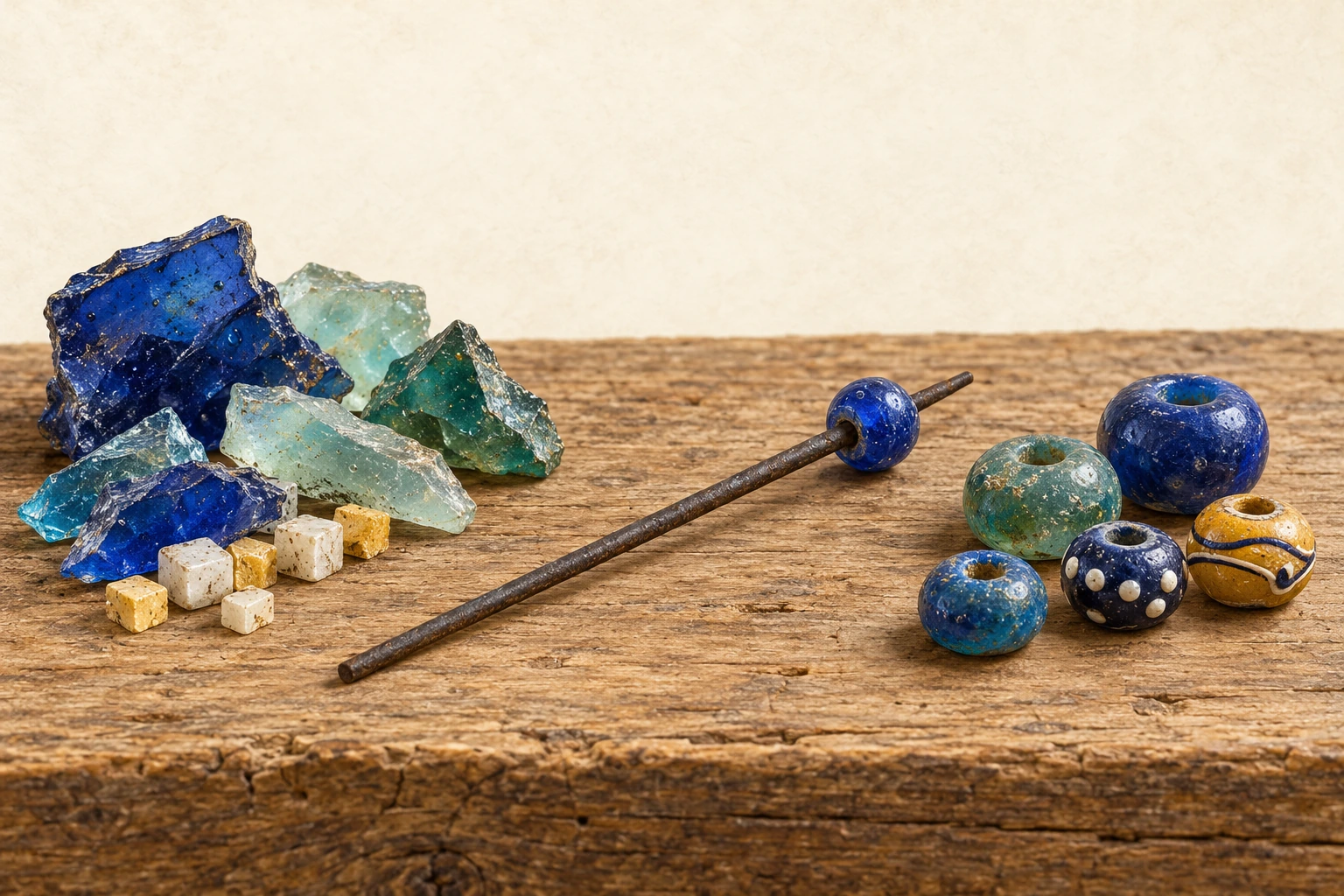
A glassworker heating a bead on an iron mandrel at a clay furnace. Modern interpretive illustration for Nordic Viking History; not a technical diagram or an exact reconstruction of a particular find.
Materials and tools: Glass raw material or recycled glass, a furnace and an iron rod.
How the work proceeded
Heat softened the glass so it could be shaped around a rod. Added trails or small amounts of contrasting glass could create dots, stripes or other decoration.
Controlled cooling was part of the work, not an afterthought. An attractive bead that cracked during cooling was still a failed product.
What the evidence tells us: Ribe preserves beadmaking workshops and evidence for imported glass material. Its modern demonstrations help explain the handling of hot glass. Producing beads from existing glass is different from manufacturing glass from its basic ingredients; finding a bead does not by itself identify a local furnace.
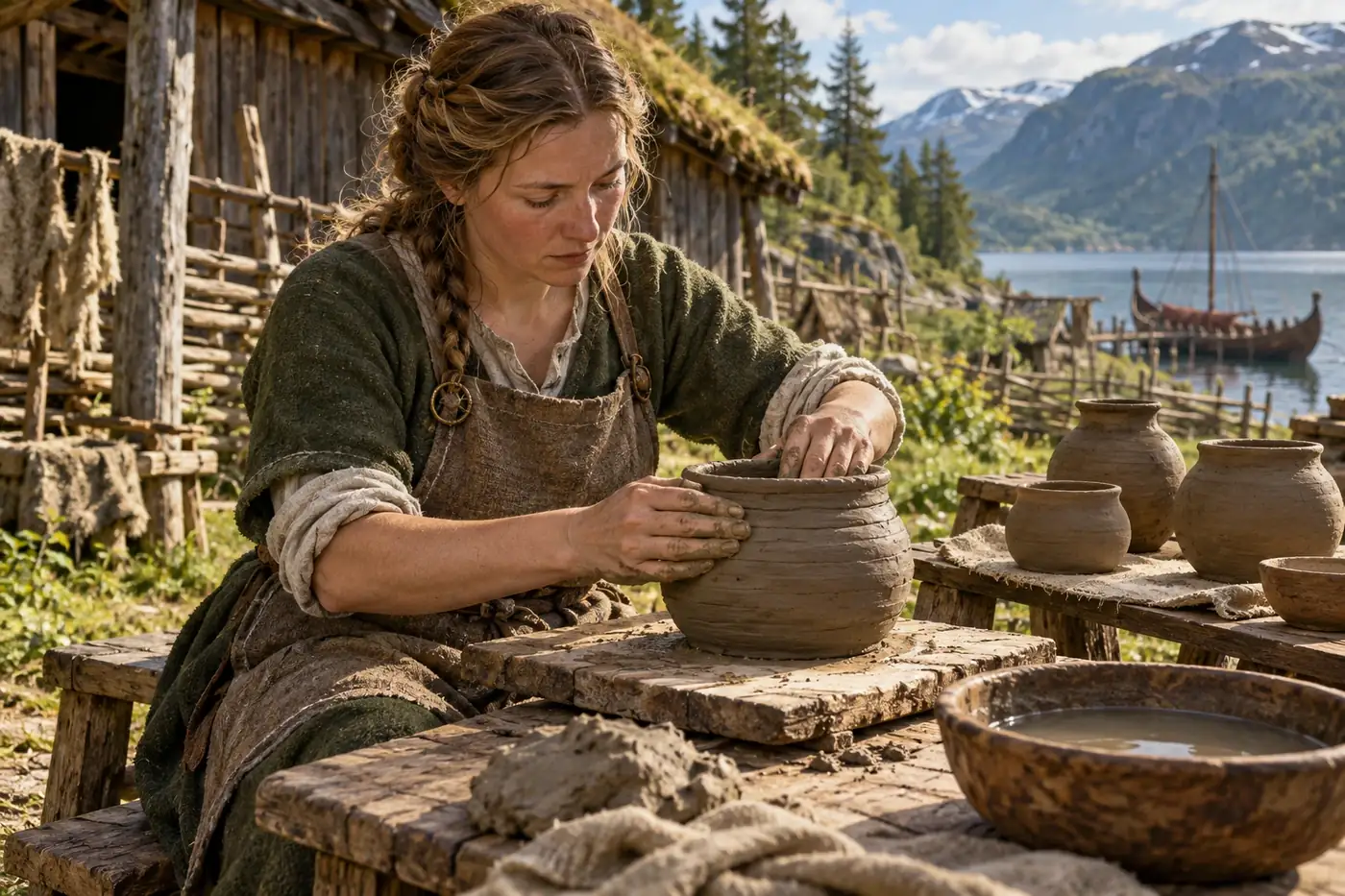
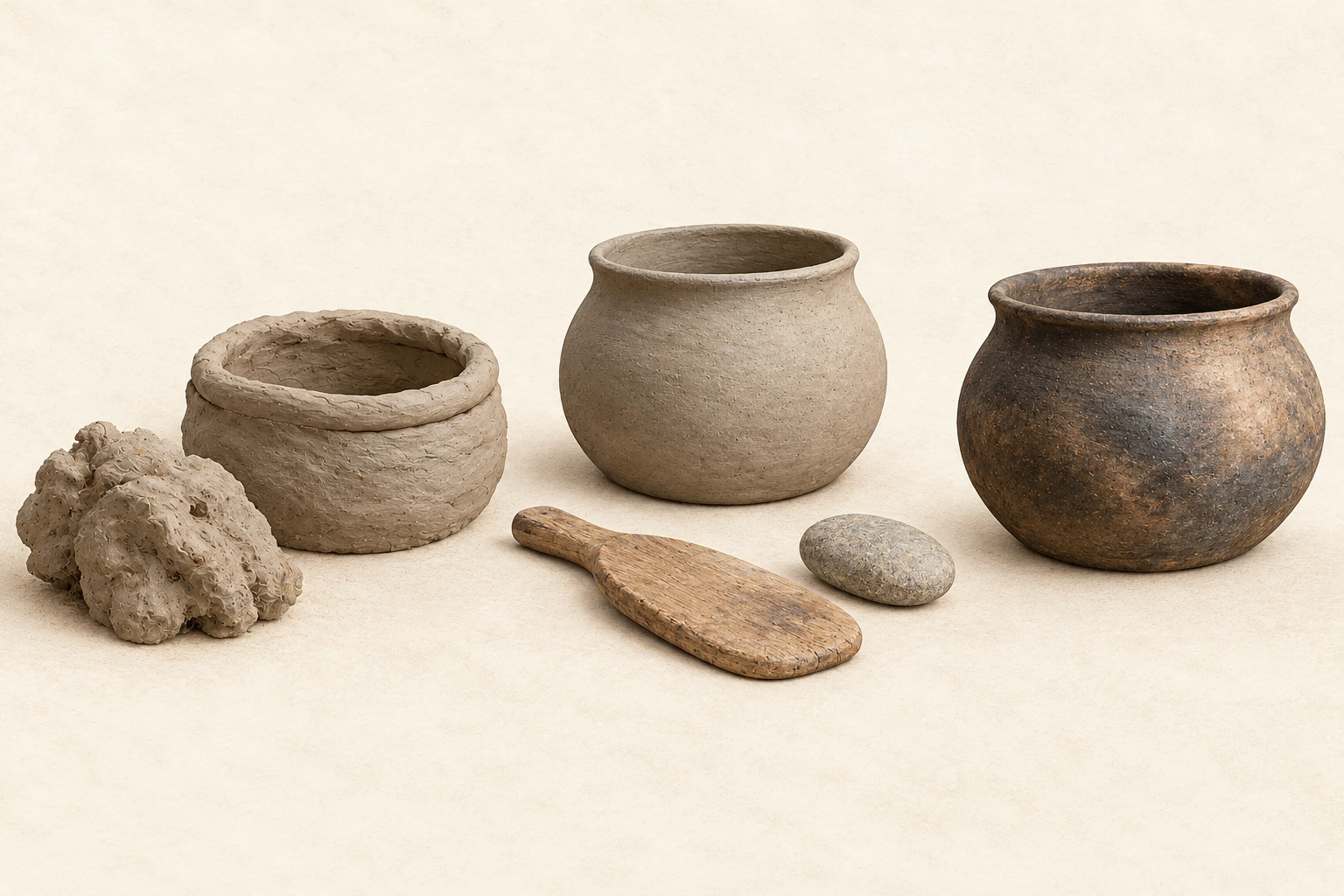
Hand building a pottery vessel from coils of clay. Modern interpretive illustration for Nordic Viking History; not a technical diagram or an exact reconstruction of a particular find.
Materials and tools: Suitable clay, shaping tools, drying space and a firing arrangement.
How the work proceeded
The potter formed and finished a vessel, allowed it to dry, and fired it to transform the clay into ceramic. Shaping, drying and firing were distinct stages.
Local hand-built vessels coexisted with imported products. A wheel-thrown pot found in Scandinavia need not have been made by a Scandinavian potter.
What the evidence tells us: The National Museum contrasts hand-made Scandinavian Viking-Age vessels with wheel-made imports from the Frankish world. Practices varied across the much wider Viking world. Neither a modern potter's wheel nor one firing technique should be inserted into every reconstruction.
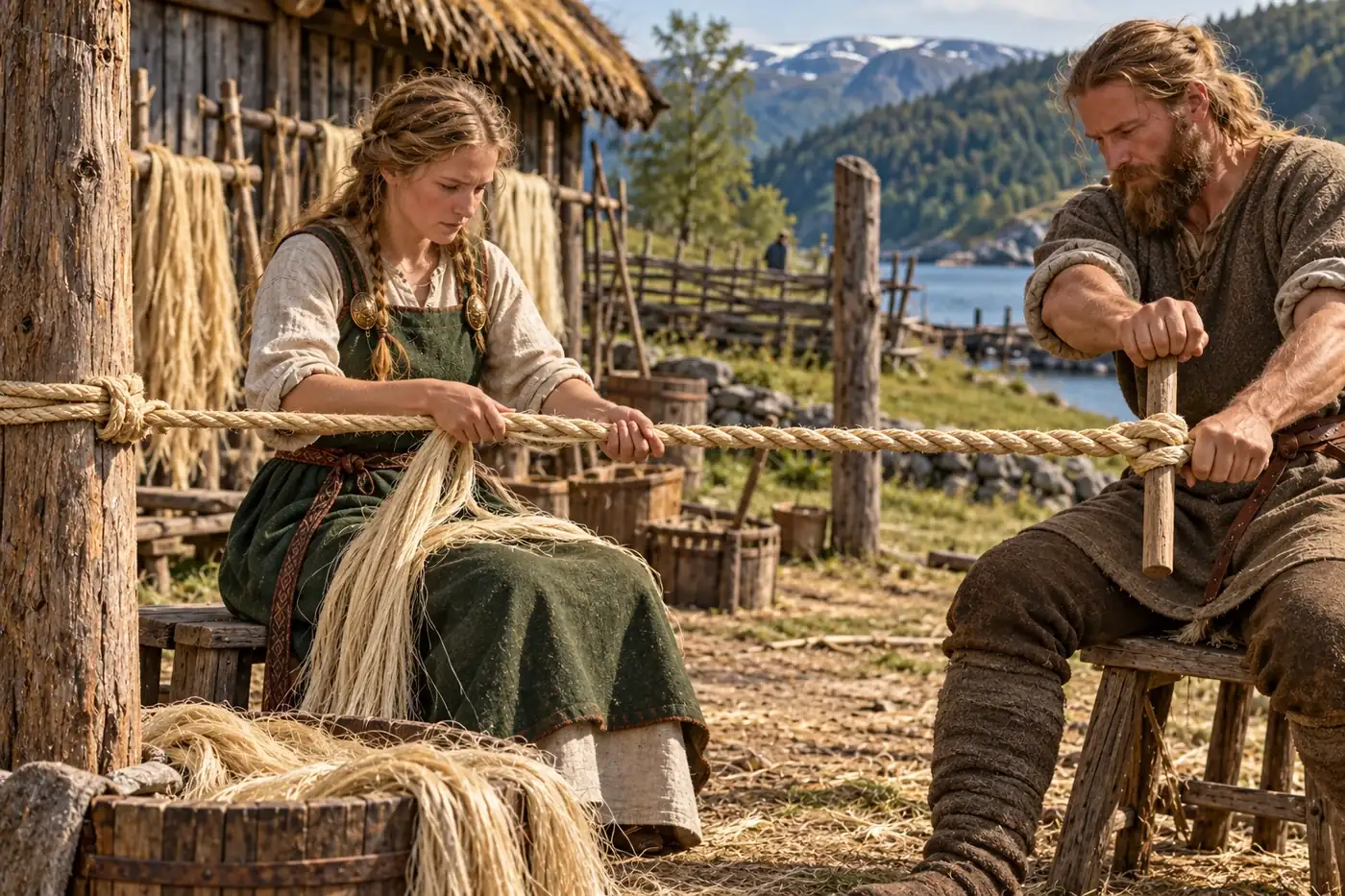
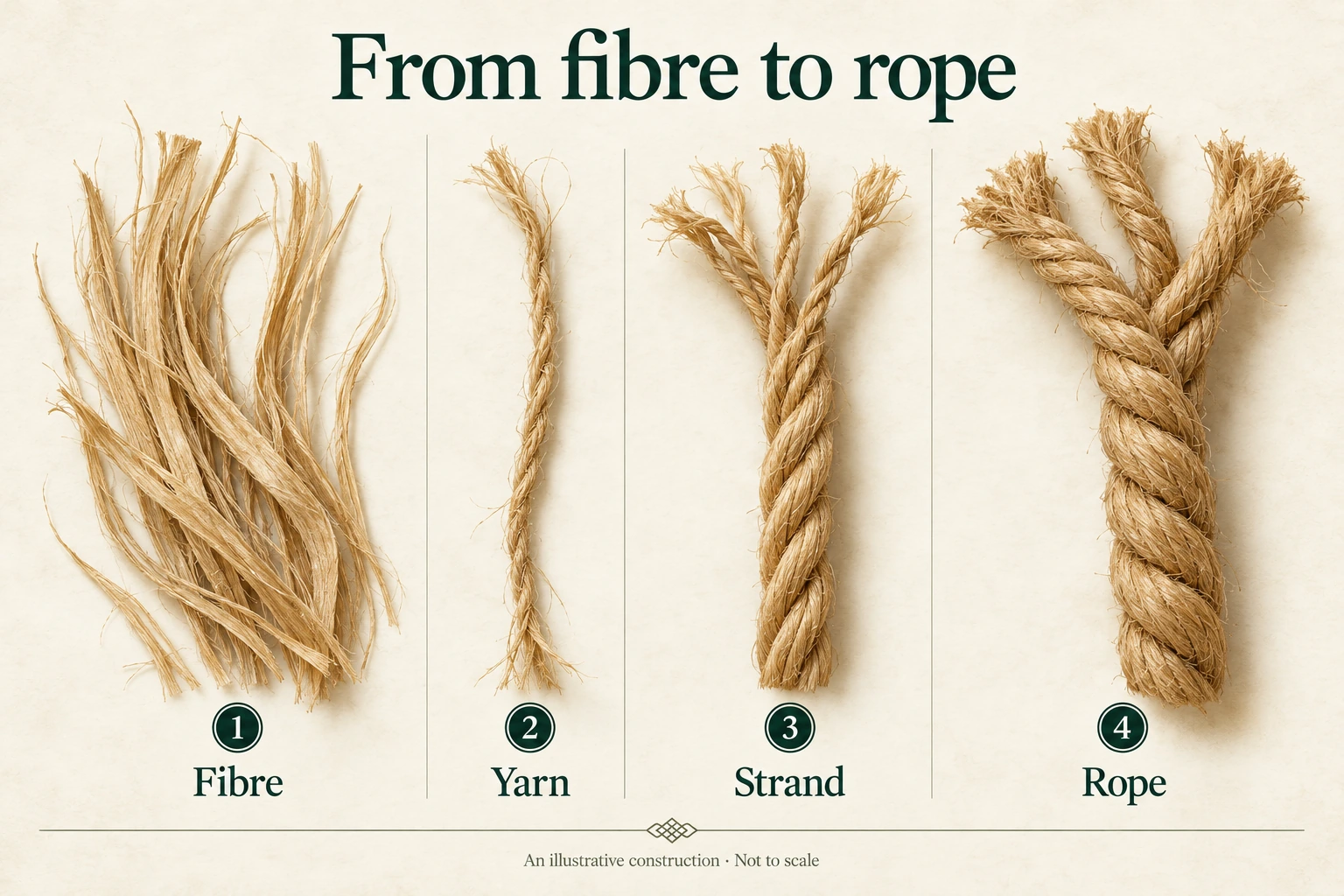
Twisting a rope with a wooden stick at its free end while the other end is fastened to a post. Modern interpretive illustration for Nordic Viking History; not a technical diagram or an exact reconstruction of a particular find.
Materials and tools: Prepared fibers or other suitable strands, space to lay them together and control of twist.
How the work proceeded
Individual elements were twisted and combined to produce a stronger cord or rope. Its size and construction depended on its intended load and use.
Rigging required attention to wear, attachments and replacement. Making a rope was only the beginning of keeping it serviceable.
What the evidence tells us: The Viking Ship Museum identifies lime bast as an important Viking-Age rope material, alongside other plant and animal materials. It explicitly notes that definitive evidence for Viking-Age hemp-rope production is lacking. Hemp used on a modern replica is therefore not proof of the original ship's rope material.
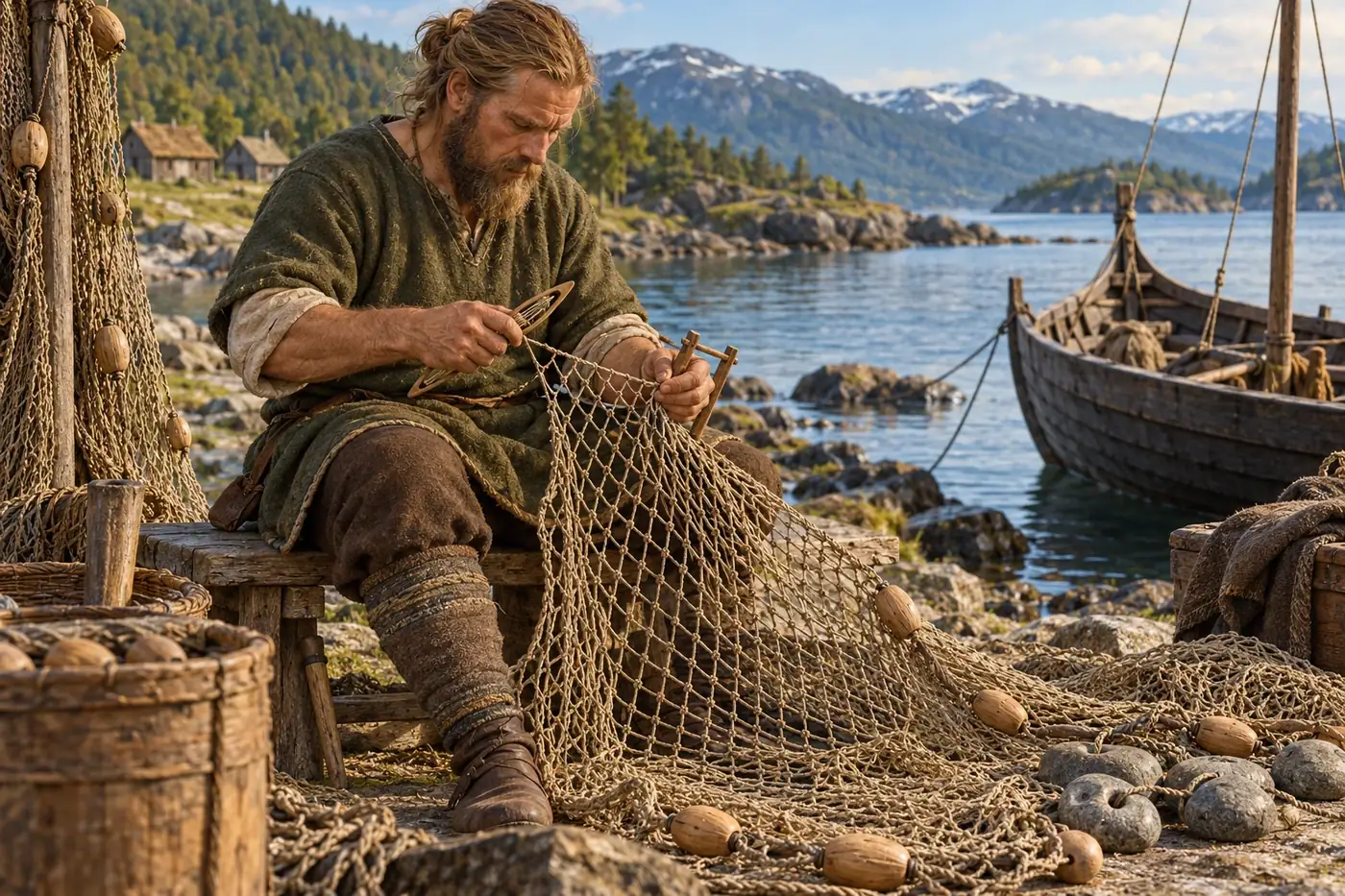
Working on a cord fishing net beside floats and stone weights. Modern interpretive illustration for Nordic Viking History; not a technical diagram or an exact reconstruction of a particular find.
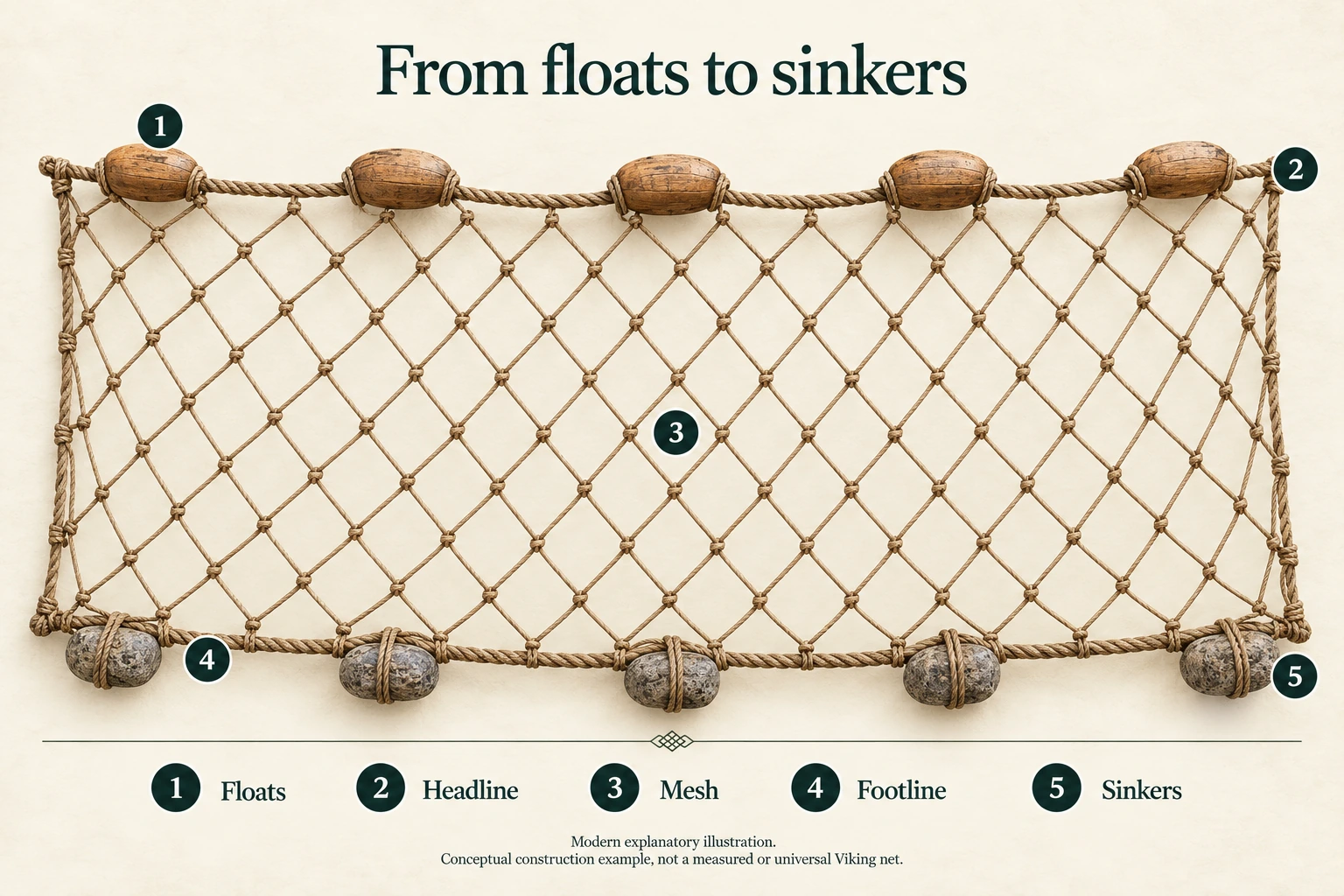
Materials and tools: Cord, a netting needle or shuttle, a mesh gauge, floats and weights where the net type required them.
How the work proceeded
A net maker built a repeating mesh, keeping the openings reasonably consistent. Netting tools helped manage the working cord and mesh size.
Floats and weights controlled how a net behaved in the water. Broken sections needed repair, and the choice of mesh affected what it could catch.
What the evidence tells us: Museum Nord emphasizes how rarely the nets themselves survive. Netting tools, floats and sinkers provide indirect evidence. Not every perforated weight belonged to a net; context matters. The sequence here is a general reconstruction, not a claim that one exact knot or fiber is documented for every region.
To watch modern practitioners, explore the Viking Ship Museum and Ribe VikingeCenter. Demonstrations interpret the past; their modern equipment and workshop routines need their own evaluation.
Sources checked October 18, 2026. Regional differences and uncertain processes are identified above.