Built for different journeys.
Ships & Seafaring
Meet cargo vessels, warships and working boats. Follow the materials, skills and decisions that made travel by water possible.
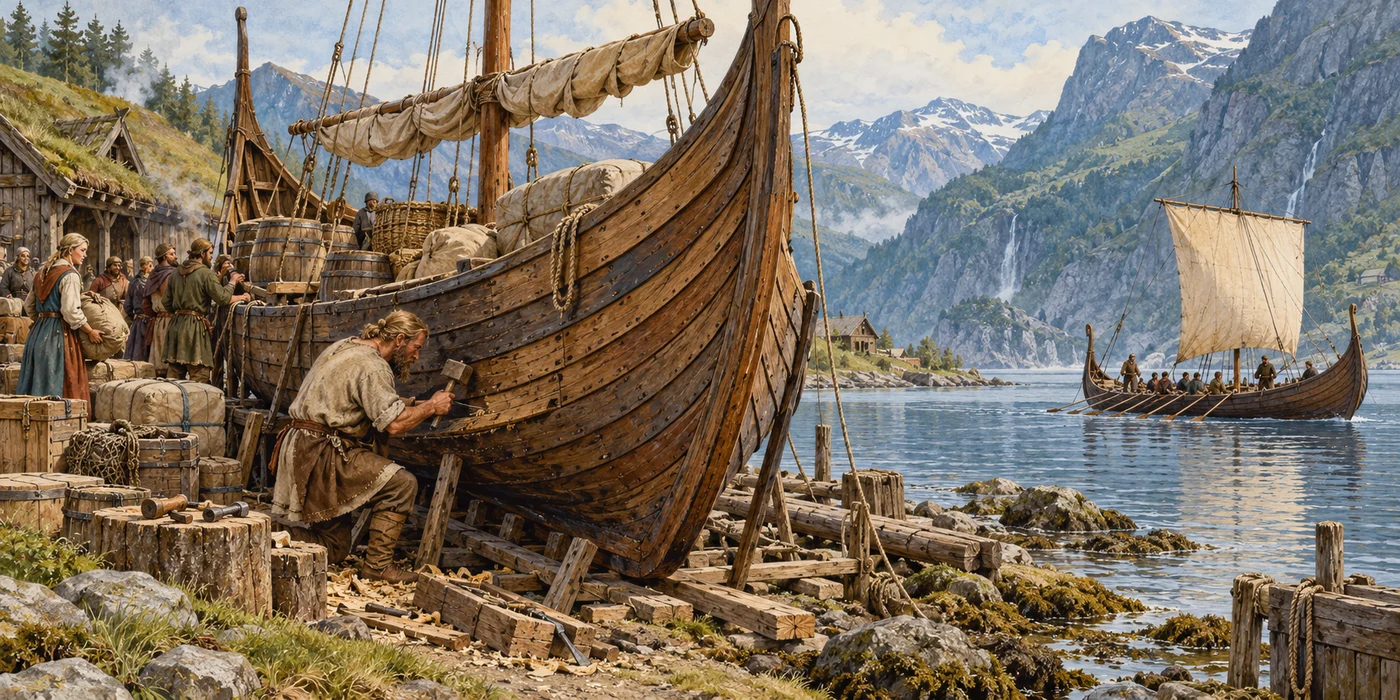
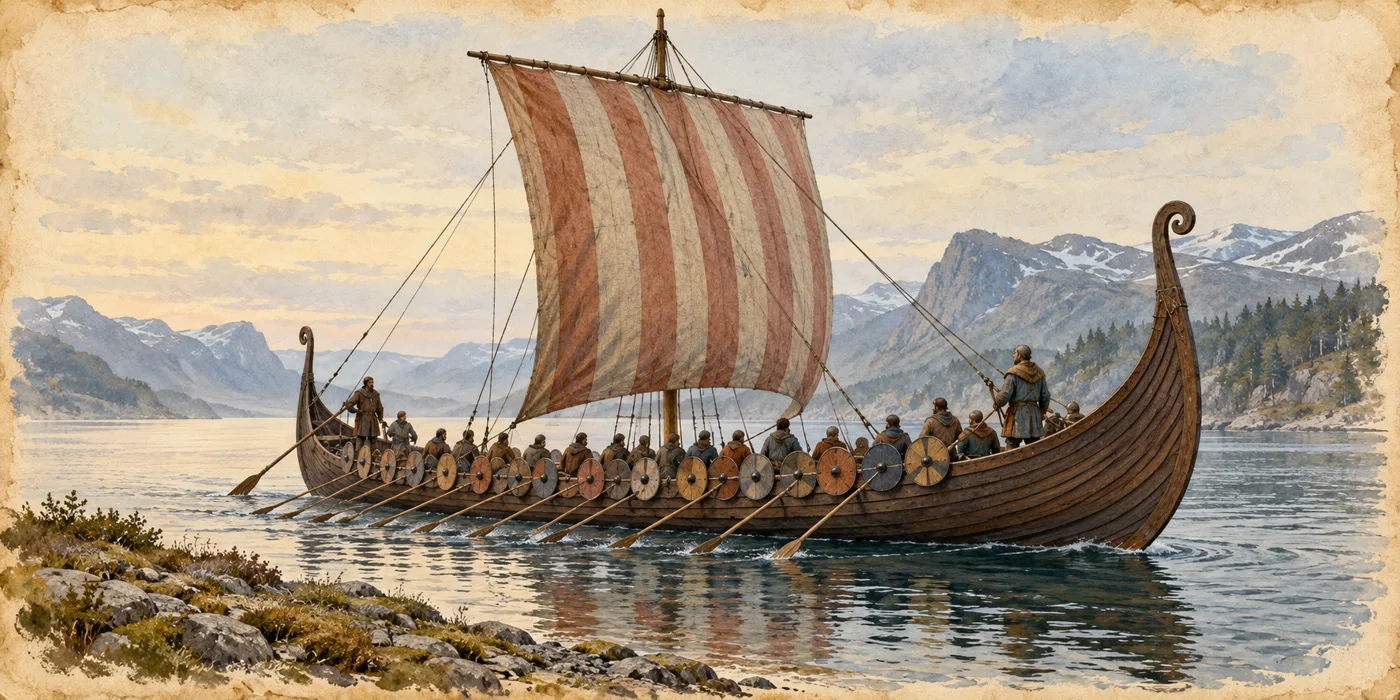
Not every Viking ship was a longship
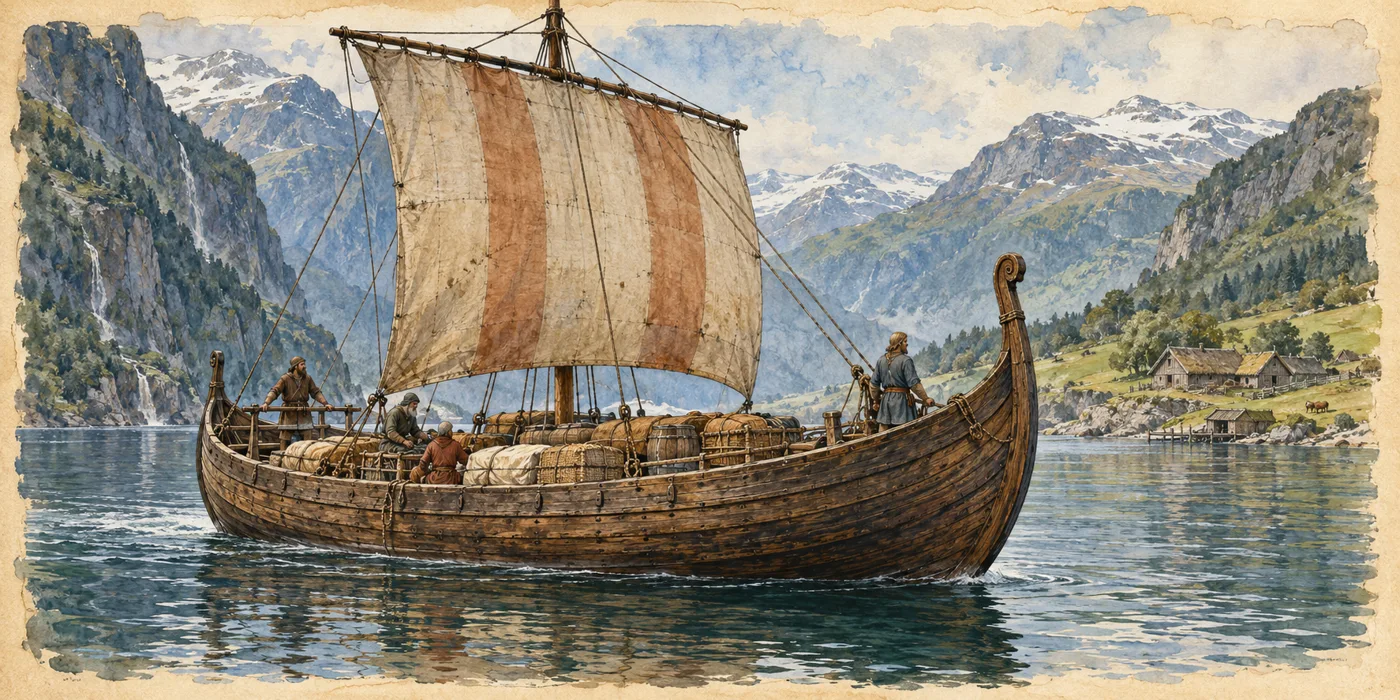
The ships found at Skuldelev give a particularly useful introduction because they preserve different kinds of vessel. Some carried cargo; others carried armed crews. A boat suited to fishing along a coast did not need the same dimensions or arrangements as a vessel intended for a large fighting force.
“Viking ship” is therefore a broad historical description, not a single design. A slim warship can communicate speed and power in a modern illustration, but it should not stand in for every trading journey. Hull shape, capacity, propulsion and intended waters need to be considered together.
| Ship | Archaeological example | Main role |
|---|---|---|
| Ocean-going cargo vessel | Skuldelev 1 | Cargo capacity and seagoing transport |
| Large warship | Skuldelev 2 | A substantial armed crew |
| Coastal trading vessel | Skuldelev 3 | Transport in coastal waters |
| Smaller warship | Skuldelev 5 | An armed crew on a smaller vessel |
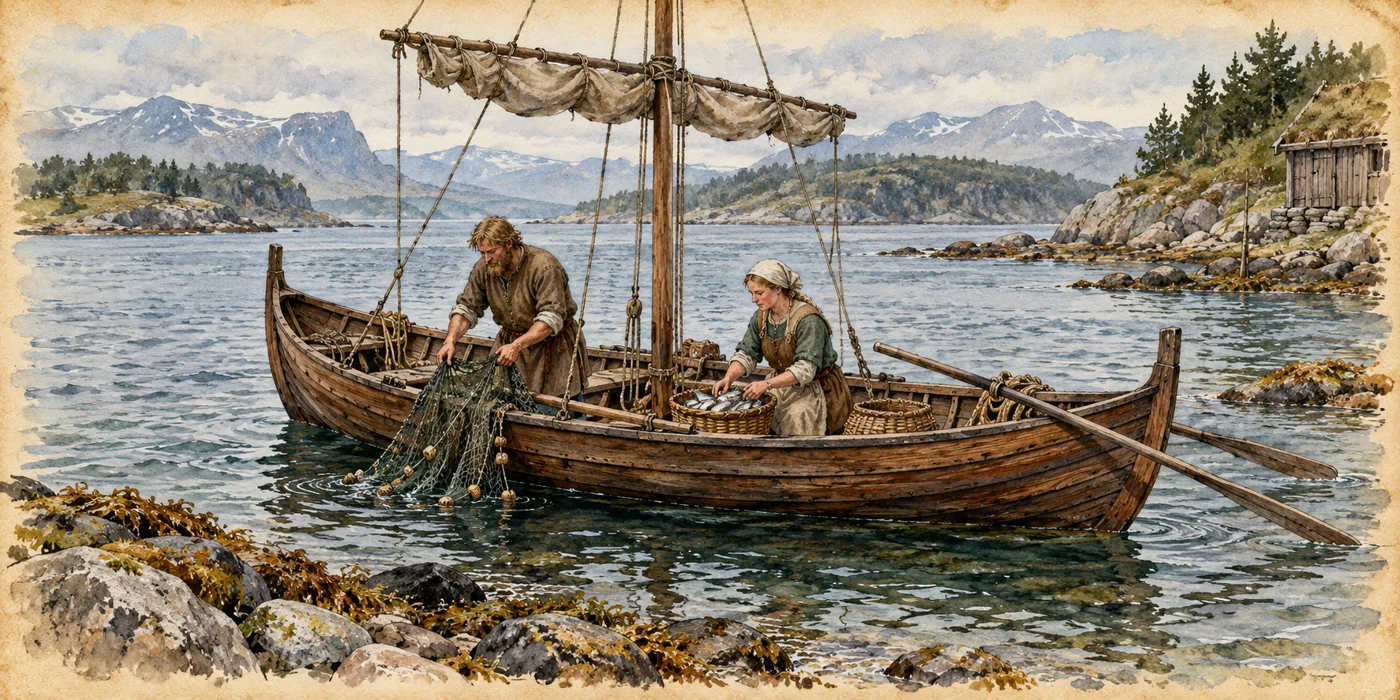
| Working boat | Skuldelev 6 | Originally a fishing boat, later altered |
How a clinker-built hull works
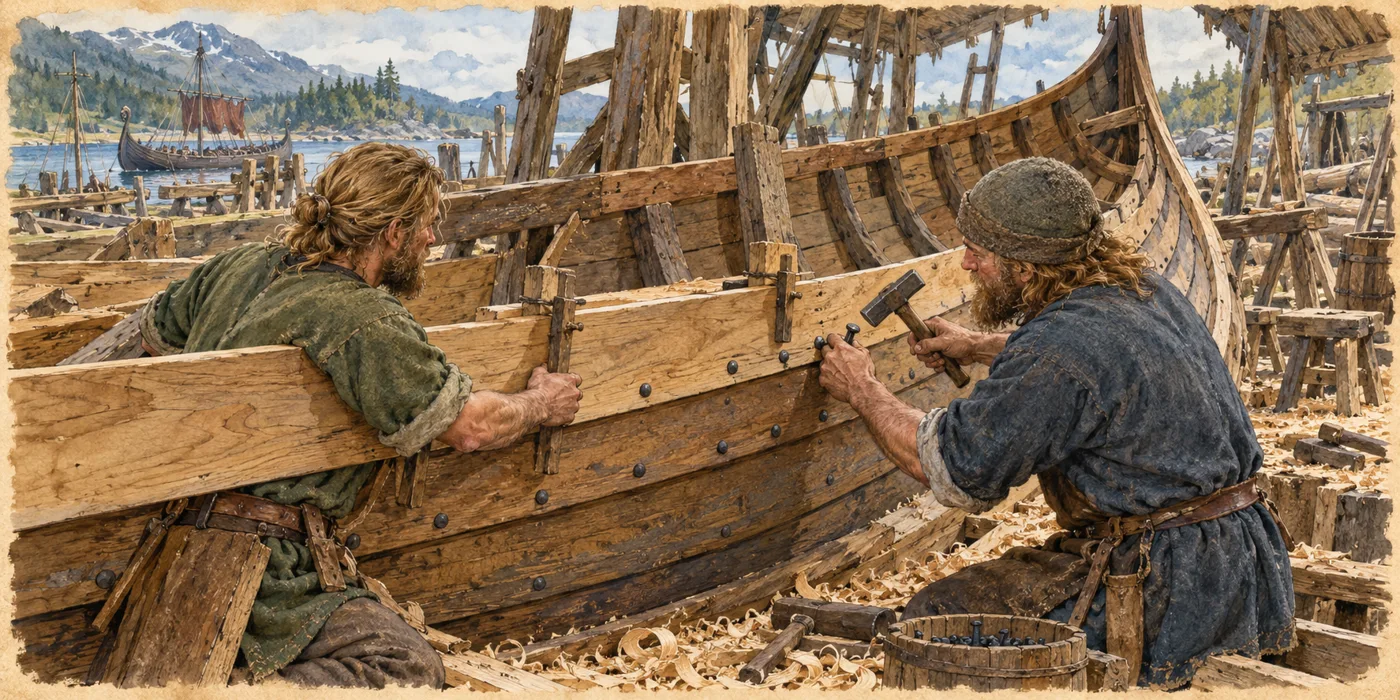
In clinker construction, neighbouring planks overlap. The keel, planking, frames and fastenings work together rather than forming independent decorative features. Shipbuilders selected and shaped timber with attention to its natural properties; splitting wood along its fibres was part of that craft.
The result could be a strong, relatively light hull, but there was no single unchanging construction recipe. Repairs and local choices leave their own traces. A surviving ship is evidence for an individual object with a history, not a perfect blueprint for every vessel built in its century.
Learn the parts before the legends
The keel runs along the bottom of the hull. Strakes are rows of planking; frames support the hull internally. The mast carries the sail arrangement, while rigging allows a crew to control it. A side-mounted steering oar is different from the central stern rudder familiar on many later ships.
Oars and a square sail offered different possibilities. Sailing depended on wind, trim and seamanship; rowing depended on crew and endurance. A square sail did not simply mean drifting helplessly downwind, but the performance of any particular vessel must be assessed with its hull, sail and conditions in mind.
Evidence: Viking Ship Museum — construction, sails and rope · Viking Ship Museum — knowledge of sailing
Sails, ropes and everything carried aboard
A hull was only part of the investment. Making sailcloth required fibre preparation, spinning and weaving; rope-making also demanded materials, labour and expertise. Wool and flax are important to discussion of sails, while the evidence for exact combinations and treatments varies.
Cargo, ballast, water, equipment and people all affected the vessel. Loading was not just a question of finding an empty space: distribution mattered to stability and handling. Repair skills could be vital far from a shipyard, where replacing a damaged part might determine whether a journey continued.
Evidence: Viking Ship Museum — construction, sails and rope · Viking Ship Museum — knowledge of sailing
Sun compasses and sunstones: possibility is not proof
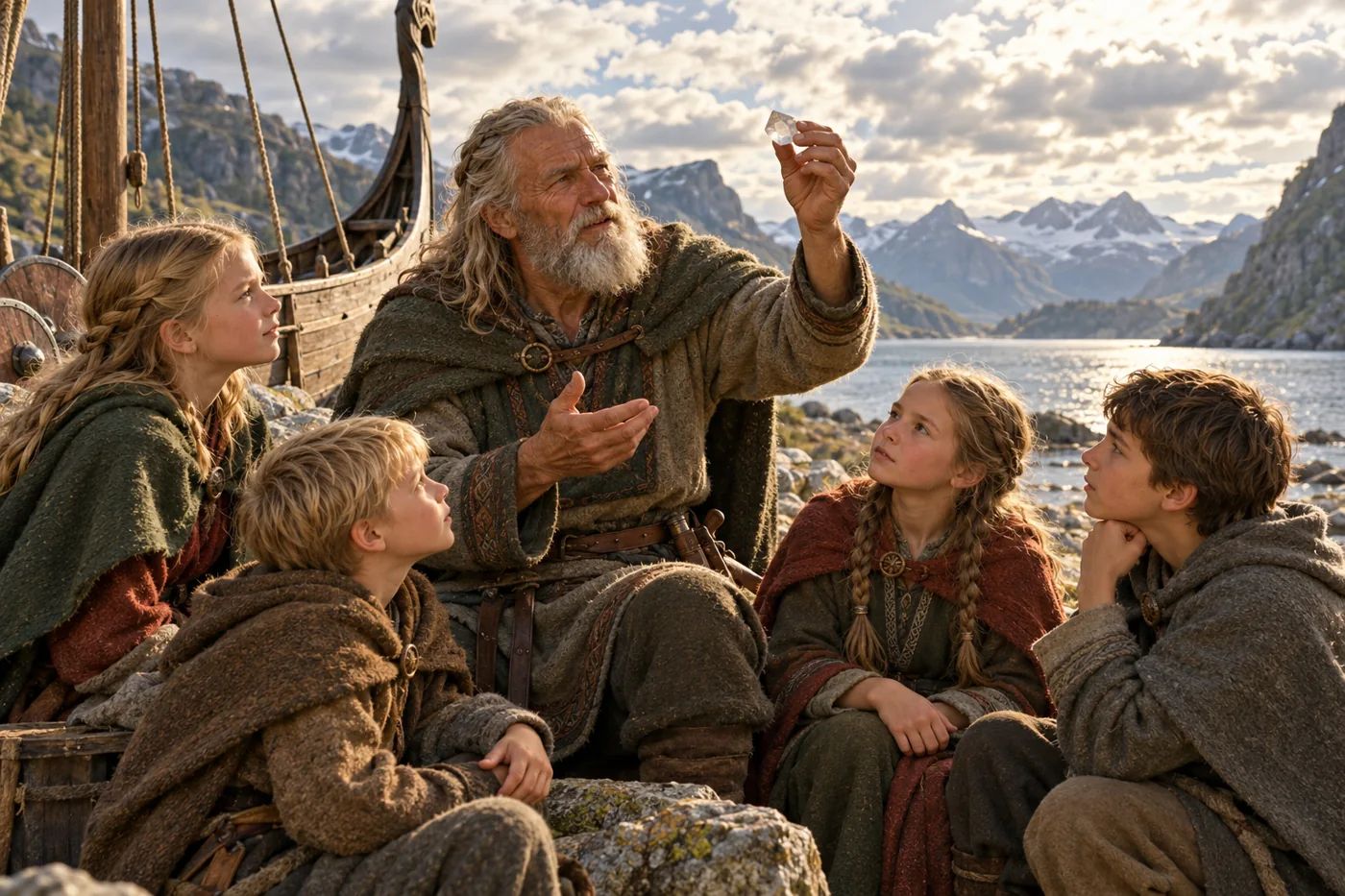
Suggested sun-compass finds and proposed uses of polarising crystals have attracted considerable interest. Experiments can ask whether a technique works under specified conditions. That is a different question from whether Viking crews routinely used it.
The archaeological and textual record is limited. An object’s interpretation may be disputed, and a later written reference cannot automatically equip every earlier ship. Present these ideas as hypotheses with evidence to examine, rather than as standard instruments carried by all navigators.
What reconstruction voyages can teach
Reconstructed vessels let researchers and skilled crews investigate handling, materials and cooperation. They can expose practical problems that are easy to miss when looking only at a museum hull. Their value lies in making assumptions testable.
A reconstruction still involves choices where evidence is missing. Modern crews, safety requirements and equipment also shape an experiment. Good interpretation names those conditions instead of describing a modern voyage as a direct replay of an ancient one.
Evidence: Viking Ship Museum — the five Viking ships · Viking Ship Museum — construction, sails and rope · Viking Ship Museum — knowledge of sailing
Sources & further reading
Sources checked October 17, 2026. These are introductory guides; evidence and uncertainty are distinguished in each section.
A crystal and a question
The Viking Sunstone: experiments, optics and uncertain evidence →
Follow the making process
Explore 19 Viking crafts, from preparing fibers and sewing clothes to casting metal and making nets.
Keep exploring