
Journeys & Encounters · Introduction
The Skuldelev Ships: Traders, Warships, and a Fishing Boat
In Brief
There was no single design for every Viking ship. Five vessels recovered from Roskilde Fjord reveal how builders adapted their craft to cargo, fighting crews, and everyday work.
Roskilde Fjord, Denmark · Late Viking Age
On this page
Different boats for different jobsAn Irish-built longship in DenmarkOriginal timber and experimental shipsSourcesDifferent boats for different jobs
The Skuldelev ships ended their useful lives in a defensive barrier. Filled with stones and deliberately sunk, they helped control a route toward Roskilde. Their reuse brought together vessels built for very different purposes.
Skuldelev 1 was a substantial cargo carrier from western Norway, with a broad hull suited to carrying goods across open seas. Skuldelev 3 was a smaller trading vessel for coastal waters. Skuldelev 6 began as a fishing boat, while Skuldelev 2 and 5 were longships associated with warfare. Comparing them makes the difference between moving merchandise and carrying an armed crew immediately visible.
An Irish-built longship in Denmark
Skuldelev 2 offers an especially striking connection across the sea. Analysis of its timber places construction near Dublin around 1042. Its narrow hull, large sail, and sixty oars suited rapid movement with a large crew. The museum estimates a complement of approximately sixty-five to seventy people.
This is a useful reminder that Scandinavian shipbuilding traditions were practiced outside Scandinavia. The vessel links the Irish Sea world to a Danish fjord through physical timber, rather than only through a written account of travel.

Original timber and experimental ships
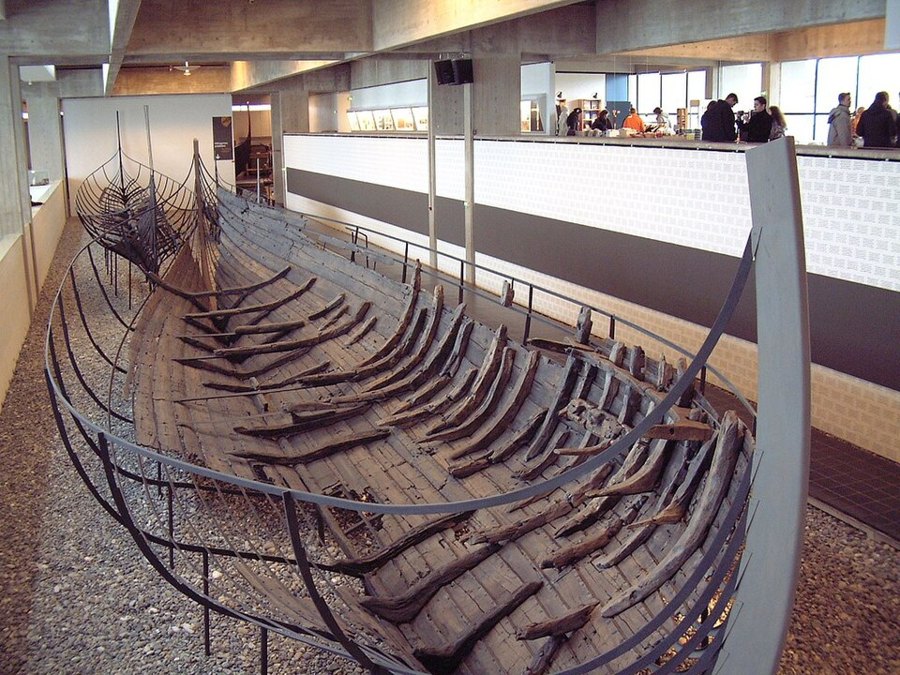
Only about a quarter of Skuldelev 2 survives. Archaeologists nevertheless recovered material from enough parts of the vessel to reconstruct much of its form. Its large size initially led investigators to think its remains belonged to two ships.
The Sea Stallion from Glendalough is a modern reconstruction of Skuldelev 2. It is not the archaeological ship itself. Reconstructions turn evidence into a vessel that can be sailed, but missing parts must still be interpreted. When comparing photographs, distinguish the surviving ancient timbers from the completed modern craft: each answers different questions about shipbuilding and seafaring.
The Evidence
The sources below support this article. Interpretations and limits are explained in the text; this is not an exhaustive research review.