Vikings, historical drama, and the worlds of Tolkien. Explore 31 productions and film series, meet their actors, and follow the stories back to history and literature.
Production and cast sources checked October 17, 2026. Commentary is our editorial interpretation. Selected casts are not complete credit lists.
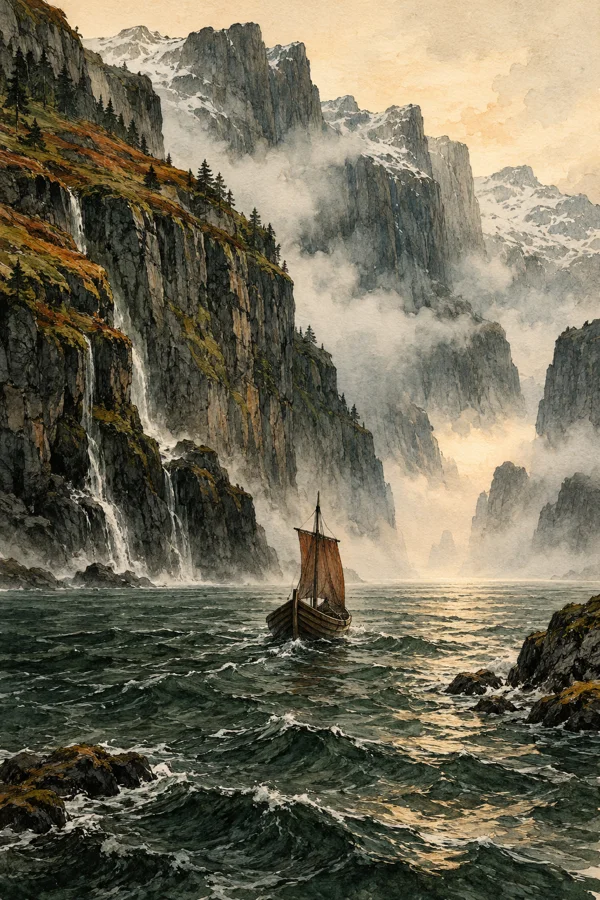
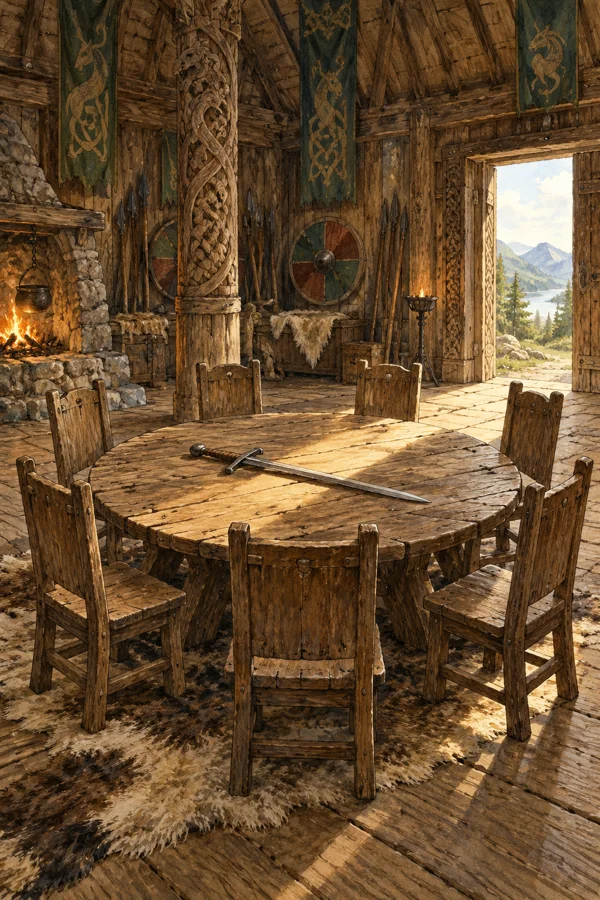
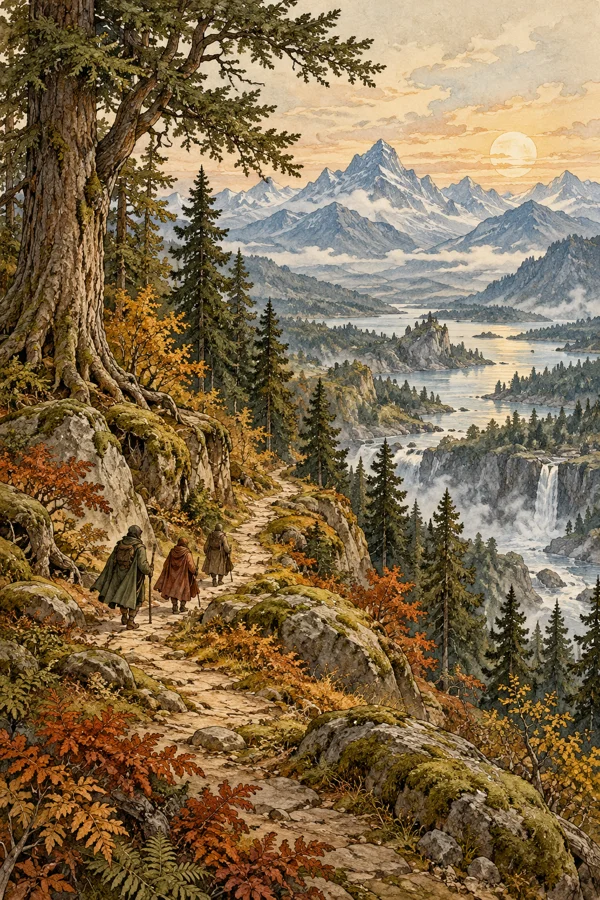
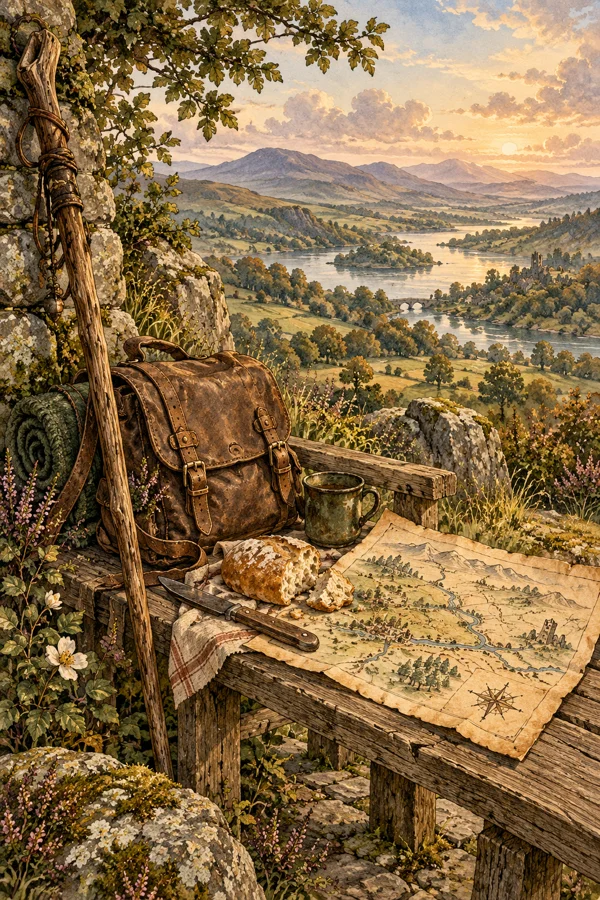
Original illustration bringing cinema and northern storytelling together.
Historical drama
Real settings with invented scenes and altered chronology.
Legend & comedy
Older stories or deliberate exaggeration reworked for the screen.
Fantasy
Invented worlds that may draw on earlier languages and literature.
31 entries to explore.
series
Television: time to enter a world
Different approaches to northern history, identity, and storytelling.
A family saga of ambition, voyages, rivalry, and power, centered first on Ragnar and then on the generations around him. The series is an accessible doorway into the imagery of the Viking world, but its storytelling moves freely between legendary material and historical settings.
What to look for
Watch how the drama uses ships, halls, feasts, and religious encounters to establish identity. Ask which details come from surviving evidence and which exist to make a character or conflict immediately readable on screen.
Where the evidence stops
Ragnar’s story belongs to a difficult mixture of legend and historical traditions. Relationships and meetings in the show are not a dependable timeline. A convincing costume or an actual place-name does not authenticate the scene around it.
A later chapter in the screen world of Vikings, following Leif Eriksson, Freydís, and Harald Sigurdsson amid changing kingdoms and religious conflict. Its early eleventh-century setting opens routes toward England and Constantinople as well as the North Atlantic.
What to look for
Use the different journeys as starting points for learning about travel networks. Constantinople was not a remote fantasy city: it was a major center of Byzantine power, known in Norse contexts as Miklagard.
Where the evidence stops
The production itself calls this historical fiction. Character arcs, encounters, and compressed events serve a drama; they should be checked separately against evidence for Leif, Harald, and conversion. It is not a documentary continuation of the original series.
TV series · Adapted from Bernard Cornwell’s The Saxon Stories
Uhtred’s divided loyalties lead viewers through a world of competing rulers, households, and identities in early medieval England. The series puts the relationship between Saxon and Danish communities at the center of a personal story about belonging and power.
What to look for
Notice that allegiance is negotiated rather than automatic. Family, faith, land, and service can pull a character in different directions. This offers a useful prompt for investigating the complexity behind simple labels such as Saxon and Dane.
Where the evidence stops
The central adventure is adapted from historical novels. Uhtred’s role in events must not be treated as the biography of a securely documented Viking-Age participant. The real political background and the invented narrative require different kinds of reading.
TV series · Created by Jon Iver Helgaker and Jonas Torgersen
Life in the fictional community of Norheim becomes a setting for dark comedy. The joke often comes from the collision between a violent historical-looking environment and attitudes that feel recognizably modern.
What to look for
The comedy exposes how familiar the screen Viking has become: viewers recognize the chief, the warrior, the raid, and the feast before the joke starts. Consider which expectations the series relies on and which it overturns.
Where the evidence stops
Its anachronisms are part of the method. Dialogue, workplace-like disputes, and social situations are not evidence for Viking-Age behavior. Dark humor also does not make the underlying subjects of violence and enslavement suitable for every audience.
The young Thorfinn enters a mercenary world after his father’s death, giving the series a deeply personal route into violence and revenge. This animated adaptation brings a different visual language to a northern historical setting. It belongs alongside live-action dramas as another way modern audiences encounter familiar place-names, conflicts, and ideals through fiction.
What to look for
Watch how movement, stillness, and a character’s changing ambitions shape the meaning of a fight. Animation can make physical action unusually expressive. Compare that dramatic language with the slower historical questions of work, dependence, travel, and life beyond a warrior’s immediate goals.
Where the evidence stops
The series is adapted from manga, not directly from an excavated or written biography. Its characters and chronology combine invention with historical reference. The cast listed here is the Japanese voice cast; dubbed editions use different performers, and availability varies by region.
A Norwegian town facing pollution and environmental strain becomes the setting for a modern story inspired by northern myth. David Stakston and Herman Tømmeraas are among its cast. The series moves the conversation away from historical costume and asks how inherited names, powers, and conflicts can speak to a contemporary community and its anxieties.
What to look for
Notice what changes when a mythic struggle takes place among schools, families, and modern industry. Familiar supernatural themes can organize present-day concerns without recreating a medieval narrative. Compare the adaptation’s environmental emphasis with the different questions posed by the older texts.
Where the evidence stops
This series is set in a modern fictional world. It does not document Viking beliefs or establish what any ancient community expected from Ragnarök. Its use of myth belongs to contemporary storytelling, and its interpretation should remain distinct from the source traditions.
A fantasy community of humans and extraordinary creatures expands the Beowulf name into a television world. Kieran Bew plays the central hero, with Ed Speleers as Slean. Compared with a single film, the series has room to spread its attention across political relationships, personal rivalries, and the everyday pressures of an invented frontier society.
What to look for
Ask how the longer format changes the hero’s importance. Supporting characters can acquire motives and loyalties that do not fit a simple monster-slaying tale. Compare the fictional community with the much more limited information provided by a poem or archaeological site.
Where the evidence stops
The Shieldlands are a fantasy setting, not an archaeological region of Viking Scandinavia. The series expands far beyond a direct adaptation of the poem. Its buildings, creatures, and political institutions therefore need to be read as world-building choices, not reconstructed historical evidence.
Actors & characters (2)
Selected cast · Beowulf: Return to the Shieldlands
A revenge story built around the prince Amleth, whose family is torn apart by murder and betrayal. The film places ritual, fate, kinship, and a violent pursuit of vengeance at the center of its imagined Viking world.
What to look for
The material world and the characters’ experience of the supernatural deserve separate attention. A film can draw carefully on objects and research while still presenting visions and ritual meanings through a modern dramatic interpretation.
Where the evidence stops
Amleth’s revenge is legendary material, not an excavated biography. The film’s intensity should not turn one exceptional story into a model for ordinary life. Most historical questions about food, work, childhood, or households need other kinds of evidence.
An outsider joins a group of northern warriors on a dangerous journey. Antonio Banderas plays Ahmed, whose unfamiliarity with his companions provides a way for the audience to enter their world.
What to look for
The outsider viewpoint is a useful question to carry into real sources: what does a traveler notice, misunderstand, or choose to describe? Dramatic scenes of language learning and cultural encounter are storytelling devices, not records of how an actual meeting unfolded.
Where the evidence stops
The adventure is fiction. Do not use its battles or dialogue as evidence for the historical Ibn Fadlan or for the people he encountered. Start again with the surviving account, its context, and the limits of translation when moving from the film into history.
Film · 2009 (BFI catalog date) · Directed by Nicolas Winding Refn
A largely silent warrior and a boy embark on a journey through a harsh, disorienting world. Mads Mikkelsen leads a film in which atmosphere, images, and uncertainty are more important than a conventional explanation of events.
What to look for
This is a useful contrast with sprawling television sagas. Rather than providing a detailed social world, the film invites interpretation of violence, belief, landscape, and the unknown. Different readings of its imagery are possible.
Where the evidence stops
An ambiguous destination is not evidence of a particular historical voyage. Neither its title nor its northern imagery makes it a guide to what Viking-Age people believed about Valhalla. Release-year listings differ; BFI catalogs it under 2009, while the British Council lists 2010.
The Last Kingdom: Seven Kings Must DieOriginal thematic illustration · not a film stillOfficial trailer · Netflix ↗
Historical drama
The Last Kingdom: Seven Kings Must Die
Film · A continuation of The Last Kingdom
Uhtred and his companions return in a feature-length continuation of the series, with the struggle over England’s future providing the political background. It works best as a continuation for viewers already familiar with the characters.
What to look for
Notice how a film condenses an extended political process into a small group of personal decisions. This makes a strong narrative, but it can make the creation of a kingdom seem more inevitable and more dependent on a single hero than the evidence allows.
Where the evidence stops
Treat the screen narrative and the historical development of England separately. A concluding film offers closure to fictional character arcs; that is different from explaining every regional interest, alliance, and consequence in the historical record.
Actors & characters (4)
Selected cast · The Last Kingdom: Seven Kings Must Die
A large-scale adventure turns rivalry, kinship, captivity, and seaborne warfare into spectacular cinema. Kirk Douglas and Tony Curtis lead a story in which personal loyalties matter as much as royal ambition. Its fjords and longships helped establish a durable screen image of the Viking world, making it a useful companion to much later television interpretations.
What to look for
Compare its visual storytelling with modern Viking drama: the ship, the warrior, and the threatened royal household remain immediately recognizable. Ask which features communicate adventure efficiently and which invite a closer look at archaeological and written evidence.
Where the evidence stops
This is entertainment built around an invented dramatic narrative. Norwegian scenery does not authenticate costumes, customs, or character relationships. Read its imagery as part of twentieth-century film history before using it to form expectations about the ninth or tenth century.
A search for an extraordinary golden bell carries rival adventurers beyond northern waters. Richard Widmark and Sidney Poitier anchor a colorful maritime tale of treasure, rivalry, and unlikely cooperation. It is a lively example of the broad adventure tradition in which a Viking ship can become a vehicle for almost any distant quest.
What to look for
Watch how the voyage connects unfamiliar shores through a single prized object. Real northern travel also crossed cultural boundaries, but the screen turns that complicated movement into a race for treasure with clear opponents and immediate stakes.
Where the evidence stops
The treasure hunt is fiction, not evidence for a documented expedition. Treat the film’s representation of northern and Muslim societies critically: dramatic stereotypes and production-era assumptions can shape an encounter as strongly as historical research.
Alfred provides a royal viewpoint on the struggles of early medieval England. This older screen treatment offers a useful comparison with the much longer storytelling space of The Last Kingdom. Put the films side by side to see how different productions build a ruler’s identity through conflict, leadership, and the responsibilities of kingship.
What to look for
Consider whose perspective organizes the action. A story centered on an English king frames northern forces differently from a saga centered on a Scandinavian household. Neither viewpoint automatically gives access to the experiences of ordinary people caught between rulers.
Where the evidence stops
A historical name does not make every conversation or motive recoverable fact. Separate the attested political setting from the screenplay’s psychological portrait. Archaeology and contemporary texts should determine the historical discussion, even when a performance makes an interpretation feel persuasive.
Terry Jones approaches the screen Viking through comic fantasy rather than sober reconstruction. Tim Robbins leads an adventure that makes northern legend a setting for absurdity and conflicting expectations. It belongs beside Norsemen as a reminder that Viking imagery can support jokes, social observation, and deliberate disruption as readily as solemn warrior spectacle.
What to look for
Look for the assumptions a joke needs its audience to recognize. The familiar expedition, the imposing warrior, and the extraordinary destination become opportunities to question heroic behavior rather than simply celebrate it. Comedy can reveal how stereotypes work.
Where the evidence stops
Comic mythology is a modern rearrangement of stories. Neither the title nor the presence of recognizable northern themes makes the plot a surviving myth. Check medieval texts separately and avoid treating humorous dialogue as a record of belief or behavior.
A digitally realized heroic world places Beowulf’s struggle with Grendel and his mother at the center of an ambitious adaptation. Ray Winstone and Anthony Hopkins are among the performers behind its characters. The film offers a particularly clear opportunity to compare an older poem with a modern screenplay that reshapes motivation, relationships, and consequences.
What to look for
Observe the hall as a place where public celebration and vulnerability meet. Compare how the adaptation stages reputation and heroic obligation with your reading of the poem, keeping the film’s visual effects and narrative additions in their own category.
Where the evidence stops
Beowulf is an Old English poem, not a documentary of Viking life. Its legendary Scandinavian setting should not collapse distinct periods into one generic northern past. This adaptation also makes substantial storytelling choices that are not a straightforward rendering of the poem.
This interpretation of the Beowulf story takes a different route from a polished heroic pageant. Gerard Butler and Sarah Polley are among the cast in a film loosely adapted from the older poem. Pair it with another Beowulf adaptation to explore how one inherited conflict can generate very different questions about violence and the outsider.
What to look for
Pay attention to the relationship between landscape and moral judgment. A threatening environment can make a character seem monstrous before the story has established what happened. Ask how sympathy changes as the adaptation selects its viewpoint and reveals information.
Where the evidence stops
The film is a modern literary interpretation. Its imagined explanations for violence cannot be used as missing historical facts, and its treatment of a legendary monster should not become an anthropological account of a real northern community.
Karl Urban and Moon Bloodgood lead an action film imagining a violent encounter between northern newcomers and Indigenous people in North America. Its value for this guide is primarily comparative: it shows how a real topic, transatlantic contact, can become the framework for a highly stylized adventure with its own invented hero and conflicts.
What to look for
Examine who receives a voice and who becomes a threatening group in the background. The framing of Indigenous characters, landscapes, and belonging matters as much as the appearance of the arriving warriors. Compare the adventure’s assumptions with carefully contextualized historical evidence.
Where the evidence stops
The plot is not an account of the excavated Norse presence in Newfoundland. Do not infer weapons, Indigenous identities, routes, or particular battles from the film. Archaeology establishes a much narrower body of evidence than this action narrative suggests.
Northern warriors meet a monster-story framework in a science-fiction adventure starring James Caviezel and John Hurt. This is the 2008 feature, not the later television series with the same name. Its mixture of genres makes it useful for exploring how easily a historical-looking settlement can become the stage for an entirely invented threat.
What to look for
Notice how the arrival of an unfamiliar danger organizes the community. A hall, a weapon, or a boat may signal an old northern world while the narrative follows conventions shared with science fiction and creature films. Recognizing that mixture improves comparison.
Where the evidence stops
The science-fiction premise makes this unsuitable as a reconstruction of Viking-Age events. Treat material details as production design unless independently verified. Its creature violence and frightening imagery also make the title distinct from a family introduction to northern history.
A storm leaves a group of northern raiders stranded on the Scottish coast, turning their expedition into a struggle to escape. Tom Hopper plays their leader, while Charlie Murphy plays the woman they take captive. The production follows the energy of pursuit and survival rather than offering a broad picture of northern society.
What to look for
Watch how a failed voyage changes the story’s scale: a sea route becomes a land journey, and strangers must negotiate danger in an unfamiliar setting. This can prompt useful questions about real supplies, local knowledge, and the limits of mobility.
Where the evidence stops
The official synopsis describes an invented adventure. Its route, enemies, and captive relationship should not stand in for documented Scottish history. A dramatic reference to the Danelaw is a starting point for checking geography, not proof that the journey is historically plausible.
Two protectors carry an infant royal heir through a dangerous, snowy landscape while rival factions threaten his future. Nils Gaup’s film offers a compelling comparison with Viking screen adventures because it combines northern terrain, loyalty, and royal conflict in a later medieval setting. Its place here is a bridge beyond the Viking Age.
What to look for
Consider the practical importance of terrain and the political importance of protecting a child. A succession dispute can mobilize entire networks of service and loyalty, while a mountain crossing reduces survival to immediate decisions about movement and shelter.
Where the evidence stops
This is medieval Norway after the Viking Age, not another account of a Viking raid. The historical background does not authenticate each chase or conversation. Keep the film’s period clearly separate when comparing its clothing, political institutions, and Christian setting with earlier centuries.
A survivor of a raid returns to Iceland seeking revenge against the men responsible. Hrafn Gunnlaugsson’s film brings the northern revenge story into a landscape where patience, deception, and personal memory drive the conflict. It offers a useful counterpoint to productions that build their Viking world mainly through large fleets and royal spectacle.
What to look for
Watch how suspense can depend on concealment rather than open battle. The difference between public reputation and private intention opens questions about feud and justice, while the landscape gives the story a distinct sense of distance and isolation.
Where the evidence stops
This is a modern revenge film rather than an eyewitness account of settlement Iceland. Connections with saga storytelling do not authenticate every custom or action. Keep its cinematic handling of violence separate from the evidence for law, kinship, and social negotiation.
Love, kinship, and revenge collide in an Icelandic drama set in 1077. Its festival description places saga traditions, Tristan and Isolde, and the influence of westerns in the same creative conversation. This makes the film an especially useful example of a northern setting shaped by several different literary and cinematic traditions.
What to look for
Consider how conversion changes the language of authority without necessarily ending conflict. Also notice how a filmmaker can borrow a familiar romantic pattern and make it feel local through landscape, household relations, and the particular pressures placed on its characters.
Where the evidence stops
The setting belongs to a late eleventh-century Christian society, while the plot blends multiple storytelling traditions. Do not use it as a direct rendering of a single saga or as evidence that all Icelandic households experienced religion and feud in the same way.
Gabriel Axel’s film offers another screen route into the legendary Danish prince associated with the Amleth tradition. Helen Mirren and Christian Bale are among its cast. Pair it with The Northman to examine how filmmakers can choose different tones and priorities when working with a story of royal danger, family, and retaliation.
What to look for
Focus on the court and household as places where appearances matter. In a revenge narrative, a gesture, a performance of weakness, or a calculated silence may carry as much force as a weapon. Compare the adaptations without assuming their details match.
Where the evidence stops
Legendary material is not a securely documented royal biography. Similarities to Hamlet belong to a long history of retelling, not proof of an actual sequence of events. Use medieval texts to investigate the tradition and films to investigate its modern interpretation.
Two children enter a colorful world of gods, giants, and extraordinary challenges in this Danish animated adaptation of the Valhalla comics. The original Danish voice cast includes Dick Kaysø and Preben Kristensen. Its child-centered viewpoint provides a different introduction to northern myth from the severe warriors and ominous landscapes of many live-action productions.
What to look for
Look at how the children change the audience’s relationship to powerful gods. Humor and curiosity can make myth approachable while preserving moments of danger. Compare this adaptation with the later live-action Valhalla and with the underlying medieval stories.
Where the evidence stops
The comic series and animated film are modern retellings, with their own character designs and narrative decisions. A recognizable mythological incident does not make the whole adventure an ancient story. Voice casts and age classifications also vary between language versions and countries.
Røskva and Tjalfe travel from the human world into a threatened realm of gods in this live-action fantasy. The adventure draws on the Valhalla tradition of modern comics and screen storytelling. Its darker visual possibilities make it a useful companion to the animated film, showing how changes of medium can alter the experience of related material.
What to look for
Compare how the two Valhalla films introduce the children, the gods, and a dangerous destination. Live action can make an encounter feel physically immediate, while animation can exaggerate it differently. Neither method has a privileged claim to historical authenticity.
Where the evidence stops
This is a modern adaptation of mythology, not a reconstruction of Viking religious practice. Its combined threats and dramatic world-saving structure should not replace close reading of individual medieval narratives. Check the specific film’s local rating before choosing it for children.
Marvel’s Thor brings a comic-book version of Asgard into a superhero story that also reaches modern Earth. Chris Hemsworth and Tom Hiddleston lead its central family rivalry. The film is useful here because it is one of the most visible routes by which audiences meet the names Thor, Loki, and Odin before encountering medieval sources.
What to look for
Compare the hero’s responsibilities on Earth with the expectations surrounding power in Asgard. Then ask which names and motifs come from older traditions and which relationships, visual designs, and plot mechanisms belong to Marvel’s own developing fictional universe.
Where the evidence stops
Marvel’s characters are comic-book adaptations, not reliable portraits of the Norse gods. Family relationships and cosmic geography can differ substantially from medieval texts. A successful superhero story should not become the default explanation of what Viking-Age people worshipped or believed.
The Fellowship of the Ring, The Two Towers, and The Return of the King follow a struggle over the One Ring in Tolkien’s invented Middle-earth. Friendship, temptation, sacrifice, exile, and the burden of power give the story its shape. These are adaptations of a modern literary work, not films set in the Viking Age.
What to look for
For visitors to this site, Rohan’s halls, poetry, kingship, and heroic atmosphere are particularly interesting. They invite comparison with older northern European literary traditions, but comparison is not identification: Rohan is not a historical Scandinavian kingdom.
Where the evidence stops
Keep Tolkien’s text, Jackson’s adaptation, and medieval sources apart. An actor’s performance or a costume decision belongs to the film adaptation. It cannot establish what Tolkien intended in every passage, much less what Viking-Age people wore or believed.
Peter Jackson’s film trilogy · A story set before The Lord of the Rings
Bilbo leaves home and joins a company of dwarves in an adventure that connects a small, reluctant traveler with a much larger world. The films expand Tolkien’s novel into three parts, so the experience and emphasis differ from reading the book.
What to look for
Compare the films’ large-scale action with the smaller perspective of a traveler who is learning as he goes. Dwarves, treasure, riddles, and dangerous journeys create openings for exploring older literature without reducing Tolkien’s invented peoples to one historical source.
Where the evidence stops
A dwarf in Middle-earth is a fictional character, not a representation of a historical ethnic group. Nor should the trilogy’s armor, architecture, or invented writing be used as a visual catalog of archaeological evidence.
A television interpretation of a much earlier period of Middle-earth than the events of The Lord of the Rings. Its ensemble moves among Elves, Dwarves, Númenóreans, and other communities. Familiar names do not mean the series is set alongside the films’ main quest.
What to look for
Compare how different adaptations portray the same named figure: Morfydd Clark and Cate Blanchett both portray Galadriel, while Robert Aramayo and Hugo Weaving portray Elrond. They work in different productions and narrative settings, not in one shared cast.
Where the evidence stops
The Second Age is part of a fictional chronology, not an early phase of European history. Production choices, expanded stories, and screen characterization should be distinguished from Tolkien’s published texts. This guide avoids major plot revelations.
Actors & characters (6)
Selected cast · The Lord of the Rings: The Rings of Power
An animated journey into Rohan’s earlier fictional history centers on the household of Helm Hammerhand and the danger facing his people. Brian Cox and Gaia Wise contribute to the original voice cast. It expands the screen experience of Middle-earth while offering another way to compare halls, kingship, memory, and heroic conflict across adaptations.
What to look for
Look at how animation portrays a kingdom already familiar from live-action films. The relationship between a place and the stories later told about it is especially important. Compare the adaptation’s focus and character development with Tolkien’s account rather than assuming they are identical.
Where the evidence stops
Rohan belongs to Tolkien’s invented world. Its northern atmosphere does not make this a Viking film in the historical sense. The screenplay develops material for a new production, so distinguish Tolkien’s text, earlier film design, and the choices of this animated adaptation.
Actors & characters (2)
Selected cast · The Lord of the Rings: The War of the Rohirrim
A shared atmosphere is the start of a question, not proof that two worlds are the same.
A scholar as well as a storyteller
J.R.R. Tolkien worked with Old and Middle English, Old Norse, and other languages. The Tolkien Estate describes his scholarship on Beowulf and his teaching alongside his creative work. That background helps explain why language, names, inherited stories, and a sense of a deep past are so important in Middle-earth.
It does not make his fiction a disguised textbook. Tolkien selected and transformed material within an invented world, while filmmakers added another layer of visual and dramatic choices. An influence can be real without being a one-to-one model.
Is Rohan a Viking kingdom?
No. Rohan is a kingdom within Tolkien’s fiction. Its halls and heroic atmosphere make comparisons with medieval northern Europe inviting, but a viewer should not identify its people with one historical population. In the book’s Appendix F, Tolkien explains the use of Old English to represent the language of Rohan: that is a literary translation device, not a claim that Middle-earth was historical England.
Read the description of Meduseld in The Two Towers alongside a discussion of real halls. Compare the social importance of a gathering place, then ask what belongs to a literary scene and what is supported by excavations.
Runes on screen and runes on stone
Tolkien developed invented writing systems, and screen productions use written signs as part of their visual world. A script that looks old is not automatically Viking runic writing. Historical inscriptions have particular alphabets, languages, dates, and find contexts. Translating a real runestone requires more than matching its shapes to fantasy lettering.
Gods, heroes, and invented peoples
Dragons, heroic journeys, treasured objects, and encounters with supernatural beings appear in many traditions. Similarity alone does not establish a direct borrowing. Norse material is one part of a wider literary conversation; Old English literature and Tolkien’s own invention matter too. Avoid treating every wizard as Odin or every magical object as the same myth in disguise.
Book, adaptation, source
Ask three separate questions: what does Tolkien write; what does this adaptation show; and what does the medieval source actually say? Keeping these questions separate makes comparison more interesting and prevents film imagery from replacing historical evidence.
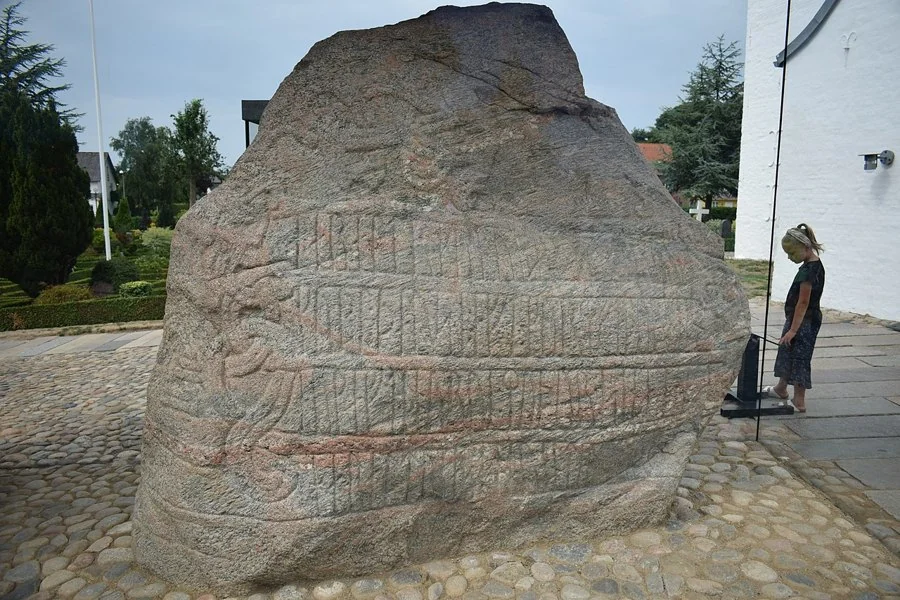
This Viking-Age monument is surviving evidence, rather than a film prop. Its inscription belongs to a particular ruler, place, and political message. Compare it with invented screen writing, then read the history of Jelling.
The large runestone commissioned by Harald Bluetooth at Jelling, Denmark, photographed in 2018.Image: Ljunie · CC BY-SA 4.0
Faces behind the stories
Actors & roles: a quick index
Follow an actor’s name to their individual profile, or a production link to its overview and official credit source. Browse all actors → “Cast member” means the cited listing confirms the performer without a character mapping.
Several productions contain strong violence, sexual content, or other adult themes. Check the rating and content notes for the specific title and your country. This is not a children’s viewing list; visit For Kids for our family learning activities.
Links lead to production information and credited sources, not a guarantee of streaming availability in your country. Platforms, subscriptions, and regional catalogs change. This page keeps major plot spoilers to a minimum, but character descriptions reveal basic premises.
Film and series cards show original thematic illustrations created for this guide. These are independent interpretations, not official artwork, film stills, or depictions of the actors. Links beside the illustrations lead to official trailers or production pages; availability may vary by country. The separate cast portraits each link to their photographic source. Photographs are reused under the individual terms below; inclusion does not imply endorsement.
Arnas Fedaravicius — German Film & Comic Con. Original photograph · CC BY 3.0. Resized and cropped in the page layout.
Bernard Hill — Bernard_Hill2.jpg: Flickr user, Gemma Longman
derivative work: Ukexpat. Original photograph · CC BY 2.0. Resized and cropped in the page layout.
A screen story is often the doorway into Viking history. Rather than grading an entire production as simply accurate or inaccurate, follow a detail through three layers: the modern creative choice, the older story, and the surviving historical evidence.
Try the costume test
Freeze a scene and separate the visible choices: fabric, cut, color, fastening, ornament and wear. Archaeological clothing evidence is often fragmentary, and reconstruction draws on several kinds of sources. The National Museum of Denmark discusses local wool and flax alongside luxurious imported materials in wealthy graves. That variety is more useful than a single “Viking outfit.”
A costume can look convincing while combining details from different places or social settings. Ask who this character is meant to be, where the scene occurs and what sort of activity the clothes must allow. Then compare one feature with a documented object. This turns a vague reaction—“it looks old”—into a question that a museum record can actually help answer.
The Northman offers a useful example of how a production creates its world through camera and lighting decisions. Focus Features’ interview with cinematographer Jarin Blaschke discusses the work as filmmaking. Such material is valuable evidence for artistic intention and production choices; it is not an excavation report about the tenth century.
Try watching the same scene twice. First follow the character’s problem. Then notice how darkness, framing, sound and movement guide your sympathy or fear. A seemingly natural view of the past is still a carefully constructed image. Historical advisers can inform that image, but cannot turn an invented conversation or a performer’s expression into a recovered event.
The Hobbit: a real connection behind the dwarf names
There is a more specific Norse connection than a general feeling of northernness. The Tolkien Estate’s discussion of The Hobbit explains that Tolkien drew his dwarves’ names from the Dvergatal, the dwarf catalogue preserved in Eddic material. The essay also points to the combination of those names with Tolkien’s invented languages. Borrowing a name and creating a new character are different creative acts.
This gives a satisfying comparison exercise. Choose a dwarf name, locate it in the older list, and then consider what the novel gives that character: speech, relationships, motives and a role in the journey. The older occurrence establishes a literary connection. It does not supply a hidden biography for every scene in the film, and it does not make Middle-earth a historical Scandinavian landscape.
Choose one question from the production instead of trying to verify every scene at once. For a voyage, begin with an excavated vessel and ask what the hull could carry. For a feast, begin with food remains and the organization of a household. For a rune, begin with a dated inscription and the language it records. The site’s linked articles provide starting points for each route.
Keep a small note of what changes as you move between media. A film has to make many things immediately visible; an archaeological account can admit that a feature is missing. A novel can reveal an invented person’s thoughts; a surviving object usually cannot. Recognizing those different strengths lets you enjoy the story while learning something more precise about the past.