Life & Society · Introduction
Viking games: play and the evidence
In Brief
Gaming pieces offer a small but vivid connection to leisure in the Viking Age. They also raise a difficult question: how much of a game can survive when its players left no complete rulebook?
Scandinavia and the North Atlantic world · Viking Age, with later medieval comparisons
Objects for play
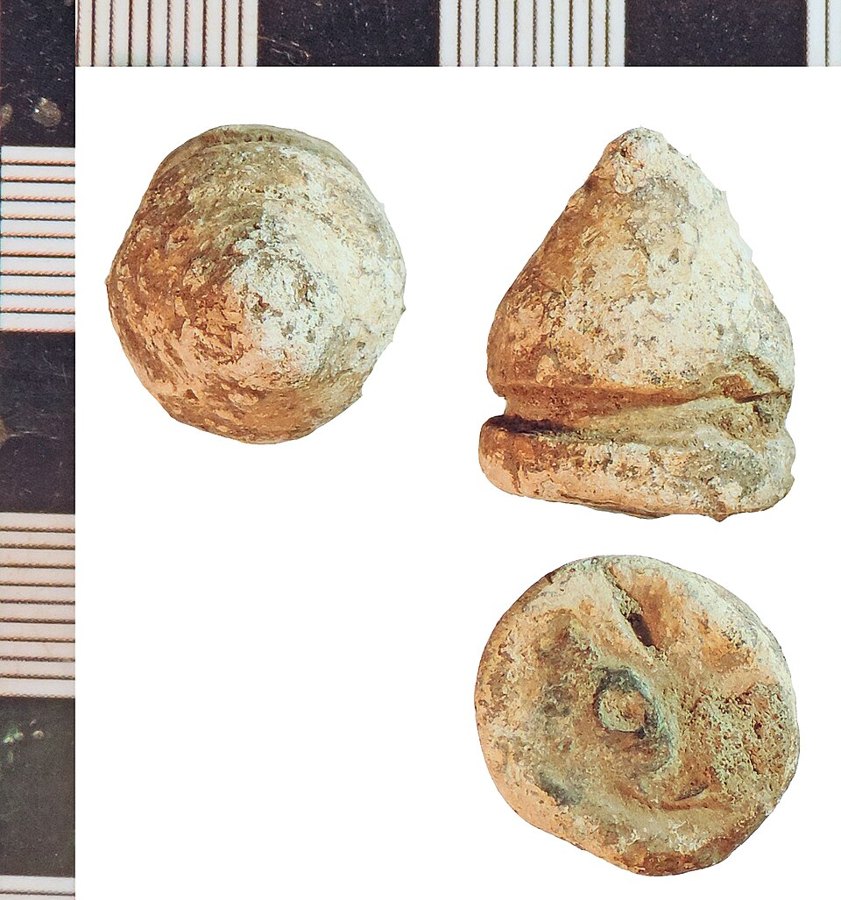
The National Museum of Denmark describes boards, dice, and playing pieces among the evidence for Viking recreation. Pieces were made from materials including wood, bone, stone, glass, and amber. Their variety matters: a game could be an everyday activity, while an elaborate set could also display craftsmanship and resources.
Games belonged to a wider world of sociability that included music, poetry, and storytelling. Bone skates add another form of recreation to the picture, although skating could also be a practical way of traveling. Leisure and useful skills were not always separate categories.
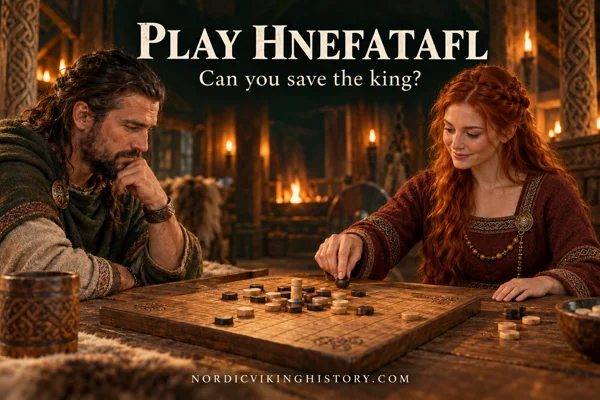
What was hnefatafl?
Hnefatafl is associated with a king protected by defenders and opposed by attackers. Unlike chess, the two sides do not begin with equivalent forces and objectives. Archaeological pieces and boards support the existence of gaming, but do not supply every instruction needed to play a particular historical version.
The objects alone cannot resolve all the details of movement and capture. Modern sets should therefore identify the rules they use. A playable reconstruction is an interpretation, not proof that every Viking community played precisely the same way.
Do the Lewis chessmen belong here?
The famous Lewis pieces are often drawn into the Viking story because of their Scandinavian connections. National Museums Scotland dates them to the late twelfth or early thirteenth century, probably made in Norway. They therefore belong to the medieval world after the conventional Viking Age.
The Lewis hoard included pieces from several chess sets as well as other gaming equipment. Some figures could potentially have served more than one game, according to the museum. Medieval boards found in Scotland also show that gaming continued in different settings, including monasteries. These later finds help explain the broader history of play, but they should not be silently moved back several centuries to illustrate an early Viking household.
Knattleikr: the ball game in the sagas
Knattleikr was a ball game described in Icelandic sagas, including Egils saga. The accounts involve a ball and a wooden implement, competitive encounters and sometimes violent conflict. They do not supply a complete, consistent rulebook. Calling it Viking hockey can offer a quick comparison but is not a historical identification. Modern games advertised as knattleikr use reconstructed rules and should be labeled accordingly.
Continue with how to read saga evidence, children, work and play.
Sources: Bohusläns Museum: sports, ball games and the limits of the evidence; Egils saga: ball play, older English translation.
The Evidence
The sources below support this article. Interpretations and limits are explained in the text; this is not an exhaustive research review.