Research & Sources · Introduction
Reading Icelandic Sagas Through Their Manuscripts
In Brief
A saga reaches us through copies, collections, and later readers. Its physical transmission is part of the evidence.
On this page
Separate story, composition, and surviving copyTexts traveled through many handsThe collection has a history tooA practical reading methodSourcesSeparate story, composition, and surviving copy
A saga may describe Viking-age events while surviving in a manuscript produced much later. Those are separate dates. Before using a scene as historical evidence, identify the text, the proposed period of composition, and the manuscript behind the edition or translation. A vivid conversation is not automatically a recorded conversation. The story is evidence for the narrative preserved by its writers and copyists, even when its relationship to the events described is uncertain.
Texts traveled through many hands
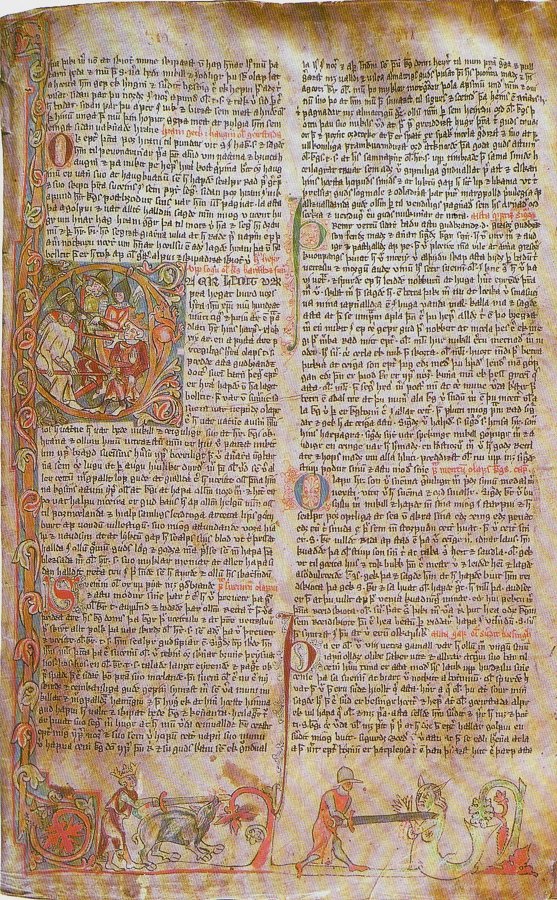
Emily Lethbridge’s study of Icelandic sagas and their landscapes emphasizes surviving manuscripts and the history of reading and retelling. The medieval parchment witnesses form only part of the record; later paper copies are also numerous. This matters because readers did not encounter one permanently fixed modern book. Different material settings and patterns of transmission affected how stories were preserved and encountered. Studying an actual manuscript can answer questions that an isolated quotation cannot.
The collection has a history too
Árni Magnússon gathered Icelandic books and manuscripts in the late seventeenth and early eighteenth centuries. His collection became a foundation for later scholarship, but its survival was not effortless: the Copenhagen fire of 1728 destroyed books and manuscripts. The collection was later divided between Denmark and Iceland through a lengthy return process. These episodes belong to the evidence’s biography. What survives today reflects collecting, copying, damage, and preservation as well as medieval literary activity.
A practical reading method
Begin with the introduction to a scholarly edition and note its manuscript basis. Distinguish what the narrator says from what a character claims. Check whether a historical argument depends on a particular episode or on a pattern across several texts. Compare independent archaeological or documentary evidence where possible, without assuming that a matching place-name proves an entire plot. The aim is neither to accept every scene literally nor to discard sagas as useless. Their value becomes clearer when literary construction and material transmission remain part of the interpretation.
The Evidence
The sources below support this article. Interpretations and limits are explained in the text; this is not an exhaustive research review.