Meet 2583 well-documented stones and the people remembered on them. Choose a map marker or a photograph to read the story.
This is a curated selection of runestones, inscribed stone crosses and related rock inscriptions, including monuments from before and after the Viking Age. Anglo-Saxon and Norse traditions are identified separately. Each page distinguishes a readable summary of the inscription from a literal translation.
Country includes entries with a recorded country but no coordinates. Region filters use the displayed map reference point, which may be historical; they do not verify present-day display or visitor access.
Search and filters cover the complete register. Object types follow the existing entry descriptions; missing or uncertain types remain unspecified.
Showing 1–20 monuments · Page 1
Loading the map. Stone pages and documented locations are also available below.
Zoom in to separate nearby stones. Numbered markers group nearby locations. Only entries with documented coordinates have map pins. A pin may mark an earlier recorded position, an original setting or a later display location. Open the entry for the coordinate source and any verified visitor location. Browse the entries ↓
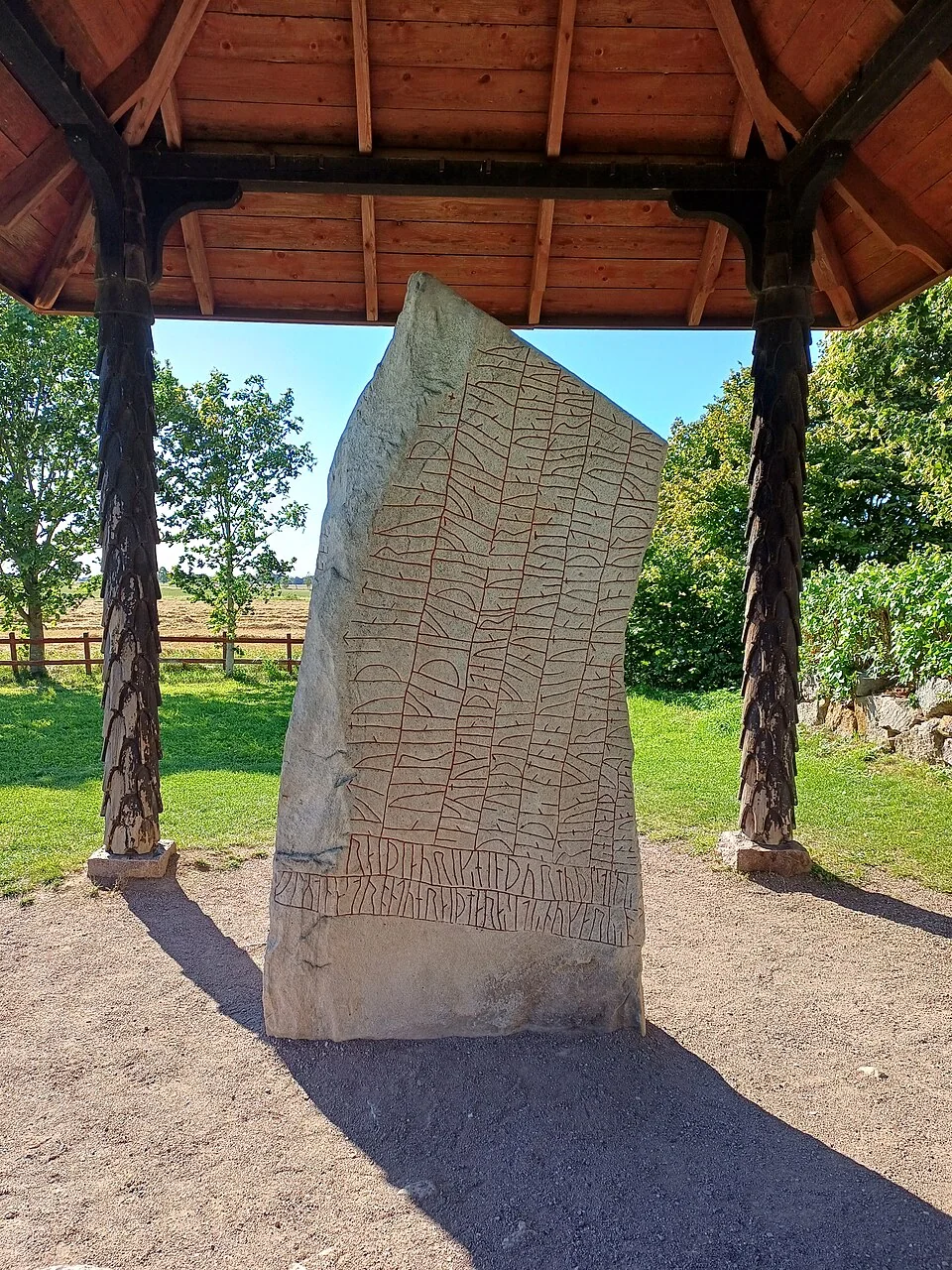
The Rök runestone beside the church in Östergötland, Sweden, photographed in 2024. The carved surface invites close attention to how runic writing survives in stone.Image: L’imaginaire · CC0 1.0
Varin made this memorial for Vämod, his dead son. The rest of the inscription contains difficult passages about rulers, warriors and legendary material. Scholars disagree about how those passages fit together, so the opening memorial is more secure than any single explanation of the whole text.
The damaged older text names Erik, Alrik and Öjuls, also rendered Eivisl. Its references to gifts, conflict and divine runes cannot be assembled into a completely secure reading. A later addition says Gisli made the memorial for his brother Gunnar.
Karlevi runestone; photograph of the surviving stone.Image: Berig · CC BY-SA 3.0
The followers of Sibbe, Foldar’s son, erected the memorial for him. A verse praises his great deeds and presents him as an exceptional warrior and leader. Its elaborate images are examples of the dense poetic language used by skalds.
Gripsholm runestone; photograph of the surviving stone.Image: Arkland · CC BY-SA 4.0
Tola commemorates Harald, her son and Ingvar’s brother. The verse describes a journey in pursuit of gold, fighting in the east, and death in Serkland. Its image of feeding an eagle refers to the dead left after battle.
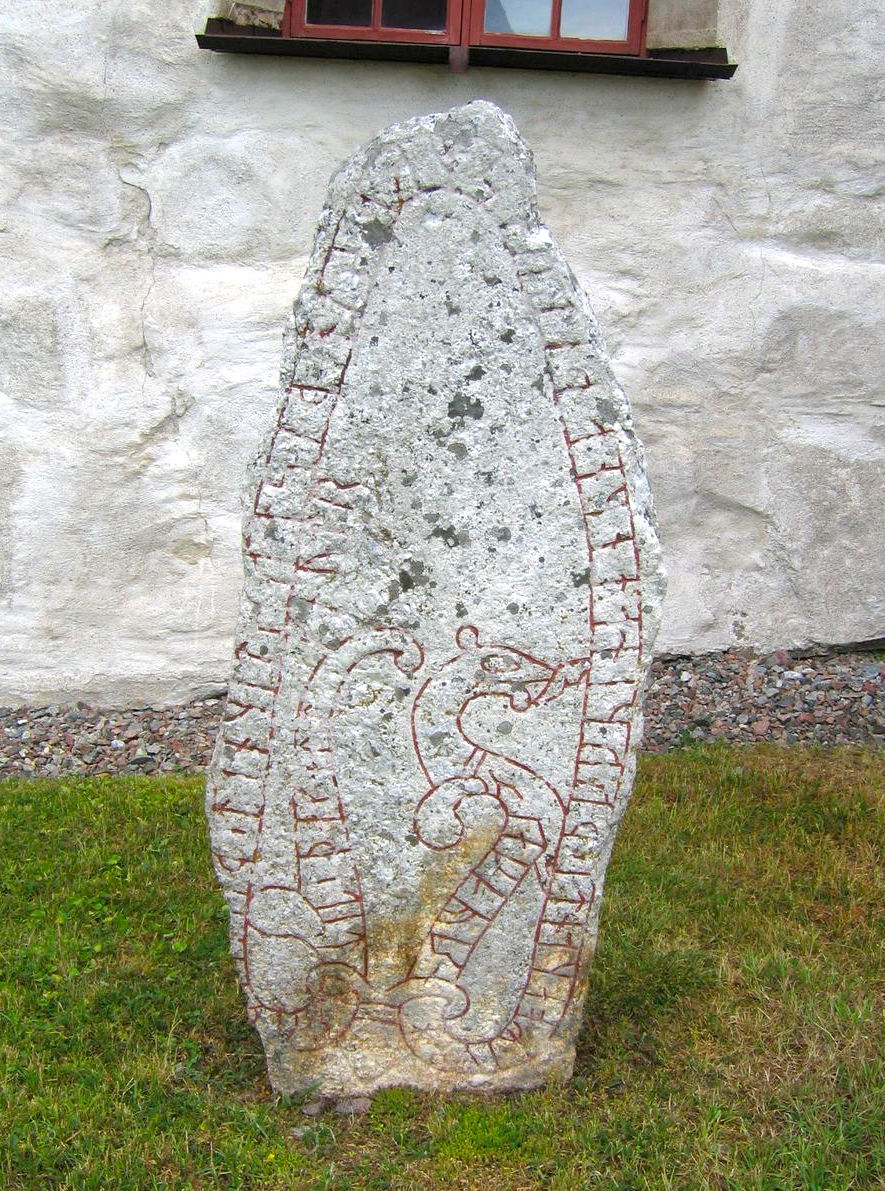
Orkesta runestone U 344; photograph of the surviving stone.Image: Berig · CC BY-SA 3.0
A mother and her sons—Holmfrid, Dan, Huskarl and Sven—commissioned this memorial for Halfdan, the father of Dan and his brothers. The inscription preserves the family’s names and their relationship to the person being remembered.
Gorm’s Jelling stone; photograph of the surviving stone.Image: Ljunie · CC BY-SA 4.0
King Gorm commemorates his wife Thyra. The inscription associates her with Denmark, though the precise meaning of the descriptive phrase applied to her is debated.
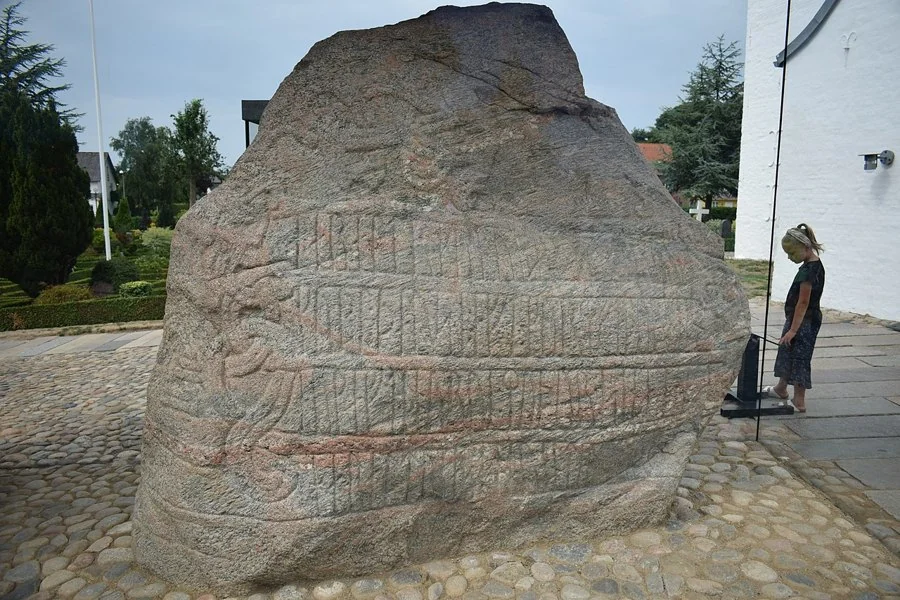
The large runestone commissioned by Harald Bluetooth at Jelling, Denmark, photographed in 2018.Image: Ljunie · CC BY-SA 4.0
Harald commemorates his parents Gorm and Thyra. He also claims to have won Denmark and Norway and to have made the Danes Christian. These are the king’s own public claims, not a neutral account of conversion.
Ragnhild and Alli’s sons commemorate Alli. Soti names himself as the rune-carver and calls on Thor to consecrate the runes. A final curse targets anyone who damages or reuses the monument; some titles and words have competing readings.
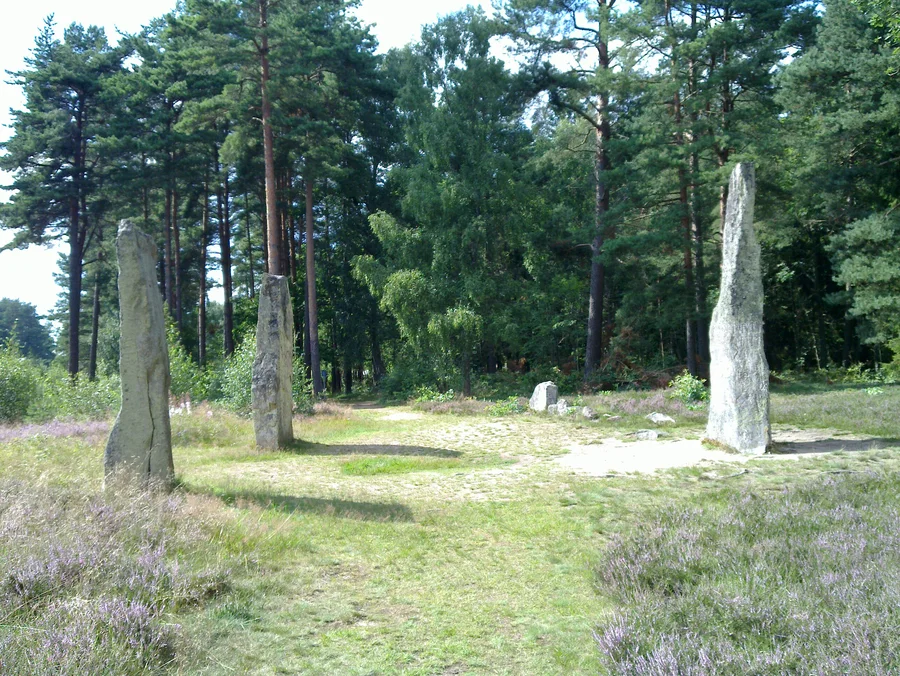
The Björketorp monument in 2011. Its runic text dates to the seventh century CE, before the conventional beginning of the Viking Age.Image: Harriks · CC BY-SA 3.0
The inscription invokes powerful runes and threatens the person who breaks the monument with misfortune and death. Another short statement announces destruction. Several expressions are difficult to interpret exactly.
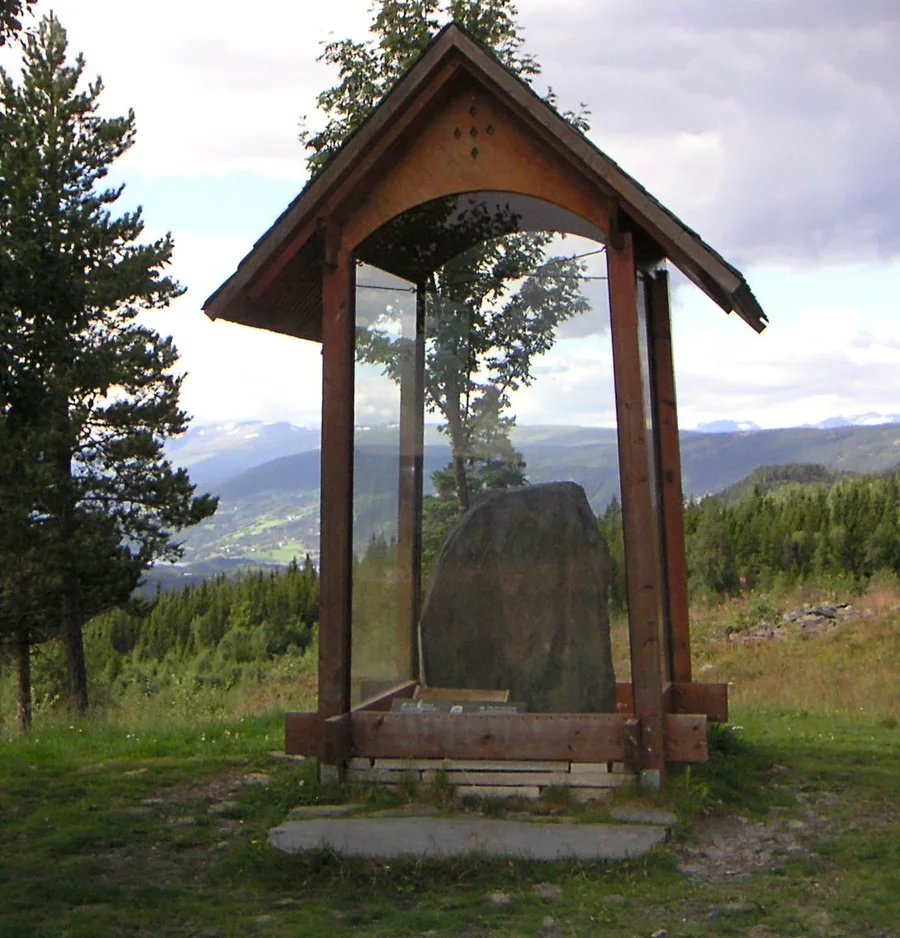
The Einang runestone, photographed in 2005. Its inscription belongs to an earlier runic tradition, several centuries before the conventional beginning of the Viking Age.Image: John Erling Blad · CC BY-SA 3.0
The writer identifies himself and says he wrote or painted the runic inscription. The personal name is not completely secure; Godagastir and Radagastir are among the proposed readings.
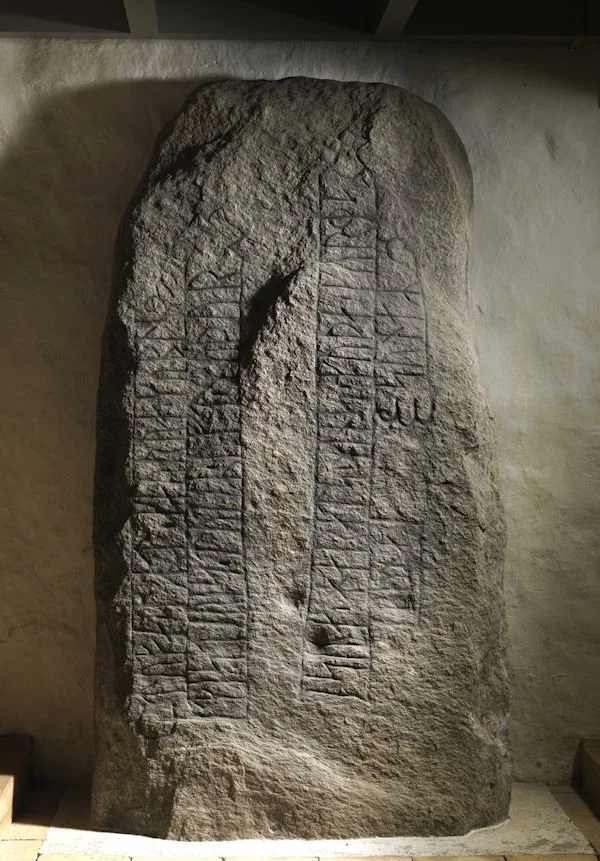
The Sønder Vissing runestone commemorating Tove’s mother, photographed for the National Museum of Denmark. The inscription connects this memorial with Harald Bluetooth’s royal family.Image: Roberto Fortuna / National Museum of Denmark · CC BY-SA 3.0
Tove commemorates her mother. She identifies herself through both her father Mistivi and her husband Harald, son of Gorm. The memorial therefore preserves a royal family connection from a woman’s perspective.
Tolir identifies himself as an official serving the king. He and his wife Gylla commissioned the runes as their own memorial, and a further statement says that Håkon ordered the carving. The opening addresses the reader directly, asking for the runes to be understood correctly.
Ragnvald commemorates his mother Fastvi, daughter of Onäm, who died in Ed, and asks God to help her spirit. On the other face he records his own experience abroad: he had been in Greece and had served as the leader of a warrior retinue.
Risbyle U 161, photographed in 2007; this is the stone with the cross used as a model for Täby’s arms.Image: Berig · CC BY 2.5
Ulv of Borresta identifies himself as the carver of a memorial to Ulv of Skålhamra, whom he calls a good relative. Ulvkell commissioned the carving. The short message therefore names both the person remembered and the people responsible for making his monument.
Jarlabanke says that he raised the stones during his lifetime and built the crossing for the benefit of his soul. He also claims sole ownership of Täby. This is a public statement about his own works and position, rather than a memorial commissioned after his death.
The surviving words describe Jarlabanke raising the stones while alive and making the crossing for his soul. The claim about owning Täby also survives, although part of the text is missing. Its message closely parallels the better-preserved companion stone on the opposite side of the path.
Eleventh century; the two faces have different stylistic date ranges
Jarlabanke commemorates himself while still alive. One face claims that he alone owned Täby; the other says he established an assembly place and controlled the whole hundred, a territorial district. These statements present his own authority and should be read as claims made by the monument’s sponsor.
Häming, Själve and Johan commemorate their father Finnvid, their mother and other relatives. The inscription comments on Finnvid’s former ownership, asks God to help the deceased, and names Visäte as the carver. Some names and connections are uncertain, so a complete family tree cannot safely be reconstructed from this summary.
Ingefast commissioned the memorial for both of his parents, Torkel and Gunhild. The text states that they drowned. It does not explain where this happened or describe a voyage, so the circumstances of their deaths should not be expanded into an imagined expedition or shipwreck.
No monuments match. Try another name or reset the filters.
Reading the evidence
Missing or disputed words can change an inscription’s meaning. Our summaries explain the message without inventing missing passages. Names and dates may appear differently in other editions.
Photographs retain their individual licenses; credits appear beside every image. Where no photograph is available, the entry links to its documentary source. Location and historical sources are linked on each stone page.