
Journeys & Encounters
Connections across water and land
Explore travel through ships, trading places, and the archaeological evidence of a North Atlantic crossing.
New: explore 200 Viking-Age place profiles by country →
Compare Oseberg, Gokstad, and the Skuldelev ships. Follow the trade route through Birka and Hedeby, or head west through Iceland to Newfoundland.
An interconnected world
Explore the Viking travel networks
From Newfoundland and Greenland to the Baltic, Byzantium and the Caspian. These are selected connections across several centuries, not the borders of an empire or a claim to show every journey. Lines are schematic corridors, including sea passages, rivers and overland transfers; they are not navigable tracks.
Select a marker to open its place guide or a related story. The same links are available in the list below.
Modern land outlines: Natural Earth, public domain. Positions are approximate modern reference points. No ethnic or political boundaries are implied. The map’s geometry is hosted on this site.
All 25 places and their linked stories
- Bergen / western Norway 60.39°, 5.32°
- Birka 59.34°, 17.54°
- Bolgar and the Volga 54.98°, 49.03°
- Caspian connections 42.00°, 50.00°
- Dublin 53.34°, -6.27°
- Faroe Islands 62.01°, -6.77°
- Greenland 61.16°, -45.60°
- Hedeby 54.49°, 9.57°
- Iceland 64.26°, -21.13°
- Jelling 55.76°, 9.42°
- Kyiv and the Dnipro 50.45°, 30.51°
- Ladoga 60.00°, 32.30°
- Lindisfarne 55.67°, -1.80°
- L’Anse aux Meadows 51.60°, -55.53°
- Miklagard 41.01°, 28.98°
- Novgorod 58.52°, 31.27°
- Orkney 58.98°, -2.96°
- Paris 48.86°, 2.35°
- Ribe 55.33°, 8.76°
- Roskilde 55.65°, 12.08°
- Rouen 49.44°, 1.10°
- Seville / Iberian coast 37.39°, -5.99°
- Truso 54.16°, 19.40°
- Wolin 53.84°, 14.61°
- York 53.96°, -1.08°
Across the North Atlantic · Late 9th–early 11th centuries
Connections: Western Norway → island routes → Iceland → southern Greenland → Newfoundland
Britain and Ireland · From the late 8th century
Connections: North Sea crossings → English river ports; northern island routes → Irish Sea towns
Into the Frankish river systems · Especially the 9th century
Connections: North Sea → Channel coast → Seine and other rivers
Through the rivers to Miklagard · Viking-Age eastern networks
Connections: Baltic → Ladoga and river networks → Dnieper → Black Sea → Constantinople
The Volga and the silver networks · Especially the 9th–10th centuries
Connections: Baltic and eastern river networks → Bolghar → Caspian connections
Down the Atlantic coast · 9th-century fleets and later contacts
Connections: Channel approaches → Iberian coasts → Mediterranean connections
Miklagard: Norse travellers in Constantinople
Constantinople was the capital of the Byzantine Empire, a powerful eastern Roman state.
Open the place guide →Iceland: settlement and the assembly at Thingvellir
Iceland formed part of a wider migration across the North Atlantic.
Open the place guide →Greenland: Norse farms at the edge of the Atlantic
Norse settlers established farming communities in southern Greenland from the late tenth century.
Open the place guide →L’Anse aux Meadows: the Norse Atlantic reaches Newfoundland
At the northern tip of Newfoundland, L’Anse aux Meadows provides archaeological evidence of a Norse presence in North America.
Open the place guide →Dublin: a river town in the Irish Sea world
A Viking fortified base was established at Dublin in 841.
Open the place guide →York: the workshops and waterways of Jorvik
York was captured by a Scandinavian army in 866.
Open the place guide →Kyiv and the Dnipro: connections across the Rus world
Kyiv developed within the world of medieval Rus, where local Slavic populations, Scandinavian connections and wider regional networks interacted.
Open the place guide →Bolgar and the Volga: a meeting place of worlds
Bolgar stood within a Volga landscape connecting different societies and long-distance exchanges.
Open the place guide →Continue through the article collection
What can a reconstructed ship tell us?
Building and sailing a reconstruction lets researchers test ideas about an ancient vessel. The result is a historical hypothesis that can be questioned and improved.
Introduction · 1 min readThe Norse presence in North America
L’Anse aux Meadows, in what is now Newfoundland, preserves archaeological evidence of a Norse presence in North America around 1000 CE.
Introduction · 4 min readTrade, silver, and the growth of towns
Trading places brought craftspeople, travelers, and local producers together. Their connections depended on transport routes, protection, and political power.
Introduction · 1 min readBirka and Hovgården: Trade, Power, and Burials
Birka was a place where waterways, exchange, and political authority met. Its remains on Björkö and the neighboring royal center at Hovgården reveal how a trading settlement belonged to a wider landscape of power.
Introduction · 2 min readHedeby: A Trading Town at the Border
At Hedeby, also known as Haithabu, a harbor and a narrow land crossing connected different seas and societies. Its relationship with the Danevirke defenses makes it an unusually revealing place to study commerce and political control together.
Introduction · 2 min readSettling Iceland: Building Lives Across the Atlantic
Iceland's settlement was a movement of households, animals, skills, and traditions across the sea. Archaeological remains let us look beyond the moment of arrival to the practical work of establishing a society.
Introduction · 2 min readOseberg: A Ship, Two Women, and an Extraordinary Burial
The Oseberg burial brings together seafaring, skilled craftsmanship, and elite power. Its treasures also remind us how much of Viking Age life normally disappears from the archaeological record.
Introduction · 2 min readGokstad: Reading a Seagoing Ship and Its Burial
The Gokstad ship is evidence for both practical maritime engineering and an extravagant funeral. Separating those two parts of its history helps explain what the find can tell us.
Introduction · 2 min read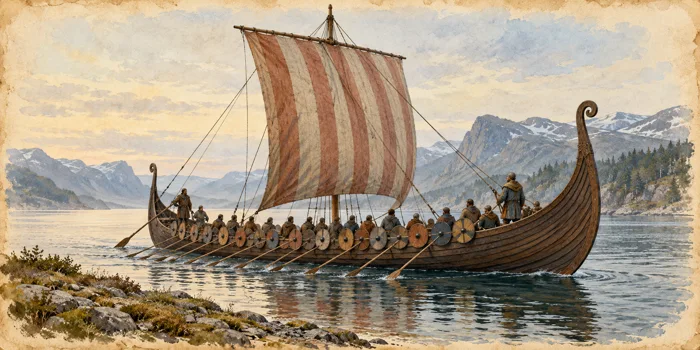 Ships & SeafaringMeet the vessels behind the voyages.Explore →09
The Skuldelev Ships: Traders, Warships, and a Fishing Boat
There was no single design for every Viking ship. Five vessels recovered from Roskilde Fjord reveal how builders adapted their craft to cargo, fighting crews, and everyday work.
Introduction · 2 min readRibe: A Market Before the Famous Raids
Planned plots, changing boundaries, and the earliest cemetery reveal how a trading place became a community.
Introduction · 2 min readKaupang: A Town Recovered from Small Traces
Coins, house foundations, and workshop debris reveal an early Norwegian trading community beside Viksfjorden.
Introduction · 2 min readViking York: Life Beneath Coppergate
The excavations under a modern shopping street preserve workshops, households, and changing textile traditions.
Introduction · 2 min readDublin: From Fortified Base to Working Town
Preserved timber, leather scraps, and craft tools reveal how an Irish town grew around maritime connections.
Introduction · 2 min readStaraya Ladoga: Where Baltic and River Routes Met
A settlement on the Volkhov connects Scandinavian activity with the waterways of northeastern Europe.
Introduction · 2 min readGotland: Silver Networks and Older Stone Traditions
Hoards and carved monuments illuminate different parts of the island’s history—and must be dated separately.
Introduction · 2 min readÞingvellir: Law Spoken in a Shared Landscape
Iceland’s general assembly joined legal procedure, political influence, and a demanding annual journey.
Introduction · 2 min read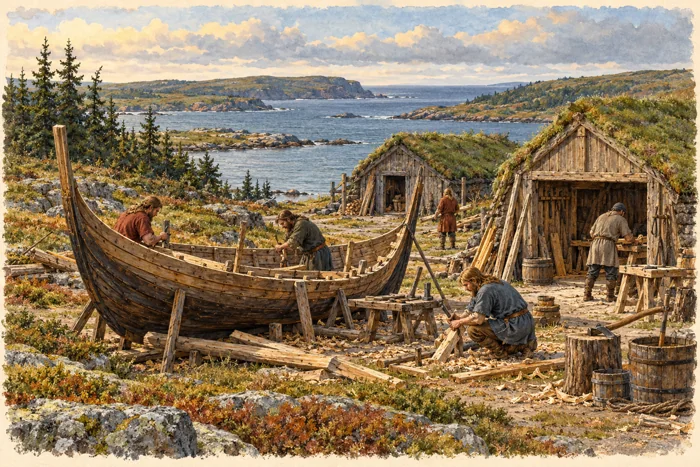 Across the AtlanticExplore the evidence for Norse journeys to North America.Explore →17
Norse Greenland: Farms at the Edge of Viable Agriculture
Pasture, marine hunting, and carefully chosen farm sites supported communities for centuries beyond the Viking Age.
Introduction · 2 min readNorse Orkney: Houses, Earlier Neighbors, and a Boat Grave
Birsay and Scar offer two different views of settlement in an already inhabited island world.
Introduction · 2 min readThe Faroes Before and During Norse Settlement
Burned barley and ancient sheep traces show why the islands cannot simply be described as empty before the Vikings.
Introduction · 2 min readWeights and Measures: Making Exchange Work
Balances made quantities visible, while markings and decoration helped users recognize and present their equipment.
Introduction · 2 min readLindisfarne in 793: A Raid and Its Afterlife
An attack on a Northumbrian monastery became a defining date because of both the violence and the people who recorded it.
Introduction · 2 min readThe Great Army: Looking Beyond the Battlefield
Winter camps reveal a mobile population whose activities included exchange and production as well as warfare.
Introduction · 2 min readThe Danelaw: Boundaries, Law, and Local Lives
The Danelaw is best approached through agreements, settlements, and language rather than as one unchanging block on a map.
Introduction · 2 min readFrom Norse Settlement to Normandy
Normandy emerged through negotiation and regional politics; it was not created fully formed by a single Viking landing.
Introduction · 2 min read Runes & WritingRead the traces travelers left behind.Explore →25
The Varangian Guard: Service Far from Home
Scandinavian military service in Byzantium connected northern lives with imperial politics around the Mediterranean.
Introduction · 2 min readThe Eastern River Routes: Waterways and Portages
Travel between the Baltic, Black Sea, and Caspian depended on connected waterways, difficult transfers, and relationships with people along the route.
Introduction · 3 min readViking-Age Swords: Craft, Status, and Survival
A sword was both a working weapon and an object whose materials and decoration could express exceptional value.
Introduction · 2 min readShields and Combat: What Survives, What Is Reconstructed
Thin wooden boards and surviving metal bosses tell a more complicated story than a solid wall of identical shields.
Introduction · 2 min readThe Ring Fortresses: Geometry and Royal Power
Denmark’s late tenth-century fortresses reveal coordinated building on a scale far beyond a single household.
Introduction · 2 min readDanegeld: Paying for Peace, Paying for Defense
Tribute and taxation linked warfare to the ability of rulers to gather and redistribute wealth.
Introduction · 2 min readSigtuna and the Reorganization of the Mälaren World
A planned street, royal minting, early cemeteries, and mobile inhabitants reveal several different processes behind the emergence of Sigtuna.
Deep dive · 4 min readGamla Uppsala Before and During the Viking Age
Monumental mounds, timber halls, ordinary farms, and a misleading place-name reveal a center that changed over many centuries.
Deep dive · 4 min read Visit the Viking worldChoose a museum or a historic landscape.Explore →33
Uppåkra: A Hall Estate Across the Iron Age
Successive floors, working surfaces, animal remains, and a human jaw at a doorway expose the practical archaeology behind an influential center.
Deep dive · 5 min readBorre: Mounds, Halls, and an Elite Landscape
Borre’s significance emerges from relationships among buildings, graves, farmland, and the shoreline—and from the limits of how those features were discovered.
Deep dive · 4 min readAvaldsnes and Power Beside the Norwegian Sea Route
Elite graves, successive halls, and later harbor deposits reveal why the Karmsund strait mattered—and why strategic geography is not a complete political explanation.
Deep dive · 5 min readLund: From Viking-Age Settlement to Cathedral City
Coffins, a buried church, timber paving, and neighborhood cemeteries reveal how Lund developed through successive changes in land use.
Deep dive · 4 min readAarhus: Defenses, Workshops, and the Town Beyond Its Walls
Aros combined a river crossing, coastal connections, defended workshops, and a productive hinterland. Excavated buildings and new rural discoveries reveal how those parts fitted together.
Deep dive · 5 min readNonnebakken: Odense’s Fortress in a Changing Landscape
Beneath modern Odense, a royal earthwork preserves evidence of construction, uncertain earlier activity, and a later religious community.
Deep dive · 5 min readLejre: Great Halls, Remembered Kings, and a Changing Landscape
Successive halls establish Lejre as a major center of power. Small objects, burial monuments, and research beyond the palisade show why its history extends beyond the legendary kings.
Deep dive · 4 min readSalme: Two Ship Burials and an Early Baltic Expedition
Two vessels on Saaremaa preserve a collective burial from around 750, with weapons, provisions, gaming equipment, and evidence for movement across the Baltic.
Deep dive · 5 min readFollow the sourcesFind institutions, collections and places to explore.Explore →41Truso: An Organized Waterfront on the Southern Baltic
Regular plots, casting debris, and a small silver hoard reveal how manufacture and exchange shaped the settlement identified with Wulfstan’s Truso.
Deep dive · 5 min readWolin: Craft, Cultural Encounters, and a Changing Harbor
Deep settlement layers and locally adapted ornament reveal a southern Baltic town whose history crosses simple Scandinavian–Slavic categories.
Deep dive · 5 min readGnezdovo: Waterfront Life and Networks on the Upper Dnieper
River landscapes, imported silver, glass technologies, and rare inscriptions reveal a community connecting several worlds through everyday activity.
Deep dive · 5 min readNovgorod: Wooden Streets, Early Connections, and a Changing Town
Dated street timbers, a nearby fortified center, and writing on organic materials reveal several distinct stages in Novgorod’s urban history.
Deep dive · 5 min readKyiv and the Origins of Rus: Chronicles, Defenses, and Material Evidence
Early Kyiv emerges from several overlapping records: later narratives, excavated defenses, regional burial practices, urban production, and princely coinage.
Deep dive · 5 min readBirka’s Garrison: Buildings, Equipment, and Organized Protection
A terraced complex beside Birka’s hillfort reveals how buildings, armor, archery equipment, dress, and storage contributed to a distinctive military setting.
Deep dive · 5 min readHedeby’s Harbor: Timber Engineering and Life at the Waterfront
Piers, dated timbers, shoreline structures, and very different shipwrecks reveal how Hedeby connected its settlement to the water.
Deep dive · 5 min readRibe’s Cemeteries: Burial Customs and the Making of a Community
Scattered graves, a Christian cemetery, and changing burial spaces reveal the inhabitants of Ribe beyond the town’s trading activity.
Deep dive · 5 min readShips & SeafaringMeet the vessels behind the voyages.Explore →49Kaupang’s Workshops: Permanent Homes and Seasonal Work
Building sequences, bird bones, and metalworking spaces show why year-round settlement and temporary craft activity need to be examined at different scales.
Deep dive · 5 min readCoppergate’s Changing Plots: Buildings, Repairs, and Urban Ground
Repeated boundaries, dated repairs, craft waste, and later leveling reveal how four York properties changed across the Viking Age and beyond.
Deep dive · 5 min readWood Quay: Recovering Dublin’s Streets and Waterfront
Banks, house plots, reclaimed ground, and a major preservation campaign reveal how medieval Dublin became an archaeological landmark.
Deep dive · 5 min readWaterford: From Fleet Landing to an Irish Port
Excavated streets, sunken buildings, defenses, and an elaborate brooch reveal the growth of Waterford beyond its traditional foundation story.
Deep dive · 5 min readLimerick: Scandinavian Power on the Shannon
River geography, rival fleets, and buildings beneath the later castle reveal a town whose history continued through changing rulers.
Deep dive · 5 min readDunmore Cave: Bones, Silver, and an Account of Violence
Written accounts describe an attack, but disturbed human remains and separately deposited valuables make Dunmore a demanding archaeological case.
Deep dive · 5 min readManx Crosses: Names, Stories, and Cultural Encounters
Carved memorials combine Christian forms, Scandinavian narratives, personal inscriptions, and the traces of later reuse.
Deep dive · 5 min readJarlshof: Reading Shetland’s Layered Settlement
Longhouses, earlier buildings, debated outbuildings, and a ship drawing reveal a settlement that changed across many centuries.
Deep dive · 5 min readAcross the AtlanticExplore the evidence for Norse journeys to North America.Explore →57The Brough of Birsay: A Center That Changed
Pictish metalworking, a carved stone, Norse houses, and a later church reveal successive forms of importance on an Orkney tidal island.
Deep dive · 5 min readThe Scar Burial: Three People in a Boat
A carefully arranged grave on Sanday brings together an older woman, an adult man, a child, and objects with histories of their own.
Deep dive · 5 min readIcelandic turf architecture and environmental choices
Turf buildings combined earth, roots, stone, timber, and skilled maintenance. Their long history requires careful separation of Viking-age evidence from later surviving farmhouses.
Deep dive · 4 min readThe Mosfell Valley and archaeology beside saga traditions
At Mosfell in Iceland, excavated buildings and burials can be compared with medieval stories. The comparison is productive when agreement is tested rather than assumed.
Deep dive · 4 min readGreenland churches and the organization of settlements
Church ruins connect religious life with farms, burial grounds, and local authority. Their changing distribution also shows why Norse Greenland must be studied across several centuries.
Deep dive · 4 min readWalrus Ivory: Greenland’s Connections with Medieval Europe
Trade begun during the North Atlantic expansion developed over later medieval centuries. Animal DNA and workshop waste now reveal connections that finished carvings alone cannot show.
Deep dive · 5 min readL’Anse aux Meadows: Buildings, Iron, and a Working Base
The Newfoundland site is more than proof of a voyage. Its rooms, waste, and dated wood reveal the practical work needed to maintain a distant expedition.
Deep dive · 5 min readThe Faroes: Several Clocks for the First Settlement
Barley grains, lake sediments, buildings, and human genetics answer different questions about arrival. Their dates should not be forced into one founding event.
Deep dive · 5 min readRunes & WritingRead the traces travelers left behind.Explore →65Alfred and Guthrum: How a Negotiated Peace Worked
A short agreement brings boundaries, social rank, trade, and personal guarantees into the same political settlement.
Deep dive · 4 min readThe Five Boroughs: Five Towns, Different Histories
Names, pottery, and coinage reveal a regional network that cannot be reduced to a single color on a political map.
Deep dive · 4 min readTorksey: The Economy Inside a Winter Camp
Thousands of objects turn a brief chronicle entry into evidence for exchange, manufacture, and a mobile population.
Deep dive · 4 min readRepton: Burials, Diet, and the Date of the Great Army
The apparent conflict between coins and radiocarbon dates became a test of how human remains should be analyzed.
Deep dive · 4 min readAldwark: How an Army Camp Changed the Archaeological Model
A riverine assemblage reveals exchange and metalworking, while its modern collection history shows why provenance matters.
Deep dive · 4 min readMaldon: A Battlefield and a Poem about Loyalty
The defeat of 991 survives through a changing coastal landscape and a literary work whose judgments remain debated.
Deep dive · 4 min readCnut: Governing across the North Sea
Conquest created the opportunity for a wider monarchy; law, delegation, and public presentation helped sustain it.
Deep dive · 4 min readEmma of Normandy: Making a Royal Past Useful
A queen’s commissioned history reveals how family claims, language, performance, and manuscript revision could shape political memory.
Deep dive · 4 min readVisit the Viking worldChoose a museum or a historic landscape.Explore →73Æthelred: Diplomacy, Government, and a Reputation for Failure
The king’s nickname is familiar; his treaties, diplomas, and coinage reveal a more demanding historical problem.
Deep dive · 4 min readSweyn Forkbeard: From Campaigns to the English Crown
The conquest of 1013 depended on movement, submission, supplies, and a political objective that had developed over time.
Deep dive · 4 min readHarald Bluetooth: Building a Royal Message at Jelling
The stone’s words belong to a larger sequence of mounds, enclosure, church, and carefully organized space.
Deep dive · 4 min readHarald Hardrada: Imperial Service and the Work of Kingship
Byzantine testimony and Norwegian coinage illuminate different parts of a career often compressed into a warrior’s biography.
Deep dive · 4 min readStamford Bridge: A Battle, a Legend, and an Uneven Ending
The defeat of Harald Hardrada ended an invasion. Its place at the end of the Viking Age requires a much wider comparison.
Deep dive · 5 min readClontarf: Alliances, Dynastic Memory, and a Powerful National Story
The battle of 1014 became a story of liberation, but its participants and its medieval retellings resist a simple division into two peoples.
Deep dive · 5 min readRollo’s Settlement: Baptism, Land, and the Making of Norman Authority
A surviving royal charter and a difficult pastoral correspondence reveal more than the familiar founding scene alone.
Deep dive · 4 min readThe Siege of Paris: What a Defender’s Chronicle Lets Us See
Abbo’s account of 885–886 combines an eyewitness perspective with poetry, Christian interpretation, and the politics of royal protection.
Deep dive · 4 min readFollow the sourcesFind institutions, collections and places to explore.Explore →81Dorestad: Wealth, River Movement, and the Limits of a Destruction Story
Harbor works, imported pottery, a reused gold brooch, and human remains reveal a changing community rather than one frozen moment of attack.
Deep dive · 4 min readFrisian Intermediaries: Trade across a Varied North Sea Coast
Merchants connected ports and river routes, but their work should not be turned into a stereotype about an entire coastal population.
Deep dive · 5 min readWho Were the Rus’? A Name across Changing Political Worlds
The same label appears in embassies, chronicles, and modern scholarship, but its meaning depends on the speaker, date, and setting.
Deep dive · 5 min readIbn Fadlan: What an Eyewitness Could See, Hear, and Misunderstand
A diplomatic journey to the Volga produced an extraordinary account whose interpreters, political setting, and transmission deserve as much attention as its famous funeral.
Deep dive · 4 min readIbn Rustah: How Reports of the North Reached a Geographer
His account of the Rus preserves information carried through other people and texts. That chain of transmission is part of the evidence.
Deep dive · 5 min readOhthere and Wulfstan: Northern Journeys through an English Text
Two maritime accounts describe routes, wealth, and neighboring peoples, while their written form reveals the interests of those who recorded them.
Deep dive · 4 min readTravelers on Runestones: Who Chose What Would Be Remembered?
Runic monuments turn distant journeys into local statements about kinship, standing, faith, and the people who paid for remembrance.
Deep dive · 4 min readWarrior Retinues: Food, Gifts, and the Work of Maintaining Loyalty
Armed followings depended on relationships sustained at home as well as success abroad. Inscriptions, halls, craft production, and later armies reveal different parts of that system.
Deep dive · 4 min readShips & SeafaringMeet the vessels behind the voyages.Explore →89Spears: Ordinary Equipment with Extraordinary Variation
Wood, iron, decoration, and deposition reveal why a spear cannot be understood from its blade shape alone.
Deep dive · 5 min readAxes: Tools, Weapons, and the Problem with Simple Labels
A cutting edge could belong in a workshop, on a battlefield, or in an elaborate burial. Shape and context help distinguish those histories.
Deep dive · 5 min readBows and Arrows Beyond the Battlefield
Hunting sites, settlement finds, and museum collections restore the wooden equipment that isolated iron points often conceal.
Deep dive · 5 min readArmor and Helmets: What Rare Survivals Can Tell Us
Yarm, Coppergate, and surviving fragments show why a small archaeological sample needs careful comparison.
Deep dive · 5 min readGjermundbu: A Burial, a Helmet, and a Changing Reconstruction
The famous helmet is a group of damaged fragments whose modern history is part of understanding the ancient find.
Deep dive · 5 min readHorses and Riding Gear: How Status Became Visible
Decorated bridles, stirrups, grooming tools, and carriage equipment reveal different relationships between horses and social display.
Deep dive · 5 min readFyrkat’s Cemetery: The Community Outside the Rampart
The graves reveal a more varied fortress population than a plan of barracks alone can suggest.
Deep dive · 5 min readAggersborg: A Royal Fortress Built over an Older Center
The largest Danish ring fortress transformed a busy place rather than occupying an empty landscape.
Deep dive · 4 min readAcross the AtlanticExplore the evidence for Norse journeys to North America.Explore →97Borgring: Testing What a Ring Fortress Was Supposed to Be
The discovery confirmed a familiar geometric plan while challenging assumptions about houses, waterways, and destruction.
Deep dive · 4 min readClinker Construction: How Overlapping Planks Make a Hull
A clinker hull was a connected structure whose seams, fastenings, timber, and internal supports worked together. The overlap is the beginning of the explanation, not the whole design.
Deep dive · 5 min readSelecting Timber: Why the Tree Was Already Part of the Design
A boatbuilder needed more than a large quantity of wood. Straight trunks, branching pieces, fiber direction, and the intended component all influenced what counted as useful timber.
Deep dive · 4 min readKeels and Stems: Building the Shape of a Hull
The keel and the rising ends establish important relationships in a ship’s structure. Surviving pieces constrain a reconstruction, but missing stems can still allow more than one convincing solution.
Deep dive · 4 min readFrames and Flexibility: How Much Movement Could a Ship Tolerate?
A wooden hull could be strong without being immovable. The difficult question is how its parts shared movement—and when flexibility became a source of damage.
Deep dive · 4 min readRivets and Roves: The Small Connections That Held Ships Together
Shipbuilding depended on metal as well as timber. Fastenings connect the hull to the wider work of ore gathering, fuel production, smithing, and continuing maintenance.
Deep dive · 4 min readCaulking and Tar: Keeping Water Outside the Hull
Sealing a wooden ship connected fine work at the seam with large-scale production in the forest. Archaeological residues and reconstruction records reveal different parts of that relationship.
Deep dive · 4 min readMasts, Yards, and Rigging: Following the Forces through a Ship
The sail’s force had to pass through ropes and timber into the hull. A working rig combined support, adjustment, lifting, and quick responses when conditions changed.
Deep dive · 4 min readRunes & WritingRead the traces travelers left behind.Explore →105Square Sails and Sailing Angles: What Progress against the Wind Means
A square sail did not restrict a ship to drifting downwind. The harder questions concern leeway, turning, effective progress, and the conditions behind a performance figure.
Deep dive · 4 min readWool Sails: Cloth, Treatment, and the Limits of Reconstruction
Producing a wool sail required selecting fibers, spinning suitable yarn, weaving, sewing, and finishing. Modern projects let researchers examine this chain without pretending that a complete Viking sail survives.
Deep dive · 4 min readFlax Sails: A Plausible Material with Missing Direct Evidence
Flax processing is documented in the archaeological record, but that does not identify the intended use of every thread. The Gislinge sail project makes this evidential gap explicit.
Deep dive · 4 min readRopes and Cordage: Choosing a Material for the Job
Viking ships did not depend on a single universal rope. Plant fibers, hair, hide, and flexible wood offered different possibilities, while the surviving evidence remains uneven.
Deep dive · 4 min readSide Rudders: Steering, Attachment, and a Difficult Experimental Problem
A steering surface was only useful while its connection to the ship remained reliable. Trials with reconstructed vessels show why the attachment deserves as much attention as the blade.
Deep dive · 4 min readRowing a Longship: Crew Numbers, Space, and Sustained Work
More occupied oars did not always mean proportionately greater progress in modern trials. Space, wind resistance, fatigue, and the time needed to change configuration all mattered.
Deep dive · 4 min readBallast and Cargo: Why Loading Changed the Ship
A vessel’s weight and its distribution affected draft, balance, steering, and access for repairs. The cargo was therefore part of the operating system, not just something placed inside it.
Deep dive · 4 min readBeach Landings and Harbor Access: The Last Part of a Voyage
Reaching a coast did not complete the journey. Water depth, unloading, shore conditions, and the ability to depart again shaped what a vessel could actually accomplish.
Deep dive · 4 min readVisit the Viking worldChoose a museum or a historic landscape.Explore →113Navigation: Familiar Coasts, Learned Observation, and Uncertain Instruments
Viking navigation was not one mysterious device. Coastwise knowledge, environmental observation, and debated instrument hypotheses answer different parts of the problem.
Deep dive · 4 min readWeather and Departure: Why Waiting Was Part of the Voyage
A sailing route was a series of decisions under changing conditions. Modern longship voyages show how favorable wind, endurance, supplies, and the choice of departure point interacted.
Deep dive · 4 min readFresh Water and Provisions: The Limits of a Voyage Estimate
Crew size and consumption connected sailing time to storage space. Sea Stallion’s records make the calculation concrete while also showing why modern supplies are not a Viking menu.
Deep dive · 4 min readRepairing Ships Away from Home: Materials, Skills, and Changing Decisions
A ship’s working life included replacement and adjustment. Repairs can preserve evidence of movement, while reconstruction voyages show the practical difference between carrying tools and being able to solve a problem.
Deep dive · 4 min readShipbuilding Labor: What Modern Work Records Can—and Cannot—Measure
A ship required connected streams of timber, metal, fiber, fuel, and skilled work. Reconstruction projects reveal this scale, but their hours need careful interpretation before becoming claims about Viking society.
Deep dive · 4 min readThe Tune Ship: Why Incomplete Remains Can Change an Interpretation
Tune is less visually complete than Oseberg or Gokstad, but its surviving structure supports important questions about hull form, sailing capability, and the history of archaeological reconstruction.
Deep dive · 4 min readThe Kvalsund Boats: Rowing, Possible Sailing, and a Revised Chronology
Two dismantled vessels from a western Norwegian bog complicate simple stories about the invention of the Viking ship. Their date and incomplete sailing evidence must be considered together.
Deep dive · 4 min readThe Ladby Ship: Reading a Vessel After Its Wood Has Disappeared
At Ladby, the arrangement of fastenings and impressions preserves the outline of a vanished ship. Its burial, excavation, and reconstruction answer different questions about the same remarkable find.
Deep dive · 5 min readFollow the sourcesFind institutions, collections and places to explore.Explore →121Gjellestad: Why Excavating a Ship Is Only the Beginning
The Gjellestad discovery combines a striking geophysical image with a difficult preservation problem. Its importance lies in the questions that careful excavation and subsequent analysis can answer.
Deep dive · 5 min readMyklebust: A Large Ship, Fragmentary Evidence, and a Modern Reconstruction
The Myklebust burial is known through fastenings, grave goods, excavation records, and renewed investigation. The imposing modern ship makes one interpretation tangible without replacing those fragmentary sources.
Deep dive · 5 min readRoskilde 6: The Engineering and Interpretation of an Exceptional Longship
A surviving keel almost thirty-two meters long anchors the reconstruction of Roskilde 6. Its scale invites questions about structural design, organized labor, and the difference between original remains and a complete museum outline.
Deep dive · 5 min readSkuldelev 1: Cargo Capacity Meets the Realities of an Open-Sea Voyage
Skuldelev 1 represents a substantial cargo vessel. Modern voyages with its reconstruction Ottar show why carrying capacity, sailing speed, delays, and maintenance must be considered together.
Deep dive · 5 min readSkuldelev 3: Coastal Cargo and the Value of a Small Trading Ship
Skuldelev 3 offers unusually complete evidence for a fourteen-meter cargo vessel. Its two modern reconstructions connect coastal transport with questions about loading, skilled construction, and a working hull’s changing condition.
Deep dive · 5 min readSkuldelev 5: A Small Warship with a Complicated Building History
Skuldelev 5 combines an effective warship form with reused timbers and extensive repairs. Its archaeological value lies in that complicated history, not in an image of every fighting vessel as a newly built royal masterpiece.
Deep dive · 5 min readSkuldelev 6: A Fishing Boat Adapted for Transport
Skuldelev 6 preserves a change of purpose in its own structure. Added planking and altered rowing arrangements show why a ship type should not be mistaken for a permanent, unchanging job description.
Deep dive · 5 min readSea Stallion: What a Recorded Experimental Voyage Can Tell Us
Sea Stallion’s voyages generated observations, instrument records, and crew accounts. Their historical value depends on knowing which conditions were measured, which were modern interventions, and which questions the experiment was designed to test.
Deep dive · 5 min readShips & SeafaringMeet the vessels behind the voyages.Explore →129Ship Barriers: Turning Old Hulls into Control of a Waterway
At Skuldelev, vessels ended their working lives as parts of a barrier across a sailing channel. The find reveals both a deliberate use of maritime geography and the complicated preservation history that followed.
Deep dive · 4 min readPorts and Pilotage: The Transport System Beyond the Ship
A seaworthy hull was only one part of a successful journey. Landing places, local knowledge, supplies, repair facilities, and onward connections made ships useful within a larger maritime landscape.
Deep dive · 5 min readVikings in Iberia and the Mediterranean
Northern fleets reached far beyond the familiar coasts of Britain and Ireland. Read the Iberian and Mediterranean evidence through the societies they encountered, not as an empty extension of a northern map.
Introduction · 3 min readFinland and the Eastern Baltic in the Viking Age
Across the eastern Baltic, local communities participated in exchange, production and conflict. Their history is more than the stretch of water between Scandinavia and the eastern rivers.
Introduction · 3 min readNorse Lives in the Hebrides and Western Scotland
The western islands connected sea travel with farming, craft and changing communities. Their history continues well beyond a first raid and cannot be reduced to a single invasion story.
Introduction · 3 min readThe Viking Sunstone: How It Might Have Worked
Could a crystal help sailors find the Sun through clouds? Explore the optical idea, the experiments and the uncertain evidence for Viking-Age use.
Introduction · 3 min readVikings at Paris in 845: Silver, Reginherus and the Ragnar Question
In 845, Viking raiders reached Paris along the Seine. Charles the Bald paid them to leave. The attack is historical; identifying its leader with the legendary Ragnar Lodbrok is a separate, much less secure claim.
Introduction · 2 min readStiklestad 1030: A King’s Defeat and the Making of Saint Olav
Olav Haraldsson died at Stiklestad in 1030. His defeat became central to the later memory of Christian kingship in Norway, but the battle did not convert the entire country in a single day.
Introduction · 2 min readAcross the AtlanticExplore the evidence for Norse journeys to North America.Explore →137The Battle of Svolder: Viking Fleets, Rival Kings and an Uncertain Location
Around 1000, Olav Tryggvason was defeated in a naval battle against an alliance associated with Sweyn Forkbeard, Olof Skötkonung and Eirik Håkonsson. The battle’s political importance is clearer than its exact location or its famous saga scenes.
Introduction · 2 min readVikings in the Mediterranean: Hastein, Björn Ironside and the Luni Story
Viking expeditions reached Iberia and the Mediterranean. The celebrated story that raiders mistook Luni for Rome belongs to a much less secure narrative tradition than the broad evidence for southern voyages.
Introduction · 2 min readThe Vale of York Cup: A Frankish Vessel in a Viking Hoard
The Vale of York cup was already an old object when someone packed it with treasure and buried it in northern England. Its manufacture, movement and final concealment belong to different chapters of its history.
Focused study · 3 min readThe Rhos Embassy of 839: Northern Travelers between Two Empires
In 839, people calling themselves Rhos appeared at a Frankish imperial court with a Byzantine embassy. This unusually early notice connects northern travelers with two powerful courts, but leaves their homeland and political organization frustratingly unclear.
Focused study · 3 min readThe Rus–Byzantine Treaty of 911: Soldiers, Property, and Negotiated Peace
Relations with Constantinople involved more than raids and spectacular journeys. The treaty dated to 911 opens a window onto military service, disputes, and the belongings of people who died far from home.
Focused study · 3 min readDid Vikings Reach China? Merchants, Texts, and Traveling Silk
Chinese objects could reach Scandinavia without Scandinavian travelers reaching China. Understanding that distinction helps separate a remarkable trading world from a claim the surviving evidence cannot securely establish.
Focused study · 3 min readBirka’s Arabic Ring: What an Inscription Can—and Cannot—Tell Us
A silver ring from Birka carries an Arabic inscription referring to Allah. Its importance lies in the combination of an excavated context, readable writing, and modern material analysis—not in an invented biography for its owner.
Focused study · 3 min readHelgö’s Buddha, Crosier, and Ladle: Objects That Changed Worlds
Three objects from Helgö connect central Sweden with distant artistic and religious traditions. Studying them individually reveals more than treating their presence as proof that their original religions were practiced together on the island.
Focused study · 3 min readRunes & WritingRead the traces travelers left behind.Explore →145Eldgjá: The Eruption Experienced by Viking-Age Iceland
An enormous eruption struck Iceland within the first generations of settlement. Its physical traces are clearer than its effects on belief: the attractive connection with Ragnarök remains a hypothesis, not an established explanation of conversion.
Focused study · 3 min readThe Settlement Ash: Why Iceland's Viking Dates Can Change
An ash layer can join archaeological sites across an island. Iceland's Landnám tephra also explains why an older museum date and a newer research date can differ without the excavated remains having changed.
Focused study · 3 min readIceland's Lost Walruses: A Viking-Age Environmental Turning Point
Iceland once supported a resident walrus population. Ancient DNA and dated remains connect its disappearance with the centuries after Norse settlement, offering a different story from Greenland's later ivory trade.
Focused study · 3 min readUninvited Passengers: House Mice and Viking Atlantic Voyages
Not every animal crossing the North Atlantic was deliberately loaded aboard. Mouse genetics offers an unusual way to investigate human connections, provided animal ancestry is not mistaken for a complete map of Viking migration.
Focused study · 3 min readThe Ballinderry Sword: An Imported Weapon in an Irish Household
The sword from Ballinderry demonstrates how an object identified as Viking-type could belong to a very different local setting. Its blade, fittings and find context answer related but separate questions.
Focused study · 2 min readThe Hon Hoard: Objects with Different Journeys in One Deposit
The gold-rich Hon or Hoen hoard joins ornaments, coins and beads whose histories did not begin together. Its interest lies in the assembly of unlike objects as much as in the quantity of gold.
Focused study · 2 min readEntering Constantinople: Rus Travel Credentials around 944
Getting to Constantinople did not automatically mean being admitted. The agreement associated with Igor shows rulers trying to distinguish authorized visitors from potentially dangerous arrivals, and to control commerce inside the imperial capital.
Focused study · 2 min readOlga at the Imperial Court: Reading a Diplomatic Reception
Olga’s reception at Constantinople survives in unusually detailed ceremonial writing. Rooms, audiences, banquets, and attendants illuminate the encounter more securely than a simple story about a northern ruler being overwhelmed by Byzantine splendor.
Focused study · 2 min readVisit the Viking worldChoose a museum or a historic landscape.Explore →153Constantinople in 860: Photios, Preaching, and the Memory of an Attack
The Rus attack of 860 is known through Byzantine voices as well as later histories. Comparing sermons with subsequent miracle stories shows why the date of a source and its literary purpose matter.
Focused study · 2 min readTwo Names for a Rapid: Language on the Dnipro Route
A Byzantine account records different names for obstacles on the route to Constantinople. The names are important evidence for multilingual travel, but their transmission through Greek makes them more complicated than a simple list of Viking place-names.
Focused study · 2 min readAl-Ghazal’s Alleged Viking Embassy: A Good Story with Difficult Evidence
An account describes an Andalusi poet-diplomat visiting a northern ruler after Viking attacks. The story deserves attention, but its entertaining details and disputed transmission prevent a confident reconstruction of the embassy’s destination.
Focused study · 2 min readViking Sightings in the 970s: The Andalusi State Responds
Not every Viking encounter became a famous sack or battle. Reports of ships off the Atlantic coast in the early 970s reveal the work of surveillance and mobilization in al-Andalus.
Focused study · 2 min readSeventy or Ninety Thousand? Comparing Pamplona’s Ransom Accounts
Our Pamplona introduction covers García Íñiguez’s capture. Here we compare the conflicting ransom figures and their regional political context: a case study in how historians handle numbers that disagree rather than choose the most dramatic total.
Focused study · 2 min readRorik at Dorestad: A Viking Leader inside Frankish Politics
Rorik’s career complicates the division between invaders and defenders. A Scandinavian leader could hold territory from a Frankish ruler, pursue northern ambitions, and become useful without becoming entirely predictable.
Focused study · 2 min readHarald Klak in 826: Baptism, Exile, and an Uncertain Return
Harald Klak’s baptism created a prominent connection between a Danish claimant and Louis the Pious. It did not permanently solve the struggle for power that had brought Harald into Frankish politics.
Focused study · 2 min readPeace at the Eider in 811: Twelve Men on Each Side
The agreement between Hemming and Charlemagne shows diplomacy operating before many familiar Viking campaigns. Its reported procedure offers a compact view of representation, reciprocal oaths, and negotiation across a frontier.
Focused study · 2 min readFollow the sourcesFind institutions, collections and places to explore.Explore →161Raffelstetten around 905: Tolls in the Wider Viking-Age Economy
A customs inquiry on the Danube reveals a commercial world beyond Scandinavian ships. Its rules help explain how movement depended on origin, cargo, destination, and recognized privileges.
Focused study · 2 min readAn Unimpressed Visitor: Al-Tartushi’s Account of Hedeby
A tenth-century Arabic-language description of the town usually identified as Hedeby is vivid, opinionated, and often quoted. Its value increases when observations are separated from judgments and uncertain cultural interpretation.
Focused study · 2 min readImitating a Dirham: Money beyond the Caliphate’s Mints
Some coins resembling Islamic dirhams were produced outside official Islamic mints. Calling them imitations identifies a relationship of design and value, but does not automatically mean they were worthless counterfeits.
Focused study · 2 min readCloth as Money in Tenth-Century Prague: A Northern Comparison
An Arabic-language account describes small textiles used for purchases in Bohemia. The report challenges the assumption that Viking-Age exchange everywhere followed a single progression from barter to silver coins.
Focused study · 2 min readSigtuna’s Late Dirhams: An Eastern Connection in a Changing Market
A small group of Islamic coins from Sigtuna belongs to a different commercial moment from the great influxes associated with earlier trading centers. Scarcity is meaningful here, provided it is not turned into a claim that all contact stopped.
Focused study · 2 min readHow Sensitive Was a Viking Balance? Testing an Exchange Tool
Small balances made weighed payment practical, but precision was not unlimited. Studies of their sensitivity help explain what a transaction could measure and where judgment remained necessary.
Focused study · 2 min readTrust before the Deal: How Viking-Age Traders Recognized Reliability
A market needed more than goods and a place to meet. Research on weights, dress accessories, and exchange asks how people judged one another when a transaction depended on shared expectations.
Focused study · 2 min readDecorated Trading Weights: Comparing Pseudo-Arabic and Inset Designs
Our weights-and-measures introduction explains the pseudo-Arabic example. Comparing it with inset lead weights from Britain and Ireland asks a different question: how could visibly different trading tools communicate experience, identity, or authority as well as measure metal?
Focused study · 2 min readShips & SeafaringMeet the vessels behind the voyages.Explore →169When a Coin Became a Pendant: Foreign Money on a Necklace
A hole or suspension loop could give a coin a new role. Research on Scandinavian coin-pendants investigates why people selected foreign money for display rather than treating all silver simply as payment metal.
Focused study · 2 min readFrankish Weapons across the Border: What Export Bans Reveal
Carolingian rulers tried to prevent valuable military equipment reaching potential enemies. The restrictions illuminate a problem of control, not a guarantee that Frankish weapons stayed inside Frankish territory.
Focused study · 2 min readWhetstones across the North Sea: An Ordinary Commodity with Long Routes
Sharpening stones connect Norwegian production landscapes with markets far beyond Scandinavia. Their distribution shows why the history of travel should include repeated movement of useful goods, not only spectacular treasures.
Focused study · 2 min readSaqaliba and Silver: People Trafficked through Northern Networks
The eastern silver trade cannot be explained honestly without discussing enslaved people. Arabic texts and northern coin finds illuminate connected systems, while leaving many individual victims unnamed.
Focused study · 2 min readSlavic-Looking Pottery at Vester Egesborg: Import or Shared Practice?
Pottery from a Danish landing site raises a deceptively difficult question: when a vessel resembles a type used across the Baltic, did the pot move, did the technique move, or is the resemblance misleading?
Focused study · 2 min readA Pot in a Merchant’s Luggage? Badorf Ware and Northern Travel
Imported pottery need not have arrived as merchandise intended for sale. The distribution of Rhineland vessels raises the possibility that some traveled with the people using them.
Focused study · 2 min readTiny Dirham Fragments: Can Broken Silver Trace Repeated Exchange?
The size of a coin fragment may preserve more than the amount of silver remaining. One interpretation connects patterns of breakage around the Baltic with the number of transactions a coin experienced.
Focused study · 2 min readA Mission That Failed: Olga, Otto I, and Adalbert in 961–962
Olga’s contacts were not confined to Constantinople. An appeal to Otto I brought a western bishop to Rus, but the mission failed. Its surviving account is especially revealing because the disappointed missionary also became a chronicler.
Focused study · 2 min readAcross the AtlanticExplore the evidence for Norse journeys to North America.Explore →177Did Ingvar Reach Georgia? Runestones, Saga, and a Proposed Connection
Ingvar’s eastern expedition is unusually visible in Swedish commemoration. Connecting it to a particular Georgian campaign, however, requires more than matching approximate dates and the presence of Varangians.
Focused study · 2 min readBeyond the Volga: Caspian Ports and the Intermediaries of Northern Trade
A river route was only one part of reaching the Caspian world. Ports, political authorities, and merchants around the sea connected northern goods with markets that had their own established priorities.
Focused study · 2 min readAfter the Danube Campaign: The Treaty of 971
The agreement ending Sviatoslav’s Balkan campaign belongs beside accounts of the fighting. Its transmission and named participants reveal how difficult it can be to recover a diplomatic document from later narrative history.
Focused study · 2 min readThe Samanids and Northern Silver: Central Asia in Viking-Age History
Many northern silver coins came from a political and economic world centered far beyond Scandinavia. Following Samanid connections restores Central Asian producers and consumers to a story often told only from the Viking end.
Focused study · 2 min readThe Burghal Hidage: How a List Turns Defense into an Administrative Problem
A network of fortifications needed more than walls. The Burghal Hidage connects places with resources, exposing the organizational work behind resistance to Scandinavian armies.
Focused study · 2 min readExplore the bigger picture
Follow the connections
Keep exploring
Where will your curiosity take you?
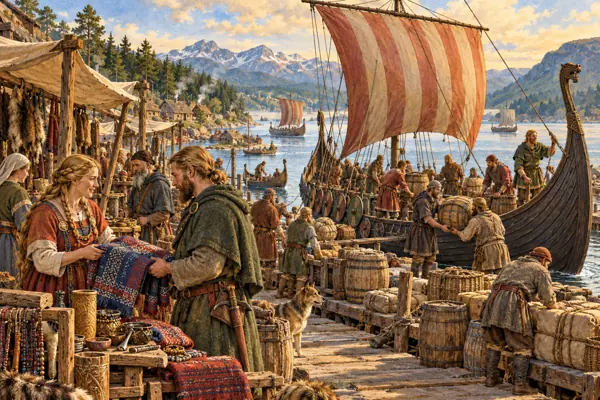
Find your bearings in Scandinavia
See where Kattegat lies between Denmark and Sweden. The map separates the real sea from the fictional town familiar from television.
Extended analysis
200 research essays: follow the evidence
Explore focused historical questions through primary evidence, scholarly debate and the limits of interpretation.
Browse all research essays ↗40 essays
New research essays
- A Burned Ship in a Working Harbor: Reconstructing the Final Movement of Hedeby 1Research essay
- Anchored Evidence: What Ground Tackle Reveals about Viking SeamanshipResearch essay
- Before Faroese Landnám: What Sheep DNA and Burned Barley Actually DateResearch essay
- Between Sea and River: Locating Transport Transitions in Viking Age Southwestern FinlandResearch essay
- Beyond the Settlements: How Far North Did Greenland’s Ivory Networks Reach?Research essay
- Birsay between Shore and Island: Accessibility Is a Historical VariableResearch essay
- Building Scandinavian Ships in Ireland: Skuldelev 2 and the Geography of SkillResearch essay
- Butternuts at L’Anse aux Meadows: Southern Connections without a Second Proven SiteResearch essay
- Bårset and the Problem of a Viking Age Without a SailResearch essay
- Crossing the Irish Sea: What Would Demonstrate Repeated Travel?Research essay
- Four Possible Havens: Testing the Stops between Viking DestinationsResearch essay
- From Shore to Shelter: Boathouse Floors, Haulage, and Repeated Maritime UseResearch essay
- Galtabäck Across a Period Boundary: Timber Connections and Maritime ContinuityResearch essay
- Greenland’s Last Recorded Ships: Why Documentary Silence Is Not an Event DateResearch essay
- Hafnir before the Farm? Testing the Seasonal-Outpost InterpretationResearch essay
- Insular Metalwork in Norway: Tracing Transfer without Inventing a TravelerResearch essay
- Iron at L’Anse aux Meadows: From Smelting Evidence to Expedition SupportResearch essay
- Is the Sheltered Bay Really the Best Harbor? Wind Fetch and Norse Landing PlacesResearch essay
- Kanhave before the Viking Age: A Canal, a Portage, or Both?Research essay
- Keeping Water Out: Caulking, Coatings, and the Evidence for Maintaining Viking ShipsResearch essay
- Klåstad: Reconstructing a Commercial Voyage from a Stranded HullResearch essay
- Knarr, Skeið, and Karvi: Can Written Ship Names Classify Excavated Vessels?Research essay
- Lapuri and the Dating of Maritime Technology in the Gulf of FinlandResearch essay
- Manx Crosses: How Many Audiences Could One Monument Address?Research essay
- Maps with Missing Edges: Reconstructing Viking Connectivity from Unequal EvidenceResearch essay
- Naming a Seaway: What Maritime Place-Names Can and Cannot LocateResearch essay
- Norse and Dorset: Distinguishing Encounters from Traveling ObjectsResearch essay
- Ohthere’s Northern Journey: Direction, Duration, and the Geography of TestimonyResearch essay
- Seven Nights to Truso: Why Wulfstan's Geography Does Not Specify a Single Sailing TrackResearch essay
- Sewn Boats and Northern Encounters: Reading the Evidence beyond the StitchResearch essay
- Ships Drawn on Objects: When Can an Image Become a Measurement?Research essay
- Short Crossings, Complex Networks: Logboats and the Archaeology of FerriesResearch essay
- The Limfjord Was Not a Permanent Shortcut: Reconstructing Changing SeawaysResearch essay
- The Portage Problem: What Boat-Hauling Experiments Can Establish about Eastern RoutesResearch essay
- Treenails across the Baltic: Construction Traditions without Fixed Ethnic LabelsResearch essay
- Two Stems for One Boat: Kraka Fyr, Skjoldungen, and Competing ReconstructionsResearch essay
- Unst’s Longhouses: Similar Plans, Different HistoriesResearch essay
- When an Oseberg Reconstruction Sails Badly: Separating Hull Shape from HandlingResearch essay
- Why a Baltic Route Model Cannot Simply Be Moved into a Tidal StraitResearch essay
- Äskekärr and the Problem of a Ship's Long Working LifeResearch essay