
Journeys & Encounters · Deep dive
Who Were the Rus’? A Name across Changing Political Worlds
In Brief
The same label appears in embassies, chronicles, and modern scholarship, but its meaning depends on the speaker, date, and setting.
On this page
A name and a later manuscriptThe embassy recorded in 839The invitation story explains legitimate ruleDifferent observers used different categoriesArchaeology cannot simply illustrate a founding legendA word for a people is not always a language nameWhere historians place Rus’ changes the storyA precise vocabulary preserves a complex historySourcesA name and a later manuscript
Rus’ can refer to people, rulers, a political community, or a territory, depending on the source and period. Stanford’s Global Medieval Sourcebook explains that the Primary Chronicle was compiled in Kyiv in the 1110s, while its earliest surviving copy dates to 1377. These dates establish two distinct distances from the ninth-century beginnings it describes: the interval before composition and the interval before the surviving witness. Even the conventional English title Russian Primary Chronicle can mislead, because the realm of Rus’ is part of the heritage of several modern countries. A medieval label should therefore be read in its own setting rather than treated as a modern national category.
Sources for this section: 1
The embassy recorded in 839
The Annals of Saint-Bertin describe men accompanying a Byzantine embassy to Louis the Pious in 839 who called their people Rhos. According to the account, investigation identified them as belonging to the Sueoni, conventionally understood as Swedes. The University of Texas’s linguistic commentary presents the Latin and a translation together. This is strong evidence for a Scandinavian connection in one early occurrence of the name. It is not a complete description of everyone later called Rus’. An embassy is a selected group carrying a diplomatic identity. Its reported origin cannot automatically settle the composition of a political community a century later or hundreds of miles away.
Sources for this section: 2

The invitation story explains legitimate rule
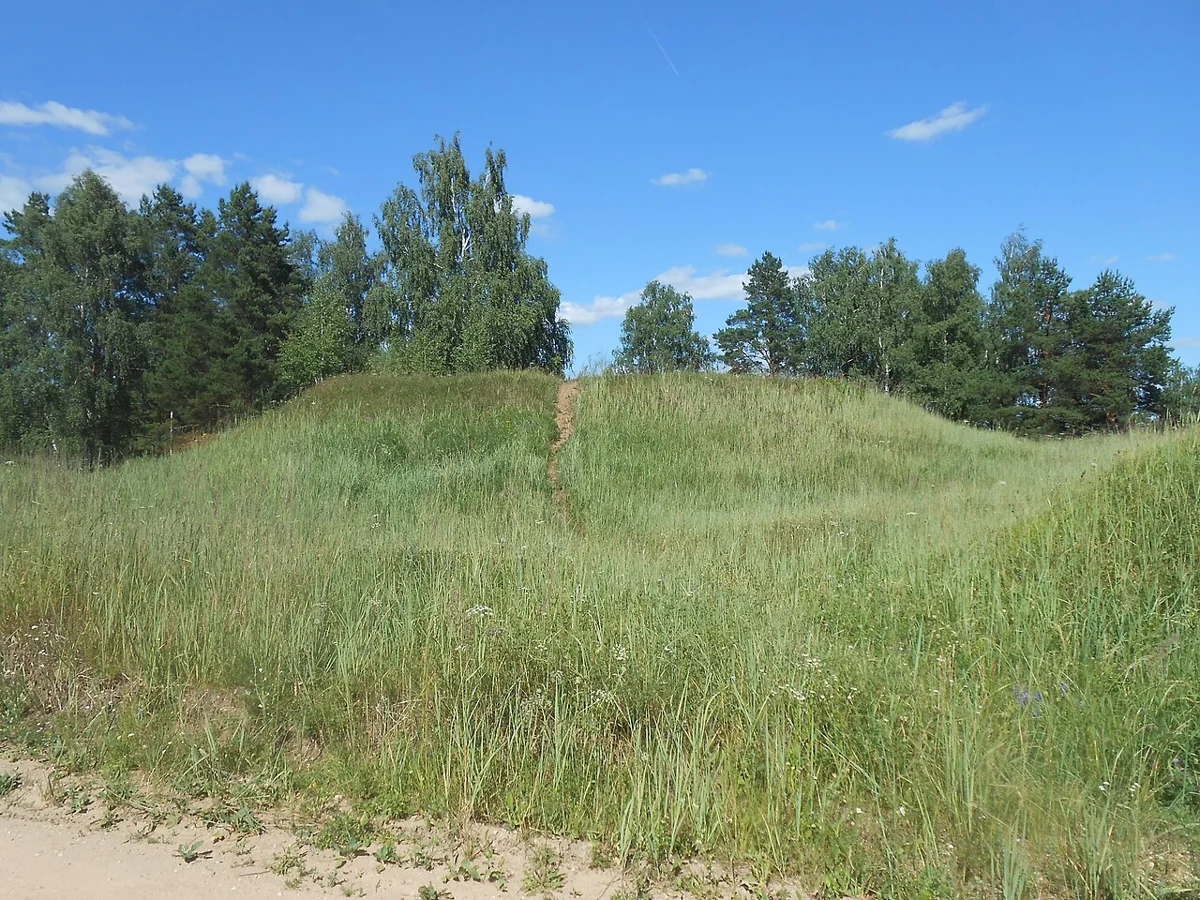
In the Primary Chronicle’s account under 862, communities expel tribute-taking Varangians, fall into conflict, and then seek a prince who can govern and judge. The narrative identifies a particular group of Varangians as Rus’ and introduces the brothers associated with the founding dynasty. Its structure makes authority answer a problem of disorder. That is a political explanation as well as a claim about ancestry. The surviving account was assembled much later than the ninth-century events it describes. Its speeches and orderly sequence should consequently be read as retrospective narrative, not minutes from an assembly at which an entire state was founded in one decision.
Sources for this section: 3, 1
Different observers used different categories
The Texas commentary compares the ninth-century Frankish account with tenth-century Liutprand of Cremona, who connects Russi with the northern people he calls Normanni. His explanation shows a writer translating an unfamiliar group into categories intelligible to his audience. The same commentary notes that the Primary Chronicle and the Novgorod Chronicle do not use Rus’ in precisely the same geographical way. This variation is important evidence. A name may spread, narrow, or acquire a political meaning as institutions and relationships change. Rather than force every occurrence into one original definition, historians can examine how the term’s shifting use records changing perspectives.
Sources for this section: 2
Archaeology cannot simply illustrate a founding legend
A study in Current Swedish Archaeology examines how Scandinavian objects and the chronicle’s Varangian narrative have been tied together in the long debate over origins. It emphasizes the influence of national and political concerns on those interpretations. The methodological issue is specific: an artifact style does not establish the identity of a whole population, and a later text should not predetermine what excavated material is allowed to mean. Objects may indicate travel, exchange, imitation, or social display. These possibilities need contextual testing. Scandinavian participation can be substantial without requiring every local institution, craft tradition, or political development to have been imported intact from Scandinavia.
Sources for this section: 4
A word for a people is not always a language name
Linguistic research on the later history of the term for the Russian language revisits a chronicle passage connecting Slavs and Rus’. It warns that an expression translated as one people should not automatically be understood as a statement that they possessed one named language in the modern sense. This is more than a technical issue of vocabulary. English translations can silently turn medieval categories into familiar national ones. A careful reading distinguishes a claim of political or collective unity from a classification of speech. Historical names for peoples, lands, and languages overlap, but their histories are not interchangeable.
Sources for this section: 5
Where historians place Rus’ changes the story
Christian Raffensperger surveys competing ways of locating Rus’ within medieval history. Scholars have treated it as an isolated development, a corridor between Scandinavia and Byzantium, a member of a Byzantine-centered world, or part of wider medieval Europe. Each frame makes some connections more visible than others. A route-centered account can foreground mobile traders and warriors while underplaying settled institutions. An exclusively Byzantine frame can obscure relationships elsewhere. This does not mean that geography is arbitrary. It means that the scale of comparison should follow the question being asked, rather than making one external relationship stand for the whole political and social world.
Sources for this section: 6
A precise vocabulary preserves a complex history
The evidence supports an important Scandinavian role in early Rus’, while also requiring attention to local communities, mixed relationships, and later political development. The useful distinction is between an early recorded group and every subsequent bearer of its name. When discussing the embassy, identify the year and the Frankish observer. When discussing the invitation, identify the later chronicle and its explanatory purpose. When discussing objects, state the archaeological context and the inference being made. This practice allows a connected history without turning medieval Rus’ into an exclusive possession of any modern nation or reducing a changing society to the birthplace of some of its early elites.
Sources for this section: 1, 2, 3, 4, 5, 6
For the introductory context, read Staraya Ladoga: Where Baltic and River Routes Met.
The Evidence
The sources below support this article. Interpretations and limits are explained in the text; this is not an exhaustive research review.
- Stanford Global Medieval Sourcebook: Primary Chronicle context ↗
- University of Texas: documentary evidence for the term Rus ↗
- University of North Carolina Greensboro: Primary Chronicle excerpt ↗
- Current Swedish Archaeology: Vikings, Rus, Varangians ↗
- Russian Linguistics: the late origins of a language name ↗
- Christian Raffensperger: The Place of Rus’ in Medieval Europe ↗