
Journeys & Encounters · Deep dive
Ibn Fadlan: What an Eyewitness Could See, Hear, and Misunderstand

In Brief
A diplomatic journey to the Volga produced an extraordinary account whose interpreters, political setting, and transmission deserve as much attention as its famous funeral.
On this page
The mission came before the famous encounterReception at court made diplomacy visibleA meal expressed the receiving ruler’s orderThe interpreter is almost invisible but essentialThe funeral was a particular eventDisapproval and curiosity can coexistThe text’s later survival leaves gapsReading the whole encounterSourcesThe mission came before the famous encounter
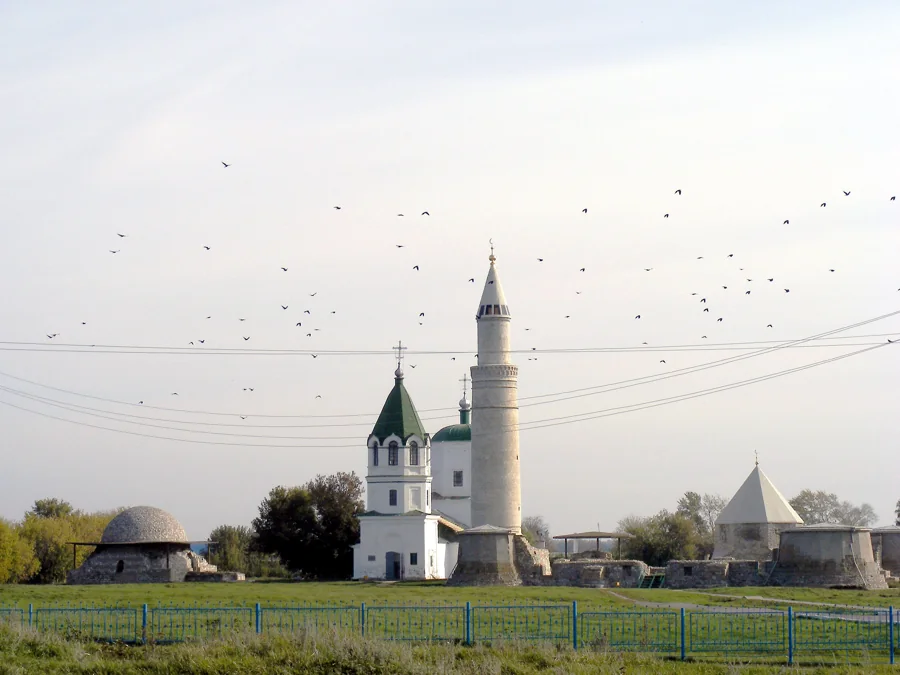
Ibn Fadlan traveled as part of an embassy sent by the Abbasid caliph al-Muqtadir to the ruler of the Volga Bulgars in 921–922. The Library of Arabic Literature’s edition presents the work as the surviving account of that mission, not as a survey commissioned to describe all Scandinavians. Its journey begins in Baghdad and passes through several political and cultural worlds before reaching the Volga. This frame matters because the encounter with the Rus was one episode within a diplomatic assignment. Reading only that episode can turn an incidental meeting into the traveler’s apparent purpose and erase the people to whom the embassy was actually sent.
Sources for this section: 1
Reception at court made diplomacy visible
The text preserved in Yaqut’s extracts describes arrival on May 12, 922, followed by preparations for the formal reading of letters. Standards, a saddled horse, clothing, gifts, and a robe for the ruler’s wife formed part of the presentation. The ruler stood while the caliph’s letter was read. These details show authority being communicated through objects, posture, and sequence as well as words. The account is therefore useful for understanding a ceremonial encounter whose participants did not simply share one political culture. The embassy carried recognizable signs of patronage, but their meaning had to operate within the receiving court’s own arrangements.
Sources for this section: 2
A meal expressed the receiving ruler’s order
The same account describes a carefully ordered meal. The ruler distributed pieces of meat, and individual tables were supplied as each participant received a portion. Rank and access structured the occasion. This scene provides a useful counterweight to a reading that makes Ibn Fadlan merely an observer of unusual customs. He was also a participant required to follow another court’s procedures. The receiving ruler possessed authority over the setting and the sequence of interaction. Diplomatic contact was not a one-way delivery of civilization from Baghdad. The text preserves moments in which the envoy had to learn how an unfamiliar but organized political environment worked.
Sources for this section: 2
The interpreter is almost invisible but essential
In an interview about translating the work, James Montgomery emphasizes the importance of the interpreter or interpreters. Ibn Fadlan depended on mediation both for conversations and for explanations of actions he observed. We do not know enough about those intermediaries to reconstruct every stage of communication. This creates a precise limitation rather than a general reason to distrust the account. A visible action, a spoken explanation, and the envoy’s written interpretation are different layers of evidence. When the narrative reports what a participant meant, the reader should ask whether that meaning came through translation, inference, or direct observation. Those routes can produce different kinds of confidence.
Sources for this section: 3
The funeral was a particular event
Montgomery’s annotated translation distinguishes the writer’s observation of a wealthy man’s ship funeral from more general statements about customary behavior. The preparation of clothing, movement of the body, placement of objects, cremation, and memorial all belong to an event in a specific riverine setting. An enslaved woman was killed during the ceremony; her lack of freedom should remain central to its interpretation. The account must not become a generic script for every Scandinavian burial. Social rank, local contacts, and the participants’ circumstances could affect its form. Archaeological parallels can support individual comparisons without proving that every narrated detail was widespread.
Sources for this section: 4
Disapproval and curiosity can coexist
The narrative contains harsh judgments of the Rus, but also close attention to their appearance, possessions, and explanations. A teaching essay from the Library of Arabic Literature places this tension within a connected Volga world shaped by trade, religion, and competing political powers. The envoy’s reactions reveal his own expectations as well as the practices he encountered. They should neither be repeated as objective descriptions of a whole people nor used to discard every observation. Bias is often specific. A traveler can report an action accurately while judging it through religious standards that the participants do not share. The historical task is to separate those operations where possible.
Sources for this section: 5
The text’s later survival leaves gaps
Montgomery also stresses how little independent biographical information survives about Ibn Fadlan. Yaqut knew copies of the account, and the surviving manuscript tradition preserves a voice otherwise scarcely documented. Proposals that the work was an unofficial report, a merchant’s guide, or a companion to another official version remain speculative. This uncertainty affects the audience we imagine behind the prose. An official justification, a practical guide, and a personal recollection would organize information differently. Since the evidence does not settle the matter, the safest approach is to describe what the text actually does rather than assign it a confident purpose based on a modern genre label.
Sources for this section: 3
Reading the whole encounter
The account becomes richer when its diplomatic reception, ordered meals, translators, judgments, and observations remain together. The Rus episode then belongs to a wider region where merchants, rulers, envoys, and enslaved people met under unequal conditions. Ibn Fadlan’s value lies in the specificity of that encounter. He sometimes tells us what he saw, sometimes what others told him, and sometimes how he understood it. Preserving those distinctions allows a close reading without either treating the narrative as a camera or dismissing it as prejudice. The result is a history of contact in which the observer and the observed are both active participants.
Sources for this section: 1, 2, 3, 4, 5
The Evidence
The sources below support this article. Interpretations and limits are explained in the text; this is not an exhaustive research review.