
Journeys & Encounters · Introduction

The Eastern River Routes: Waterways and Portages
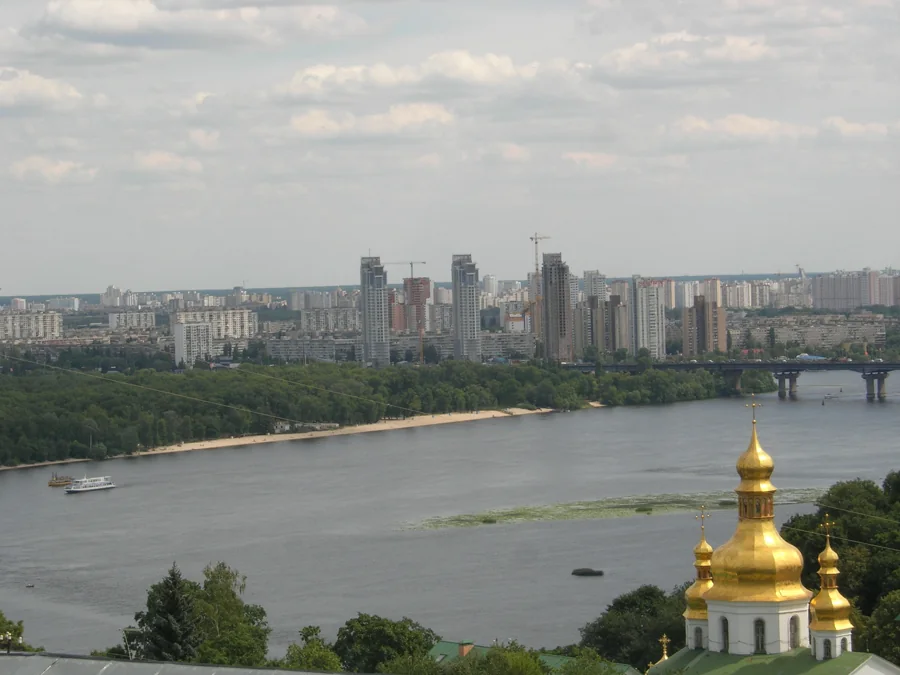
The Dnipro River at Kyiv in 2009
The Dnipro River at Kyiv, Ukraine, photographed in 2009. The modern river landscape provides geographical context for reading about eastern routes; it is not a reconstruction of the medieval waterfront.Image: Роман Днепр · CC BY-SA 3.0

In Brief

Travel between the Baltic, Black Sea, and Caspian depended on connected waterways, difficult transfers, and relationships with people along the route.

On this page

More than one road eastA bureaucrat’s viewWhen a river became an obstacleTesting the physical problemSources

More than one road east

Eastern journeys did not follow a single continuous waterway. River systems connected the Baltic region with the Black Sea and Caspian, with movement between drainage basins and around obstacles. Uppsala University’s World in the Viking Age project studies the Rus as traders and political actors in these networks. It cautions against reducing them to an unchanged ethnic group of Scandinavian Vikings. Their cultural connections were strongly Scandinavian, but their composition was mixed and could change.

A bureaucrat’s view

Ibn Khurradadhbih, writing within the Abbasid administration, described foreign travelers and their routes before the middle of the ninth century. Uppsala’s project uses his account to investigate Rus movement further into Asia. The text includes different routes and modes of travel, not simply a northern fleet sailing directly to a distant capital. Its descriptions require interpretation alongside archaeology. An itinerary tells us what a writer knew or chose to report; it cannot identify every person who used the same corridor.

When a river became an obstacle

The Viking Ship Museum draws attention to accounts of portaging around Dnieper rapids. Constantine VII’s tenth-century work and the much later compilation known as the Primary Chronicle belong to different moments and must be read accordingly. They describe journeys in which boats had to move over land. That practical requirement changes how we imagine travel: crews needed to handle cargo, equipment, and hulls while exposed away from navigable water.

Testing the physical problem

In a 1996 experiment, the museum’s small reconstructed warship Helge Ask was hauled across a roughly 300-meter strip of land in Denmark. Removing ballast, lowering the mast, and preparing a track were part of the operation. The trial showed that portage was physically feasible for that vessel and arrangement. It did not reproduce a Dnieper expedition with its terrain, security problems, loads, or available labor. Experiments are most useful when their conditions remain visible: they help explain an ancient task without pretending to recover an exact universal travel speed.

The Evidence

The sources below support this article. Interpretations and limits are explained in the text; this is not an exhaustive research review.
  1. Uppsala University: Re-Reading the Rus ↗
  2. Viking Ship Museum: Ship over land ↗

Explore further · Updated October 17, 2026

Beyond a Silver Arrow: The Islamic World and Northern Exchange

A dirham connects places, but its route may involve many people. Follow the coin without imagining that every owner traveled to its mint.

Mint, route and findspot are different places

The National Museum of Denmark identifies Central Asian cities, including Samarkand and Tashkent, among the sources of silver coins reaching northern networks. Calling all these objects simply Arab silver can obscure the geographical diversity involved.

A mint inscription gives a starting point for the object’s history. A Scandinavian hoard supplies another context, often much later. The space between them is a research problem; it should not be filled with a direct journey merely because a map has room for an arrow.

Sources: 1

The people in between matter

The Viking Ship Museum’s comparative exhibition placed northern seafaring beside Byzantine and Indian Ocean travel. Goods, ideas and skills moved within systems that already had their own institutions and participants. Scandinavians were not the inventors or sole operators of long-distance exchange.

This changes how to read the eastern river routes. A portage requires work and local knowledge; a market requires people willing or compelled to transact. Treat each connection as a relationship to investigate, rather than assuming one northern traveler accompanied a commodity across its entire history.

Sources: 2

Put coercion back into the network

The Danish museum’s account of slavery places the sale of people at centers including Hedeby and Bolgar. Silver and attractive imported objects can therefore belong to an economy that also included captivity and forced labor.

Do not label an individual coin as payment for a captive without evidence. Instead, connect the economic overview to the separate study of enslavement. Ibn Fadlan’s account offers another route into the subject, but his observations of a particular group must not become a description of everyone who used these waterways.

Sources: 3

Sources for this section

  1. National Museum of Denmark: Silver’s route to Denmark
  2. Viking Ship Museum: The World in the Viking Age — exhibition research
  3. National Museum of Denmark: Slaves and thralls

Take a closer look at the evidence

More related studies (1)
FacebookPinterestXEmail