Start Here · Overview
Why Did the Viking Age Begin? 10 Factors That Changed History
In Brief
The Viking Age grew from a combination of seafaring, existing contacts, opportunities for wealth and competition for power. These ten connected factors explain the possibilities—not ten proven causes shared by every expedition.
On this page
1. Seafaring made distant opportunities reachable2. Earlier connections meant the world was not unknown3. Trading places brought people and information together4. Portable wealth offered rewards5. Captive people were part of the economy6. Leaders competed for power7. Gifts helped hold groups together8. Existing martial networks could organize expeditions9. Protection and commerce created resources to compete over10. Experience could make further journeys possibleBefore the famous dateShips opened possibilities; people organized expeditionsWealth included captive peopleCompare explanations instead of choosing a sloganSources1. Seafaring made distant opportunities reachable
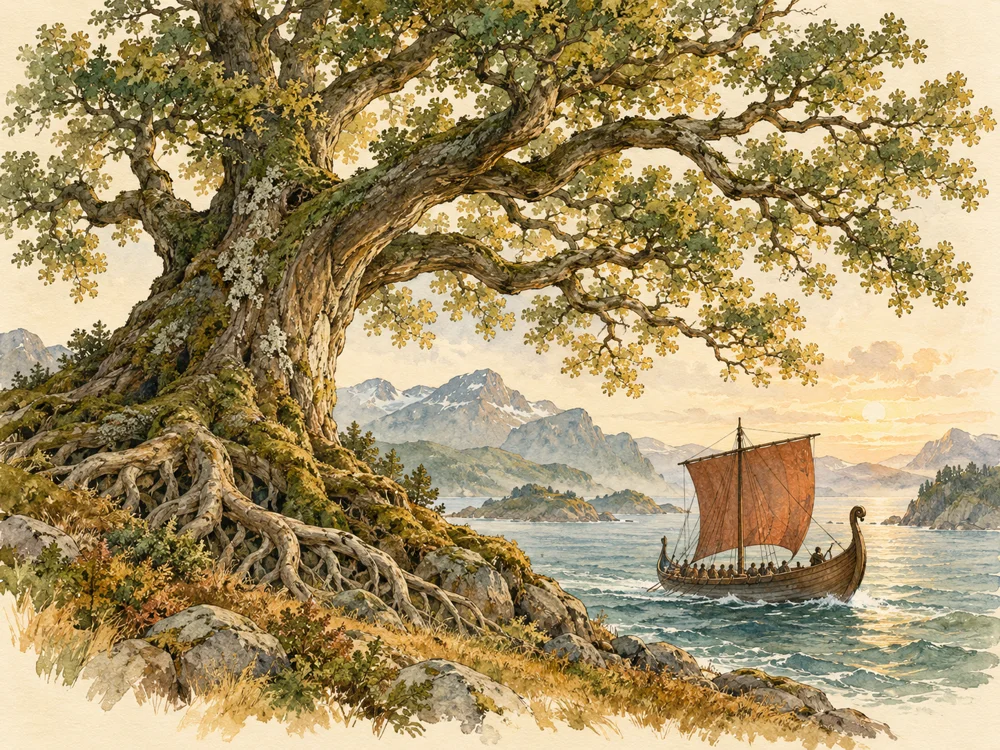
Ships were an enabling condition, not a motive. Crews needed vessels that could carry people and supplies, knowledge of coasts, and the ability to return. A useful question is not simply whether a ship could sail far, but who could assemble and support the people aboard it.
Sources for this section: 1
2. Earlier connections meant the world was not unknown
Scandinavia was already connected to distant regions before the famous raids. Imported objects in earlier graves show long-distance relationships, although an object may pass through many hands. Expansion built on parts of this connected world rather than beginning with the discovery that other societies existed.
Sources for this section: 2
3. Trading places brought people and information together
Markets such as early Ribe linked craftspeople, local producers and travelers. They offered places to exchange goods and encounter people with knowledge of other shores. Treating such contact as a possible source of practical information is an interpretation; it does not make every trader a scout or a raider.
Sources for this section: 3
4. Portable wealth offered rewards
Precious metal and valuable objects could reward a successful expedition. Some churches and monasteries concentrated riches in accessible places. This helps explain particular targets, but accounts written in religious communities make those attacks especially visible in the surviving record. Raiding was not limited to monasteries.
Sources for this section: 4
5. Captive people were part of the economy
Enslavement connected violence, markets and labor. Captives could be sold or compelled to work, making people themselves a source of profit to their captors. Any explanation focused only on treasure leaves out these forced journeys. The scale and organization varied, and later evidence cannot automatically describe the earliest expeditions.
Sources for this section: 5
6. Leaders competed for power
Political authority depended on resources and support. Rival leaders had reasons to seek wealth and demonstrate their ability to organize followers. This offers a plausible setting for expansion, but no single ruler or central plan explains the whole Viking world. Later royal institutions must not be projected unchanged into the eighth century.
Sources for this section: 6
7. Gifts helped hold groups together
Wealth could be turned into relationships. Rewards and gifts helped leaders secure loyalty, so obtaining valuables could have consequences beyond personal consumption. This is closely connected to political competition rather than a completely separate cause. A ring in a grave does not reveal the precise bargain that brought it there.
Sources for this section: 6
8. Existing martial networks could organize expeditions
People needed crews, leadership and shared expectations before a voyage could become an armed venture. Research into early raiding therefore examines military values and the societies that produced them, alongside ships and markets. Archaeological assemblages reveal aspects of such groups; they do not give direct access to every participant’s motivation.
Sources for this section: 2
9. Protection and commerce created resources to compete over
Ports did not operate outside politics. Rulers could protect merchants while benefiting from dues and control of exchange. The combination of commercial value and political rivalry helps explain why trading places mattered in conflict as well as peaceful exchange. Trade and violence could intersect without being identical activities.
Sources for this section: 3
10. Experience could make further journeys possible
Learning routes, landing places and local conditions mattered. Earlier journeys could supply experience useful on later ones. This is best understood as a possible process that reinforced expansion, not an independently proven trigger. We should distinguish what made the first ventures possible from what encouraged people to continue them.
Sources for this section: 1
Before the famous date
Lindisfarne in 793 is a memorable event, not the invention of Scandinavian seafaring. To understand the beginning, look backward as well as outward. Uppsala’s Viking Phenomenon research examines the century around 750–850 and its connections with the preceding Vendel period. Elite graves already contain evidence of distant relationships before the conventional Viking Age.
This changes the question. Instead of asking what suddenly made an isolated population leave home, ask how existing routes, knowledge and forms of authority could support larger and more violent movements. Earlier contact is part of the explanation; it does not prove that later raiding was inevitable.
Sources for this section: 2
Ships opened possibilities; people organized expeditions
A seaworthy vessel still needed a crew, supplies, maintenance and knowledge of destinations. Heen-Pettersen’s study of early Insular objects in Norwegian burials emphasizes the importance of learned geographical and social knowledge. Knowing where a coast lay was not the same as knowing where to land or whom to approach.
Read the ship and the trading place together. Danish museum evidence describes ports where protection, commerce and royal interests intersected. Such settings make it easier to understand how travelers might obtain information and organize exchange. They do not establish that every merchant became a raider or that a single organization directed expansion.
Sources for this section: 1, 3
Wealth included captive people
Monasteries could concentrate portable valuables without the defenses of some trading centers. That helps explain particular targets, but the perspective of surviving monastic accounts also makes attacks on religious communities especially visible. A record of a raid is not a neutral survey of all activity on that coast.
Enslavement must remain in the explanation. Captives could be sold or forced to work, connecting violence with household production and markets. An account limited to gold, silver and adventurous young men misses people whose journeys were compulsory. The rewards of an expedition were distributed within an unequal society.
Sources for this section: 4, 5
Compare explanations instead of choosing a slogan
Political competition, access to wealth and established overseas connections can be investigated together. A leader might benefit from rewarding followers; a merchant from a protected market; a captive from neither. These are different positions within the same network, not interchangeable descriptions of a Viking.
Claims that everyone left because Scandinavia was overcrowded, that climate alone caused expansion, or that one invention explains the whole period need more evidence than a successful voyage. A useful reading route is Ribe for early exchange, Salme for an armed Baltic expedition, and Lindisfarne for an attack recorded by outsiders. Compare the dates and evidence before treating them as stages in one universal story.
Sources for this section: 2, 7
The Evidence
The sources below support this article. Interpretations and limits are explained in the text; this is not an exhaustive research review.
- Heen-Pettersen (2019): The Earliest Wave of Viking Activity? ↗
- Uppsala University: The Viking Phenomenon — research questions ↗
- National Museum of Denmark: Trade in the Viking period ↗
- National Museum of Denmark: Raids on churches and monasteries ↗
- National Museum of Denmark: Slaves and thralls ↗
- National Museum of Denmark: Magnates and kings ↗
- National Museum of Denmark: Written sources and diplomacy ↗