
Journeys & Encounters · Introduction
Lindisfarne in 793: A Raid and Its Afterlife

In Brief
An attack on a Northumbrian monastery became a defining date because of both the violence and the people who recorded it.
On this page
Why this island matteredWhat the sources actually sayA landmark, not an absolute beginningThe community continuedSourcesWhy this island mattered
Lindisfarne was already an important religious center before the raiders arrived. Aidan established a monastery there in 635, with support from King Oswald of Northumbria. Its position near the royal center at Bamburgh connected religious life with political power. The island later became closely associated with Cuthbert, whose shrine attracted gifts and pilgrims. The Lindisfarne Gospels, made in the early eighth century, belong to this world of learning, patronage, and accumulated wealth.
What the sources actually say
The attack is conventionally dated to June 8, 793. Alcuin, a Northumbrian scholar working in Francia, responded in letters to people affected by the disaster. He described the violation of a sacred place and asked why God had permitted it. His letters are evidence of contemporary reactions, but Alcuin was not standing on the beach watching the landing. Later chroniclers framed the event with alarming portents. Such language reveals how Christian writers understood catastrophe; it is not a weather report that explains the raid.
A landmark, not an absolute beginning
English Heritage also records an earlier encounter in southern England in which seaborne newcomers killed a royal official. Lindisfarne therefore cannot securely stand for the first Scandinavian violence anywhere in Britain. Its prominence owes much to the importance of the monastery and the survival of written responses. A memorable date is useful for orientation, but it should not turn a gradual, geographically varied history into a single sudden beginning.
The community continued
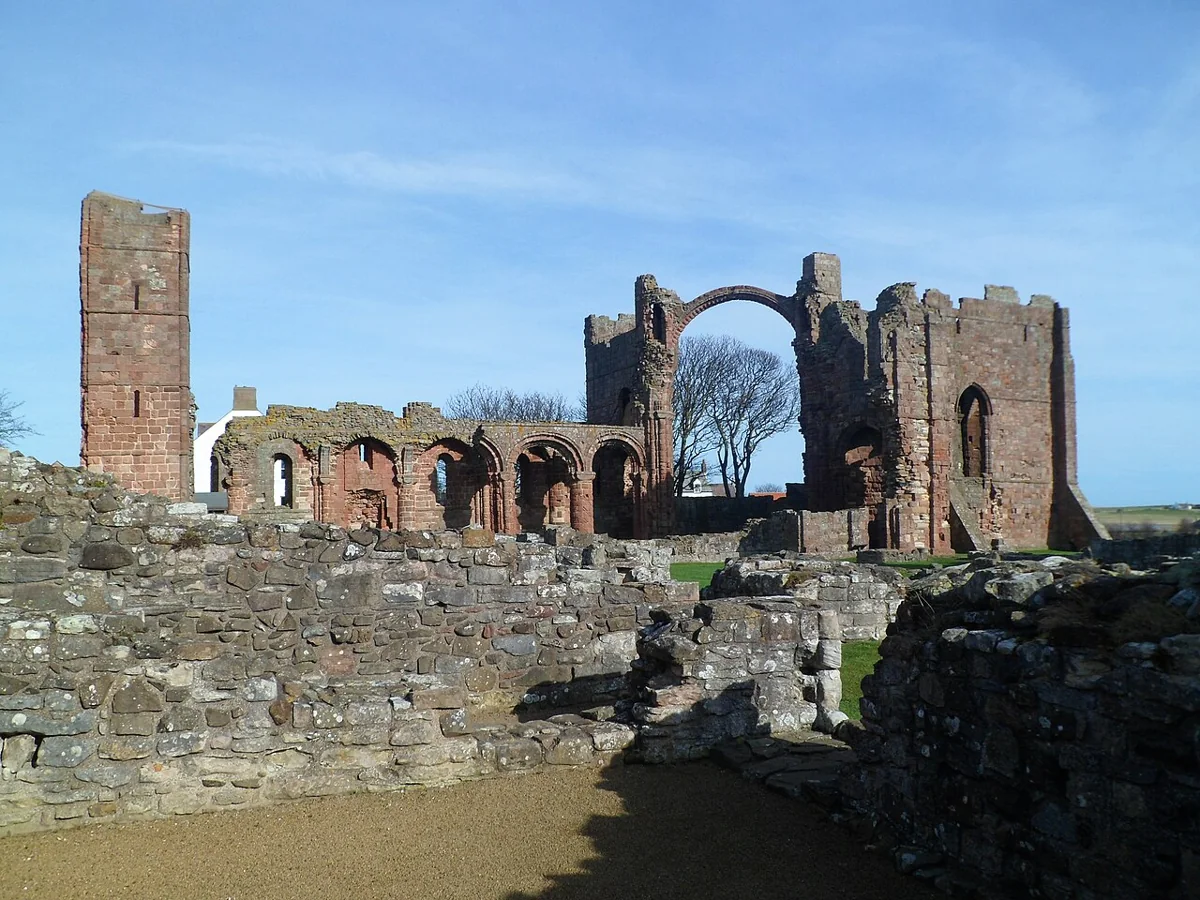
The monastery did not simply disappear in 793. Later religious sculpture indicates continuing Christian activity on the island, and Cuthbert’s community and cult endured through subsequent moves. The standing priory ruins that visitors see today are principally the remains of a much later, twelfth-century establishment. Separating the early monastery, the raid, and the surviving medieval buildings prevents three different stages of the island’s history from being compressed into one dramatic scene.
The Evidence
The sources below support this article. Interpretations and limits are explained in the text; this is not an exhaustive research review.