Art, craft & close looking
Viking Art Styles
Six styles. A world of intertwined animals.
Learn to recognize Oseberg, Borre, Jelling, Mammen, Ringerike and Urnes through surviving objects, close looking and a practical guide to their differences.
A timeline with overlapping edges
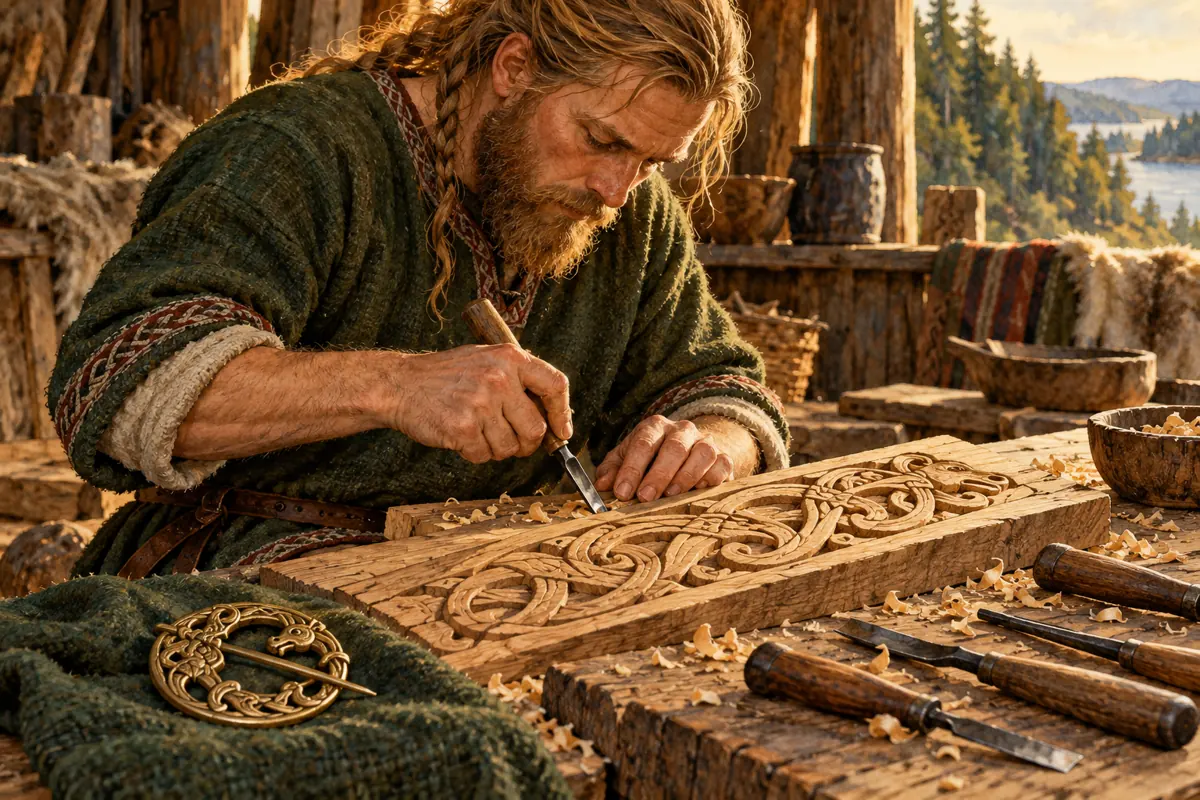
These are modern labels used to compare ornament, not six schools with fixed opening and closing dates. Styles overlap, objects combine features, and dates vary between scholarly classifications. The broad periods below are a reading aid, not a method for dating an unprovenanced object.
Late 700s–800s · approximate
Oseberg / Broa
Gripping beasts and richly carved surfaces
Start with the animals: limbs reach out to grasp nearby bodies or the frame. Figures are packed into ornament that rewards a close look. The Oseberg finds also include different kinds of carving; a whole burial assemblage should not be treated as one identical pattern.
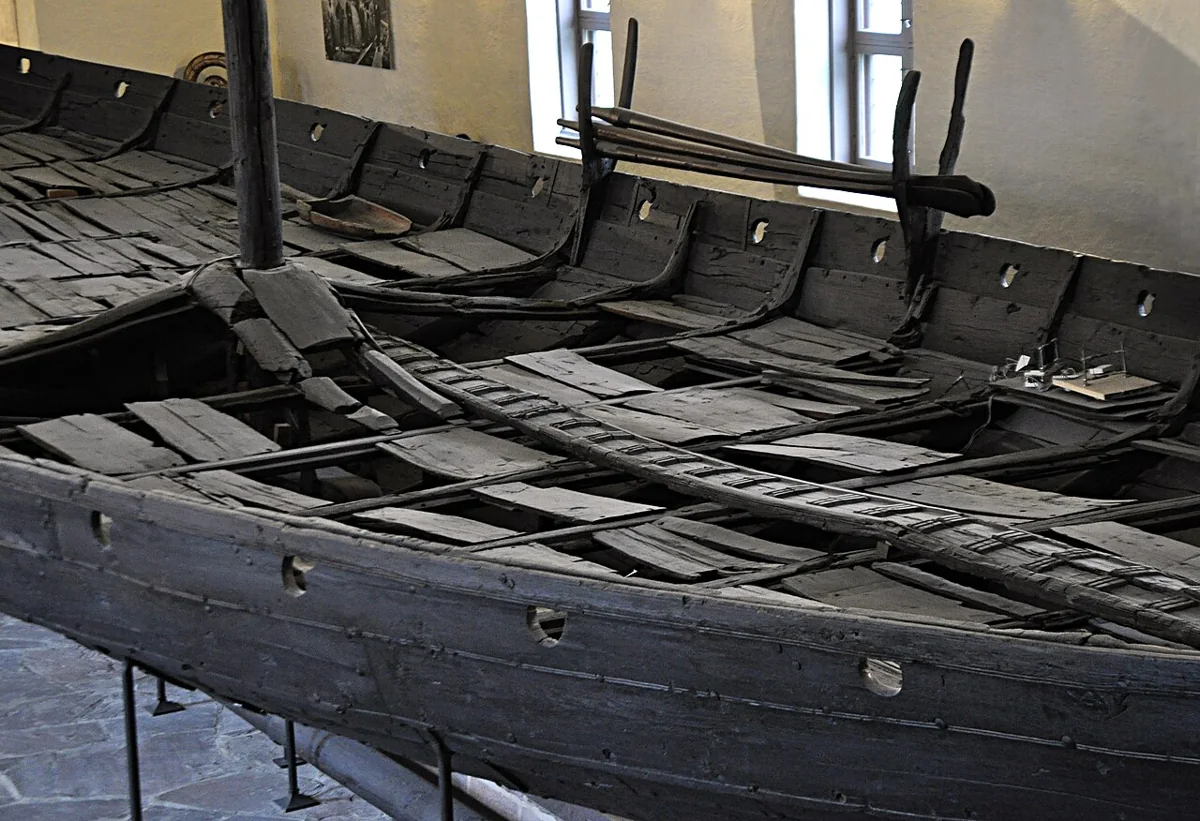
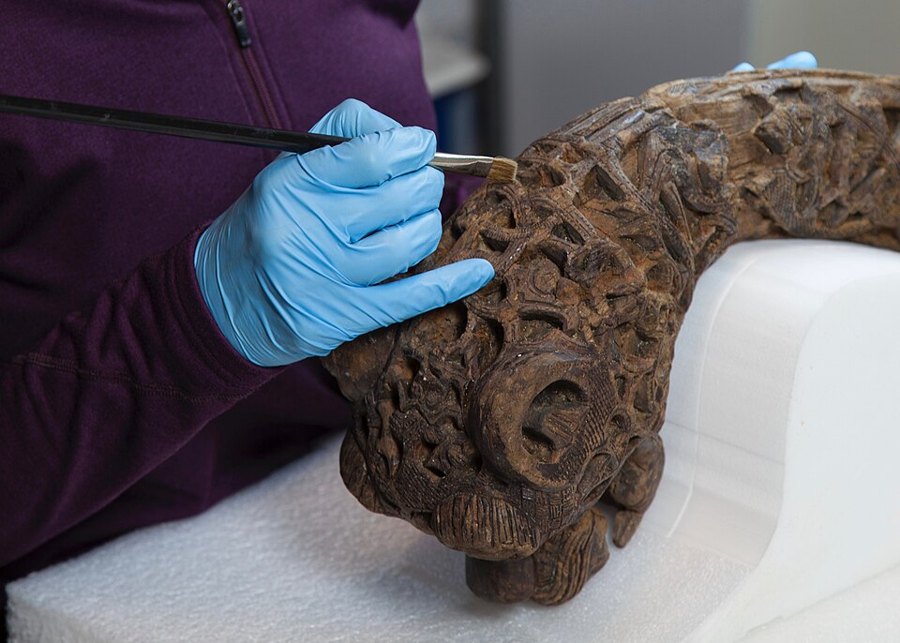
Look for a head, then follow one body and its feet before moving to the next creature. A ship photograph gives context; the animal-head post lets you look more closely at the carved surface.
Read the evidence: Museum of Cultural History — the Oseberg wooden objects ↗
Mid-800s–late 900s · approximate
Borre
Gripping animals, masks and ring chains
Borre ornament often uses compact animals, frontal cat-like faces and organized interlace. Ring-chain patterns are a useful clue. A creature may grip a border or part of its own body; the design can feel tightly locked together.
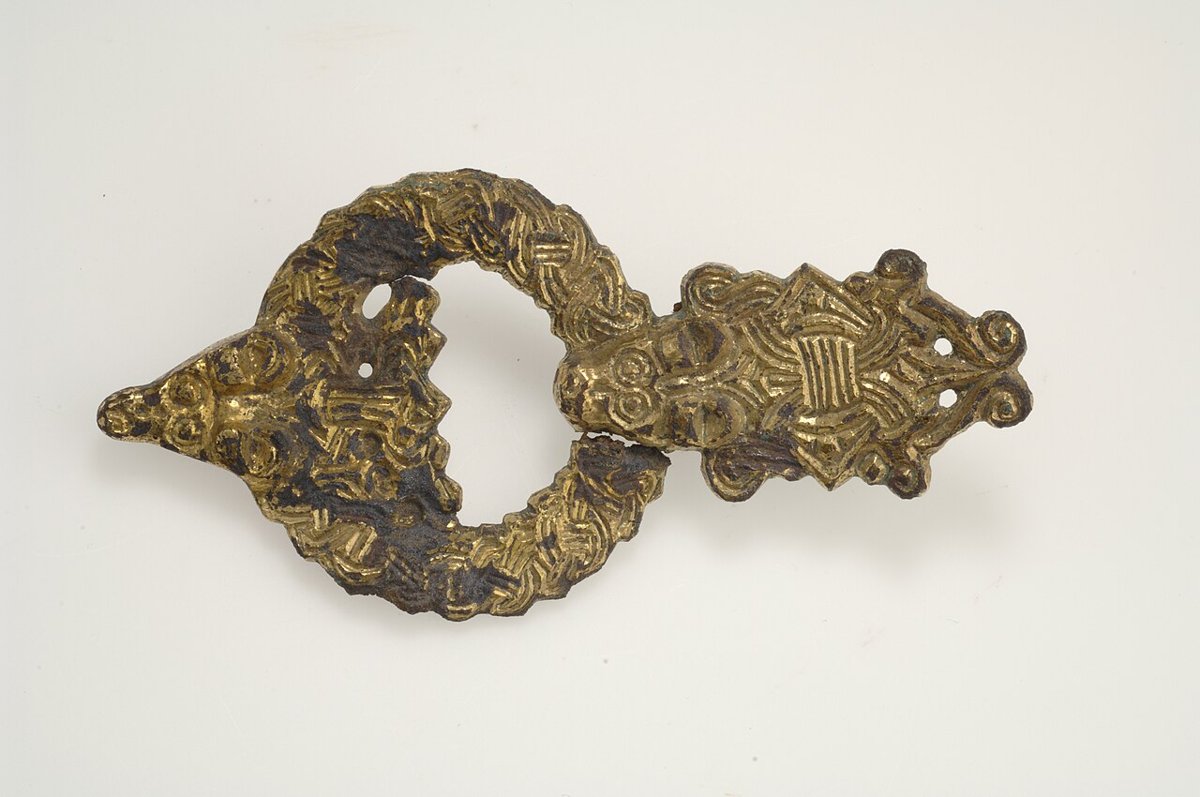
Compare the repeated pattern with the animal forms. A ring-chain is a decorative structure, not automatically a religious symbol. The style name comes from a find location; it does not mean that every object was made there.
Read the evidence: British Museum — Borre style ↗
Mainly the 900s · approximate
Jelling / Jellinge
Ribbon-like bodies and animals in profile
Here the animals stretch into curling, ribbon-like bodies. Heads seen from the side and looping outlines help distinguish the effect from the compact grip of many Borre designs. The small silver cup from Jelling gave the style its name.
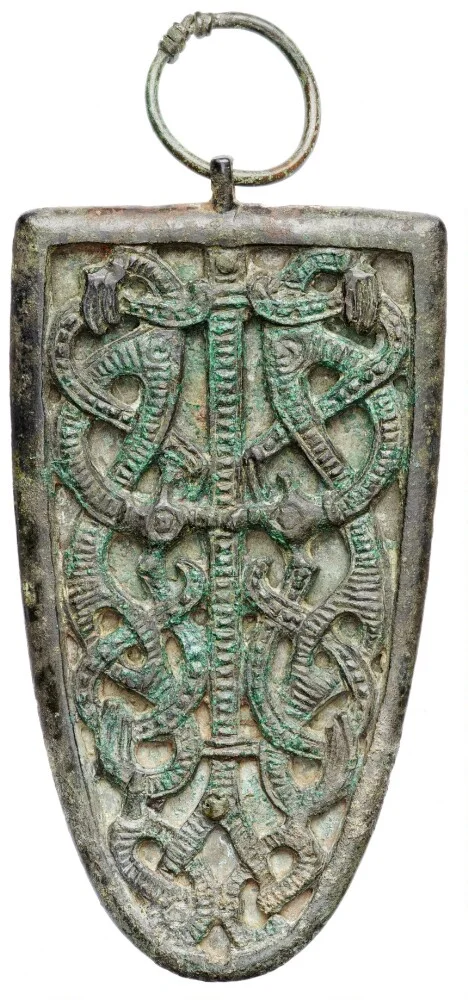
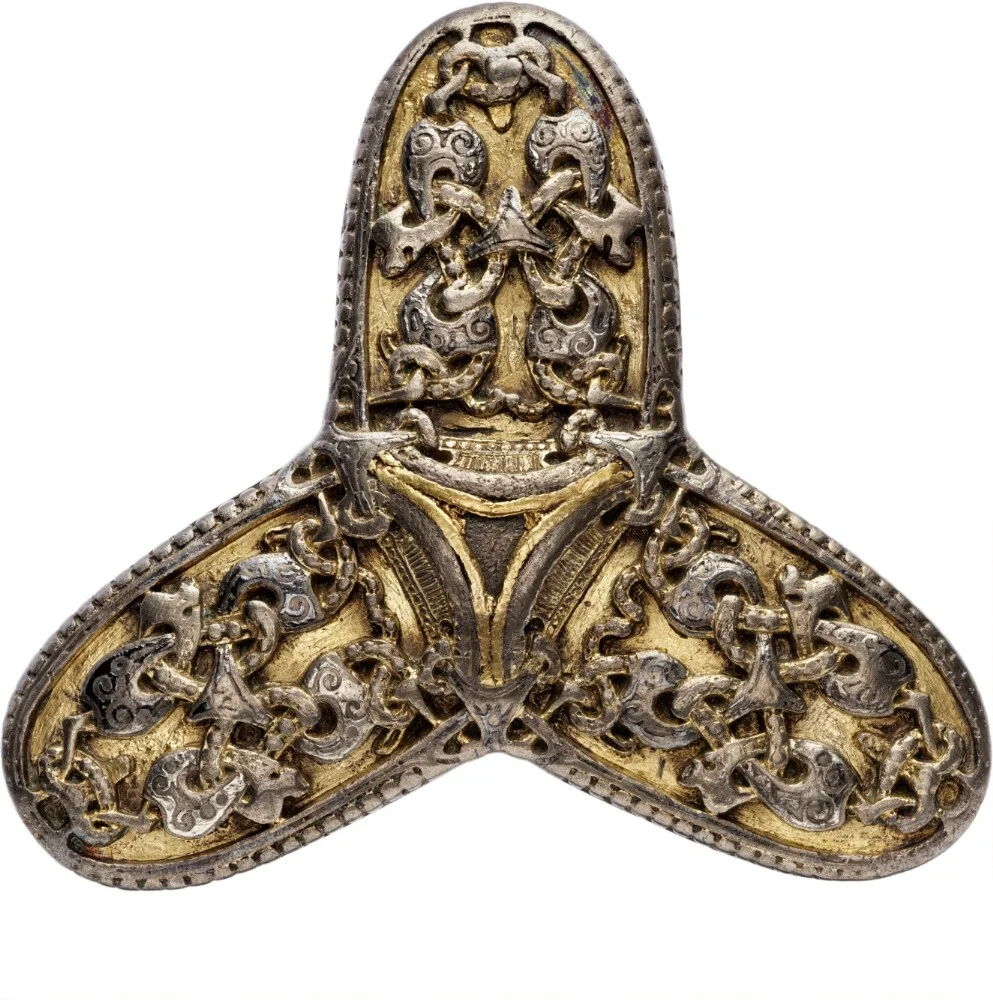
Follow the ornament on the tongue-shaped and threefoil brooches below. Do not identify the style from an object’s outline alone: the decoration is the important evidence. Jelling the place, Jelling-style ornament and the large Jelling stone are not interchangeable labels.
Read the evidence: Swedish History Museum — a Jelling-style brooch from Birka ↗
Later 900s–around 1000 · approximate
Mammen
Animals, plants and more substantial bodies
The decorated axe from Bjerringhøj near Mammen is the key named example. Its iron surface carries precious-metal ornament. Plant forms and a bird-like figure make it an especially useful object for thinking about the relationship between decoration and meaning.
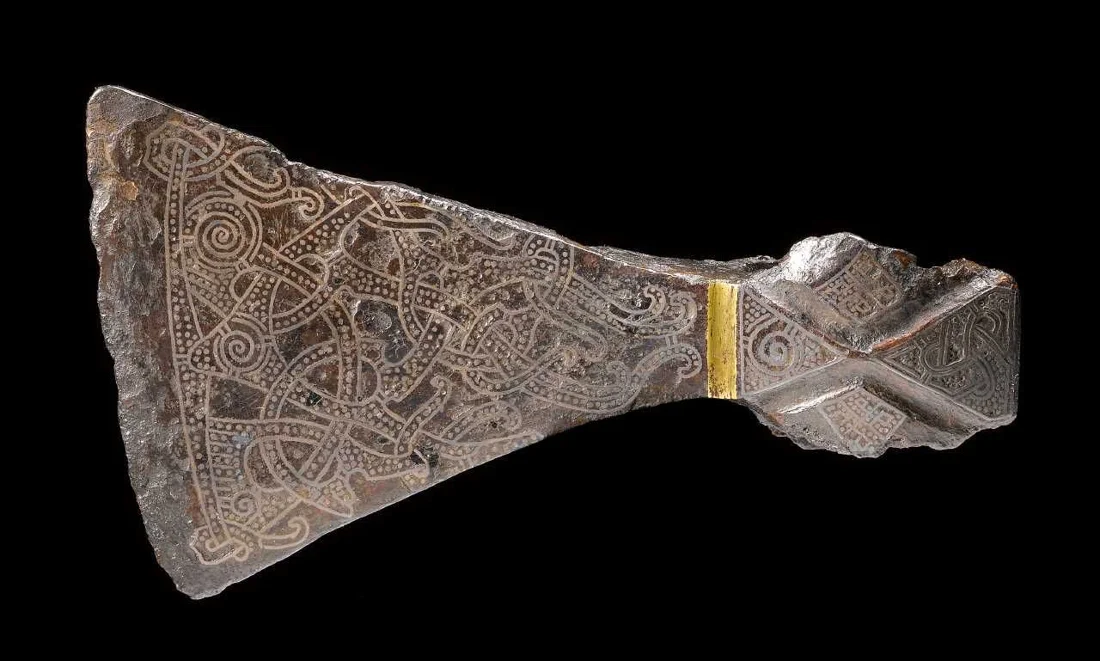
The museum discusses both Christian and pre-Christian readings of the motifs. A possible tree or bird identification should therefore be presented as an interpretation, not a certain label supplied by the original maker.
Read the evidence: National Museum of Denmark — the Mammen axe and its interpretations ↗
Around 1000–mid-1000s · approximate
Ringerike
Animal bodies surrounded by curling tendrils
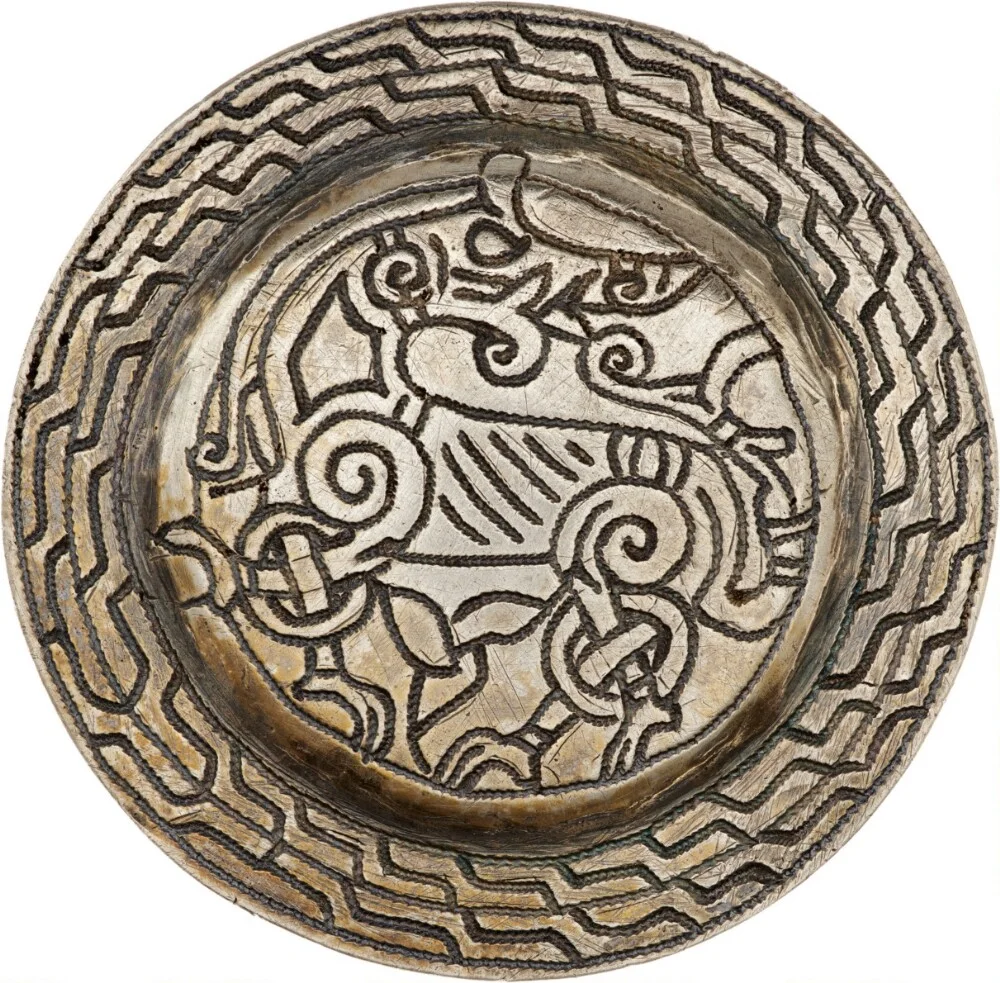
Ringerike ornament brings animal forms into lively arrangements with curling extensions and plant-like elements. Look at the round silver brooch and the Söderala weather vane as two different surfaces carrying the style.
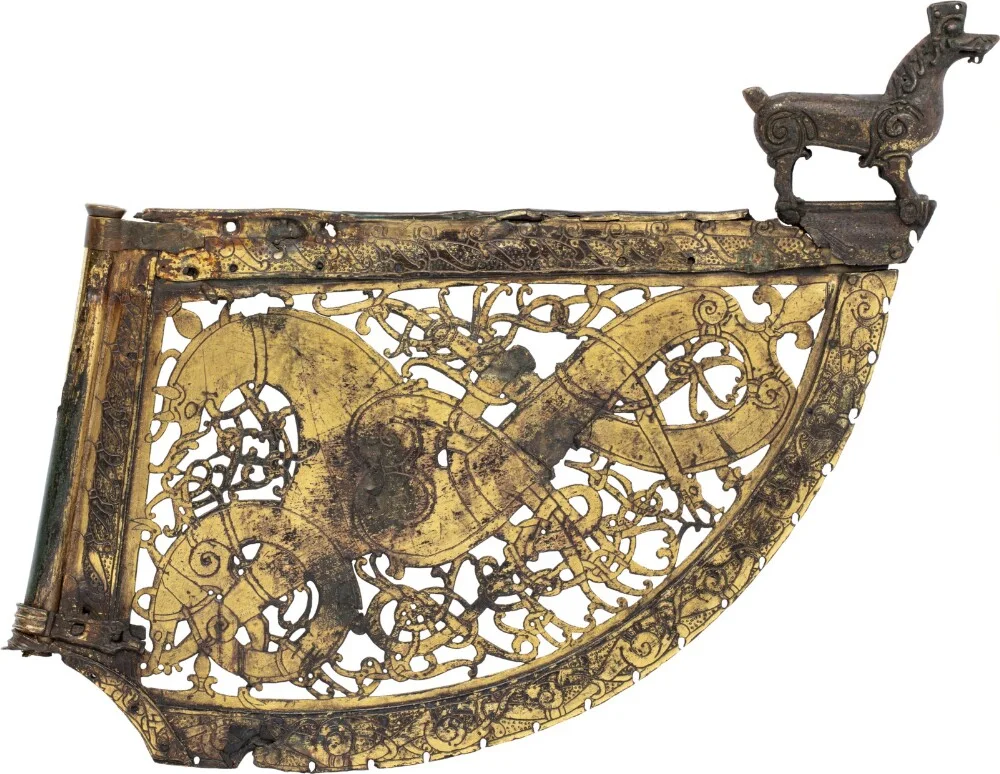
The weather vane preserves interwoven animals in openwork. Its later location on a church tower is part of the object’s history; that location alone cannot establish its first use. Different materials can make related ornament look surprisingly different.
Read the evidence: Swedish History Museum — the Söderala weather vane ↗
Mid-1000s–early 1100s · approximate
Urnes
Slender animals and elongated eyes
Urnes designs often contrast slender animals with even thinner, snake-like forms. Long jaws, pointed elongated eyes and sweeping interlace create an open, fluid effect. The style continues beyond conventional end dates for the Viking Age.
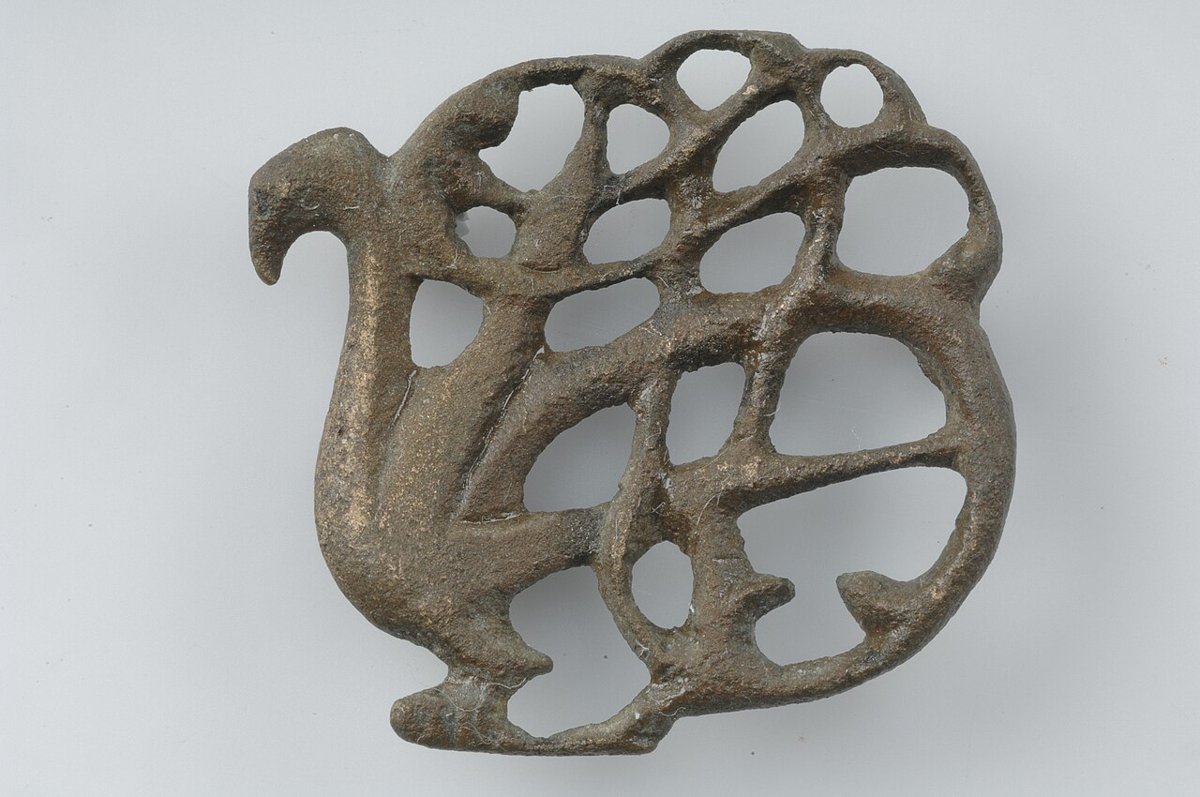
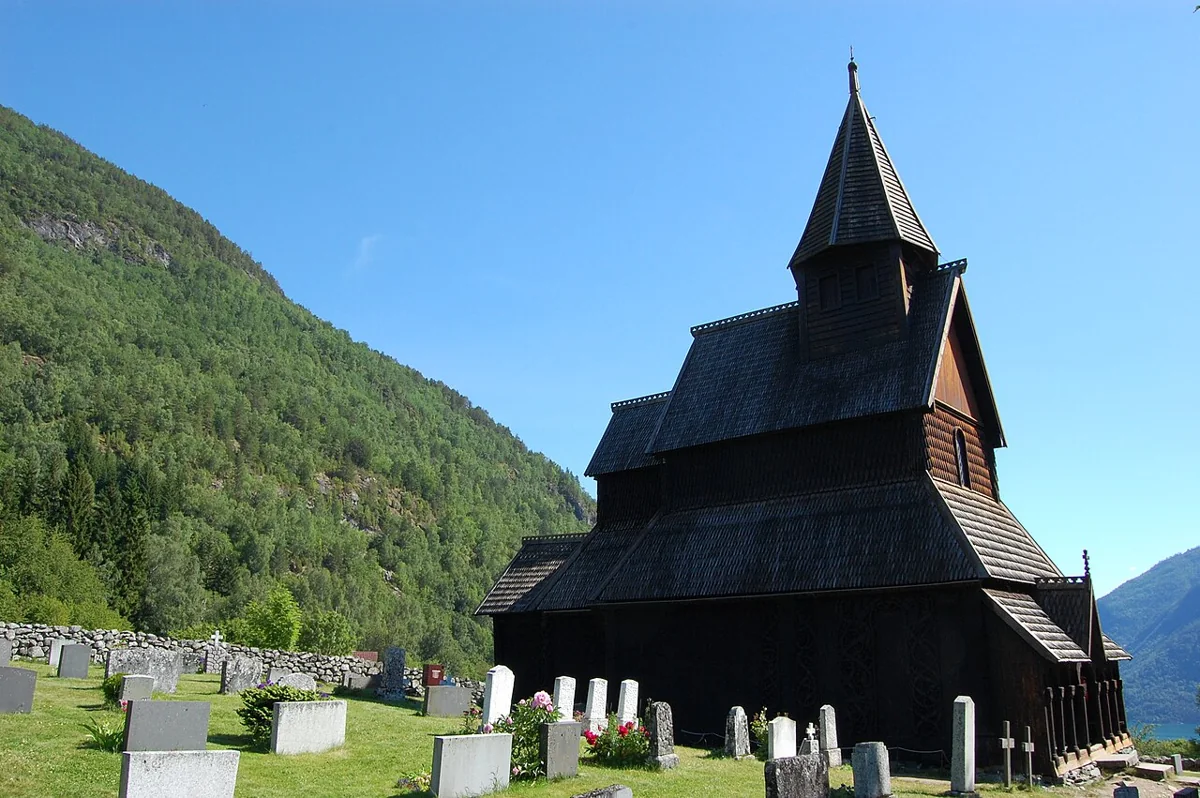
Compare the surviving brooch with the church associated with the style’s name. The church exterior is contextual photography, not a close-up of its carved portal. Christian buildings and Scandinavian animal ornament could belong to the same visual world.
Read the evidence: British Museum — Urnes style ↗
How to look at animal ornament
- Find the head. Look for an eye, a jaw and a snout before deciding where a creature begins.
- Follow the body. A crossing may belong to another animal. Trace one line at a time.
- Find the feet. What do they grip? Are they part of the border or the figure?
- Compare the whole arrangement. Repetition, empty space and the relation between thick and thin forms matter as much as a single detail.
- Check the museum record. Material, provenance and date can test a first visual impression.
Patterns are not a ready-made dictionary
A recognizable animal does not automatically identify a named god, monster or belief. A stylistic classification describes visual relationships; interpreting meaning is a separate step. Avoid attaching a confident modern meaning to every knot or interlaced creature.
Wood, metal, stone—and what survived
The Oseberg collection reminds us how much skill went into wooden objects and how demanding their conservation is. Museum displays are the result of survival, excavation and care. An absence of surviving decoration in a material is not proof that people never decorated it.
Read about conserving the Oseberg finds ↗
Keep exploring
Symbols & Origins · Weapons & Tools · Runestones · Plan a museum visit
Photographs retain the individual licenses and credits shown beside them. Modern illustrations are labeled separately. Sources reviewed October 18, 2026.
Take a closer look at the evidence
- The Fuller Brooch: Five Senses in the Age of Viking Invasions
The Fuller Brooch belongs to Anglo-Saxon England, not to Viking manufacture. Its human figures offer a different view of the ninth-century world: one concerned with perception, Christian learning and the relationship between seeing and understanding.
- The Jelling Cup: A Small Vessel with a Large Art-Historical Name
The silver cup from Jelling helped give a style of Viking ornament its modern name. Looking closely at its small scale and disturbed find context reveals why a famous object can be useful without being straightforward.
- The Söderala Vane: Animals, Openwork and Missing Movement
The Söderala vane combines interlaced animals with an open metal surface and attachment holes for elements now lost. Its appearance was therefore shaped not only by ornament but potentially by movement and changing viewpoints.
- The Källunge Vane: Two Different Compositions on One Metal Sheet
The Källunge vane rewards looking at both sides. Its engraved animals, punched background and former gilding create a different visual effect from the openwork of the better-known Söderala vane.
- The Ellebækgård Pendant: Bronze beneath Gold and White Metal
A small Viking-Age pendant from Ellebækgård combines a copper-alloy body with more than one surface treatment. It offers a precise example of why the visible color of an ornament need not reveal its underlying material.
- The Hiddensee Gold: Workshop Connections without a Named Owner
The Hiddensee gold ornaments offer a concentrated example of late Viking-Age luxury craft. Their technical and stylistic relationships are stronger evidence than attempts to attach the complete treasure to a particular royal household.
More related studies (1)
- The Walters Whalebone Plaque: A Carved Object without a Recorded Grave
The Walters Art Museum's whalebone plaque preserves a recognizable Viking-Age object form, but its public ownership record does not supply an excavated burial context. That difference matters when comparing it with better-documented finds.
Follow the making process
Explore 19 Viking crafts, from preparing fibers and sewing clothes to casting metal and making nets.
Keep exploring