
Start Here · Overview
How Did the Viking Age End?
In Brief
The Viking Age ended gradually as Scandinavian kingdoms, Christian institutions and overseas communities changed. 1066 is a conventional end date, especially in English history, because Harald Hardrada was defeated at Stamford Bridge. It was not the year Scandinavians disappeared or every voyage stopped.

On this page
Why 1066? The short answerA period boundary is not an extinction eventChristianization altered institutions as well as beliefsKingdoms and networks changed shapeFollow continuity beyond the endpointSourcesWhy is 1066 used as the end of the Viking Age?
On 25 September 1066, Harold Godwinson’s army defeated Harald Hardrada and Tostig at Stamford Bridge in England. Hardrada was killed. The event provides a memorable endpoint for an English account of the period, but it does not date every social change across Scandinavia.
English Heritage explains the northern battles of 1066. For the wider dating problem, see when the Viking Age began and ended in different regions.
What changed—and what continued?
- Religion: conversion and church organization developed over generations.
- Government: rulers built kingdoms through changing networks of power and allegiance.
- Overseas life: settlement and trade continued into the Middle Ages.
These processes overlapped. Christianity did not make warfare disappear, and one battle cannot explain the whole transition.
A period boundary is not an extinction event
A battle provides a clear date; social change rarely does. Denmark’s National Museum uses approximately 800–1050 for the Viking Age, while other regional frameworks extend farther into the eleventh century. These dates organize evidence rather than mark the disappearance of farmers, sailors or craftspeople.
Harald Hardrada’s defeat at Stamford Bridge in 1066 is central to a story about claims to the English throne. It cannot, by itself, explain changes in a Swedish farming district or the continuing life of an Atlantic settlement. Begin by deciding which place and which kind of change you want to understand.
Sources for this section: 1
Christianization altered institutions as well as beliefs
The Swedish History Museum describes multiple conversions, with local processes taking very different lengths of time. Churches and burial customs made changes visible, while ecclesiastical organization helped rulers develop new forms of authority. A ruler’s baptism and the establishment of a local church were not necessarily simultaneous.
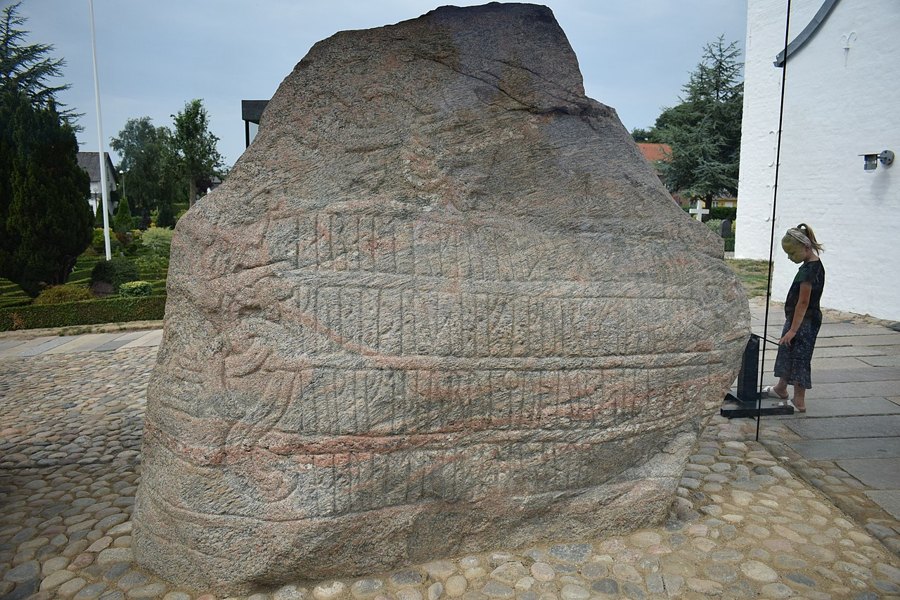
This is why a cross or a Christian inscription deserves a place in the Viking story. Religious change happened within the period, not simply after it. Nor does adopting Christianity mean that warfare ceased: the question is how power and institutions were reorganized, rather than whether violence vanished.
Sources for this section: 2
Kingdoms and networks changed shape
Danish royal territories varied with the balance of power; there could be rival kings. The later consolidation of kingdoms should therefore be understood as work undertaken across generations, not the automatic result of one victory. Towns, followers and control of resources belong in that account.
Exchange also changed. The National Museum of Denmark describes a late-tenth-century shift in the supply of coins reaching Denmark, from eastern Islamic issues toward western European ones. This is evidence for changing connections, not the end of trade. A map with one unchanging arrow for the whole Viking Age hides such developments.
Sources for this section: 3, 4
Follow continuity beyond the endpoint
The inhabitants of Scandinavian-founded settlements did not need to return north when a conventional date was reached. The long sequence at Bornais in the Hebrides is a useful counterexample to a sudden ending: occupation and political relationships continued into later medieval centuries.
For a clearer picture, compare three timelines: a ruler’s career, the development of a town, and the history of a household landscape. They will rarely stop together. Read the kingdom guide next, then revisit the Christian monuments and Atlantic settlements already on this site. Their later chapters are part of the explanation, provided those later dates are clearly marked.
Sources for this section: 5
The Evidence
The sources below support this article. Interpretations and limits are explained in the text; this is not an exhaustive research review.
- National Museum of Denmark: The Viking Age ↗
- Swedish History Museum: When Scandinavia became Christian ↗
- National Museum of Denmark: Magnates and kings ↗
- National Museum of Denmark: Silver’s route to Denmark ↗
- Niall Sharples, editor (2019): Bornais excavations — publisher’s synopsis ↗
- English Heritage: Fulford and Stamford Bridge in 1066 ↗