Journeys & Encounters · Introduction
Viking trade: silver, towns and workshops
In Brief
Trading places brought craftspeople, travelers, and local producers together. Their connections depended on transport routes, protection, and political power.
Why here?
Hedeby, in present-day northern Germany, occupied a meeting point of land and water routes. Ribe, in present-day Denmark, developed as a trading center in the early eighth century.
Making an exchange
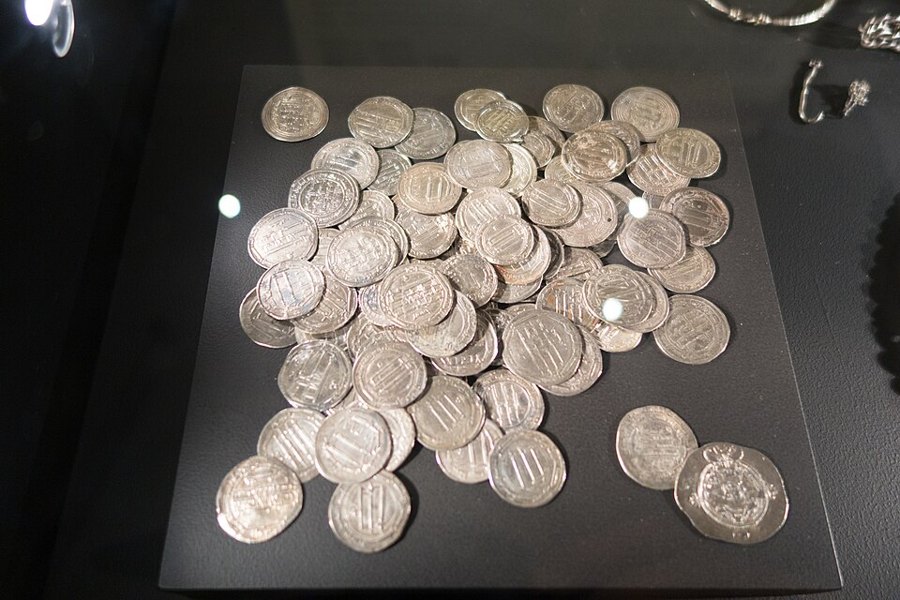
Goods could be exchanged directly. Silver could also be weighed out using scales and weights. Cut jewelry, ingots, and coins could therefore serve as metal for payment; a coin did not always function as modern money does.
Protection had a price
Rulers could provide security while collecting duties from merchants and craftspeople. Commercial activity and political authority were closely connected.
Follow the object carefully
An imported object establishes a connection, but it does not by itself tell us that its final owner visited the place where it was made. Objects could pass through many hands.
Amber: an object, a workshop and a trading network
Amber was both a traded material and something worked by craftspeople. An unfinished bead from Clifford Street in York is evidence of manufacture, not just an imported finished ornament. Blanks and discarded pieces can reveal stages of production and problems with the material. This is why apparently unimpressive workshop waste can tell us more about local activity than a complete jewel without an excavation context.
Continue with beads and workshop evidence, Viking York.
Sources: York Museums Trust: an amber-bead workshop; National Museum of Denmark: craft production and imports.
The Evidence
The sources below support this article. Interpretations and limits are explained in the text; this is not an exhaustive research review.