
Research & Sources · Deep dive
Tracing Viking Silver Through Lead Isotopes
In Brief
Silver could cross continents, be melted into rings, and disappear into another casting. Isotope research follows parts of that history while testing how recycling changed the evidence.
On this page
The question is larger than a mineComparison requires several ratiosRefining can change what lead recordsReference coverage limits exclusionThe Baltic case reveals melted importsBedale shows why assemblages matterA source is not a transactionRead the scale of the conclusionSourcesThe question is larger than a mine
An ingot from a Viking hoard may have acquired its final shape far from the source of its silver. A useful investigation therefore distinguishes geological origin, the monetary stock that supplied the metal, and the workshop that recast it. Kershaw and Merkel’s research treats recycling as a historical process that can be investigated, rather than an automatic reason to abandon provenance. That approach changes the question from “Which single mine made this ring?” to “Which available metal stocks contributed to this assemblage?” The second question can remain answerable even when the first is too restrictive. It also better matches objects assembled from previously circulating metal.
Sources for this section: 1
Comparison requires several ratios
Oxford’s lead isotope database guidance describes comparison using three isotope ratios, analytical uncertainty, and reference measurements from ores and slags. The result is then assessed against geographical, geochemical, and historical information. A two-dimensional plot is a display of selected relationships, not the whole reasoning process. Imagine an artifact overlapping one ore field on a published graph: another ratio may separate them, or multiple deposits may remain compatible. The proper claim depends on the complete comparison. A point sitting inside a colored region is therefore an invitation to inspect the reference data and uncertainty, not a self-sufficient label identifying a source on a modern map.
Sources for this section: 2


Refining can change what lead records
Remelting and refining should not be treated as the same operation. Kershaw and Merkel explain that cupellation can remove trace elements and introduce a lead isotope signature connected with refining lead rather than the silver’s original source. Combining lead measurements with trace-element evidence helps investigate this problem. Consider the consequence for a hypothetical ingot: a European lead signature alone would not necessarily mean that all its silver came from a European ore body. The analyst must consider whether a later metallurgical operation altered the signal. This is why provenance studies discuss process history alongside numerical matches, rather than assigning origins by chemical resemblance alone.
Sources for this section: 1
Reference coverage limits exclusion
The Oxford guidance also stresses the contribution of measured geological reference material and historical context. An artifact that differs from every source in a comparison set has not thereby been shown to come from outside the known world; the set may be incomplete. Conversely, compatibility is stronger when plausible alternatives have been tested and rejected for stated reasons. For readers, the important distinction is between an untested source and an incompatible source. A map should make that difference visible. Sampling density can vary among mining districts, so a densely documented region should not win by default simply because more of its geological variation has been measured.
Sources for this section: 2
The Baltic case reveals melted imports
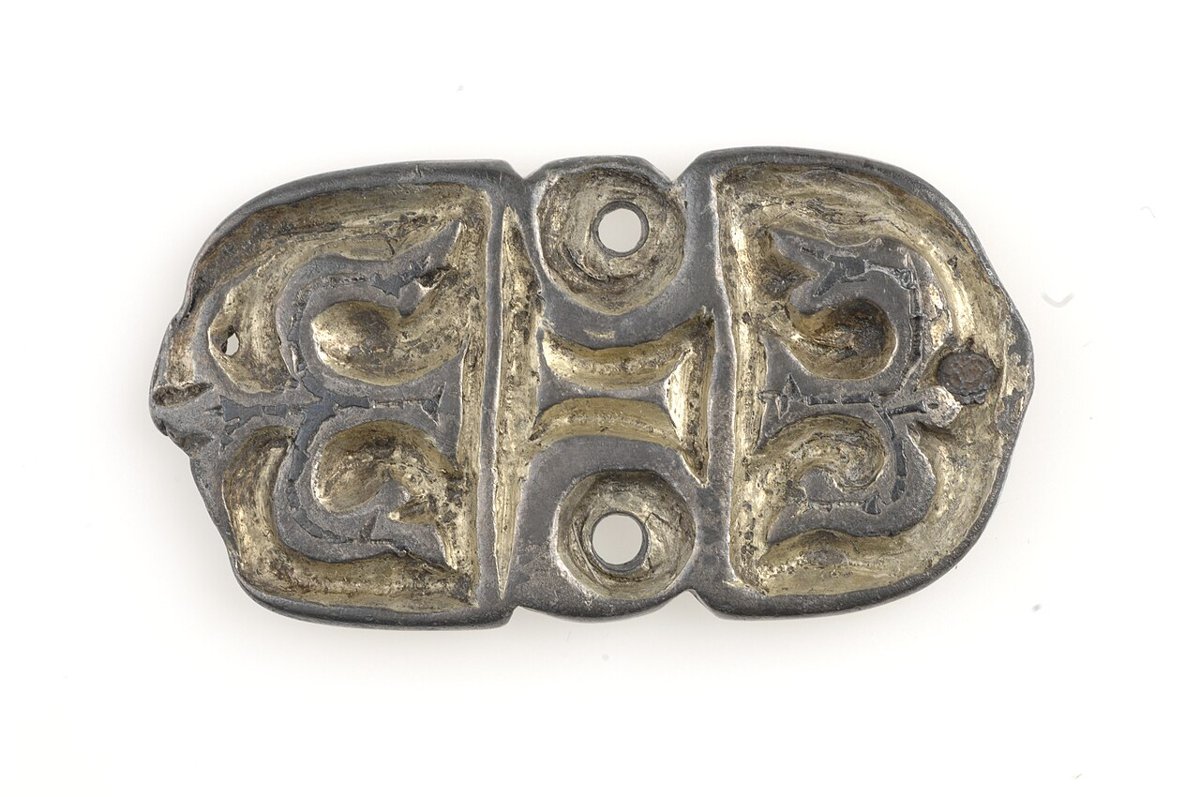
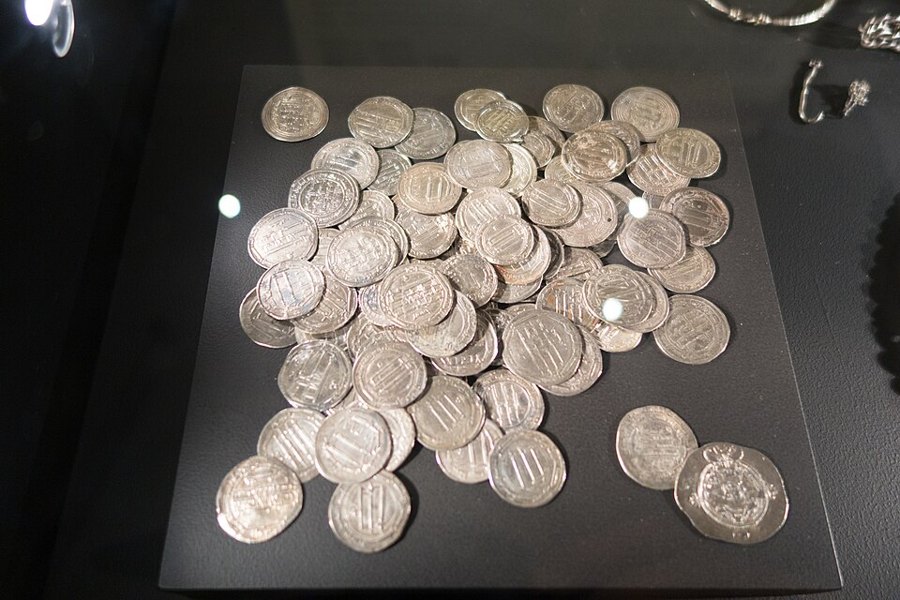
A study of nine cast silver objects from early Viking Age Baltic hoards combined lead isotope and trace-element analysis with reference data for Islamic dirhams and ninth-century western European silver. The results indicated chiefly recycled Islamic silver, including metal stock entering the central Baltic during the first half of the ninth century. That matters because surviving coins alone can miss imports subsequently melted into other forms. The inference is about a hidden contribution to the silver supply, not a count of all vanished coins. Nine analyzed objects do not directly measure the total tonnage traded, the number of voyages, or the identities of those carrying the metal.
Sources for this section: 3
Bedale shows why assemblages matter
Analyses of silver rings and ingots from the late ninth- or early tenth-century Bedale hoard identified several metallurgical groups. The study compared material with Anglo-Saxon, Carolingian, and Islamic silver references as well as possible lead sources, distinguishing refined, unrefined, and mixed contributions. Western European silver predominated, while several large ingots included Islamic silver. Such diversity is historically useful because one hoard need not equal one acquisition episode. A group buried together can contain material accumulated through different connections and transformed at different times. Its final unity is archaeological; the metal’s earlier histories may be plural. Studying several objects makes that distinction visible.
Sources for this section: 4
A source is not a transaction
The Bedale researchers interpret their results within the history of Viking expansion and continental raiding. Chemistry can constrain that discussion without independently identifying a specific act of seizure. The same geographically compatible silver could have moved through payment, exchange, gifts, or repeated transfers after an initial acquisition. These possibilities require archaeological and historical evaluation. To test the reasoning in a popular account, separate its sentences: one should state the measured grouping; another should state the proposed route or transaction. If the second sentence introduces a named raid or owner, ask what additional evidence supports that step. A geographical contribution is not automatically a complete itinerary.
Sources for this section: 4
Read the scale of the conclusion
The Baltic study offers a good model for judging scale. Its object analyses challenge a simple equation between surviving dirhams and the intensity of early imports, because casting could remove recognizable coin evidence. That is a substantive historical conclusion even without an exact import total. A clear explanation should preserve the distinction between measured objects, the modeled metal stock, and the wider economic implication. Readers can then see what new finds might change: more measurements might refine a regional pattern, while differently composed objects could reveal an overlooked supply. Provenance research is strongest when it explains which historical alternatives the measurements discriminate, and which remain open.
Sources for this section: 3
For the introductory context, read Hoards: Why the Arrangement Matters as Much as the Silver.
The Evidence
The sources below support this article. Interpretations and limits are explained in the text; this is not an exhaustive research review.