
Journeys & Encounters · Introduction
Viking York: Life Beneath Coppergate
In Brief
The excavations under a modern shopping street preserve workshops, households, and changing textile traditions.
York, England · Ninth–eleventh centuries, with later comparisons
On this page
The city beneath the streetA reconstruction grounded in excavationFollowing the making of clothTechnology changed within the townSourcesThe city beneath the street
Between 1976 and 1981, York Archaeological Trust excavated Coppergate in central York. The work revealed buildings and everyday material from the Viking-age city known as Jorvik. York Archaeology reports more than 40,000 individual objects, including shoes, household equipment, imported goods, and wooden structures. The resulting picture is unusually intimate: urban history can be approached through yards and workplaces, rather than only through rulers and battles.
A reconstruction grounded in excavation
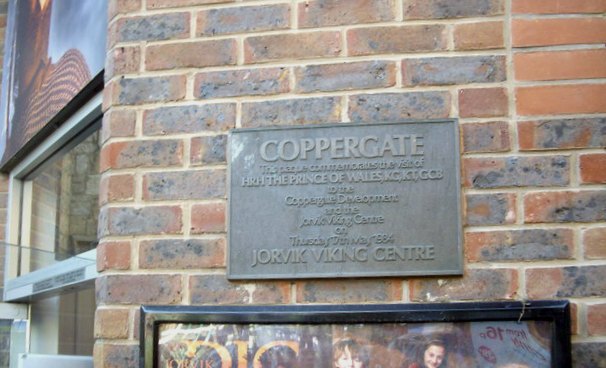
JORVIK Viking Centre occupies the excavation site. Its presentation includes the remains of a tenth-century blacksmith’s house beneath a glass floor. The distinction between those surviving remains and the reconstructed street above them matters. Objects and foundations are archaeological evidence; furnished rooms and animated inhabitants combine that evidence with modern interpretation. A reconstructed scene can make working space understandable, but no excavation supplies a complete snapshot of every person, sound, or conversation.

Following the making of cloth
Penelope Walton Rogers’s study of textile production at 16–22 Coppergate cataloged 1,147 associated artifacts. Of these, 1,006 belonged to the ninth through thirteenth centuries, with roughly two-thirds of that group assigned to the Anglo-Scandinavian period. Raw fibers, dye materials, and tools allowed the investigation to follow several stages of cloth production. The date range must remain visible: the whole collection cannot be labeled Viking without distinguishing its later medieval components.
Technology changed within the town
The textile study traced changes in loom use and in the distribution of work across four properties. Flax processing, spinning, and needlework appeared widely, while some later activities became more concentrated. The author also noted that many tools and dyes followed Anglo-Saxon traditions despite a strong Scandinavian presence. That observation complicates a simple replacement story. People living under Scandinavian influence did not necessarily abandon established skills. York’s archaeological strength lies in these layered continuities and changes, which a single label such as “Viking town” can otherwise hide.
The Evidence
The sources below support this article. Interpretations and limits are explained in the text; this is not an exhaustive research review.