Life & Society · Introduction
Clothing: what survives, and what we reconstruct
In Brief
Textiles offer glimpses of materials, skill, and status. Surviving fragments rarely preserve an entire outfit, so reconstructions combine several kinds of evidence.
On this page
Small fragments, large questionsMaterials and meansFastening and displayLooking at a reconstructionSourcesSmall fragments, large questions
Viking-Age clothing is often represented by scraps rather than complete garments. Researchers compare these remains with images and written descriptions.
Materials and means
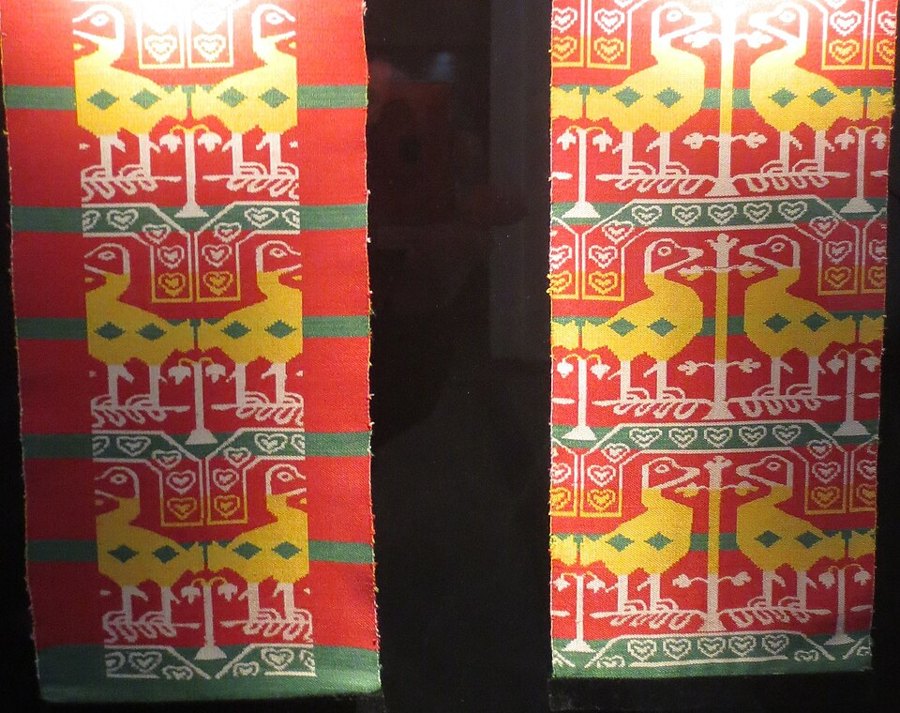
Wool and flax supplied important local fibers. Some wealthy burials also contain imported silk and precious-metal thread. Such finds reveal access to costly materials, not a standard wardrobe for every household.
Fastening and display
Brooches could hold garments together while also displaying wealth or decoration. Beads, arm rings, and other ornaments were made from varied materials, including glass, amber, and metals.
Looking at a reconstruction
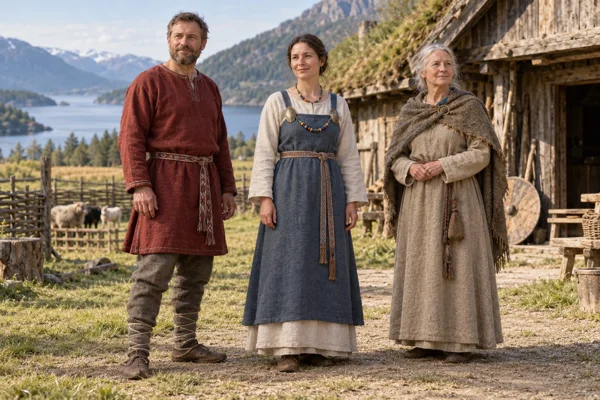
Ask which details come from preserved cloth, which from an image, and which fill a gap. The cut, fit, and combination of garments may have different levels of support.
The Evidence
The sources below support this article. Interpretations and limits are explained in the text; this is not an exhaustive research review.