
Research & Sources · Deep dive
Reconstructing Viking Clothing from Fragments and Fasteners
In Brief
A complete outfit may be built from evidence that survives only around the chest. Textile layers, seams, and brooches can constrain a reconstruction while leaving much of its silhouette uncertain.
On this page
A complete outfit starts with incomplete materialBryndum preserved relationships as well as clothLayering does not settle every garment shapeTextile on metal may record manufactureIdentify the event that made the traceMatching fragments requires several cluesDigital work can reduce physical handlingShow the evidence beside the reconstructionSourcesA complete outfit starts with incomplete material
The Fashioning the Viking Age project reconstructed textiles and outfits using material from Hedeby and the Danish graves at Bjerringhøj and Hvilehøj. Rimstad and colleagues’ 2024 account explicitly addresses the problems of turning fragmented evidence into garments. The distinction between those two products matters: a textile sample can reproduce an observed weave without establishing the shape of the clothing that once used it. An outfit requires additional decisions about dimensions, joins, and placement on a body. A clear reconstruction should therefore identify where it reproduces a surviving feature and where it supplies a plausible continuation. The finished garment is an argument assembled from several levels of evidence.
Sources for this section: 1
Bryndum preserved relationships as well as cloth
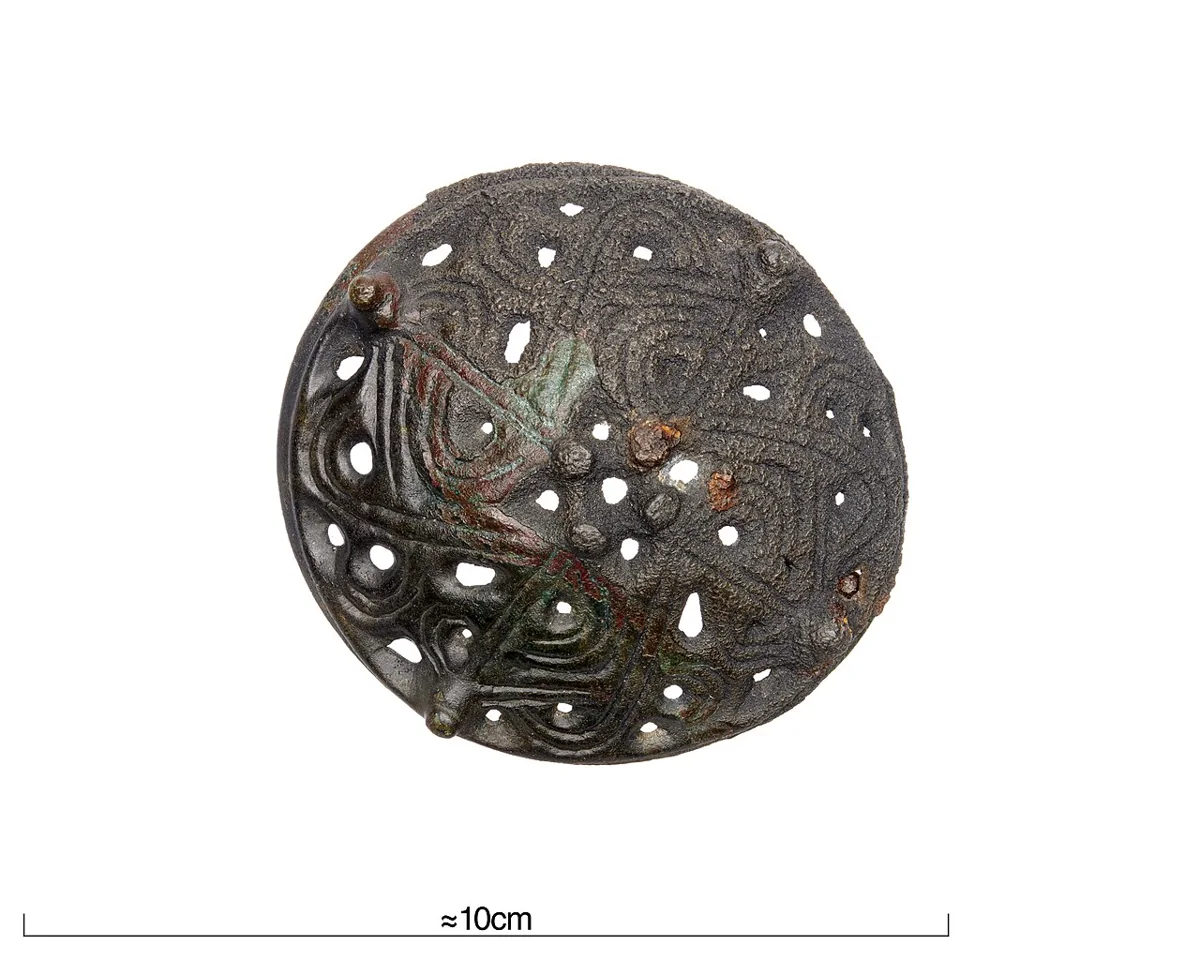
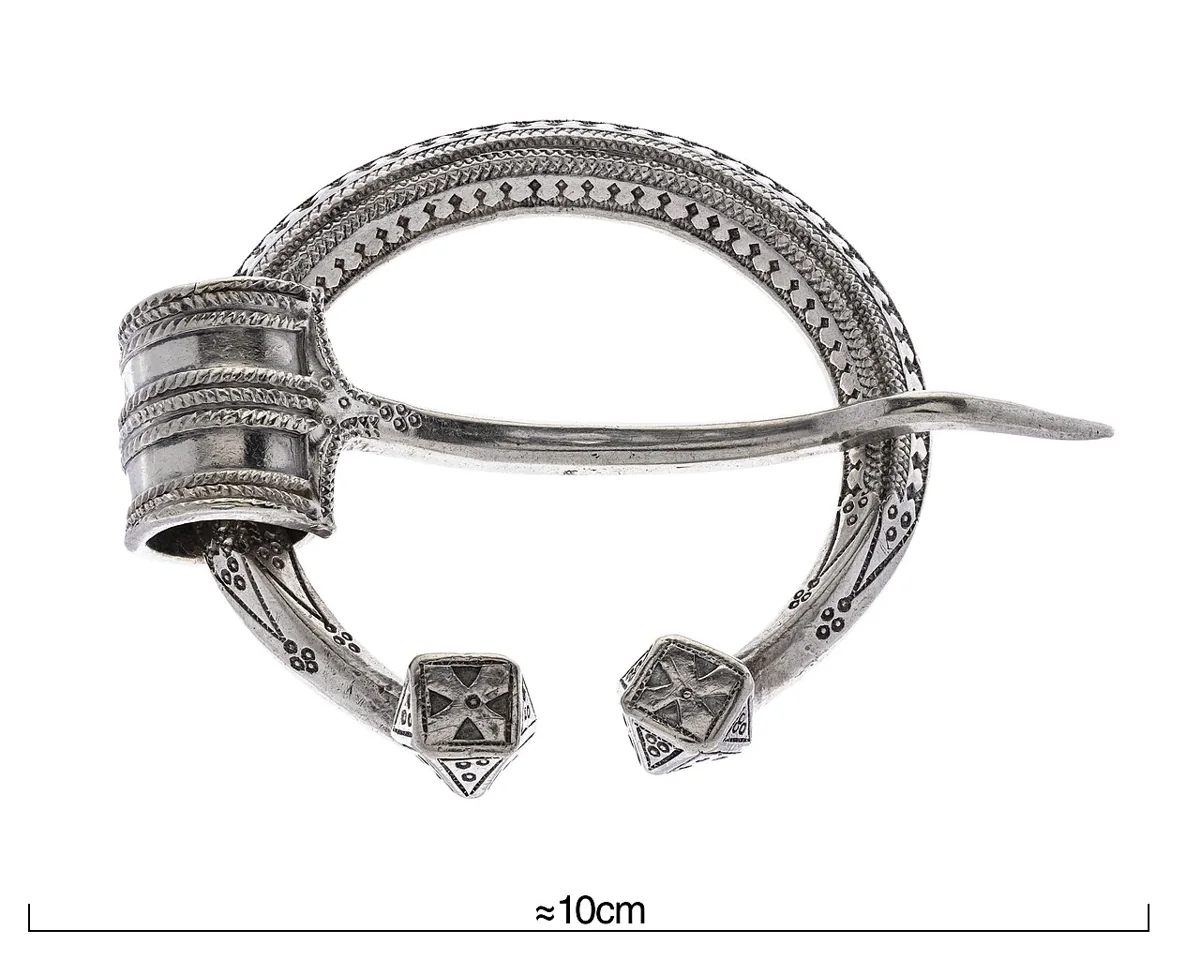
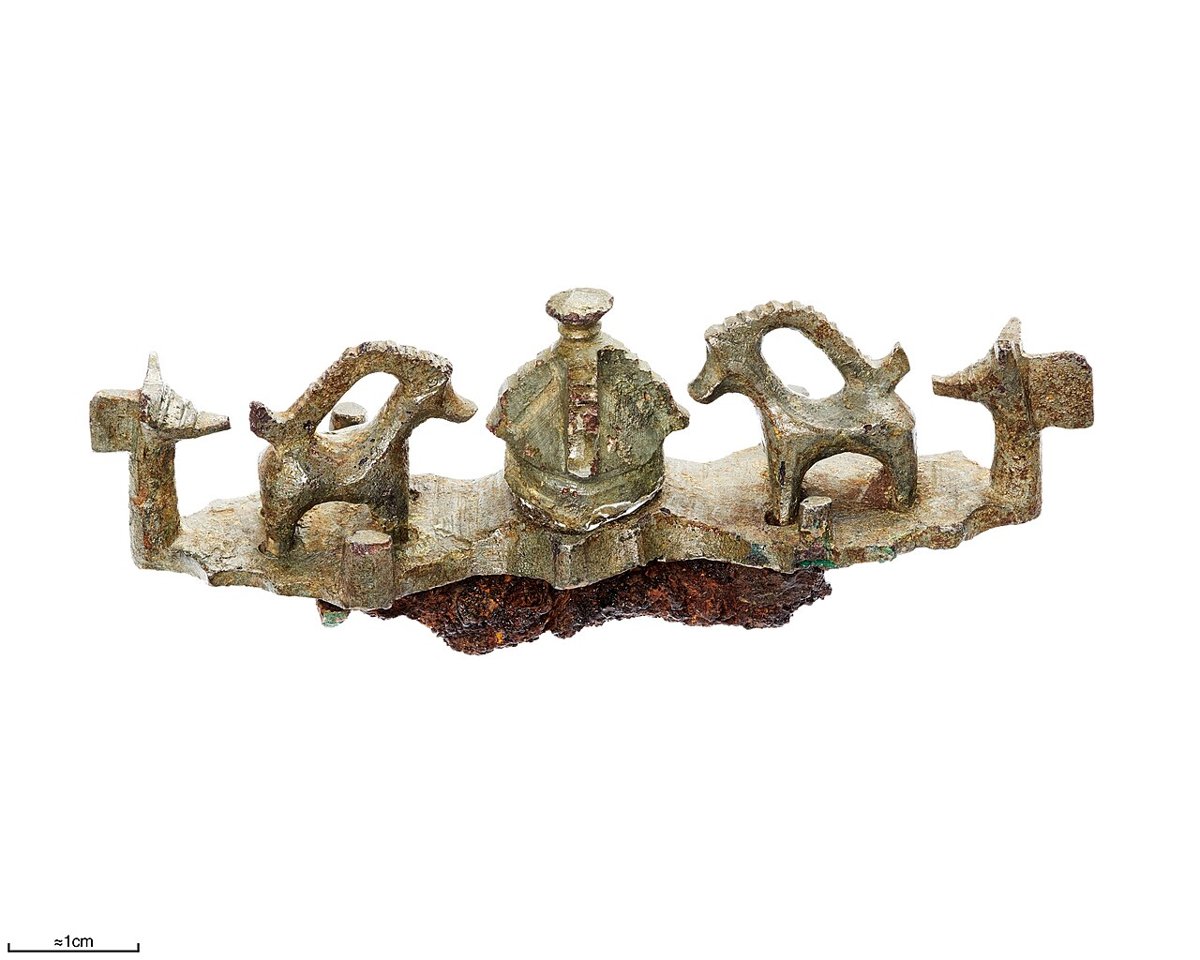
At Bryndum in Denmark, a block lifted from grave G12 contained two oval brooches with organic remains. Controlled laboratory excavation identified six textiles and documented their relationships. The resulting interpretation included a blue wool dress supported by tablet-woven straps and an inner pleated plant-fiber garment. The methodological strength lies in preserving association: textile touching a pin, lying beneath a brooch, or extending above its edge can answer different questions. Removing every fragment from its setting before recording would lose some of those relationships. A small amount of cloth in a known position can therefore be more informative for dress reconstruction than a larger isolated scrap.
Sources for this section: 2


Layering does not settle every garment shape
The Bryndum study also discusses an outer wool textile and a possible lining, while noting that seams did not align as one might expect for a jacket; repair remained another possibility. This is a useful example of interpretation constrained rather than completed by detailed observation. Different layers can suggest an arrangement without preserving an entire cutting pattern. A reconstruction should not turn a possible jacket into a universally established Viking garment. It should explain why the layered association supports the proposal and which details remain unresolved. Alternatives matter especially when the surviving area is small compared with the missing body and sleeves of the proposed clothing.
Sources for this section: 2
Textile on metal may record manufacture
A study of one hundred textile impressions on the backs of oval brooches from Birka and Vendel investigated fabric involved in producing the brooches. These impressions belong to a different evidential problem from surviving clothing attached to a worn fastener. The example prevents a tempting shortcut: not every textile trace associated with a brooch records the garment it fastened. An analyst must establish how the trace formed before using it to reconstruct dress. A casting impression, a mineralized cloth remnant, and a loose fiber can each preserve information, but their relationships to the finished outfit are not interchangeable. Context begins at the scale of the object’s surface.
Sources for this section: 3

Identify the event that made the trace
The brooch-impression research compared reconstructed fabric characteristics with contemporary textiles to investigate production. Its question concerned the role of cloth in a metalworking process. For clothing studies, that offers a broader discipline: ask whether an observation belongs to manufacture, use, burial, or later handling. Imagine a fabric impression and a preserved strap on the same type of brooch. The strap may constrain attachment, while the impression may constrain workshop practice. Combining them into a single dress reconstruction without separating their origins would invent a relationship. The useful result is not less information, but a more accurate account of what each trace can independently support.
Sources for this section: 3
Matching fragments requires several clues
A review of virtual textile reconstruction identifies useful features including fiber material, spinning direction, thread count, and warp and weft orientation, alongside color and visible design. Such properties help evaluate whether fragments belong together. A similar shade alone is a weak basis for joining pieces when degradation has altered their appearance. Conversely, pieces whose colors now differ might still share a construction history. The archaeological puzzle also lacks the complete solution image supplied with a modern jigsaw, and some pieces are permanently missing. A responsible reconstruction should therefore preserve its matching criteria and competing possibilities rather than presenting a computer-assisted arrangement as automatically definitive.
Sources for this section: 4

Digital work can reduce physical handling
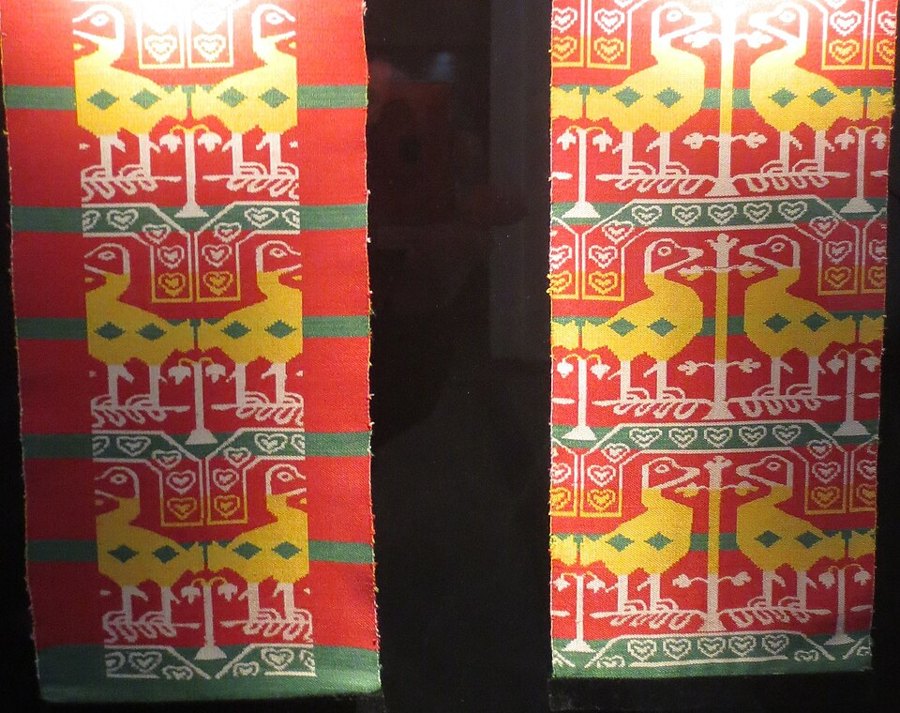
The same review uses fragmented Oseberg tapestries to illustrate the challenges of damaged edges, missing material, and earlier treatment. Although these are furnishing textiles rather than complete clothing, the conservation problem is relevant: repeatedly manipulating fragile fragments can cause further loss. Virtual comparison offers a way to investigate arrangements with less direct handling. It does not remove the need for specialist judgment about the material. Old adhesive joins, for example, may document a previous reconstruction rather than an original connection. A digital record should make such interventions visible so that a later investigator does not mistake a historical restoration decision for an ancient seam or continuous edge.
Sources for this section: 4
Show the evidence beside the reconstruction
The 2024 Fashioning the Viking Age account frames reconstruction as work requiring explicit solutions to fragmentary evidence. A useful exhibition can carry that reasoning into its presentation. Show the surviving pieces on a diagram, identify the construction details they establish, and explain the choices needed to make a wearable whole. A visitor can then appreciate the craft without assuming every hem or sleeve survives archaeologically. For an illustrative comparison, two outfits might use the same documented textile structure while differing in uncertain garment length. Displaying that possibility makes the historical question clearer. The reconstruction’s purpose is to make an evidence-based proposal understandable and testable, not to conceal the gaps that made reconstruction necessary.
Sources for this section: 1


For the introductory context, read Clothing: what survives, and what we reconstruct.
The Evidence
The sources below support this article. Interpretations and limits are explained in the text; this is not an exhaustive research review.
- Rimstad and colleagues, Well-considered reconstructions of the well-dressed Vikings (2024) ↗
- The Bryndum burial ground in Denmark: news on Viking Age women’s clothing (2025) ↗
- Tortoise brooches, textile impressions and textiles ↗
- Gigilashvili and colleagues, Computational techniques for virtual reconstruction of fragmented archaeological textiles (2023) ↗