
Journeys & Encounters · Introduction
Kaupang: A Town Recovered from Small Traces
In Brief
Coins, house foundations, and workshop debris reveal an early Norwegian trading community beside Viksfjorden.
Vestfold, Norway · Ninth–tenth centuries
On this page
A waterfront communityA collection wider than silverBuildings as changing footprintsFinding the metalworkerSourcesA waterfront community
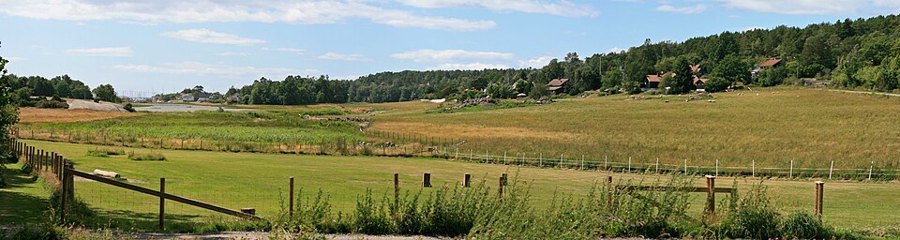
Kaupang lay on the shore of Viksfjorden in Vestfold, in present-day Norway. The Historical Museum in Oslo describes it as the country’s earliest town, with an estimated population of perhaps 400–600 people in the ninth century. That estimate is a reconstruction, not a surviving census. Its small scale is important: a place could organize substantial exchange and specialized work without looking like a later medieval city.
A collection wider than silver
Excavations produced approximately 100,000 finds discussed in the museum’s exhibition account. They included Arabic silver coins, a gold coin from Dorestad, glass beads, jewelry, pottery, tools, and weapons. Coins can identify connections and provide chronological clues, but their place of manufacture is not necessarily the birthplace of their final owner. Read together, ordinary equipment and valuable imports describe a community that used, repaired, and made things as well as receiving goods from outside.

Buildings as changing footprints
A 2015 excavation reported by archaeologists Axel Mjærum and Jessica Leigh McGraw found a curved wall trench, postholes, a hearth, and a possible doorway. These traces suggested buildings that replaced one another. The proposed reconstruction included wattle walls and rounded corners. Whetstones, soapstone vessel fragments, loom-weight pieces, and an unsuccessful glass bead added evidence for everyday activity. The failed bead is particularly revealing: a mistake left in the ground can be more informative about local production than a perfect object carried far from its maker.
Finding the metalworker
Elsewhere on the excavated plot, a smaller structure was associated with lead waste, crucibles, and a brass bar about 20 centimeters long. This combination strengthens the case for a metalworker’s workplace. It does not establish exactly which ornaments or fittings were produced there. Kaupang shows why excavators record the position of each discovery: a metal bar alone is portable property, while a bar beside melting equipment and waste can expose a working process.
The Evidence
The sources below support this article. Interpretations and limits are explained in the text; this is not an exhaustive research review.