
Research & Sources · Introduction
How a Hair Comb Reveals Distant Connections
In Brief
An everyday object can carry evidence of a long journey. Research on early combs from Hedeby combines artifact styles with laboratory analysis to investigate connections with northern Scandinavia.
On this page
Identify the materialBring style and science togetherRaw antler or a finished comb?A connection is not a complete itinerarySourcesIdentify the material
A 2023 study examined forty-nine antler-comb samples from Hedeby. The researchers used Zooarchaeology by Mass Spectrometry, usually shortened to ZooMS, to distinguish animal species through surviving proteins. Heavily worked antler can be difficult to identify by appearance alone.
Forty-two samples were identified as reindeer and two more as probable reindeer. Four could only be assigned to a broader animal group; one could not be identified. Those results concern the selected sample, not every comb ever used at Hedeby.
Bring style and science together
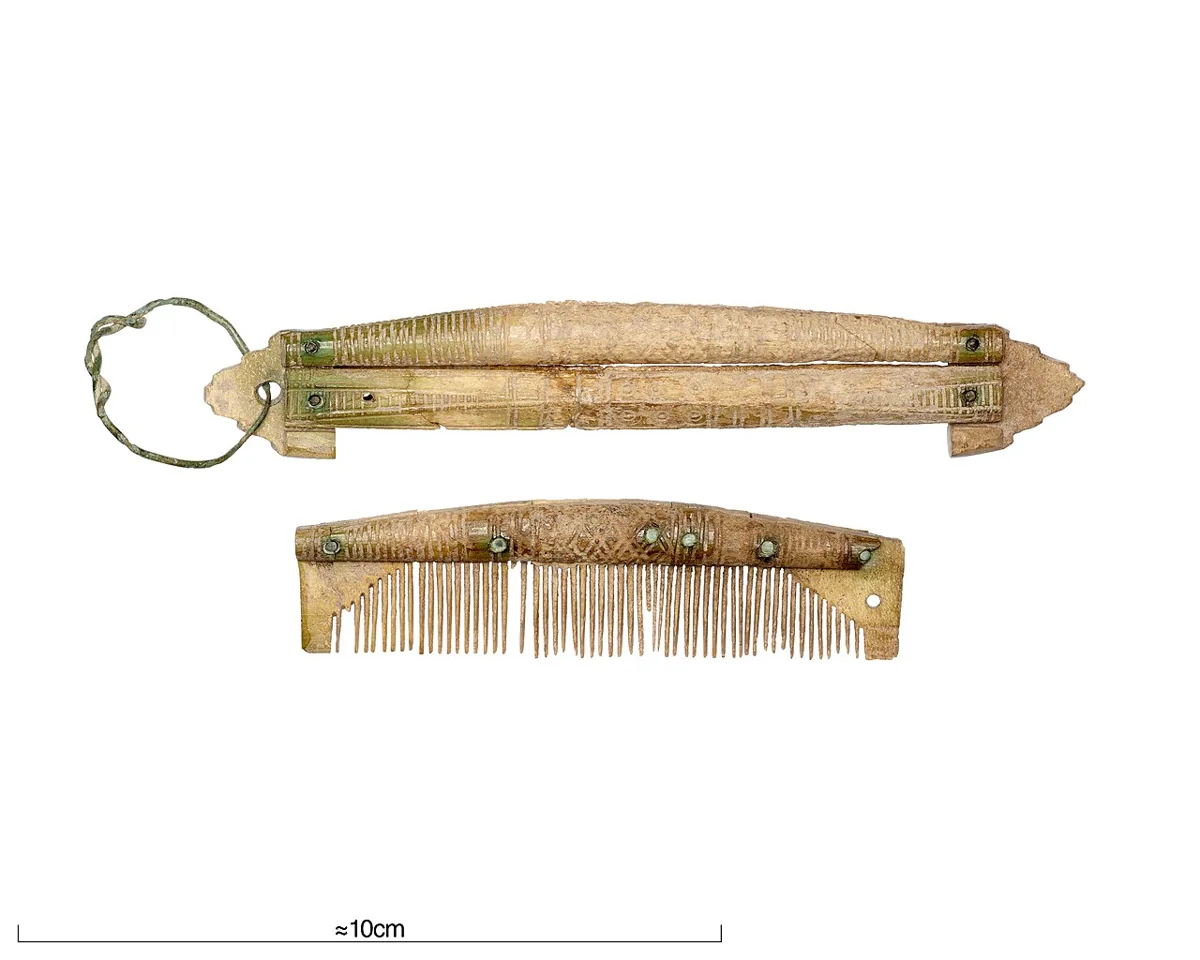
The combs belonged to types associated with the ninth century. Combining that stylistic dating with species identification allowed the researchers to investigate connections during an early phase of the town. Reindeer antler points toward resources from central and northern Scandinavia rather than the immediate surroundings of Hedeby.

Raw antler or a finished comb?
The University of York’s account highlights an important comparison. Earlier research on manufacturing waste at Hedeby found very little reindeer antler, and production evidence was absent from the early phase under discussion. The team therefore interpreted these early combs as likely made elsewhere.
This distinction changes the story. Importing raw material would connect a local workshop to distant suppliers. Receiving finished objects would also involve craftspeople working somewhere else. The researchers combined finished objects with workshop evidence to consider which explanation fitted better.
A connection is not a complete itinerary
The study does not establish the route taken by each comb. Objects might arrive through exchange or travel with people. A material identification is stronger evidence for a connection than for one named trader, journey, or transaction. The useful question is how several independent clues narrow the possibilities, while leaving the unresolved steps visible.
The Evidence
The sources below support this article. Interpretations and limits are explained in the text; this is not an exhaustive research review.