
Journeys & Encounters · Introduction
Hedeby: A Trading Town at the Border


In Brief
At Hedeby, also known as Haithabu, a harbor and a narrow land crossing connected different seas and societies. Its relationship with the Danevirke defenses makes it an unusually revealing place to study commerce and political control together.
Near Schleswig, Germany · Eighth–eleventh centuries CE
Why this location mattered
Hedeby stood on the Schleswig isthmus, between the Scandinavian peninsula of Jutland and continental Europe. Its position linked movement between the North Sea and the Baltic, as well as routes between the Danish kingdom and the Frankish world. Waterways, wetlands, and a short overland crossing shaped the opportunities of the site.
During the tenth century, the settlement became connected to the defensive system known as the Danevirke. Archaeological remains include streets, buildings, cemeteries, and a harbor. Together they show that this was a working town embedded in a strategically important border landscape. Trade did not operate separately from the people who controlled routes and territory.
A settlement of makers
The Viking Museum Haithabu displays finds associated with local crafts and exchange. Jewelry and weapons from richly furnished graves, together with runestones, also provide evidence for high-status people. These different sources let us ask how production, wealth, and authority overlapped without reducing the population to either merchants or warriors.
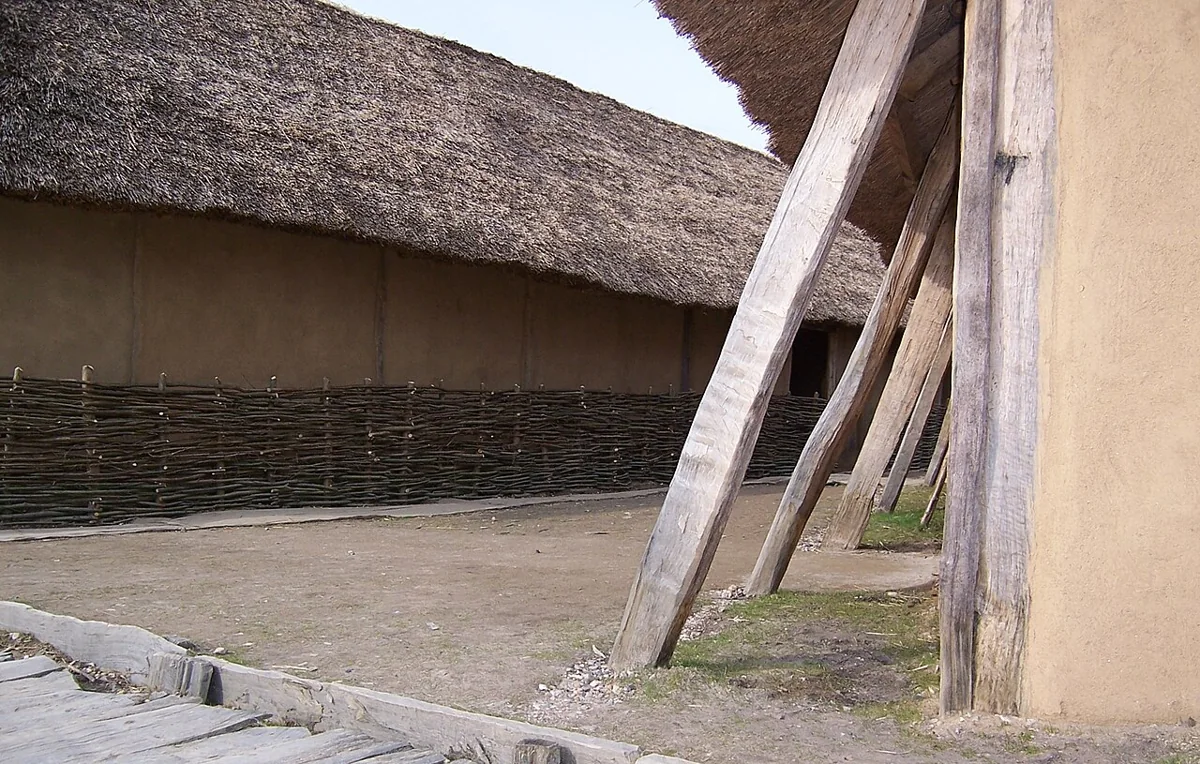
The museum's reconstructed settlement contains seven houses and a landing bridge based on archaeological findings. Narrow paths and houses with plastered wattle walls help visitors visualize built space at human scale. These structures are modern interpretations; the original evidence is what makes those interpretations useful.
Reading the harbor
A ship recovered from the harbor forms a centerpiece of the museum's ship hall. Set alongside the settlement finds, it connects the town's buildings to the water routes that sustained exchange. This is a helpful way to approach Hedeby: move mentally from house, to path, to landing place, to sea. Each part answered a different practical need.
The Evidence
The sources below support this article. Interpretations and limits are explained in the text; this is not an exhaustive research review.