
Life & Society · Deep dive
Bone and Antler Workshops Beyond the Finished Comb
In Brief
Discarded crowns, sharpened tines, and imported antler reveal the supply networks and working decisions behind familiar museum objects.
On this page
A workshop begins with materialCuts left on a discarded crownProduction in Anglo-Scandinavian YorkNorthern supplies reached southern workshopsTools with uncertain namesBeyond the comb displaySimilar objects, several centersSourcesA workshop begins with material
Bone and antler working depended on obtaining suitable pieces before an artisan could shape a finished object. Antler could be collected after a deer shed it, so its use did not necessarily require killing the animal. The National Museum of Ireland emphasizes naturally shed red deer antler as a material gathered and traded for work in towns. The form of the raw material mattered: branches, tines, and the thicker base offered different possibilities. One worked object in the museum exploits the broad antler burr as a surface for a carved face while retaining a pointed tine. Its maker responded to an existing natural shape instead of treating the material as an anonymous block. Such choices belong to the craft as much as the final decoration.
Sources for this section: 1
Cuts left on a discarded crown
A piece of waste from Coppergate, catalog number 7277, preserves an unusually clear record of cutting. The antler crown was detached from the beam with two slanting saw cuts, and another deep cut runs axially through its base. A surviving tine bears additional cuts, with its end removed. York Archaeology dates its context approximately between 975 and the early or middle eleventh century. Unlike a polished finished object, this discarded piece exposes operations the craftworker had no reason to conceal. The cuts show how the antler was divided, although they do not identify the person holding the saw. Waste therefore provides a different kind of craft history: it preserves decisions about subdivision and access to usable material before an object acquired its final shape.
Sources for this section: 2

Production in Anglo-Scandinavian York
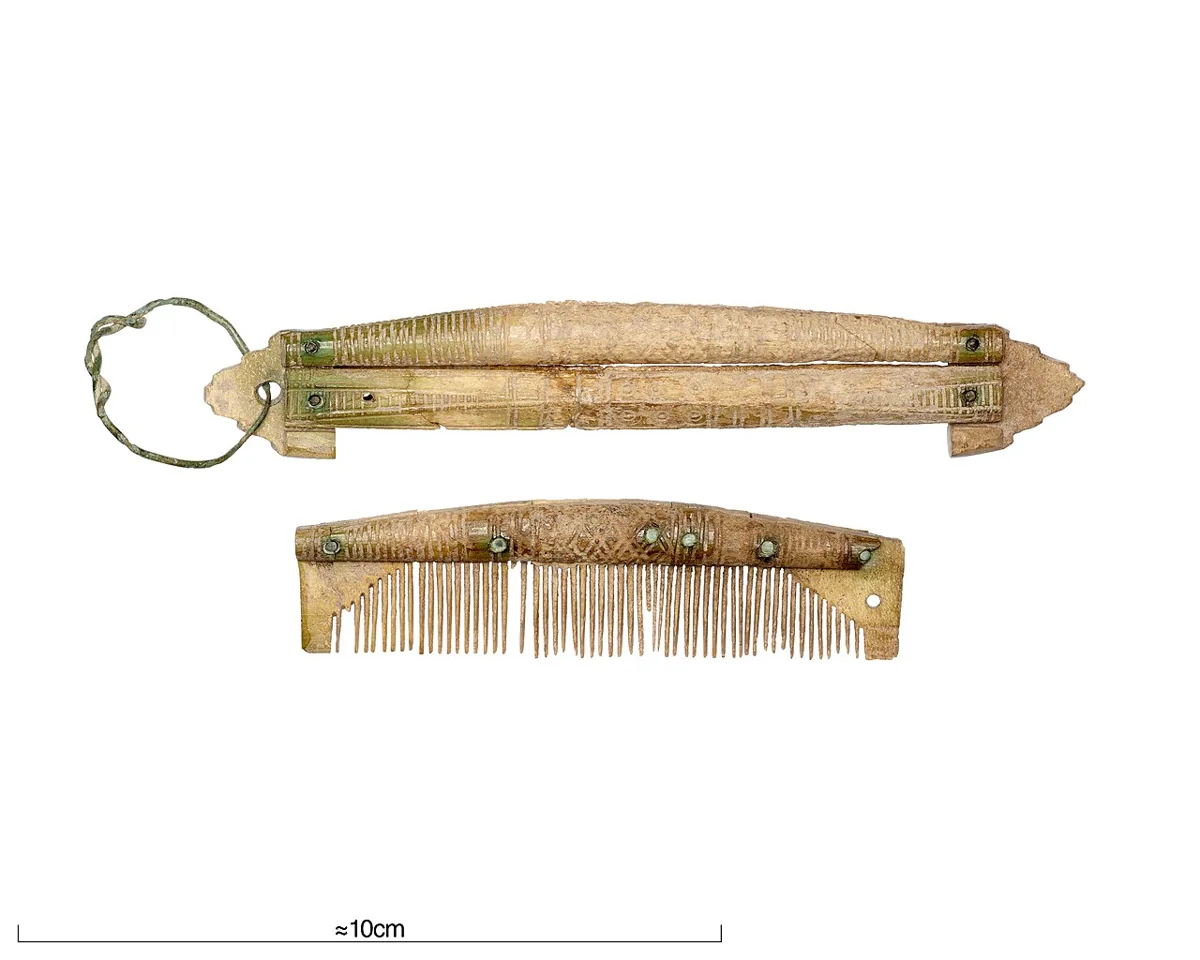
The published study of York’s bone, antler, ivory, and horn assemblages covers several sites and centuries, with much of its evidence coming from Anglo-Scandinavian Coppergate. There, manufacturing remains strongly emphasize antler comb production. The researchers also identify more limited bead production. That contrast matters because the mere presence of many kinds of finished objects does not mean a workshop made them all. Some arrived ready for use. Comparing unfinished pieces and waste with completed objects helps separate the workshop’s output from the possessions circulating around it. A town could be both a manufacturing center and a consumer of products made elsewhere. Those roles can coexist within the same excavation without leaving identical archaeological traces.
Sources for this section: 3
Northern supplies reached southern workshops
Research by Steven Ashby, Ashley Coutu, and Søren Sindbæk examined combs, manufacturing waste, and raw antler from Ribe, Aarhus, and Aggersborg using peptide mass fingerprinting. This method identifies animal groups through surviving proteins. The study documented reindeer antler in use by the 780s at the latest, connecting urban craft with resources from the Scandinavian Peninsula. The finding changes the scale at which a workshop should be understood. A bench in a southern market town might depend on people collecting material far beyond its immediate agricultural hinterland. Access to that supply was part of production, even when the collectors and transporters left no tools in the workshop itself. Urban specialization and distant resource gathering were linked activities.
Sources for this section: 4

Tools with uncertain names
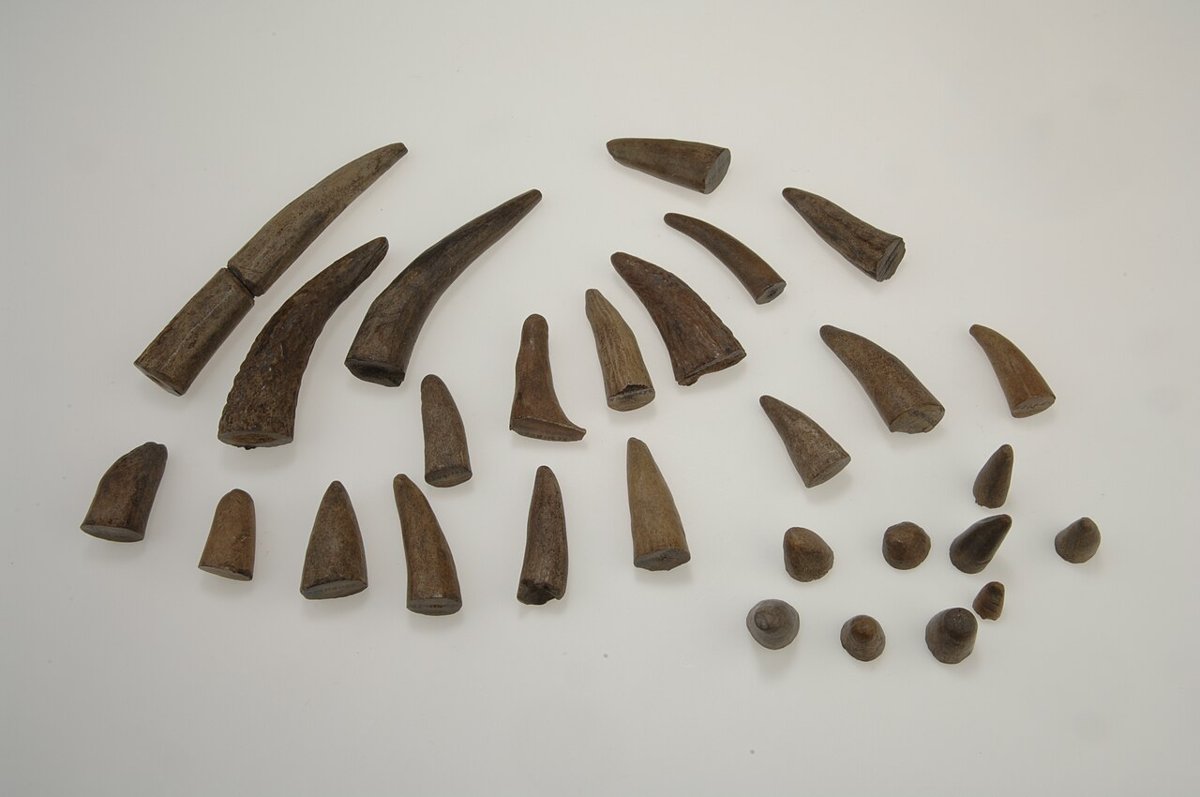
The Irish museum’s carved antler point also shows the limits of assigning precise functions. Its polished tip suggests use, and a transverse perforation could have allowed attachment or suspension. Proposed uses for comparable shaped tines include pins, pegs, and components of clamps associated with comb making. The decorated example may instead have served as a piercing tool. Its findspot and date are uncertain, so it cannot securely establish a particular Viking Dublin workshop practice. Still, it makes a useful comparison with excavated pieces: a simple pointed form can fit several tasks. Calling every pointed bone an awl would conceal that variety. Wear, attachment features, and archaeological context must work together before a specific task becomes the strongest explanation.
Sources for this section: 1
Beyond the comb display
York’s wider skeletal-material assemblage includes gaming pieces, motif pieces, textile equipment, and other objects, alongside combs and simple points. The report spans Anglo-Scandinavian and later medieval contexts, so individual dates must be checked rather than assigning the entire list to the Viking Age. Even with that chronological distinction, the collection demonstrates why finished combs alone cannot represent the whole craft. There were objects for manipulating other materials, objects for personal use, and objects involved in leisure. Some required elaborate shaping; others involved comparatively modest alteration. Keeping those differences visible prevents “boneworker” from becoming an overly uniform occupational label. Archaeological classifications describe materials and products more readily than the exact boundaries between the people who made them.
Sources for this section: 3
Similar objects, several centers
Steven Ashby’s comparative atlas questions the idea that particular widespread comb forms must have originated in one dominant center. In his discussion of Dublin, he notes that types interpreted as local mass-produced exports also occur substantially elsewhere in Ireland and around the southern Baltic. Similarity alone does not isolate a single source of manufacture. The comparison is especially important when interpreting workshop debris: an unfinished piece establishes local making more securely than a familiar finished shape establishes an import. Shared forms could reflect connections between makers, customers, and places without all products passing through one workshop. A history of bone and antler craft therefore needs both the intimate scale of saw cuts and the wider geography of dated production evidence.
Sources for this section: 5
For the introductory context, read How a Hair Comb Reveals Distant Connections.
For the introductory context, read Grooming: Personal Care in an Imperfect Environment.
The Evidence
The sources below support this article. Interpretations and limits are explained in the text; this is not an exhaustive research review.