Life & Society · Introduction
Grooming: Personal Care in an Imperfect Environment
In Brief
Combs, tweezers, and parasite remains belong in the same account of daily life.
On this page
Small objects, repeated actionsImages of hairCombs and unwelcome companionsWhy York preserves the detailSourcesSmall objects, repeated actions
Personal grooming is visible in objects designed for close work on the body. The National Museum of Denmark identifies combs, tweezers, and ear picks among Viking Age finds. Some combs had protective cases, and decorative patterns show that practical possessions could also receive careful finishing. These objects support a straightforward conclusion: people invested resources in personal appearance and care. They do not by themselves reveal a universal daily routine, a bathing calendar, or how every person wore their hair.
Images of hair
Carved figures and small metal representations provide another kind of evidence. The Danish museum points to the carefully represented beard and mustache on a male head from the Oseberg burial and to figures with arranged hair. Such images show that hair could be presented deliberately. They are selective representations, however, rather than photographs of a whole population. An elaborate hairstyle on one figure is a possibility within the visual record, not a rule for every woman or man.
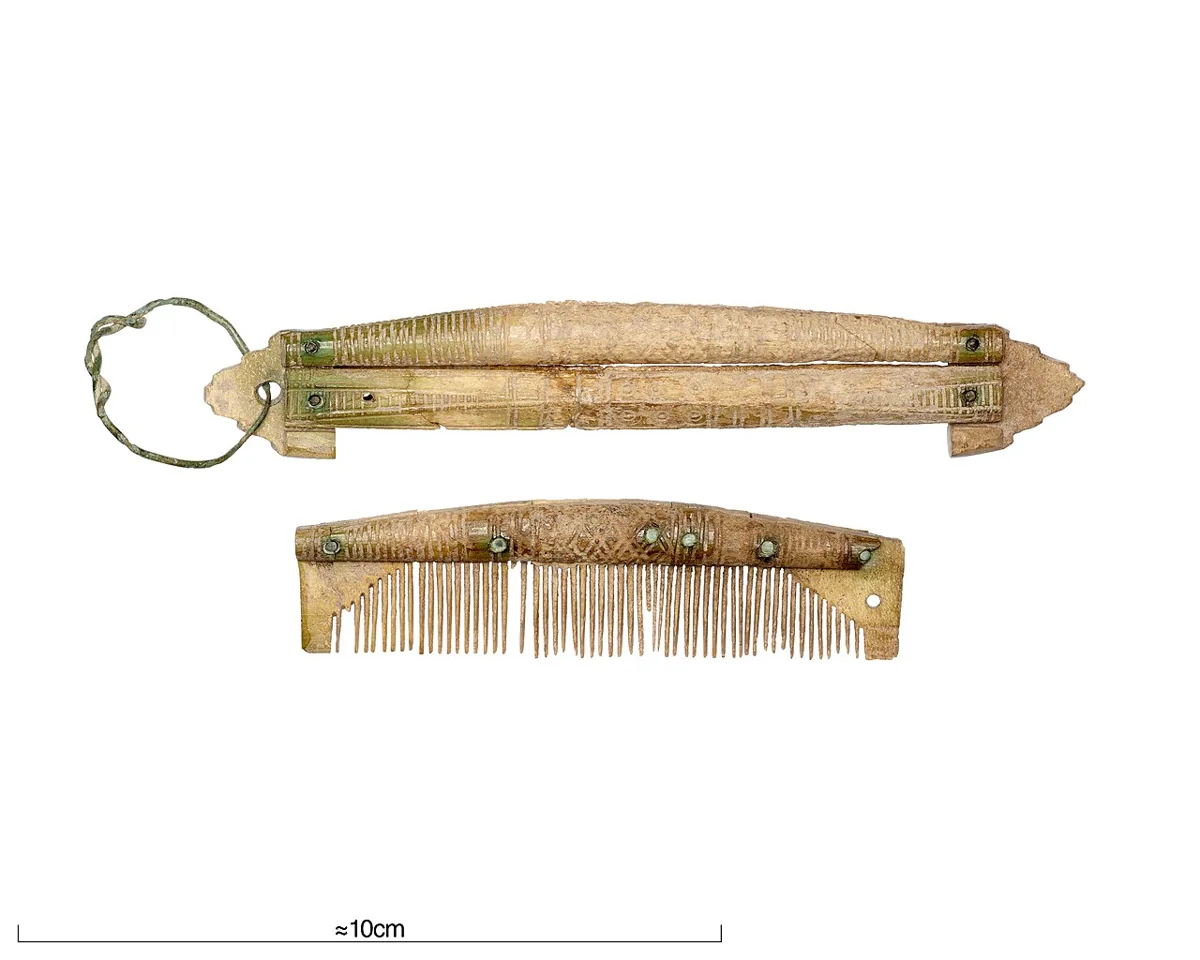
Combs and unwelcome companions
At Coppergate, comb-making evidence includes antler waste and finished objects. JORVIK Viking Centre connects comb use with both tidying hair and dealing with lice. The same excavations recovered human fleas and head lice. There is no contradiction here. Owning grooming equipment does not guarantee freedom from parasites, especially when living conditions make them difficult to avoid. Objects document efforts; environmental remains can reveal problems those efforts did not entirely solve.
Why York preserves the detail
Wet, oxygen-poor deposits at York preserved materials that normally decay, including organic objects and insect remains. That unusual survival allows a close view of bodily care within the wider household environment. It also limits comparisons: a site with fewer preserved insects was not necessarily cleaner. A balanced account neither romanticizes immaculate Vikings nor assumes universal neglect. The strongest evidence concerns particular implements, specific traces of use, and the local conditions in which people lived. Personal care and environmental cleanliness should be investigated as related but distinct questions.
The Evidence
The sources below support this article. Interpretations and limits are explained in the text; this is not an exhaustive research review.