Life & Society · Introduction
Inside a Viking-Age home
In Brief
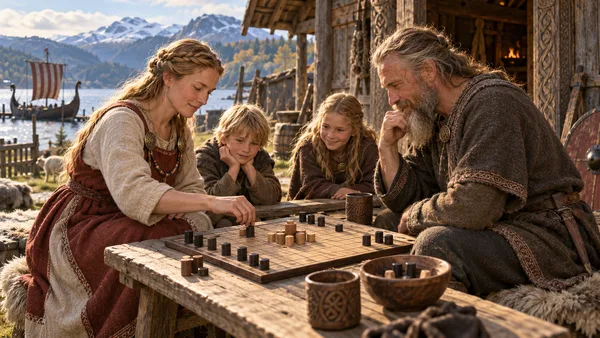
For many people in Viking-Age Denmark, daily life centered on a farm. The longhouse stood within a working landscape of animals, fields, storage, and craft.
A household at work
Danish farmsteads could include barns, workshops, and other outbuildings around the main dwelling. They were places of production as well as residence.
Fire, timber, and shared space
The National Museum of Denmark describes timber longhouses with internal roof supports and a central hearth. Wall-side platforms provided places to sit and sleep. In some houses, animals occupied one end when a separate stable was absent.
Reading the remains
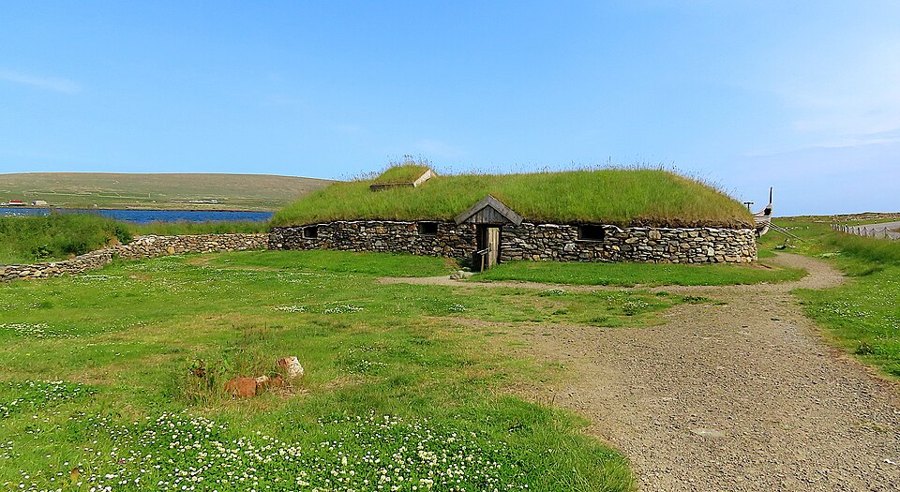
Postholes and other surviving traces help archaeologists investigate buildings. A modern reconstruction makes an interpretation visible; it should not be treated as an intact ancient home.
The Evidence
The sources below support this article. Interpretations and limits are explained in the text; this is not an exhaustive research review.