For adults · Strategy, chance & knowledge
Games & Play.
Plan your next move. Take a chance. Challenge what you know about the Viking world.
Three playable games and seven quizzes. Play a practice computer, share a board with a friend, or follow the evidence behind the games.
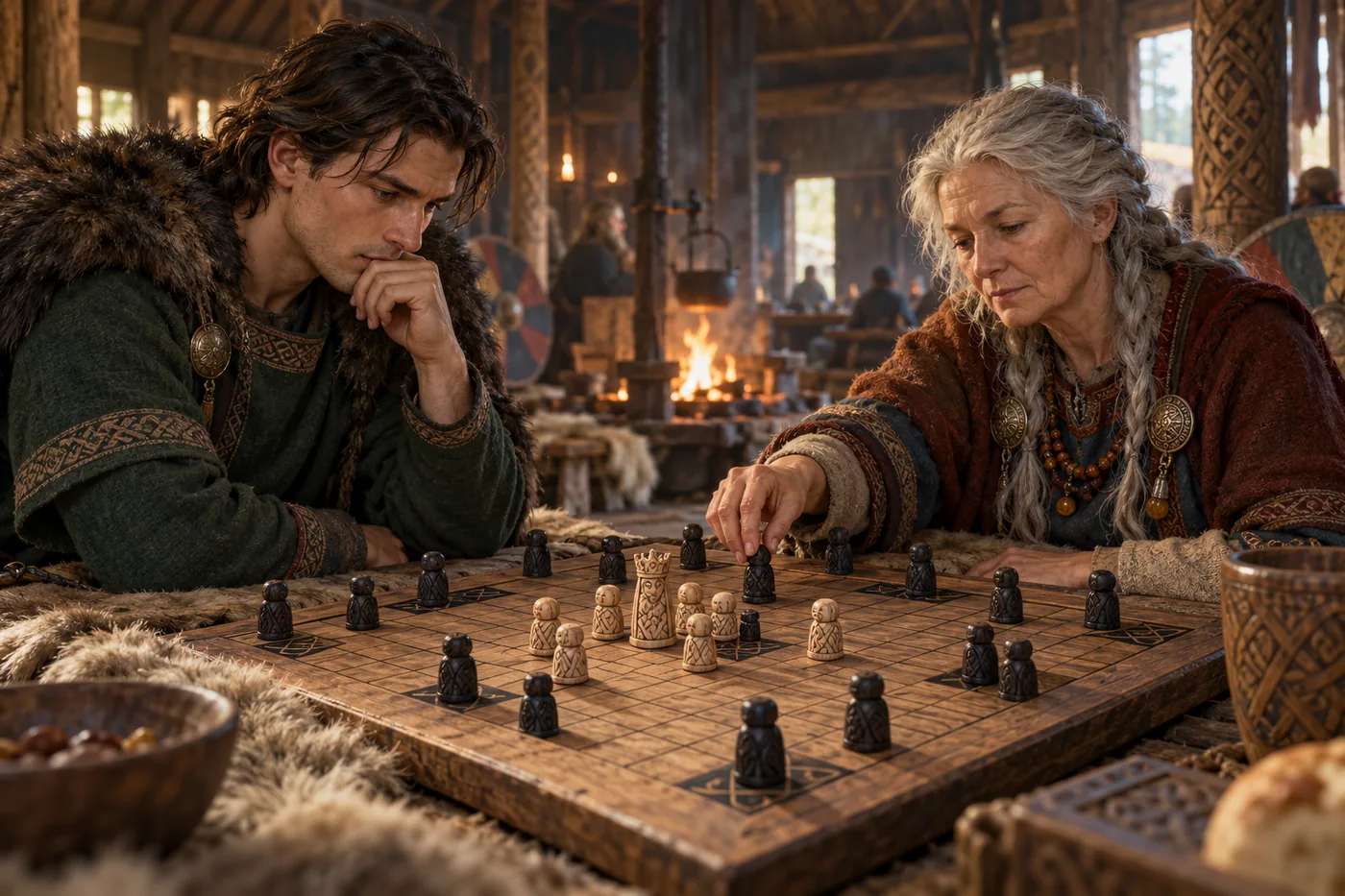
Take your seat
What will you play?
01 · Strategy
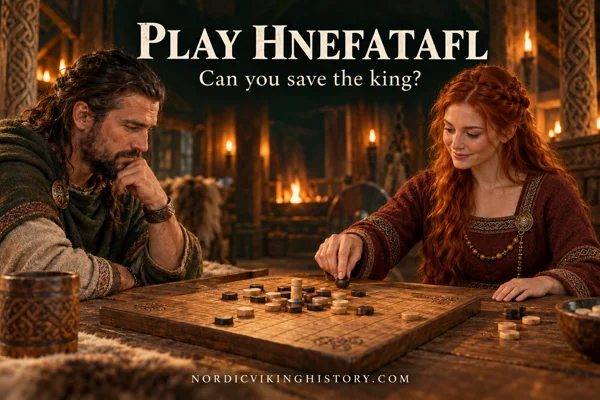
Hnefatafl
Save the king or command the siege. Two unequal sides, two paths to victory.
Play Hnefatafl →02 · Strategy
Nine Men’s Morris
Make a mill of three. Capture a piece. Leave your opponent with no way through.
Play Morris →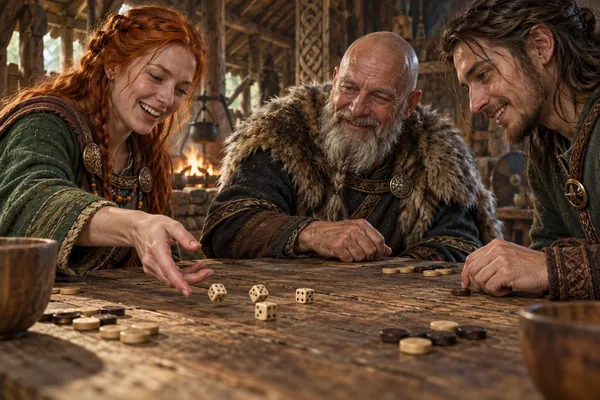
03 · Chance
Roll & Hold
Build your score, then decide: bank the points or risk another throw?
Play dice →Seven quizzes · Eight or ten questions
Put your knowledge to the test.
Choose your level. Each answer comes with an explanation and a route back to the evidence.
Intermediate
Connect the clues.
Ships, trade & connectionsBeliefs, words & objectsLeif Eriksson & the Vinland voyages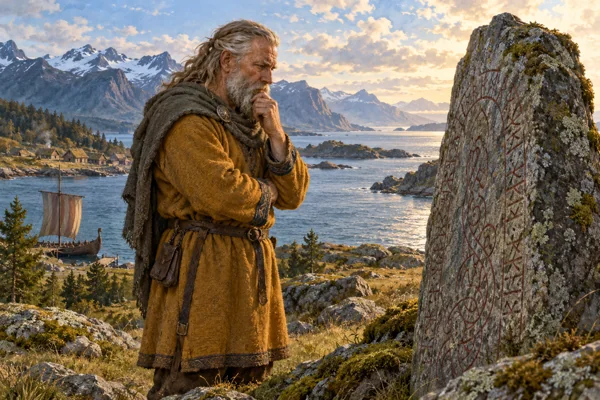
Your move
Play Hnefatafl
Protect the king or command the siege. Play against a practice computer opponent, or share the board with a friend.
Modern practice variant: Copenhagen-inspired, with no exit-fort victory. These are not recovered Viking-Age rules.
Rules & our practice adjustments
Attackers begin. Slide along an empty row or column without jumping. Only the king may stop on the center throne or a corner; others may cross the empty throne.
Sandwich an ordinary enemy between your pieces or against an empty restricted square. Moving into a gap is safe. The king helps capture. Close an edge bracket around two or more enemies with your pieces supporting them from inside to capture a shieldwall; the king survives it.
The king wins at a corner. Attackers win by surrounding him on four sides (three beside the throne), or enclosing every defender away from the edge. The king cannot be captured on an edge. Having no legal move loses.
Practice adjustments: no exit-fort adjudication; the third identical position with the same side to move awards victory to attackers. The computer is a casual opponent, not a tournament engine. No automatic insufficient-material draw is imposed; players can start again by agreement.
02 · Strategy
Nine Men’s Morris Kvarn
Build a line of three. Break your opponent’s pattern. Keep enough room for your next move.
A modern ruleset with flying at three pieces. Archaeological boards do not preserve a complete Viking-Age rulebook.
Rules, winning & practice choices
- Take turns placing nine pieces each on empty intersections. Complete a line of three to make a mill.
- For each newly completed mill, remove one opposing piece outside a mill. If every opposing piece is in a mill, any may be taken. Two mills in one move still earn one capture. Opening and later closing a mill can earn another.
- After both supplies are empty, move along one line to an adjacent empty intersection. You cannot jump over a piece or cross the center. With exactly three pieces left, you may fly to any empty intersection.
- After placement, fewer than three pieces or no legal move means a loss.
Our practice draw rules: the same board with the same player to move three times, or 50 moves by each player without a capture, ends in a draw. Other versions handle draws differently. The computer is a casual practice opponent.
Compare the Viking Ship Museum’s teaching rules and Yucata’s modern rules and edge cases.
Changing mode starts a new game. Progress stays in this page session and resets on reload.
03 · Chance & judgement
Roll & Hold Dice
One more throw—or keep what you have? Be first to bank 100 points.
A modern dice game, also known as Pig. This is not presented as a recovered Viking game.
You0banked points
Computer0banked points
This turn0not yet banked
Rules & historical context
Player 1 begins. You may roll repeatedly until you choose to hold or roll a 1. Holding banks the turn total and passes play. A 1 loses only the unbanked total. The first player to bank at least 100 wins immediately; the other player does not receive an extra turn.
The practice computer usually holds at 20 turn points, or as soon as banking would win. This is a simple opponent, not an optimal strategy.
Viking-Age dice survive, but they do not tell us one universal scoring system. Our activity uses the modern game Pig, described by Neller and Presser (2010). No stakes or payments are involved.
Changing mode starts a new game. Progress resets on reload.
Viking games & pastimes
Games in the Viking world
Play Hnefatafl, Nine Men’s Morris and Roll & Hold dice, or choose seven adult Viking quizzes. Play a practice computer or share a screen. Explore the historical evidence.
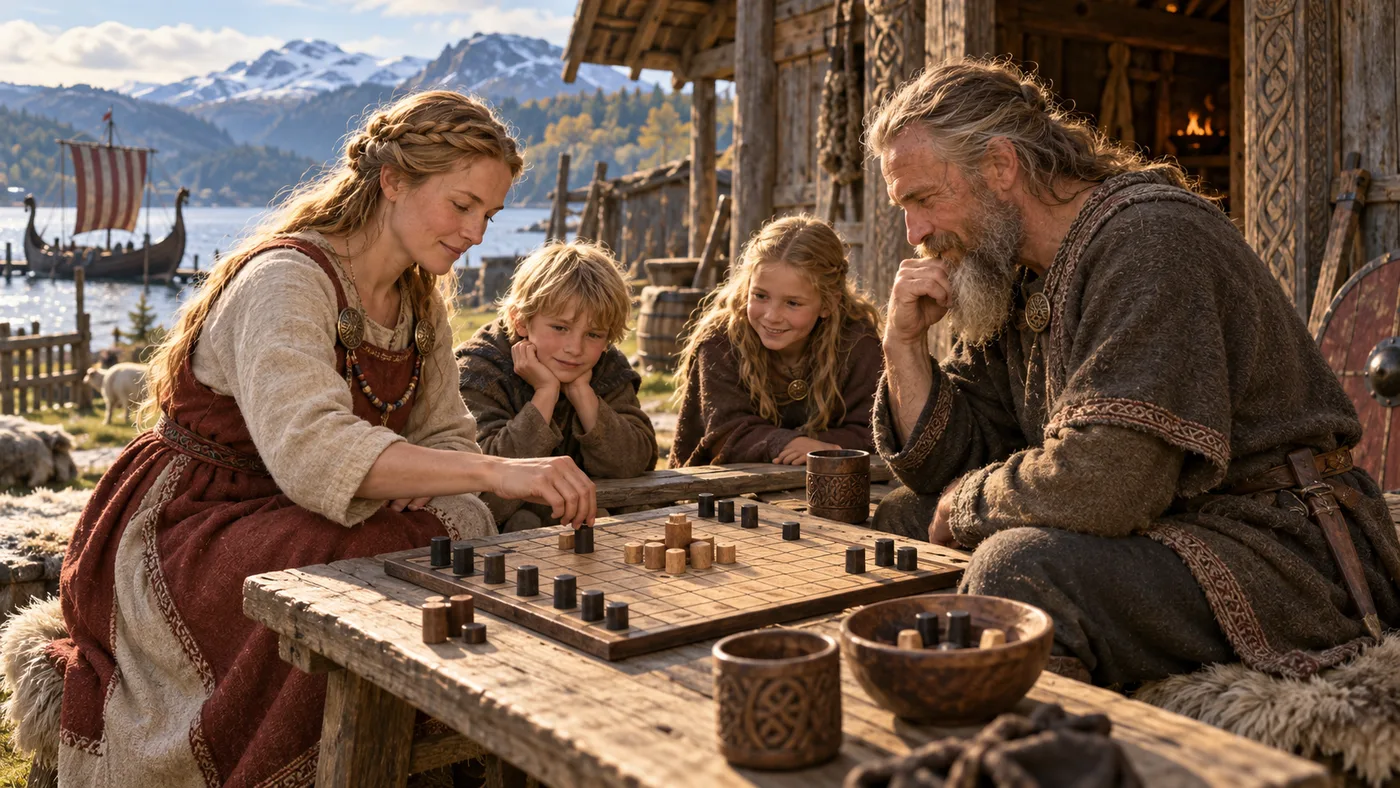
Games could bring people together, display skill and turn rivalry into entertainment. Some activities also developed useful physical abilities. That does not make every game military training: enjoyment, sociability and prestige deserve a place in the story.
Three different kinds of evidence
Objects: boards, counters, dice and skates survive, sometimes in datable contexts. Written stories: medieval sagas describe contests set in earlier centuries. Reconstructed play: museums and living-history groups use rules chosen today. These categories help us ask better questions; they are not interchangeable.
Around the board
Hnefatafl: an unequal contest
Tafl games pit a king and defenders against attackers. The unequal sides create different decisions for each player. Archaeological boards and pieces, together with texts, support the wider gaming tradition; no complete contemporary Viking-Age rulebook survives. Board sizes, escape squares and capture rules differ between modern reconstructions. [1, 2]
Try a reconstructed game
Choose one published ruleset before starting. For example, the Swedish History Museum offers a playable version with 16 attackers, eight defenders and a king or queen. Follow that version throughout instead of mixing rules from several variants. Its teaching rules are a modern way to explore the game, not a transcript of a tenth-century match. [2]
Nine Men’s Morris: making a line
Kvarn, or Nine Men’s Morris, is another game associated with the Viking world. A York archaeology teaching resource identifies evidence of Morris boards from Viking York. In familiar modern play, players form rows of three and reduce an opponent’s pieces. Finding a recognizable board does not settle every detail of the rules used at that place and date. [1, 9]
Dice, chance and stakes
Dice and counters could be portable entertainment. Finds show gaming equipment in different materials, including bone and antler. They do not identify a single universal Viking dice game. To play today, agree a simple scoring game and label it a modern activity. Stories about spectacular wagers belong to literary history, not a reliable record of every household’s habits. [1, 2]
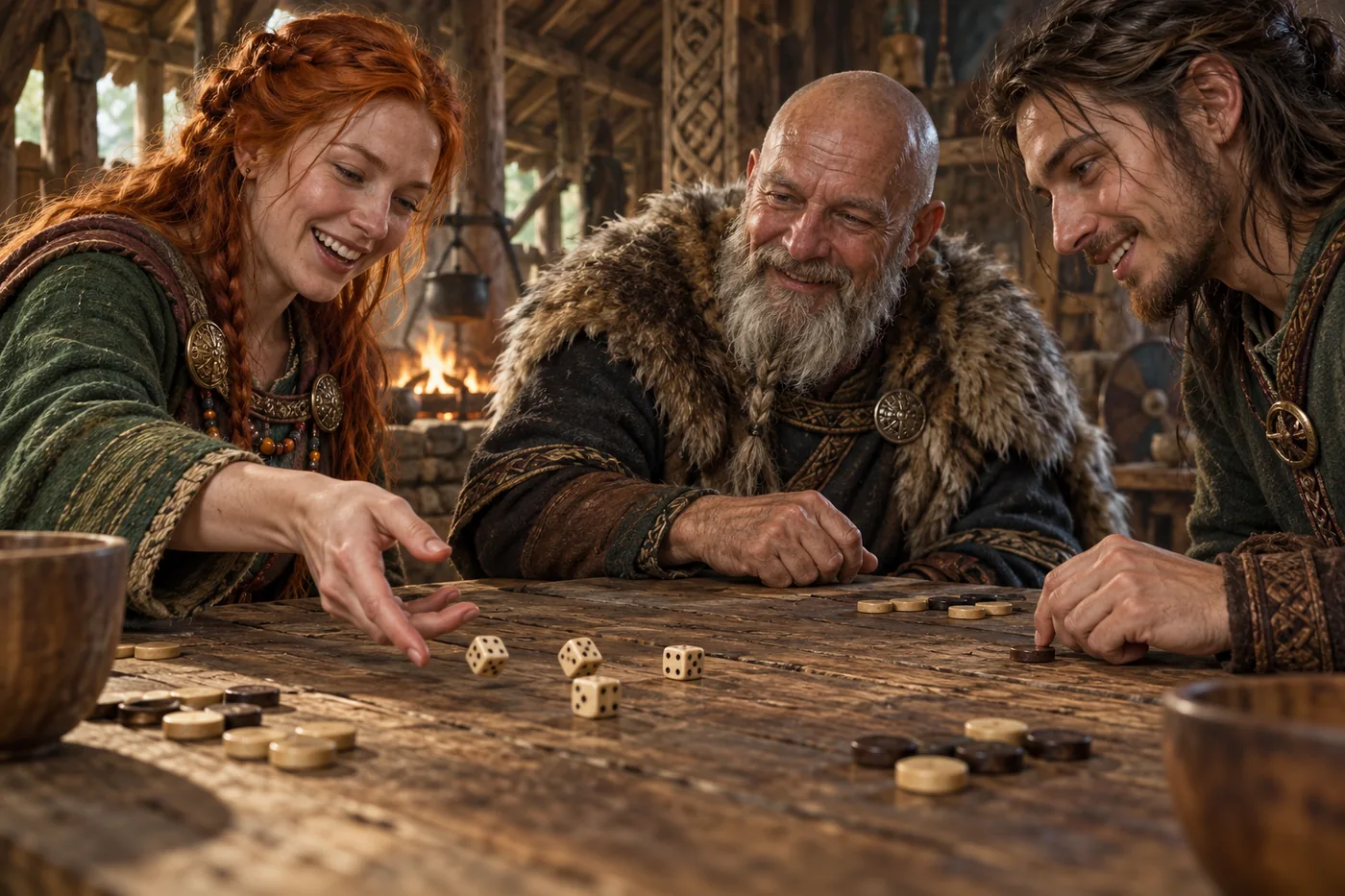
Were Vikings playing chess?
Chess reached the North around the transition to the medieval period; it should not replace tafl in every Viking scene. The famous Lewis chessmen are twelfth-century objects, later than the conventional Viking Age. A striking medieval object is not automatically evidence for ninth-century leisure. [1, 8]
Strength, balance and competition
Wrestling
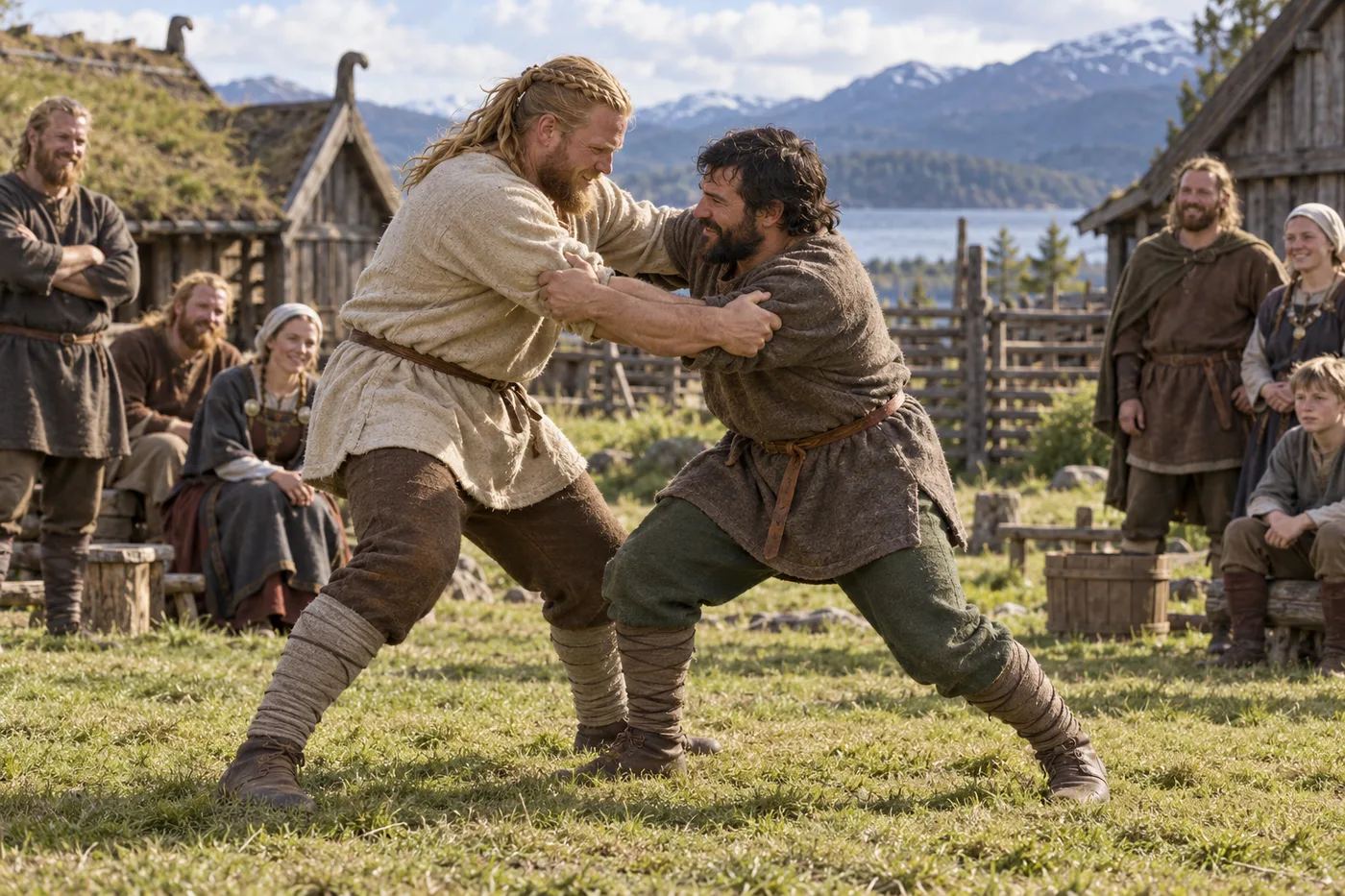
Norse stories and museum accounts describe physical contests, including wrestling. Balance, grip and timing matter as much as strength. Modern glíma is a living sport with its own history and codified rules: those rules cannot simply be projected unchanged into the Viking Age. Our illustration shows a plausible contest, not a documented sequence of techniques. [5]
Knattleikr: the saga ball game
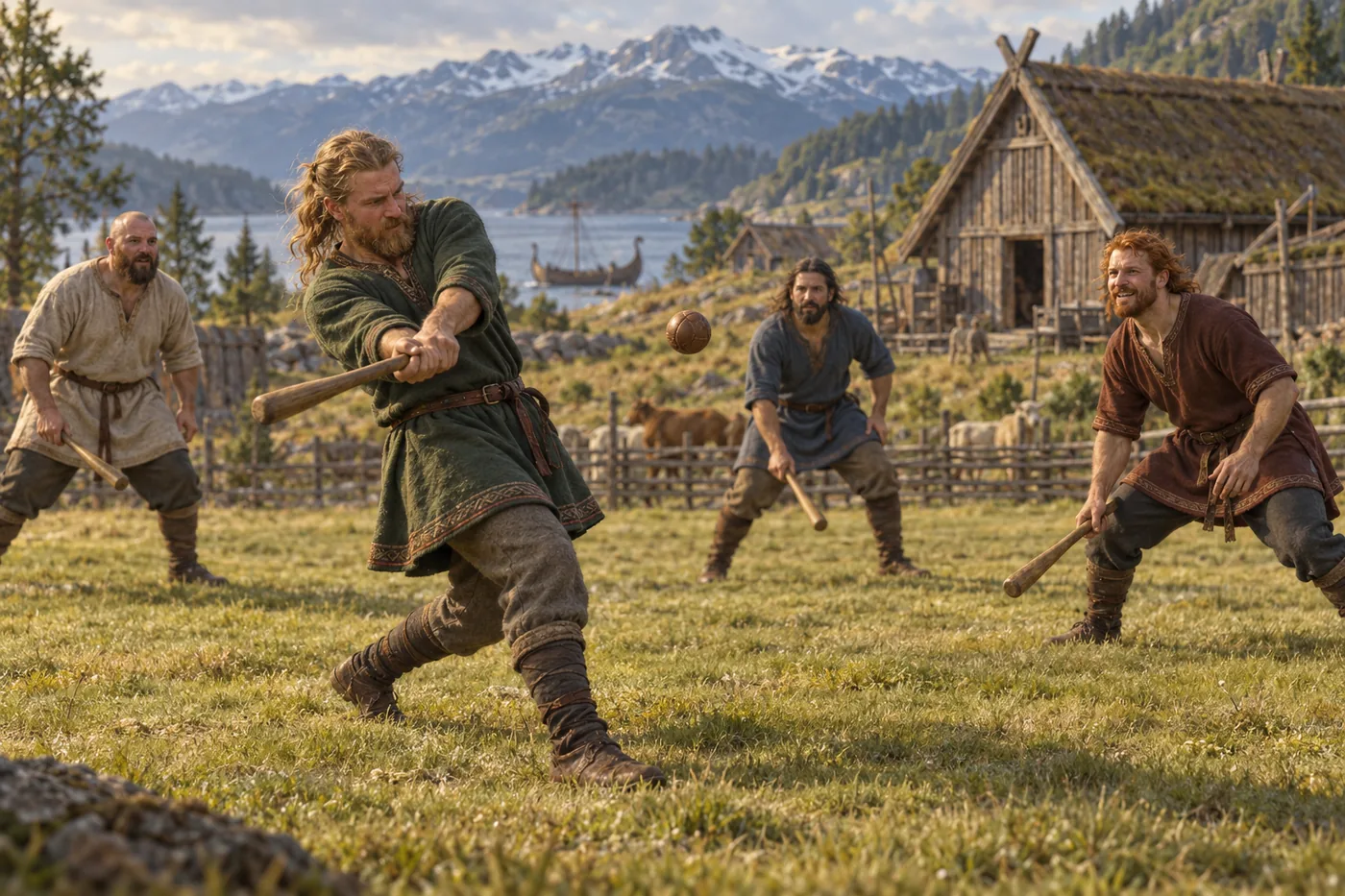
Icelandic sagas describe knattleikr, a competitive game involving a ball and a striking implement. The full rules are uncertain. Accounts of heated rivalry and injury show how a game can become a narrative about reputation and conflict. A modern demonstration needs explicitly reconstructed rules; the surviving stories do not supply a complete sports manual. [3]
Running, swimming and riding
Physical accomplishments appear in accounts of Norse life. Swimming and riding were useful skills as well as occasions for competition. Feats such as running along a ship’s oars are especially memorable saga material, but a dramatic story does not tell us how common an activity was. [5]
Archery and weapon practice
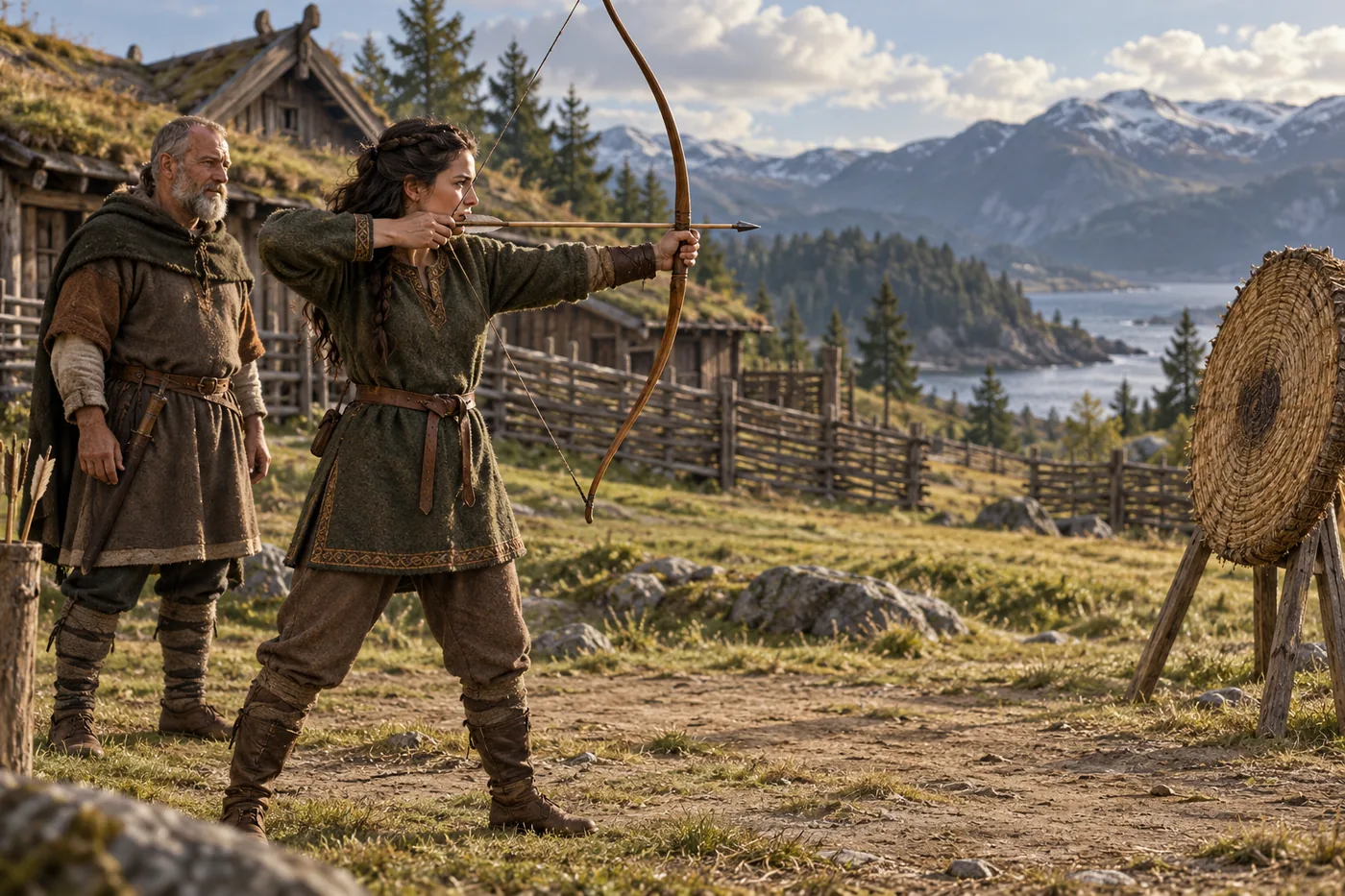
Archery could serve hunting and warfare. Evidence for weapons does not establish that all boys followed the same training program or that men practiced for several hours every winter day. We omit that precise claim because the sources checked here do not support it. Read the weapons and tools guide for the objects themselves. [5]
On snow and ice
Bone skates: pushing across ice
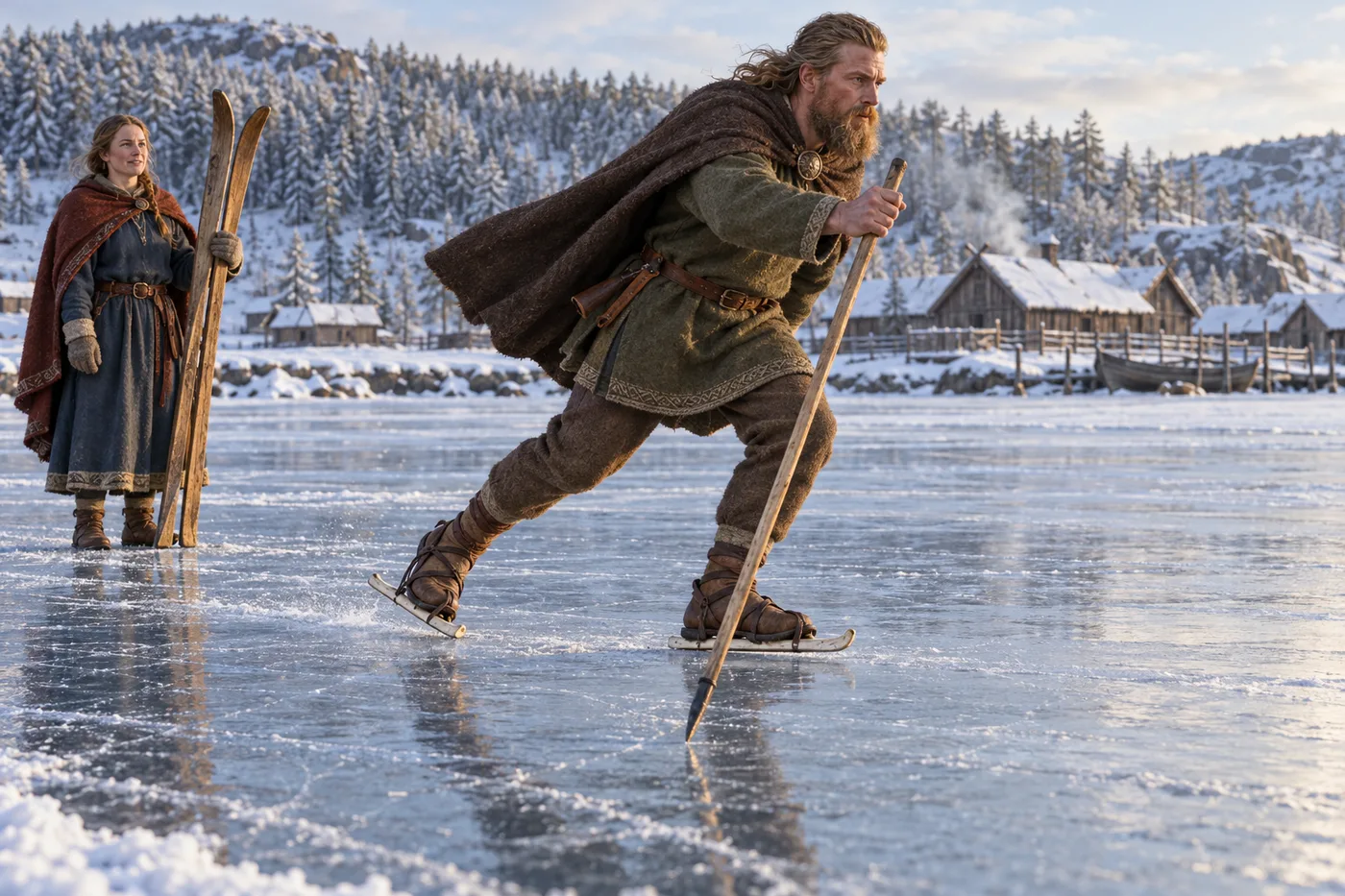
A horse-bone skate from York is dated to approximately 930–975. Its smooth, worked underside shows how an animal bone could become a runner. Bone skating differs from skating on modern steel blades: a pole can supply propulsion. An individual find supports skating technology, not an exact account of the wearer or the occasion. [4]
Wooden skis
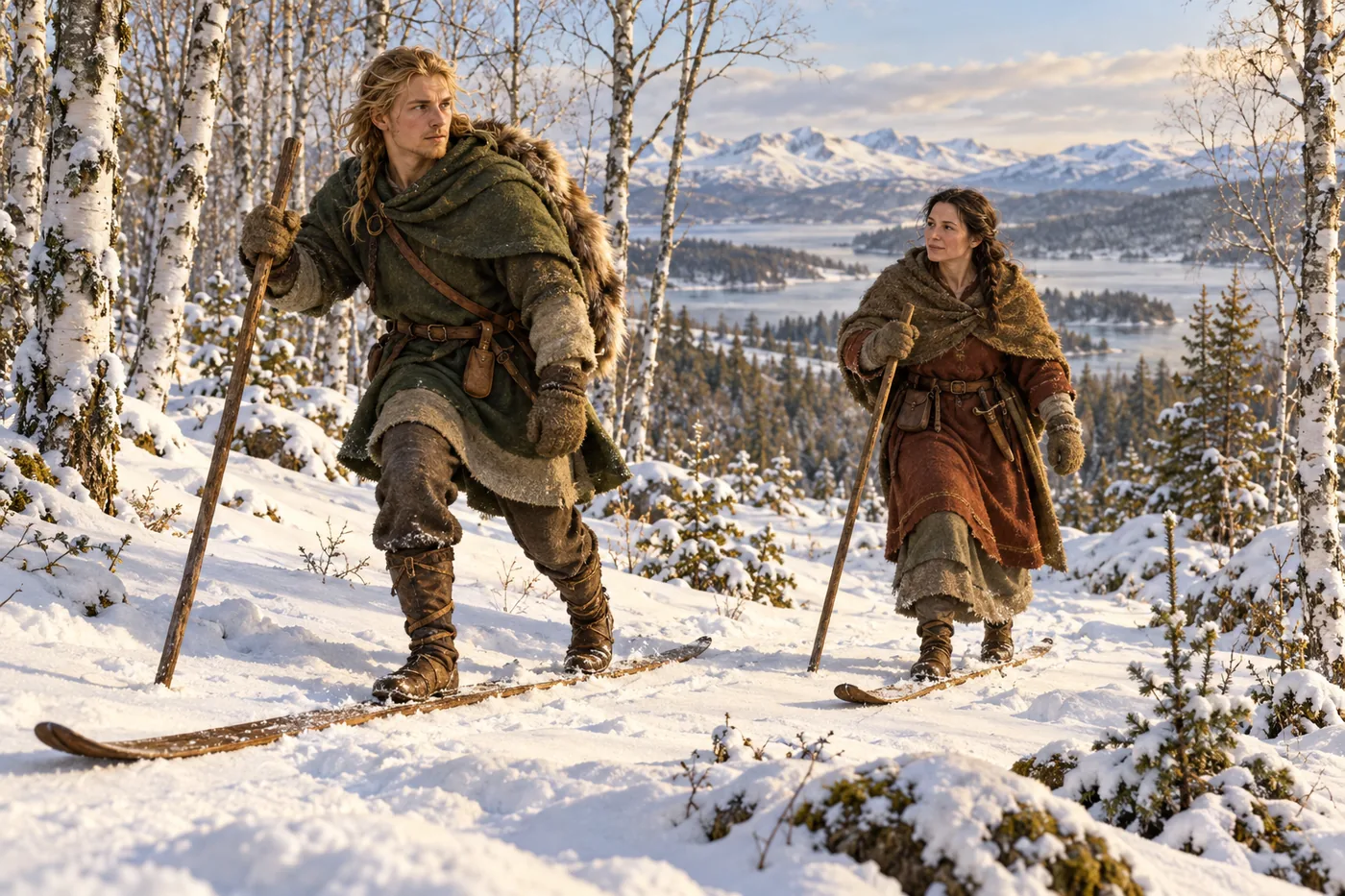
Skiing combined travel with other activities in snowy landscapes. Equipment varied by region, terrain and period; “short wooden planks” is too narrow a definition. Medieval descriptions celebrate skill on snow, but they must be read with their dates and literary purposes in mind. [3, 5]
Small objects, big possibilities
Buzz bones and shared play
JORVIK describes perforated bones threaded on twisted cord that spin and buzz when pulled. These provide a useful reminder that entertainment need not require an elaborate board. An object’s small size alone, however, does not prove it belonged to a child. Children could also watch older players and learn by joining everyday activities. [5]
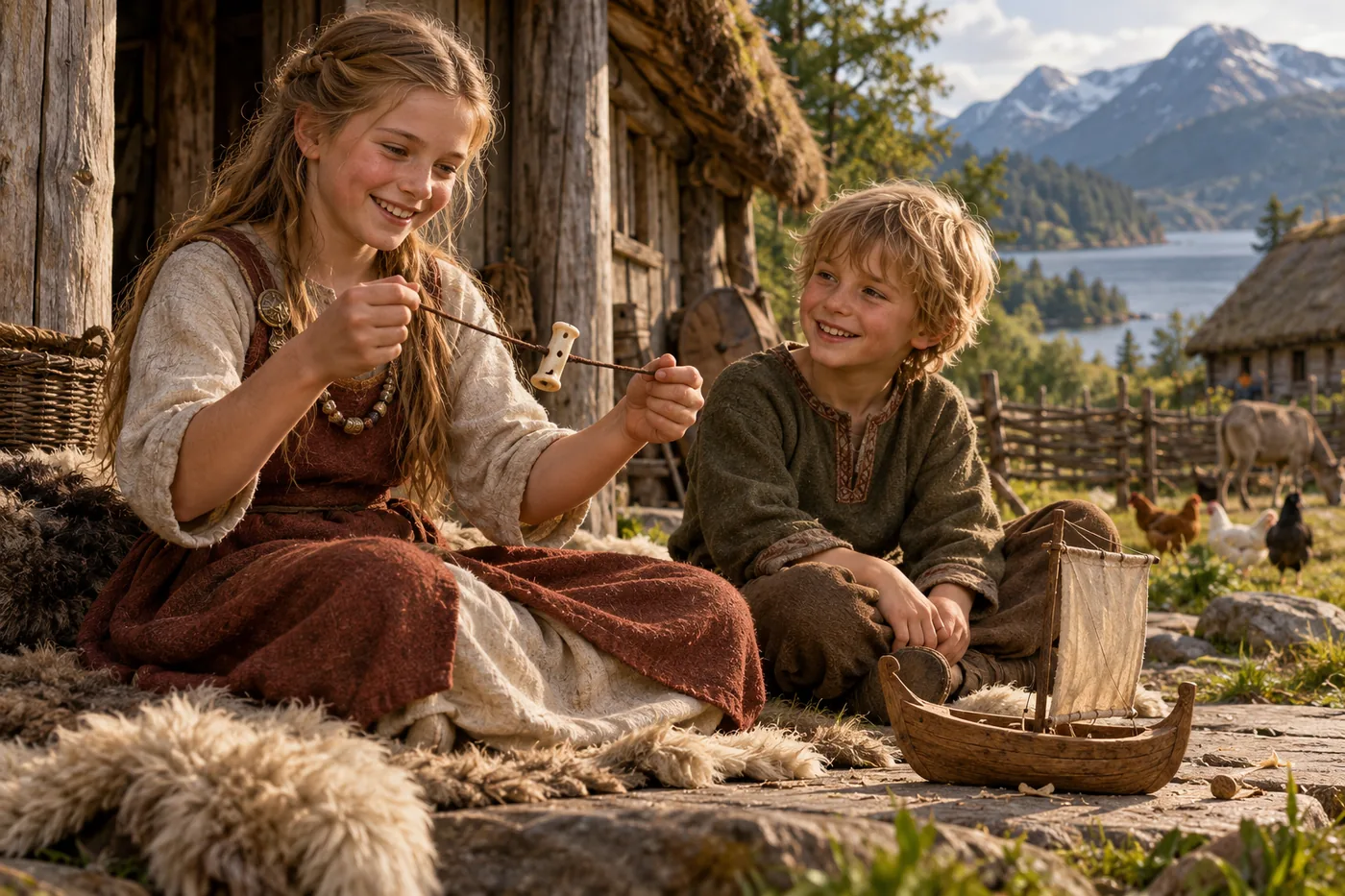
Make a game today
Draw a Morris board on cardboard or use a museum’s reconstructed tafl rules with two colors of counters. These are modern learning activities inspired by historical evidence. For younger visitors, see For Kids; for making boards, counters and cord, explore Viking crafts. Use large pieces for small children and avoid sharp implements in play.
Traditional games: how far back can we trace them?
These names appear in Scandinavian folk play and modern Viking-themed events. A museum may use a game for teaching without claiming that its exact name and rules are preserved from the tenth century. We distinguish the activity from a securely dated Viking-Age attestation.
| Game | What the name describes | Historical caution |
|---|---|---|
| Rövkrok | A leg-hooking strength contest performed lying down. | Included in museum educational discussions of older play; exact Viking-Age rules are not established here. |
| Dra kavel / dra oxe | Seated opponents pull a stick, testing strength and balance. | Treat the familiar modern version as traditional play, not a securely reconstructed Viking ruleset. |
| Dra skinn | A contest organized around pulling a hide. | Names and forms vary; the exact proposed version needs a dated source. |
| Stångstötning / stangstörtning | Pole-throwing or pole-tossing traditions. | Do not assume all regional forms are identical or securely Viking-Age. |
| Skäggbrottning | A contest described as gripping an opponent’s beard. | No firm Viking-Age attestation established in the sources checked for this guide; not offered as a recommended activity. |
| Lugga björn | A traditional balance challenge involving a constrained posture. | The name and precise actions need a source; modern descriptions vary. |
| Halmstråhoppning | A small jumping challenge using a straw or similar marker. | Listed as traditional play; a Viking-Age origin is not established here. |
| Plocka kniv | A balance challenge centered on reaching an object. | Do not use a knife in a modern activity. Any safe substitute remains a modern adaptation. |
Bohusläns museum includes rövkrok and other traditional activities in its educational material [7]. This is a useful starting point for play, but finer claims about chronology require the original evidence.
Did every contest begin with “handsalagrid”?
We have not established a reliable primary or scholarly source for a universal sacred handshake under this name before Viking games. The claim circulates in popular descriptions, but it is not presented here as settled history. A modern agreement to play fairly is sensible without assigning it an unverified ancient ritual.
Play was not only preparation for war
A strong body or a strategic mind could be useful in many settings. That possibility is different from demonstrating the purpose of a particular game. Household leisure, friendship, competition and public reputation are questions to investigate alongside martial interpretations.
Follow the evidence
- National Museum of Denmark: games and entertainment
- Swedish History Museum: gaming pieces and dice
- Bohusläns museum: Viking-Age and medieval sport
- York Archaeology: bone skate, c. 930–975
- JORVIK: bone, antler and buzz bones
- The Viking Museum: play and sport
- Bohusläns museum: Iron Age play and games
- British Museum: medieval Lewis chess piece
- JORVIK archaeological learning resource
Sources checked October 18, 2026. Modern illustrations are interpretive; exact ancient rules and participation patterns are often uncertain.
Continue with how we evaluate evidence, crafts and activities for children.
Keep exploring