
Life & Society · Introduction
Health and Healing: What the Bones Can Tell Us
In Brief
Human remains document some bodily problems and possible interventions, while leaving much of illness invisible.
On this page
An uneven medical recordA close study at VarnhemPossible attempts at reliefKeeping the human scaleSourcesAn uneven medical record
Bones and teeth preserve particular kinds of injury and disease. The National Museum of Denmark describes joint degeneration, dental problems, and weapon injuries in Viking Age remains. Many other illnesses leave no recognizable skeletal trace. Consequently, a skeleton cannot supply a complete medical history, and the absence of a visible lesion is not proof of good health. Written medieval discussions of medicinal plants are another body of evidence, but their date and setting must be established before applying them to a Viking household.
A close study at Varnhem
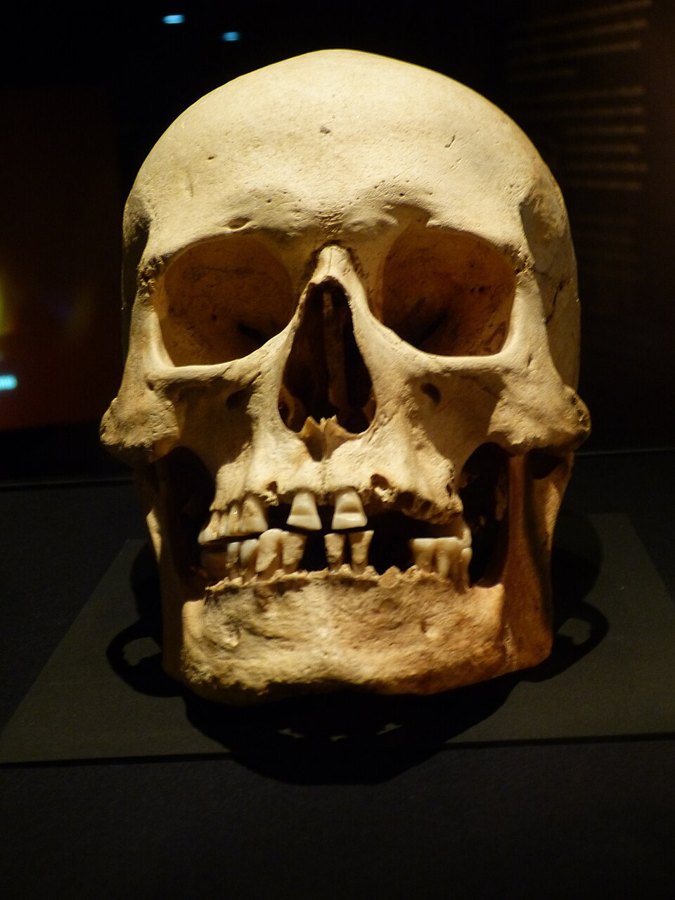
A 2023 study examined teeth from an early Christian cemetery at Varnhem in Västergötland. The material dates broadly from the tenth through twelfth centuries, spanning the late Viking Age and its aftermath. Clinical examination and selected radiographs identified cavities, tooth loss, infections, and unusual wear. The value lies in the detailed evidence from this community. Its results should not be converted into a single dental profile for everyone living across the Viking world.

Possible attempts at relief
The Varnhem researchers reported modified molars with openings into the pulp chamber, interpreted as possible attempts to address infection or pain. They also identified tooth-picking wear and filed front teeth. These modifications need not share a purpose: a mark associated with care differs from a deliberate alteration that may have signaled identity. The authors cannot identify who performed the possible treatments. The findings do not establish a profession equivalent to modern dentistry or show what patients thought about the procedures.
Keeping the human scale
A useful account separates an observed feature from its explanation. A cavity or healed injury is a physical finding; an interpretation of pain, treatment, or social care requires further reasoning. Even a careful study may leave several possibilities open. This does not make the evidence uninformative. It brings attention to people living with discomfort, altered bodies, and practical attempts to manage problems. Describing such evidence is historical investigation, not a recommendation to reproduce old remedies or procedures.
The Evidence
The sources below support this article. Interpretations and limits are explained in the text; this is not an exhaustive research review.