
Life & Society · Introduction
Glass Beads: Color, Recycling, and Workshop Skill
In Brief
Small ornaments connect early northern towns with older glass and highly practiced craft knowledge.
On this page
A new life for older glassMaking white and blueThe evidence from YorkFrom workshop to clothingSourcesA new life for older glass
At early eighth-century Ribe, craftspeople used glass from Roman mosaics as material for beads. These small mosaic cubes are called tesserae. Research reported by Aarhus University in 2022 used their chemical composition to investigate how workers transformed them. This is an early trading-town story that begins before some conventional dates for the Viking Age. It shows that the craft networks associated with later Viking towns had deeper roots.
Making white and blue
The Ribe study linked opaque white beads to transparent, gold-covered mosaic glass. Tiny bubbles trapped during working made the finished glass appear white; traces of gold helped identify its earlier form. Blue beads involved mixing blue mosaic glass with clearer material, changing its opacity. These results reveal selection and combination rather than indiscriminate melting of anything available. The research reconstructs workshop choices through physical traces, without requiring a surviving written recipe or a modern claim that all beadmakers followed the same method.

The evidence from York
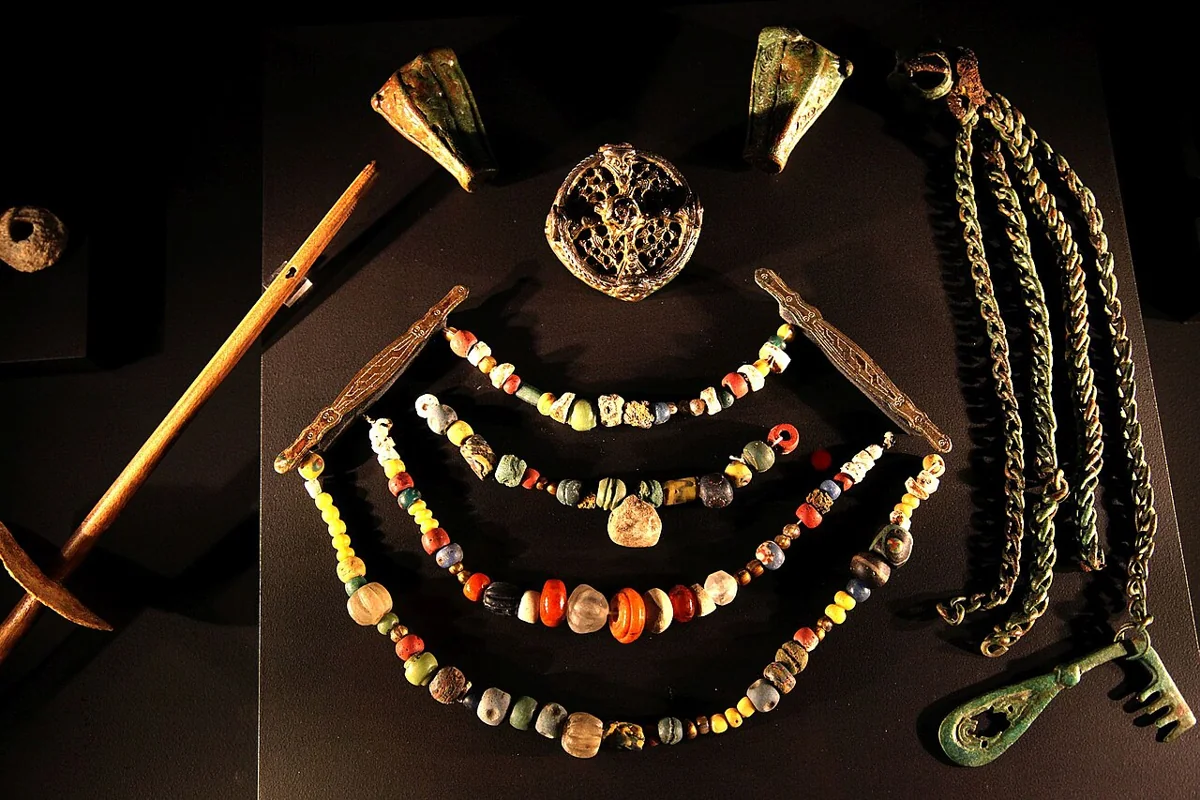
Coppergate excavations recovered almost 300 glass beads, including blue, green, and yellow examples. A few orange beads carried gold foil. JORVIK Viking Centre also describes a furnace and crucibles as evidence for local glassworking. These production remains matter because a bead alone could have arrived from elsewhere. Together, finished ornaments and workshop equipment make it possible to ask which stages of manufacture took place within the town and which materials or objects were imported.
From workshop to clothing
Beads probably appeared in necklaces alongside amber and jet, creating combinations of color and material. Some may also have decorated other objects. Their small size should not lead us to treat them as trivial: glass had to be obtained, heated, shaped, and handled successfully. The examples from Ribe and York illuminate different parts of that story. One provides chemical evidence for a particular recycling process; the other connects ornaments with an urban craft setting. Neither town supplies a universal explanation for every bead found across northern Europe.


The Evidence
The sources below support this article. Interpretations and limits are explained in the text; this is not an exhaustive research review.