
Journeys & Encounters · Introduction
Weights and Measures: Making Exchange Work
In Brief
Balances made quantities visible, while markings and decoration helped users recognize and present their equipment.
On this page
A balance with two pansRecognizing a setMarks were not one universal codeMeasuring more than silverSourcesA balance with two pans
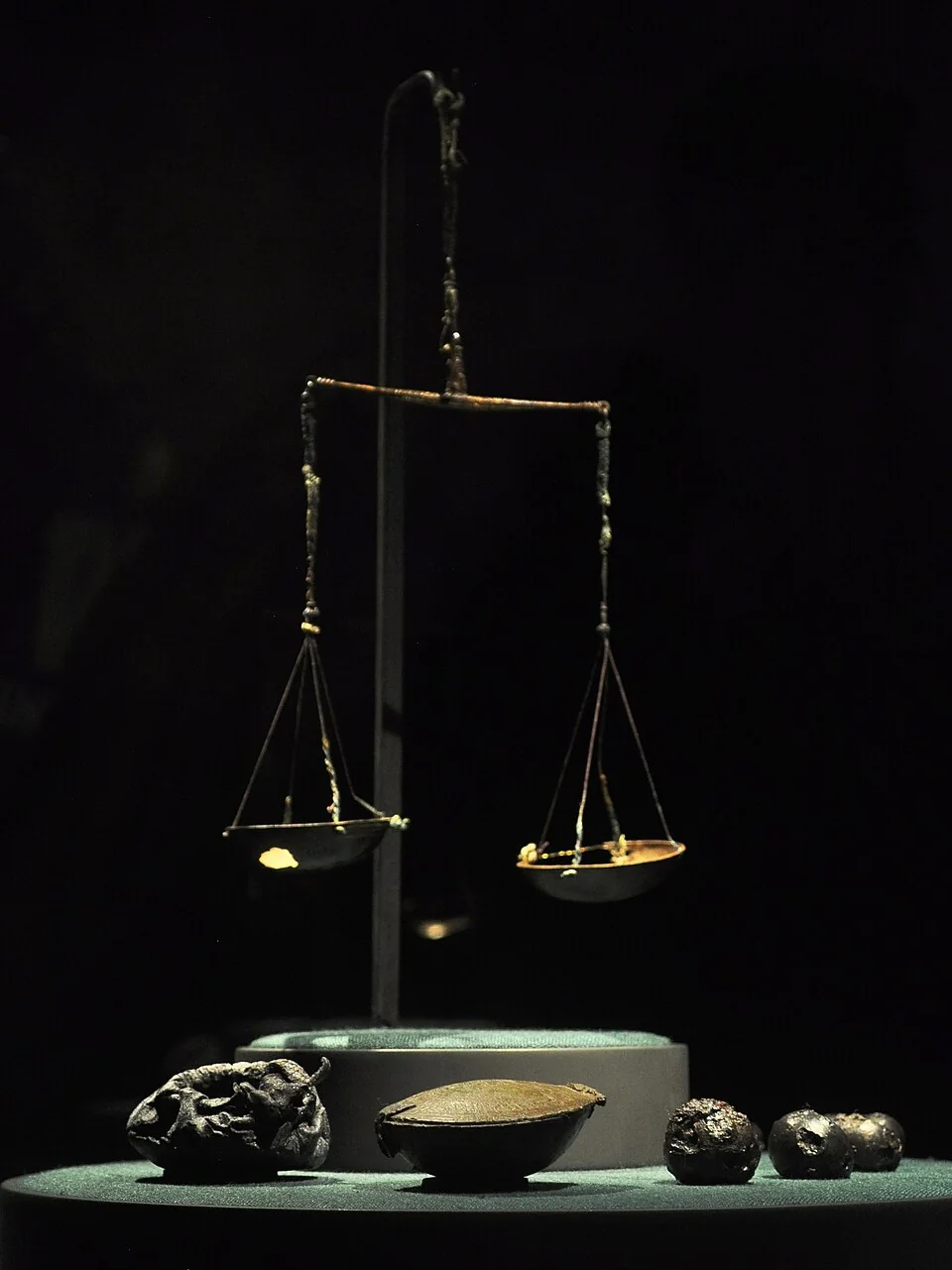
Small balances allowed precious metal to be compared against weights. Silver could therefore be assessed as material, including fragments cut from larger objects. A coin’s image and origin were not the only possible basis of its value in this setting. Watching the pans reach balance made measurement part of an exchange. The equipment did not determine what a seller should charge, but it helped establish the quantity of metal under discussion.
Recognizing a set
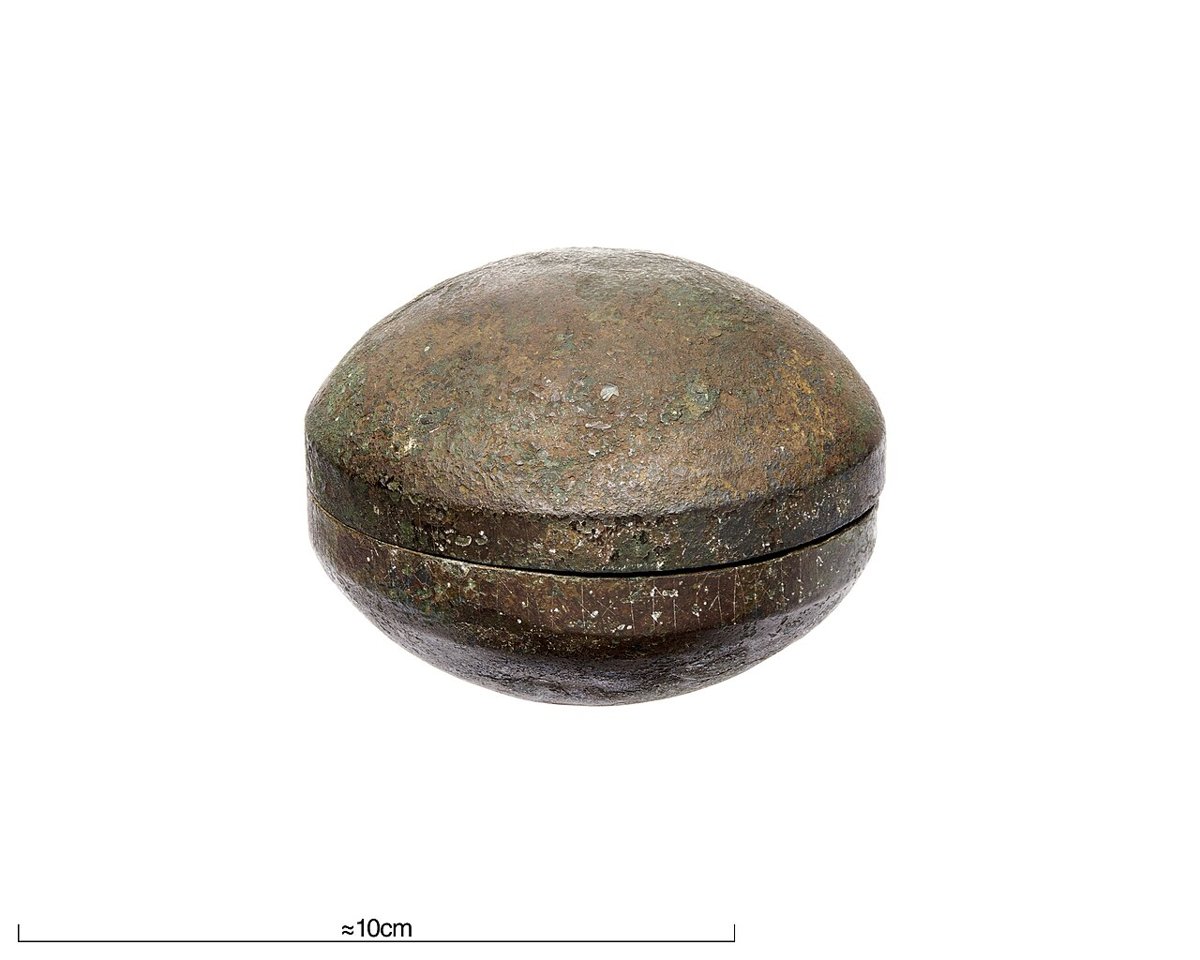
The Swedish History Museum describes weights with flattened ends and an iron core covered by bronze. Marks on the ends helped distinguish units. The covering could make removal of metal more apparent, offering a practical obstacle to altering a weight unnoticed. Sets could contain several sizes, and Scandinavian systems reflected contacts with other regions. These are technologies of comparison: they depend on users recognizing what the equipment is supposed to represent, rather than on a number being self-explanatory.

Marks were not one universal code
A museum study of a decorated weight makes a useful distinction between a weight system and its visible markings. The marking conventions were not necessarily standardized across every set. One Scandinavian example carries decoration resembling Arabic script, apparently drawing on the appearance of Islamic coins. Much of the inscription cannot be read as meaningful Arabic. Its appearance may have communicated authority or worldly connections, but the owner’s exact intention is unknown. Decoration is evidence of cultural contact, not proof that the person using it could read the language imitated.
Measuring more than silver
Larger goods needed different equipment. Steelyard-type balances could weigh materials such as food and textiles using a suspended load and a movable balancing element. This widens the picture beyond the familiar merchant with a handful of silver. Measurement linked ordinary provisions and raw materials to exchange as well. Finds of scales and weights in both women’s and men’s burials also caution against assigning all commercial knowledge to one gender. Burial equipment supplies clues to social associations, while the details of an individual’s working life may remain inaccessible.

The Evidence
The sources below support this article. Interpretations and limits are explained in the text; this is not an exhaustive research review.