

Journeys & Encounters · Focused study
Did Ingvar Reach Georgia? Runestones, Saga, and a Proposed Connection

In Brief
Ingvar’s eastern expedition is unusually visible in Swedish commemoration. Connecting it to a particular Georgian campaign, however, requires more than matching approximate dates and the presence of Varangians.
On this page
Begin with what the stone saysSeveral bodies of evidence must be joined carefullyA route proposal is not a recovered travel logSourcesBegin with what the stone says
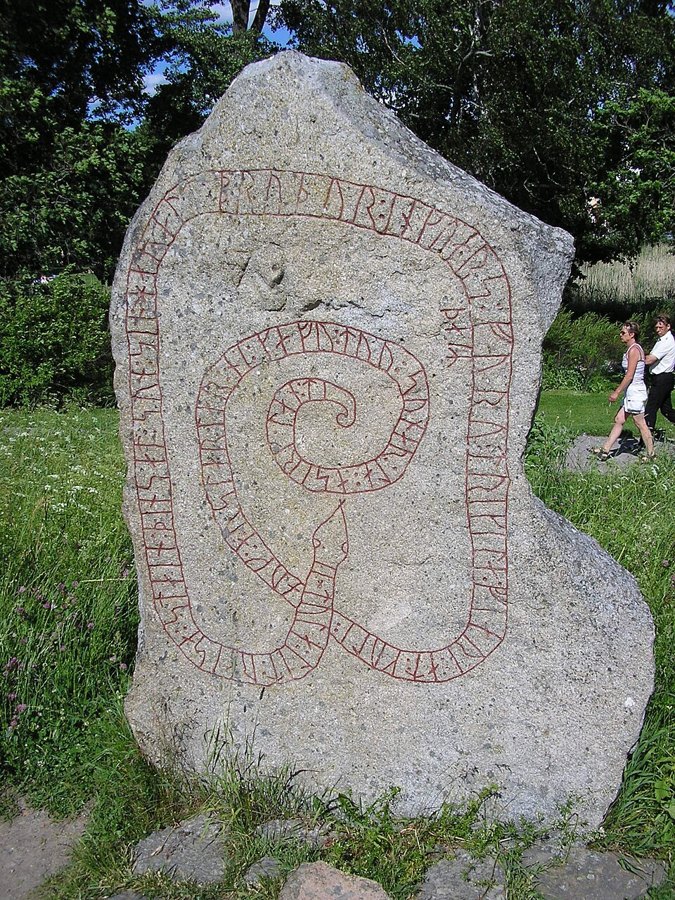
The Swedish National Heritage Board’s account of the Gripsholm stone, Sö 179, identifies a memorial raised by Tola for Harald, described as Ingvar’s brother. The verse recalls a search for gold, fighting in the east, and death in Serkland. The agency explains Serkland broadly in relation to Muslim lands and presents the Caspian region as a reasonable geographical suggestion. The inscription does not supply a city-by-city route or mention Georgia by name. Its precision lies in commemoration, not in itinerary.
Sources for this section: 1
Several bodies of evidence must be joined carefully
A study of Yngvars saga víðförla and the Ingvar stones questions how securely particular inscriptions have been grouped together. It compares runic evidence, the saga, Icelandic annals, and proposed links with the Chronicle of Kartli. The latter describes Varangians in Georgian conflict but does not identify their leader as Ingvar. Similar dates can make a connection worth considering without proving it. The study also emphasizes that a personal name occurring on a stone does not automatically identify the expedition leader.
Sources for this section: 2
A route proposal is not a recovered travel log
Our synthesis preserves different confidence levels. Memorial inscriptions provide strong evidence that people associated with Ingvar were remembered for a disastrous eastern journey. A later saga supplies a much fuller adventure narrative, but its fullness does not give it equal authority on every detail. A Georgian connection adds another possible historical setting and must be argued independently. On a map, these distinctions should be visible: securely named regions, broad geographical interpretations, and proposed routes need different treatment. The question remains interesting precisely because the evidence does not fit together effortlessly. Treating all the sources as one seamless account would conceal the historical work needed to connect them, while dismissing them all would lose the real expedition commemorated in stone.
Sources for this section: 1, 2
The Evidence
The sources below support this article. Interpretations and limits are explained in the text; this is not an exhaustive research review.