
A place in the wider Viking world
Bolgar and the Volga: a meeting place of worlds
Approximate reference point: 54.9776°, 49.0306°. Approximate modern location for orientation; not a reconstructed historical landing point.
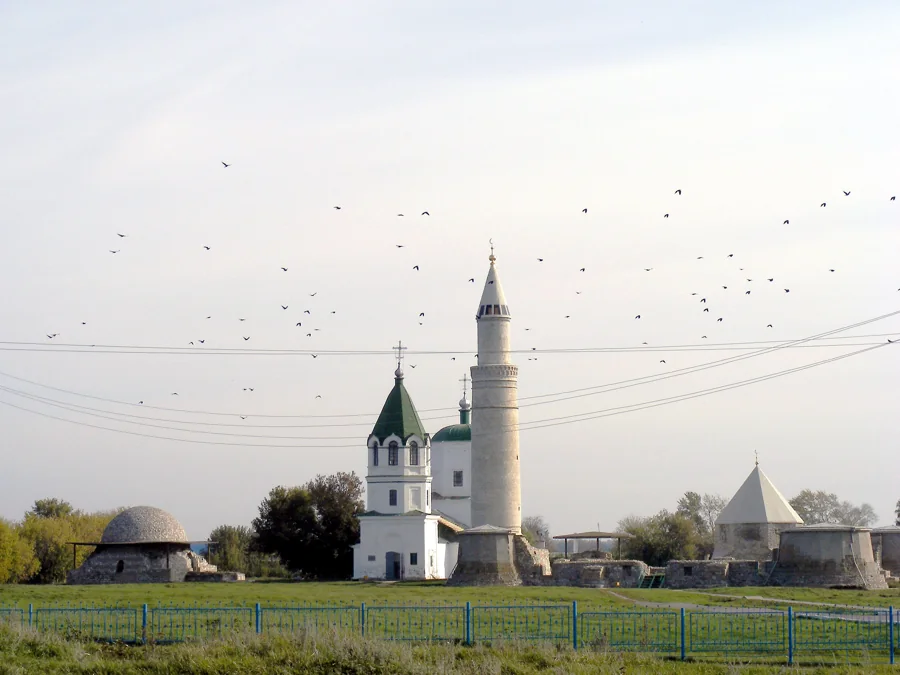
The place and its connections
Bolgar stood within a Volga landscape connecting different societies and long-distance exchanges. It was a centre of the Volga Bulgar world, not a Scandinavian foundation. Its importance to a Viking-age journey map lies in contact: northern travellers could encounter markets and networks extending far beyond Scandinavia.
Reading the surviving evidence
The archaeological complex preserves a long sequence, including major developments under the Golden Horde. Many visible monuments are later than the Viking Age. The site also commemorates the Volga Bulgars’ acceptance of Islam in 922, a crucial part of its own history and continuing religious significance.
More than a voyage
Islamic silver found in Scandinavia offers material evidence for eastern connections. Coins could pass through many hands and places before reaching a northern hoard; their presence is not proof that a particular Scandinavian owner visited the mint city. The Volga world also included slave trading, a necessary part of the story when describing the wealth moving along these routes.
Explore the evidence
Sources checked October 17, 2026. This is a historical guide, not current travel-access advice.
- UNESCO: Bolgar complex ↗
- National Museum of Denmark: Islamic silver ↗
- National Museum of Denmark: slavery and trade ↗