
Journeys & Encounters · Deep dive
Maldon: A Battlefield and a Poem about Loyalty
In Brief
The defeat of 991 survives through a changing coastal landscape and a literary work whose judgments remain debated.
On this page
The crossing in the narrativeThe problem of ofermodTwo men named GodricHeroic poetry without a complete beginning or endA text rescued before the fireNorthey Island is a researched identificationWhat a battlefield can and cannot explainRemembering defeatSourcesThe crossing in the narrative
The Old English poem places English and Scandinavian forces on opposite sides of a tidal crossing. A messenger offers peace in return for payment; Byrhtnoth rejects the demand. Defenders initially prevent the opposing force from crossing, but Byrhtnoth then permits its passage. The Cambridge teaching account explains how this sequence creates the conditions for the disastrous battle that follows. Geography is therefore part of the poem’s argument. The crossing is not decorative scenery: controlling it offers a military advantage, and relinquishing that advantage raises the question of responsibility. The poem makes a leader’s decision central to the relationship between courage and consequence.
Sources for this section: 1
The problem of ofermod
The word ofermod, used in connection with Byrhtnoth’s decision, has prompted extensive debate. Oxford’s teaching commentary contrasts readings emphasizing confidence with those emphasizing arrogance. The translation changes how directly the narrator appears to criticize him. It is not enough to select an English equivalent and treat the dispute as solved. The surrounding request, the tactical situation, and the later outcome all contribute to interpretation. A reading that celebrates resolve can still recognize a costly mistake; a critical reading need not make every loyal follower foolish. The word matters because it resists reducing the poem to either uncomplicated praise or uncomplicated condemnation.
Sources for this section: 2

Two men named Godric
Cambridge’s account distinguishes the Godric who flees from the Godric who continues fighting. The repeated name can confuse a reader who expects each name to identify a single character. Their different actions help organize the poem’s moral world. Desertion and steadfastness become visible through decisions made after the leader’s fall. Byrhtwold’s speech similarly turns dwindling military strength into a reason for stronger resolve. These are crafted contrasts, not an administrative casualty list. Paying attention to the named figures and the sequence of speeches reveals how the poet converts defeat into a story about obligation, reputation, and the choices of those left behind.
Sources for this section: 1
Heroic poetry without a complete beginning or end
The surviving work is a fragment. Oxford’s description of Mark Griffith’s critical edition emphasizes that its beginning and ending are missing, while enough of the main narrative remains to show its literary construction. The edition also examines the mixture of inherited poetic features and forms associated with later alliterative verse. Such work places Maldon within literary history as well as military history. The surviving final action is not necessarily the ending the poet originally composed. An interpretation must therefore distinguish the emotional effect of the extant fragment from claims about the complete work’s design.
Sources for this section: 3
A text rescued before the fire
The medieval manuscript was destroyed in the Cotton library fire of 1731. The Bodleian record for Rawlinson B.203 identifies an earlier eighteenth-century transcript as the earliest surviving copy. This means the words now studied pass through an additional stage of copying. Editors must assess that transcript and its relationship to early publication rather than consult the lost medieval page directly. The transmission history does not make the poem unusable; it identifies the basis of confidence and the locations of possible error. A manuscript’s destruction can change the questions scholarship must ask without destroying every trace of its contents.
Sources for this section: 4
Northey Island is a researched identification
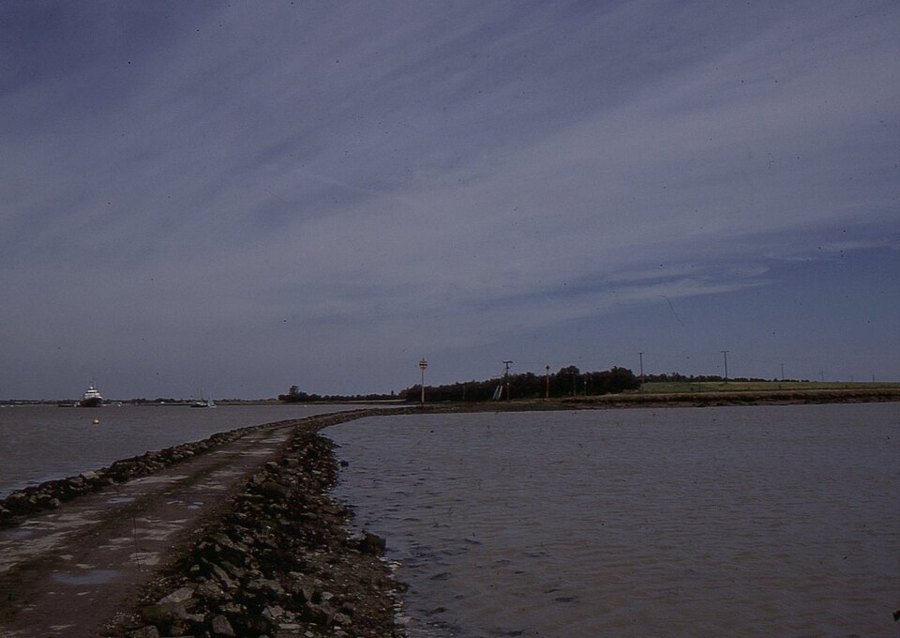
The National Trust’s heritage record describes the Northey Island and South House Farm area as the probable location of the battle. It records a twentieth-century history of argument, including geological investigation and consideration of other candidate sites. The present channel is not simply the channel of 991: coastal change, sediment accumulation, and reclamation altered its dimensions and surroundings. Consequently, the modern causeway is valuable for orientation but cannot settle every tactical question by appearance alone. A literary reference to water and a crossing must be compared with reconstructed terrain, rather than fitted uncritically onto the landscape visible during a single visit.
Sources for this section: 5
What a battlefield can and cannot explain
The geographical question and the literary question overlap without becoming identical. A restricted crossing helps explain why permission to advance matters in the poem. It does not prove that the reported conversations occurred word for word or settle what ofermod meant to the poet’s audience. Conversely, a persuasive interpretation of pride or loyalty cannot locate a lost shoreline. The useful comparison assigns each kind of evidence a task: environmental investigation reconstructs possibilities of movement, while textual analysis examines how decisions are represented. This division makes a combined history stronger because disagreement in one area need not be disguised by certainty borrowed from another.
Sources for this section: 2, 5
Remembering defeat
Maldon’s enduring power comes partly from its refusal to make victory the only measure of significance. The surviving narrative gives defeated followers memorable decisions and speeches, while allowing the leader’s judgment to remain difficult. A modern history can preserve that complexity without treating the poem as a transparent account of every battlefield event. The military defeat, the coastal setting, the ethical narrative, and the surviving transcript are four connected subjects. Studying them together shows why this episode remains unusually rich: it concerns not only what happened in 991, but how a community could make an unsuccessful defense meaningful and how that meaning reached later readers.
Sources for this section: 1, 2, 3, 4
The Evidence
The sources below support this article. Interpretations and limits are explained in the text; this is not an exhaustive research review.