
Journeys & Encounters · Deep dive
Horses and Riding Gear: How Status Became Visible
In Brief
Decorated bridles, stirrups, grooming tools, and carriage equipment reveal different relationships between horses and social display.
On this page
Riding equipment is not a cavalry rosterSollerön includes the work of caring for a horseA bridle could carry a program of ornamentStirrups joined practical support and precious surfacesRegional forms do not identify a single ownerCarriage horses also displayed wealthA small English fitting preserves another connectionStatus was assembled around the animalSourcesRiding equipment is not a cavalry roster
Horse gear can establish that riding or animal management mattered in a burial, but it cannot by itself identify a battlefield formation. The Swedish History Museum’s discussion of male ideals connects weapons, hunting equipment, and horseback display while emphasizing that such objects occur in only a minority of men’s graves. This distinction is essential. An impressive assemblage may show what a community wished to commemorate rather than the everyday equipment of everyone around it. The archaeological question is therefore not simply whether Vikings rode horses. It is how particular people used animals, equipment, and funerary presentation to mark resources, skill, and relationships with others.
Sources for this section: 1
Sollerön includes the work of caring for a horse
Grave 2 at Bengtsarvet on Sollerön contained weapons and arrowheads together with parts of a bridle and a curry-comb. The museum identifies the latter as a grooming implement. Its presence helps broaden the picture from riding as a dramatic activity to the maintenance that made it possible. A horse was a living animal requiring care, not merely a platform for displaying an ornate rider. The combination also supports comparison within one assemblage: weapons, hunting equipment, and grooming material were selected together. It does not reveal how often the deceased rode or who performed daily animal care, but it makes those practical questions historically relevant.
Sources for this section: 1

A bridle could carry a program of ornament
The Broa bridle from Gotland, cataloged by the Swedish History Museum, combines an iron bit with leather strapping and 21 differently shaped gilded bronze mounts. Five mounts receive particular attention for their gripping-beast ornament, conventionally called Broa style. Several include animal heads or profile forms. The decorated surfaces would have made the horse itself part of a visual presentation. This is a useful distinction from ornament worn only on a person’s body. Resources were invested in an assembly linking rider and animal. The museum’s detailed inventory also shows why a loose mount should not automatically be interpreted as jewelry: fittings could belong to a much larger harness system.
Sources for this section: 2
Stirrups joined practical support and precious surfaces
A pair of stirrups at the Metropolitan Museum dates to the late tenth or early eleventh century and combines iron with bronze, gold, and silver. Gilded bronze and silver overlay turn functional equipment into decorated metalwork. The museum cautiously describes a likely wealthy burial context and a possible Danish attribution. Those qualifications should remain visible. Material and workmanship can be examined directly, while the original deposit is less securely documented. The pair also differs slightly in measurements and weight, reminding us that paired equipment need not be mechanically identical. Such details offer a more grounded view of skilled production than imagining perfectly standardized accessories for an entire social class.
Sources for this section: 3
Regional forms do not identify a single owner
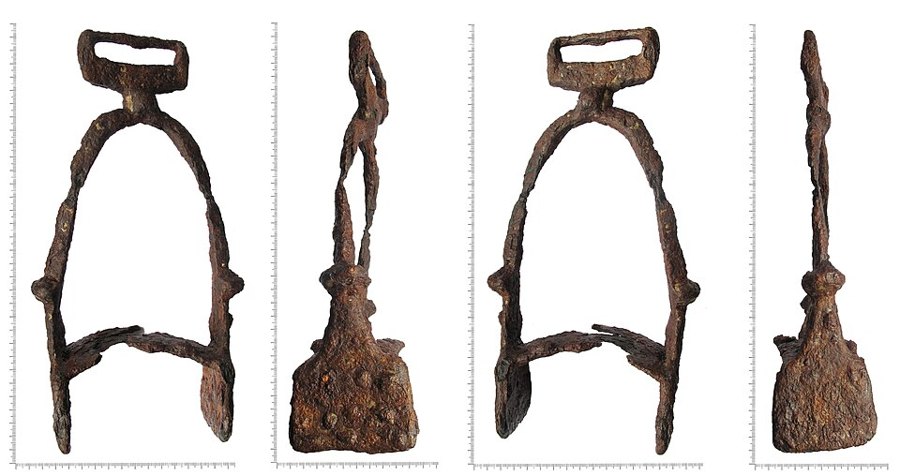
Another Metropolitan Museum stirrup, assigned to the tenth or eleventh century and probably East Prussia, has a broad rectangular suspension opening and flaring lower sides. The museum places this form within a wider distribution around the Baltic and North Seas and relates its development to earlier eastern European types. The comparison is about the history of a design. It does not establish a direct journey by the person who last used this example, nor does it make that person an Avar or Scandinavian on its own. Equipment forms can participate in broad networks of adoption while individual objects retain uncertain biographies. That is why typology and personal identity require different arguments.
Sources for this section: 4
Carriage horses also displayed wealth
The Mammen hoard contained two wooden harness bows decorated with gilded bronze, found during gravel extraction near the famous chamber grave. Denmark’s National Museum explains that these fittings sat over carriage horses and guided the reins. They were therefore both useful components and conspicuous decoration. This example prevents all ornate horse equipment from being absorbed into a warrior narrative. A carriage and its team could communicate resources through movement and appearance without implying mounted combat. The hoard also included other valuable objects, so its interpretation concerns a deposited assemblage rather than a surviving vehicle. Reconstructing the complete harness remains a task of connecting fittings with their original structural role.
Sources for this section: 5
A small English fitting preserves another connection
An eleventh-century stirrup strap-fitting from near Sittingbourne in Kent, held by the British Museum, carries interlaced animal ornament. Its copper-alloy body has traces of iron rivets on a bent lower flange, while corrosion makes parts of the animal difficult to follow. The museum classifies it as late Anglo-Saxon. This object usefully extends the comparison beyond Scandinavian graves. Riding accessories and animal ornament belonged to connected artistic environments whose modern labels do not always coincide. The rivets also preserve evidence of attachment: decoration was integrated into working equipment. Even a small fitting can therefore illuminate both construction and visual style without supplying a complete saddle or rider.
Sources for this section: 6
Status was assembled around the animal
Across these examples, status appears through combinations rather than one diagnostic object. A grooming tool evokes care; a bridle distributes ornament over the horse; stirrups join support and display; carriage harness guides movement while advertising investment. Burial or hoard context then adds another layer of selection. These relationships explain why equestrian equipment deserves more than a passing mention beside weapons. It links craft, animal management, mobility, and public appearance. The strongest interpretation identifies which connection each find actually supports. Riding gear demonstrates sophisticated material choices, while the tactics, occupation, or rank of a particular user require evidence beyond the survival of decorated metal.
Sources for this section: 1, 2, 3, 4, 5, 6
The Evidence
The sources below support this article. Interpretations and limits are explained in the text; this is not an exhaustive research review.
- Swedish History Museum: Men in the Viking Age and Sollerön grave 2 ↗
- Swedish History Museum: Broa bridle ↗
- Metropolitan Museum: Decorated pair of stirrups ↗
- Metropolitan Museum: Stirrup, probably East Prussia ↗
- National Museum of Denmark: The hoard from Mammen ↗
- British Museum: Stirrup strap-fitting from near Sittingbourne ↗