
Journeys & Encounters · Introduction
Norse Greenland: Farms at the Edge of Viable Agriculture
In Brief
Pasture, marine hunting, and carefully chosen farm sites supported communities for centuries beyond the Viking Age.
Southwestern Greenland · Tenth–fifteenth centuries
On this page
Settling a usable landscapePasture and the organization of farmsMeals also came from the seaWas grain grown locally?SourcesSettling a usable landscape
Norse settlers arrived from Iceland in southern Greenland during the tenth century. UNESCO’s Kujataa landscape preserves evidence of their farming society through the fifteenth century, alongside a much later Inuit farming tradition. These are distinct historical phases, not one uninterrupted community. The farms occupied an environment where suitable ground mattered intensely. A map of Greenland’s vast coastline says little about the smaller patches of freshwater, grazing, and sheltered land available to a household.
Pasture and the organization of farms
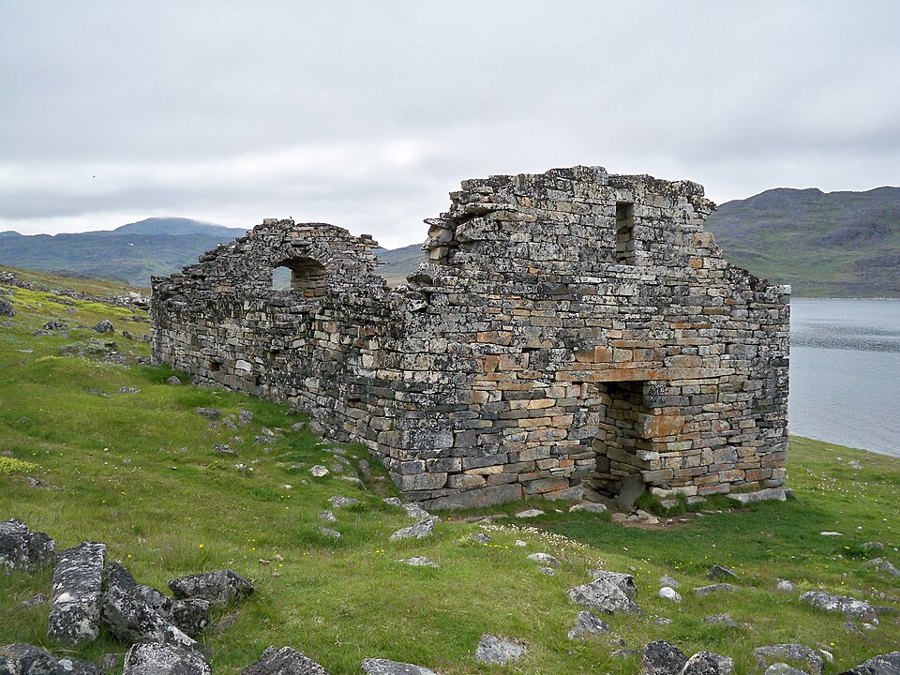
The National Museum of Denmark describes farms placed near water and vegetation useful for animal husbandry. Grass, sedges, and scrub supported animals, while turf served as building material. Differences between farms, including the presence of churches, indicate social hierarchy. Church farms appear to have acted as central places. The exact relationships between landowners, tenants, relatives, and religious dependents are reconstructed partly by comparison with better-documented Iceland, so they should not be presented as a complete Greenlandic register.

Meals also came from the sea
Animal bones from refuse deposits reveal the importance of marine resources, particularly seals. Caribou were hunted as well. This evidence challenges an image of farmers depending only on domestic livestock. The farm and the hunting grounds belonged to the same working economy. Bones tell us what entered particular deposits; their interpretation depends on context, preservation, and comparison rather than on treating every recovered fragment as a direct measure of diet.
Was grain grown locally?
A research project sampled 450 kilograms of soil from twelve Norse farms and investigated plant remains. Charred barley grains together with threshing waste at four sites strongly suggested local cultivation. The waste matters because imported clean grain alone would be less convincing evidence of farming. Phosphate measurements at two farms did not reveal deliberate manuring across the fields studied. These results add a specific, limited answer: some Greenlandic farms apparently cultivated barley, but the study does not establish that every household grew grain or that harvests were consistently reliable.
The Evidence
The sources below support this article. Interpretations and limits are explained in the text; this is not an exhaustive research review.