
Journeys & Encounters · Overview
Finland and the Eastern Baltic in the Viking Age
In Brief
Across the eastern Baltic, local communities participated in exchange, production and conflict. Their history is more than the stretch of water between Scandinavia and the eastern rivers.
On this page
A period label, not a national identitySouthwestern Finland: a fresh look at waterwaysSalme: evidence for movement and a violent encounterFollow local histories as well as routesSourcesA period label, not a national identity
Viking Age is useful for comparing roughly contemporary evidence, but it does not turn everyone living in modern Finland, Estonia or Latvia into a Scandinavian Viking. Start with particular communities, waterways and finds. Åland, southwest Finland, Saaremaa and the southern Baltic coast should not be collapsed into one cultural block.
The National Museum of Finland records thousands of Viking-Age coins among Finnish finds. This is a substantial body of evidence for connections. A coin’s origin, however, identifies where it was issued, not the language spoken by its final owner or every stop along its journey.
Sources for this section: 1, 2
Southwestern Finland: a fresh look at waterways
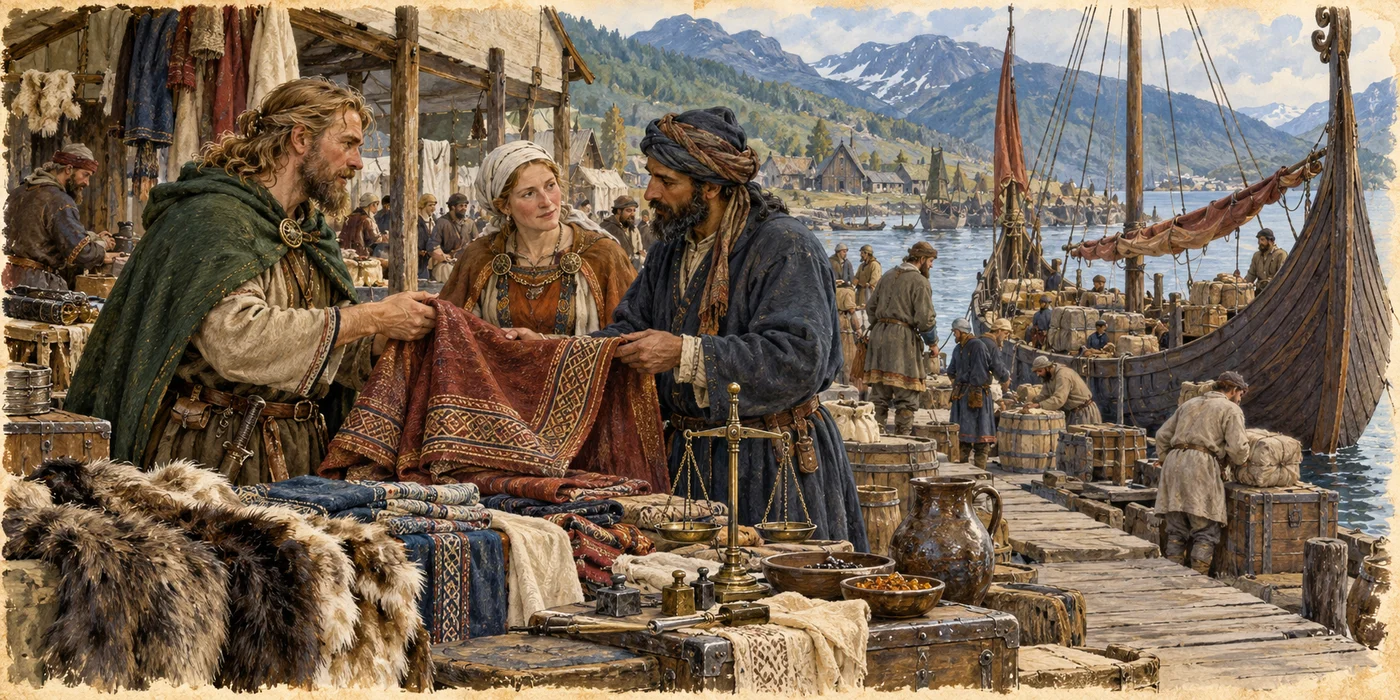
A study by Yann Irissou, published on August 19, 2026, reassesses maritime connections using 481 trade-related finds, including hacksilver, weights and scales. It considers their distribution in relation to waterways, central places and Kyrksundet. The combination extends discussion beyond a list of spectacular imported objects.
For a reader, the significant shift is methodological: weighing equipment and fragmented silver can reveal participation in exchange even where the surviving picture of trading places is incomplete. The study concerns southwestern Finland. Its findings should not be presented as a census of commerce across all of Finland or the entire eastern Baltic.
Sources for this section: 3
Salme: evidence for movement and a violent encounter
At Salme on Saaremaa, two ships held the remains of 41 people with equipment and weapons. The burials date to around the middle of the eighth century, before the familiar Lindisfarne marker. Museum collections preserve the objects; isotope research compares the buried people with possible childhood environments.
The combination supports Scandinavian connections and a probable central Swedish origin for the group examined. It does not identify the opposing side or establish the purpose of the expedition beyond dispute. Local resistance, rival travelers and political competition are possibilities to investigate, not a cast of named characters supplied by the graves.
Sources for this section: 4, 5
Follow local histories as well as routes
The Truso and Wolin guides introduce different southern Baltic settings, while Ladoga and the river-route articles explain connections farther east. Read these as linked but distinct histories. A route depends on communities able to provide supplies, exchange goods or deny passage; it is not simply a line drawn between Scandinavian departure and Byzantine arrival.
Kalevala belongs in the site’s discussion of later Finnish and Karelian storytelling, with its nineteenth-century compilation clearly identified. It cannot supply a ready-made account of every eastern Baltic community in the ninth century. Keep the archaeological region, the language tradition and the later literary collection separate before exploring their possible relationships.
Sources for this section: 6
The Evidence
The sources below support this article. Interpretations and limits are explained in the text; this is not an exhaustive research review.
- National Museum of Finland: Viking-Age coin finds ↗
- Swedish History Museum: Who were the Vikings? ↗
- Yann Irissou (2026): Viking Age Trade and Waterway Connections in Southwestern Finland ↗
- Price and colleagues (2016): Isotopic provenancing of the Salme ship burials ↗
- Saaremaa Museum: Salme ship-burial objects and 3D models ↗
- Finnish Literature Society: Is the Kalevala oral tradition or literature? ↗