
A place in the wider Viking world
Miklagard: Norse travellers in Constantinople
Approximate reference point: 41.0086°, 28.9802°. Approximate modern location for orientation; not a reconstructed historical landing point.
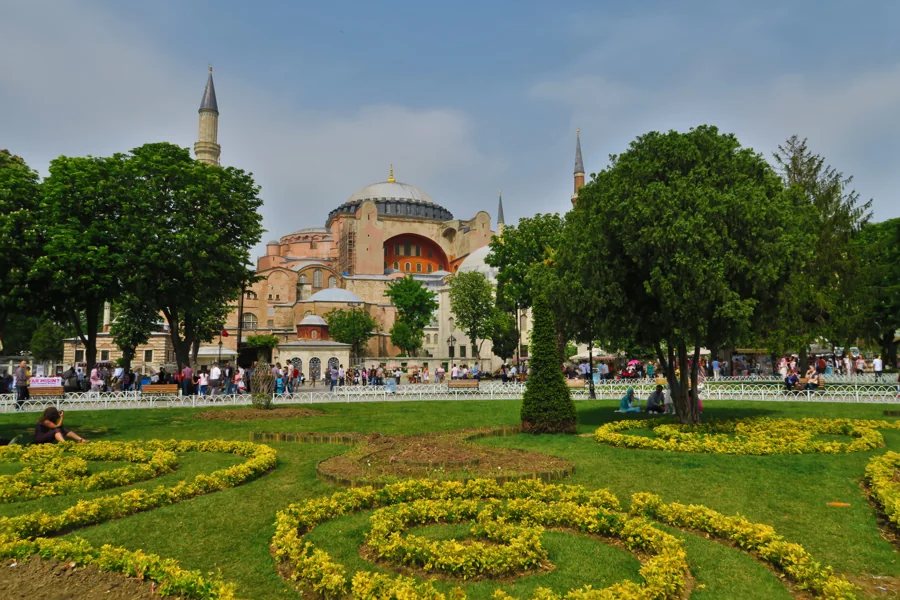
The place and its connections
Constantinople was the capital of the Byzantine Empire, a powerful eastern Roman state. Norse speakers called it Miklagarðr, the great city. Its fortifications, churches and markets belonged to a long-established urban world: Scandinavians arrived as outsiders, not as its founders. Present-day Istanbul preserves monuments from many different periods, which should not all be placed in a Viking-age scene.
Reading the surviving evidence
The sixth-century Hagia Sophia provides an especially direct connection. Runic graffiti survives inside the building, which was a church when Norse visitors entered it. These short inscriptions reveal individual presence, but do not supply complete biographies. The National Museum of Denmark discusses the names Halvdan and Are while treating their possible employment as imperial guards as a suggestion.
More than a voyage
Trading, warfare and service could bring northerners into Byzantine territory. The city was a destination for luxury goods and a place where imperial employment offered opportunities. The famous Varangian Guard belongs within Byzantine military history, rather than representing an independent Viking army ruling the city.

Explore the evidence
Sources checked October 17, 2026. This is a historical guide, not current travel-access advice.
- National Museum of Denmark: eastern journeys ↗
- National Museum of Denmark: runic graffiti ↗
- UNESCO: Historic Areas of Istanbul ↗
Continue the journey
Take a closer look at the evidence
- The Rus–Byzantine Treaty of 911: Soldiers, Property, and Negotiated Peace
Relations with Constantinople involved more than raids and spectacular journeys. The treaty dated to 911 opens a window onto military service, disputes, and the belongings of people who died far from home.
- Entering Constantinople: Rus Travel Credentials around 944
Getting to Constantinople did not automatically mean being admitted. The agreement associated with Igor shows rulers trying to distinguish authorized visitors from potentially dangerous arrivals, and to control commerce inside the imperial capital.
- Olga at the Imperial Court: Reading a Diplomatic Reception
Olga’s reception at Constantinople survives in unusually detailed ceremonial writing. Rooms, audiences, banquets, and attendants illuminate the encounter more securely than a simple story about a northern ruler being overwhelmed by Byzantine splendor.
- Constantinople in 860: Photios, Preaching, and the Memory of an Attack
The Rus attack of 860 is known through Byzantine voices as well as later histories. Comparing sermons with subsequent miracle stories shows why the date of a source and its literary purpose matter.
- After the Danube Campaign: The Treaty of 971
The agreement ending Sviatoslav’s Balkan campaign belongs beside accounts of the fighting. Its transmission and named participants reveal how difficult it can be to recover a diplomatic document from later narrative history.