
Journeys & Encounters · Deep dive
Axes: Tools, Weapons, and the Problem with Simple Labels
In Brief
A cutting edge could belong in a workshop, on a battlefield, or in an elaborate burial. Shape and context help distinguish those histories.
On this page
Start with the whole objectA Thames battle-axe and its constructionExperiments identified a specialized toolA working axe in an urban settingAn intact axe beside a deformed swordDecoration does not settle religious identityMuseum categories preserve different levels of confidenceFunction can change without changing the nameSourcesStart with the whole object
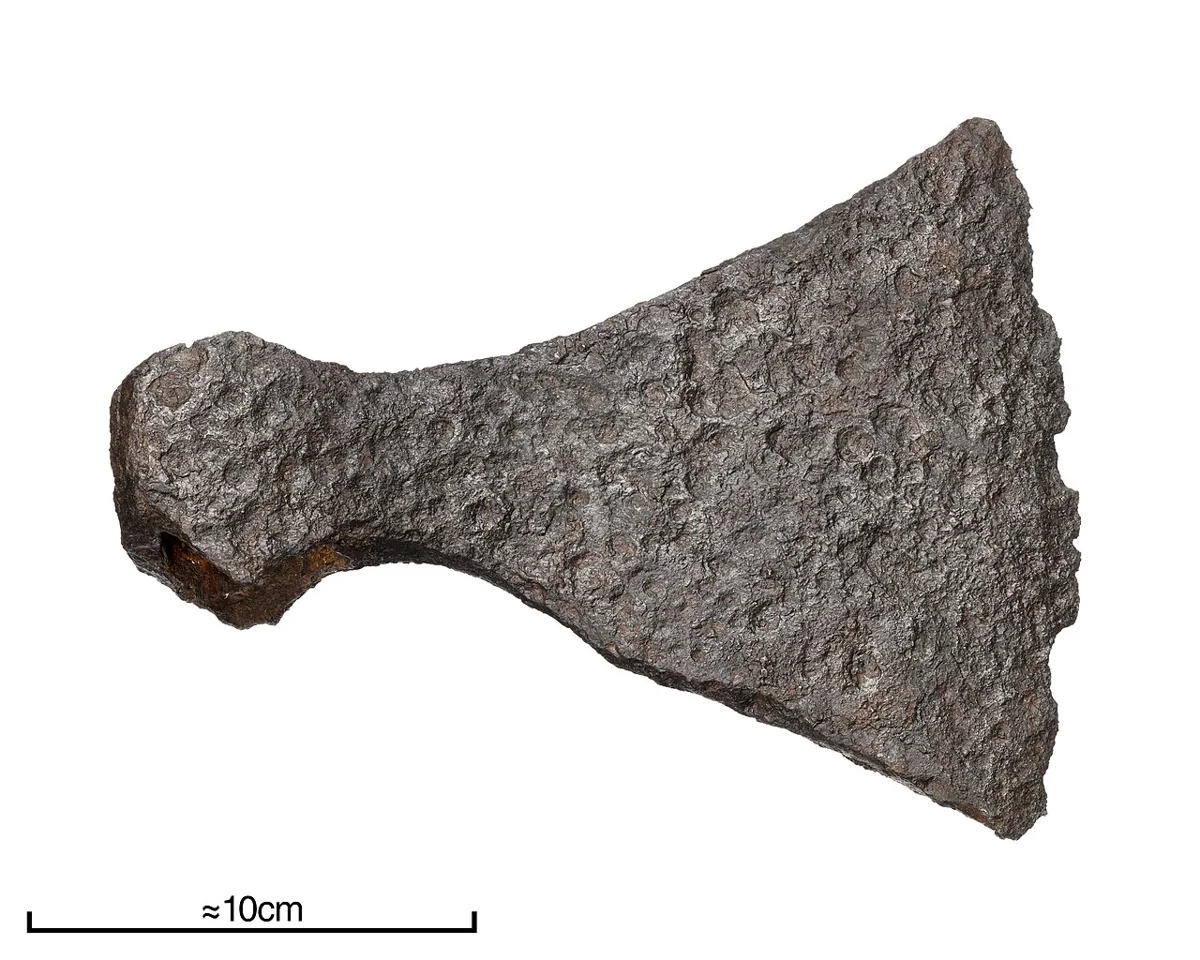
The word axe groups together objects whose proportions, hafts, and working edges could differ substantially. A broad blade is not automatically evidence for the same task as another broad blade. The British Museum’s late Viking-period Thames battle-axe has a markedly expanded, thin blade that thickens behind the edge. A woodworking example discussed by ship archaeologist Ole Crumlin-Pedersen instead has a blade sharpened from one side and a socket angled toward that side. Comparing those features explains why a useful classification needs more than a dramatic outline. The geometry of the edge and its relationship to the handle matter as much as the category printed on a display label.
Sources for this section: 1, 2
A Thames battle-axe and its construction
The Thames example is assigned to Petersen’s type M and dated to the tenth or eleventh century. The British Museum connects this widespread form with axes represented in the Bayeux Tapestry. Its technical discussion suggests that a harder cutting strip was welded into the end of the blade, accounting for the thickening behind the edge. These are separate arguments: the archaeological object supplies its dimensions and surviving construction, while images help reconstruct how comparable weapons were handled. The comparison is valuable without making the tapestry an exact portrait of this particular axe. Nor does its find in the river establish who used it or how it entered the water.
Sources for this section: 1

Experiments identified a specialized tool
Crumlin-Pedersen’s 1986 study of ship reconstruction describes the search for tools capable of producing the marks observed on original planking. A distinctive axe from Hedeby harbor supplied an important comparison: its one-sided sharpening and offset socket suggested a specialized woodworking purpose. Replicas proved useful for dressing plank sides and produced marks resembling those on archaeological timbers. The experiment did not identify the ancient carpenter, but it connected a tool’s geometry with a specific manufacturing problem. This is a stronger approach than choosing an axe because it looks generally old-fashioned. Tool, timber, and observed marks became parts of the same testable explanation.
Sources for this section: 2
A working axe in an urban setting
The Swedish History Museum identifies an iron axehead from Birka’s Black Earth settlement area as probably a working axe. Its description reconstructs a thick, strong wooden handle. The word probably is important: this is an interpretation of a particular object, not a claim that every settlement axe had exactly the same purpose. Even so, including it beside decorated burial weapons changes the picture. Axe use belonged to the material work of maintaining a settlement as well as to armed conflict. The find context makes workshop and household activities relevant questions, while the missing complete handle reminds us that a displayed iron head represents only part of the tool.
Sources for this section: 3

An intact axe beside a deformed sword
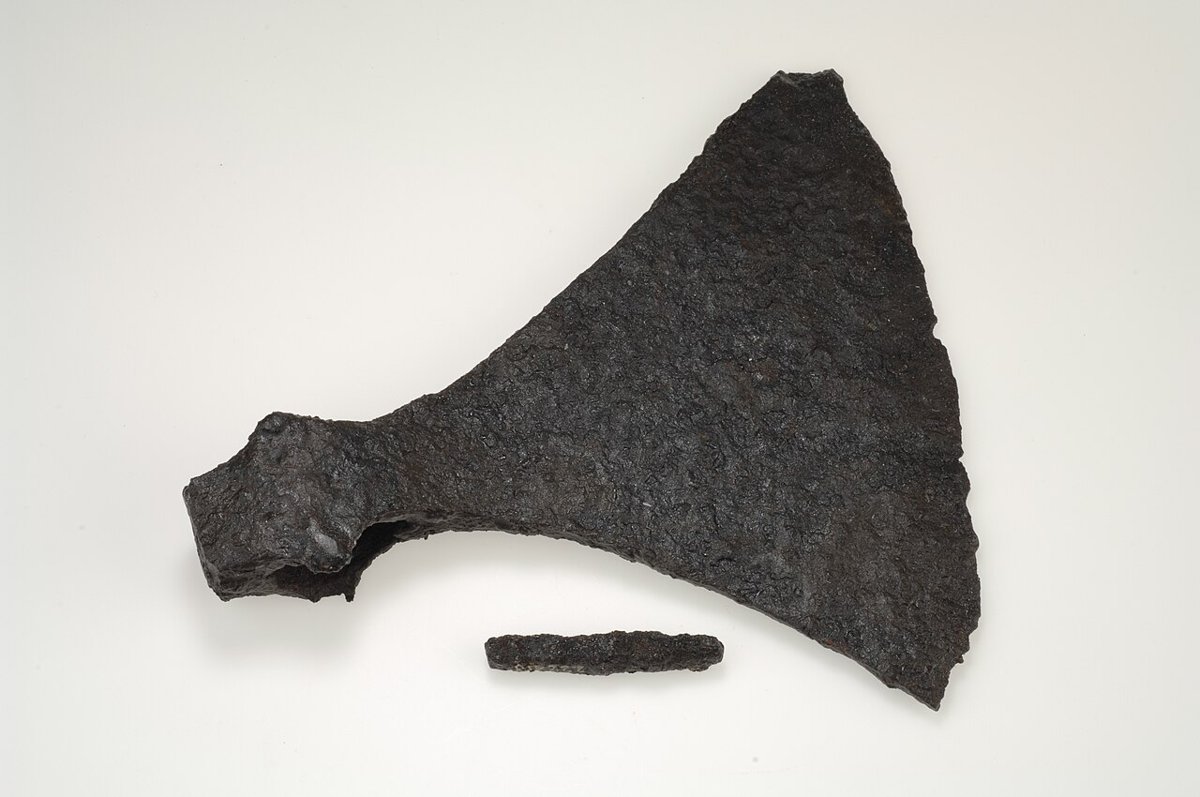
Another Birka axe presents a different context. It was deposited in a pit associated with mound and chamber grave Bj 750, together with a deformed sword and a spear. The axe itself remained intact. The museum describes its long, narrow blade and attributes its form to Slavic connections, noting parallels in northern Poland and Germany. That interpretation concerns the object’s comparative distribution; it does not identify the buried person’s language. More immediately, the contrast in treatment matters. Different weapons within one deposit did not necessarily receive the same ritual handling. A single label such as weapon offering can hide the distinct decisions made about individual objects.
Sources for this section: 4
Decoration does not settle religious identity
The famous Mammen axe introduces another difficulty: interpreting images. Denmark’s National Museum describes silver inlay and a tree on one side, with a bird on the other. It offers Christian and pre-Christian readings of both motifs rather than assigning them one certain meaning. A tree may invite comparison with the Christian Tree of Life or Yggdrasil; the bird has similarly attracted alternative identifications. The responsible conclusion is about interpretive possibilities, not the owner’s private convictions. An elaborate object could be legible in more than one symbolic tradition. Its craftsmanship is directly visible, while a precise theological program requires an argument beyond the presence of a tree or bird.
Sources for this section: 5

Museum categories preserve different levels of confidence
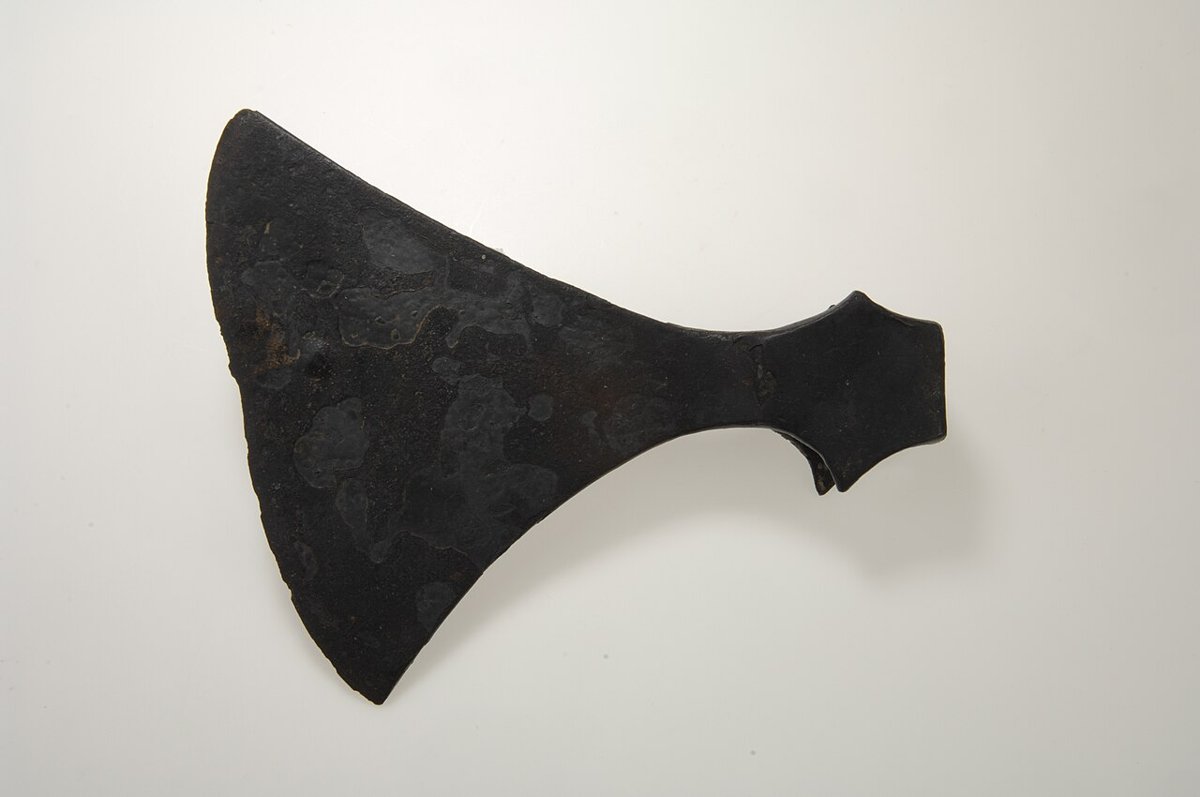
The British Museum catalogs a ninth- to tenth-century bearded axe from Øverli in Norway as Petersen type E. Its surviving information includes the object’s form and a nineteenth-century collection history identifying agricultural clearance as the occasion of discovery. That record is useful, but it is not a modern excavation report with a detailed surrounding assemblage. Comparing Øverli with Birka shows why identical-looking catalog fields can conceal very different evidential foundations. A typological label organizes shape; a findspot locates recovery; an excavated association connects objects. None should silently stand in for the others when reconstructing the life of an axe.
Sources for this section: 6
Function can change without changing the name
The examples support a practical sequence of questions. Examine the edge and socket, ask whether a handle survives, compare experimental performance where appropriate, and then consider the circumstances of deposition. These steps can reveal a specialized woodworking implement, a probable fighting weapon, or an object whose earlier use remains uncertain. Decoration and burial treatment add further histories rather than replacing function. The axe category is therefore useful precisely when its internal differences remain visible. A weapon could also be an item of skilled metalwork, a display of resources, and a carefully selected burial object. Those relationships are more informative than forcing every example into one permanent role.
Sources for this section: 1, 2, 3, 4, 5, 6
The Evidence
The sources below support this article. Interpretations and limits are explained in the text; this is not an exhaustive research review.