
Journeys & Encounters · Deep dive
Sea Stallion: What a Recorded Experimental Voyage Can Tell Us
In Brief
Sea Stallion’s voyages generated observations, instrument records, and crew accounts. Their historical value depends on knowing which conditions were measured, which were modern interventions, and which questions the experiment was designed to test.
On this page
A voyage and an experiment are different recordsModern instruments made the conditions visibleNot every important observation was electronicTowage must remain visible in the resultA volunteer crew is part of the experimentSustained progress matters more than a spectacular peakSourcesA voyage and an experiment are different records
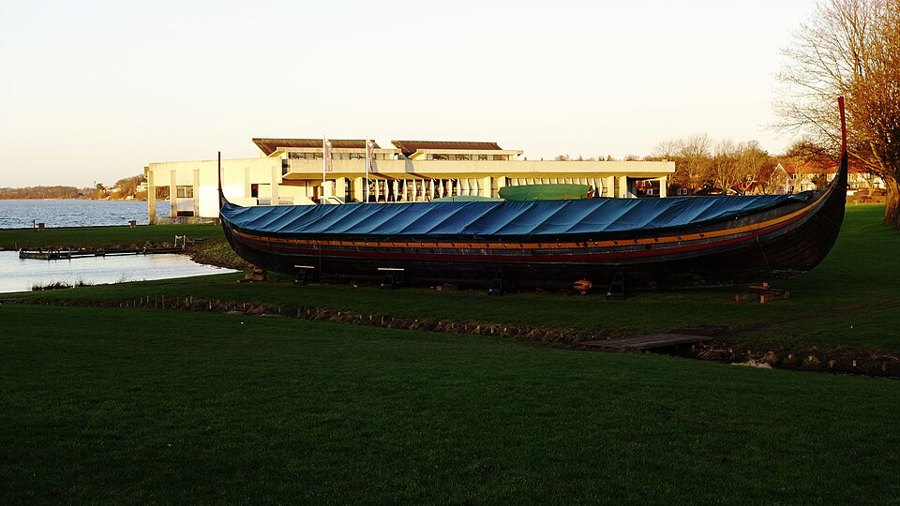
Sea Stallion, the modern reconstruction of Skuldelev 2, traveled from Roskilde to Dublin between July 1 and August 14, 2007. The museum published navigational information during the journey, allowing the public to follow its progress. But a line on a map records where a vessel went; it does not by itself explain how the vessel performed or why its crew chose that route.
The research protocol distinguished observations made during ordinary progress toward the destination from deliberate trials conducted when circumstances allowed. That distinction is essential. A crew trying to arrive efficiently may avoid precisely the conditions researchers need to understand, such as prolonged work against an unfavorable wind. A dedicated trial can investigate those conditions more systematically. Both kinds of record matter, but they answer different questions and should not be merged into an undifferentiated story of a successful voyage.
Sources for this section: 6, 1
Modern instruments made the conditions visible
The project used electronic recording of position, speed, course, wind, and other environmental information. A contemporary museum account describes the move from phone reports and emailed diaries during earlier sailing to a more extensive logging and communication system for the Dublin voyage. This made it possible to collect information continuously and share aspects of the journey with audiences ashore.
Modern instrumentation does not make the wooden hull ancient, but neither does it invalidate a carefully framed experiment. Instruments can measure the behavior of a reconstructed vessel without supplying its motive power. The relevant question is whether a device merely records conditions or changes the choices and actions being studied. Navigation aids can do both, depending on how they are used. Documentation should therefore identify their role instead of treating all modern equipment as a single category. A measured trial can be historically useful while remaining explicitly modern in its recording methods.
Sources for this section: 2

Not every important observation was electronic
The protocol also required human assessment of sea conditions, including wave height, swell, and the way the ship responded. It called for recording the number of people rowing and the time required for changes between propulsion arrangements. Instrument data and logbook observations were intended to complement one another.
That combination addresses a problem familiar in field experiments: easily measured quantities are not always the only quantities that matter. A speed reading cannot explain whether a maneuver felt controlled, whether a difficult sea repeatedly interrupted work, or whether the crew had to delay an action. Conversely, a vivid account of rough conditions may be hard to compare with another passage unless wind, time, and position are also recorded. The useful record preserves both kinds of evidence and makes clear which observations are estimates, which are timed events, and which come from instruments.
Sources for this section: 1
Towage must remain visible in the result
An early July voyage log explicitly records rowing, tacking, and towing by the support vessel Cable One. It also describes how the towline was led to pull the hull through the swell. This is direct evidence that the journey's overall progress cannot be treated as if every mile resulted from the reconstructed sail and oars alone.
Towage does not erase the value of the sailing segments. It changes the question that can be answered by the complete itinerary. Researchers can examine unassisted periods separately, provided the record identifies them, and can still study handling and crew work during those periods. What would be misleading is to use total distance divided by total elapsed time as an unqualified measure of Viking propulsion. The log's candor is therefore a strength. It allows analysis to account for an intervention instead of forcing the public narrative and the experimental evidence to diverge.
Sources for this section: 4
A volunteer crew is part of the experiment
The museum describes a wider pool of nearly 140 participants associated with the Irish voyage, with approximately sixty to sixty-two aboard at a time and some changes of personnel along the way. The modern crew included volunteers divided into watches, alongside practical provision for health, food, communication, and repairs.
Crew experience is a variable, not merely background color. Familiarity with the vessel affects coordination, the time required for maneuvers, and confidence in demanding conditions. Changes of personnel can therefore influence performance even when the hull and rig remain the same. Comparisons with medieval ship organization also require chronological care. The Gulating legal material discussed by the museum survives in later medieval contexts and cannot be treated as a complete contemporary manual for the eleventh-century Skuldelev 2. Modern organization and historical comparison are related research subjects, but they remain different bodies of evidence.
Sources for this section: 5
Sustained progress matters more than a spectacular peak
A July 2007 museum discussion explicitly cautioned that the vessel's reliable speed potential was not yet established. It distinguished a high maximum from the ability to maintain useful progress over long distances and under different wind conditions. Its observations were preliminary contributions to a developing investigation, not final universal performance specifications.
That is the appropriate way to read the voyage today. A peak speed is meaningful only with its duration and conditions; a sustained passage requires attention to course, weather, crew, and interruptions. The experiment's lasting value lies in making those relationships inspectable. Sea Stallion provides an unusually rich modern record for testing interpretations of a reconstructed longship. It does not reproduce every circumstance of an eleventh-century expedition, and it need not do so to improve understanding of what a vessel with this interpreted structure can accomplish.
Sources for this section: 3
For the introductory context, read What can a reconstructed ship tell us?.
The Evidence
The sources below support this article. Interpretations and limits are explained in the text; this is not an exhaustive research review.
- Viking Ship Museum: The archaeological experiment, research protocol, 2007 ↗
- Viking Ship Museum: Electronic recording and public communication, 2007 ↗
- Viking Ship Museum: Sea Stallion speed potential, July 2007 ↗
- Viking Ship Museum: Voyage log, early July 2007 ↗
- Viking Ship Museum: The ship’s crew ↗
- Viking Ship Museum: Sea Stallion voyage to Dublin, 2007 ↗