
Journeys & Encounters · Deep dive
Warrior Retinues: Food, Gifts, and the Work of Maintaining Loyalty
In Brief
Armed followings depended on relationships sustained at home as well as success abroad. Inscriptions, halls, craft production, and later armies reveal different parts of that system.
On this page
A following was a relationshipA hall provided more than shelterCraft workers supplied the material of relationshipsMarkets and households could overlapGift exchange is an explanation to testTrust also extended beyond personal followersLate Anglo-Saxon housecarls offer a distinct caseLoyalty required resources and repeated actionSourcesA following was a relationship
The Turinge runestone names housecarls among those commemorating Thorsteinn and praises the treatment of followers. The inscription also identifies him as a commander who died abroad. Its value is not a detailed organizational chart. It is the connection between remembered leadership and reciprocal conduct. Followers mattered enough to appear beside relatives in a public memorial. The text therefore gives a contemporary point of entry into a relationship often reconstructed from later literature. It shows what this particular group wished to praise, while leaving recruitment, duration of service, and the everyday distribution of responsibilities largely unrecorded.
Sources for this section: 1
A hall provided more than shelter
At Tissø, the excavated hall contained evidence associated with communal meals and elite hospitality. The National Museum of Denmark describes a large central space, substantial roof-bearing posts, animal bones, fragments of imported glass drinking vessels, and a carved tuning peg from a stringed instrument. These finds support a setting where people assembled and resources were consumed visibly. They do not identify every guest as a warrior. The broader point is that maintaining a following required places where relationships could be renewed. A hall made status and access physically tangible: who could enter, who was entertained, and whose household could sustain a gathering.
Sources for this section: 2

Craft workers supplied the material of relationships
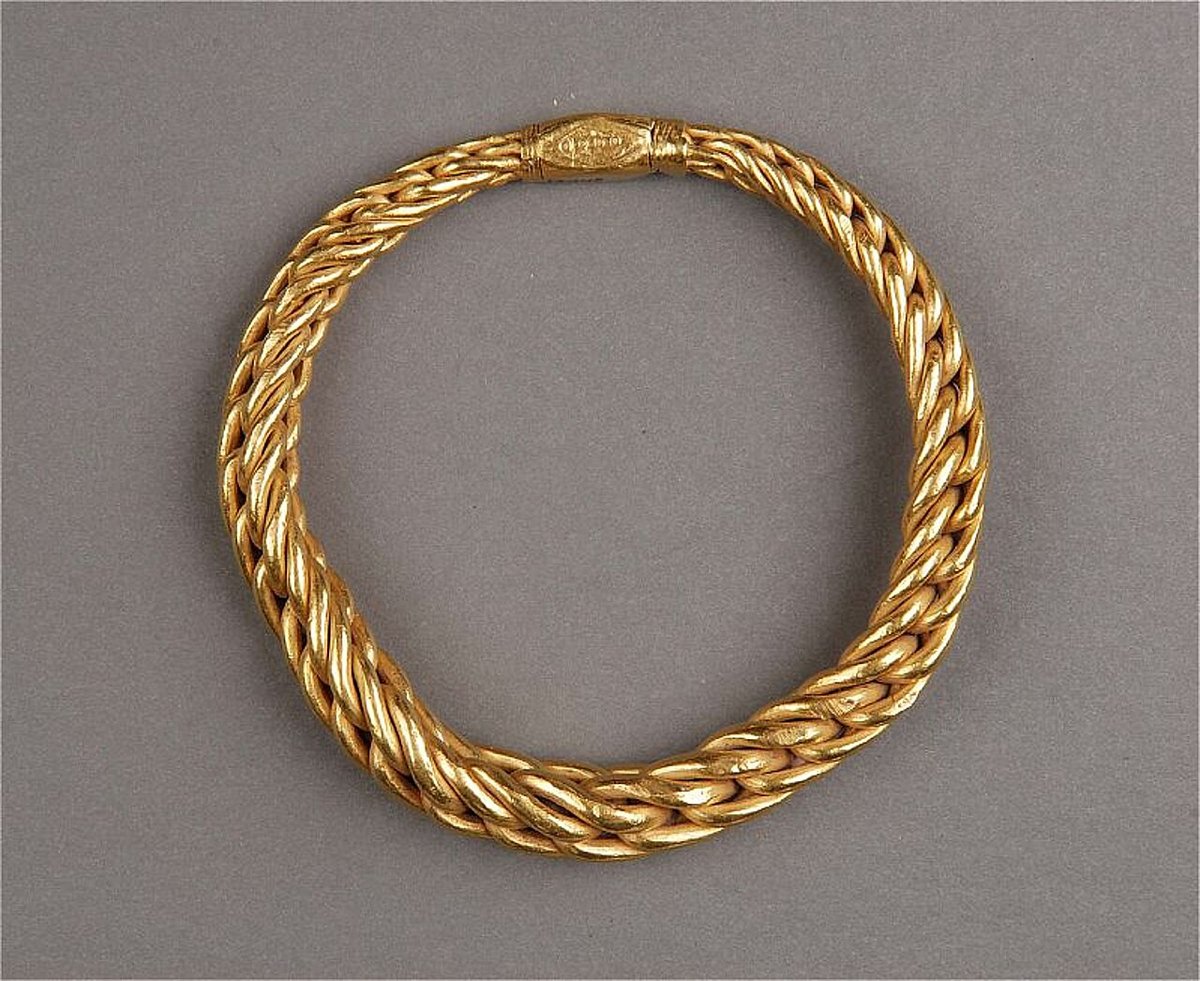
The Tissø craft evidence includes production refuse, unfinished objects, molds, tools, and metal stock. The museum distinguishes goods intended for the household, gifts for friends and allies, and products made for sale. That range is important because the same workshop could support different kinds of exchange. A finely made object might reward service, create an obligation, or enter a market. Its manufacture alone does not identify its final transaction. Nevertheless, craft production at a major residence makes clear that elite generosity depended on skilled labor and access to materials. The giving hand was only the visible end of a much larger productive process.
Sources for this section: 3
Markets and households could overlap
Tissø also hosted gatherings that brought traveling craftspeople and traders to the residence. The museum’s account includes both elaborate equipment for aristocratic customers and simpler everyday objects. This complicates a rigid division between a warrior household and a commercial settlement. A center of authority could concentrate consumers, provide occasions for exchange, and attract specialist production. It is reasonable to ask how such gatherings strengthened a leader’s position, but the precise terms of protection or payment require additional evidence. The archaeological pattern establishes overlapping activities more securely than it establishes a single economic system. Household provision and wider trade could reinforce one another without becoming identical.
Sources for this section: 3
Gift exchange is an explanation to test
A study titled Warrior Economy and Trading Economy argues that overseas acquisition supplied the wealth necessary to maintain prestige and relationships at home. It offers an influential model in which generosity helps explain why leaders sought silver and exotic objects. The model is useful because it connects expeditions with local obligations. Its broad claims should not, however, be applied as a universal description of every traveler or transaction. The Tissø evidence itself includes production for sale as well as gifts. A stronger interpretation asks which specific evidence indicates reward, tribute, purchase, or redistribution, rather than assuming that all silver passing through an elite household had the same function.
Sources for this section: 4, 3
Trust also extended beyond personal followers
Research using institutional economics challenges an excessive concentration on gift relationships when explaining Viking-Age exchange. It asks how cooperation could function beyond an extended family or a ruler’s immediate dependents, especially where transactions involved specialization or delayed payment. This provides a useful boundary to the retinue model. Personal loyalty could organize an armed group without accounting for an entire trading network. Different relationships required different ways to establish confidence and settle obligations. The comparison encourages a plural account: household ties, public rules, repeated dealings, and negotiated agreements could all matter. One powerful social institution need not explain every other form of cooperation.
Sources for this section: 5
Late Anglo-Saxon housecarls offer a distinct case
English Heritage identifies Harold Godwineson’s housecarls as the experienced core of his army at Hastings in 1066. The account distinguishes their role from the Norman use of mounted troops and notes that English forces could travel on horseback while fighting on foot. This late eleventh-century setting should not simply be projected onto every earlier Scandinavian following. It demonstrates a particular royal military context after long interaction across the North Sea. The shared term housecarl invites comparison, but terminology alone does not prove unchanged recruitment, pay, size, or tactical practice. Historical comparison works best when it preserves the time and political setting of each example.
Sources for this section: 6
Loyalty required resources and repeated action
The evidence considered here connects military relationships with food, buildings, craft labor, prestigious objects, and public memory. It also shows why an armed following should not be imagined as a self-sufficient band existing only during campaigns. Dependence on a leader had to be sustained through visible conduct and material support. The Turinge memorial praises a relationship; Tissø shows activities that could help maintain elite connections; Hastings illustrates a later royal military form. These sources do not combine into one universal institution. They reveal how authority could gather people around a household, while leaving room for local differences and for forms of cooperation outside that household.
Sources for this section: 1, 2, 3, 4, 5, 6
The Evidence
The sources below support this article. Interpretations and limits are explained in the text; this is not an exhaustive research review.
- Scandinavian Runic Text Database: Turinge Sö338 ↗
- National Museum of Denmark: activity in the Tissø hall ↗
- National Museum of Denmark: trade and crafts at Tissø ↗
- Journal of European Archaeology: warrior and trading economies ↗
- Archaeological Dialogues: institutional economics in Viking studies ↗
- English Heritage: the Battle of Hastings ↗