
Journeys & Encounters · Deep dive
The Faroes: Several Clocks for the First Settlement
In Brief
Barley grains, lake sediments, buildings, and human genetics answer different questions about arrival. Their dates should not be forced into one founding event.
On this page
A settlement history contains more than one beginningBurned grain moved the archaeological thresholdA lake recorded livestock without preserving a houseLater graves reveal how communities organized spaceModern genetic patterns are not dated landing recordsCompare landscapes without making every island identicalSourcesA settlement history contains more than one beginning
The familiar Viking Age settlement of the Faroes does not necessarily mark the first human presence on the islands. Sverri Dahl’s archaeological study set buildings and artifacts beside the later Faroese saga tradition. Its account of Kvívík describes a substantial longhouse, associated agricultural structures, imported materials, and evidence of household work. These remains illuminate established communities rather than the instant when the first boat arrived.
That distinction matters when a new early date reaches the news. First recorded activity, first livestock introduction, a surviving house, and a settlement tradition can belong to different phases. One does not automatically invalidate the others. A longhouse occupied around the Viking Age may stand in a landscape used earlier. Equally, an early trace does not establish a permanent village of comparable size. Begin by identifying the event each kind of evidence can date before arranging it into a single historical sequence.
Sources for this section: 1
Burned grain moved the archaeological threshold
Mike Church and colleagues reported pre-Viking evidence from Á Sondum on Sandoy in 2013. Carbonized barley occurred in patches of burned peat ash within windblown sand. The radiocarbon results supported two earlier phases, broadly within the fourth to sixth centuries and the late sixth to eighth centuries. The combination of a cultivated cereal and an anthropogenic deposit made the finding more informative than an unexplained piece of old charcoal.
The dates belong to the sampled grains and their archaeological contexts. They do not provide names, language, religion, or a count of households. Nor can two dated phases demonstrate uninterrupted occupation throughout the interval between them. The authors called for reconsidering the nature and scale of early settlement as well as its timing. That is a more precise conclusion than replacing a ninth-century founding story with another equally simple founding story set several centuries earlier.
Sources for this section: 2

A lake recorded livestock without preserving a house
Lorelei Curtin and colleagues examined sediment from Eiðisvatn on Eysturoy. Their 2021 study combined ancient environmental DNA with fecal biomarkers and a chronology based on radiocarbon dating and volcanic ash. Sheep DNA and increased livestock-related biomarkers indicated human introduction of animals around 500 CE, centuries before the nearby documented Norse settlement. Plant evidence also showed changes consistent with grazing pressure.
The strength comes from combining different indicators in a dated sequence. Sheep could not have reached this island watershed by ordinary natural dispersal, while fecal compounds provide an independent line of evidence for livestock. The result nevertheless concerns the sampled catchment. It does not locate the settlers’ dwellings or establish when every island was occupied. Its modeled date also carries uncertainty rather than functioning as a dated inscription. The study explicitly leaves the early inhabitants’ identity unresolved, a limit that should remain attached to its striking chronological result.
Sources for this section: 3
Later graves reveal how communities organized space
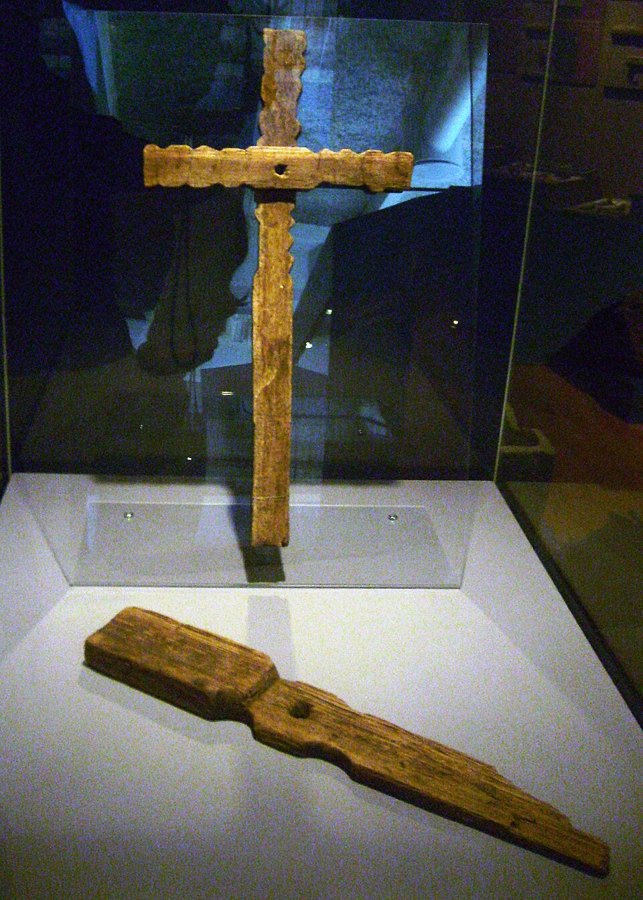
Ann Sølvia Selmarsdóttir Purkhús’s research approaches Viking Age burial sites through excavation archives and landscape analysis. It examines relationships with settlements, landing places, routes, and agricultural areas. The work began with very few known burial sites and also assessed possible locations through survey and other methods. Not every promising location could be confirmed as a burial.
This research illuminates a different historical scale from the earliest barley or livestock signal. Burial placement can help investigate how established communities represented affiliation and used their surroundings. It cannot simply identify the people responsible for a much earlier sedimentary trace. The scarcity of excavated graves also warns against treating the known sample as a complete map of inhabitants. Separating confirmed remains from proposed sites keeps the evidence useful while acknowledging how strongly discovery, preservation, and research coverage shape the surviving picture.
Sources for this section: 4
Modern genetic patterns are not dated landing records
A 2024 study of Faroese and Icelandic paternal lineages compared Y-chromosomal diversity with possible source populations. It found differences between the two island groups and argued against assuming that their paternal founders were an interchangeable population. The discussion also considers alternative demographic processes and acknowledges limits in the resolution available for distinguishing them.
This is evidence about inherited lineages shaped by founding events, drift, and subsequent population history. It is not a direct sample of the people who left the early barley or introduced the first sheep. A demographic estimate derived from present-day genomes and an archaeological date measure different things. They can be compared, but agreement needs an explicit model and disagreement does not disappear by choosing the most dramatic number. The genetic study is valuable for complicating a uniform settlement narrative, while identification of particular early occupants requires additional evidence.
Sources for this section: 5
Compare landscapes without making every island identical
Lindsay Macgregor’s comparative work on Faroe and Shetland examined topography, place names, land divisions, and settlement development. It found similarities in the attraction of useful harbors and cultivable land, alongside differences in later expansion and naming patterns. The comparison shows why a shared Norse cultural setting need not produce an identical local history.
A practical chronology can therefore retain several rows: early human activity on Sandoy, livestock introduction in an Eysturoy catchment, Viking Age buildings and burials, and later population and settlement development. The rows overlap without becoming interchangeable. Future excavation may connect them more closely, but gaps should not be filled with an assumed ethnic identity or continuous occupation. The emerging account is richer than a contest between two founding dates. It asks how different groups used island landscapes over time, and which traces allow each part of that history to be recovered.
Sources for this section: 6
For the introductory context, read When was the Viking Age?.
For the introductory context, read The Faroes Before and During Norse Settlement.
The Evidence
The sources below support this article. Interpretations and limits are explained in the text; this is not an exhaustive research review.
- Sverri Dahl — The Norse Settlement of the Faroe Islands (1970) ↗
- Church and colleagues — pre-Viking evidence from Á Sondum (2013) ↗
- Curtin and colleagues — sedimentary DNA and molecular evidence (2021) ↗
- Ann Sølvia Selmarsdóttir Purkhús — Burials and Landscape (2021) ↗
- Genetic evidence for distinct paternal settlers (2024) ↗
- Lindsay Macgregor — comparative settlement study (1987) ↗